Amino Acids (AA)
Amino acids (AAs) are the fundamental building blocks of proteins, playing a crucial role in various biological processes. These organic compounds are essential for protein synthesis, metabolic pathways, and cell signaling. In this category, you will find a comprehensive range of amino acids, including essential, non-essential, and modified forms, which are vital for research in biochemistry, molecular biology, and nutritional sciences. At CymitQuimica, we provide high-quality amino acids to support your research and development needs, ensuring accuracy and reliability in your experimental outcomes.
Subcategories of "Amino Acids (AA)"
- Amino Acid Derivatives(3,955 products)
- Amino Acid and Amino Acid Related Compounds(3,451 products)
- Amino Acids with Oxygen or Sulphur(168 products)
- Boc- Amino Acids(351 products)
- Fmoc Amino Acids(1,710 products)
Found 38234 products of "Amino Acids (AA)"
Sort by
Purity (%)
0
100
|
0
|
50
|
90
|
95
|
100
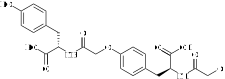
Liraglutide Impurity 41 Tetratrifluoroacetate (21-D-Glu)
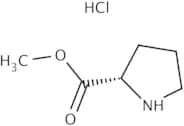
Formula:C172H265N43O51·4C2HF3O2Molecular weight:3751.26 4*114.02L-Proline methyl ester hydrochloride
CAS:Formula:C6H11NO2HClPurity:≥ 98.0%Color and Shape:White powderMolecular weight:165.621-Butyl-3-Methylimidazolium Bis(trifluoromethylsulfonyl)imide
CAS:Formula:C8H15N2·C2F6NO4S2Molecular weight:139.22 280.14(±)-Metanephrine-a,ß,ß-d3 HCl ((±)-Metadrenaline -a,ß,ß-d3 HCl)
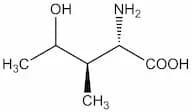
CAS:Formula:C10H12D3NO3Molecular weight:200.254-hydroxy l-isoleucine
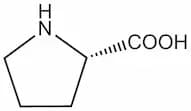
CAS:Amino acidFormula:C6H13NO3Purity:≥ 98.0 % (HPLC)Color and Shape:PowderMolecular weight:147.17L-proline
CAS:Amino acidFormula:C5H9NO2Purity:≥ 98.0 % (HPLC)Color and Shape:PowderMolecular weight:115.135-hydroxy l-tryptophan
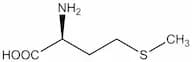
CAS:Nitrogen heterocyclic compoundFormula:C11H12N2O3Purity:≥ 98.0 % (HPLC)Color and Shape:PowderMolecular weight:220.23L-methionine
CAS:MethionineFormula:C5H11NO2SPurity:≥ 95.0 % (HPLC)Color and Shape:PowderMolecular weight:149.21Γ-aminobutyric acid
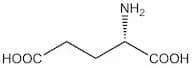
CAS:Amino acidFormula:C4H9NO2Purity:≥ 98.0 % (HPLC)Color and Shape:PowderMolecular weight:103.12L-glutamic acid
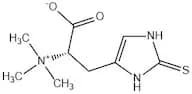
CAS:Glutamic acidFormula:C5H9NO4Purity:≥ 98.0 % (HPLC)Color and Shape:PowderMolecular weight:147.13L-(+)-ergothioneine
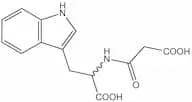
CAS:Nitrogen heterocyclic compoundFormula:C9H15N3O2SPurity:≥ 90.0 % (HPLC)Color and Shape:PowderMolecular weight:229.3N-malonyl dl-tryptophan
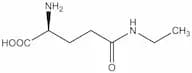
Nitrogen heterocyclic compoundFormula:C14H14N2O5Purity:≥ 98.0 % (HPLC)Color and Shape:PowderMolecular weight:290.28L-theanine
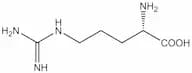
CAS:Acyclic amideFormula:C7H14N2O3Purity:≥ 98.0 % (HPLC)Color and Shape:PowderMolecular weight:174.2L-arginine
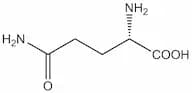
CAS:Amino acidFormula:C6H14N4O2Purity:≥ 98.0 % (HPLC)Color and Shape:PowderMolecular weight:174.2L-glutamine
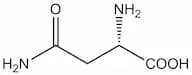
CAS:Amino acidFormula:C5H10N2O3Purity:≥ 98.0 % (HPLC)Color and Shape:PowderMolecular weight:146.14L-asparagine
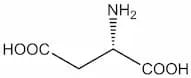
CAS:Amino acidFormula:C4H8N2O3Purity:≥ 98.0 % (HPLC)Color and Shape:PowderMolecular weight:132.12L-aspartic acid
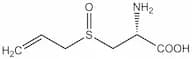
CAS:Amino acidFormula:C4H7NO4Purity:≥ 98.0 % (HPLC)Color and Shape:PowderMolecular weight:133.1L-(±)-alliin
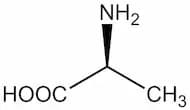
CAS:Organo-sulphur compoundFormula:C6H11NO3SPurity:≥ 95.0 % (HPLC)Color and Shape:PowderMolecular weight:177.22L-alanine
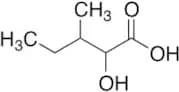
CAS:Amino acidFormula:C3H7NO2Purity:≥ 98.0 % (HPLC)Color and Shape:PowderMolecular weight:89.092-Hydroxy-3-methylpentanoic Acid (Mixture of Diastereomers)
CAS:Controlled Product<p>Applications 2-hydroxy-3-methylpentanoic acid (cas# 488-15-3) is a useful research chemical.<br></p>Formula:C6H12O3Color and Shape:NeatMolecular weight:132.15Methyl 4-(Bromomethyl)-3-methoxybenzoate
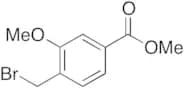
CAS:Controlled Product<p>Applications Methyl 4-(Bromomethyl)-3-methoxybenzoate is an intermediate used to prepare heteroarylphenyloxoacetyl and heteroarylphenylsulfonyl benzoylpiperazine analogs of BMS 378806 as HIV entry inhibitors. It is also used to synthesize steroid 5α-reductase inhibiting acylpiperidines.<br> Not a dangerous good if item is equal to or less than 1g/ml and there is less than 100g/ml in the package<br>References Lu, R., et al.: J. Med. Chem., 52, 4481 (2009); Picard, F., et al.: J. Med. Chem., 45, 3406 (2002)<br></p>Formula:C10H11BrO3Color and Shape:NeatMolecular weight:259.0964-Bromo-6-methyl-3H-1,3-benzodiazole
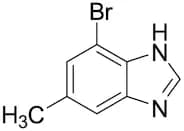
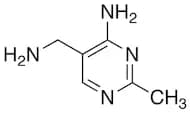
CAS:Controlled Product<p>Applications 4-Bromo-6-methyl-3H-1,3-benzodiazole<br></p>Formula:C8H7BrN2Color and Shape:NeatMolecular weight:211.0584-Amino-5-aminomethyl-2-methylpyrimidine
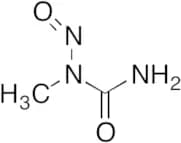
CAS:Controlled Product<p>Applications Substrate for TenA enzyme in the thiamin salvage pathway<br>References Jenkins, A., et al.: Nat. Chem. Biol., 3, 492 (2007), Jenkins, A., et al.: Bioorg. Chem., 36, 29 (2008),<br></p>Formula:C6H10N4Color and Shape:Light YellowMolecular weight:138.17N-Methyl-N-nitroso Urea (Wetted with water >20%)
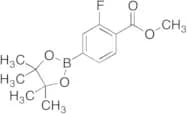
CAS:Controlled Product<p>Stability Temperature Sensitive<br>Applications Precursor of Diazomethane. It has a cytotoxicity effect.This product contains an undetermined amount of water.<br> Not a dangerous good if item is equal to or less than 1g/ml and there is less than 100g/ml in the package<br>References Huggins, C., et al.: J. Exp. Med., 131, 321 (1970), Gullino, P.M., et al.: J. Natl. Cancer Inst., 54, 401 (1975),<br></p>Formula:C2H5N3O2Color and Shape:Off-White To Light BeigeMolecular weight:103.083-Fluoro-4-methoxycarbonylphenylboronic Acid, Pinacol Ester
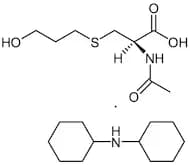
CAS:Controlled Product<p>Applications 3-Fluoro-4-methoxycarbonylphenylboronic acid, pinacol ester is a useful intermediate for organic synthesis and other chemical transformations.<br>References Zhao, F., et al.: Eur. J. Med. Chem., 134, 147 (2017); Zhao, F., et al.: Bioorg. Med. Chem., 24, 4281 (2016)<br></p>Formula:C19H38F3NO2SColor and Shape:NeatMolecular weight:401.571N-Acetyl-S-(3-hydroxypropyl)-L-cysteine Dicyclohexylamine Salt (unlabelled)
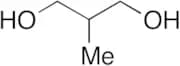
CAS:Controlled Product<p>Applications N-Acetyl-S-(3-hydroxypropyl)-L-cysteine Dicyclohexylamine Salt (unlabelled) (CAS# 14369-42-7) is a useful research compound.<br></p>Formula:C12H23N·C8H15NO4SColor and Shape:NeatMolecular weight:402.592-Methyl-1,3-propandiol (b-Hydroxyisobutanol)
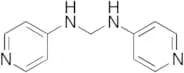
CAS:Controlled Product<p>Applications β-Hydroxyisobutanol is used as a reagent in the synthesis of pyrazolo[1,5-a]pyridinecarbonyl-substituted spirocyclic piperidine ketals as inhibitors of HCV protein NS4B and of hepatitis C viral replication and their lack of cytotoxicity in human cells.<br>References Tai, V.W.-F., et al.: Bioorg. Med. Chem. Lett., 24, 2288 (2014);<br></p>Formula:C4H10O2Color and Shape:ColourlessMolecular weight:90.121N,N'-Di-4-pyridinyl-methanediamine
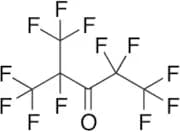
CAS:<p>Applications N,N'-Di-4-pyridinyl-methanediamine is used to prepare bis(heteroaryl)-imidazolidinediones with oxalyl chloride.<br>References Ghandi, M., et al.: Synth. Comm., 37, 637 (2007)<br></p>Formula:C11H12N4Color and Shape:NeatMolecular weight:200.24Perfluoro(2-methyl-3-pentanone)
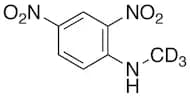
CAS:Controlled Product<p>Applications Perfluoro(2-methyl-3-pentanone) (cas# 756-13-8) is a useful research chemical.<br></p>Formula:C6F12OColor and Shape:ColourlessMolecular weight:316.04N-Methyl-2,4-dinitroaniline-d3
CAS:Controlled Product<p>Applications N-Methyl-2,4-dinitroaniline-d3 (cas# 91808-45-6) is a compound useful in organic synthesis.<br> Not a dangerous good if item is equal to or less than 1g/ml and there is less than 100g/ml in the package<br></p>Formula:C7H4D3N3O4Color and Shape:BrownMolecular weight:200.173-Amino-4-methylbenzamide
CAS:Controlled Product<p>Applications 3-Amino-4-methylbenzamide is useful for preparing heteroaryl compounds ERK1/ERK2 inhibitors.<br>References Qiao, L.: PCT Int. Appl. (2016), WO 2016100452 A2<br></p>Formula:C8H10N2OColor and Shape:NeatMolecular weight:150.182-(1-Methyl-1H-imidazol-5-yl)acetic Acid Hydrochloride
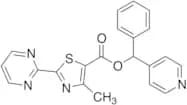
CAS:Controlled ProductFormula:C6H8N2O2·HClColor and Shape:NeatMolecular weight:176.601phenyl(pyridin-4-yl)methyl 4-methyl-2-(pyrimidin-2-yl)-1,3-thiazole-5-carboxylate
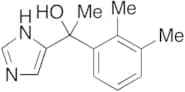
CAS:Controlled Product<p>Applications phenyl(pyridin-4-yl)methyl 4-methyl-2-(pyrimidin-2-yl)-1,3-thiazole-5-carboxylate (cas# 1281055-79-5) is a useful research chemical.<br></p>Formula:C21H16N4O2SColor and Shape:Off-WhiteMolecular weight:388.45α-(2,3-Dimethylphenyl)-α-methyl-1H-imidazole-5-methanol
CAS:Controlled Product<p>Applications α-(2,3-Dimethylphenyl)-α-methyl-1H-imidazole-5-methanol is used as a reagent in the synthesis of Medetomidine (M203250); an α2-adrenergic agonist. Also a sedative and analgesic.<br>References Scheinin, M., et al.: Br. J. Clin. Pharmacol., 24, 443 (1987); Stenberg, D., et al.: J. Vet. Pharmacol. Ther., 10, 319 (1987); Virtanen, R., et al.: Eur. J. Pharmacol., 150, 9 (1988); Cullen, L.K., et al.: Br. Vet. J., 152, 519 (1996); Chen, W., et al.: Faming Zhuanli Shenqing. CN 101921234 A 20101222. Dec 22, 2010<br></p>Formula:C13H16N2OColor and Shape:Light Yellow To BeigeMolecular weight:216.283-Hydroxy-4-methylaniline
CAS:Controlled Product<p>Applications 3-Hydroxy-4-methylaniline<br></p>Formula:C7H9NOColor and Shape:NeatMolecular weight:123.154-Chloro-2-methylaniline
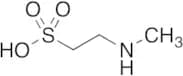
CAS:Controlled Product<p>Stability Air Sensitive<br>Applications 4-Chloro-2-methylaniline<br> Not a dangerous good if item is equal to or less than 1g/ml and there is less than 100g/ml in the package<br></p>Formula:C7H8ClNColor and Shape:Light BrownMolecular weight:141.60N-Methyltaurine
CAS:<p>Applications N-Methyltaurine can be used as a counter ion in the formation of soaps.<br>References Miyahara, Reiji, et al.: J. of Oleo Sci., 50(10), 823-830 (2001)<br></p>Formula:C3H9NO3SColor and Shape:NeatMolecular weight:139.1735DL-Homocysteine-d4
CAS:Controlled Product<p>Applications DL-Homocysteine-d4 is used in the detection of the biosynthetic pathway for the formation of volatile aroma compound 2-methyltetrahydrothiophen-3-one by the bacterium Chitinophaga.<br>References Nawrath, T., et al.: ChemBioChem., 11, 1914-1919 (2010)<br></p>Formula:C4D4H5NO2SColor and Shape:NeatMolecular weight:139.213-Methoxypropanoic Acid
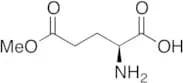
CAS:<p>Applications 3-Methoxypropanoic acid<br></p>Formula:C4H8O3Color and Shape:NeatMolecular weight:104.11L-Glutamic Acid 5-Methyl Ester
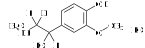
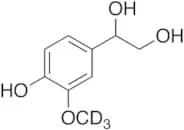
CAS:Controlled Product<p>Applications L-Glutamic acid 5-methyl ester is a protected form of L-Glutamic acid (G596960). L-Glutamic acid is a nonessential amino acid that is important to the mammalian central nervous system. L-Glutamic acid is also a neurotransmitter for cone photoreceptors in the human brain and is used as a treatment for patients who have liver disease accompanied by encephalopathy (a condition termed ‘hepatic coma’).<br>References Anderson, H., et al.: J. Nutr., 99, 82 (1969); Brandon, C. & Lam, D.: Proc. Nat. Acad. Sci., 80, 5117 (1983); McDermott Jr, W., et al.: New Engl. J. Med., 253, 1093 (1955)<br></p>Formula:C6H11NO4Color and Shape:NeatMolecular weight:161.156rac 4-Hydroxy-3-methoxyphenylethylene Glycol-d3
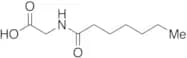
CAS:Controlled Product<p>Applications A labelled metabolite of Catecholamines.<br>References Kopin, I.J., et al.: J. Biol. Chem., 236, 2109 (1961), Short, F.W., et al.: J. Med. Pharm. Chem., 5, 642 (1962)<br></p>Formula:C92H3H9O4Color and Shape:NeatMolecular weight:187.21N-Heptanoylglycine
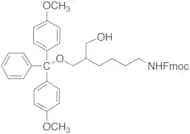
CAS:<p>Applications An acylglycine present in urniary excretion that can be analyzed and be used as diagnostic tool for metabolic disorders, complementary to organic acids and acylcarnitine profiles.<br>References Bonafe, L. et al.: Mol. Genetics Metab., 69, 302 (2000);<br></p>Formula:C9H17NO3Color and Shape:WhiteMolecular weight:187.241-O-Dimethoxytrityl-2-(N-Fmoc)-4-Aminobutyl)-1,3-propanediol, >95%
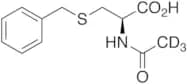
CAS:<p>Stability Very Hygroscopic<br>Applications 1-O-Dimethoxytrityl-2-(N-Fmoc)-4-Aminobutyl)-1,3-propanediol is a useful reagent for the synthesis of acridine and/or lipid containing oligodeoxyribonucleotides.<br>References Marasco, C. J., et al.: Tetra. Lett., 35, 3029 (1994)<br></p>Formula:C43H45NO6Purity:>95%Color and Shape:Off White SolidMolecular weight:671.82N-(Acetyl-d3)-S-benzyl-L-cysteine
CAS:Controlled Product<p>Applications A labelled metabolite of Toluene.<br>References Gargas, M., et al.: Toxicol. Appl. Pharmacol., 98, 87 (1989), Commandeur, J., et al.: Pharmacol. Rev., 47(2), 271 (1995), Campo, P., et al.: Neurotoxicol. Teratol., 21, 427 (1999), Lohse, C., et al.: J. Agr. Food Chem., 48, 5913 (2000),<br></p>Formula:C122H3H12NO3SColor and Shape:White To Off-WhiteMolecular weight:256.342-Chloro-L-phenylalanine
CAS:<p>Applications 2-Chloro-L-phenylalanine<br></p>Formula:C9H10ClNO2Color and Shape:White To Off-WhiteMolecular weight:199.63(4-Hydroxyphenyl)glycine
CAS:<p>Applications (4-Hydroxyphenyl)glycine, is a key intermediate for the synthesis Cefpiramide (C243400), used as a β-lactam antibiotic.<br>References Xiao, R. Q., et al.: Guangzhou Huagong, 41, 111 (2013);<br></p>Formula:C8H9NO3Color and Shape:Off White PowderMolecular weight:167.162L-Histidinol Dihydrochloride
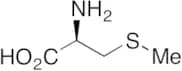
CAS:Controlled ProductFormula:C6H11N3O·2ClHColor and Shape:NeatMolecular weight:214.09S-Methyl-L-cysteine
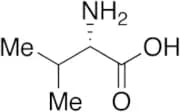
CAS:Controlled Product<p>Applications S-Methyl-L-cysteine is a substrate in the catalytic antioxidant system mediated by methionine sulfoxide reductase A (MSRA). It has been studied as a theurapeutic for neurodegenerative diseases including Parkinson′s.<br>References Wassef, R., et al.: J. Neurosci., 21, 12808 (2007)<br></p>Formula:C4H9NO2SColor and Shape:NeatMolecular weight:135.19L-Valine
CAS:Controlled Product<p>Applications L-Valine is an essential amino acid and one of 20 proteinogenic amino acids. L-Valine cannot be manufactured by the body and must be acquired through diet or supplementation. L-valine is found in grains, dairy products, mushrooms, meats, peanuts and soy proteins. L-Valine has been used in studies to attenuate arrhythmias and induce hypotensive effects.<br>References Choi, C.W. et al.: Anim. Feed Sci. Technol., 102, 15 (2002); Kolarski, D. et al.: Krmiva, 30, 155 (1988); Oba, M. et al.: J. Dairy Sci., 93, 2044 (2010); Mitrega, K. et al.: Pharmacol. Res., 64, 218 (2011);<br></p>Formula:C5H11NO2Color and Shape:NeatMolecular weight:117.15Linoleoyl Carnitine
CAS:Controlled Product<p>Stability Hygroscopic, Temperature Sensitive<br>Applications A carnitine ester of unsaturated fatty acid. Used in the studies of fibroblasts in long-chain 3-hydroxyacyl-CoA dehydrogenase deficiency and fatty acid oxidation disorders.<br>References Gross R.W., et al.: J. Biol. Chem., 258, 5221 (1983),<br></p>Formula:C25H45NO4Color and Shape:NeatMolecular weight:423.63(+)-a-Methyl-b-alanine
CAS:Controlled Product<p>Applications (+)-α-Methyl-β-alanine is a reactant for the chemoenzymatic assembly of cryptophycins as potent anticancer therapeutics.<br>References Magarvey, N.A., et al.: ACS Chem. Biol., 1, 766-779 (2006)<br></p>Formula:C4H9NO2Color and Shape:NeatMolecular weight:103.120D-Aspartic Acid
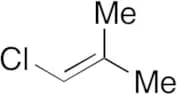
CAS:<p>Applications A non-essential amino acid found in food sources and dietary supplements. Its conjugate base D-aspartate has potential use as a a therapeutic agent in the treatment of schizophrenia-related symptoms.<br>References Errico, F. et al.: J. Neurosci., 28, 10404 (2008); Denu, J.M. et al.: Biochem., 34, 3396 (1995); Chen, P.E. et al.: Mol. Pharmacol., 67, 1470 (2005);<br></p>Formula:C4H7NO4Color and Shape:NeatMolecular weight:133.101-Chloro-2-methylpropene
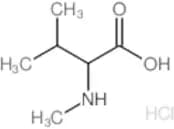
CAS:Controlled Product<p>Stability Volatile<br>Applications 1-Chloro-2-methylpropene is a reagent in the synthesis of pyrrolyl and indolyl diketo acids and esters as nucleotide-competitive non-nucleoside inhibitors of terminal deoxynucleotidyl transferase.<br> Not a dangerous good if item is equal to or less than 1g/ml and there is less than 100g/ml in the package<br>References Costi, R., et al.: J. Med. Chem., 56, 7431 (2013);<br></p>Formula:C4H7ClColor and Shape:NeatMolecular weight:90.55N-Methyl-dl-valine Hydrochloride
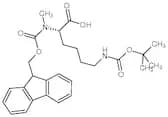
CAS:Controlled Product<p>Applications N-Methyl-dl-valine, HCl<br></p>Formula:C6H13NO2Color and Shape:NeatMolecular weight:131.173Fmoc-n-me-lys(boc)-oh
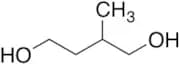
CAS:Controlled Product<p>Applications Fmoc-n-me-lys(boc)-oh<br></p>Formula:C27H34N2O6Color and Shape:NeatMolecular weight:482.5692-Methyl-1,4-butanediol
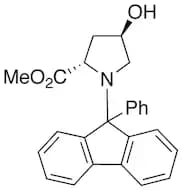
CAS:Controlled Product<p>Stability Unstable in Aqueous Solution<br>Applications 2-METHYL-1,4-BUTANEDIOL (cas# 2938-98-9) is a useful research chemical.<br></p>Formula:C5H12O2Color and Shape:NeatMolecular weight:104.15(4R, 2S)-4-Hydroxy-1-(9-phenyl-9H-fluoren-9-yl)-proline Methyl Ester
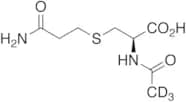
CAS:Controlled Product<p>Applications (4R, 2S)-4-Hydroxy-1-(9-phenyl-9H-fluoren-9-yl)-proline Methyl Ester (cas# 179990-59-1) is a compound useful in organic synthesis.<br></p>Formula:C25H23NO3Color and Shape:Light BrownMolecular weight:385.46N-Acetyl-S-(carbamoylethyl)-L-cysteine-d3
CAS:Controlled Product<p>Stability Hygroscopic<br>Applications Labelled N-Acetyl-S-(carbamoylethyl)-L-cysteine (A171870). N-Acetyl-S-(carbamoylethyl)-L-cysteine is the urinary metabolite of Acrylamide (AA). Acrylamide is formed during the heating of food and is classified as a genotoxic carcinogen.<br>References Besaratinia, A., et al.: Mutat. Res., 80, 31 (2005), Bjellaas, T., et al.: Xenobiotica, 35, 1003 (2005), Bjellaas, T., et al.: Food Chem. Toxicol., 45, 1020 (2007), Bjellaas, T., et al.: Toxicol. Sci., 98, 110 (2007),<br></p>Formula:C8H11D3N2O4SColor and Shape:Off-WhiteMolecular weight:237.29NG,NG-Dimethylarginine-D6 Dihydrochloride
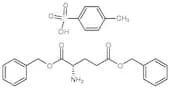
CAS:Controlled Product<p>Stability Very Hygroscopic<br>Applications A potent inhibitor of NO synthase of adrenal glands, brain, and vascular endothelial cells.<br>References Vallence, P., et al.: Lancet, 339, 572 (1992),<br></p>Formula:C8H14D6Cl2N4O2Color and Shape:NeatMolecular weight:281.21L-Glutamic acid dibenzyl ester 4-toluenesulfonate
CAS:Controlled Product<p>Applications L-Glutamic acid dibenzyl ester 4-toluenesulfonate<br></p>Formula:C26H29NO7SColor and Shape:NeatMolecular weight:499.58Ethyl 3-(dimethylamino)-2-(2,4,5-trifluoro-3-methoxybenzoyl)acrylate
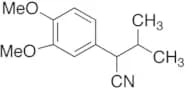
CAS:Formula:C15H16F3NO4Color and Shape:NeatMolecular weight:331.2873,4-Dimethoxy-a-(1-methylethyl)benzeneacetonitrile
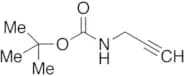
CAS:Controlled Product<p>Impurity Verapamil EP Impurity K<br>Applications (Verapamil EP Impurity K)<br></p>Formula:C13H17NO2Color and Shape:White To Light GreenMolecular weight:219.28N-Boc-propargylamine
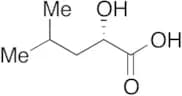
CAS:Controlled Product<p>Applications N-Boc-propargylamine is used in the preparation of triazolobenzylidene-thiazolopyrimidines which act as CDC25 phosphatase inhibitors. Also used in the synthesis of β-glucan polysaccharide analogs.<br>References Duval, R. et al.: J. Comb. Chem., 11, 947 (2009); Tanaka, H. et al.: Tetrahedron Lett., 53, 4104 (2012);<br></p>Formula:C8H13NO2Color and Shape:NeatMolecular weight:155.2L-Leucic Acid
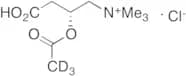
CAS:Controlled Product<p>Applications L-Leucic Acid is a reagent in the synthesis of cryptophycins based macrocyclic depsipeptides which are used as tubulin inhibitors.<br>References Kumar, A., et al.: Eur. J. Med. Chem., 93, 55 (2015)<br></p>Formula:C6H12O3Color and Shape:NeatMolecular weight:132.16Acetyl-d3 L-Carnitine Hydrochloride
CAS:Controlled Product<p>Applications Acetyl-d3 L-Carnitine Hydrochloride is labelled Acetyl L-Carnitine Hydrochloride (A171990) which is used for transmembrane action potential studies. Acetylcarnitine has antinociceptive activity that may be mediated by enhanced activity of muscarinic cholinergic receptors or mGlu2 glutamate receptors.<br>References Matsui, K., et al.: Japanese J. Pharmcol., 39, 263 (1985); Chlechio, S., et al.: J. Endocrinol. Invest., 27, 171 (2004): Walker, R., et al.: Comparative General Pharmacol., 4, 65 (1973)<br></p>Formula:C92H3H15NO4·ClColor and Shape:NeatMolecular weight:242.72L-Homocystine
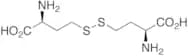
CAS:Controlled Product<p>Applications Increased levels lead to hyperhomocysteinemia; a cardiovascular risk factor in prediction of coronary heart disease as well as being associated with congenital birth defects, pregnancy complications and cancer.<br>References Geisel, J. et al.: Clin. Chem. Lab. Med., 41, 1513 (2003); Geisel, J. et al.: Clin. Chem. Lab. Med., 41, 1513 (2003);<br></p>Formula:C8H16N2O4S2Color and Shape:NeatMolecular weight:268.35Methionine-methyl-d3
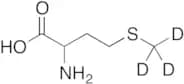
CAS:Controlled Product<p>Applications Methionine-methyl-d3 is the labeled Methionine-methyl, a useful building block.<br></p>Formula:C5D3H8NO2SColor and Shape:NeatMolecular weight:152.23L-Pyroglutamic Acid β-Naphthylamide
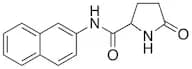
CAS:Controlled Product<p>Applications A substrate for pyroglutamate aminopeptidase. Used for colorimetric determination of pyrrolidonyl peptidase activity in bacteria.<br> Not a dangerous good if item is equal to or less than 1g/ml and there is less than 100g/ml in the package<br>References Szewczuk, A., et al.: Eur. J. Biochem., 8, 63 (1969), Szewczuk, A., et al.: Anal. Biochem., 39, 268 (1971)<br></p>Formula:C15H14N2O2Color and Shape:NeatMolecular weight:254.286-Hydroxy-L-DOPA
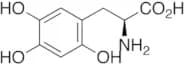
CAS:Controlled Product<p>Impurity Levodopa EP Impurity A; Levodopa USP Related Compound A<br>Stability Hygroscopic<br>Applications 6-Hydroxy-L-DOPA (Levodopa EP Impurity A; Levodopa USP Related Compound A) is the 6-hydroxy derivative of the amino acid L-DOPA (D533751) with neurotoxic properties. Studies show that exogenously administered 6-Hydroxy-L-DOPA is biotransformed by amino acid decarboxylase to the highly potent and catecholamine-selective neurotoxin, 6-Hydroxydopamine. The treatment of 6-Hydroxy-L-DOPA in rats resulted in the stimulation of acetylcholinesterase.<br>References Jaim-Etcheverry, G. et al.: Brain Res., 100, 699 (1975); Kostrzewa, R.M. et al.: Amino Acids, 14, 175 (1998); Berthet, A. et al.: J. Neurosci., 29, 4829 (2009);<br></p>Formula:C9H11NO5Color and Shape:Brown To BlackMolecular weight:213.19DL-Cysteine
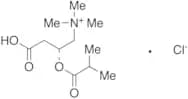
CAS:Controlled Product<p>Stability Hygroscopic<br>Applications Cysteine is a non-essential amino acid that can be synthesized by the human body under normal physiological conditions if a sufficient quantity of methionine is available. Cysteine is commonly used as a precursor in the food and pharmaceutical industries. Cysteine is used as a processing aid for baking, as an additive in cigarettes, as well as in the preparation of meat flavours.<br>References Hui, N. et al.: Meat Sci. Appl., 74 (2001); Kiviharju, K. et al.: J. Biotechnol., 117, 299 (2005); Pecivova, P. et al.: J. Sci. Food Agric., 90, 1681 (2010);<br></p>Formula:C3H7NO2SColor and Shape:NeatMolecular weight:121.16Isobutyryl L-Carnitine Chloride
CAS:Controlled ProductFormula:C11H22NO4·ClColor and Shape:NeatMolecular weight:267.75N-Pyrazinylcarbonyl-L-phenylalanine Methyl Ester
CAS:<p>Applications Used for the synthesis of Bortezomib from L-phenylalanine via dipeptidyl boronic acid ester intermediates.<br>References Zhu, Y., et al.: J. Med. Chem., 52, 4192 (2009),<br></p>Formula:C15H15N3O3Color and Shape:NeatMolecular weight:285.304-Aminohippuric Acid
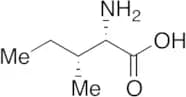
CAS:Controlled Product<p>Applications 4-Aminohippuric Acid is used in the measurement of renal plasma flow as a diagnostic tool which may be applied towards kidney disorders.<br>References Phillips, R. et al.: Am. J. Physiol., 152, 523 (1948);<br></p>Formula:C9H10N2O3Color and Shape:Off White SolidMolecular weight:194.19L-Allo-isoleucine
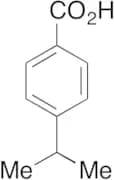
CAS:Controlled Product<p>Applications L-alloisoleucine is a stereo-isomer of L-isoleucine (I820175) and is produced as a byproduct of isoleucine via transamination. L-allo-isoleucine has been suggested to induce epithelial β-defensin expression. In addition, L-allo-isoleucine is utilized in the biosynthesis pathway for coronamic acid.<br>References Fehlbaum, P., et al.: Proc. Natl. Acad. Sci. USA 97, 12723 (2000); Parry, R. J., et al.: J. Am. Chem. Soc. 113, 1849 (1991)<br></p>Formula:C6H13NO2Color and Shape:NeatMolecular weight:131.174-(1-Methylethyl)benzoic Acid
CAS:<p>Applications 4-(1-Methylethyl)benzoic Acid is used in the synthesis of quinuclidine benzamides as agonists for nicotinic acetylcholine receptors. Also used in the synthesis of nifuroxazide analogues showing antimicrobial activity against methicillin-resistant Staphylococcus.<br>References Bodnar, A. et al.: J. Med. Chem., 48, 905 (2005); Masunari, A. et al.: Bioorg. Med. Chem. Lett., 15, 4229 (2007);<br></p>Formula:C10H12O2Color and Shape:NeatMolecular weight:164.2L-Ornithine Hydrochloride
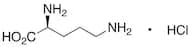
CAS:Controlled Product<p>Stability Hygroscopic<br>Applications L-Ornithine is a non-essential amino acid for human development but is required intermediate in arginine biosynthesis. L-Ornithine is found in virtually all vertebrate tissues as well as incorporated into proteins, such as tyrocidine. Isolation from chicken excreta.<br>References Fattori, D., et al.: J. Med. Chem., 50, 550 (2007), Gomez-Alonso, S., et al.: J. Agric. Food Chem., 55, 608 (2007), Subramaniam, R., et al.: Bioorg. Med. Chem. Lett., 18, 3333 (2008),<br></p>Formula:C5H12N2O2·ClHColor and Shape:White To Off-WhiteMolecular weight:168.62D-Glutamic Acid 1-tert-Butyl Ester
CAS:Controlled Product<p>Applications D-Glutamic acid 1-tert-butyl ester is a protected form of D-Glutamic acid (G596965). D-Glutamic acid is an unnatural isomer of L-Glutamic acid (G596960), and is found in bacterial cell wall peptidoglycan of gram-positive and gram-negative bacteria. D-Glutamic acid also occurs as poly-gamma-Glutamic acid, which is a weak immunogen but is capable of acting as a hapten (a small molecule that induces the production of antibodies, as well as binding to them).<br>References Dougherty, T., et al.: J. Bacteriol., 175, 111 (1993); Goodman, J. & Nitecki, D.: Immunology, 13, 577 (1967); Robinson, T.: Life Sci., 19, 1097 (1976)<br></p>Formula:C9H17NO4Color and Shape:NeatMolecular weight:203.24Perfluoro-3-methoxypropanoic Acid
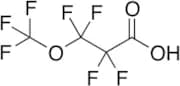
CAS:<p>Applications Perfluoro-3-methoxypropanoic acid (cas# 377-73-1) is a useful research chemical.<br> Not a dangerous good if item is equal to or less than 1g/ml and there is less than 100g/ml in the package<br></p>Formula:C4HF7O3Color and Shape:NeatMolecular weight:230.04N3-Ethylthymidine
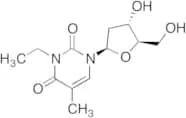
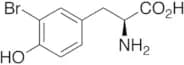
CAS:Controlled Product<p>Applications E677525<br>References Shimizu, T., et al.: Chem. Pharm. Bull., 53, 313 (2005)<br></p>Formula:C12H18N2O5Color and Shape:NeatMolecular weight:270.121573-Bromo-L-tyrosine
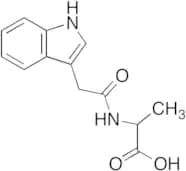
CAS:Controlled Product<p>Applications 3-Bromo-L-tyrosine is used in the preparation and synthesis of polyclonal antibodies that work against brominated protein related allergic responses and afflictions. Also effective in asthma control and prediction in children.<br>References Kambayashi, Y. et al.: J. Clin. Biochem., 44, 95 (2009); Wedes, S. et al.: J. Ped., 159, 248 (2011);<br></p>Formula:C9H10BrNO3Color and Shape:White To Light BrownMolecular weight:260.08Indole-3-acetic-L-alanine
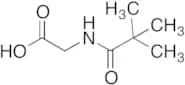
CAS:Controlled Product<p>Applications Indole-3-acetic-L-alanine is a derivative of the phytohormone indole-3-acetic acid (I577340) used in studies for the isolation and characterization of Arabdopsis thaliana mutants.<br>References Rampey, R.A., et al.: G3 (Bethesda), 3, 131-141 (2013)<br></p>Formula:C13H14N2O3Color and Shape:NeatMolecular weight:246.26N-Pivaloylglycine
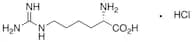
CAS:Controlled Product<p>Applications N-Pivaloylglycine is used in the biological study between dogs and rats. In a high dose toxicity study of pivalic acid (PA), PA caused skeletal muscle disorder in dog, and a significant increase of pivaloyl carnitine (PC) was observed in canine muscle, but not in rat muscle.<br>References Yamaguchi, T., et al.: Toxicol. Appl. Pharmacol., 214, 61-68 (2006)<br></p>Formula:C7H13NO3Color and Shape:NeatMolecular weight:159.18L-Homoarginine Hydrochloride
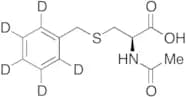
CAS:Controlled Product<p>Stability Moisture Sensitive<br>Applications An inhibitor of alkaline phosphatase isoenzymes. An analog of Homoarginine (H585000).<br>References Muth, W., et al.: J. Biol. Chem., 249, 7463 (1974), Hanukoglu, I., et al.: Eur. J. Biochem., 180, 479 (1989), Khaw, L., et al.: J. Bacteriol. 180, 809 (1998), Gallagher, D., et al.: J. Mol. Biol., 342, 119 (2004),<br></p>Formula:C7H16N4O2·ClHColor and Shape:NeatMolecular weight:224.69N-Acetyl-S-benzyl-d5-L-cysteine
CAS:Controlled Product<p>Applications N-Acetyl-S-benzyl-d5-L-cysteine is deuterium labelled N-Acetyl-S-benzyl-L-cysteine, which is a metabolite of toluene.<br>References Gargas, M., et al.: Toxicol. Appl. Pharmacol., 98, 87 (1989), Commandeur, J., et al.: Pharmacol. Rev., 47(2), 271 (1995), Campo, P., et al.: Neurotoxicol. Teratol., 21, 427 (1999), Lohse, C., et al.: J. Agr. Food Chem., 48, 5913 (2000),<br></p>Formula:C12D5H10NO3SColor and Shape:NeatMolecular weight:258.35N-Carbamyl-L-glutamic Acid
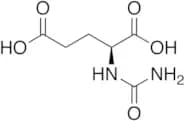
CAS:Controlled Product<p>Applications N-Carbamyl-L-glutamic Acid has been shown to have protective effects against ammonia intoxication and is used in the treatment of acute hyperammonemia.<br>References Paik, W.K. et al.: Life Sci., 15, 1189 (1974); O'Connor, J.E. et al.: Eur. J. Pediat., 148, 540 (1989); Lee, J.H. et al.: Biochem. Biophys. Res. Chem., 248, 391 (1998);<br></p>Formula:C6H10N2O5Color and Shape:NeatMolecular weight:190.153-Indolepropionic-d2 Acid
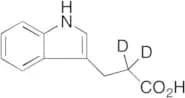
CAS:Controlled Product<p>Stability Hygroscopic<br>Applications 3-Indolepropionic-d2 acid is deuterium labelled 3-Indolepropionic acid (I627170). 3-Indolepropionic acid is a deamination product of Tryptophan (T947200) that protects the hippocampus (studied in gerbils) from ischemic damage and oxidative stress. It’s ability to protect the neurons in this way is attributed to its potent antioxidative effects. 3-Indolepropionic acid is also hypothesized to have protective effects on the thyroid gland.<br>References Hwang, I., et al.: J. Neurosci. Res., 87, 2126 (2009); Karbownik, M., et al.: J. Cell. Biochem., 95, 131 (2005)<br></p>Formula:C11D2H9NO2Color and Shape:NeatMolecular weight:191.22(S)-2-Amino-4-methylpentanol
CAS:Controlled Product<p>Applications (S)-2-Amino-4-methylpentanol is a starting material for the synthesis of aminopeptidase N and phospholipase A2 inhibitors.<br>References Fournié-Zaluski, M., et al.: J. Med. Chem., 35, 1259 (1992); Bennion, C., et al.: J. Med. Chem., 35, 2939 (1992)<br></p>Formula:C6H15NOColor and Shape:NeatMolecular weight:117.189