Amino Acids (AA)
Amino acids (AAs) are the fundamental building blocks of proteins, playing a crucial role in various biological processes. These organic compounds are essential for protein synthesis, metabolic pathways, and cell signaling. In this category, you will find a comprehensive range of amino acids, including essential, non-essential, and modified forms, which are vital for research in biochemistry, molecular biology, and nutritional sciences. At CymitQuimica, we provide high-quality amino acids to support your research and development needs, ensuring accuracy and reliability in your experimental outcomes.
Subcategories of "Amino Acids (AA)"
- Amino Acid Derivatives(3,955 products)
- Amino Acid and Amino Acid Related Compounds(3,451 products)
- Amino Acids with Oxygen or Sulphur(168 products)
- Boc- Amino Acids(351 products)
- Fmoc Amino Acids(1,710 products)
Found 38234 products of "Amino Acids (AA)"
Sort by
Purity (%)
0
100
|
0
|
50
|
90
|
95
|
100
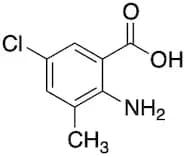
2-Amino-5-chloro-3-methylbenzoic Acid
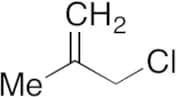
CAS:Controlled Product<p>Applications 2-Amino-5-chloro-3-methylbenzoic Acid is a useful research chemical for the preparation of benzoyl urea containing anthranillic acid groups with insecticidal activity.<br>References Peng, Y., et al.: Nongyao, 48, 326 (2009);<br></p>Formula:C8H8NO2ClColor and Shape:NeatMolecular weight:185.63-Chloro-2-methyl-1-propene
CAS:<p>Applications 3-Chloro-2-methyl-1-propene has been used in the synthesis of 2-S-substituted pyrimidines as antimetabolites of nucleic acid precursors for cancer therapy.<br> Not a dangerous good if item is equal to or less than 1g/ml and there is less than 100g/ml in the package<br>References Kaldrikyan, M.A., Melik-Ohanjanyan, R.G.: Hayastani Kimiakan Handes, 67, 321 (2014)<br></p>Formula:C4H7ClColor and Shape:NeatMolecular weight:90.55L-Lysine-15N Dihydrochloride Salt
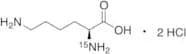
CAS:Formula:C6H14N15NO2•2(HCl)Color and Shape:NeatMolecular weight:147.1823646D-Lysine Methyl Ester Dihydrochloride
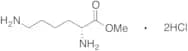
CAS:Controlled Product<p>Applications D-Lysine Methyl Ester is a protected form of D-Lysine (L468930). D-Lysine is the unnatural isomer of L-Lysine (L468895) that has the ability to reduce non-enzymatic glycation in vitro. D-Lysine also exists as polypeptide chains of poly-D-lysine, a nonspecific adhesion-promoting molecule that has the potential to be a polymeric drug carrier.<br>References Chen, Q. et al.: J. Biol. Chem., 269, 26602 (1994); Sensi, M., et al.: Diabetologia, 36, 797 (1993); Vermeersch, H. & Remon, J.: J. Control. Rel., 32, 225 (1994)<br></p>Formula:C7H16N2O2HClColor and Shape:NeatMolecular weight:233.136L-Ornithine Hydrochloride
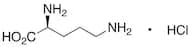
CAS:Controlled Product<p>Stability Hygroscopic<br>Applications L-Ornithine is a non-essential amino acid for human development but is required intermediate in arginine biosynthesis. L-Ornithine is found in virtually all vertebrate tissues as well as incorporated into proteins, such as tyrocidine. Isolation from chicken excreta.<br>References Fattori, D., et al.: J. Med. Chem., 50, 550 (2007), Gomez-Alonso, S., et al.: J. Agric. Food Chem., 55, 608 (2007), Subramaniam, R., et al.: Bioorg. Med. Chem. Lett., 18, 3333 (2008),<br></p>Formula:C5H12N2O2·ClHColor and Shape:White To Off-WhiteMolecular weight:168.62L-Asparagine-d3 Hydrate
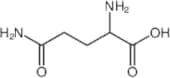
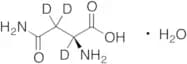
CAS:Controlled Product<p>Applications L-Asparagine-d3 Hydrate is an isotope labelled L-Asparagine Hydrate, a naturally occurring amino acid that is not a essential for humans and can be synthesized from central metabolic pathway intermediates.<br>References Burda, P., et al.: Biochim. Biophys. Acta., 1426, 239 (1999); Yamane, H., et al.: Animal. Sci. J., 80, 286 (2009);<br></p>Formula:C4D3H5N2O3·H2OColor and Shape:White To Off-WhiteMolecular weight:153.1517L-Glutamine-amide-¹⁵N
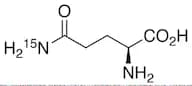
CAS:Controlled Product<p>Applications Labelled L-Glutamine (G597000). L-Glutamine is an essential amino acid that is a crucial component of culture media that serves as a major energy source for cells in culture. L-Glutamine is very stable as a dry powder and as a frozen solution. In liquid media or stock solutions, however, L-glutamine degrades relatively rapidly. Optimal cell performance usually requires supplementation of the media with L-glutamine prior to use.<br>References Rivett, A., et al.: J. Biol. Chem., 260, 300 (1985), Watford, M., et al.: Metabolism, 49, 141 (2000), Wilmore, D., et al.: J. Nutr., 131, 2543S (2001),<br></p>Formula:C5H1015NNO3Color and Shape:NeatMolecular weight:147.14N-Pivaloylglycine
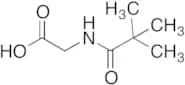
CAS:Controlled Product<p>Applications N-Pivaloylglycine is used in the biological study between dogs and rats. In a high dose toxicity study of pivalic acid (PA), PA caused skeletal muscle disorder in dog, and a significant increase of pivaloyl carnitine (PC) was observed in canine muscle, but not in rat muscle.<br>References Yamaguchi, T., et al.: Toxicol. Appl. Pharmacol., 214, 61-68 (2006)<br></p>Formula:C7H13NO3Color and Shape:NeatMolecular weight:159.18L-Leucine
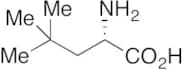
CAS:Controlled Product<p>Applications L-Leucine is an essential amino acid. L-Leucine acts as a nutrient signal to stimulate protein synthesis. It has also activates the mammalian target of rapamycin kinase that regulates cell growth.<br>References Demant, T. et al.: Am. J. Physiol., 270, E1022 (1996); Diraison, F. et al.: Am. J. Physiol., 277, E529 (1999); Suryawan, A. et al.: J. Anim. Sci., 89, 2004 (2011); Peyrollier, K. et al.: Biochem. J., 350, 361 (2000);<br></p>Formula:C6H13NO2Color and Shape:NeatMolecular weight:131.17N-Acetyl-L-alanine
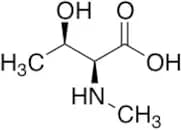
CAS:Controlled Product<p>Applications N-Acetyl-L-alanine is used as a biomarker for prostate cancer.<br>References Jansen, R., et al.: Clin. Biochem., 38, 362 (2005),<br></p>Formula:C5H9NO3Color and Shape:NeatMolecular weight:131.13H-L-MeThr-OH
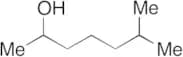
CAS:Controlled Product<p>Applications H-L-METHR-OH (cas# 2812-28-4) is a useful research chemical.<br></p>Formula:C5H11NO3Color and Shape:NeatMolecular weight:133.156-Methyl-2-heptanol
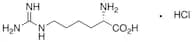
CAS:Controlled Product<p>Applications 6-Methyl-2-heptanol is an intermediate used to prepare tri- and tetrasubstituted imidazoles as highly potent and specific ATP-mimetic inhibitors of p38 MAP kinase.<br>References Laufer, S., et al.: J. Med. Chem., 51, 4122 (2008)<br></p>Formula:C8H18OColor and Shape:NeatMolecular weight:130.23L-Homoarginine Hydrochloride
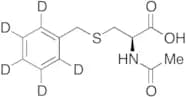
CAS:Controlled Product<p>Stability Moisture Sensitive<br>Applications An inhibitor of alkaline phosphatase isoenzymes. An analog of Homoarginine (H585000).<br>References Muth, W., et al.: J. Biol. Chem., 249, 7463 (1974), Hanukoglu, I., et al.: Eur. J. Biochem., 180, 479 (1989), Khaw, L., et al.: J. Bacteriol. 180, 809 (1998), Gallagher, D., et al.: J. Mol. Biol., 342, 119 (2004),<br></p>Formula:C7H16N4O2·ClHColor and Shape:NeatMolecular weight:224.69N-Acetyl-S-benzyl-d5-L-cysteine
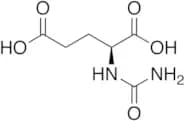
CAS:Controlled Product<p>Applications N-Acetyl-S-benzyl-d5-L-cysteine is deuterium labelled N-Acetyl-S-benzyl-L-cysteine, which is a metabolite of toluene.<br>References Gargas, M., et al.: Toxicol. Appl. Pharmacol., 98, 87 (1989), Commandeur, J., et al.: Pharmacol. Rev., 47(2), 271 (1995), Campo, P., et al.: Neurotoxicol. Teratol., 21, 427 (1999), Lohse, C., et al.: J. Agr. Food Chem., 48, 5913 (2000),<br></p>Formula:C12D5H10NO3SColor and Shape:NeatMolecular weight:258.35N-Carbamyl-L-glutamic Acid
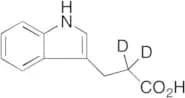
CAS:Controlled Product<p>Applications N-Carbamyl-L-glutamic Acid has been shown to have protective effects against ammonia intoxication and is used in the treatment of acute hyperammonemia.<br>References Paik, W.K. et al.: Life Sci., 15, 1189 (1974); O'Connor, J.E. et al.: Eur. J. Pediat., 148, 540 (1989); Lee, J.H. et al.: Biochem. Biophys. Res. Chem., 248, 391 (1998);<br></p>Formula:C6H10N2O5Color and Shape:NeatMolecular weight:190.153-Indolepropionic-d2 Acid
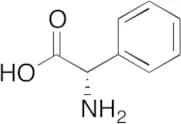
CAS:Controlled Product<p>Stability Hygroscopic<br>Applications 3-Indolepropionic-d2 acid is deuterium labelled 3-Indolepropionic acid (I627170). 3-Indolepropionic acid is a deamination product of Tryptophan (T947200) that protects the hippocampus (studied in gerbils) from ischemic damage and oxidative stress. It’s ability to protect the neurons in this way is attributed to its potent antioxidative effects. 3-Indolepropionic acid is also hypothesized to have protective effects on the thyroid gland.<br>References Hwang, I., et al.: J. Neurosci. Res., 87, 2126 (2009); Karbownik, M., et al.: J. Cell. Biochem., 95, 131 (2005)<br></p>Formula:C11D2H9NO2Color and Shape:NeatMolecular weight:191.22L-(+)-2-Phenylglycine
CAS:<p>Applications L-(+)-2-Phenylglycine is a derivative of Glycine (G615990), the smallest of all the amino acids, and is also used to treat schizophrenia, stroke, and benign prostatic hyperplasia. L-(+)-2-Phenylglycine is also used as an N-linked side chain of an SMTP (Stachybotrys microspora tripenyl phenols) congener, which was potent in enhancing plasminogen activation in S. microspora.<br>References Gusev, E., et al.: Cerebrovasc. Dis., 10, 49 (2000); Koide, H., et al.: J. Antibiot., 65, 91 (2012); Rosse, R., et al.: Clin. Neuropharmacol., 12, 416 (1989); Tuszynski, G., et al.: Lab. Invest., 70, 228 (1994)<br></p>Formula:C8H9NO2Color and Shape:Off White Crystalline PowderMolecular weight:151.1626(2R)-2-Hydroxyglutaric Acid Disodium Salt
CAS:<p>Stability Hygroscopic<br>Applications A potential inhibitor of glutamate carboxypeptidase.<br>References Wolcott, T.G., et al.: Biochem. Biophys. Res. Commun., 57, 709 (1974), Knowles, P.F., et al.: Eur. J. Biochem., 114, 139 (1981),<br></p>Formula:C5H6O5·2NaColor and Shape:NeatMolecular weight:192.08Ac-Glu-OMe
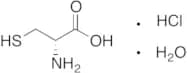
CAS:Controlled Product<p>Applications Ac-Glu-OMe (cas# 17015-15-5) is a useful research chemical.<br></p>Formula:C8H13NO5Color and Shape:NeatMolecular weight:203.19D-Cysteine Hydrochloride Monohydrate
CAS:Controlled Product<p>Applications D-Cysteine Hydrochloride Monohydrate is used as a reactant in the expedient synthesis of electronically modified luciferins for bioluminescence imaging.<br>References McCutcheon, D., et al.: J. Am. Chem. Soc., 134, 7604 (2012);<br></p>Formula:C3H7NO2S·HCl·H2OColor and Shape:NeatMolecular weight:121.16+(36.46)+(18.02)N-Methyl-L-alanine
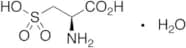
CAS:Controlled Product<p>Applications N-Methyl-L-alanine is a reactant used in the preparation of site-specific trastuzumab maytansinoid antibody-drug conjugates with improved therapeutic activity.<br>References Pillow, T.H., et. al.: J. Med. Chem., 57, 7890 (2014)<br></p>Formula:C4H9NO2Color and Shape:NeatMolecular weight:103.12L-Cysteic Acid Monohydrate
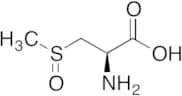
CAS:Controlled Product<p>Applications A major metabolite of non-essential amino acid L-Cysteine.<br>References Parsons, R.B. et al.: Neurotoxicol., 19, 599 (1998);<br></p>Formula:C3H7NO5S·H2OColor and Shape:White To Off-WhiteMolecular weight:187.17S-Methyl-L-cysteine sulfoxide
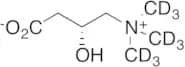
CAS:Controlled ProductFormula:C4H9NO3SColor and Shape:Off-WhiteMolecular weight:151.18L-Carnitine-d9
CAS:Controlled Product<p>Applications L-Carnitine-d9 is the isotope labelled analog of L-Carnitine (C184110); an essential cofactor of fatty acid metabolism; required for the transport of fatty acids through the inner mitochondrial membrane. Synthesized primarily in the liver and kidney; highest concentrations found in heart and skeletal muscle. Dietary sources include red meat, dairy products, beans, avocado.<br>References Mitchell, M.E., et al.: Am. J. Clin. Nutr., 31, 293 (1978); Lango, R., et al.: Cardiovasc. Res., 51, 21 (2001); Vaz, F.M., et al.: Biochem. J., et al.: 361, 417 (2002); Karlic, H., et al.: Nutrition, 20, 709 (2004)<br></p>Formula:C7D9H7NO3Color and Shape:NeatMolecular weight:171.26Decanoyl-L-carnitine-d3 Chloride
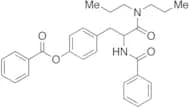
CAS:Controlled Product<p>Stability Hygroscopic<br>Applications Decanoyl-L-carnitine-d3 Chloride is the isotope labelled analog of Decanoyl-L-carnitine Chloride (D212580); a metabolite of L-Carnitine (C184110) which is an essential cofactor of fatty acid metabolism. Also required for the transport of fatty acids through the inner mitochondrial membrane.<br>References Mitchell, M.E., et al.: Am. J. Clin. Nutr., 31, 293 (1978); Lango, R., et al.: Cardiovasc. Res., 51, 21 (2001); Vaz, F.M., et al.: Biochem. J., et al.: 361, 417 (2002); Karlic, H., et al.: Nutrition, 20, 709 (2004)<br></p>Formula:C17D3H31NO4·ClColor and Shape:NeatMolecular weight:354.93N,O-Dibenzoyl-DL-tyrosyl-N’,N’-dipropylamide
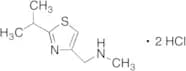
CAS:Controlled Product<p>Applications N,O-Dibenzoyl-DL-tyrosyl-N',N'-dipropylamide is a metabolite of the antispasmodic agent Tiropramide (T446900). Tiropramide impurity B.<br>References Janssen, et al.: J. Pharm. Pharmacol., 9, 381 (1956), Bertaccini, et al.: Br. J. Pharmac., 34, 310 (1968),<br></p>Formula:C29H32N2O4Color and Shape:White To Light RedMolecular weight:472.581-(2-Isopropylthiazol-4-yl)-N-methylmethanamine Dihydrochloride
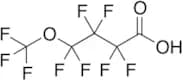
CAS:<p>Applications 1-(2-Isopropylthiazol-4-yl)-N-methylmethanamine dihydrochloride (cas# 1185167-55-8) is a useful research chemical.<br></p>Formula:C8H14N2S·2ClHColor and Shape:NeatMolecular weight:243.20Perfluoro-4-methoxybutanoic Acid
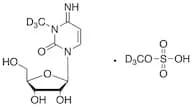
CAS:<p>Applications Perfluoro-4-Methoxybutanoic Acid (cas# 863090-89-5) is a useful research chemical.<br> Not a dangerous good if item is equal to or less than 1g/ml and there is less than 100g/ml in the package<br></p>Formula:C5HF9O3Color and Shape:NeatMolecular weight:280.053-Methyl Cytidine-d3 Methosulfate-d3
CAS:Controlled Product<p>Applications Labelled Cytidine derivative.<br>References Ueda, T., et al.: Chem. Pharmaceut. Bull., 22, 2377 (1974),<br></p>Formula:C10D3H12N3O5·CD3HO4SColor and Shape:NeatMolecular weight:375.385Fmoc-L-cysteic Acid
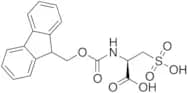
CAS:Controlled Product<p>Applications Fmoc-L-cysteic acid (cas# 751470-47-0) is a useful research chemical for organic synthesis and other chemical processes.<br>References Dialer, L. O., et al.: J. Med. Chem., 56, 7552 (2013); Revell, J. D., et al.: Tetrahedron, 63, 8420, (2007)<br></p>Formula:C18H17NO7SColor and Shape:NeatMolecular weight:391.46-[(E)-4-Hydroxy-3-methylbut-2-enylamino]-9-β-D-ribofuranosylpurine
CAS:Controlled Product<p>Applications A well-known, highly active stimulant of cell divisions in plant tissue cultures.<br>References D.S. Letham: Phytochemistry, 12, 2445 (1973)<br></p>Formula:C15H21N5O5Color and Shape:NeatMolecular weight:351.361-(3-Methyl-1-phenyl-1H-pyrazol-5-yl)piperazine
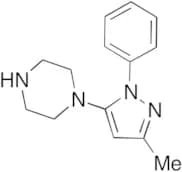
CAS:Controlled Product<p>Applications 1-(3-Methyl-1-phenyl-1H-pyrazol-5-yl)piperazine is an intermediate used to prepare nonracemic γ-bicyclic heteroarylpiperazine- and heteroarylpiperidine-substituted prolinylthiazolidines as selective and orally active dipeptidylpeptidase 4 inhibitors for use as antidiabetic agents.<br>References Yoshida, T., et al.: Bioorg. Med. Chem., 20, 5705 (2012)<br></p>Formula:C14H18N4Color and Shape:NeatMolecular weight:242.325-Amino-2-methylbenzotrifluoride
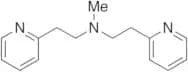
CAS:Controlled Product<p>Applications 5-Amino-2-methylbenzotrifluoride is used to prepare azoles as inhibitors of VEGF receptors 1 and 2 with high intestinal permeability. It can also be used to prepare curcumin analogs conjugated with antiandrogens.<br>References Kiselyov, A., et al.: Bioorg. Med. Chem. Lett., 17, 1369 (2007); Shi, Q., et al.: Bioorg. Med. Chem., 20, 4020 (2012)<br></p>Formula:C8H8F3NColor and Shape:NeatMolecular weight:175.15N-Methyl-N,N-bis(2-pyridylethyl)amine
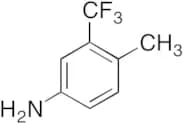
CAS:<p>Impurity Betahistine EP Impurity C (Free Base)<br>Applications N-Methyl-N,N-bis(2-pyridylethyl)amine is used as a reagent in the preparation of copper pyridylmethylethylenediamine dicyanamido polymeric complexes.<br>References Mautner, F.A. et al.: Inorg. Chim. Acta, 362, 4073 (2009);<br></p>Formula:C15H19N3Color and Shape:NeatMolecular weight:241.333-[4-(2-Methoxyphenyl)piperazin-1-yl]propan-1-amine
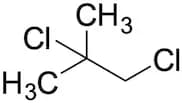
CAS:Controlled Product<p>Applications 3-[4-(2-methoxyphenyl)piperazin-1-yl]propan-1-amine (cas# 20529-23-1) is a useful research chemical.<br></p>Formula:C14H23N3OColor and Shape:NeatMolecular weight:249.351,2-Dichloro-2-methylpropane
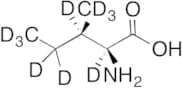
CAS:<p>Applications 1,2-Dichloro-2-methylpropane (cas# 594-37-6) is a useful research chemical.<br> Not a dangerous good if item is equal to or less than 1g/ml and there is less than 100g/ml in the package<br></p>Formula:C4H8Cl2Color and Shape:NeatMolecular weight:127.01L-Allo-isoleucine-d10
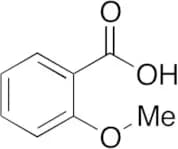
CAS:Controlled Product<p>Applications L-Allo-isoleucine-d10 is a derivative compound of L-allo-isoleucine (A548200), which has been suggested to induce epithelial β-defensin expression. In addition, L-allo-isoleucine is utilized in the biosynthesis pathway for coronamic acid.<br>References Fehlbaum, P., et al.: Proc. Natl. Acad. Sci. USA 97, 12723 (2000); Parry, R. J., et al.: J. Am. Chem. Soc. 113, 1849 (1991)<br></p>Formula:C6H3D10NO2Color and Shape:White To Off-WhiteMolecular weight:141.232-Methoxybenzoic Acid
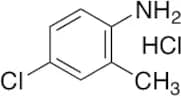
CAS:Controlled Product<p>Applications 2-Methoxybenzoic Acid is used in the preparation of benzohydroxamic acids as potent and selective anti-hepatitis C virus (HCV) agents.<br>References Kozlov, M.V., et al.: Bioorg. Med. Chem. Lett., 23, 5936 (2013)<br></p>Formula:C8H8O3Color and Shape:Off-WhiteMolecular weight:152.154-Chloro-2-methylaniline Hydrochloride
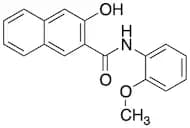
CAS:Controlled Product<p>Stability Hygroscopic<br>Applications 4-Chloro-2-methylaniline Hydrochloride (cas# 3165-93-3) is a useful research chemical.<br> Not a dangerous good if item is equal to or less than 1g/ml and there is less than 100g/ml in the package<br></p>Formula:C7H8ClN•HClColor and Shape:Off-WhiteMolecular weight:141.6036463-Hydroxy-2'-methoxy-2-naphthanilide
CAS:Controlled Product<p>Applications 3-Hydroxy-2'-methoxy-2-naphthanilide (cas# 135-62-6) is a useful research chemical.<br></p>Formula:C18H15NO3Color and Shape:NeatMolecular weight:293.312-Fluoro-3-methoxyphenylboronic acid
CAS:Controlled Product<p>Applications 2-Fluoro-3-methoxyphenylboronic acid<br></p>Formula:C7H8BFO3Color and Shape:NeatMolecular weight:169.95a-Methacrylic Acid
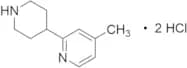
CAS:Controlled Product<p>Stability Light Sensitive<br>Applications α-Methacrylic acid is used in chemistry as a stabilizing agent, forming a thin capping layer on the surface of nanoparticles. α-Methacrylic acid is also used as a surfactant, so that control is maintained during nanocrystal growth. α-Methacrylic acid is also used as a chelating agent.<br> Not a dangerous good if item is equal to or less than 1g/ml and there is less than 100g/ml in the package<br>References Peng, W., et al.: J. Cryst. Growth, 279, 454 (2005); Qu, S., et al.: Appl. Phys. Lett., 80, 3605 (2002); Zhao, G., et al.: Phys. C: Supercond., 468, 2317 (2008)<br></p>Formula:C4H6O2Color and Shape:ColourlessMolecular weight:86.094-Methyl-2-(4-piperidinyl)pyridine Hydrochloride
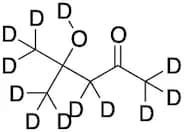
CAS:Controlled Product<p>Applications 4-methyl-2-(piperidin-4-yl)pyridine (cas# 1260886-47-2) is a useful research chemical.<br></p>Formula:C11H18Cl2N2Color and Shape:NeatMolecular weight:249.184-Hydroxy-4-methyl-2-pentanone-d12
CAS:Controlled Product<p>Applications 4-Hydroxy-4-methyl-2-pentanone-d12 (CAS# 114253-85-9) is a useful isotopically labeled research compound.<br></p>Formula:C6D12O2Color and Shape:NeatMolecular weight:128.232-Methoxy-4-methylaniline
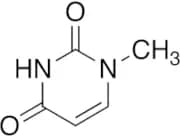
CAS:Controlled Product<p>Applications 2-METHOXY-4-METHYLANILINE (cas# 39538-68-6) is a useful research chemical.<br></p>Formula:C8H11NOColor and Shape:NeatMolecular weight:137.171-Methyluracil
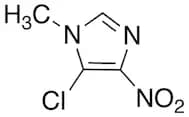
CAS:Controlled Product<p>Applications 1-Methyluracil (cas# 615-77-0) is a compound useful in organic synthesis.<br></p>Formula:C5H6N2O2Color and Shape:WhiteMolecular weight:126.115-Chloro-1-methyl-4-nitroimidazole
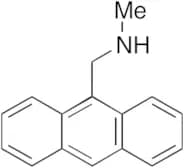
CAS:Controlled Product<p>Impurity Azathioprine EP Impurity C<br>Applications 5-Chloro-1-methyl-4-nitroimidazole (cas# 4897-25-0) is a compound useful in organic synthesis.<br></p>Formula:C4H4ClN3O2Color and Shape:White To Off-WhiteMolecular weight:161.559-(N-Methylaminomethyl)anthracene
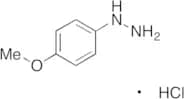
CAS:Controlled Product<p>Applications 9-(N-Methylaminomethyl)anthracene is a reactant that has been used in the synthesis of anthracene-oxyquinoline dyad as a fluorescent indicator for Hg(II).<br>References Praveen, L., et. al.: Tetrahedron Lett., 53, 3951 (2012)<br></p>Formula:C16H15NColor and Shape:NeatMolecular weight:221.3(4-Methoxyphenyl)hydrazine Hydrochloride
CAS:<p>Stability Light Sensitive<br>Applications 4-Methoxyphenylhydrazine hydrochloride was used in the preparation of 5-cyano-3-(5-methoxy-2-methylindol-3-yl)-1,2,4-thiadiazole. It was also used to synthesize diarylpyrazoles as possible cyclooxygenase 2 ((COX-2)) inhibitors.<br>References Iwakawa, T., et al.: Chem. Pharm. Bull., 48, 160 (2000); Penning, T., et al.: J. Med. Chem., 40, 1347 (1997)<br></p>Formula:C7H10N2O·HClColor and Shape:Off-White To Light PurpleMolecular weight:138.17 + 36.466-Methylquinoline
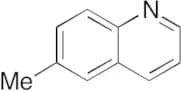
CAS:Controlled Product<p>Applications 6-Methylquinoline, is a building block used for the synthesis of various pharmaceutical compounds, and biologically active compounds. It can be used for the preparation of pyranobenzopyrone compounds, having anti-norovirus activity.<br>References Pokhrel, L., et al.: bioorg. Med. Chem. Lett., 22, 3480 (2012);<br></p>Formula:C10H9NColor and Shape:ColourlessMolecular weight:143.185Zinc Glycinate
CAS:<p>Applications Zinc Glycinate is used in the preparation of hydroxy acid complexes used in skin antiaging, acne and skin whitening formulations.<br></p>Formula:C4H8N2O4ZnColor and Shape:NeatMolecular weight:213.54-Chloro-benzoic Acid 1-(4-Methoxyphenyl)hydrazide Hydrochloride
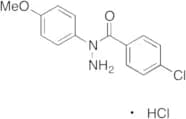
CAS:<p>Applications 4-Chloro-benzoic Acid 1-(4-Methoxyphenyl)hydrazide Hydrochloride is a derivative of (4-Methoxyphenyl)hydrazine Hydrochloride (M265880). It is a useful synthetic intermediate for the preparation of Indomethacin (I641000); a potent, time-dependent, nonselective inhibitor of the cyclooxygenase enzymes COX-1 and COX-2.<br>References Blobaum, Anna L., et al.: ACS Med. Chem. Lett., 4(5), 486-490 (2013); Prusakiewicz, Jeffery J., et al.: Biochemistry, 43(49), 15439-15445 (2004)<br></p>Formula:C14H13ClN2O2·HClColor and Shape:NeatMolecular weight:313.18(1-Chlorocyclohexyl)cyclohexyl-methanone
CAS:Controlled Product<p>Applications (1-Chlorocyclohexyl)cyclohexyl-methanone is a synthetic intermediate and a potential reagent for the synthesis of Dicyclomine Impurity A (B382435) and Dihexyverine Hydrochloride (D448200).<br>References Cramer, R., et al.: J. Med. Chem., 47, 6777 (2004); Vilar, S., et al.: J. Med. Chem., 49, 1118 (2006); Kopp, M., et al.: B. Soc. Chim. Fr., no vol., 84 (1952); Levy, J., et al.: CR. Soc. Biol., 144, 339 (1950)<br></p>Formula:C13H21ClOColor and Shape:NeatMolecular weight:228.76Vinyltris(2-methoxyethoxy)silane
CAS:<p>Applications VINYLTRIS(2-METHOXYETHOXY)SILANE (cas# 1067-53-4) is a useful research chemical.<br></p>Formula:C11H24O6SiColor and Shape:ColourlessMolecular weight:280.39Tiopronin-d3
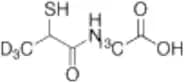
CAS:Controlled Product<p>Applications Labelled Tiopronin. It is used as antidote against heavy metal poisoning; hepatoprotectant; mucolytic.<br>References Capasso, F., et al.: Agents Actions, 11, 741 (1981), Amor, B., et al.: Arthritis Rheum., 25, 698 (1982), Ichida, F., et al.: J. Int. Med. Res., 10, 325 (1982),<br></p>Formula:C5H6D3NO3SColor and Shape:NeatMolecular weight:166.212-Ethyl-2-methylpentanoic Acid
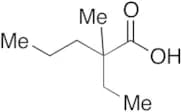
CAS:Controlled Product<p>Applications 2-Ethyl-2-methylpentanoic Acid is a derivative of 2,5-Dimethyl-2-ethylhexanoic Acid (D461540), used in biological studies to evaluate environmental chemicals for estrogenicity.<br>References Rabinowitz, J.R., et al.: Chem. Res. Toxicol.,22, 1594 (2009); Judson, R., et al.: Environ. Health Perspect, 117, 685 (2009)<br></p>Formula:C8H16O2Color and Shape:Colourless OilyMolecular weight:144.215-(2-Hydroxyethylamino)-2-methoxylaniline sulfate
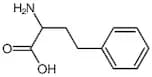
CAS:Controlled Product<p>Applications 5-(2-Hydroxyethylamino)-2-methoxylaniline sulfate (cas# 83763-48-8) is a useful research chemical.<br> Not a dangerous good if item is equal to or less than 1g/ml and there is less than 100g/ml in the package<br></p>Formula:C9H14N2O2•H2SO4Color and Shape:NeatMolecular weight:280.29D-Homophenylalanine
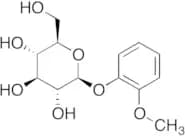
CAS:Controlled Product<p>Applications D-Homophenylalanine<br></p>Formula:C10H13NO2Color and Shape:NeatMolecular weight:179.22Guaiacol-β-D-glucopyranoside
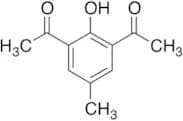
CAS:Controlled Product<p>Applications Guaiacol-beta-D-glucopyranoside, is a Guaiacol Conjugate, that has shown to present in fermentation of grapes that had been exposed to bushfire smoke and can potentially yield unpalatable, smoke-affected wine.<br>References Hayasaka, Y.m et al.: J. Arg. Food Chem., Vol. 58, Issue 4, P: 2076; 2081 (2010);<br></p>Formula:C13H18O7Color and Shape:NeatMolecular weight:286.281-(3-Acetyl-2-hydroxy-5-methyl-phenyl)ethanone
CAS:Controlled Product<p>Applications 1-(3-ACETYL-2-HYDROXY-5-METHYL-PHENYL)-ETHANONE (cas# 55108-28-6) is a useful research chemical.<br></p>Formula:C11H12O3Color and Shape:NeatMolecular weight:192.211Methyl 4-Methoxysalicylate
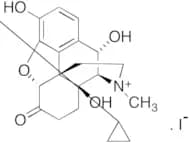
CAS:Controlled Product<p>Applications Methyl 4-Methoxysalicylate, is an organic building block, used for the synthesis of (+)-coriandrone A and B, two bioactive natural products. It can also be used for the preparation of Dimethoxybenzofuran derivatives as potent and selective inhibitors of CYP2A6.<br>References Wang, W., et al.: Org. Biomol. Chem., 11, 6686 (2013); Yamaguchi, Y., et al.: Heterocycles, 87, 1727 (2013);<br></p>Formula:C9H10O4Color and Shape:NeatMolecular weight:182.1710a-Hydroxy-methylnaltrexone Iodide
Controlled Product<p>Stability Hygroscopic, Light Sensitive<br></p>Formula:C21H26NO5·IColor and Shape:Orange To RedMolecular weight:499.342-Methoxyethyl 3-Oxobutanoate
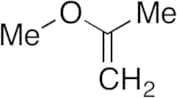
CAS:Controlled Product<p>Applications 2-Methoxyethyl 3-oxobutanoate (cas# 22502-03-0) is a useful research chemical.<br></p>Formula:C7H12O4Color and Shape:NeatMolecular weight:160.162-Methoxypropene
CAS:Controlled Product<p>Applications 2-Methoxypropene is used in the synthesis of Macrolactin A, a 24-member macrolide typically employed as an antibiotic. Also used in the synthesis of phenylalanine derivatives used as α4β1 and α4β7 receptor antagonists in the treatment of allergic asthma.<br>References Marino, K. et al.: J. Am. Chem. Soc., 12, 1664, (2002); Tilley, J. et al.: Bioorg. Med. Chem. Lett., 23, 1036 (2013);<br></p>Formula:C4H8OColor and Shape:NeatMolecular weight:72.112-Methoxypropyl Acetate
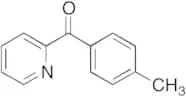
CAS:Controlled Product<p>Applications 2-Methoxypropyl Acetate causes moderate irritation, significant reduction in body weight development and thymic atrophy in rats as well as pronounced prenatal toxicity in rats.<br> Not a dangerous good if item is equal to or less than 1g/ml and there is less than 100g/ml in the package<br>References Ma-Hock, L., et al.: Hum. Exp. Toxicol., 24, 95-99 (2005)<br></p>Formula:C6H12O3Color and Shape:Colourless LiquidMolecular weight:132.16(4-Methylphenyl)-2-pyridinylmethanone
CAS:Controlled Product<p>Applications (4-Methylphenyl)-2-pyridinylmethanone is a useful reactant in organic synthesis.<br>References Hu, Zhiyuan, et al.: Org. & Biomol. Chem., 16(31), 5653-5660 (2018);Liao, Yang, et al.: J. of Organometallic Chem., 881, 1-12 (2019)<br></p>Formula:C13H11NOColor and Shape:NeatMolecular weight:197.2325Ammonium Perfluoro(2-methyl-3-oxahexanoate)
CAS:Controlled Product<p>Applications AMMONIUM PERFLUORO(2-METHYL-3-OXAHEXANOATE) (cas# 62037-80-3) is a useful research chemical.<br></p>Formula:C6F11O3·H4NColor and Shape:White To Off-WhiteMolecular weight:347.082-Methylnaphth[1,2-d]oxazole
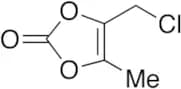
CAS:Controlled Product<p>Applications 2-Methylnaphth[1,2-d]oxazole (cas# 85-15-4) is a useful research chemical.<br></p>Formula:C12H9NOColor and Shape:YellowMolecular weight:183.2064-Chloromethyl-5-methyl-1,3-dioxol-2-one
CAS:Controlled Product<p>Applications 4-Chloromethyl-5-methyl-1,3-dioxol-2-one is an important reagent in the preparation of angiotensin II receptor antagonist such as Olmesratan Medoxomil (O550000). 4-Chloromethyl-5-methyl-1,3-dioxol-2-one is also used in the preparation of prodrugs of ampicillin.<br>References Ikeda, S. et al.: Chem. Pharmac. Bull., 32, 4316 (1984); Wu, T. Yaox. Xueb., 41, 537 (2006);<br></p>Formula:C5H5ClO3Color and Shape:NeatMolecular weight:148.542-Bromo-4-methylphenol
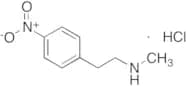
CAS:Controlled Product<p>Applications 2-Bromo-4-methylphenol is a useful synthetic intermediate. It was used in the synthesis of furan-2-ylmethylene thiazolidinediones as potent, and selective inhibitors of phosphoinositide 3-kinase γ. It was also a reactant used to prepare phosphoramidate and phosphorothioamidate analogs of amiprophos Me as potential antimalarial agents.<br>References Pomel, V., et al.: J. Med. Chem., 49, 3857 (2006); Mara, C., et al.: Bioorg. Med. Chem. Lett., 21, 6180 (2011)<br></p>Formula:C7H7BrOColor and Shape:NeatMolecular weight:187.03N-Methyl-2-(4-nitrophenyl)ethanamine Hydrochloride
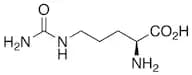
CAS:Controlled Product<p>Applications N-Methyl-2-(4-nitrophenyl)ethanamine Hydrochloride is used as a reactant in the preparation of small molecule CDC25 phosphatases inhibitors.<br>References Contour-Galcera, Marie-Odile, et al.: Bioorg. & Med. Chem. Let., 14(23), 5809-5812 (2004)<br></p>Formula:C9H12N2O2·HClColor and Shape:NeatMolecular weight:216.66L-Citrulline
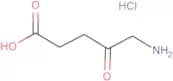
CAS:Controlled Product<p>Applications An amino acid, first isolated from the juice of watermelon, Citrullus vulgaris Schrad., Cucurbitaceae. Used in the treatment of asthenia.<br>References Kurtz, et al.: J. Biol. Chem., 122, 477 (1938), Rajantie, J., et al.: J. Pediatr., 97, 927 (1980), Carpenter, T.O., et al.: N. Engl. J. Med., 312, 290 (1985),<br></p>Formula:C6H13N3O3Color and Shape:NeatMolecular weight:175.195-Amino-4-oxopentanoic acid hydrochloride
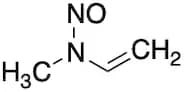
CAS:<p>066621 - 5-Amino-4-oxopentanoic acid hydrochloride</p>Formula:C5H10ClNO3Purity:97.0%Color and Shape:Solid, Powder or Crystalline Powder or SolidMolecular weight:167.59N-Methyl-N-nitroso-ethenamine
CAS:<p>Applications N-Methyl-N-nitroso-ethenamine is used as research reagent for base induced fragmentation to give aldehydes or ketones and smaller alkylnitrosamine<br>References Leoppky, R.N., et al.: J Org. Chem, 23, 135(1982)<br></p>Formula:C3H6N2OColor and Shape:YellowMolecular weight:86.094-Chloro-2-methoxyphenol
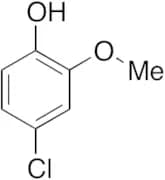
CAS:Controlled Product<p>Applications 4-Chloro-2-methoxyphenol is used as a reagent in the synthesis of novel potent and selective sphingosine-1-phosphate 4 receptor (S1P4-R) agonists which may be used in development of treatment against autoimmue diseases and viral infections. Also used in the synthesis of novel inhibtors of P. falciparum enoyl-ACP-reductase which may be used in treatment of malaria.<br>References Guerrero, M., et al.: Bioorg. Med. Chem. Lett., 22, 537 (2012); Belluti, F., et al.: J. Med. Chem., 56, 7516 (2013);<br></p>Formula:C7H7ClO2Color and Shape:NeatMolecular weight:158.582-(3-Methoxyphenoxy)propanoic acid
CAS:Controlled Product<p>Applications 2-(3-Methoxyphenoxy)propanoic acid<br></p>Formula:C10H12O4Color and Shape:NeatMolecular weight:196.2D,L-o-Tyrosine
CAS:Controlled Product<p>Applications D,L-o-Tyrosine is a metabolite of Phenylalanine (P319415). A precursor in the formation of catecholamines. Used as biomarkers of protein oxidative damage in β-thalassemia.<br>References Tsugita, A., et al.: Eur. J. Biochem., 124, 585 (1982), Nielsen, F., et al.: Clin. Chem., 43, 1209 (1997), Mates, J., et al.: Clin. Biochem., 32, 595 (1999),<br></p>Formula:C9H11NO3Color and Shape:WhiteMolecular weight:181.19N-Benzyloxycarbonyl L-Threonine Amide
CAS:Controlled Product<p>Applications Threonine derivative used in the synthesis of peptide.<br>References Dekker, C.A., et al.: J. Biol. Chem., 180, 155 (1949),<br></p>Formula:C12H16N2O4Color and Shape:NeatMolecular weight:252.27D-Tryptophan
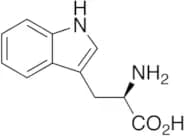
CAS:Controlled Product<p>Applications An essential amino acid found in naturally produced peptides. Unlike its stereoisomer, L-tryptophan, it is not used in structural or enzyme proteins.<br>References Karunakaran, S.et al.: Bochem. J., 414, 343 (2008); Pallaghy, P.K. et al.: Biochem., 38, 11553 (1999);<br></p>Formula:C11H12N2O2Color and Shape:NeatMolecular weight:204.23N-Methylnitroacetamide
CAS:Controlled Product<p>Impurity Ranitidine EP Impurity H<br>Applications N-Methylnitroacetamide (Ranitidine EP Impurity H) is a degradation product of Ranitidine (R120000).<br>References Sharma, N. et al.: Sci. Pharmac., 79, 309 (2011); Haywood, P.A. et al.: J. Chem. Soc., 5, 951 (1987);<br></p>Formula:C3H6N2O3Color and Shape:NeatMolecular weight:118.093-Methyl-1H(4H)-1,2,4-triazole-5-thione
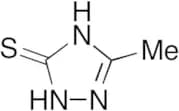
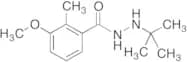
CAS:Formula:C3H5N3SColor and Shape:NeatMolecular weight:115.157N'-tert-Butyl-3-methoxy-2-methylbenzohydrazide
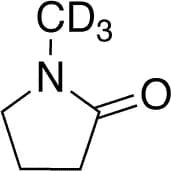
CAS:Controlled Product<p>Applications N'-tert-Butyl-3-methoxy-2-methylbenzohydrazide is an intermediate used in the synthesis of methoxyfenozide; an active ingredient for the commercial production of certain insecticidal and pesticidal formulations.<br>References Shao, J., et al.: Xiandai Nongyao, 2, 12, (2003), Mao, W. T., et al.: Chin. Chem. Lett., 23, 1233 (2012)<br></p>Formula:C13H20N2O2Color and Shape:NeatMolecular weight:236.311-Methyl-2-pyrrolidinone-d3
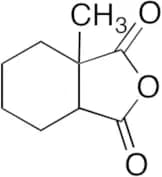
CAS:Controlled Product<p>Applications Labelled 1-Methyl-2-pyrrolidinone (M326120). It is a versatile industrial solvent. NMP is currently approved for use only in veterinary pharmaceuticals. The determination of the disposition and metabolism of NMP in the rat will contribute toward understanding the toxicology of this exogenous chemical which man may likely be exposed to in increasing amounts.<br>References Southwell, D., et al.: J. Pharm. Pharmacol., 33, 3 (1981), Barry, W., et al.: J. Invest. Dermatol., 82, 49 (1984),<br></p>Formula:C5H6D3NOColor and Shape:NeatMolecular weight:102.15Hexahydro-3a-methyl-1,3-isobenzofurandione
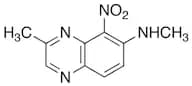
CAS:<p>Stability Moisture sensitive<br>Applications Hexahydro-4-methylphthalic Anhydride, can be used in the mixture of other isomers nanofiber supported 3D interconnected BN nanosheets for epoxy nanocomposites with ultrahigh thermal management capability<br>References Chen, J., et al.: Adv. Funct. Material., 27, 5 (2017)<br></p>Formula:C9H12O3Color and Shape:NeatMolecular weight:168.18982-Methyl-7-methylamino-8-nitro-quinoxaline
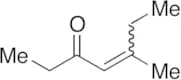
CAS:Controlled Product<p>Applications 2-Methyl-7-methylamino-8-nitro-quinoxaline (cas# 78411-55-9) is a compound useful in organic synthesis.<br></p>Formula:C10H10N4O2Color and Shape:NeatMolecular weight:218.213-Methyl-3-hepten-5-one
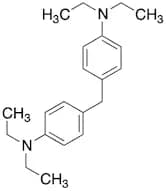
CAS:Controlled Product<p>Applications 3-Methyl-3-hepten-5-one is a reagent used to prepare fused nitrogen-heterocycles from β-enamino nitrile and α,β-unsaturated carbonyl compounds.<br>References Nemes, P., et al.: Synlett., 2, 222 (1999)<br></p>Formula:C8H14OColor and Shape:ColourlessMolecular weight:126.24,4-Methylenebis(N,N-diethylaniline)
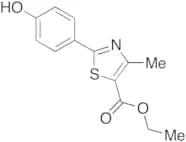
CAS:Controlled Product<p>Applications 4,4-methylenebis(N,N-diethylaniline) (cas# 135-91-1) is a useful research chemical.<br></p>Formula:C21H30N2Color and Shape:NeatMolecular weight:310.49Ethyl 2-(4-Hydroxyphenyl)-4-methylthiazole-5-carboxylate
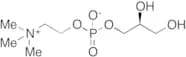
CAS:<p>Applications Ethyl 2-(4-Hydroxyphenyl)-4-methylthiazole-5-carboxylate is used in the synthesis of the major metabolites of Febuxostat (F229000), a xanthine oxidase/xanthine dehydrogenase inhibitor. Used for treatment of hyperuricemia and chronic gout. 40-120 mg/day febuxostat was proven effective in lowering serum urate levels when administered to manage hyperuricemia in patients with gout.<br>References Li, X., et. al.: Lett. Org. Chem., 12, 217 (2015); Vallu, V., et. al.: Anal. Chem. Indian J., 14, 339 (2014); Osada, Y., et al.: Eur. J. Pharmacol., 241, 183 (1993); Okamoto, K., et al.: J. Biol. Chem., 278, 1848 (2003); Mayer, M.D., et al.: Am. J. Therap., 12, 22 (2005); Tomlinson, B., et al.: Curr. Opin. Invest. Drugs, 6, 1168 (2005)<br></p>Formula:C13H13NO3SColor and Shape:NeatMolecular weight:263.31(S)-α-Glycerophosphocholine
CAS:Controlled Product<p>Stability Hygroscopic<br>Applications α-Glycerylphosphorylcholine is a parasympathomimetic acetylcholine precursor which may have potential for the treatment of Alzheimer's disease and other dementias.<br>References Moreno, M., et al.: Clin. Ther., 25, 178 (2003); Parnetti, L., et al.: J. Neurol. Sci., 257, 264 (2007); Doggrell, S., et al.: Expert Opin. Investig. Drugs, 12, 1633 (2003)<br></p>Formula:C8H20NO6PColor and Shape:NeatMolecular weight:257.224-Methoxy-2-methylaniline
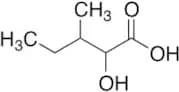
CAS:Controlled ProductFormula:C8H11NOColor and Shape:NeatMolecular weight:137.182-Hydroxy-3-methylpentanoic Acid (Mixture of Diastereomers)
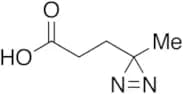
CAS:Controlled Product<p>Applications 2-hydroxy-3-methylpentanoic acid (cas# 488-15-3) is a useful research chemical.<br></p>Formula:C6H12O3Color and Shape:NeatMolecular weight:132.153-Methyl-diazirine-3-propanoic Acid
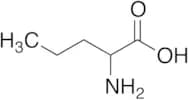
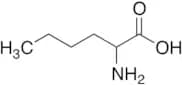
CAS:Controlled Product<p>Stability Light Sensitive<br>Applications 3-Methyl-diazirine-3-propanoic Acid is a reagent used in crosslinking sugars and photoactivatable crosslinking.<br>References Tanaka, Y. et al.: J. Am. Chem. Soc., 130, 3278 (2008);<br></p>Formula:C5H8N2O2Color and Shape:NeatMolecular weight:128.13DL-norvaline
CAS:<p>Applications Norvaline, a hydrogen analogs of an amino acid, was found to be racemates from the Murchison meteorite show. Norvaline was used in chiral separation by electrokinetic chromatography.<br>References Cronin, J., et al.: Science, 275, 951 (1997); Pizzarello, S., et al.: Geochim. Cosmochim. Acta., 64, 329 (2000); Gerabe, S., et al.: J. Chromatogr., 480, 403 (1989);<br></p>Formula:C5H11NO2Color and Shape:NeatMolecular weight:117.15DL-glutamine
CAS:Controlled Product<p>Applications DL-glutamine<br></p>Formula:C5H10N2O3Color and Shape:NeatMolecular weight:146.142-Mercapto-4-methyl-5-thiazoleacetic Acid
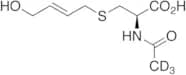
CAS:Controlled Product<p>Applications 2-Mercapto-4-methyl-5-thiazoleacetic Acid is used as a reagent for determination of hydroxylamine using fused gold nanoparticles immobilized on sol-gel film modified gold electrode.<br> Not a dangerous good if item is equal to or less than 1g/ml and there is less than 100g/ml in the package<br>References Kannan, P., John, A.: Anal. Chim. Acta, 663, 158 (2010);<br></p>Formula:C6H7NO2S2Color and Shape:NeatMolecular weight:189.26N-Acetyl-S-(4-hydroxy-2-buten-1-yl)-L-cysteine-d3
CAS:Controlled Product<p>Stability Hygroscopic<br>Applications A novel labelled metabolite of Butadiene monoepoxide (BMO), a mutagen and carcinogen compound.<br>References Cheng, X., et al.: Drug Metab. Dispos., 21, 121 (1993), Nieusma, J., et al.: Chem. Res. Toxicol., 10, 450 (1997),<br></p>Formula:C9D3H12NO4SColor and Shape:NeatMolecular weight:236.3032






![6-[(E)-4-Hydroxy-3-methylbut-2-enylamino]-9-β-D-ribofuranosylpurine](/_next/image/?url=https%3A%2Fstatic.cymitquimica.com%2Fproducts%2FTR%2Fthumb-webp%2FH946500.webp&w=3840&q=75)
![3-[4-(2-Methoxyphenyl)piperazin-1-yl]propan-1-amine](/_next/image/?url=https%3A%2Fstatic.cymitquimica.com%2Fproducts%2FTR%2Fthumb-webp%2FM229390.webp&w=3840&q=75)











![2-Methylnaphth[1,2-d]oxazole](/_next/image/?url=https%3A%2Fstatic.cymitquimica.com%2Fproducts%2FTR%2Fthumb-webp%2FM332348.webp&w=3840&q=75)