Amino Acids (AA)
Amino acids (AAs) are the fundamental building blocks of proteins, playing a crucial role in various biological processes. These organic compounds are essential for protein synthesis, metabolic pathways, and cell signaling. In this category, you will find a comprehensive range of amino acids, including essential, non-essential, and modified forms, which are vital for research in biochemistry, molecular biology, and nutritional sciences. At CymitQuimica, we provide high-quality amino acids to support your research and development needs, ensuring accuracy and reliability in your experimental outcomes.
Subcategories of "Amino Acids (AA)"
- Amino Acid Derivatives(3,955 products)
- Amino Acid and Amino Acid Related Compounds(3,436 products)
- Amino Acids with Oxygen or Sulphur(168 products)
- Boc- Amino Acids(351 products)
- Fmoc Amino Acids(1,710 products)
Found 38216 products of "Amino Acids (AA)"
Sort by
Purity (%)
0
100
|
0
|
50
|
90
|
95
|
100
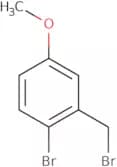
2-Bromo-5-methoxybenzyl bromide
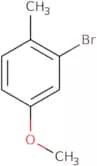
CAS:<p>2-Bromo-5-methoxybenzyl bromide is a ligand in organic chemistry. It is used as a reaction partner for the synthesis of heterocycles, such as 2-pyridone, which are biologically relevant. This ligand can be prepared by refluxing anhydrous potassium carbonate with chloroform and phenol. Macrocyclic compounds can be synthesized from this product through the Witting reaction. The efficiency of this method makes it suitable for use in biological studies.</p>Formula:C8H8Br2OPurity:Min. 95%Color and Shape:White PowderMolecular weight:279.96 g/mol3-Bromo-4-methylanisole
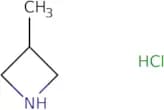
CAS:<p>3-Bromo-4-methylanisole is a natural product that has been shown to selectively activate the transcription factor, proliferator activated receptor γ (PPARγ), which plays a central role in cell differentiation and lipid metabolism. 3-Bromo-4-methylanisole is a competitive inhibitor of the catalytic site of PPARγ and also inhibits the activity of other transcriptional factors. This compound has been shown to stimulate the production of peroxisomes, which are organelles involved in lipid metabolism. 3-Bromo-4-methylanisole can be synthesized from toluene by a two step process involving electrolysis followed by chlorination. It can also be prepared from magnolol, a natural product isolated from Magnolia officinalis, by oxidation with potassium dichromate and sodium bisulfite.</p>Formula:C8H9BrOPurity:Min. 95%Color and Shape:PowderMolecular weight:201.06 g/mol3-Methylazetidine hydrochloride
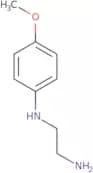
CAS:<p>3-Methylazetidine hydrochloride is a versatile building block that can be used as a reagent or speciality chemical. It is a useful intermediate in the synthesis of complex compounds and research chemicals. 3-Methylazetidine hydrochloride is also an important reaction component for the synthesis of new, high quality, useful scaffolds.</p>Formula:C4H9N·HClPurity:Min. 95%Color and Shape:Clear colourless syrup/liquid.Molecular weight:107.58 g/molN-(4-Methoxyphenyl)ethane-1,2-diamine
CAS:<p>N-(4-Methoxyphenyl)ethane-1,2-diamine is a synthetic compound that has been shown to inhibit the activity of cathepsins. It can be used in the treatment of diseases caused by these enzymes, such as osteoarthritis and Alzheimer's disease. N-(4-Methoxyphenyl)ethane-1,2-diamine has a pharmacokinetic profile that is favorable for oral administration. The drug is absorbed from the gastrointestinal tract readily and undergoes extensive metabolism in the liver. This process leads to the formation of active metabolites which are excreted in urine or bile. N-(4-Methoxyphenyl)ethane-1,2-diamine also inhibits nitroalkanes with activated aromatic rings, such as 4-nitrobenzaldehyde and 2,4,6-trinitrobenzene.</p>Formula:C9H14N2OPurity:Min. 95%Color and Shape:Slightly Yellow PowderMolecular weight:166.22 g/molNε-Methyl-L-lysine hydrochloride
CAS:<p>Ne-Methyl-L-lysine hydrochloride is an acetylated form of the amino acid L-lysine. It has shown to be effective in treating pernicious anemia, a condition in which the body lacks sufficient vitamin B12. Ne-Methyl-L-lysine hydrochloride inhibits the production of human vascular endothelial growth factor (VEGF) and can also be used as a diagnostic tool for pernicious anemia. This drug is expressed by genetically engineered cells and has been shown to inhibit acetylation reactions, leading to monoclonal antibodies with increased stability. Ne-Methyl-L-lysine hydrochloride also binds to vitamin B12 and prevents its catabolism, thereby increasing the levels of this essential nutrient.</p>Formula:C7H16N2O2•HClPurity:Min. 95%Color and Shape:White PowderMolecular weight:196.67 g/mol2-Methyl-DL-tryptophan
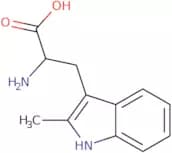
CAS:<p>2-Methyl-DL-tryptophan is a sweetener that has a sweet taste. It is not metabolized in the body and does not have any known side effects. It is used as an artificial sweetener in food products and dietary supplements. 2-Methyl-DL-tryptophan has been approved by the FDA for use as a general purpose sweetener, but it is not allowed to be used in baked goods or other foods that are typically eaten without adding water to them.</p>Formula:C12H14N2O2Purity:Min. 95%Color and Shape:PowderMolecular weight:218.25 g/mol4-Iodo-N-(4-methoxyphenyl)-N-methylbenzamide
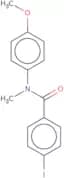
CAS:<p>4-Iodo-N-(4-methoxyphenyl)-N-methylbenzamide is a useful scaffold that can be used in the synthesis of complex compounds. It is also a versatile building block and has been found to be useful as an intermediate and building block. 4-Iodo-N-(4-methoxyphenyl)-N-methylbenzamide is a fine chemical with CAS No. 320734-40-5. This reagent is high quality, research chemicals, and can be used in the synthesis of speciality chemicals.</p>Formula:C15H14INO2Purity:Min. 95%Molecular weight:367.18 g/molFmoc-Ile-Pro-OH
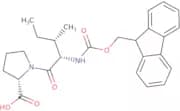
CAS:<p>Fmoc-Ile-Pro-OH is a versatile building block that can be used for the synthesis of complex compounds, as well as a reagent for research chemicals. This chemical also has high quality and is useful as an intermediate or reaction component in organic chemistry. Fmoc-Ile-Pro-OH is a useful scaffold for the synthesis of structurally diverse molecules, such as epoxy resins, polyesters, and polyurethanes. It can be used in the synthesis of peptides with side chains attached to the backbone chain. Fmoc-Ile-Pro-OH is also used in many pharmaceuticals and agrochemicals.</p>Formula:C26H30N2O5Purity:Min. 95%Color and Shape:White/Off-White SolidMolecular weight:450.53 g/mol3-Methyladipic acid
CAS:<p>3-Methyladipic acid is a molecule that is formed from the chemical reaction of ethylmalonic acid and pyrimidine compounds. 3-Methyladipic acid can be found in urine samples, where it is excreted as a hydrated form. It is also soluble in organic solvents such as ethanol and acetone. This compound has been used to identify the presence of fatty acids in biological fluids by liquid chromatography. The addition of malonic acid to 3-methyladipic acid changes its phase composition, which can be observed using a polarizing microscope. 3-Methyladipic acid has also been used to study tubule cells, which are found in the kidney and are involved in the reabsorption of water and electrolytes.</p>Formula:C7H12O4Purity:Min. 95%Color and Shape:PowderMolecular weight:160.17 g/molFmoc-Ala-Pro-Pro-OH
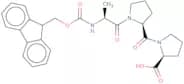
CAS:<p>Fmoc-Ala-Pro-Pro-OH is an amino acid that belongs to the class of speciality chemicals. It is a versatile building block for organic synthesis, with applications in pharmaceuticals, agrochemicals, and other chemical industries. The CAS number for Fmoc-Ala-Pro-Pro-OH is 386768-25-8.</p>Formula:C28H31N3O6Purity:Min. 95%Color and Shape:PowderMolecular weight:505.56 g/molFmoc-glycine N-hydroxysuccinimide ester
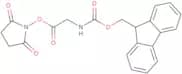
CAS:<p>Fmoc-glycine N-hydroxysuccinimide ester is a reagent and building block that is used in the synthesis of peptides and other organic compounds. It has many uses, including as a reaction component, a speciality chemical, and a versatile building block. Fmoc-glycine N-hydroxysuccinimide ester is also a useful intermediate for complex compounds or fine chemicals. This product is available to purchase at wholesale pricing in quantities ranging from 1 gram to 5 kilograms.</p>Formula:C21H18N2O6Purity:Min. 95 Area-%Color and Shape:White Off-White PowderMolecular weight:394.38 g/molL-Isoleucine methyl ester hydrochloride
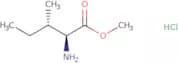
CAS:<p>L-Isoleucine methyl ester hydrochloride (LIME) is a chemical pesticide that inhibits the synthesis of prostaglandins. It is used to treat inflammatory bowel disease and cancer, as well as other inflammatory diseases. LIME is metabolized by an enzyme called synthase to produce L-methionine methyl ester hydrochloride, which is a substrate for another enzyme called nitric oxide synthase. Nitrous acid and butyric acid are two metabolites of LIME that have been shown to inhibit the production of beta-amyloid peptides. One study has also shown that LIME can reduce the levels of vitamin D3 in rats with colitis.</p>Formula:C7H16ClNO2Purity:Min. 95%Color and Shape:PowderMolecular weight:181.66 g/molTrityl-L-phenylalanine diethylamine
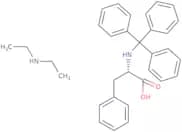
CAS:<p>Trityl-L-phenylalanine diethylamine is a reagent that is used in the synthesis of peptides, reagents, and other chemicals. Trityl-L-phenylalanine diethylamine reacts with an azide to form a triazole. It can also be used to convert an acid into an amino acid. This chemical has been shown to be sensitive to plasmin, which may lead to degradation during peptide synthesis.</p>Formula:C28H25NO2·C4H11NPurity:Min. 95%Color and Shape:PowderMolecular weight:480.64 g/molFmoc-(1R,2R)-2-aminocyclopentane carboxylic acid
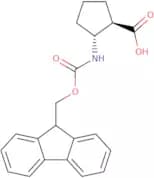
CAS:<p>Fmoc-(1R,2R)-2-aminocyclopentane carboxylic acid is a high quality and versatile building block. It can be used as an intermediate in the synthesis of complex compounds or as a reaction component. Fmoc-(1R,2R)-2-aminocyclopentane carboxylic acid is a speciality chemical that has potential uses in research, development and manufacturing of pharmaceuticals, agrochemicals, dyestuff intermediates, perfumes and other fine chemicals. CAS No. 359586-69-9</p>Formula:C21H21NO4Purity:Min. 95%Color and Shape:PowderMolecular weight:351.4 g/molD-Phenylalanine
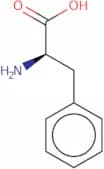
CAS:<p>D-Phenylalanine is an amino acid that is found in the human body and is used as a pharmacological agent. It has been shown to be an antimicrobial peptide with a broad spectrum of activity against bacteria, yeast, and fungi. D-Phenylalanine also has the ability to inhibit the production of peptide hormones, such as gastrin and vasopressin, and can be used as an inhibitor for enzymes such as acetylcholine esterase. Studies have shown that D-phenylalanine can increase mitochondrial membrane potential in cells by binding to ester hydrochloride. This leads to increased enzyme activities, which may result in a decrease in hydrogen bonding interactions.</p>Formula:C9H11NO2Purity:Min. 95%Color and Shape:White Off-White PowderMolecular weight:165.19 g/mol2-Iodo-N-methyl-N-p-tolylbenzamide
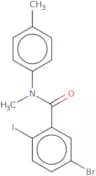
CAS:<p>2-Iodo-N-methyl-N-p-tolylbenzamide is a fine chemical that has the CAS No. 1387529-49-8 and is a versatile building block with a wide range of applications, including research chemicals, reaction components and speciality chemicals. 2-Iodo-N-methyl-N-p-tolylbenzamide is soluble in organic solvents such as ethers, chloroform and benzene, while insoluble in water. It has been shown to be a useful intermediate for the synthesis of complex compounds and can be used as a reagent to prepare other compounds. 2Iodo-Nmethyl--Np--tolylbenzamide has been shown to have high quality and is an excellent building block for synthesizing pharmaceuticals.</p>Formula:C15H13BrINOPurity:Min. 95%Molecular weight:430.08 g/molL-Selenocystine
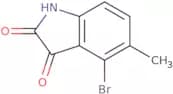
CAS:Formula:C6H12N2O4Se2Purity:>97.0%(T)Color and Shape:Light yellow to Brown powder to crystalMolecular weight:334.094-Bromo-5-methyl-1H-indole-2,3-dione
CAS:<p>4-Bromo-5-methyl-1H-indole-2,3-dione is a synthetic molecule that has been shown to have neuroprotective effects. It inhibits the production of proinflammatory cytokines, such as tnf-α and il-6, by binding to survivin. 4Bromo-5 methyl 1Hindole 2,3 dione also binds to the viral capsid protein and blocks virus infection. This compound has been shown to inhibit viral replication in vitro as well as provide protection against alphavirus infection in mice.</p>Formula:C9H6BrNO2Purity:Min. 95%Molecular weight:240.05 g/molN-Cbz-L-Phenylalanine
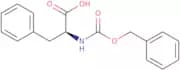
CAS:<p>N-Cbz-L-Phenylalanine is a synthetic amino acid that is used as an inhibitor of protease activity. It binds to the active site of a protease enzyme and prevents it from cleaving its substrate peptide bonds, thereby inhibiting the enzyme’s activity. N-Cbz-L-Phenylalanine has been shown to inhibit trypsin from soybean, pancreatic elastase, and chymotrypsin from hog pancreas. This inhibitor has also been shown to inhibit growth factors and other biochemical properties.</p>Formula:C17H17NO4Purity:Min. 95%Color and Shape:PowderMolecular weight:299.32 g/mol(1S,2S)-Boc-aminocyclopentane carboxylic acid
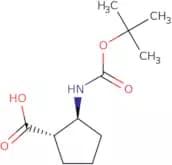
CAS:<p>(1S,2S)-Boc-aminocyclopentane carboxylic acid is a useful scaffold for the synthesis of complex compounds and pharmaceuticals. It has been used as a building block for the synthesis of bioactive natural products and pharmaceuticals. This product is also used as an intermediate in the production of research chemicals and speciality chemicals. It can be used as a reagent in organic chemistry reactions, such as peptide coupling, esterification, oxidation, reduction, nitration, sulfonylation, and Friedel-Crafts acylation. (1S,2S)-Boc-aminocyclopentane carboxylic acid has high purity with CAS No. 143679-80-5 and is available at competitive prices.</p>Formula:C11H19NO4Purity:Min. 95%Color and Shape:White PowderMolecular weight:229.27 g/mol