Amino Acids (AA)
Amino acids (AAs) are the fundamental building blocks of proteins, playing a crucial role in various biological processes. These organic compounds are essential for protein synthesis, metabolic pathways, and cell signaling. In this category, you will find a comprehensive range of amino acids, including essential, non-essential, and modified forms, which are vital for research in biochemistry, molecular biology, and nutritional sciences. At CymitQuimica, we provide high-quality amino acids to support your research and development needs, ensuring accuracy and reliability in your experimental outcomes.
Subcategories of "Amino Acids (AA)"
- Amino Acid Derivatives(3,969 products)
- Amino Acid and Amino Acid Related Compounds(3,474 products)
- Amino Acids with Oxygen or Sulphur(168 products)
- Boc- Amino Acids(351 products)
- Fmoc Amino Acids(1,710 products)
Found 38282 products of "Amino Acids (AA)"
Sort by
Purity (%)
0
100
|
0
|
50
|
90
|
95
|
100
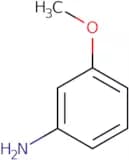
3-Methoxybenzenamine
CAS:<p>3-Methoxybenzenamine is a molecule that can be synthesized by an asymmetric reaction. It has carcinogenic potential and is classified as a chemical substance. 3-Methoxybenzenamine reacts with hydrochloric acid to form hydrogen chloride gas and methoxybenzene. The hydroxyl group on the molecule reacts with l-tartaric acid to form an ester, which then undergoes hydrolysis to produce 3-hydroxybutanoic acid. This reaction also produces water, which may result in a decrease of the concentration of the reactants. 3-Methoxybenzenamine can also react with amines to form quaternary ammonium salts, which are highly soluble in water and have a high detection sensitivity.</p>Formula:C7H9NOPurity:Min. 95%Color and Shape:Clear LiquidMolecular weight:123.15 g/molRengasin-4'-O-glucoside
<p>Rengasin-4'-O-glucoside (RG4G) is a natural glycoside that belongs to the category of sugar derivatives. It has versatile uses and can be used as a building block for complex compounds, as well as in research chemicals, pharmaceuticals, and cosmetics. RG4G also has many applications in chemistry, including being used as a reagent or speciality chemical. RG4G is also an important intermediate in organic synthesis, which can be used to synthesize many useful compounds. The compound is often used as a scaffold for larger molecules.</p>Purity:Min. 95%Boc-L-alanine benzylester
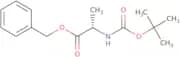
CAS:<p>Boc-L-alanine benzylester is a novel fluorescent crosslinker that can be used to synthesize fluorescent polymers. It is composed of an acid moiety and benzothiadiazole moieties, which are catalytic. The synthesis of Boc-L-alanine benzylester involves the reaction of lysine or tyrosine with an acid chloride to form an amide bond, followed by a ring opening reaction with the corresponding benzothiadiazole. The fluorescein group is then added as a substituent at the N-terminus. This new crosslinker has been shown to have high reactivity in cycloadditions and crosslinking reactions with anthracene, cyclopentadiene, and cyclohexadiene. Boc-L-alanine benzylester has also been shown to be effective in ascorbate oxidation.</p>Formula:C15H21NO4Purity:Min. 95%Color and Shape:PowderMolecular weight:279.33 g/molFmoc-Dab(Fmoc-Dab(Boc))-OH
<p>Fmoc-Dab(Fmoc-Dab(Boc))-OH is a water soluble, high quality reagent that is used in peptide synthesis. This compound is a versatile building block for the preparation of complex compounds and fine chemicals. The chemical structure of this compound is not yet known. Fmoc-Dab(Fmoc-Dab(Boc))-OH reacts with DBU to form an active ester that can be used as a coupling agent for peptide synthesis.</p>Formula:C43H46N4O9Purity:Min. 95%Color and Shape:PowderMolecular weight:762.85 g/mol2-Chloro-4-methyl-6-methylsulfanylpyrimidine
CAS:<p>2-Chloro-4-methyl-6-methylsulfanylpyrimidine is a high quality chemical that is an intermediate for organic synthesis. It is a reagent and useful intermediate in the production of complex compounds. 2-Chloro-4-methyl-6-methylsulfanylpyrimidine has been shown to be a building block for use in synthesizing fine chemicals, pharmaceuticals, and pesticides. This compound can also be used as a reaction component for the synthesis of other chemicals, making it an important research chemical. <br>2-Chloro-4-methyl-6-methylsulfanylpyrimidine is soluble in water and insoluble in ethanol or ether. It has CAS No. 89466-59-1 and a molecular weight of 238.2 g/mol.br>br><br>2CMSMP can be used to produce various compounds such as:</p>Formula:C6H7ClN2SPurity:Min. 95%Color and Shape:PowderMolecular weight:174.65 g/mol1-Benzyl-3-methyl-1H-pyrazol-5-amine HCl
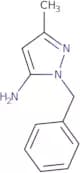
CAS:<p>1-Benzyl-3-methyl-1H-pyrazol-5-amine HCl is a fine chemical that can be used as a versatile building block in research or as an intermediate in the synthesis of complex compounds. It has been shown to be a useful reagent for the preparation of speciality chemicals and reaction components. 1-Benzyl-3-methyl-1H-pyrazol-5-amine HCl has been shown to be a high quality compound with CAS No. 113482–3, which is listed on the Chemical Abstracts Service registry.</p>Formula:C11H13N3·HClPurity:Min. 95%Color and Shape:Off-White PowderMolecular weight:223.7 g/molBenzoyl-L-tyrosine ethyl ester
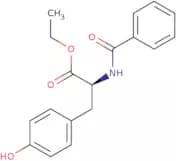
CAS:<p>Benzoyl-L-tyrosine ethyl ester is a copolymer of benzoyl-L-tyrosine and polyethylene glycol. It is a mesoporous material that has an ability to bind with DNA and inhibit the activity of enzymes such as proteases, trypsin, and chymotrypsin. Benzoyl-L-tyrosine ethyl ester inhibits the enzymatic activity of these enzymes by binding to the active site on their surface; it also inhibits the production of inflammatory mediators. This product has been shown to have potent inhibitor properties in vitro, but its efficacy in vivo has not been evaluated.</p>Formula:C18H19NO4Purity:Min. 95%Color and Shape:PowderMolecular weight:313.35 g/mol1-Boc-azetidine-3-yl-methanol
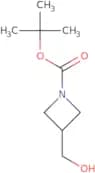
CAS:<p>Stable under physiological and chemical conditions, 1-Boc-azetidine-3-yl-methanol is a linker that forms permanent bonds in conjugates, particularly in antibody-drug conjugates (ADCs) and as a linker in PROTAC (PROteolysis TArgeting Chimera) molecules for targeted protein degradation. It is also a versatile chemical intermediate used to synthesize complex organic molecules, particularly in pharmaceuticals, agrochemicals, and research chemicals.</p>Formula:C9H17NO3Purity:Min. 95%Color and Shape:White PowderMolecular weight:187.24 g/mol2-Chloro-5-(4-chloro-5-difluoromethoxy-1-methylpyrazol-3-yl)-4-fluorophenoxyacetic acid monohydrate
CAS:<p>2-Chloro-5-(4-chloro-5-difluoromethoxy-1-methylpyrazol-3-yl)-4-fluorophenoxyacetic acid monohydrate (2,4,5P) is a phenoxy herbicide that has been shown to be an effective broadleaf and grass weed control agent. 2,4,5P is a granule formulation that can be applied by helicopter or ground equipment. It has synergistic effects with glyphosate when applied together to soybean plants and can be used in combination with other herbicides for more effective weed control.</p>Formula:C13H9Cl2F3N2O·H2OPurity:Min. 95%Color and Shape:White PowderMolecular weight:355.14 g/mol(R)-(-)-2-Phenylglycinol
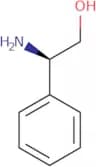
CAS:<p>(R)-(-)-2-Phenylglycinol is an enantiopure chiral compound that has been used in the synthesis of polymers. This polymerase chain reaction (PCR) inhibitor binds to the α subunit of DNA polymerase, preventing replication and transcription. The binding site for this inhibitor is located at the active site of the enzyme and is a hydroxyl group. The (S)-enantiomer of 2-phenylglycinol does not bind to the α subunit, so it can be used as a control in experiments. 2-Phenylglycinol is also known to have antiviral properties against HIV infection.</p>Formula:C8H11NOPurity:Min. 97.5 Area-%Color and Shape:White PowderMolecular weight:137.18 g/mol1-(3-Methylphenyl)-2-nitropropene
CAS:<p>1-(3-methylphenyl)-2-nitropropene is a versatile building block that is used in the synthesis of complex compounds. It is also an intermediate for the synthesis of other chemicals, such as reaction components and useful scaffolds. It has been shown to be high quality and useful as reagent and speciality chemical.</p>Formula:C10H11NO2Purity:Min. 95%Molecular weight:177.2 g/mol5-Fluoro-1-Methyl-1H-Indole-3-Carbaldehyde
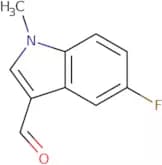
CAS:<p>5-Fluoro-1-Methyl-1H-Indole-3-Carbaldehyde is a high quality chemical that is used as a reagent, an intermediate for the synthesis of pharmaceuticals, and in the production of fine chemicals. 5FMICA is also a useful scaffold for developing valuable building blocks. This chemical has been shown to be a versatile building block for the synthesis of complex compounds. 5FMICA can be used as a reaction component for the preparation of speciality chemicals and research chemicals.</p>Formula:C10H8FNOPurity:Min. 95%Color and Shape:PowderMolecular weight:177.18 g/mol1-Methylindole-6-carboxylic acid
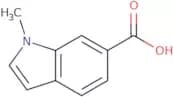
CAS:<p>1-Methylindole-6-carboxylic acid is a versatile building block that is used in the synthesis of more complex compounds. It can be used as a reagent, speciality chemical, and useful building block for pharmaceuticals and other research chemicals. 1-Methylindole-6-carboxylic acid has been shown to be an effective intermediate for the production of a number of different compounds. The compound can also act as a reaction component or scaffold for chemical reactions.</p>Formula:C10H9NO2Purity:Min. 95%Color and Shape:PowderMolecular weight:175.18 g/molO-tert-Butyl-L-allo-threonine
CAS:<p>O-tert-Butyl-L-allo-threonine is a methionine derivative that has been shown to be expressed in the human liver and kidney. It is synthesized by coupling of the n-terminal tryptophan with O-tert-butyl L-allo-threonine, which is then followed by a transpeptidation reaction. The resulting product can be used as an efficient insulin precursor for the production of human insulin. The efficiency of this process depends on the spacer length and reaction time, which can be optimized for each synthesis.</p>Formula:C8H17NO3Purity:Min. 95%Color and Shape:White PowderMolecular weight:175.23 g/mol2-(Dimethylamino)-2-methylpropanoic acid
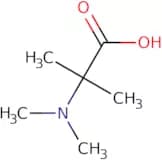
CAS:<p>2-(Dimethylamino)-2-methylpropanoic acid is a solvent that has been investigated for use in vapor phase systems. It has been shown to have the ability to adsorb onto surfaces and to be able to desorb from these surfaces at a later time. This process allows 2-(dimethylamino)-2-methylpropanoic acid to be used as an additive for waterproofing and other applications. A thermogravimetric analysis of 2-(dimethylamino)-2-methylpropanoic acid showed that it decomposes at temperatures between 220°C and 260°C, which is lower than the temperature required for many other solvents. This property makes it suitable for use in vapor phase systems.</p>Formula:C6H13NO2Purity:Min. 95%Color and Shape:PowderMolecular weight:131.17 g/molBoc-(2S,4S)-4-phenylpyrrolidine-2-carboxylic acid
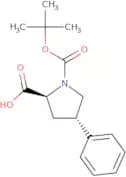
CAS:<p>Boc-(2S,4S)-4-phenylpyrrolidine-2-carboxylic acid is a versatile building block that can be used in the synthesis of complex compounds. It has been shown to be a useful intermediate in the synthesis of pharmaceuticals and other compounds. Boc-(2S,4S)-4-phenylpyrrolidine-2-carboxylic acid is also a reagent for the preparation of heterocyclic compounds and other research chemicals. This chemical is soluble in methanol and water, but insoluble in ether or chloroform. The CAS number for this product is 96314-29-3.</p>Formula:C16H21NO4Purity:Min. 95%Color and Shape:White PowderMolecular weight:291.34 g/molN-Boc-2-methyl-L-proline
CAS:<p>N-Boc-2-methyl-L-proline is a chemical compound that is used as a building block in the synthesis of other compounds. This substance is also an intermediate in the production of pharmaceuticals and pesticides. The compound has been shown to have high quality, versatility, and complexity. N-Boc-2-methyl-L-proline can be used as a reagent for research or as a speciality chemical. The CAS number for this substance is 103336-06-7.</p>Formula:C11H19NO4Purity:Min. 95%Color and Shape:White To Off-White SolidMolecular weight:229.27 g/molN-Boc-4-methylene-L-proline methyl ester
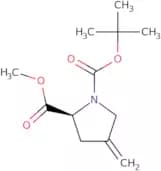
CAS:<p>N-Boc-4-methylene-L-proline methyl ester is a versatile building block for the synthesis of complex compounds. It is an intermediate that can be used in the production of pharmaceuticals, agrochemicals, and other speciality chemicals. The compound has been shown to have an inhibitory effect on HIV replication.</p>Formula:C12H19NO4Purity:Min. 95%Color and Shape:Colorless PowderMolecular weight:241.28 g/mol(S)-(+)-2-Phenylglycine methyl ester hydrochloride
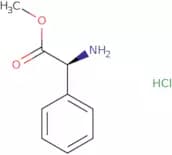
CAS:<p>(S)-(+)-2-Phenylglycine methyl ester hydrochloride is a nitro compound that inhibits the production of nitric oxide (NO) by inhibiting the enzyme nitric oxide synthase. It has shown inhibitory effects on bronchial hyperresponsiveness in animals with bronchial asthma and ischemic reperfusion injury. The compound also inhibits nitrogen-induced allergic reactions and inflammatory diseases. (S)-(+)-2-Phenylglycine methyl ester hydrochloride has been shown to have a protective effect against prostate cancer in animal models, although it was not active against prostate cancer cells in vitro. This may be due to its inability to cross the cell membrane or its inability to effectively penetrate the nucleus, which is where cancerous cells originate. The functional groups present on this molecule include amide, carbonyl, and hydroxyl groups.</p>Formula:C9H12ClNO2Purity:Min. 95%Color and Shape:White To Off-White SolidMolecular weight:201.65 g/molFmoc-Lys(Fmoc)-OH
CAS:<p>Fmoc-Lys(Fmoc)-OH is an ester of lysine that is used in peptide synthesis. It has shown to have antimicrobial properties against bacteria and fungi. Fmoc-Lys(Fmoc)-OH has been found to be taken up by cancer cells, suggesting that it may have anticancer effects. It has also been found to inhibit the growth of bladder cancer cells as well as histidine aminopeptidase from the cell surface. Fmoc-Lys(Fmoc)-OH is stable in trifluoroacetic acid, making it a good candidate for solid-phase synthesis. This product can be synthesized by attaching the amino acid lysine to an ester linker with a fluorinated side chain. The product is then linked end-to-end via intramolecular hydrogen bonds and chemical stability is achieved through covalent amide bond formation between Lys and Fmoc groups</p>Formula:C36H34N2O6Purity:Min. 95%Color and Shape:SolidMolecular weight:590.67 g/mol