Amino Acids (AA)
Amino acids (AAs) are the fundamental building blocks of proteins, playing a crucial role in various biological processes. These organic compounds are essential for protein synthesis, metabolic pathways, and cell signaling. In this category, you will find a comprehensive range of amino acids, including essential, non-essential, and modified forms, which are vital for research in biochemistry, molecular biology, and nutritional sciences. At CymitQuimica, we provide high-quality amino acids to support your research and development needs, ensuring accuracy and reliability in your experimental outcomes.
Subcategories of "Amino Acids (AA)"
- Amino Acid Derivatives(3,969 products)
- Amino Acid and Amino Acid Related Compounds(3,474 products)
- Amino Acids with Oxygen or Sulphur(168 products)
- Boc- Amino Acids(351 products)
- Fmoc Amino Acids(1,710 products)
Found 38282 products of "Amino Acids (AA)"
Sort by
Purity (%)
0
100
|
0
|
50
|
90
|
95
|
100
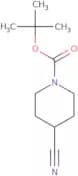
N-Boc-4-cyanopiperidine
CAS:<p>N-Boc-4-cyanopiperidine is a synthetic compound that has been used as a competitive inhibitor in the study of biochemistry and neurochemistry. It has been shown to inhibit ligand binding to calcium channels, which are proteins that regulate the flow of calcium ions into cells. N-Boc-4-cyanopiperidine also inhibits the production of prostaglandins, which are chemicals that promote inflammation. This drug has been investigated for its possible use in treating neuropathic pain, since it inhibits voltage-gated sodium channels and potassium channels.</p>Formula:C11H18N2O2Purity:Min. 95%Color and Shape:PowderMolecular weight:210.27 g/molBoc-2-chloro-L-phenylalanine
CAS:<p>Boc-2-chloro-L-phenylalanine is a versatile building block that can be used as an intermediate or a reaction component. It has the following properties: CAS No. 114873-02-8, fine chemical, useful scaffold, versatile building block, useful intermediate, research chemicals, reaction component, speciality chemical, complex compound, useful building block. Boc-2-chloro-L-phenylalanine is a high quality reagent that can be used for research purposes.</p>Formula:C14H18ClNO4Purity:Min. 98 Area-%Color and Shape:PowderMolecular weight:299.75 g/molDL-Leucine
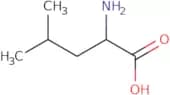
CAS:<p>DL-Leucine is an amino acid that is needed for the formation of proteins. It is also able to inhibit the activity of enzymes by hydrolyzing them. DL-Leucine has been shown to be a potent inhibitor of lysine hydrolases and can be used as an additive in the manufacture of animal feed. DL-Leucine has been shown to be stable in many environments, including those containing chlorine, hydrochloric acid, n-dimethyl formamide, and x-ray crystallography. The enantiomers of DL-leucine have different chemical stability; one form is more stable than the other in acidic environments.</p>Formula:C6H13NO2Purity:Min. 95%Color and Shape:PowderMolecular weight:131.17 g/mol5-Amino-2-methylindole
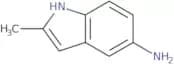
CAS:<p>5-Amino-2-methylindole is a hyaluronic acid inhibitor that has been shown to have an inhibitory effect on the growth of some bacteria. It inhibits the synthesis of bacterial enzymes and growth factors, which are required for bacterial cell division. 5-Amino-2-methylindole also inhibits the production of a number of important enzymes in bacteria, including benzofuran derivatives, as well as p. aeruginosa. This drug is used as a topical treatment in cases where there is tissue damage or inflammation. 5-Amino-2-methylindole has been shown to be effective against gram positive bacteria such as Streptococcus pyogenes and Enterococcus faecalis, but not against gram negative bacteria such as Pseudomonas aeruginosa or Escherichia coli.</p>Formula:C9H10N2Purity:Min. 95%Color and Shape:Yellow To Dark Brown SolidMolecular weight:146.19 g/molD-Threonine methyl ester hydrochloride
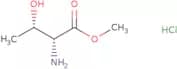
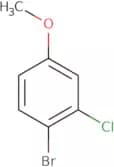
CAS:<p>D-Threonine methyl ester hydrochloride is a versatile building block that is used in the synthesis of complex compounds. It can be used as a reagent, speciality chemical, and useful scaffold in organic chemistry. D-Threonine methyl ester hydrochloride has been shown to react with a variety of electrophiles and nucleophiles to form diverse products. This product is also used as a reaction component for the synthesis of high quality chemical intermediates.</p>Formula:C5H11NO3·HClPurity:Min. 98%Color and Shape:PowderMolecular weight:169.61 g/mol1-Bromo-2-chloro-4-methoxybenzene
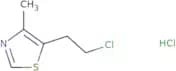
CAS:<p>1-Bromo-2-chloro-4-methoxybenzene is a polychlorinated bromoarene. It is used as a precursor to produce the hydroxamic acid, 1-bromo-2,4-dichlorobenzene. This compound has been shown to be a powerful inhibitor of bacterial growth in activated sludge and soil bacteria. It also inhibits plant growth and has been used as an herbicide. The synthesis of this compound starts with acetonitrile and phenol, which are heated together to produce the desired product in high yields. The solvents are then removed by vacuum distillation or crystallization.</p>Formula:C7H6BrClOPurity:Min. 95%Molecular weight:221.48 g/mol5-(2-Chloroethyl)-4-methyl-thiazole hydrochloride
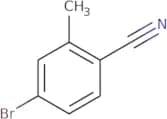
CAS:Controlled Product<p>5-(2-Chloroethyl)-4-methyl-thiazole hydrochloride is an inorganic acid that can be synthesized from 2-chloroethanol and thiourea. It has been used as a reagent to determine the activity of human liver enzymes, such as butyrolactone and thiocyanation. 5-(2-Chloroethyl)-4-methyl-thiazole hydrochloride has also been used in the study of drug absorption, with chloride as its conjugate base. 5-(2-Chloroethyl)-4-methyl-thiazole hydrochloride has been shown to have significant inhibitory effects on the growth of various infectious bacteria, including S. aureus. This compound is a specific agonist for ThP1 cells and is synthetically produced by reacting 2 chloroethanol with thiourea.</p>Formula:C6H8ClNS·HClPurity:Min. 95%Color and Shape:PowderMolecular weight:198.11 g/mol4-Bromo-2-methylbenzonitrile
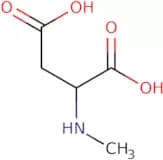
CAS:<p>4-Bromo-2-methylbenzonitrile (4BMB) is a biphenyl derivative that inhibits the activity of tyrosine kinase enzymes. It has been shown to be a virulence factor for Streptococcus, which causes lysis of red blood cells. 4BMB has also been shown to inhibit the growth of Escherichia coli and other bacteria, including Streptococcus pneumoniae, by inducing cell lysis. The mechanism of action for this drug is through binding to an anion in the active site, causing reversible inhibition of ATP synthase. This causes an increase in intracellular pH and leads to cell death. 4BMB is fluorescent under UV light and can be used as a molecular probe for studying hydrogen bond formation and interactions with anions.</p>Formula:C8H6BrNPurity:Min. 95%Color and Shape:PowderMolecular weight:196.04 g/molN-Methyl-DL-aspartic acid
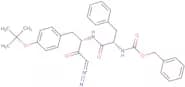
CAS:<p>N-Methyl-DL-aspartic acid (NMDA) is a pharmacological agent that binds to the glutamate receptor and increases the intracellular calcium concentration in cells. NMDA has been shown to cause neuronal death in mouse hippocampal cells, as well as rat striatal cells. It can also act as a messenger molecule and enhance growth factor production. NMDA binds to the N-methyl-D-aspartate receptor, which is located on the surface of neurons in the brain. This binding causes an influx of sodium ions into the cell, resulting in an increase in the intracellular calcium concentration. This increase leads to changes in cellular function, including increased growth factor production and neuronal death.</p>Formula:C5H9NO4Purity:Min. 95%Color and Shape:PowderMolecular weight:147.13 g/molZ-Phe-Tyr(tBu)-diazomethylketone
CAS:<p>Z-Phe-Tyr(tBu)-diazomethylketone is a compound that is used in the treatment of cancer and HIV. It was developed as an antiviral therapy for HIV, but it has been found to be ineffective against HIV. Z-Phe-Tyr(tBu)-diazomethylketone has been shown to produce attenuating effects on syncytial virus and may be a potential antiviral drug. This compound is not active against regulatory sequences or tissues, but it does inhibit endoproteolytic processing of n6-methyladenosine, which leads to modifications in rna binding.</p>Formula:C31H34N4O5Purity:Min. 95%Color and Shape:Off-White PowderMolecular weight:542.63 g/molN-alpha-[2,4-Dinitro-5-fluorophenyl]-D-alanine amide
CAS:<p>N-alpha-[2,4-Dinitro-5-fluorophenyl]-D-alanine amide is a potential drug for the treatment of cancer. It has been shown to be effective in inhibiting the proliferation of human prostate carcinoma cells in culture. This compound is a potential anticancer drug that binds to DNA and inhibits topoisomerase II, which is an enzyme involved in DNA replication. The mechanism of action of this drug was studied using methods such as optimization, isomers, plates, trifluoroacetic acid, tautomers, amino acid analysis and nanomolar concentrations. N-alpha-[2,4-Dinitro-5-fluorophenyl]-D-alanine amide has also been shown to inhibit cyanobacteria growth.</p>Formula:C9H9N4O5FPurity:Min. 95%Color and Shape:Light (Or Pale) Yellow To Yellow SolidMolecular weight:272.0557N-(4-Methoxyphenyl)ethane-1,2-diamine
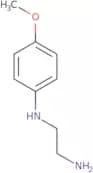
CAS:<p>N-(4-Methoxyphenyl)ethane-1,2-diamine is a synthetic compound that has been shown to inhibit the activity of cathepsins. It can be used in the treatment of diseases caused by these enzymes, such as osteoarthritis and Alzheimer's disease. N-(4-Methoxyphenyl)ethane-1,2-diamine has a pharmacokinetic profile that is favorable for oral administration. The drug is absorbed from the gastrointestinal tract readily and undergoes extensive metabolism in the liver. This process leads to the formation of active metabolites which are excreted in urine or bile. N-(4-Methoxyphenyl)ethane-1,2-diamine also inhibits nitroalkanes with activated aromatic rings, such as 4-nitrobenzaldehyde and 2,4,6-trinitrobenzene.</p>Formula:C9H14N2OPurity:Min. 95%Color and Shape:Slightly Yellow PowderMolecular weight:166.22 g/molL-α-Lysophosphatidylcholine
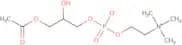
CAS:L-alpha-Lysophosphatidylcholine (from bovine brain) is a phospholipid that has been shown to have a matrix effect in biological samples. It can be used for the diagnosis of diseases, such as infectious diseases, by assessing the enzyme activities and receptor activity. L-alpha-Lysophosphatidylcholine (from bovine brain) can also be used to evaluate the response of polymorphonuclear leucocytes to an antigen. This molecule is an important component of the basic protein, which is found in higher concentrations in infectious diseases. L-alpha-Lysophosphatidylcholine (from bovine brain) has been shown to have an inhibitory effect on the polymerase chain reaction process.Purity:Min. 95%Color and Shape:PowderN-Methyl-3,4-methylenedioxyphenylpropane hydrochloride
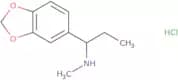
CAS:Controlled Product<p>N-Methyl-3,4-methylenedioxyphenylpropane hydrochloride is a high quality reagent that is a useful intermediate in the synthesis of complex compounds. It is used as a fine chemical and research chemicals in the manufacture of speciality chemicals. N-Methyl-3,4-methylenedioxyphenylpropane hydrochloride has been shown to be an excellent scaffold for the synthesis of many different compounds with high versatility. It can also be used as a building block or reaction component.</p>Formula:C11H15NO2·HClColor and Shape:PowderMolecular weight:229.7 g/molEthyl 4-methylpyrrole 3-carboxylate
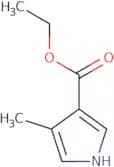
CAS:<p>Ethyl 4-methylpyrrole 3-carboxylate is a monomer that belongs to the group of functional groups. It is used in the polymerization process and has been shown to be able to imprint or introduce other functional groups into polymers. The following are some of its properties: it can be used as an operational group, it has chemical interactions with other functional groups, and it can be used for selectivity techniques. It also has isomeric properties, which depend on the type of functional group attached. Some examples of these properties are electrochemical polymerization and electropolymerization. The molecule also interacts with different polarities depending on the type of functional group attached.</p>Formula:C8H11NO2Purity:Min. 95%Color and Shape:Yellow PowderMolecular weight:153.18 g/molFmoc-β-Ala-Ser(Psi(Me,Me)pro)-OH
<p>Fmoc-b-Ala-Ser(Psi(Me,Me)pro)-OH is a fine chemical that is a versatile building block for the synthesis of complex compounds. It is also a useful intermediate in organic chemistry. This chemical can be used as a reaction component to synthesize peptides and other research chemicals. Fmoc-b-Ala-Ser(Psi(Me,Me)pro)-OH has been shown to have high quality and be an excellent reagent in the synthesis of complex molecules.</p>Formula:C24H26N2O6Purity:Min. 95%Color and Shape:PowderMolecular weight:438.47 g/molMethyl (2R,3S)-N-boc-3-phenylisoserine
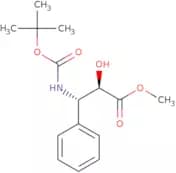
CAS:<p>Methyl (2R,3S)-N-boc-3-phenylisoserine is a fine chemical that has been used as a building block for the synthesis of complex compounds with high quality. It reacts with other molecules to form various useful compounds and has been used in research chemicals and as a reaction component. Methyl (2R,3S)-N-boc-3-phenylisoserine is also used as a reagent and is an important intermediate for the production of many speciality chemicals.</p>Formula:C15H21NO5Purity:Min. 95%Color and Shape:PowderMolecular weight:295.33 g/mol2-Hydroxy-4-methoxybenzophenone-5-sulfonic acid
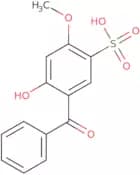
CAS:<p>2-Hydroxy-4-methoxybenzophenone-5-sulfonic acid is a diazonium salt that can be used as a reference standard to measure the microbial metabolism of aromatic compounds. It is stable in air and light, but can undergo photolysis in solution. The monosodium salt form of 2-hydroxy-4-methoxybenzophenone-5-sulfonic acid has been shown to have acute toxicities for fish, rats and rabbits. This compound also has photochemical properties that make it useful for surface methodology, such as determining the degree of hydrophobicity of various types of surfaces. Hydrochloric acid is needed for the preparation of this compound.</p>Formula:C14H12O6SPurity:Min. 95%Color and Shape:White To Yellow SolidMolecular weight:308.31 g/molO-tert-Butyl-L-serine
CAS:<p>O-tert-Butyl-L-serine is a chemical compound that is a derivative of the amino acid L-phenylalanine. It is used as a linker to attach benzene molecules to other compounds. Its kinetics and properties have been studied in detail, and it has been shown to be a high molecular weight, hydrophobic, organic solvent ester. O-tert-Butyl-L-serine can be synthesized by reacting benzyl chloride with an ester hydrochloride in the presence of catalytic amounts of pyridine and DMAP. The resulting product is an amide hydrochloride that can then be converted into the tertiary amine using base hydrolysis. This tertiary amine can then be reacted with benzene in the presence of base to produce O-tert-butyl-L-serine.</p>Formula:C7H15NO3Purity:Min. 98 Area-%Color and Shape:PowderMolecular weight:161.2 g/molFmoc-Asp(OtBu)-Ser(Psi(Me,Me)pro)-OMe
<p>Fmoc-Asp(OtBu)-Ser(Psi(Me,Me)pro)-OMe is a versatile building block that can be used in a variety of chemical reactions. Fmoc-Asp(OtBu)-Ser(Psi(Me,Me)pro)-OMe is a reagent and speciality chemical that is useful as an intermediate or reaction component for the synthesis of complex compounds. Fmoc-Asp(OtBu)-Ser(Psi(Me,Me)pro)-OMe has been used in the synthesis of many fine chemicals and research chemicals. This compound has also been shown to have high quality and is a useful scaffold for drug discovery.</p>Formula:C30H36N2O8Purity:Min. 95%Color and Shape:PowderMolecular weight:552.62 g/mol


![N-alpha-[2,4-Dinitro-5-fluorophenyl]-D-alanine amide](/_next/image/?url=https%3A%2Fstatic.cymitquimica.com%2Fproducts%2F3D%2Fthumb-webp%2FFD48427.webp&w=3840&q=75)