Amino Acids (AA)
Subcategories of "Amino Acids (AA)"
- Amino Acid Derivatives(4,012 products)
- Amino Acid and Amino Acid Related Compounds(3,490 products)
- Amino Acids with Oxygen or Sulphur(168 products)
- Boc- Amino Acids(351 products)
- Fmoc Amino Acids(1,710 products)
Found 38365 products of "Amino Acids (AA)"
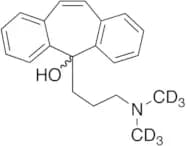
5-Hydroxy-N-methylprotriptyline-d6
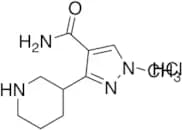
CAS:Controlled ProductFormula:C20D6H17NOColor and Shape:NeatMolecular weight:299.441-Methyl-3-(piperidin-3-yl)-1H-pyrazole-4-carboxamide Hydrochloride
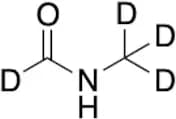
CAS:Controlled ProductFormula:C10H16N4O·HClColor and Shape:NeatMolecular weight:244.721N-Methyl-d3-form-d1-amide
CAS:Controlled ProductApplications N-Methyl-d3-form-d1-amide (CAS# 110505-55-0) is a useful isotopically labeled research compound.
Formula:C2HD4NOColor and Shape:NeatMolecular weight:63.091,2-O-Dioctadecyl-rac-glycerol
CAS:Controlled ProductFormula:C39H80O3Color and Shape:NeatMolecular weight:597.051Diethyl 3,7-Bis(formyloxy)-25-methyl-cholestane-26,27-dioic Acid Ester-d3
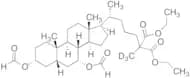
CAS:Controlled ProductApplications Diethyl 3,7-Bis(formyloxy)-25-methyl-cholestane-26,27-dioic Acid Ester-d3 is an intermediate used in the synthesis of 3α,7α-Dihydroxycoprostanic Acid-d3 (D452517), which is a labelled analogue of 3α,7α-Dihydroxycoprostanic Acid (D452515), a precursor of Cholic Acid (C432600), it undergoes side chain oxidation during the synthesis of bile acids. It was found that Zellweger’s syndrome patients have abnormal mitochondrial structure, the organelle that is responsible for the side chain oxidation, and as a consequence, excess amounts of 3α,7α-Dihydroxycoprostanic Acid.
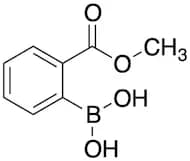
References Hanson, R. F., et al.: Science (Washington, DC, U. S.), 203, 1107 (1979)Formula:C34D3H51O8Color and Shape:NeatMolecular weight:593.8062-Methoxycarbonylphenylboronic acid
CAS:Controlled ProductApplications 2-Methoxycarbonylphenylboronic acid
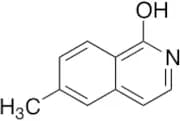
Formula:C8H9BO4Color and Shape:NeatMolecular weight:179.976-Methylisoquinolin-1(2H)-one
CAS:Controlled ProductApplications 6-Methylisoquinolin-1(2H)-one (cas# 131002-10-3) is a useful research chemical.
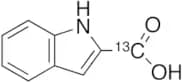
Formula:C10H9NOColor and Shape:NeatMolecular weight:159.185Indole-2-carboxylic Acid-13C
CAS:Controlled ProductApplications Indole-2-carboxylic Acid-13C (cas# 1216839-31-4) is a compound useful in organic synthesis.
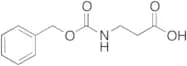
Formula:C813CH7NO2Color and Shape:NeatMolecular weight:162.15N-Carbobenzoxy-β-alanine
CAS:Controlled ProductApplications N-Carbobenzoxy-β-alanine has been utilized for various synthesis applications including palladium-catalyzed asymmetric allylation of β-diketones, branched linker that can increase the potency of doxorubicin immunoconjugates, and diacridines that intercalate nucleic acids and inhibit DNA synthesis.
References Sawamura, M., et al.: J. Am. Chem. Soc. 114, 2586 (1997); King, H. D., et al.: Bioconjugate Chem. 10, 279 (1999); Denny, W. A., et al.: J. Med. Chem 28, 1568 (1985)Formula:C11H13NO4Color and Shape:NeatMolecular weight:223.231-O-Octadecyl-2-O-methyl-rac-glycerol-d5
CAS:Controlled ProductApplications 1-O-Octadecyl-2-O-methyl-rac-glycerol-d5 is labelled 1-O-Octadecyl-2-O-methyl-rac-glycerol (O236100) which is used to prepare homologous piperidine-containing alkyl glycerolipids with possible antitumor activities.
References Stekar, J., et al.: Angewandte Chemie, International Edition in English, 34, 238 (1995)Formula:C22D5H41O3Color and Shape:NeatMolecular weight:363.637-Methylindole
CAS:Controlled ProductApplications 7-Methylindole is a reactant in the synthesis of α-amino amides that are found in a variety of biological-active compounds.
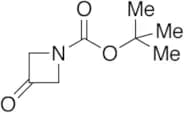
References Box, H.K., et. al.: Tetrahedron, 70, 9709 (2014)Formula:C9H9NColor and Shape:NeatMolecular weight:131.171-Boc-3-azetidinone
CAS:Controlled ProductApplications Used for the preparation of antibacterial aminoglycoside analogs.
Not a dangerous good if item is equal to or less than 1g/ml and there is less than 100g/ml in the package
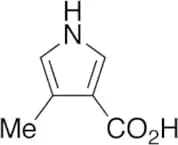
References Wright, J., et al.: J. Antibiotics, 29, 714 (1976), Chanal, C., et al.: Antimicrob. Agents Chemother., 32, 1660 (!988),Formula:C8H13NO3Color and Shape:NeatMolecular weight:171.194-Methyl-1H-pyrrole-3-carboxylic acid
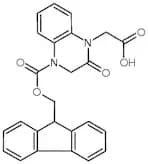
CAS:Controlled ProductFormula:C6H7NO2Color and Shape:NeatMolecular weight:125.125Fmoc-4-carboxymethyl-1,2,3,4-tetrahydroquinoxalin-3-one
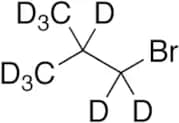
CAS:Controlled ProductFormula:C25H20N2O5Color and Shape:NeatMolecular weight:428.4371-Bromo-2-methylpropane-d9
CAS:Controlled ProductApplications Isotope labelled 1-Bromo-2-methylpropane is a halogenated alkane used in various synthetic preparations.
Not a dangerous good if item is equal to or less than 1g/ml and there is less than 100g/ml in the package
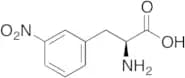
References Noller, C.R., et al.: Org. Syntheses., 13, (1933); Wang, Z.M., et al.: Lett. Org. Chem., 4, 72 (2007);Formula:C4D9BrColor and Shape:NeatMolecular weight:146.07L-3-Nitrophenylalanine
CAS:Controlled ProductApplications L-3-Nitrophenylalanine is a derivative of L-Phenylalanine (P319415), and is used in the photocleavage of polypeptide backbones. L-Phenylalanine is an essential amino acid. L-Phenylalanine is biologically converted into L-tyrosine, another one of the DNA-encoded amino acids, which in turn is converted to L-DOPA and further converted into dopamine, norepinephrine, and epinephrine.
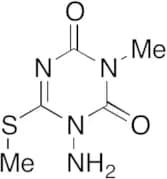
References Peters, F. et al.: Chem. Biol., 16, 148 (2009); Hollunger, G. et al.: Acta Pharmacol. Toxicol., 34, 391 (1974); Bagchi, S.P. et al.: Biochem. Pharmacol., 26, 900 (1977);Formula:C9H10N2O4Color and Shape:NeatMolecular weight:210.191-Amino-3-methyl-6-(methylthio)-1,3,5-triazine-2,4(1H,3H)-dione
CAS:Controlled ProductFormula:C5H8N4O2SColor and Shape:NeatMolecular weight:188.21a-Methyl-1-naphthaleneacetic Acid-d3 Methyl Ester
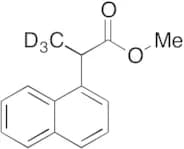
CAS:Controlled ProductApplications α-Methyl-1-naphthaleneacetic Acid Methyl Ester is an isotope labelled intermediate in the synthesis of 5-Methylchrysene (M265135), methylated derivative of chrysenes (MeChry), an aryl hydrocarbon receptor (AhR) agonist.
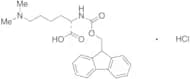
References Abd, E.A., et al.: Poly. Arom. Comp., 33, 331 (2013); Galatsis, P., et al.: Bioorg. Med. Chem. Lett., 20, 5089 (2010);Formula:C14H11D3O2Color and Shape:NeatMolecular weight:217.28(S)-N-Fmoc-N6,N6-dimethyl-L-lysine Hydrochloride
CAS:Controlled ProductApplications Di-Me L-lysine derivative. The methylation of lysine in histone tails is a common posttranslational modification that functions in histone-regulated chromatin condensation, with binding of methylated lysine occurring in aromatic pockets on chromodomain proteins.
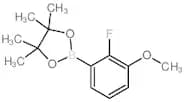
References Schreiber, G., et al.: J. Mol. Biol., 248, 478 (1995), Jacobs, S., et al.: Science, 295, 2080 (2002), Tatko, C., et al.: Protein Sci., 12, 2443 (2003),Formula:C23H28N2O4·ClHColor and Shape:NeatMolecular weight:432.942-(2-Fluoro-3-methoxyphenyl)-4,4,5,5-tetramethyl-1,3,2-dioxaborolane
CAS:Controlled ProductApplications 2-(2-Fluoro-3-methoxyphenyl)-4,4,5,5-tetramethyl-1,3,2-dioxaborolane
Formula:C13H18BFO3Color and Shape:NeatMolecular weight:252.09