Amino Acids (AA)
Subcategories of "Amino Acids (AA)"
- Amino Acid Derivatives(4,017 products)
- Amino Acid and Amino Acid Related Compounds(3,491 products)
- Amino Acids with Oxygen or Sulphur(168 products)
- Boc- Amino Acids(351 products)
- Fmoc Amino Acids(1,710 products)
Found 38385 products of "Amino Acids (AA)"
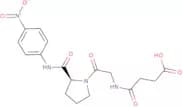
Suc-Gly-Pro-pNA
CAS:Suc-Gly-Pro-pNA is a proteolytic enzyme that hydrolyzes proteins. It has been shown to have potential for use as an anti-inflammatory agent. Suc-Gly-Pro-pNA has high proteolytic activity and can cleave peptide hormones such as angiotensin II and vasopressin. It also has thermal stability, and can tolerate high concentrations of salt and heat, making it suitable for therapeutic purposes. Suc-Gly-Pro-pNA binds to peptides with carboxy terminal residues by substrate binding, which may be the reason for its high degree of specificity. This enzyme is expressed in the cytosol and extracellular environment.Formula:C17H20N4O7Purity:Min. 95%Molecular weight:392.36 g/molFmoc-Gly-Wang resin (100-200 mesh)
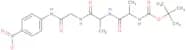
Please enquire for more information about Fmoc-Gly-Wang resin (100-200 mesh) including the price, delivery time and more detailed product information at the technical inquiry form on this pagePurity:Min. 95%Boc-Ala-Ala-Gly-pNA
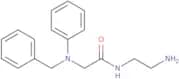
CAS:Boc-Ala-Ala-Gly-pNA is a peptide that has been synthesized using the Fmoc/tBu strategy. It has an acidic pH, and its proteolytic activity can be enhanced by the addition of chromogenic or fluorogenic substrates. Boc-Ala-Ala-Gly-pNA is used as a substrate in fingerprint analysis and can be used to identify bacteria such as Proteus mirabilis, Pseudomonas aeruginosa, and Bacillus cereus. This peptide can also be used to identify strains of Escherichia coli, Enterococci, Staphylococci, Streptococci, and Haemophilus influenzae.Formula:C19H27N5O7Purity:Min. 95%Color and Shape:PowderMolecular weight:437.45 g/molN-(2-Amino-ethyl)-2-(benzyl-phenyl-amino)-acetamide
CAS:Please enquire for more information about N-(2-Amino-ethyl)-2-(benzyl-phenyl-amino)-acetamide including the price, delivery time and more detailed product information at the technical inquiry form on this page
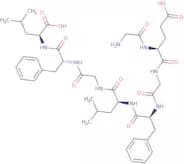
Formula:C17H21N3OPurity:Min. 95%Color and Shape:White PowderMolecular weight:283.37 g/molH-Gly-Glu-Gly-Phe-Leu-Gly-D-Phe-Leu-OH
CAS:Please enquire for more information about H-Gly-Glu-Gly-Phe-Leu-Gly-D-Phe-Leu-OH including the price, delivery time and more detailed product information at the technical inquiry form on this pageFormula:C41H58N8O11Purity:Min. 95%Molecular weight:838.95 g/molH-His-Met-OH
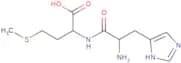
CAS:H-His-Met-OH is a histidine derivative that has been shown to have antioxidant properties. It is classified as an amide, and also acts as a chelating agent. The molecule can bind to metal ions and thereby scavenge free radicals. H-His-Met-OH has been shown to have anti-cancer activity in vitro and in vivo against kidney cancer cells. This compound also has the ability to inhibit the growth of Pseudomonas aeruginosa, which is an activated form of this bacterium, by preventing its respiration. H-His-Met-OH inhibits energy metabolism in cancer cells, which may be due to its ability to inhibit glucose uptake by inhibiting the glycolytic pathway.Formula:C11H18N4O3SPurity:Min. 95%Molecular weight:286.35 g/mol1,2-Phenylene phosphorochloridite
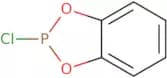
CAS:1,2-Phenylene phosphorochloridite is a chemical that is an intermediate for the synthesis of perfluorinated compounds. It has been used as a precursor for the synthesis of biodiesel. The proton NMR spectrum shows three resonances: one at δ 3.8 ppm (J = 6 Hz) corresponding to the protons on the aromatic ring, one at δ 4.7 ppm (J = 6 Hz) corresponding to the protons on the chloro group, and one at δ 7.6 ppm (J = 2 Hz) corresponding to the protons on the methylene chain. This chemical can be prepared by reacting trifluoroacetic acid with phenol in a preparative method with nucleophilic substitution or by dehydrating fatty alcohols with halides in a dehydration reaction.
Formula:C6H4ClO2PPurity:Min. 95%Color and Shape:PowderMolecular weight:174.52 g/molH-Leu-Leu-Leu-NH2
CAS:Please enquire for more information about H-Leu-Leu-Leu-NH2 including the price, delivery time and more detailed product information at the technical inquiry form on this page
Formula:C18H36N4O3Purity:Min. 95%Molecular weight:356.5 g/molGLP-1 (7-36)-Lys(biotinyl) amide (human, bovine, guinea pig, mouse, rat) trifluoroacetate
CAS:Please enquire for more information about GLP-1 (7-36)-Lys(biotinyl) amide (human, bovine, guinea pig, mouse, rat) trifluoroacetate including the price, delivery time and more detailed product information at the technical inquiry form on this pageFormula:C165H252N44O48S•(C2HF3O2)xPurity:Min. 95%Molecular weight:3,652.1 g/molTRH-AMC acetate salt
CAS:TRH-AMC acetate salt Pyr-His-Pro-AMC acetate salt is a potent and selective histidine kinase inhibitor that modulates the activity of many enzymes. TRH-AMC acetate salt Pyr-His-Pro-AMC acetate salt has a molecular weight of 476.9 g/mol and chemical formula C12H14N2O4S. The compound was synthesized by reacting tris(2,4,6-trimethoxybenzoyl)amine with pyridoxal 5'-phosphate and histidine in acetic acid. The synthesis reaction yielded a white solid that was then recrystallized from methanol to yield the final product. TRH-AMC acetate salt Pyr-His-Pro-AMC acetate salt has been shown to inhibit the enzymatic activity of numerous enzymes at nanomolar concentrations including: protein kinases, phosphatases, ligasesFormula:C26H28N6O6Purity:Min. 95%Molecular weight:520.54 g/molFmoc-L-aspartic acid β-methylpentyl ester
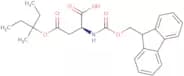
CAS:Fmoc-L-aspartic acid b-methylpentyl ester is a solid phase synthesis of Asp(OtBu)-OH that has been synthesized by reacting aspartic acid with piperidine and methylbenzene. This synthesis has been shown to be effective at temperatures below 25°C, to minimize the formation of water, and to be resistant to treatments with strong acids or bases. The synthesis has also been optimized for the peptidyl bond formation and peptide synthesis, resulting in enhanced yields.Formula:C25H29NO6Purity:Min. 95%Color and Shape:White PowderMolecular weight:439.5 g/molH-Arg-Arg-Lys-Asp-Leu-His-Asp-Asp-Glu-Glu-Asp-Glu-Ala-Met-Ser-Ile-Thr-Ala-OH
CAS:Please enquire for more information about H-Arg-Arg-Lys-Asp-Leu-His-Asp-Asp-Glu-Glu-Asp-Glu-Ala-Met-Ser-Ile-Thr-Ala-OH including the price, delivery time and more detailed product information at the technical inquiry form on this pageFormula:C85H139N27O35SPurity:Min. 95%Molecular weight:2,131.24 g/molO-a-Hippuryl-L-argininic acid hydrochloride salt
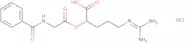
CAS:Please enquire for more information about O-a-Hippuryl-L-argininic acid hydrochloride salt including the price, delivery time and more detailed product information at the technical inquiry form on this pageFormula:C15H20N4O5Purity:Min. 95%Molecular weight:336.34 g/mol(Leu8,D-Trp22,Tyr25)-Somatostatin-28
CAS:Please enquire for more information about (Leu8,D-Trp22,Tyr25)-Somatostatin-28 including the price, delivery time and more detailed product information at the technical inquiry form on this pageFormula:C138H209N41O40S2Purity:Min. 95%Molecular weight:3,146.52 g/molFmoc-Leu-Pro-OH
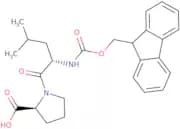
CAS:Fmoc-Leu-Pro-OH is a benzyl ester that can be used in peptide synthesis. It can be used to remove the benzyl protecting group from the amino acids leucine, proline, and hydroxyproline. Fmoc-Leu-Pro-OH is also capable of cleaving dipeptides and octapeptides. The benzyl ester can be deprotected using anisole and accelerates the reaction. This reagent is irreversible, so it cannot be reused.Formula:C26H30N2O5Purity:Min. 95%Molecular weight:450.53 g/mol(Phe1,Ser2)-TRAP-6 trifluoroacetate salt
CAS:Please enquire for more information about (Phe1,Ser2)-TRAP-6 trifluoroacetate salt including the price, delivery time and more detailed product information at the technical inquiry form on this pageFormula:C34H56N10O9Purity:Min. 95%Molecular weight:748.87 g/molFibronectin Adhesion-Promoting Peptide trifluoroacetate salt
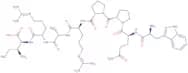
CAS:Fibronectin Adhesion-Promoting Peptide trifluoroacetate salt H-Trp-Gln-Pro-Pro-Arg-Ala-Arg-Ile-OH trifluoroacetate salt (FAP) is a synthetic peptide that promotes fibronectin adhesion. It binds to the amino acid sequence in the C terminal end of fibronectin, which is known to be responsible for binding to actin filaments and growth factors. FAP has been shown to promote wound healing by stimulating the proliferation of corneal epithelial cells in vitro. The mechanism of action of FAP may be due to its ability to bind to chloride ions, which are involved in the regulation of cell proliferation and migration.
Formula:C47H74N16O10Purity:Min. 95%Molecular weight:1,023.19 g/mol(Ala2)-Leu-Enkephalin
CAS:Leu-enkephalin is an opioid peptide that is a neurotransmitter in the brain. It is synthesized from the proenkephalin precursor and acts on δ-opioid receptors and kappa-opioid receptors. Leu-enkephalin has been shown to have physiological effects such as analgesia, hypothermia, hyperalgesia, and decreased gastrointestinal motility. Leu-enkephalin also inhibits voltage-dependent calcium channels in neuronal cells by binding to them with high affinity. The binding of leu-enkephalin to these channels affects their function and leads to neuronal death. Disulfide bonds are formed between cysteine residues on leu-enkephalin to stabilize this protein's structure.Formula:C29H39N5O7Purity:Min. 95%Molecular weight:569.65 g/molAmyloid P Component (33-38) amide trifluoroacetate salt
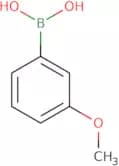
CAS:Please enquire for more information about Amyloid P Component (33-38) amide trifluoroacetate salt including the price, delivery time and more detailed product information at the technical inquiry form on this pageFormula:C37H56N10O7SPurity:Min. 95%Molecular weight:784.97 g/mol3-Methoxyphenylboronic acid
CAS:3-Methoxyphenylboronic acid is a photophysical molecule that can be used as an analytical reagent in plant physiology and analytical chemistry. 3-Methoxyphenylboronic acid reacts reversibly with copper ions to form a complex. The binding constants of the copper complex depend on the pH of the solution, which can be altered by adding a phosphate derivative to the solution. This reaction was investigated using cross-coupling techniques and showed that the binding constants for this complex are dependent on the type of solvent used. 3-Methoxyphenylboronic acid has also been used to measure glucose levels in blood samples.Formula:C7H9BO3Purity:Min. 95%Color and Shape:White PowderMolecular weight:151.96 g/mol