Amino Acids (AA)
Subcategories of "Amino Acids (AA)"
- Amino Acid Derivatives(4,012 products)
- Amino Acid and Amino Acid Related Compounds(3,490 products)
- Amino Acids with Oxygen or Sulphur(168 products)
- Boc- Amino Acids(351 products)
- Fmoc Amino Acids(1,710 products)
Found 38366 products of "Amino Acids (AA)"
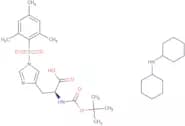
Boc-His(1-Mts)-OH·DCHA
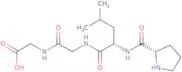
CAS:Controlled ProductPlease enquire for more information about Boc-His(1-Mts)-OH·DCHA including the price, delivery time and more detailed product information at the technical inquiry form on this pageFormula:C20H27N3O6S·C12H23NPurity:Min. 95%Molecular weight:618.83 g/molH-Pro-Leu-Gly-Gly-OH
CAS:Please enquire for more information about H-Pro-Leu-Gly-Gly-OH including the price, delivery time and more detailed product information at the technical inquiry form on this pageFormula:C15H26N4O5Purity:Min. 95%Molecular weight:342.39 g/molH-Met-D-Met-OH
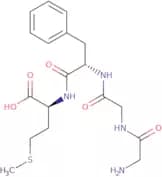
CAS:Please enquire for more information about H-Met-D-Met-OH including the price, delivery time and more detailed product information at the technical inquiry form on this pageFormula:C10H20N2O3S2Purity:Min. 95%Molecular weight:280.41 g/mol(Des-Tyr1)-Met-Enkephalin
CAS:Des-Tyr1-Met-Enkephalin H-Gly-Gly-Phe-Met-OH is a peptide that is derived from the endorphin family. It has been shown to have both amnestic and enkephalin effects, which may be due to its antagonistic effect on naloxone. This endogenous peptide has been studied in a dose response curve, with an increase in amnesia and decrease in memory retention as the dose increases. Des-Tyr1-Met-Enkephalin H-Gly-Gly-Phe-Met-OH also binds to receptors at the same sites as other substances such as epinephrine, β endorphin, and behavioral effects are observed.
Formula:C18H26N4O5SPurity:Min. 95%Molecular weight:410.49 g/molBoc-Pro-PAM resin (200-400 mesh)
Please enquire for more information about Boc-Pro-PAM resin (200-400 mesh) including the price, delivery time and more detailed product information at the technical inquiry form on this pagePurity:Min. 95%Furin Inhibitor II trifluoroacetate salt
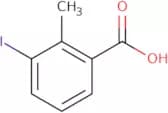
CAS:Furin inhibitor II is a small molecule that inhibits the activity of furin, which is an enzyme used in the processing of growth factor-β1. Furin inhibitor II binds to human receptors and blocks their binding to the surface glycoprotein on cancer cells. Furin inhibitor II also has physiological activities, such as reducing inflammation, inhibiting viral replication, and inhibiting the growth of bacteria. Furin inhibitor II may be useful for treating cancer or infectious diseases.Formula:C36H75N25O6Purity:Min. 95%Molecular weight:954.15 g/mol3-Iodo-2-methylbenzoic acid
CAS:3-Iodo-2-methylbenzoic acid is a reagent that is used as an intermediate in the synthesis of complex compounds and fine chemicals. 3-Iodobenzoic acid is classified as a speciality chemical, which means it can be used for research purposes only. 3-Iodo-2-methylbenzoic acid has many uses, including being a versatile building block in chemical reactions and a reaction component in the synthesis of useful scaffolds and building blocks.Formula:C8H7IO2Purity:Min. 95%Color and Shape:SolidMolecular weight:262.04 g/mol(D-Arg2, Sar 4)-Dermorphin (1-4) trifluoroacetate salt
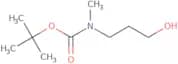
CAS:Please enquire for more information about (D-Arg2, Sar 4)-Dermorphin (1-4) trifluoroacetate salt including the price, delivery time and more detailed product information at the technical inquiry form on this pagePurity:Min. 95%Molecular weight:555.63N-Methyl-N-boc-aminopropan-3-ol
CAS:N-Methyl-N-boc-aminopropan-3-ol is a fine chemical with CAS No. 98642-44-5 that is used in the synthesis of complex compounds, as a reagent for research chemicals, and as a speciality chemical. It is also used in the synthesis of versatile building blocks, reaction components and scaffolds. N-Methyl-N-boc-aminopropan-3-ol has a high quality and can be used as a versatile intermediate or a useful scaffold.Formula:C9H19NO3Purity:Min. 95%Color and Shape:Colourless To Pale Yellow LiquidMolecular weight:189.25 g/molH-Lys(isopropyl)-OH
CAS:Please enquire for more information about H-Lys(isopropyl)-OH including the price, delivery time and more detailed product information at the technical inquiry form on this pageFormula:C9H20N2O2Purity:Min. 95%Molecular weight:188.27 g/molHIV (gp120) Fragment (318-327)
CAS:Please enquire for more information about HIV (gp120) Fragment (318-327) including the price, delivery time and more detailed product information at the technical inquiry form on this pageFormula:C48H80N16O12Purity:Min. 95%Molecular weight:1,073.25 g/molH-Met-Thr-OH
CAS:Met-Thr-OH is a peptide binding inhibitor that is used as a research tool for determining the role of metalloproteins in vivo. Methionine aminopeptidase (MetAP) is an enzyme that cleaves methionine from protein and peptides and has been shown to play a vital role in cancer progression. MetAP has been shown to be inhibited by Met-Thr-OH, which binds to the enzyme's active site and blocks its activity. The inhibition of MetAP limits the production of proteins involved in cell growth and proliferation, leading to reductions in tumor size. This inhibition may also be due to the inhibition of other functional groups such as phosphorylation, dephosphorylation, or nitrosylation.
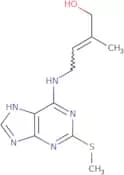
Formula:C9H18N2O4SPurity:Min. 95%Molecular weight:250.32 g/mol2-Methylthio-cis-zeatin
CAS:2-Methylthio-cis-zeatin is a corynebacterium metabolite that is produced by the oxidative deamination of 2-methylthioadenosine. It can be used as an indicator for the presence of corynebacteria in various plant species and has been found to have physiological functions such as multiple-reaction monitoring, biochemical analysis, and chemical structures. The production of 2-methylthio-cis-zeatin has been detected in tissue culture and explants from plants. Chemical analyses have shown that this metabolite is an impurity or contaminant in some pharmaceuticals and food products. 2-Methylthio-cis-zeatin can be identified using chromatographic methods with a mass spectrometric detection (MS) method, which allows for the identification of its isomers. This metabolite can also be analyzed using chromatographic methods with MS detection, which allows for the identification of its isomersFormula:C11H15N5OSPurity:Min. 95%Molecular weight:265.34 g/molH-D-Phe-His-Leu-Leu-Arg-Glu-Val-Leu-Glu-Nle-Ala-Arg-A la-Glu-Gln-Leu-Ala-Gln-Gln-Ala-His-Ser-Asn-Arg-Lys-a-Me-Leu-Nle-Glu-Ile-Ile-NH 2 trifluoroacetate salt
CAS:Please enquire for more information about H-D-Phe-His-Leu-Leu-Arg-Glu-Val-Leu-Glu-Nle-Ala-Arg-A la-Glu-Gln-Leu-Ala-Gln-Gln-Ala-His-Ser-Asn-Arg-Lys-a-Me-Leu-Nle-Glu-Ile-Ile-NH 2 trifluoroacetate salt including the price, delivery time and more detailed product information at the technical inquiry form on this pageFormula:C159H267N49O43Purity:Min. 95%Molecular weight:3,553.13 g/molFmoc-Cit-Wang resin (200-400 mesh)
Please enquire for more information about Fmoc-Cit-Wang resin (200-400 mesh) including the price, delivery time and more detailed product information at the technical inquiry form on this pagePurity:Min. 95%Methylenedi-p-phenyl diisocyanate
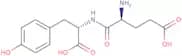
CAS:Methylenedi-p-phenyl diisocyanate (MDI) is a glycol ether, which is a potent inducer of allergic reactions. It can be found in polyurethane foam insulation and in the production of diphenyl and diisocyanate. MDI has been shown to cause asthma, skin inflammation, and other respiratory problems. MDI is highly toxic to aquatic life and can cause long term effects on fish populations. The toxicity of MDI depends on the concentration and duration of exposure, as well as the species that it is administered to. High concentration exposure for a short period of time will result in death by respiratory failure or cardiac arrest. Longer exposure at lower concentrations may lead to liver, kidney, lung damage or cancerous tumor development.Formula:C15H10N2O2Purity:Min. 95%Molecular weight:250.25 g/molH-Glu-Tyr-OH
CAS:H-Glu-Tyr-OH is an amino acid derivative that has been shown to have anti-cancer properties. It inhibits the growth of cancer cells by binding to the surface of the tumor and inhibiting the production of angiogenic factors. This leads to a decrease in tumor size and an increase in light emission, which can be detected with light exposure. H-Glu-Tyr-OH also inhibits protein synthesis and cell proliferation, leading to death of tumor cells. The mechanism of action for H-Glu-Tyr-OH is through its ability to inhibit DNA topoisomerase I and II, which are enzymes that maintain the integrity of DNA. These enzymes are essential for DNA replication and transcription, so their inhibition results in cell death.Formula:C14H18N2O6Purity:Min. 95%Molecular weight:310.3 g/mol(Des-Bromo)-Neuropeptide B (1-23) (human) trifluoroacetate salt
CAS:Please enquire for more information about (Des-Bromo)-Neuropeptide B (1-23) (human) trifluoroacetate salt including the price, delivery time and more detailed product information at the technical inquiry form on this pageFormula:C107H162N30O30Purity:Min. 95%Molecular weight:2,348.62 g/molH-Arg(NO2)-pNA·HBr
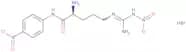
CAS:Please enquire for more information about H-Arg(NO2)-pNA·HBr including the price, delivery time and more detailed product information at the technical inquiry form on this page
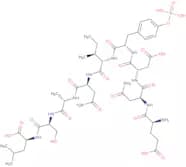
Formula:C12H17N7O5·HBrPurity:Min. 95%Molecular weight:420.22 g/molH-Glu-Asn-Asp-Tyr(PO3H2)-Ile-Asn-Ala-Ser-Leu-OH
CAS:Please enquire for more information about H-Glu-Asn-Asp-Tyr(PO3H2)-Ile-Asn-Ala-Ser-Leu-OH including the price, delivery time and more detailed product information at the technical inquiry form on this pageFormula:C44H68N11O21PPurity:Min. 95%Molecular weight:1,118.05 g/mol