Amino Acids (AA)
Subcategories of "Amino Acids (AA)"
- Amino Acid Derivatives(4,015 products)
- Amino Acid and Amino Acid Related Compounds(3,490 products)
- Amino Acids with Oxygen or Sulphur(168 products)
- Boc- Amino Acids(351 products)
- Fmoc Amino Acids(1,710 products)
Found 38368 products of "Amino Acids (AA)"
[4-(1-Cyano-1-methylethyl)phenyl]boronic acid
CAS:Please enquire for more information about [4-(1-Cyano-1-methylethyl)phenyl]boronic acid including the price, delivery time and more detailed product information at the technical inquiry form on this pageFormula:C10H12BNO2Purity:Min. 95%Molecular weight:189.02 g/molH-Cys(Acm)-2-chlorotrityl resin (200-400 mesh) (Low Substitution)
Please enquire for more information about H-Cys(Acm)-2-chlorotrityl resin (200-400 mesh) (Low Substitution) including the price, delivery time and more detailed product information at the technical inquiry form on this pagePurity:Min. 95%µ-Conotoxin GIIIA
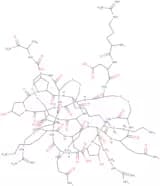
CAS:Controlled ProductConotoxins are peptides that can bind to specific receptors on the surface of cells. Their function is to regulate ion channels and thus affect cellular physiology. Conotoxin GIIIA is a disulfide-bonded peptide with a molecular weight of 5808 Da. It has been shown to inhibit Na+ channel activity in human serum, and may have diagnostic and therapeutic applications for diseases such as epilepsy. The amino acid sequence of conotoxin GIIIA is Arg-Asp-Cys-Cys-Thr-Hyp-Hyp-Lys-Lys-Cys-Lys-Asp-Arg-Gln-Cys (NH2)Formula:C100H170N38O32S6Purity:Min. 95%Molecular weight:2,609.05 g/molL-m-Tyrosine
CAS:L-m-Tyrosine is a nonessential amino acid that is synthesized from phenylalanine. It has been shown to have antioxidant properties and protects against oxidative injury by scavenging reactive oxygen species such as hydrogen fluoride. L-m-Tyrosine has also been shown to modulate dopamine levels in the brain and may be used in the treatment of Parkinson's disease. The biological effects of L-m-Tyrosine are mediated through the transcriptional regulation of genes encoding proteins involved in dopamine β-hydroxylase and hydrogen fluoride detoxification. L-m-Tyrosine is also an experimental model for studying drug resistance in bacteria, including methicillin resistant Staphylococcus aureus (MRSA).Formula:C9H11NO3Purity:Min. 98 Area-%Color and Shape:PowderMolecular weight:181.19 g/molH-Gly-Gly-Met-OH
CAS:H-Gly-Gly-Met-OH is a hydrophobic amino acid with a decelerated reaction. It has been shown to modulate the growth of organisms, such as Staphylococcus aureus and Streptococcus pneumoniae. This molecule also has aspirin-like activity against S. aureus and can be used for cavity prevention. H-Gly-Gly-Met-OH is effective in inhibiting the growth of S. aureus, but not against Streptococcus pneumoniae. The test organism used in this study was Escherichia coli K12. H-Gly-Gly-Met-OH has been shown to have sequences that are similar to those found in kinetically slow peptides and tripeptides, which may explain its stability when encapsulated in liposomes for oral administration.Formula:C9H17N3O4SPurity:Min. 95%Molecular weight:263.32 g/molFA-Phe-Lys-OH·HCl
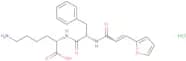
CAS:Please enquire for more information about FA-Phe-Lys-OH·HCl including the price, delivery time and more detailed product information at the technical inquiry form on this pageFormula:C22H27N3O5•HClPurity:Min. 95%Molecular weight:449.93 g/molBz-Asn-Gly-Thr-NH2
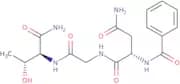
CAS:Please enquire for more information about Bz-Asn-Gly-Thr-NH2 including the price, delivery time and more detailed product information at the technical inquiry form on this page
Formula:C17H23N5O6Purity:Min. 95%Molecular weight:393.39 g/molH-Ser(tBu)-AMC·HCl
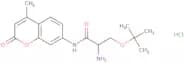
CAS:Please enquire for more information about H-Ser(tBu)-AMC·HCl including the price, delivery time and more detailed product information at the technical inquiry form on this page
Formula:C17H22N2O4·HClPurity:Min. 95%Molecular weight:354.83 g/molBrain Injury Derived Neurotrophic Peptide
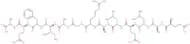
CAS:Brain Injury Derived Neurotrophic Peptide H-Glu-Ala-Leu-Glu-Leu-Ala-Arg-Gly-Ala-Ile-Phe-Gln-Ala-NH2 is a growth factor that has been shown to have antiinflammatory and immunosuppressive effects in autoimmune diseases. It also has the ability to bind to peptides, proteins, and particle surfaces. This peptide has been shown to be effective against cancer cells by inhibiting tumor growth and increasing the effectiveness of radiation therapy. Brain Injury Derived Neurotrophic Peptide H-Glu-Ala-Leu-Glu-Leu-Ala Arg Gly Ala Ile Phe Gln Ala NH2 is also an immunosuppressant that can reduce inflammation caused by infectious diseases such as HIV/AIDS.
Formula:C62H102N18O18Purity:Min. 95%Molecular weight:1,387.58 g/molH-Lys(acetimidoyl)-OH
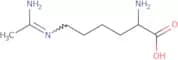
CAS:Lysine acetimidate is a reactive compound that can be activated by the addition of an acid. Lysine acetimidate is a potent activator of macrophages and other inflammatory cells. It has been used in experimental models to study bowel disease and repair mechanisms. In these models, lysine acetimidate has shown to have anti-inflammatory effects, which may be due to its ability to decrease the production of pro-inflammatory cytokines by immune cells. The metabolic disorder caused by lysine acetimidate is still being studied. Lysine acetimidate also has immunomodulatory effects, as it can inhibit the synthesis of epidermal growth factor (EGF) in lung cells and cause damage to alveolar type II cells in the lung.Formula:C8H17N3O2Purity:Min. 95%Molecular weight:187.24 g/molBiotinyl-Substance P trifluoroacetate salt
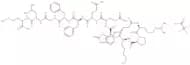
CAS:Biotinyl-Substance P trifluoroacetate salt Biotinyl-Arg-Pro-Lys-Pro-Gln-Gln-Phe-Phe-Gly-Leu-Met-NH2 trifluoroacetate salt is a biotin conjugated Substance P analog. It is designed to bind to the amino acid sequences in the brain that are responsible for controlling and regulating pain. The drug's amino acid sequence was designed by accessing databases of amino acid sequences from all known organisms. The drug is administered as a sequence of cassettes, each containing an acid molecule that can be transferred to cells through nucleotide transfer.Formula:C73H112N20O15S2Purity:Min. 95%Molecular weight:1,573.93 g/molBoc-glu(OtBu)-OH
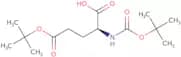
CAS:Boc-glu(OtBu)-OH is a synthetic substrate that is used in chemical diversity studies. It has been shown to be an important model system for the study of disaccharide uptake and metabolism. This substrate binds to lectins, which are proteins found on the surface of cells. Boc-glu(OtBu)-OH binds to oligosaccharides and human cervical carcinoma cells, as well as amide groups. Analytical methods have been developed to measure its uptake and metabolism.Formula:C14H25NO6Purity:Min. 98 Area-%Color and Shape:White Off-White PowderMolecular weight:303.35 g/molBoc-D-Arg(Pmc)-OH
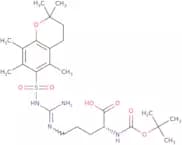
CAS:Boc-D-Arg(Pmc)-OH is a triazole derivative that inhibits the production of proinflammatory cytokines. It is used as a therapeutic for premature infants to reduce the risk of infections, such as sepsis and meningitis. Boc-D-Arg(Pmc)-OH has been shown to inhibit interleukin 1 receptor (IL1R) and IL1β synthesis in human cells. Boc-D-Arg(Pmc)-OH binds to the triazole ring of IL1β, preventing the formation of an enzyme complex that is required for IL1β synthesis. This binding also prevents the formation of an enzyme complex that is required for IL1R synthesis. The conformation of the peptide chain may be important for its activity, with some stereoisomers being more potent than others.Formula:C25H40N4O7SPurity:Min. 95%Molecular weight:540.67 g/molH-Gly-Cys-Gly-OH
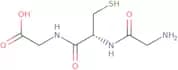
CAS:H-Gly-Cys-Gly-OH is an amino acid sequence that has been evaluated for its interactions with other amino acids and proteins. It is a tripeptide heterocycle and can be found in the tissues of many organisms, including humans. H-Gly-Cys-Gly-OH can be found in bovine serum and has been shown to have reversed phase high performance liquid chromatography activity. This molecule also interacts with reversed phase high performance liquid chromatography, ion exchange, and tripeptides.Formula:C7H13N3O4SPurity:Min. 95%Molecular weight:235.26 g/molH-Ala-Ala-Tyr-Ala-Ala-OH
CAS:H-Ala-Ala-Tyr-Ala-Ala-OH is a butanedione that hydrolyzes to form acetaldehyde. It is a chaperone and amide that, in the presence of water, forms peptides. The kinetic constants are dependent on the pH of the reaction. This product has been shown to have proctolin activity and is an enkephalinase inhibitor, which is involved in pain sensation. H-Ala-Ala-Tyr-Ala-Ala-OH has been used as an ion exchanger and carboxylate isomerizing agent.Formula:C21H31N5O7Purity:Min. 95%Molecular weight:465.5 g/molH-Pro-Lys-OH acetate salt
CAS:H-Pro-Lys-OH acetate salt is a synthetic compound that is specific for histidine residues. It catalyzes the hydrolysis of fibrinogen to form fibrin, which can be used in the formation of blood clots. This molecule has been shown to have a number of sequences and acid analysis. H-Pro-Lys-OH acetate salt can be used as an additive in food products. The incubation process should be done at pH 4.5 and the reaction should be stopped by adding tripeptides followed by using ion-exchange chromatography or SDS polyacrylamide gel electrophoresis to analyze the amino acids present in the product.
Formula:C11H21N3O3Purity:Min. 95%Molecular weight:243.3 g/molH-Met-Phe-OH
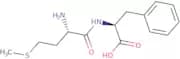
CAS:H-Met-Phe-OH is a synthetic polymerase chain that has been shown to be effective in treatment trials for various diseases such as ventricular dysfunction, cancer, inflammatory diseases, and virus. H-Met-Phe-OH binds to the DNA template strand and initiates the synthesis of RNA from nucleotide triphosphates. This molecule also has chemotactic activity and can be used as a diagnostic tool for inflammation or cancer. H-Met-Phe-OH can also be used in biological samples to detect viruses or hepatitis B.Formula:C14H20N2O3SPurity:Min. 95%Molecular weight:296.39 g/molH-Trp-Asn-OH
CAS:H-Trp-Asn-OH is a synthetic amino acid with the chemical formula H-Trp-Asn-OH. It has been shown to act as a competitive antagonist of the 5HT3 receptor and can be used in the treatment of diseases such as irritable bowel syndrome, depression, and anxiety. The crystal structure of H-Trp-Asn-OH shows that it is an L type polymerase that contains a carboxy group. The docking studies show that this compound binds to the receptor proteins of the subunits and inhibits fission by triphosphatases, which are enzymes involved in cellular processes such as transcription and protein synthesis.Formula:C15H18N4O4Purity:Min. 95%Molecular weight:318.33 g/molFmoc-Pro-Wang resin (200-400 mesh)
Please enquire for more information about Fmoc-Pro-Wang resin (200-400 mesh) including the price, delivery time and more detailed product information at the technical inquiry form on this pagePurity:Min. 95%Fmoc-D-ApH(Cbm)-D-ApH(Cbm)-OH
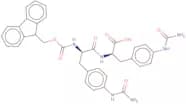
CAS:Fmoc-D-ApH(Cbm)-D-ApH(Cbm)-OH is a complex compound that is useful as a reagent for organic synthesis. It has been shown to be an effective intermediate in the synthesis of various compounds, such as peptides and pharmaceuticals. Fmoc-D-ApH(Cbm)-D-ApH(Cbm)-OH is also used as a building block for more complex molecules. This chemical has been shown to have high purity and quality, making it suitable for research purposes.
Formula:C35H34N6O7Purity:Min. 95%Color and Shape:PowderMolecular weight:650.68 g/mol
![[4-(1-Cyano-1-methylethyl)phenyl]boronic acid](/_next/image/?url=https%3A%2Fstatic.cymitquimica.com%2Fproducts%2F3D%2Fthumb-webp%2FFC121870.webp&w=3840&q=75)