Amino Acids (AA)
Subcategories of "Amino Acids (AA)"
- Amino Acid Derivatives(4,015 products)
- Amino Acid and Amino Acid Related Compounds(3,490 products)
- Amino Acids with Oxygen or Sulphur(168 products)
- Boc- Amino Acids(351 products)
- Fmoc Amino Acids(1,710 products)
Found 38368 products of "Amino Acids (AA)"
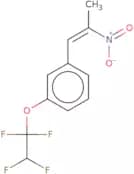
3'-(Tetrafluoroethoxy)-beta-methyl-beta-nitrostyrene
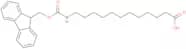
CAS:3'-(Tetrafluoroethoxy)-beta-methyl-beta-nitrostyrene is a versatile building block that can be used as a reaction component for the synthesis of more complex compounds. This compound is also known to have speciality chemical and research chemical properties. 3'-(Tetrafluoroethoxy)-beta-methyl-beta-nitrostyrene has been shown to be an effective reagent for the synthesis of high quality complex compounds.Formula:C11H9F4NO3Purity:Min. 95%Molecular weight:279.19 g/molFmoc-12-aminododecanoic acid
CAS:Fmoc-12-aminododecanoic acid is a synthetic amino acid that has been shown to lower blood pressure in both animal and human studies. It binds to albumin, which regulates the passage of substances into and out of the bloodstream, and also binds to b2 receptors that regulate the release of insulin from pancreatic cells. Fmoc-12-aminododecanoic acid has also been shown to inhibit cancer cell growth in vitro and has been used as an anti-cancer agent in animal experiments. This drug also inhibits bacterial growth by binding to a transporter protein, preventing uptake of glucose. Fmoc-12-aminododecanoic acid is a substrate for 4-tert butylbenzoic acid (4TBBA), which is taken up by bacteria such as P. aeruginosa at high rates.
Formula:C27H35NO4Purity:Min. 95%Molecular weight:437.57 g/molRef: 3D-FF48336
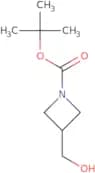
Discontinued product1-Boc-azetidine-3-yl-methanol
CAS:Stable under physiological and chemical conditions, 1-Boc-azetidine-3-yl-methanol is a linker that forms permanent bonds in conjugates, particularly in antibody-drug conjugates (ADCs) and as a linker in PROTAC (PROteolysis TArgeting Chimera) molecules for targeted protein degradation. It is also a versatile chemical intermediate used to synthesize complex organic molecules, particularly in pharmaceuticals, agrochemicals, and research chemicals.
Formula:C9H17NO3Purity:Min. 95%Color and Shape:White PowderMolecular weight:187.24 g/molRef: 3D-FB11553
Discontinued productMethyl 3,5-dibromo-2-methoxybenzoate
CAS:Methyl 3,5-dibromo-2-methoxybenzoate is a fine chemical that is useful as a scaffold for the preparation of a variety of compounds. It is also used as an intermediate in the synthesis of pharmaceuticals and research chemicals. Methyl 3,5-dibromo-2-methoxybenzoate can be used as a reaction component to generate complex compounds with high purity and quality. This compound has been classified as a speciality chemical and may be reclassified due to its usefulness in research.
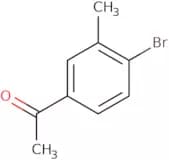
Formula:C9H8Br2O3Purity:Min. 95%Molecular weight:323.97 g/mol4'-Bromo-3'-methylacetophenone, 75%
CAS:4'-Bromo-3'-methylacetophenone, 75% is a high quality reagent that is a useful intermediate for the synthesis of complex compounds. It has CAS No. 37074-40-1 and can be used as a fine chemical or speciality chemical in research. This product is also a versatile building block that can be used as an intermediate in reactions and as a reaction component.
Formula:C9H9BrOPurity:Min. 95%Molecular weight:213.07 g/molRef: 3D-FB106406
Discontinued product6-Methyl-4-hydroxycoumarin
CAS:6-Methyl-4-hydroxycoumarin is a coumarin derivative that has been shown to have potent inhibitory activity against both Gram-positive and Gram-negative bacteria. It also inhibits the growth of leukemia cells and shows anti-inflammatory properties. The photophysical studies of this molecule show that it has absorption bands in the visible region, which may be attributed to its hydroxyl group. 6-Methyl-4-hydroxycoumarin has also been shown to be an effective inhibitor of LPS (lipopolysaccharide)-stimulated RAW 264.7 cells, as well as benzofuran derivatives that have been shown to have inflammatory propertys.
Formula:C10H8O3Purity:Min. 95%Color and Shape:PowderMolecular weight:176.17 g/molRef: 3D-FM12567
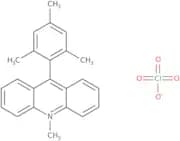
Discontinued product9-Mesityl-10-methylacridinium perchlorate
CAS:9-Mesityl-10-methylacridinium perchlorate is a cross-coupling reagent that can be used to form amines from alkenes via bond cleavage. The mechanism of this reaction involves irradiation, which generates radical species, and the use of molecular probes to rationalize the rate of the reaction. 9-Mesityl-10-methylacridinium perchlorate is a highly reactive compound with a short half life, which makes it an ideal candidate for generating radicals in order to study mechanistic studies on acridinium.Formula:C23H22ClNO4Purity:Min. 95%Color and Shape:PowderMolecular weight:411.88 g/molRef: 3D-FM60362
Discontinued product5-Methyl-2-nitropyridine
CAS:Please enquire for more information about 5-Methyl-2-nitropyridine including the price, delivery time and more detailed product information at the technical inquiry form on this page
Formula:C6H6N2O2Purity:Min. 95%Color and Shape:PowderMolecular weight:138.12 g/molRef: 3D-FM32781
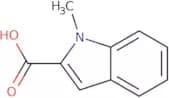
Discontinued product1-Methylindole-2-Carboxylic Acid
CAS:1-Methylindole-2-Carboxylic Acid is a chemical that belongs to the group of phenylacetic acid compounds. It has been shown to inhibit lymphocyte activation and t-cell proliferation in vitro, which may be due to its ability to interfere with the production of interleukin. 1-Methylindole-2-Carboxylic Acid also has an antitumor effect on animals and can reduce the tumor burden by inhibiting DNA synthesis, protein synthesis, and mineralization. The molecular modeling studies have shown that 1-Methylindole-2-Carboxylic Acid binds in the active site of protein kinase C as a competitive inhibitor and prevents ATP from binding to the enzyme.
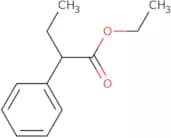
Formula:C10H9NO2Purity:Min. 95%Color and Shape:PowderMolecular weight:175.18 g/molEthyl 2-phenylbutyrate
CAS:Ethyl 2-phenylbutyrate is a synthetic, non-steroidal compound that has been shown to inhibit the activity of cyclooxygenase enzymes. It is used as an intermediate in organic synthesis and as a reagent in the cross-coupling reaction between arenes and magnesium. The compound is synthesized by reacting cyclopentyl bromide with an alkyl halide, followed by treatment with an alkanoic acid. The enantiomers of ethyl 2-phenylbutyrate can be separated by chromatography or by crystallization. This chemical is soluble in benzene and ether, but not in water.
Formula:C12H16O2Purity:Min. 95%Color and Shape:PowderMolecular weight:192.25 g/molRef: 3D-FE41789
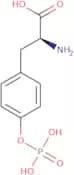
Discontinued productO-Phospho-L-tyrosine
CAS:O-Phospho-L-tyrosine is a phosphorylated form of L-tyrosine. It is used as an immunogen in the production of monoclonal antibodies. O-Phospho-L-tyrosine has also been shown to inhibit the enzyme indole alkaloids, which are responsible for the development of oral pathogens. The dephosphorylation of O-Phospho-L-tyrosine by tyrosine phosphatases leads to its conversion back to L-tyrosine. This compound can be detected by chromatographic analysis and is commonly used in analytical methods to identify natural compounds.
Formula:C9H12NO6PPurity:Min. 95%Color and Shape:PowderMolecular weight:261.17 g/molRef: 3D-FP27018
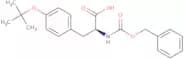
Discontinued productZ-O-tert-Butyl-L-tyrosine
CAS:Z-O-tert-Butyl-L-tyrosine is a fine chemical that is soluble in water and has a wide range of uses. It is a versatile scaffold for the synthesis of complex compounds, and can be used as a building block or reaction component in research chemicals. Z-O-tert-Butyl-L-tyrosine is an important reagent for organic synthesis, especially when combined with other chemicals. This chemical can also be used as a speciality chemical to produce high quality products.
Formula:C21H25NO5Purity:Min. 95%Color and Shape:White PowderMolecular weight:371.43 g/molRef: 3D-FB49847
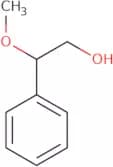
Discontinued product2-Methoxy-2-phenylethanol
CAS:2-Methoxy-2-phenylethanol is a molecule that has been found to be a good catalyst for the ring-opening of epoxides. It is also used as a solid catalyst in kinetic studies and as an additive in organic syntheses. 2-Methoxy-2-phenylethanol is soluble in water and reacts with fatty acids to form acetylated products. This molecule has been shown to have an inhibitory effect on human liver alcohol dehydrogenase, which may be due to it's ability to bind to the enzyme's active site.
Formula:C9H12O2Purity:Min. 95%Color and Shape:Colorless Clear LiquidMolecular weight:152.19 g/molRef: 3D-FM154645
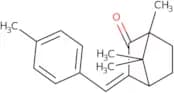
Discontinued product3-(4-Methylbenzylidene)camphor
CAS:3-(4-Methylbenzylidene)camphor is a chemical compound that has two isomers, alpha and beta. It can be found in biological samples, such as human urine or wastewater, and can be used for the treatment of skin cancer. 3-(4-Methylbenzylidene)camphor is prepared by extraction from a dry sample with an organic solvent. The extraction process requires a hydroxyl group to react with the dry sample and create a liquid. The resulting liquid is then evaporated to leave behind the extract. The kinetic data of 3-(4-Methylbenzylidene)camphor was determined by measuring its rate of reaction with an analytical method. The rate of reaction increased as the concentration increased to a constant value at high concentrations, which suggests that it may have some occlusive properties in humans due to its tendency to bind to plasma proteins.
Formula:C18H22OPurity:Min. 95%Color and Shape:White PowderMolecular weight:254.37 g/molRef: 3D-FM25793
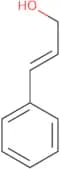
Discontinued product3-Phenyl-2-propen-1-ol
CAS:3-Phenyl-2-propen-1-ol is a cinnamyl compound that is found in plants, such as cinnamon and cassia. It has been shown to have an inhibitory effect on the enzyme activities of sorbitol dehydrogenase, which is involved in the synthesis of polysaccharides. 3-Phenyl-2-propen-1-ol also has a transcriptional regulatory effect on genes that encode enzymes involved in the synthesis of polymers. The reaction mechanism for this reaction has been proposed to be through an initial nucleophilic attack by the hydroxyl group on the electrophilic carbonyl carbon atom followed by protonation and elimination of water.
3-Phenyl-2-propen-1-ol has also been shown to be a signal peptide, which is used to identify proteins for transport within cells. This polymerase chain reaction (PCR) model system can be used to determineFormula:C9H10OPurity:Min. 95%Color and Shape:PowderMolecular weight:134.18 g/molRef: 3D-FP159401
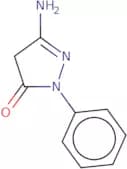
Discontinued product1-Phenyl-3-aminopyrazol-5-one
CAS:1-Phenyl-3-aminopyrazol-5-one is a solvent that can be used in elemental analysis. It has a molecular weight of 137.12 and is soluble in water, methanol, ethanol, acetone, ether, benzene and chloroform. 1-Phenyl-3-aminopyrazol-5-one has been shown to react with amines and form tautomers with different chemical properties. The spectral data for this compound are presented as the absorption spectra of substituted 1-phenyl-3-aminopyrazol-5-ones with acetyl groups at C2 and C4 (1), the nuclear magnetic resonance spectrum of 1-(dimethylamino)ethyl 3-[2-(N,N'-dimethylamino)ethyl]pyrazole (2), the NMR spectrum of 2-(dimethylamino)ethyl 3-[2-(N,N'-dimethylamino)ethyl]Formula:C9H9N3OPurity:Min. 95%Molecular weight:175.19 g/molRef: 3D-FP67038
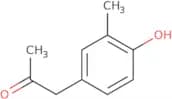
Discontinued product(4-Hydroxy-3-methylphenyl)acetone
CAS:(4-Hydroxy-3-methylphenyl)acetone is a high quality, reagent that has been used in the synthesis of complex compounds. It is also a useful intermediate for the production of fine chemicals, useful scaffolds, and useful building blocks. The compound can be used as a speciality chemical in research and is versatile as a building block for reactions. (4-Hydroxy-3-methylphenyl)acetone has been shown to react with various organic compounds, such as alcohols, amines, and carboxylic acids.
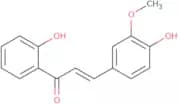
Formula:C10H12O2Purity:Min. 98 Area-%Color and Shape:PowderMolecular weight:164.2 g/mol2',4-Dihydroxy-3-methoxychalcone
CAS:2',4-Dihydroxy-3-methoxychalcone is a chalcone that has been shown to have reactive properties. The compound was found to be cytotoxic to cancer cells in the presence of neutrophils, and it has been shown to inhibit the growth of t47d cells in culture. There is also evidence that 2',4-Dihydroxy-3-methoxychalcone may help regulate the microflora in the gut, which may help prevent obesity and diabetes. In epidemiological studies, 2',4-Dihydroxy-3-methoxychalcone was found to be protective against cancer, but more research is required.
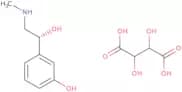
Formula:C16H14O4Purity:Min. 95%Color and Shape:PowderMolecular weight:270.28 g/mol(-)-Phenylephrine hydrogentartrate
CAS:(-)Phenylephrine is a medication that belongs to the group of drugs called sympathomimetics. This drug is a potent vasoconstrictor that causes blood vessels to narrow and increases blood pressure. (-)Phenylephrine is used in humans as a pharmaceutical dosage for treatment of chronic bronchitis, hay fever, and other allergic reactions. It also has been shown to inhibit guanylate cyclase activity and can be used for the treatment of asthma. (-)Phenylephrine inhibits the action of two enzymes: cyclase and phosphodiesterase. This inhibition leads to an increased level of cAMP, which binds with G protein-coupled receptors in tissues that are rich in smooth muscle cells such as the airways or urinary bladder. The binding of cAMP with these receptors causes an increase in intracellular calcium ion levels, leading to relaxation of smooth muscles and improved breathing or urination.
Formula:C9H13NO2·C4H6O6Purity:Min. 98 Area-%Color and Shape:PowderMolecular weight:317.29 g/molRef: 3D-FP33906
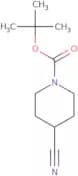
Discontinued productN-Boc-4-cyanopiperidine
CAS:N-Boc-4-cyanopiperidine is a synthetic compound that has been used as a competitive inhibitor in the study of biochemistry and neurochemistry. It has been shown to inhibit ligand binding to calcium channels, which are proteins that regulate the flow of calcium ions into cells. N-Boc-4-cyanopiperidine also inhibits the production of prostaglandins, which are chemicals that promote inflammation. This drug has been investigated for its possible use in treating neuropathic pain, since it inhibits voltage-gated sodium channels and potassium channels.
Formula:C11H18N2O2Purity:Min. 95%Color and Shape:PowderMolecular weight:210.27 g/molRef: 3D-FB05720
Discontinued product