


Amino Acids (AA)
Subcategories of "Amino Acids (AA)"
- Amino Acid Derivatives(4,017 products)
- Amino Acid and Amino Acid Related Compounds(3,490 products)
- Amino Acids with Oxygen or Sulphur(168 products)
- Boc- Amino Acids(351 products)
- Fmoc Amino Acids(1,710 products)
Found 38384 products of "Amino Acids (AA)"
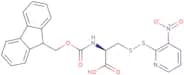
Fmoc-Cys(NPys)-OH
CAS:Fmoc-Cys(NPys)-OH is a disulfide with a cyclic structure that can be used in the synthesis of peptides. It reacts efficiently with thiols to form stable, covalent bonds and can be used as an efficient ligation reagent for cyclic peptides. Fmoc-Cys(NPys)-OH is also useful for the synthesis of biomolecules because it has a systematic nature and does not react with other reactive groups on the molecule. It has been shown to have high reactivity towards oxytocin, which is important for its function in triggering labor contractions.
Formula:C23H19N3O6S2Purity:Min. 95%Color and Shape:White SolidMolecular weight:497.55 g/molRef: 3D-FF111428
Discontinued product(Des-Tyr1)-Leu-Enkephalin
CAS:Des-Tyr1-Leu-Enkephalin H-Gly-Gly-Phe-Leu-OH is a synthetic opioid peptide that acts as a neuroprotective agent and has been shown to enhance the expression of nerve growth factor. It also has immunomodulatory effects by interacting with opioid receptors and regulating the production of inflammatory cytokines. Des-Tyr1-Leu-Enkephalin H-Gly-Gly-Phe-Leu-OH binds to opioid receptors in the central nervous system, thereby triggering a response that leads to pain relief and suppression of cough reflexes. This peptide has been shown to be effective in clinical trials for patients with neuropathic pain or postoperative ileus. It also shows promise as an analgesic for cancer patients with chronic pain, although this use is still experimental.
Formula:C19H28N4O5Purity:Min. 95%Molecular weight:392.45 g/molRef: 3D-FD111019
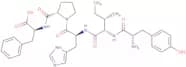
Discontinued productAngiotensin I/II (4-8)
CAS:Angiotensin I/II (4-8) H-Tyr-Ile-His-Pro-Phe-OH is a peptide that contains the sequence of angiotensin I and II. It has been shown to have proton transport properties, which may be related to its sequence. The amino acid sequence of this peptide is similar to other pentapeptides such as insulin and vasopressin. This peptide has been linked to a vector that can cross the blood brain barrier, allowing it to act on the central nervous system.Formula:C35H45N7O7Purity:Min. 95%Molecular weight:675.77 g/molRef: 3D-FA108794
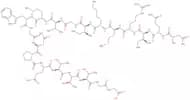
Discontinued productGlycoprotein IIb Fragment (300-312)
CAS:Glycoprotein IIb fragment (300-312) is a fragment of the glycoprotein IIb that is a potent inhibitor of the binding of fibrinogen to platelets. It has been used in immunoassays to detect and quantify glycoprotein IIb or its fragments in human serum, plasma, or urine. This fragment contains amino acids 300-312 and has an affinity for fibrinogen with a Kd value of 2.4 x 10^-6 M. The sequence of this fragment is H-Gly-Asp-Gly-Arg-His-Asp-Leu-Leu-Val-Gly-Ala-Pro.Formula:C57H94N18O18Purity:Min. 95%Molecular weight:1,319.47 g/molRef: 3D-FG108422
Discontinued productH-Tyr-Leu-OH
CAS:H-Tyr-Leu-OH is a peptide that has been shown to have regulatory effects on the synthesis of dopamine and 5-hydroxytryptamine (5HT), which is responsible for mood, appetite, and sleep. H-Tyr-Leu-OH is an orally active compound that has antidepressant-like activity in animals. It has also been shown to have antiobesity effects by regulating the secretion of proctolin from the pancreas. H-Tyr-Leu-OH has a pH optimum of 7, which is neutral. This compound can be used in cell culture experiments to study the effect of pH on enzyme preparations.
Formula:C15H22N2O4Purity:Min. 95%Molecular weight:294.35 g/molRef: 3D-FT108211
Discontinued productFmoc-Trp(Boc)-Thr(Psi(Me,Me)pro)-OH
CAS:Please enquire for more information about Fmoc-Trp(Boc)-Thr(Psi(Me,Me)pro)-OH including the price, delivery time and more detailed product information at the technical inquiry form on this pageFormula:C38H41N3O8Purity:Min. 95%Molecular weight:667.75 g/molRef: 3D-FF111414
Discontinued productN-Tritylglycine
CAS:N-Tritylglycine is an acidic amino acid that can be protonated in a highly acidic environment. It has been shown to inhibit the growth of tumor tissue by inducing apoptosis and inhibiting protein synthesis. N-Tritylglycine is used as a reagent for analytical chemistry, where it is used to detect amines such as histamine and serotonin. N-Tritylglycine also has been shown to be potent inhibitor of kinesin.
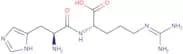
Formula:C21H19NO2Purity:Min. 95%Molecular weight:317.38 g/molH-His-Arg-OH
CAS:H-His-Arg-OH is a synthetic peptide that has been shown to have cytotoxic effects on mammalian cells. The H-His-Arg-OH peptide can be used for the treatment of heart disease and autoimmune diseases, such as rheumatoid arthritis. This peptide has been found to be resistant to congestive heart failure, which is caused by a number of factors, including hypertension and valvular stenosis. It has also been shown to have an immunoglobulin G1 (IgG1) genotype.
Formula:C12H21N7O3Purity:Min. 95%Molecular weight:311.34 g/molRef: 3D-FH108062
Discontinued productFmoc-Ile-Gly-OH
CAS:Please enquire for more information about Fmoc-Ile-Gly-OH including the price, delivery time and more detailed product information at the technical inquiry form on this page
Formula:C23H26N2O5Purity:Min. 95%Molecular weight:410.46 g/molRef: 3D-FF111336
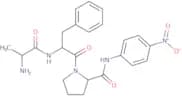
Discontinued productH-Ala-Phe-Pro-pNA
CAS:Please enquire for more information about H-Ala-Phe-Pro-pNA including the price, delivery time and more detailed product information at the technical inquiry form on this page
Formula:C23H27N5O5Purity:Min. 95%Molecular weight:453.49 g/molRef: 3D-FA110784
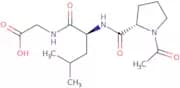
Discontinued productAc-Pro-Leu-Gly-OH
CAS:Ac-Pro-Leu-Gly-OH is a synthetic peptide that has been shown to be an effective crosslinker for thiols. Ac-Pro-Leu-Gly-OH is a water soluble, acidic peptide and can be used in biological systems as a crosslinker.
Formula:C15H25N3O5Purity:Min. 95%Molecular weight:327.38 g/molRef: 3D-FA109853
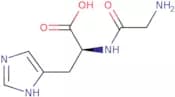
Discontinued productH-Gly-His-OH
CAS:H-Gly-His-OH is a cationic surfactant that can be used as an emulsifying agent, dispersing agent, or wetting agent. It has been shown to form model complexes with hydrogen bond strength and the ability to bind to nitrogen atoms. H-Gly-His-OH has been detected in a detectable concentration of 0.01% in neutral pH and at least 0.1% in acidic pH. The chemical shift of the proton NMR spectra for H-Gly-His-OH are found at 8.5 ppm (δ) and 8.2 ppm (δ). Magnetic resonance spectroscopy performed on ternary mixtures containing H-Gly-His-OH show peaks at δ 2.6 ppm and δ 1.9 ppm from the amide protons of the His residue, which are characteristic for this molecule's chemical structure.
Formula:C8H12N4O3Purity:Min. 95%Molecular weight:212.21 g/molRef: 3D-FG108051
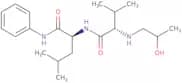
Discontinued productN-((RS)-2-Hydroxy-propyl)-Val-Leu-anilide
CAS:Please enquire for more information about N-((RS)-2-Hydroxy-propyl)-Val-Leu-anilide including the price, delivery time and more detailed product information at the technical inquiry form on this pageFormula:C20H33N3O3Purity:Min. 95%Molecular weight:363.49 g/molRef: 3D-FR108295
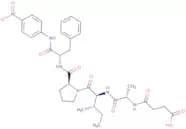
Discontinued productSuc-Ala-Ile-Pro-Phe-pNA
CAS:Cyclosporine is a cyclic peptide that is used as an immunosuppressive drug. It binds to the cytosolic protein phosphatase, preventing its activation. Cyclosporine also binds to other proteins in the cell, such as casein kinase II and cyclophilin, leading to changes in cellular function. It has been shown to inhibit the production of cytokines and other inflammatory mediators by inhibiting tyrosine kinase activity. Cyclosporine is metabolized into FK506, which has a similar structure but greater potency than cyclosporine. The mechanism of action for FK506 is not fully understood but it appears to be related to its ability to bind to tyrosine kinases and inhibit their activity.
Formula:C33H42N6O9Purity:Min. 95%Molecular weight:666.72 g/molRef: 3D-FS110770
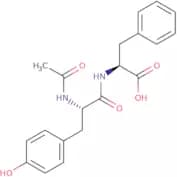
Discontinued productAc-Tyr-Phe-OH
CAS:This synthetic peptide is an acceptor of protons and has a molecular weight of 904. It is one of the most potent proton donors known to date and has been shown to be effective in iontophoresis experiments. Ac-Tyr-Phe-OH has been found to have a bitter taste, which may limit its use as a drug candidate. However, it could be used as a screening tool to identify compounds that are likely to have a bitter taste, but without the need for extensive animal testing.
Formula:C20H22N2O5Purity:Min. 95%Molecular weight:370.4 g/molRef: 3D-FA107952
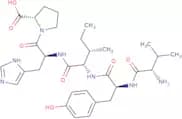
Discontinued productAngiotensin I/II (3-7)
CAS:Angiotensin I/II (3-7) H-Val-Tyr-Ile-His-Pro-OH is an antagonist of the angiotensin II receptor. It has been shown to be a cognitive enhancer by statistically improving treatments for behavioural problems in rats and mice. Angiotensin I/II (3-7) H-Val-Tyr-Ile-His-Pro-OH has also been shown to inhibit nicotinic acetylcholine receptors, which are involved in mediating the effects of neurotransmitters on muscle cells. This agent also inhibits angiotensin II receptors, leading to vasodilation and reduced blood pressure. The mechanism of action is not yet clear but may involve inhibition of protein kinase C. In preclinical studies, it has been shown that this drug facilitates behavioural effects such as memory retention and motor performance in rats when given before treatment with peptides such as substance P or calcitonin gene related pept
Formula:C31H45N7O7Purity:Min. 95%Molecular weight:627.73 g/molRef: 3D-FA109995
Discontinued product(Arg17)-Amyloid b-Protein (1-42) trifluoroacetate salt
CAS:Please enquire for more information about (Arg17)-Amyloid b-Protein (1-42) trifluoroacetate salt including the price, delivery time and more detailed product information at the technical inquiry form on this page
Formula:C203H312N58O60SPurity:Min. 95%Molecular weight:4,557.07 g/molRef: 3D-FA109844
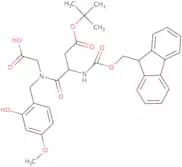
Discontinued productFmoc-D-Asp(OtBu)-(Hmb)Gly-OH
CAS:Please enquire for more information about Fmoc-D-Asp(OtBu)-(Hmb)Gly-OH including the price, delivery time and more detailed product information at the technical inquiry form on this page
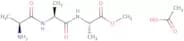
Formula:C33H36N2O9Purity:Min. 95%Molecular weight:604.65 g/molH-Ala-Ala-Ala-OMe acetate salt
CAS:Controlled ProductPlease enquire for more information about H-Ala-Ala-Ala-OMe acetate salt including the price, delivery time and more detailed product information at the technical inquiry form on this page
Formula:C10H19N3O4Purity:Min. 95%Molecular weight:245.28 g/molRef: 3D-FA110833
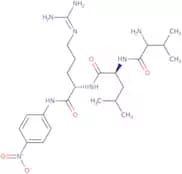
Discontinued productH-DL-Val-Leu-Arg-pNA acetate salt
CAS:H-DL-Val-Leu-Arg-pNA acetate salt is a natriuretic that is used to treat chronic kidney failure. It has an inhibitory effect on serine protease and epidermal growth factor, which are enzymes involved in the production of atrial natriuretic peptide (ANP). The drug also reduces blood pressure by inhibiting the activity of angiotensin II, which is a potent vasoconstrictor. H-DL-Val-Leu-Arg-pNA acetate salt has been shown to increase urea nitrogen levels by inhibiting the activity of alkaline phosphatase, which breaks down ammonia in the liver.
Formula:C23H38N8O5Purity:Min. 95%Molecular weight:506.6 g/molRef: 3D-FV110743
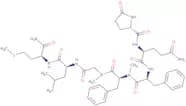
Discontinued product(Pyr 5,N-Me-Phe8, Sar 9)-Substance P (5-11)
CAS:Senktide is a substance P analog that has been shown to produce tail-flick responses in animals. The maximum response of the tail-flick test can be enhanced by the administration of either dopamine or serotonin. Inhibition of metabolism is likely to be responsible for these effects, as demonstrated by experiments in Sprague-Dawley rats. Senktide is an experimental model for studying the role of substance P in the regulation of blood pressure and locomotor activity. This compound also has pressor properties that are similar to those of dopamine and serotonin, which may be due to its ability to stimulate alpha-adrenergic receptors and inhibit dopaminergic neurons via a presynaptic mechanism.
Formula:C43H61N9O9SPurity:Min. 95%Molecular weight:880.07 g/molRef: 3D-FP109387
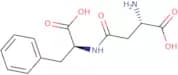
Discontinued productH-Asp(Phe-OH)-OH
CAS:Aspartame is a synthetic, sweetener that is used as a sugar substitute in diet products. It was discovered by accident in 1965 when James Schlatter, a chemist of G.D. Searle Company, was testing an anti-ulcer drug and l-phenylalanine methyl ester on his finger and tasted the sweetness on his fingers. Aspartame is composed of two amino acids: aspartic acid and phenylalanine. The aspartic acid is made up of a carboxylic acid group with an amide functional group. Aspartame can be found in many foods including chewing gum and diet sodas. It has been shown to have no carcinogenic effects or adverse effects on reproduction function in animal studies.
Formula:C13H16N2O5Purity:Min. 95%Color and Shape:White To Off-White SolidMolecular weight:280.28 g/molRef: 3D-FA108328
Discontinued productRecA-Like Protein (193-212)
CAS:Please enquire for more information about RecA-Like Protein (193-212) including the price, delivery time and more detailed product information at the technical inquiry form on this page
Formula:C93H152N28O29S2Purity:Min. 95%Molecular weight:2,190.51 g/molRef: 3D-FR109119
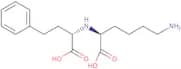
Discontinued productN2-(S)-1-Carboxy-3-phenylpropyl-L-lysine
CAS:Please enquire for more information about N2-(S)-1-Carboxy-3-phenylpropyl-L-lysine including the price, delivery time and more detailed product information at the technical inquiry form on this page
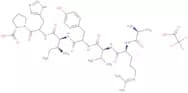
Formula:C16H24N2O4Purity:Min. 95%Molecular weight:308.37 g/molAngiotensin A (1-7) trifluoroacetate
CAS:Endogenous heptapetide which causes vasodilation and has anti-hypertensive properties.
Formula:C40H62N12O9•(C2HF3O2)xPurity:Min. 95%Color and Shape:PowderMolecular weight:855 g/molThymopentin acetate salt
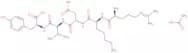
CAS:Controlled ProductThymopentin acetate salt H-Arg-Lys-Asp-Val-Tyr-OH acetate salt is an experimental model system that has been shown to replicate the physiological effects of thymopoietin in vitro. It has also been shown to inhibit the growth of Candida glabrata, a fungus that causes infection in patients with HIV or AIDS. Thymopentin acetate salt H-Arg-Lys-Asp-Val-Tyr-OH acetate salt has been shown to activate both toll like receptor and IL2 receptor, which may be due to its ability to stimulate polyamine synthesis.Formula:C30H49N9O9Purity:Min. 95%Molecular weight:679.77 g/molH-Asp-Phe-NH2 trifluoroacetate
CAS:Please enquire for more information about H-Asp-Phe-NH2 trifluoroacetate including the price, delivery time and more detailed product information at the technical inquiry form on this page
Formula:C13H17N3O4•(C2HF3O2)xPurity:Min. 95%Ref: 3D-FH184031
Discontinued productEVP4593
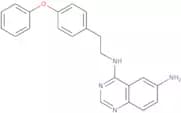
CAS:6-Amino-4-(4-phenoxyphenylethylamino)quinazoline is a potential anticancer drug that has been shown to inhibit the polymerase chain reaction in human osteosarcoma cells. It also inhibits the signaling pathway of nuclear factor-κB (NF-κB), which is involved in cell death and tumorigenesis. 6-Amino-4-(4-phenoxyphenylethylamino)quinazoline has shown significant cytotoxicity against murine hepatoma cells and bowel disease cells, but not against normal tissue. This drug is also an inhibitor of the drug transporter Pgp. 6-Amino-4-(4-phenoxyphenylethylamino)quinazoline has been shown to be effective in experimental models for cancer, AIDS, and other infectious diseases.Formula:C22H20N4OPurity:Min. 95%Color and Shape:PowderMolecular weight:356.42 g/molRef: 3D-FA17546
Discontinued product8-Phenyltheophylline
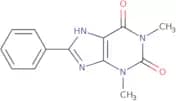
CAS:Controlled Product8-Phenyltheophylline (8PT) is an adenosine receptor agonist that is used as a bronchodilator for the treatment of asthma. It has been shown to increase the intracellular calcium concentration in hl-60 cells and in rat papillary muscles. 8PT also has locomotor activating effects, which are thought to be due to its ability to block potassium channels in the hippocampal formation. These effects may be related to ATP-sensitive potassium channels, which have been shown to be sensitive to ATP in untreated mice. 8PT also has anti-arrhythmic properties, which may be due to its ability to inhibit sodium channels and its effect on heart rate and contractility.
Formula:C13H12N4O2Purity:Min. 95%Color and Shape:PowderMolecular weight:256.26 g/molRef: 3D-FP165348
Discontinued product4-[2-[[(1S)-1-(2-Aminophenyl)-3-methylbutyl]amino]-2-oxoethyl]-2-ethoxybenzoic acid
CAS:Bosentan is a potent inhibitor of the uptake of organic anions. It is used in the treatment of pulmonary arterial hypertension and has been shown to be effective against pravastatin-resistant HIV protease inhibitors, such as saquinavir, quinidine, and rosuvastatin. Bosentan inhibits uptake by binding to the transporter protein at a site that does not overlap with the binding site for organic anion substrates. This leads to a change in kinetic parameters for substrates, such as pravastatin and saquinavir. The binding site on bosentan may also be elucidated through monolayer experiments with efflux transporters.
Formula:C22H28N2O4Purity:Min. 95%Molecular weight:384.47 g/molRef: 3D-FD21379
Discontinued productFmoc-2,6-dichloro-L-phenylalanine
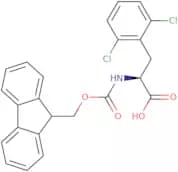
CAS:Please enquire for more information about Fmoc-2,6-dichloro-L-phenylalanine including the price, delivery time and more detailed product information at the technical inquiry form on this page
Formula:C24H19Cl2NO4Purity:Min. 95%Molecular weight:456.32 g/molRef: 3D-FF48009
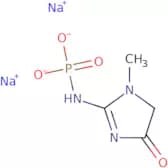
Discontinued productDisodium (1-methyl-4-oxoimidazolidin-2-ylidene)phosphoramidate
CAS:Please enquire for more information about Disodium (1-methyl-4-oxoimidazolidin-2-ylidene)phosphoramidate including the price, delivery time and more detailed product information at the technical inquiry form on this page
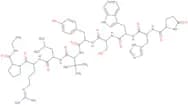
Formula:C4H6N3O4PNa2Purity:Min. 80 Area-%Color and Shape:PowderMolecular weight:237.06 g/mol(Des-Gly10, tBu-D-Gly6,Pro-NHEt 9)-LHRH acetate salt
CAS:(Des-Gly10, tBu-D-Gly6,Pro-NHEt 9)-LHRH acetate salt Pyr-His-Trp-Ser-Tyr-tBu-D-Gly-Leu-Arg-Pro-NHEt acetate salt is a synthetic hormone that belongs to the group of gonadotropin releasing hormones (GnRH). It is used in veterinary medicine to stimulate ovulation and follicular growth in animals. (Des-Gly10, tBu-D-Gly6, Pro -NHEt9)-LHRH acetate salt Pyr -His -Trp -Ser -Tyr -tBu -D -Gly -Leu -Arg -Pro NHEt acetate salt is a prodrug that is hydrolyzed in vivo to buserelin, its active form. This drug has been shown to be effective against estradiol benzoate and sodium salts
Formula:C59H84N16O12·xC2H4O2Purity:Min. 95%Molecular weight:1,209.4 g/molRef: 3D-FD109861
Discontinued product5-[(1-Methylindole-3-yl)carbonyl]-4,5,6,7-tetrahydro-1H-bezimidazole
CAS:Controlled Product5-[(1-Methylindole-3-yl)carbonyl]-4,5,6,7-tetrahydro-1H-bezimidazole is a reactive heterocyclic compound. It is a carboxylic acid and an amide with a peptic and cephalalgic effect. The symptoms of 5-[(1-methylindole-3-yl)carbonyl]-4,5,6,7-tetrahydro-1H-bezimidazole are hemicrania and amnesia. It has been expressed in the calf thymus DNA.
Formula:C17H17N3OPurity:Min. 95%Molecular weight:279.34 g/mol






![4-[2-[[(1S)-1-(2-Aminophenyl)-3-methylbutyl]amino]-2-oxoethyl]-2-ethoxybenzoic acid](/_next/image/?url=https%3A%2Fstatic.cymitquimica.com%2Fproducts%2F3D%2Fthumb-webp%2FFD21379.webp&w=3840&q=75)
![5-[(1-Methylindole-3-yl)carbonyl]-4,5,6,7-tetrahydro-1H-bezimidazole](/_next/image/?url=https%3A%2Fstatic.cymitquimica.com%2Fproducts%2F3D%2Fthumb-webp%2FFM148522.webp&w=3840&q=75)