Amino Acids (AA)
Amino acids (AAs) are the fundamental building blocks of proteins, playing a crucial role in various biological processes. These organic compounds are essential for protein synthesis, metabolic pathways, and cell signaling. In this category, you will find a comprehensive range of amino acids, including essential, non-essential, and modified forms, which are vital for research in biochemistry, molecular biology, and nutritional sciences. At CymitQuimica, we provide high-quality amino acids to support your research and development needs, ensuring accuracy and reliability in your experimental outcomes.
Subcategories of "Amino Acids (AA)"
- Amino Acid Derivatives(3,955 products)
- Amino Acid and Amino Acid Related Compounds(3,466 products)
- Amino Acids with Oxygen or Sulphur(168 products)
- Boc- Amino Acids(351 products)
- Fmoc Amino Acids(1,710 products)
Found 38249 products of "Amino Acids (AA)"
Sort by
Purity (%)
0
100
|
0
|
50
|
90
|
95
|
100
3-Methanesulfinylpropan-1-amine
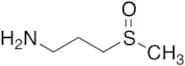
CAS:Controlled Product<p>Applications 3-Methanesulfinylpropan-1-amine is used in preparation of Amide compounds as pesticides including acaricides, insecticides, and parasiticides.<br>References Furukawa, H., et al.: Jpn. Kokai Tokkyo Koho, (2018);<br></p>Formula:C4H11NOSColor and Shape:NeatMolecular weight:121.2011'-(tert-Butoxycarbonyl)spiro[indoline-3,4'-piperidine]-5-carboxylic acid
CAS:Purity:95.0%Molecular weight:332.39999389648444-(2-methoxybenzoyl)-8-methyl-1-oxa-4,8-diazaspiro[4.5]decane-3-carboxylic acid
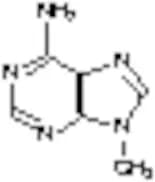
CAS:Purity:95.0%Molecular weight:334.372009277343756-Amino-9-methylpurine(9-Methyl Adenine)
CAS:Controlled Product<p>Applications A receptor adenine derivative binding membrane brain animal cell line.<br>References Camaioni, E., et al.: Bioorg. Med. Chem., 6, 523 (1998), Kelly, M., et al.: Br. J. Pharmacol., 125, 979 (1998), Redzic, Z., et al.: Brain Res., 888, 66 (2001), Levy, D., et al.: J. Med. Chem., 46, 2177 (2003),<br></p>Formula:C6H7N5Color and Shape:NeatMolecular weight:149.154-[2-(4-Hydroxyphenyl)-4-methylpentan-2-yl]phenol
CAS:<p>Applications 4-[2-(4-Hydroxyphenyl)-4-methylpentan-2-yl]phenol could be a useful reagent for making visible-transparent aromatic polymers.<br> Not a dangerous good if item is equal to or less than 1g/ml and there is less than 100g/ml in the package<br>References Agou, T., et al.: Macromolecules (Washington, DC, U. S.), 53, 2942 (2020)<br></p>Formula:C18H22O2Color and Shape:Off-WhiteMolecular weight:270.37Desmosine Chloride
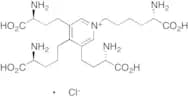
CAS:Controlled Product<p>Stability Very Hygroscopic<br>Applications A component of elastin. It can be measured in all body fluids as biomarkers for in vivo degradation of matrix tissue elastin in man and animals.<br>References Sato, F., et al.: Clin. Biochem., 39, 746 (2006), Koenders, M., et al.: J. Pathol., 218, 446 (2009), Ma, S. et al.: J. Chrom. Anal. Tech. Biomed. Life Sci., 879, 1893 (2011),<br></p>Formula:C24H40N5O8·ClColor and Shape:Light Tan To BrownMolecular weight:562.064-Hydroxy-4-methyl-2-pentanone-d12
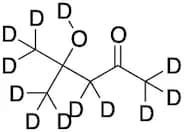
CAS:Controlled Product<p>Applications 4-Hydroxy-4-methyl-2-pentanone-d12 (CAS# 114253-85-9) is a useful isotopically labeled research compound.<br></p>Formula:C6D12O2Color and Shape:NeatMolecular weight:128.23(S)-Piperazine-2-carboxylic acid
CAS:Formula:C5H10N2O2Purity:97.0%Color and Shape:SolidMolecular weight:130.147N-Fmoc-L-tyrosine Benzyl Ester
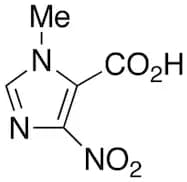
CAS:Controlled Product<p>Applications N-Fmoc-L-tyrosine Benzyl Ester is used to synthesize truncated analogues of preptin-(1-16) as possible osteoblast proliferation stimulant. It is also an intermediate used to prepare phosphotyrosinyl phosphoramidite derivatives useful in the incorporation of multiple reporter groups on synthetic oligonucleotides.<br>References Kowalczyk, R., et al.: Bioorg. Med. Chem., 22, 3565 (2014); Misiura, K., et al.: Nucl. Acids Res., 18, 4345 (1990)<br></p>Formula:C31H27NO5Color and Shape:NeatMolecular weight:493.551-Methyl-4-nitro-1H-imidazole-5-carboxylic Acid
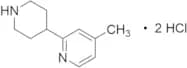
CAS:Controlled Product<p>Applications A derivative of imidazole used in the synthesis of heteroxanthine.<br>References Sarasin, J., et al.: Helv. Chim. Acta, 7, 713 (1924),<br></p>Formula:C5H5N3O4Color and Shape:NeatMolecular weight:171.114-Methyl-2-(4-piperidinyl)pyridine Hydrochloride
CAS:Controlled Product<p>Applications 4-methyl-2-(piperidin-4-yl)pyridine (cas# 1260886-47-2) is a useful research chemical.<br></p>Formula:C11H18Cl2N2Color and Shape:NeatMolecular weight:249.18a-Methacrylic Acid
CAS:Controlled Product<p>Stability Light Sensitive<br>Applications α-Methacrylic acid is used in chemistry as a stabilizing agent, forming a thin capping layer on the surface of nanoparticles. α-Methacrylic acid is also used as a surfactant, so that control is maintained during nanocrystal growth. α-Methacrylic acid is also used as a chelating agent.<br> Not a dangerous good if item is equal to or less than 1g/ml and there is less than 100g/ml in the package<br>References Peng, W., et al.: J. Cryst. Growth, 279, 454 (2005); Qu, S., et al.: Appl. Phys. Lett., 80, 3605 (2002); Zhao, G., et al.: Phys. C: Supercond., 468, 2317 (2008)<br></p>Formula:C4H6O2Color and Shape:ColourlessMolecular weight:86.091-[1-(2-methoxyethyl)piperidin-3-yl]methanamine
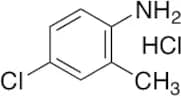
CAS:Controlled Product<p>Applications 1-[1-(2-methoxyethyl)piperidin-3-yl]methanamine (cas# 936940-49-7) is a useful research chemical.<br></p>Formula:C9H20N2OColor and Shape:NeatMolecular weight:172.2684-Chloro-2-methylaniline Hydrochloride
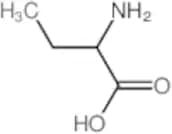
CAS:Controlled Product<p>Stability Hygroscopic<br>Applications 4-Chloro-2-methylaniline Hydrochloride (cas# 3165-93-3) is a useful research chemical.<br> Not a dangerous good if item is equal to or less than 1g/ml and there is less than 100g/ml in the package<br></p>Formula:C7H8ClN•HClColor and Shape:Off-WhiteMolecular weight:141.603646DL-2-aminobutyric acid
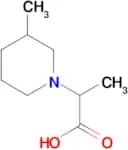
CAS:Controlled Product<p>Applications DL-2-aminobutyric acid<br></p>Formula:C4H9NO2Color and Shape:NeatMolecular weight:103.122-(3-methylpiperidin-1-yl)propanoic acid
CAS:Purity:95.0%Color and Shape:Solid, CrystallineMolecular weight:171.240005493164062-Methoxyphenol
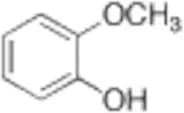
CAS:Controlled Product<p>Stability Light Sensitive<br>Applications 2-Methoxyphenol (CAS# 90-05-1) is useful for testing ruthenium- and palladium-containing catalysts activity via guaiacol hydrogenation.<br>References Shakirov, I. I., et al.: Pet. Chem., 60, 1136 (2020)<br></p>Formula:C7H8O2Color and Shape:NeatMolecular weight:124.14(R)-N-(1-Carboxyethyl)-D-norvaline 1-Ethyl Ester
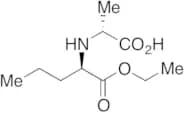
CAS:Controlled Product<p>Applications (R)-N-(1-Carboxyethyl)-D-norvaline 1-Ethyl Ester is an intermediate in the synthesis of Perindoprilat (P287530), an angiotensin-converting enzyme (ACE) inhibitor. Antihypertensive.<br>References Pascard, C., et al.: J. Med. Chem., 34, 663 (1991)<br></p>Formula:C10H19NO4Color and Shape:NeatMolecular weight:217.26(R)-3-Amino-pentanoic acid
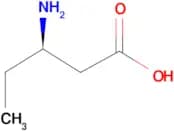
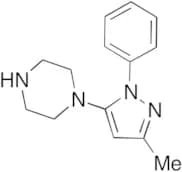
CAS:Formula:C5H11NO2Purity:95%Color and Shape:Solid, Light brown powderMolecular weight:117.1481-(3-Methyl-1-phenyl-1H-pyrazol-5-yl)piperazine
CAS:Controlled Product<p>Applications 1-(3-Methyl-1-phenyl-1H-pyrazol-5-yl)piperazine is an intermediate used to prepare nonracemic γ-bicyclic heteroarylpiperazine- and heteroarylpiperidine-substituted prolinylthiazolidines as selective and orally active dipeptidylpeptidase 4 inhibitors for use as antidiabetic agents.<br>References Yoshida, T., et al.: Bioorg. Med. Chem., 20, 5705 (2012)<br></p>Formula:C14H18N4Color and Shape:NeatMolecular weight:242.324-(2,4-dimethylphenyl)-3H,4H,5H,6H,7H-imidazo[4,5-c]pyridine-6-carboxylic acid
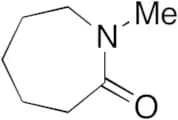
CAS:Purity:95.0%Molecular weight:271.32000732421875N-Methylcaprolactam
CAS:<p>Applications N-Methylcaprolactam is a reagent that is used in the synthesis of 3-Chloro-4-(dichloromethyl)-5-hydroxy-2(5H)-furanone-13C5, which is a chlorinated furanone that accounts for more of the mutagenic activity of drinking water than any other disinfection byproduct.<br></p>Formula:C7H13NOColor and Shape:NeatMolecular weight:127.184-Methoxypyridazin-3-amine
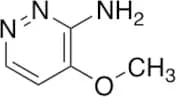
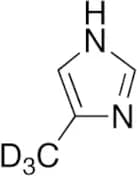
CAS:Controlled ProductFormula:C5H7N3OColor and Shape:NeatMolecular weight:125.1284-Methylimidazole-d3
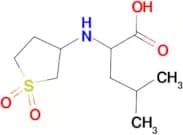
CAS:Controlled Product<p>Applications Labelled 4-Methylimidazole (M312990). 4-Methylimidazole is a monomethylated imidazole that can be used as a building block in the preparation of a wide range of biologically active compounds. 4-Methylimidazole is a product which results from the interaction of reducing sugars with ammonia. 4-Methylimidazole showed convulsant activity in animals and is listed as a possible carcinogen.<br> Not a dangerous good if item is equal to or less than 1g/ml and there is less than 100g/ml in the package<br>References Nishie, K. et al.: Toxicol. Appl. Pharmacol., 14, 301 (1969): Cunha, S.C. et al.: J. Food Comp. Anal., 24, 609 (2011); Chan, P.C. et al.: Arch. Toxicol., 82, 55 (2008);<br></p>Formula:C4H3D3N2Color and Shape:BeigeMolecular weight:85.122-(1,1-Dioxo-tetrahydro-1λ*6*-thiophen-3-ylamino)-4-methyl-pentanoic acid
CAS:Purity:95.0%Molecular weight:249.3300018310547Tetrahydro-5-methyl-2-furanol
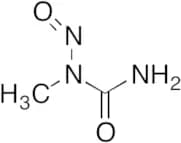
CAS:Controlled Product<p>Applications Tetrahydro-5-methyl-2-furanol is an intermediate in synthesizing 2,3-Dihydro-2-methylfuran (D447355), which is a general reagent used in next generation of biofuels. Dihydrofuranyl derivative.<br>References Simmie, J. et al.: J. Phys Chem., 116, 4528 (2012);<br></p>Formula:C5H10O2Color and Shape:NeatMolecular weight:102.13N-Methyl-N-nitroso Urea (Wetted with water >20%)
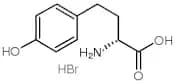
CAS:Controlled Product<p>Stability Temperature Sensitive<br>Applications Precursor of Diazomethane. It has a cytotoxicity effect.This product contains an undetermined amount of water.<br> Not a dangerous good if item is equal to or less than 1g/ml and there is less than 100g/ml in the package<br>References Huggins, C., et al.: J. Exp. Med., 131, 321 (1970), Gullino, P.M., et al.: J. Natl. Cancer Inst., 54, 401 (1975),<br></p>Formula:C2H5N3O2Color and Shape:Off-White To Light BeigeMolecular weight:103.08D-Homotyrosine Hydrobromide
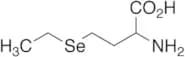
CAS:Controlled Product<p>Applications D-Homotyrosine hydrobromide<br></p>Formula:C10H13NO3·HBrColor and Shape:White To Off-WhiteMolecular weight:276.127Seleno-D,L-ethionine
CAS:Controlled Product<p>Stability Hygroscopic<br>Applications Used as a substrate for methionine adenosyltransferase from rat liver.<br> Not a dangerous good if item is equal to or less than 1g/ml and there is less than 100g/ml in the package<br>References Lombardini, J.B., et al.: Biochem. Pharmacol., 32(3), 489 (1983), Kajander, E., et al.: Cancer Res., 46 (6), 2866 (1986), Kajander, E., et al.: Biochem. J., 267 (3), 767 (1990)<br></p>Formula:C6H13NO2SeColor and Shape:Off-White To Light BeigeMolecular weight:210.132-Chloro-2-methylpropane-d9
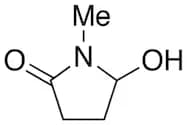
CAS:Controlled Product<p>Applications Isotope labelled 2-Chloro-2-methylpropane is a starting molecule to carry out nucleophilic substitution reactions.<br>References Eyet, N., et al.: J. Phy. Chem. A., 117, 1136 (2013); Eyet, N., et al.: J. Am. Mass. Spec., 18, 1046 (2007);<br></p>Formula:C4D9ClColor and Shape:NeatMolecular weight:101.625-Hydroxy-N-methyl-2-pyrrolidinone
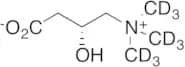
CAS:Controlled Product<p>Applications 5-Hydroxy-N-methyl-2-pyrrolidinone is a metabolite of N-methylpyrrolidone (NMP).<br>References Payan, J., et al.: Drug Metab. Dispos., 30, 1418 (2002), Carnerup, M., et al.: Food Chem. Toxicol., 43, 1441 (2005), Angerer, J., et al.: Toxicol. Sci., 93, 3 (2006),<br></p>Formula:C5H9NO2Color and Shape:NeatMolecular weight:115.13L-Carnitine-d9
CAS:Controlled Product<p>Applications L-Carnitine-d9 is the isotope labelled analog of L-Carnitine (C184110); an essential cofactor of fatty acid metabolism; required for the transport of fatty acids through the inner mitochondrial membrane. Synthesized primarily in the liver and kidney; highest concentrations found in heart and skeletal muscle. Dietary sources include red meat, dairy products, beans, avocado.<br>References Mitchell, M.E., et al.: Am. J. Clin. Nutr., 31, 293 (1978); Lango, R., et al.: Cardiovasc. Res., 51, 21 (2001); Vaz, F.M., et al.: Biochem. J., et al.: 361, 417 (2002); Karlic, H., et al.: Nutrition, 20, 709 (2004)<br></p>Formula:C7D9H7NO3Color and Shape:NeatMolecular weight:171.263-(2,3-Dihydro-1H-indol-1-yl)propanoic acid
CAS:Formula:C11H13NO2Purity:95.0%Color and Shape:SolidMolecular weight:191.232-Methylbutyrylglycine-d9
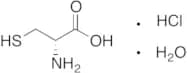
CAS:Controlled Product<p>Applications Labelled 2-Methylbutyrylglycine (M294340). 2-Methylbutyrylglycine is one of the acylglycines, an important class of metabolites that have been used in the diagnosis of several inborn errors of metabolism (IEM).<br>References Costa, C., et al.: J. Pharmaceut. Biomed. Anal., 21, 1215 (2000), Garcia-Villoria, J., et al.: Clin. Biochem., 42, 2 (2009), Scalbert, A., et al.: Metabolomics, 5, 435 (2009),<br></p>Formula:C72H9H4NO3Color and Shape:Off-WhiteMolecular weight:168.24D-Cysteine Hydrochloride Monohydrate
CAS:Controlled Product<p>Applications D-Cysteine Hydrochloride Monohydrate is used as a reactant in the expedient synthesis of electronically modified luciferins for bioluminescence imaging.<br>References McCutcheon, D., et al.: J. Am. Chem. Soc., 134, 7604 (2012);<br></p>Formula:C3H7NO2S·HCl·H2OColor and Shape:NeatMolecular weight:121.16+(36.46)+(18.02)(S)-2-Amino-4-methylpentanol
CAS:Controlled Product<p>Applications (S)-2-Amino-4-methylpentanol is a starting material for the synthesis of aminopeptidase N and phospholipase A2 inhibitors.<br>References Fournié-Zaluski, M., et al.: J. Med. Chem., 35, 1259 (1992); Bennion, C., et al.: J. Med. Chem., 35, 2939 (1992)<br></p>Formula:C6H15NOColor and Shape:NeatMolecular weight:117.1894-[2-(4-chlorophenyl)acetyl]-8-methyl-1-oxa-4,8-diazaspiro[4.5]decane-3-carboxylic acid
CAS:Purity:95.0%Molecular weight:352.82000732421875Ethyl Lauroyl Arginate Hydrochloride
CAS:<p>Applications Ethyl Lauroyl Arginate Hydrochloride is used as a food antimicrobial in the sanitation of preserved foods. It is also used in cosmetics as a preservative.<br> Not a dangerous good if item is equal to or less than 1g/ml and there is less than 100g/ml in the package<br>References Brandt, A. et al.: . Food. Sci., 75, M557 (2010); Taormina, P. et al.: J. Food. Prot., 72, 1216 (2009); Chem. and Eng. News Page 14, Nov. 5 (2018)<br></p>Formula:C20H40N4O3·ClHColor and Shape:NeatMolecular weight:421.024-Methylfluorene
CAS:Controlled Product<p>Applications 4-Methylfluorene is a polycyclic aromatic hydrocarbon that has been found to be emitted by wastewater treatment facilities.<br>References Zhang, W., et. al.: Sci. Total Environ., 432m 396 (2012)<br></p>Formula:C14H12Color and Shape:NeatMolecular weight:180.2453-Hydroxy-DL-kynurenine
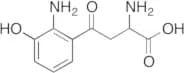
CAS:<p>Stability Hygroscopic<br>Applications 3-Hydroxy-DL-kynurenine is a tryptophan metabolite. Could be associated with symptoms in Parkinson's disease.<br>References Heilman, P. L., et al.: Movement Disorders, 35, 2028 (2020)<br></p>Formula:C10H12N2O4Color and Shape:NeatMolecular weight:224.21(S)-5-Amino-3-((tert-butoxycarbonyl)amino)-5-oxopentanoic acid
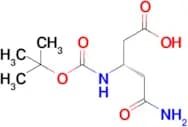
CAS:Purity:95+%Molecular weight:246.26300048828125Dihydro-5-methyl-4H-1,3,5-dithiazine
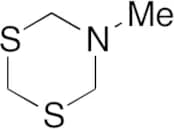
CAS:Controlled Product<p>Applications Dihydro-5-methyl-4H-1,3,5-dithiazine is used as a reagent in the synthesis of neovibsanin derivatives which have the ability to induce neuronal differentiation in PC12 cells.<br>References Annette, P.-J. C., et al.: Tetrahedron, 66, 6842 (2010)<br></p>Formula:C4H9NS2Color and Shape:NeatMolecular weight:135.251L-Leucine
CAS:Controlled Product<p>Applications L-Leucine is an essential amino acid. L-Leucine acts as a nutrient signal to stimulate protein synthesis. It has also activates the mammalian target of rapamycin kinase that regulates cell growth.<br>References Demant, T. et al.: Am. J. Physiol., 270, E1022 (1996); Diraison, F. et al.: Am. J. Physiol., 277, E529 (1999); Suryawan, A. et al.: J. Anim. Sci., 89, 2004 (2011); Peyrollier, K. et al.: Biochem. J., 350, 361 (2000);<br></p>Formula:C6H13NO2Color and Shape:NeatMolecular weight:131.17Cyclo(L-prolyl-L-leucyl)
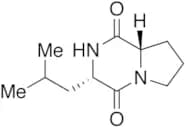
CAS:Controlled Product<p>Applications Sorbicillin analog. A bioactive secondary metabolites from terrestrial Streptomyces species TN262.<br>References Ma, L. et al. : J. Anitibiot. 64, 645 (2011); Elleuch, L. et al.: Appl. Biochem. Biotech. 162, 579 (2010)<br></p>Formula:C11H18N2O2Color and Shape:NeatMolecular weight:210.27Ethyl trans-3-Methyl-4-oxocrotonate
CAS:Controlled Product<p>Applications Derivative of monoenoic and trienoic analogs of Sorbic Acid with antifungal activity.<br>References Guerin, J. et al.: Annales Pharmaceutiques Francaises 44, 373 (1987)<br></p>Formula:C7H10O3Color and Shape:NeatMolecular weight:142.15L-Anserine Nitrate Salt
CAS:Controlled Product<p>Applications L-Anserine Nitrate Salt (cas# 10030-52-1) is a compound useful in organic synthesis.<br></p>Formula:C10H16N4O3·HNO3Color and Shape:NeatMolecular weight:303.27


![1'-(tert-Butoxycarbonyl)spiro[indoline-3,4'-piperidine]-5-carboxylic acid](/_next/image/?url=https%3A%2Fstatic.cymitquimica.com%2Fproducts%2F10%2Fthumb-webp%2FF223613.webp&w=3840&q=75)
![4-(2-methoxybenzoyl)-8-methyl-1-oxa-4,8-diazaspiro[4.5]decane-3-carboxylic acid](/_next/image/?url=https%3A%2Fstatic.cymitquimica.com%2Fproducts%2F10%2Fthumb-webp%2FF525647.webp&w=3840&q=75)
![4-[2-(4-Hydroxyphenyl)-4-methylpentan-2-yl]phenol](/_next/image/?url=https%3A%2Fstatic.cymitquimica.com%2Fproducts%2FTR%2Fthumb-webp%2FB434508.webp&w=3840&q=75)



![1-[1-(2-methoxyethyl)piperidin-3-yl]methanamine](/_next/image/?url=https%3A%2Fstatic.cymitquimica.com%2Fproducts%2FTR%2Fthumb-webp%2FM139405.webp&w=3840&q=75)
![4-(2,4-dimethylphenyl)-3H,4H,5H,6H,7H-imidazo[4,5-c]pyridine-6-carboxylic acid](/_next/image/?url=https%3A%2Fstatic.cymitquimica.com%2Fproducts%2F10%2Fthumb-webp%2FF522510.webp&w=3840&q=75)





![4-[2-(4-chlorophenyl)acetyl]-8-methyl-1-oxa-4,8-diazaspiro[4.5]decane-3-carboxylic acid](/_next/image/?url=https%3A%2Fstatic.cymitquimica.com%2Fproducts%2F10%2Fthumb-webp%2FF525660.webp&w=3840&q=75)