


Amino Acids (AA)
Amino acids (AAs) are the fundamental building blocks of proteins, playing a crucial role in various biological processes. These organic compounds are essential for protein synthesis, metabolic pathways, and cell signaling. In this category, you will find a comprehensive range of amino acids, including essential, non-essential, and modified forms, which are vital for research in biochemistry, molecular biology, and nutritional sciences. At CymitQuimica, we provide high-quality amino acids to support your research and development needs, ensuring accuracy and reliability in your experimental outcomes.
Subcategories of "Amino Acids (AA)"
- Amino Acid Derivatives(3,955 products)
- Amino Acid and Amino Acid Related Compounds(3,469 products)
- Amino Acids with Oxygen or Sulphur(168 products)
- Boc- Amino Acids(351 products)
- Fmoc Amino Acids(1,710 products)
Found 38260 products of "Amino Acids (AA)"
Sort by
Purity (%)
0
100
|
0
|
50
|
90
|
95
|
100
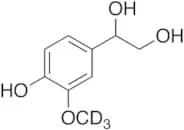
rac 4-Hydroxy-3-methoxyphenylethylene Glycol-d3
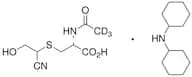
CAS:Controlled Product<p>Applications A labelled metabolite of Catecholamines.<br>References Kopin, I.J., et al.: J. Biol. Chem., 236, 2109 (1961), Short, F.W., et al.: J. Med. Pharm. Chem., 5, 642 (1962)<br></p>Formula:C92H3H9O4Color and Shape:NeatMolecular weight:187.21N-Acetyl-S-(1-cyano-2-hydroxyethyl)-L-cysteine-d3 Dicyclohexylamine Salt (Mixture of Diastereomers)
CAS:Controlled Product<p>Stability Hygroscopic<br>Applications A labelled metabolite of Acrylonitrile (ACN).<br>References Guengerich, F., et al.: Cancer Res., 41, 4925 (1981), Leonard, A., et al.: Mutation Res., 436, 263 (1999), Stadler, R., et al.: J. Agric. Food Chem., 52, 5550 (2004), Dybing, E., et al.: Food Chem. Toxicol., 43, 365 (2005), Rice, J., et al.: Mutation Res., 580, 3 (2005),<br></p>Formula:C20H32D3N3O4SColor and Shape:White To Off-WhiteMolecular weight:416.598-Nitroguanine
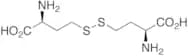
CAS:Controlled Product<p>Applications 8-Nitroguanine as a potential biomarker for progression of malignant fibrous histiocytoma, a model of inflammation-related cancer.<br>References Surh, Y., et al.: Mutat. Res., 480, 243 (2001), Balkwill, F., et al.: Lancet, 357, 539 (2001), Kawanishi, S., et al.: Biol. Chem., 387, 365 (2006), Hoki, Y., et al.: Cancer Sci., 98, 163 (2007),<br></p>Formula:C5H4N6O3Color and Shape:NeatMolecular weight:196.12L-Homocystine
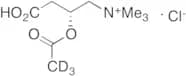
CAS:Controlled Product<p>Applications Increased levels lead to hyperhomocysteinemia; a cardiovascular risk factor in prediction of coronary heart disease as well as being associated with congenital birth defects, pregnancy complications and cancer.<br>References Geisel, J. et al.: Clin. Chem. Lab. Med., 41, 1513 (2003); Geisel, J. et al.: Clin. Chem. Lab. Med., 41, 1513 (2003);<br></p>Formula:C8H16N2O4S2Color and Shape:NeatMolecular weight:268.35Acetyl-d3 L-Carnitine Hydrochloride
CAS:Controlled Product<p>Applications Acetyl-d3 L-Carnitine Hydrochloride is labelled Acetyl L-Carnitine Hydrochloride (A171990) which is used for transmembrane action potential studies. Acetylcarnitine has antinociceptive activity that may be mediated by enhanced activity of muscarinic cholinergic receptors or mGlu2 glutamate receptors.<br>References Matsui, K., et al.: Japanese J. Pharmcol., 39, 263 (1985); Chlechio, S., et al.: J. Endocrinol. Invest., 27, 171 (2004): Walker, R., et al.: Comparative General Pharmacol., 4, 65 (1973)<br></p>Formula:C92H3H15NO4·ClColor and Shape:NeatMolecular weight:242.724-(4-Methylpiperazinomethyl)benzoic Acid, Dihydrochloride
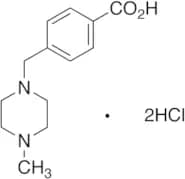
CAS:Controlled Product<p>Stability Hygroscopic<br>Applications 4-(4-Methylpiperazinomethyl)benzoic Acid, Dihydrochloride (cas# 106261-49-8) is a compound useful in organic synthesis.<br></p>Formula:C13H18N2O2·2ClHColor and Shape:NeatMolecular weight:307.22N-Acetyl-L-phenylalanine
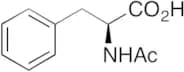
CAS:Controlled Product<p>Applications N-Acetyl-L-phenylalanine is an protected analogue of L-Phenylalanine (P319415), an essential amino acid produced for medical, feed, and nutritional applications such as in the preparation of Aspartame.<br>References Sriram, S., et al.: J. Med. Chem., 56, 2540 (2013); Parker, B.M., et al.: J. Biotech., 155, 396 (2011);<br></p>Formula:C11H13NO3Color and Shape:NeatMolecular weight:207.23L-Histidinol Dihydrochloride
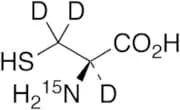
CAS:Controlled ProductFormula:C6H11N3O·2ClHColor and Shape:NeatMolecular weight:214.09L-Cysteine-15N,d3
CAS:Controlled ProductFormula:C3D3H415NO2SColor and Shape:NeatMolecular weight:125.17S-Methyl-L-cysteine
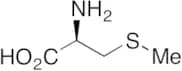
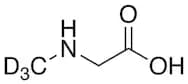
CAS:Controlled Product<p>Applications S-Methyl-L-cysteine is a substrate in the catalytic antioxidant system mediated by methionine sulfoxide reductase A (MSRA). It has been studied as a theurapeutic for neurodegenerative diseases including Parkinson′s.<br>References Wassef, R., et al.: J. Neurosci., 21, 12808 (2007)<br></p>Formula:C4H9NO2SColor and Shape:NeatMolecular weight:135.19Sarcosine-d3 Hydrochloride
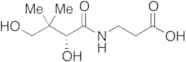
CAS:Controlled ProductFormula:C32H3H4NO2·ClHColor and Shape:NeatMolecular weight:128.57Pantothenic Acid (Technical Grade, Contains Lactone)
CAS:Controlled Product<p>Stability Hygroscopic<br>Applications Pantothenic Acid is a member of the B complex vitamins; essential vitamin for the biosynthesis of coenzyme A in mammalian cells. Occurs ubiquitously in all animal and plant tissue. The richest common source is liver, but jelly of the queen bee contains 6 times as much as liver. Rice bran and molasses are other good sources.<br>References Gardner, P., et al.: Food Chem., 68, 471 (2000); Ou, B., et al.: J. Agric. Food Chem., 50, 2772 (2002); Bahorun, T., et al.: J. Sci. Food Agric., 84, 1553 (2004)<br></p>Formula:C9H17NO5Color and Shape:NeatMolecular weight:219.24Ethyl 3-(dimethylamino)-2-(2,4,5-trifluoro-3-methoxybenzoyl)acrylate
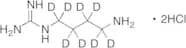
CAS:Formula:C15H16F3NO4Color and Shape:NeatMolecular weight:331.2874-Aminobutyl-d8 Guanidine Dihydrochloride
CAS:Controlled Product<p>Applications 4-Aminobutyl-d8 Guanidine is the labelled analog of the decarboxylation product of the amino acid arginine (A769500) and also an intermediate in polyamine biosynthesis.<br>References Golding, B.T., et al.: Biochem. Soc. Trans., 22, 391S (1994);<br></p>Formula:C5H6D8N4·2HClColor and Shape:NeatMolecular weight:211.16263Fmoc-Ser(TBDMS)-OH
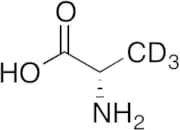
CAS:Controlled Product<p>Applications Fmoc-Ser(TBDMS)-OH (cas# 146346-81-8) is a useful research chemical.<br></p>Formula:C24H31NO5SiColor and Shape:NeatMolecular weight:441.592L-Alanine-d3
CAS:Controlled Product<p>Applications L-Alanine-d3 is the labeled analogue of L-Alanine (A481500), which is used to make in-vivo measurement of glucose and alanine metabolism in studies of patients with diabetes. L-Alanine is a non-essential amino acid for human development. L-Alanine is one of the 20 amino acids encoded by the genetic code.<br>References Bier, D.M. et al.: Diabetes, 26, 1005 (1977); Capaldo, B. et al.: J. Clin. Endocrinol. Metab., 71, 1220 (1990); Giacca, A. et al.: Diabetes, 47, 1763 (1998)<br></p>Formula:C3D3H4NO2Color and Shape:NeatMolecular weight:92.11(+)-a-Methyl-b-alanine
CAS:Controlled Product<p>Applications (+)-α-Methyl-β-alanine is a reactant for the chemoenzymatic assembly of cryptophycins as potent anticancer therapeutics.<br>References Magarvey, N.A., et al.: ACS Chem. Biol., 1, 766-779 (2006)<br></p>Formula:C4H9NO2Color and Shape:NeatMolecular weight:103.120N-[(Benzyloxy)carbonyl]glycylglycine
CAS:<p>Applications N-[(Benzyloxy)carbonyl]glycylglycine is a reagent in the synthesis of Glycylglycyl-L-tyrosine (G718500), which is a fungal tyrosinases and their capability to oxidize peptide-bound tyrosine residues is important in a view of applicability of tyrosinases.<br>References Bowness, J., et al.: Biochem. J., 53, 620 (1953), Cuff, M., et al.: J. Mol. Biol., 278, 855 (1998), Kubo, I., et al.: Bioorg. Med. Chem., 12, 5349 (2004),<br></p>Formula:C12H14N2O5Color and Shape:NeatMolecular weight:266.25D-Aspartic Acid
CAS:<p>Applications A non-essential amino acid found in food sources and dietary supplements. Its conjugate base D-aspartate has potential use as a a therapeutic agent in the treatment of schizophrenia-related symptoms.<br>References Errico, F. et al.: J. Neurosci., 28, 10404 (2008); Denu, J.M. et al.: Biochem., 34, 3396 (1995); Chen, P.E. et al.: Mol. Pharmacol., 67, 1470 (2005);<br></p>Formula:C4H7NO4Color and Shape:NeatMolecular weight:133.10NG,NG-Dimethylarginine-D6 Dihydrochloride
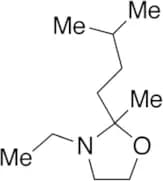
CAS:Controlled Product<p>Stability Very Hygroscopic<br>Applications A potent inhibitor of NO synthase of adrenal glands, brain, and vascular endothelial cells.<br>References Vallence, P., et al.: Lancet, 339, 572 (1992),<br></p>Formula:C8H14D6Cl2N4O2Color and Shape:NeatMolecular weight:281.213-Ethyl-2-methyl-2-(3-methylbutyl)-oxazolidine
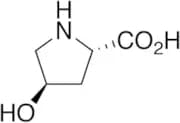
CAS:<p>Applications 3-Ethyl-2-methyl-2-(3-methylbutyl)-oxazolidine is a oxazolidine-based moisture scavenger for use in urethane coatings, sealants and elastomers.<br> Not a dangerous good if item is equal to or less than 1g/ml and there is less than 100g/ml in the package<br></p>Formula:C11H23NOColor and Shape:NeatMolecular weight:185.31trans-4-Hydroxy-L-proline
CAS:Controlled Product<p>Applications A natural constituent of animal structural proteins such as collagen and elastin. Several microorganisms producing proline trans-4- and cis-3-hydroxylase were discovered and these enzymes were applied to the industrial production of trans-4- and cis-3-hydroxy-L-proline.<br>References Langmaier, F. et al.: Int. J. Cosm. Sci., 24, 273 (2002); Lawrence, C., et al.: Biochem. J., 313, 185 (1996); Mori, H., et al.: J. Bacteriol.; 179, 5677 (1997); Clifton, I., et al.: Eur. J. Biochem., 268, 6625 (2001);<br></p>Formula:C5H9NO3Color and Shape:NeatMolecular weight:131.13N-(4-Aminobenzoyl-d4)-β-alanine
CAS:Controlled Product<p>Applications N-(4-Aminobenzoyl-d4)-β-alanine is the labeled analogue of N-(4-Aminobenzoyl)-β-alanine (A593795), a metabolite of BX661A, a therapeutic agent used in the treatment of ulcerative colitis, chemotaxis and reactive oxygen species production in polymorphonuclear leukocyctes. Inhibits lipid peroxidation in large intestinal mucosa after mesenteric ischemia/reperfusion.<br>References Kimura, I. et al.: Arzneimittelforschung., 48, 1007 (1998); Kumamoto, T. et al.: Jpn. J. Pharmacol., 75, 187 (1997);<br></p>Formula:C10D4H8N2O3Color and Shape:NeatMolecular weight:212.238(2R)-3-Hydroxyisovaleroyl Carnitine
CAS:Controlled Product<p>Stability Very Hygroscopic<br>Applications Hydroxyisovaleroyl Carnitine is used as a diagnostic tool to identify the presence of orofacial clefts. Also used in the screening and diagnostics of inborn errors of metabolism.<br>References Denes, J. et al.: Anal. Chem., 84, 10113 (2012); Budner, M. et al.: Arch. Oral. Biol., 58, 459 (2013);<br></p>Formula:C12H23NO5Color and Shape:NeatMolecular weight:261.31L-Homocysteine Thiolactone Hydrochloride
CAS:Controlled Product<p>Applications L-Homocysteine Thiolactone Hydrochloride is used to prepare substituted homocysteine analogs as inhibitors of peptidylglycine α-amidating monooxygenase. It is also used to synthesize (mercaptoacyl)alanylprolines as metalloprotease inhibitors.<br>References Erion, M., et al.: J. Med. Chem., 37, 4430 (1994); Slusarchyk, W., et al.: Bioorg. Med. Chem. Lett., 5, 753 (1995)<br></p>Formula:C4H8ClNOSColor and Shape:NeatMolecular weight:153.63L-2-Aminobutyric Acid-d6
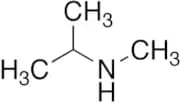
CAS:Controlled Product<p>Applications L-2-Aminobutyric Acid-d6 is the isotope labelled analog of L-2-Aminobutyric Acid (A602930); a receptor antagonist.<br>References Porter, D.J.T., et al.: Biochem. Pharmacol., 50, 1475 (1995)<br></p>Formula:C4D6H3NO2Color and Shape:Off-WhiteMolecular weight:109.16N-Isopropyl-N-methylamine
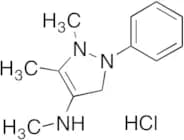
CAS:Controlled Product<p>Stability Volatile<br>Applications N-Isopropyl-N-methylamine (cas# 4747-21-1) is a compound useful in organic synthesis.<br> E0<br></p>Formula:C4H11NColor and Shape:NeatMolecular weight:73.144-Methylaminoantipyrine Hydrochloride
CAS:Formula:C12H15N3O·ClHColor and Shape:Light Orange Colour To Light BrownMolecular weight:253.731-Carboxy-7-(dimethylamino)-3,4-dihydroxyphenoxazin-5-ium chloride
CAS:Purity:95.0%Molecular weight:336.73001098632812-Ethyl-6-methylpyrazine
CAS:<p>Applications 2-ethyl-6-methylpyrazine (cas# 13925-03-6) is a useful research chemical.<br></p>Formula:C7H10N2Color and Shape:ColourlessMolecular weight:122.178-Chloro-4-hydroxy-2-methylquinoline
CAS:Controlled Product<p>Applications 8-Chloro-4-hydroxy-2-methylquinoline (cas# 5236-87-3) is a useful research chemical.<br></p>Formula:C10H8NOClColor and Shape:NeatMolecular weight:193.623-Hydroxy-4-methoxycinnamic Acid
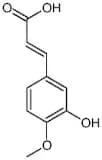
CAS:Controlled Product<p>Applications 3-Hydroxy-4-methoxycinnamic acid, trans-Isoferulic acid<br></p>Formula:C10H10O4Color and Shape:NeatMolecular weight:194.188-benzyl-4-(2,2-dimethylpropanoyl)-1-oxa-4,8-diazaspiro[4.5]decane-3-carboxylic acid
CAS:Purity:95.0%Molecular weight:360.45401000976564-(2-fluorobenzoyl)-8-propyl-1-oxa-4,8-diazaspiro[4.5]decane-3-carboxylic acid
CAS:Purity:95.0%Molecular weight:350.39001464843758-benzyl-4-(3-fluorobenzoyl)-1-oxa-4,8-diazaspiro[4.5]decane-3-carboxylic acid
CAS:Purity:95.0%Molecular weight:398.43399047851561-Methoxy-2-propanol
CAS:Controlled Product<p>Applications 1-Methoxy-2-propanol is used as a reagent in the synthesis of 2-amino-3-carboxy-4-phenylthiophenes as novel atypical protein kinase C inhibitors. Also used as a reagent in the synthesis of Metolachlor (M338700); a selective pre-emergence herbicide.<br> Not a dangerous good if item is equal to or less than 1g/ml and there is less than 100g/ml in the package<br>References Titchenell, P.M., et al.: Bioorg. Med. Chem. Lett., 23, 3034 (2013); Zhang, H.: Nongyao Kexue Yu Guanli, 32, 26 (2011)<br></p>Formula:C4H10O2Color and Shape:ColourlessMolecular weight:90.12(4R,6S)-rel-5,6-Dihydro-4-hydroxy-6-methyl-4H-thieno[2,3-b]thiopyran-2-sulfonamide 7,7-Dioxide
CAS:Controlled Product<p>Applications (4R,6S)-rel-5,6-Dihydro-4-hydroxy-6-methyl-4H-thieno[2,3-b]thiopyran-2-sulfonamide 7,7-Dioxide is used as a reactant in the preparation of Dorzolamide Hydrochloride (D535100), which is a carbonic anhydrase inhibitor; antiglaucoma agent.<br>References Lippa, E.A., et al.: Ophthalmology, 98, 308 (1991); Wang, R.-F., et al.: Arch. Ophthalmol., 109, 1297 (1991); Whikehart, D., et al.: J. Ocul. Pharmacol., 7, 195 (1991); Sjoquist, B., et al.: Drug Metab. Dispos., 26, 745 (1998);<br></p>Formula:C8H11NO5S3Color and Shape:NeatMolecular weight:297.37N-Methyl-N-nitroso-1-octadecylamine
CAS:<p>Applications N-Methyl-N-nitroso-1-octadecylamine was found to present in various hair-care products when investigated through thermal energy analyzer.<br>References Morrison, J.B., et al.: Food. Chem. Toxicol., 21, 69 (1983); Rainey, W.T., et al.: Biomed. Mass. Spec., 5, 395 (1978);<br></p>Formula:C19H40N2OColor and Shape:White To Off-WhiteMolecular weight:312.53(1R,5S)-2-(tert-Butoxycarbonyl)-2-azabicyclo[3.1.0]hexane-1-carboxylic acid
CAS:Purity:97%Molecular weight:227.259994506835944-(3,4-dichlorobenzoyl)-8-methyl-1-oxa-4,8-diazaspiro[4.5]decane-3-carboxylic acid
CAS:Purity:95.0%Molecular weight:373.23001098632818-ethyl-4-(4-methoxybenzoyl)-1-oxa-4,8-diazaspiro[4.5]decane-3-carboxylic acid
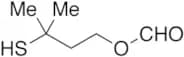
CAS:Purity:95.0%Molecular weight:348.398986816406253-Mercapto-3-methylbutyl Formate
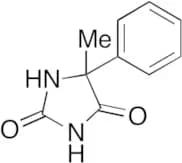
CAS:Controlled Product<p>Applications 3-Mercapto-3-methylbutyl formate is one of the major odor-active thiol in pan-roasted white sesame seeds.<br>References Czerny, M., et al.: J .Agric. Food Chem., 47, 695 (1999), Steinhaus, M., et al.: Eur. Food Res. Technol., 226, 45 (2007), Tamura, H., et al.: Agric. Food Chem., 2010, 58, 7368 (2010),<br></p>Formula:C6H12O2SColor and Shape:NeatMolecular weight:148.225-Methyl-5-phenylhydantoin
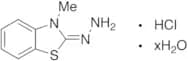
CAS:Controlled Product<p>Applications 5-Methyl-5-phenylhydantoin is a reactant for synthesis of beta-amino alcohols as inhibitors of anti-tubercular target N-acetyltransferase, chlorohydantoins and specific MMP inhibitors.<br>References Fullam, E., et al.: Bioorg. Med. Chem. Lett., 21, 1185 (2011); Whitehead, D., et al.: Tetrahedron Lett., 50, 3 (2009); Chollet, A., et al.: Bioorg. Med. Chem., 10, 531 (2002)<br></p>Formula:C10H10N2O2Color and Shape:NeatMolecular weight:190.203-Methyl-2-benzothiazolinone Hydrazone Hydrochloride Hydrate
CAS:<p>Stability Hygroscopic<br>Applications 3-Methyl-2-benzothiazolinone Hydrazone Hydrochloride Hydrate is a chromegenic reagent for the determination of benzodiazepines, cholesterol, and enzyme activity. 3-Methyl-2-benzothiazolinone Hydrazone Hydrochloride Hydrate is used as an electrophilic coupling reagent used in the spectrophotometric determination of chloramine-B (CAB) and other residual chlorine content in various environmental water samples.<br> Not a dangerous good if item is equal to or less than 1g/ml and there is less than 100g/ml in the package<br>References Syed, A. et al.: Environ. Sci. Indian J., 3, 49 (2008); Syed, A.A. et al.: Chem. Environ. Res., 15, 41 (2006); Mohan, J. et al.: Indian J. Chem., 32B, 44 (1993);<br></p>Formula:C8H10ClN3S·xH2OColor and Shape:NeatMolecular weight:233.7182-[4-(3-Chlorophenyl)piperazin-1-yl]-2-(3-methylphenyl)acetic acid
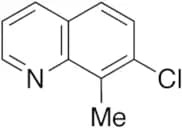
CAS:Molecular weight:344.83999633789067-Chloro-8-methylquinoline
CAS:Controlled Product<p>Applications 7-Chloro-8-methylquinoline (cas# 78941-93-2) is a compound useful in organic synthesis.<br></p>Formula:C10H8ClNColor and Shape:NeatMolecular weight:177.633-[(4,6-Dimethylpyrimidin-2-yl)amino]benzoic acid
CAS:Formula:C13H13N3O2Purity:95.0%Color and Shape:SolidMolecular weight:243.266H-Thr-OH
CAS:<p>M02962 - H-Thr-OH</p>Formula:C4H9NO3Purity:95%Color and Shape:Crystalline Powder,PowderMolecular weight:119.12






![N-[(Benzyloxy)carbonyl]glycylglycine](/_next/image/?url=https%3A%2Fstatic.cymitquimica.com%2Fproducts%2FTR%2Fthumb-webp%2FB287100.webp&w=3840&q=75)






![8-benzyl-4-(2,2-dimethylpropanoyl)-1-oxa-4,8-diazaspiro[4.5]decane-3-carboxylic acid](/_next/image/?url=https%3A%2Fstatic.cymitquimica.com%2Fproducts%2F10%2Fthumb-webp%2FF525790.webp&w=3840&q=75)
![4-(2-fluorobenzoyl)-8-propyl-1-oxa-4,8-diazaspiro[4.5]decane-3-carboxylic acid](/_next/image/?url=https%3A%2Fstatic.cymitquimica.com%2Fproducts%2F10%2Fthumb-webp%2FF525729.webp&w=3840&q=75)
![8-benzyl-4-(3-fluorobenzoyl)-1-oxa-4,8-diazaspiro[4.5]decane-3-carboxylic acid](/_next/image/?url=https%3A%2Fstatic.cymitquimica.com%2Fproducts%2F10%2Fthumb-webp%2FF525805.webp&w=3840&q=75)


![(4R,6S)-rel-5,6-Dihydro-4-hydroxy-6-methyl-4H-thieno[2,3-b]thiopyran-2-sulfonamide 7,7-Dioxide](/_next/image/?url=https%3A%2Fstatic.cymitquimica.com%2Fproducts%2FTR%2Fthumb-webp%2FD678970.webp&w=3840&q=75)

![(1R,5S)-2-(tert-Butoxycarbonyl)-2-azabicyclo[3.1.0]hexane-1-carboxylic acid](/_next/image/?url=https%3A%2Fstatic.cymitquimica.com%2Fproducts%2F10%2Fthumb-webp%2FF614314.webp&w=3840&q=75)
![4-(3,4-dichlorobenzoyl)-8-methyl-1-oxa-4,8-diazaspiro[4.5]decane-3-carboxylic acid](/_next/image/?url=https%3A%2Fstatic.cymitquimica.com%2Fproducts%2F10%2Fthumb-webp%2FF525632.webp&w=3840&q=75)
![8-ethyl-4-(4-methoxybenzoyl)-1-oxa-4,8-diazaspiro[4.5]decane-3-carboxylic acid](/_next/image/?url=https%3A%2Fstatic.cymitquimica.com%2Fproducts%2F10%2Fthumb-webp%2FF525667.webp&w=3840&q=75)
acetic acid](/_next/image/?url=https%3A%2Fstatic.cymitquimica.com%2Fproducts%2F10%2Fthumb-webp%2FF300210.webp&w=3840&q=75)
![2-[4-(3-Chlorophenyl)piperazin-1-yl]-2-(3-methylphenyl)acetic acid](/_next/image/?url=https%3A%2Fstatic.cymitquimica.com%2Fproducts%2F10%2Fthumb-webp%2FF300388.webp&w=3840&q=75)
![3-[(4,6-Dimethylpyrimidin-2-yl)amino]benzoic acid](/_next/image/?url=https%3A%2Fstatic.cymitquimica.com%2Fproducts%2F10%2Fthumb-webp%2FF023725.webp&w=3840&q=75)
