Amino Acids (AA)
Amino acids (AAs) are the fundamental building blocks of proteins, playing a crucial role in various biological processes. These organic compounds are essential for protein synthesis, metabolic pathways, and cell signaling. In this category, you will find a comprehensive range of amino acids, including essential, non-essential, and modified forms, which are vital for research in biochemistry, molecular biology, and nutritional sciences. At CymitQuimica, we provide high-quality amino acids to support your research and development needs, ensuring accuracy and reliability in your experimental outcomes.
Subcategories of "Amino Acids (AA)"
- Amino Acid Derivatives(3,955 products)
- Amino Acid and Amino Acid Related Compounds(3,469 products)
- Amino Acids with Oxygen or Sulphur(168 products)
- Boc- Amino Acids(351 products)
- Fmoc Amino Acids(1,710 products)
Found 38260 products of "Amino Acids (AA)"
Sort by
Purity (%)
0
100
|
0
|
50
|
90
|
95
|
100
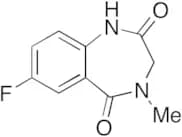
7-Fluoro-3,4-dihydro-4-methyl-1H-1,4-benzodiazepine-2,5-dione
CAS:Controlled ProductFormula:C10H9FN2O2Color and Shape:NeatMolecular weight:208.19L-Ornithine-2,3,3,4,4,5,5-d7 hydrochloride
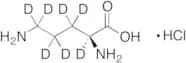
CAS:Controlled Product<p>Applications L-Ornithine-2,3,3,4,4,5,5-d7 hydrochloride is the labelled analogue of L-Ornithine Hydrochloride (O695550), a non-essential amino acid for human development but is required intermediate in arginine biosynthesis. L-Ornithine is found in virtually all vertebrate tissues as well as incorporated into proteins, such as tyrocidine. Isolation from chicken excreta.<br>References Fattori, D., et al.: J. Med. Chem., 50, 550 (2007), Gomez-Alonso, S., et al.: J. Agric. Food Chem., 55, 608 (2007), Subramaniam, R., et al.: Bioorg. Med. Chem. Lett., 18, 3333 (2008),<br></p>Formula:C5D7H5N2O2·ClHColor and Shape:NeatMolecular weight:175.1104926088H-Phe-OH
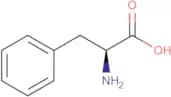
CAS:<p>M02961 - H-Phe-OH</p>Formula:C9H11NO2Purity:98%Color and Shape:SolidMolecular weight:165.1921-(3-Acetyl-2-hydroxy-5-methyl-phenyl)ethanone
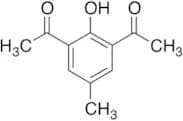
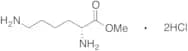
CAS:Controlled Product<p>Applications 1-(3-ACETYL-2-HYDROXY-5-METHYL-PHENYL)-ETHANONE (cas# 55108-28-6) is a useful research chemical.<br></p>Formula:C11H12O3Color and Shape:NeatMolecular weight:192.211D-Lysine Methyl Ester Dihydrochloride
CAS:Controlled Product<p>Applications D-Lysine Methyl Ester is a protected form of D-Lysine (L468930). D-Lysine is the unnatural isomer of L-Lysine (L468895) that has the ability to reduce non-enzymatic glycation in vitro. D-Lysine also exists as polypeptide chains of poly-D-lysine, a nonspecific adhesion-promoting molecule that has the potential to be a polymeric drug carrier.<br>References Chen, Q. et al.: J. Biol. Chem., 269, 26602 (1994); Sensi, M., et al.: Diabetologia, 36, 797 (1993); Vermeersch, H. & Remon, J.: J. Control. Rel., 32, 225 (1994)<br></p>Formula:C7H16N2O2HClColor and Shape:NeatMolecular weight:233.1362-Methoxyresorcinol
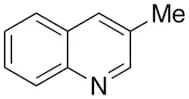
CAS:Controlled Product<p>Applications 2-Methoxyresorcinol (cas# 29267-67-2) is a compound useful in organic synthesis.<br></p>Formula:C7H8O3Color and Shape:NeatMolecular weight:140.143-Methylquinoline
CAS:Controlled Product<p>Applications It can be degraded efficiently by the QL-degrading bacteria.<br>References Shukla, O., et al.: Microbios., 59, 47 (1989), Oh, Y; Biotechnol Bioeng 1994, 44, 533,,,<br></p>Formula:C10H9NColor and Shape:NeatMolecular weight:143.194-(2-phenylacetyl)-8-propyl-1-oxa-4,8-diazaspiro[4.5]decane-3-carboxylic acid
CAS:Purity:95.0%Molecular weight:346.4270019531251,6-Anhydro-β-D-glucopyranose-13C6
CAS:<p>Stability Hygroscopic<br>Applications Isotope labelled 1,6-Anhydro-β-D-glucopyranose (A648100), an compound that have been proven to be a valuable synthon for the preparation of various biologically important and structurally diverse products (e.g. rifamycin S, indanomycin, thromboxane B2, (+)-biotin, tetrodotoxin, quinone, and macrolide antibiotics) as well as for modified sugars.<br>References Fraser-Reid, B., et al. J. Am. Chem. Soc. 106, 731 (1984); Edwards, M.P., et al. J. Org. Chem. 49, 3503 (1984); Kelly, A.G., and Roberts, J.S. J. Chem. Soc., Chem. Commun. 228, (1980); Ogawa, T., et al. Carbohydr. Res. 57, C31 (1977); Isobe, M., et al. Tetrahedron Lett. 28, 6485 (1987);<br></p>Formula:C6H10O5Color and Shape:NeatMolecular weight:168.106-Phenyl-5,6,6a,7,8,9,10,10a-octahydro-7,10-methanophenanthridine-2-carboxylic acid
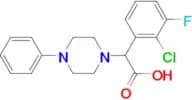
CAS:Purity:98%Molecular weight:319.403991699218752-(2-Chloro-3-fluorophenyl)-2-(4-phenylpiperazin-1-yl)acetic acid
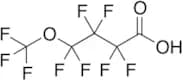
CAS:Molecular weight:348.79998779296875Perfluoro-4-methoxybutanoic Acid
CAS:<p>Applications Perfluoro-4-Methoxybutanoic Acid (cas# 863090-89-5) is a useful research chemical.<br> Not a dangerous good if item is equal to or less than 1g/ml and there is less than 100g/ml in the package<br></p>Formula:C5HF9O3Color and Shape:NeatMolecular weight:280.054-Desmethoxypropoxyl-4-methoxy S-Deoxo Rabeprazole
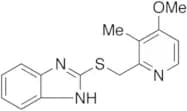
CAS:Controlled Product<p>Impurity Rabeprazole EP Impurity G<br>Applications Used in the preparation of 2-[[(2-pyridyl)methyl]thio]-1H-benzimidazoles derivatives as anti helicobacter pylori agents.<br>References Kuehler, T. et al.: J. Med. Chem., 41, 1777 (1998)<br></p>Formula:C15H15N3OSColor and Shape:WhiteMolecular weight:285.365-((tert-Butoxycarbonyl)amino)pyrimidine-2-carboxylic acid
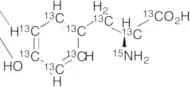
CAS:Purity:95%Molecular weight:239.2310028076172L-Tyrosine-13C9,15N
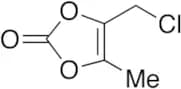
CAS:<p>Applications L-Tyrosine-13C9 ,15N is labelled analogue of L-Tyrosine (T899975), one of the 22 proteinogenic amino acids that are used by cells to synthesize proteins. L-Tyrosine is biologically converted from L-phenylalanine and is in turn is converted to L-DOPA and further converted into the neurotransmitters: dopamine, norepinephrine, and epinephrine.<br>References Rasmussen D.D. et al.: J. Clin. Endocrinol. Metab., 57, 760 (1983); Bagchi, S.P. et al.: Biochem. Pharmacol., 26, 900 (1977)<br></p>Formula:C9H1115NO3Color and Shape:White To Off-WhiteMolecular weight:191.11584-Chloromethyl-5-methyl-1,3-dioxol-2-one
CAS:Controlled Product<p>Applications 4-Chloromethyl-5-methyl-1,3-dioxol-2-one is an important reagent in the preparation of angiotensin II receptor antagonist such as Olmesratan Medoxomil (O550000). 4-Chloromethyl-5-methyl-1,3-dioxol-2-one is also used in the preparation of prodrugs of ampicillin.<br>References Ikeda, S. et al.: Chem. Pharmac. Bull., 32, 4316 (1984); Wu, T. Yaox. Xueb., 41, 537 (2006);<br></p>Formula:C5H5ClO3Color and Shape:NeatMolecular weight:148.544-{[1,1'-biphenyl]-4-carbonyl}-8-ethyl-1-oxa-4,8-diazaspiro[4.5]decane-3-carboxylic acid
CAS:Purity:95.0%Molecular weight:394.47100830078125DL-leucine
CAS:<p>Applications Dl-leucine<br></p>Formula:C6H13NO2Color and Shape:WhiteMolecular weight:131.173-(4-tert-Butoxycarbonylaminophenoxy)propionic acid
Formula:C14H19NO5Purity:85.0%Molecular weight:281.3084-(4-fluorobenzoyl)-8-propyl-1-oxa-4,8-diazaspiro[4.5]decane-3-carboxylic acid
CAS:Purity:95.0%Molecular weight:350.39001464843755-((2-Hydroxyethyl)amino)-2-methylphenol
CAS:Controlled Product<p>Applications 5-((2-Hydroxyethyl)amino)-2-methylphenol (cas# 55302-96-0) is a useful research chemical.<br></p>Formula:C9H13NO2Color and Shape:NeatMolecular weight:167.28-ethyl-4-(4-methyl-3-nitrobenzoyl)-1-oxa-4,8-diazaspiro[4.5]decane-3-carboxylic acid
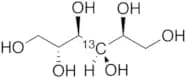
CAS:Purity:95.0%Molecular weight:377.3970031738281D-Glucitol-3-13C
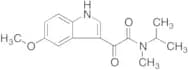
CAS:Controlled Product<p>Applications Isotope labelled D-Glucitol is a sugar alcohol obtained from the reduction of glucose and is naturally found in various fruits such as apples, pears and peaches. D-Glucitol has been widely used as a sweetener, laxative, various medical applications and in cosmetic products.<br>References Wang, Z.J., et al.: Anal. BIoanal. Chem., 405, 3899 (2013); Vinarta, S.C., et al.: Carb. Poly., 92, 1107 (2013); Kaumanu, M.L., et al.: Soil. Biol. Biochem., 57, 644 (2013); Hailu, T., et al.: Anal. Biochem., 434, 181 (2013);<br></p>Formula:CC5H14O6Color and Shape:NeatMolecular weight:183.1645-Methoxy-N-methyl-N-(1-methylethyl)-α-oxo-1H-indole-3-acetamide
CAS:Controlled Product<p>Applications 5-Methoxy-N-methyl-N-(1-methylethyl)-α-oxo-1H-indole-3-acetamide is an intermediate used in the synthesis of 5-Methoxy-N-methyl-N-isopropyl Tryptamine (M271680), which is a psychedelic tryptamine related to N-methyl-N-isopropyltryptamine. 5-Methoxy MiPT potently inhibits the re-uptake of the monoamines serotonin and norepinephrine but does not affect dopamine re-uptake. 5-Methoxy MiPT has no effect on the release of monoamines from rat brain synaptosomes. This product is intended for forensic and research applications.<br>References Katagi, M., et al.: Jpn. J. Forensic Toxicol., 20, 303 (2002), Meatherall, R., et al.: J. Anal. Toxicol., 27, 313 (2003), Wilson, J., et al.: Forensic Sci. Int., 148, 31 (2005), Kamata, T., et al.: Drug Metab. Dispos., 34, 281 (2006),<br></p>Formula:C15H18N2O3Color and Shape:Beige To Light BrownMolecular weight:274.321'-(Tert-butoxycarbonyl)spiro[cyclohexane-1,3'-indoline]-4-carboxylic acid
CAS:Purity:97%Molecular weight:331.41198730468752-Bromo-4-methylphenol
CAS:Controlled Product<p>Applications 2-Bromo-4-methylphenol is a useful synthetic intermediate. It was used in the synthesis of furan-2-ylmethylene thiazolidinediones as potent, and selective inhibitors of phosphoinositide 3-kinase γ. It was also a reactant used to prepare phosphoramidate and phosphorothioamidate analogs of amiprophos Me as potential antimalarial agents.<br>References Pomel, V., et al.: J. Med. Chem., 49, 3857 (2006); Mara, C., et al.: Bioorg. Med. Chem. Lett., 21, 6180 (2011)<br></p>Formula:C7H7BrOColor and Shape:NeatMolecular weight:187.031-Piperidin-1-yl-cyclohexanecarboxylic acid
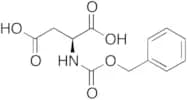
CAS:Formula:C12H21NO2Color and Shape:SolidMolecular weight:211.305N-Cbz-L-aspartic Acid
CAS:Controlled Product<p>Applications N-Cbz-L-aspartic acid is an N-Cbz-protected form of L-Aspartic acid (A790024). L-Aspartic acid is a nonessential amino acid that is used to biosynthesize other amino acids within the human body. L-Aspartic acid also increases membrane conductance of mammalian neurons by voltage-dependent means, causing depolarization and nerve impulses that travel to key areas of the central nervous system.<br>References Anderson, H., et al.: J. Nutr., 99, 82 (1969); Honey, C., et al.: Neurosci. Lett., 61, 135 (1985); MacDonald, J., et al.: Brain Res., 237, 248 (1982)<br></p>Formula:C12H13NO6Color and Shape:White To Off-WhiteMolecular weight:267.23Methyl 2-Bromo-2-methylpropanoate
CAS:Controlled Product<p>Applications Methyl 2-bromo-2-methylpropanoate (cas# 23426-63-3) is a useful research chemical.<br></p>Formula:C5H9O2BrColor and Shape:ColourlessMolecular weight:181.023-([(TERT-BUTOXY)CARBONYL](METHYL)AMINO)CYCLOBUTANE-1-CARBOXYLIC ACID
CAS:Purity:95.0%Molecular weight:229.27600097656251-{[(2-METHYL-2-PROPANYL)OXY]CARBONYL-6-PHENYL-3-PIPERIDINECARBOXYLIC ACID
CAS:Purity:95.0%Molecular weight:305.37399291992192-Methyl-N-[3-(trifluoromethyl)phenyl]propanamide
CAS:Controlled ProductFormula:C11H12F3NOColor and Shape:NeatMolecular weight:231.214-(3-methylphenyl)-3H,4H,5H,6H,7H-imidazo[4,5-c]pyridine-6-carboxylic acid
CAS:Purity:95.0%Molecular weight:257.2929992675781p-Methoxytoluene
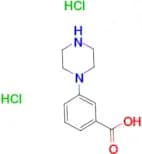
CAS:<p>Applications p-Methoxytoluene is a building block that has been used as a reactant for the preparation of electrophilic fluorinating agents.<br> Not a dangerous good if item is equal to or less than 1g/ml and there is less than 100g/ml in the package<br>References Baudoux, J., Cahard, D.: Org. Reactions, 69, 347 (2007)<br></p>Formula:C8H10OColor and Shape:NeatMolecular weight:122.163-Piperazin-1-yl-benzoic acid dihydrochloride
CAS:Formula:C11H16Cl2N2O2Purity:96.0%Color and Shape:SolidMolecular weight:279.168-propyl-4-(pyridine-3-carbonyl)-1-oxa-4,8-diazaspiro[4.5]decane-3-carboxylic acid
CAS:Purity:95.0%Molecular weight:333.388000488281254-(2-bromobenzoyl)-8-methyl-1-oxa-4,8-diazaspiro[4.5]decane-3-carboxylic acid
CAS:Purity:95.0%Molecular weight:383.242004394531254-[4-(dimethylamino)benzoyl]-8-ethyl-1-oxa-4,8-diazaspiro[4.5]decane-3-carboxylic acid
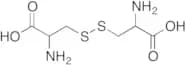
CAS:Purity:95.0%Molecular weight:361.4419860839844DL-Cystine-2,2',3,3,3',3'-d6
CAS:Controlled Product<p>Applications DL-Cystine-2,2',3,3,3',3'-d6 (CAS# 352431-53-9) is a useful isotopically labeled research compound.<br></p>Formula:C6D6H6N2O4S2Color and Shape:NeatMolecular weight:246.34(3R,3aS,6aS)-5-(tert-Butoxycarbonyl)hexahydro-2H-furo[2,3-c]pyrrole-3-carboxylic acid
CAS:Purity:95%Molecular weight:257.2860107421875(1S,2S,4R)-7-(tert-Butoxycarbonyl)-7-azabicyclo[2.2.1]heptane-2-carboxylic acid
CAS:Formula:C12H19NO4Purity:95.0%Color and Shape:SolidMolecular weight:241.287trans-Glutaconic Acid
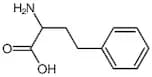
CAS:Controlled Product<p>Applications trans-Glutaconic Acid is used in the synthesis of iso and azokainoids which act as agonists for glutamate receptors. E-isomer of Glutaconic Acid (G596945).<br>References Felluga, F. et al.: Chirality, 24, 112 (2012); Wang, W. et al.: Bioorg. Med. Chem. Lett., 23, 1949 (2013);<br></p>Formula:C5H6O4Color and Shape:White To Light BrownMolecular weight:130.1D-Homophenylalanine
CAS:Controlled Product<p>Applications D-Homophenylalanine<br></p>Formula:C10H13NO2Color and Shape:NeatMolecular weight:179.22



![4-(2-phenylacetyl)-8-propyl-1-oxa-4,8-diazaspiro[4.5]decane-3-carboxylic acid](/_next/image/?url=https%3A%2Fstatic.cymitquimica.com%2Fproducts%2F10%2Fthumb-webp%2FF525718.webp&w=3840&q=75)



![4-{[1,1'-biphenyl]-4-carbonyl}-8-ethyl-1-oxa-4,8-diazaspiro[4.5]decane-3-carboxylic acid](/_next/image/?url=https%3A%2Fstatic.cymitquimica.com%2Fproducts%2F10%2Fthumb-webp%2FF525684.webp&w=3840&q=75)

![4-(4-fluorobenzoyl)-8-propyl-1-oxa-4,8-diazaspiro[4.5]decane-3-carboxylic acid](/_next/image/?url=https%3A%2Fstatic.cymitquimica.com%2Fproducts%2F10%2Fthumb-webp%2FF525715.webp&w=3840&q=75)
![8-ethyl-4-(4-methyl-3-nitrobenzoyl)-1-oxa-4,8-diazaspiro[4.5]decane-3-carboxylic acid](/_next/image/?url=https%3A%2Fstatic.cymitquimica.com%2Fproducts%2F10%2Fthumb-webp%2FF525692.webp&w=3840&q=75)
![1'-(Tert-butoxycarbonyl)spiro[cyclohexane-1,3'-indoline]-4-carboxylic acid](/_next/image/?url=https%3A%2Fstatic.cymitquimica.com%2Fproducts%2F10%2Fthumb-webp%2FF734299.webp&w=3840&q=75)



AMINO)CYCLOBUTANE-1-CARBOXYLIC ACID](/_next/image/?url=https%3A%2Fstatic.cymitquimica.com%2Fproducts%2F10%2Fthumb-webp%2FF504133.webp&w=3840&q=75)
![1-{[(2-METHYL-2-PROPANYL)OXY]CARBONYL-6-PHENYL-3-PIPERIDINECARBOXYLIC ACID](/_next/image/?url=https%3A%2Fstatic.cymitquimica.com%2Fproducts%2F10%2Fthumb-webp%2FF513063.webp&w=3840&q=75)
![2-Methyl-N-[3-(trifluoromethyl)phenyl]propanamide](/_next/image/?url=https%3A%2Fstatic.cymitquimica.com%2Fproducts%2FTR%2Fthumb-webp%2FM331270.webp&w=3840&q=75)
![4-(3-methylphenyl)-3H,4H,5H,6H,7H-imidazo[4,5-c]pyridine-6-carboxylic acid](/_next/image/?url=https%3A%2Fstatic.cymitquimica.com%2Fproducts%2F10%2Fthumb-webp%2FF522509.webp&w=3840&q=75)

![8-propyl-4-(pyridine-3-carbonyl)-1-oxa-4,8-diazaspiro[4.5]decane-3-carboxylic acid](/_next/image/?url=https%3A%2Fstatic.cymitquimica.com%2Fproducts%2F10%2Fthumb-webp%2FF525740.webp&w=3840&q=75)
![4-(2-bromobenzoyl)-8-methyl-1-oxa-4,8-diazaspiro[4.5]decane-3-carboxylic acid](/_next/image/?url=https%3A%2Fstatic.cymitquimica.com%2Fproducts%2F10%2Fthumb-webp%2FF525646.webp&w=3840&q=75)
![4-[4-(dimethylamino)benzoyl]-8-ethyl-1-oxa-4,8-diazaspiro[4.5]decane-3-carboxylic acid](/_next/image/?url=https%3A%2Fstatic.cymitquimica.com%2Fproducts%2F10%2Fthumb-webp%2FF525710.webp&w=3840&q=75)
![(3R,3aS,6aS)-5-(tert-Butoxycarbonyl)hexahydro-2H-furo[2,3-c]pyrrole-3-carboxylic acid](/_next/image/?url=https%3A%2Fstatic.cymitquimica.com%2Fproducts%2F10%2Fthumb-webp%2FF609060.webp&w=3840&q=75)
![(1S,2S,4R)-7-(tert-Butoxycarbonyl)-7-azabicyclo[2.2.1]heptane-2-carboxylic acid](/_next/image/?url=https%3A%2Fstatic.cymitquimica.com%2Fproducts%2F10%2Fthumb-webp%2FF223549.webp&w=3840&q=75)

![4-[(4-PHENYLQUINAZOLIN-2-YL)AMINO]BENZOIC ACID](/_next/image/?url=https%3A%2Fstatic.cymitquimica.com%2Fproducts%2F10%2Fthumb-webp%2FF531237.webp&w=3840&q=75)