


Amino Acids (AA)
Amino acids (AAs) are the fundamental building blocks of proteins, playing a crucial role in various biological processes. These organic compounds are essential for protein synthesis, metabolic pathways, and cell signaling. In this category, you will find a comprehensive range of amino acids, including essential, non-essential, and modified forms, which are vital for research in biochemistry, molecular biology, and nutritional sciences. At CymitQuimica, we provide high-quality amino acids to support your research and development needs, ensuring accuracy and reliability in your experimental outcomes.
Subcategories of "Amino Acids (AA)"
- Amino Acid Derivatives(3,955 products)
- Amino Acid and Amino Acid Related Compounds(3,469 products)
- Amino Acids with Oxygen or Sulphur(168 products)
- Boc- Amino Acids(351 products)
- Fmoc Amino Acids(1,710 products)
Found 38260 products of "Amino Acids (AA)"
Sort by
Purity (%)
0
100
|
0
|
50
|
90
|
95
|
100
D,L-o-Tyrosine
CAS:Controlled Product<p>Applications D,L-o-Tyrosine is a metabolite of Phenylalanine (P319415). A precursor in the formation of catecholamines. Used as biomarkers of protein oxidative damage in β-thalassemia.<br>References Tsugita, A., et al.: Eur. J. Biochem., 124, 585 (1982), Nielsen, F., et al.: Clin. Chem., 43, 1209 (1997), Mates, J., et al.: Clin. Biochem., 32, 595 (1999),<br></p>Formula:C9H11NO3Color and Shape:WhiteMolecular weight:181.19trans-Glutaconic Acid
CAS:Controlled Product<p>Applications trans-Glutaconic Acid is used in the synthesis of iso and azokainoids which act as agonists for glutamate receptors. E-isomer of Glutaconic Acid (G596945).<br>References Felluga, F. et al.: Chirality, 24, 112 (2012); Wang, W. et al.: Bioorg. Med. Chem. Lett., 23, 1949 (2013);<br></p>Formula:C5H6O4Color and Shape:White To Light BrownMolecular weight:130.1N6-{[(2-Phenylethyl)amino]carbonothioyl}lysine (PEITC-Lys)
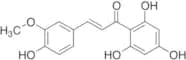
CAS:Controlled ProductFormula:C15H23N3O2SColor and Shape:NeatMolecular weight:309.433-Methoxy-2',4',6',4-tetrahydroxychalcone (>80%)
CAS:Controlled Product<p>Applications 3-Methoxy-2',4',6',4-tetrahydroxychalcone piperidine complex (cas# 52218-19-6) is a useful research chemical.<br></p>Formula:C16H14O6Purity:>80%Color and Shape:NeatMolecular weight:302.28(4S)-4-METHYL-L-PROLINE HCL
CAS:Formula:C6H12ClNO2Purity:97.0%Color and Shape:SolidMolecular weight:165.62Linoleoyl Carnitine
CAS:Controlled Product<p>Stability Hygroscopic, Temperature Sensitive<br>Applications A carnitine ester of unsaturated fatty acid. Used in the studies of fibroblasts in long-chain 3-hydroxyacyl-CoA dehydrogenase deficiency and fatty acid oxidation disorders.<br>References Gross R.W., et al.: J. Biol. Chem., 258, 5221 (1983),<br></p>Formula:C25H45NO4Color and Shape:NeatMolecular weight:423.631,6-Anhydro-β-D-glucopyranose-13C6
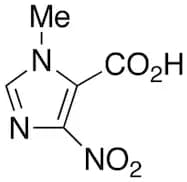
CAS:<p>Stability Hygroscopic<br>Applications Isotope labelled 1,6-Anhydro-β-D-glucopyranose (A648100), an compound that have been proven to be a valuable synthon for the preparation of various biologically important and structurally diverse products (e.g. rifamycin S, indanomycin, thromboxane B2, (+)-biotin, tetrodotoxin, quinone, and macrolide antibiotics) as well as for modified sugars.<br>References Fraser-Reid, B., et al. J. Am. Chem. Soc. 106, 731 (1984); Edwards, M.P., et al. J. Org. Chem. 49, 3503 (1984); Kelly, A.G., and Roberts, J.S. J. Chem. Soc., Chem. Commun. 228, (1980); Ogawa, T., et al. Carbohydr. Res. 57, C31 (1977); Isobe, M., et al. Tetrahedron Lett. 28, 6485 (1987);<br></p>Formula:C6H10O5Color and Shape:NeatMolecular weight:168.101-Methyl-4-nitro-1H-imidazole-5-carboxylic Acid
CAS:Controlled Product<p>Applications A derivative of imidazole used in the synthesis of heteroxanthine.<br>References Sarasin, J., et al.: Helv. Chim. Acta, 7, 713 (1924),<br></p>Formula:C5H5N3O4Color and Shape:NeatMolecular weight:171.11L-Ethionine
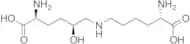
CAS:Controlled Product<p>Applications Ethionine-induced inhibition of protein synthesis and lowering of ATP level in the liver.<br>References Rotig, A., et al.: Lancet, 356, 391 (2000), Forsgren, M., et al.: Biochem. J., 382, 519 (2004), Johnson, A., et al.: J. Biol. Chem., 280, 31397 (2005), Horvath, R., et al.: Neurology, 66, 253 (2006), Mollet, M., et al.: J. Clin. Invest., 117, 765 (2007),<br></p>Formula:C6H13NO2SColor and Shape:NeatMolecular weight:163.24(2S,2’S,5S)-5-Hydroxy Lysinonorleucine
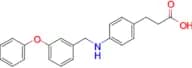
CAS:<p>Stability Hygroscopic<br>Applications 2S,2’S,5S)-5-Hydroxy Lysinonorleucine is one of the stereoisomers of 5-Hydroxylysinonorleucine, reduced collagen cross links.<br>References Astbury, C., et al.: Br. J. Rheumatol., 33, 11 (1994), Watts, N., et al.: Clin. Chem., 45, 1359 (1999), Banse, X., et al.: Bone, 31, 70 (2002),<br></p>Formula:C12H25N3O5Color and Shape:Light Orange to Brown SolidMolecular weight:291.343-(4-((3-Phenoxybenzyl)amino)phenyl)propanoic acid
CAS:Purity:95.0%Color and Shape:SolidMolecular weight:347.41400146484375L-Formiminoglutamic Acid
CAS:<p>Stability Hygroscopic<br>Applications L-Formiminoglutamic acid is a useful research chemical. It is used medically in the diagnosis of Cobalt deficiencies in Cattle and sheep.<br>References Marsh, K. B., et al.: New Zeal. J. Agric. Res., 31, 273 (1988); Quirk, M. F., et al.: J. Agric. Sci., 110, 465 (1988); Quirk, M. F., et al.: Aust. J. Agric. Res., 38, 1071 (1987)<br></p>Formula:C6H10N2OColor and Shape:NeatMolecular weight:174.164-Aminohippuric Acid
CAS:Controlled Product<p>Applications 4-Aminohippuric Acid is used in the measurement of renal plasma flow as a diagnostic tool which may be applied towards kidney disorders.<br>References Phillips, R. et al.: Am. J. Physiol., 152, 523 (1948);<br></p>Formula:C9H10N2O3Color and Shape:Off White SolidMolecular weight:194.19Ref: 10-F806736
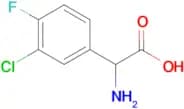
1gTo inquire5mgTo inquire10mgTo inquire25mgTo inquire50mgTo inquire100mgTo inquire250mgTo inquire3-Chloro-4-fluoro-DL-phenylglycine
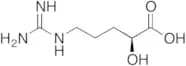
CAS:Formula:C8H7ClFNO2Purity:98+%Color and Shape:SolidMolecular weight:203.6L-Argininic Acid
CAS:<p>Applications L-Argininic Acid is a guanidino compound, of which accumulation in tissue can cause Hyperargininemia.<br>References Deignan, J., et al.: Mol. Gen. Metab., 93, 172 (2008); Balz, D., et al.: Intl. J. Develop. Neurosci., 21, 75 (2003); Wyse, A., et al.: Brain Res., 923, 50 (2001)<br></p>Formula:C6H13N3O3Color and Shape:Off White SolidMolecular weight:175.194-(2-fluorobenzoyl)-8-propyl-1-oxa-4,8-diazaspiro[4.5]decane-3-carboxylic acid
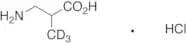
CAS:Purity:95.0%Molecular weight:350.3900146484375rac-3-Aminoisobutyric Acid-d3 Hydrochloride
CAS:Controlled Product<p>Stability Hygroscopic<br>Applications Labelled 3-Aminoisobutyric Acid (A611585). Substituted β-alanines. Used for preparation and isolation of D(-)-β-aminoisobutyric acid.<br>References Kakimoto, Y., et al.: J. Biol. Chem., 236, 3288 (1961),<br></p>Formula:C4H7D3ClNO2Color and Shape:NeatMolecular weight:142.63-(1,2,4-Triazol-1-yl)-L-alanine
CAS:Controlled Product<p>Applications A metabolite common to all triazole fungicides: free triazole, 1,2,4-triazole (T), and its 2 conjugates: triazolylalanine (TA) and triazolylacetic acid (TAA).<br>References Hrudey, S., et al.: Water Sci. Technol., 20, 55 (1988), Froese, K., et al.: Water Res., 33, 1355 (1999), Hengel, M., et al.: J. Agric. Food Chem., 50, 3412 (2002),<br></p>Formula:C5H8N4O2Color and Shape:NeatMolecular weight:156.145-Methoxyresorcinol
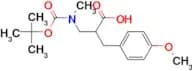
CAS:<p>Applications 5-Methoxyresorcinol (cas# 2174-64-3) is a useful research chemical.<br></p>Formula:C7H8O3Color and Shape:NeatMolecular weight:140.1372-N-Boc-3-(4-Methoxy-phenyl)-2-methylaminomethyl-propionic acid
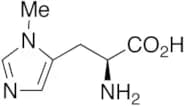
CAS:Formula:C17H25NO5Purity:97.0%Color and Shape:SolidMolecular weight:323.3893-N-Methyl-L-histidine
CAS:<p>Applications 3-N-Methyl-L-histidine is a potential compound to be used as a treatment with pharmacological PPARα agonists to stimulate the ubiquitin proteasome pathway and myofibrillar protein breakdown in skeletal muscle of rodents.<br>References Ringseis, R., et al.: Biochem. Biphys. Gen. Subject., 1830, 2105 (2013); Ubhi, B.K., et al.: Molec. Biosys., 8, 3125 (2012);<br></p>Formula:C7H11N3O2Color and Shape:NeatMolecular weight:169.184-(4-chloro-2-fluorobenzoyl)-8-ethyl-1-oxa-4,8-diazaspiro[4.5]decane-3-carboxylic acid
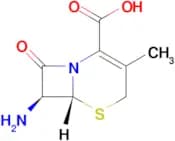
CAS:Purity:95.0%Molecular weight:370.809997558593757-Aminodezacetoxycephalosporanic acid
CAS:Purity:98.0%Color and Shape:Solid, PowderMolecular weight:214.240005493164062-(2,3-Dimethylphenyl)-2-[4-(4-fluorophenyl)piperazin-1-yl]acetic acid
CAS:Molecular weight:342.41400146484375(1R,5S)-2-(tert-Butoxycarbonyl)-2-azabicyclo[3.1.0]hexane-1-carboxylic acid
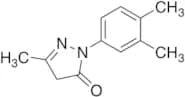
CAS:Purity:97%Molecular weight:227.259994506835941-(3,4-Dimethylphenyl)-3-methyl-1H-pyrazol-5(4H)-one
CAS:<p>Applications 1-(3,4-Dimethylphenyl)-3-methyl-1H-pyrazol-5(4H)-one is a reagent used in the enantioselective aminoalkylation of pyrazol-3-ones.<br>References Carceller-Ferrer, L. et al.: Org. Biomol. Chem., 17, 9859 (2019);<br></p>Formula:C12H14N2OColor and Shape:Off-WhiteMolecular weight:202.253-QUINOLINECARBOXYLIC ACID, 7-[(2-AMINOETHYL)AMINO]-1-CYCLOPROPYL-6-FLUORO-1,4-DIHYDRO-8-METHOXY-4-OXO-
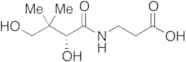
CAS:Purity:97.0%Molecular weight:335.3349914550781Pantothenic Acid (Technical Grade, Contains Lactone)
CAS:Controlled Product<p>Stability Hygroscopic<br>Applications Pantothenic Acid is a member of the B complex vitamins; essential vitamin for the biosynthesis of coenzyme A in mammalian cells. Occurs ubiquitously in all animal and plant tissue. The richest common source is liver, but jelly of the queen bee contains 6 times as much as liver. Rice bran and molasses are other good sources.<br>References Gardner, P., et al.: Food Chem., 68, 471 (2000); Ou, B., et al.: J. Agric. Food Chem., 50, 2772 (2002); Bahorun, T., et al.: J. Sci. Food Agric., 84, 1553 (2004)<br></p>Formula:C9H17NO5Color and Shape:NeatMolecular weight:219.242'-Amino-[1,1':3',1''-terphenyl]-4,4''-dicarboxylic acid
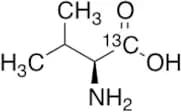
CAS:Purity:98%Molecular weight:333.3429870605469L-Valine-13C
CAS:<p>Applications L-Valine (1-13c, 99%) (cas# 81201-85-6) is a useful research chemical.<br></p>Formula:C413CH11NO2Color and Shape:NeatMolecular weight:118.143-Methyl-3-hepten-5-one
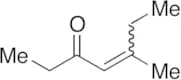
CAS:Controlled Product<p>Applications 3-Methyl-3-hepten-5-one is a reagent used to prepare fused nitrogen-heterocycles from β-enamino nitrile and α,β-unsaturated carbonyl compounds.<br>References Nemes, P., et al.: Synlett., 2, 222 (1999)<br></p>Formula:C8H14OColor and Shape:ColourlessMolecular weight:126.22-(2,3-Dimethylphenyl)-2-[4-(2-fluorophenyl)piperazin-1-yl]acetic acid
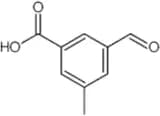
CAS:Molecular weight:342.414001464843753-Formyl-5-methylbenzoic Acid
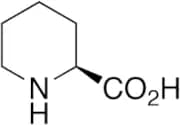
CAS:Controlled Product<p>Applications 3-Formyl-5-methylbenzoic Acid<br></p>Formula:C9H8O3Color and Shape:NeatMolecular weight:164.16L-Pipecolic Acid
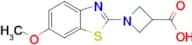
CAS:<p>Applications Pipecolic acid is involved in synaptic transmission in the central nervous system. The l-form occurs in plants.<br>References Nomura Y., et al.: Neurochem. Res., 6, 391 (1981),<br></p>Formula:C6H11NO2Color and Shape:NeatMolecular weight:129.161-(6-methoxy-1,3-benzothiazol-2-yl)azetidine-3-carboxylic acid
CAS:Purity:95.0%Molecular weight:264.29998779296875N-Boc-3-cyclopentylamino-propionic acid
CAS:Purity:98.0%Color and Shape:Solid, Colourless powderMolecular weight:257.32998657226562-Methylbutyrylglycine-d9
CAS:Controlled Product<p>Applications Labelled 2-Methylbutyrylglycine (M294340). 2-Methylbutyrylglycine is one of the acylglycines, an important class of metabolites that have been used in the diagnosis of several inborn errors of metabolism (IEM).<br>References Costa, C., et al.: J. Pharmaceut. Biomed. Anal., 21, 1215 (2000), Garcia-Villoria, J., et al.: Clin. Biochem., 42, 2 (2009), Scalbert, A., et al.: Metabolomics, 5, 435 (2009),<br></p>Formula:C72H9H4NO3Color and Shape:Off-WhiteMolecular weight:168.246-Methylheptanoic Acid (>90%)
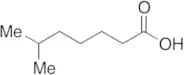
CAS:Controlled Product<p>Applications 6-Methylheptanoic acid is used as a reagent to synthesize analogues of Eponemycin, an antibiotic that also exhibits anti-angiogenic activity by inhibiting proteasome function. 6-Methylheptanoic acid naturally occurs as a component of the scent chemical of the brushtail possum.<br> Not a dangerous good if item is equal to or less than 1g/ml and there is less than 100g/ml in the package<br>References McLean, S., et al.: J. Chem. Ecol., 38, 1318 (2012); Oikawa, T., et al.: Biochem. Biophys. Res. Comm., 181, 1070 (1991); Sin, N., et al.: Bioorg. Med. Chem., 6, 1209 (1998)<br></p>Formula:C8H16O2Purity:>90%Color and Shape:NeatMolecular weight:144.218-methyl-4-(3-methylbenzoyl)-1-oxa-4,8-diazaspiro[4.5]decane-3-carboxylic acid
CAS:Purity:95.0%Molecular weight:318.372985839843758-benzyl-4-propanoyl-1-oxa-4,8-diazaspiro[4.5]decane-3-carboxylic acid
CAS:Purity:95.0%Molecular weight:332.39999389648444-Chloro-2-methylaniline
CAS:Controlled Product<p>Stability Air Sensitive<br>Applications 4-Chloro-2-methylaniline<br> Not a dangerous good if item is equal to or less than 1g/ml and there is less than 100g/ml in the package<br></p>Formula:C7H8ClNColor and Shape:Light BrownMolecular weight:141.605,6-Dihydro-4H-benzo[b]thieno[2,3-d]azepine-2-carboxylic acid
CAS:Purity:95.0%Molecular weight:245.3000030517578(8-Benzyl-2,4-dioxo-1,3,8-triaza-spiro[4.5]dec-3-yl)-acetic acid
CAS:Purity:95.0%Molecular weight:317.3450012207031



![N6-{[(2-Phenylethyl)amino]carbonothioyl}lysine (PEITC-Lys)](/_next/image/?url=https%3A%2Fstatic.cymitquimica.com%2Fproducts%2FTR%2Fthumb-webp%2FP335918.webp&w=3840&q=75)







![4-(2-fluorobenzoyl)-8-propyl-1-oxa-4,8-diazaspiro[4.5]decane-3-carboxylic acid](/_next/image/?url=https%3A%2Fstatic.cymitquimica.com%2Fproducts%2F10%2Fthumb-webp%2FF525729.webp&w=3840&q=75)


![4-(4-chloro-2-fluorobenzoyl)-8-ethyl-1-oxa-4,8-diazaspiro[4.5]decane-3-carboxylic acid](/_next/image/?url=https%3A%2Fstatic.cymitquimica.com%2Fproducts%2F10%2Fthumb-webp%2FF525713.webp&w=3840&q=75)
![2-(2,3-Dimethylphenyl)-2-[4-(4-fluorophenyl)piperazin-1-yl]acetic acid](/_next/image/?url=https%3A%2Fstatic.cymitquimica.com%2Fproducts%2F10%2Fthumb-webp%2FF300390.webp&w=3840&q=75)
![(1R,5S)-2-(tert-Butoxycarbonyl)-2-azabicyclo[3.1.0]hexane-1-carboxylic acid](/_next/image/?url=https%3A%2Fstatic.cymitquimica.com%2Fproducts%2F10%2Fthumb-webp%2FF614314.webp&w=3840&q=75)
![3-QUINOLINECARBOXYLIC ACID, 7-[(2-AMINOETHYL)AMINO]-1-CYCLOPROPYL-6-FLUORO-1,4-DIHYDRO-8-METHOXY-4…](/_next/image/?url=https%3A%2Fstatic.cymitquimica.com%2Fproducts%2F10%2Fthumb-webp%2FF386963.webp&w=3840&q=75)


![2'-Amino-[1,1':3',1''-terphenyl]-4,4''-dicarboxylic acid](/_next/image/?url=https%3A%2Fstatic.cymitquimica.com%2Fproducts%2F10%2Fthumb-webp%2FF695958.webp&w=3840&q=75)

![2-(2,3-Dimethylphenyl)-2-[4-(2-fluorophenyl)piperazin-1-yl]acetic acid](/_next/image/?url=https%3A%2Fstatic.cymitquimica.com%2Fproducts%2F10%2Fthumb-webp%2FF300391.webp&w=3840&q=75)



![8-methyl-4-(3-methylbenzoyl)-1-oxa-4,8-diazaspiro[4.5]decane-3-carboxylic acid](/_next/image/?url=https%3A%2Fstatic.cymitquimica.com%2Fproducts%2F10%2Fthumb-webp%2FF525653.webp&w=3840&q=75)
![8-benzyl-4-propanoyl-1-oxa-4,8-diazaspiro[4.5]decane-3-carboxylic acid](/_next/image/?url=https%3A%2Fstatic.cymitquimica.com%2Fproducts%2F10%2Fthumb-webp%2FF525787.webp&w=3840&q=75)

![5,6-Dihydro-4H-benzo[b]thieno[2,3-d]azepine-2-carboxylic acid](/_next/image/?url=https%3A%2Fstatic.cymitquimica.com%2Fproducts%2F10%2Fthumb-webp%2FF215573.webp&w=3840&q=75)
![(8-Benzyl-2,4-dioxo-1,3,8-triaza-spiro[4.5]dec-3-yl)-acetic acid](/_next/image/?url=https%3A%2Fstatic.cymitquimica.com%2Fproducts%2F10%2Fthumb-webp%2FF495291.webp&w=3840&q=75)