Amino Acids (AA)
Subcategories of "Amino Acids (AA)"
- Amino Acid Derivatives(4,012 products)
- Amino Acid and Amino Acid Related Compounds(3,490 products)
- Amino Acids with Oxygen or Sulphur(168 products)
- Boc- Amino Acids(351 products)
- Fmoc Amino Acids(1,710 products)
Found 38366 products of "Amino Acids (AA)"
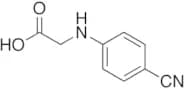
N-(4-Cyanophenyl)-glycine
CAS:Controlled ProductApplications N-(4-Cyanophenyl)-glycine (cas# 42288-26-6) is a compound useful in organic synthesis.
Formula:C9H8N2O2Color and Shape:NeatMolecular weight:176.17L-Phenylalanine-d7
CAS:Controlled ProductApplications Labelled analogue of L-Phenylalanine, an essential amino acid.
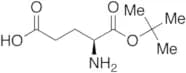
References Hollunger, G. et al.: Acta Pharmacol. Toxicol., 34, 391 (1974); Bagchi, S.P. et al.: Biochem. Pharmacol., 26, 900 (1977);Formula:C9H4D7NO2Color and Shape:NeatMolecular weight:172.23L-Glutamic Acid α-tert-Butyl Ester
CAS:Applications L-Glutamic Acid α-tert-Butyl Ester is an ester of L-Glutamic Acid used in the synthesis of enantiopure isotopomers of amino acids.
References Chauvel, E., et al.: J. Med. Chem., 37, 2950 (1994),Formula:C9H17NO4Color and Shape:NeatMolecular weight:203.24(2R)-3-Hydroxyisovaleroyl Carnitine
CAS:Controlled ProductStability Very Hygroscopic
Applications Hydroxyisovaleroyl Carnitine is used as a diagnostic tool to identify the presence of orofacial clefts. Also used in the screening and diagnostics of inborn errors of metabolism.
References Denes, J. et al.: Anal. Chem., 84, 10113 (2012); Budner, M. et al.: Arch. Oral. Biol., 58, 459 (2013);Formula:C12H23NO5Color and Shape:NeatMolecular weight:261.31L-2-Aminobutyric Acid-d6
CAS:Controlled ProductApplications L-2-Aminobutyric Acid-d6 is the isotope labelled analog of L-2-Aminobutyric Acid (A602930); a receptor antagonist.
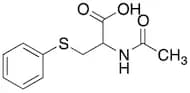
References Porter, D.J.T., et al.: Biochem. Pharmacol., 50, 1475 (1995)Formula:C4D6H3NO2Color and Shape:Off-WhiteMolecular weight:109.162-(Acetylamino)-3-(phenylthio)propanoic Acid
CAS:Controlled ProductApplications 2-(Acetylamino)-3-(phenylthio)propanoic acid is a useful chemical in research.
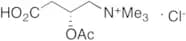
Formula:C11H13NO3SColor and Shape:NeatMolecular weight:239.29Acetyl L-Carnitine Hydrochloride
CAS:Applications Acetyl-L-carnitine is a mitochondrial metabolite that helps to transport fatty acids into the mitochondria for energy (1). Acetyl-L-carnitine also upregulate metabotropic glutamate receptor 2 (mGlu2) via NF-κB p65 acetylation (2,3). It exhibits antidepressant and neuroprotective properties.
References (1) Stephens, F. B., et al.: J Physiol. 581, 431 (2007) (2) Wang, S. M., et al.: J Psychiatr Res. 53, 30 (2014) (3) Cuccurazzu, B., et al.: Neuropsychopharmacology 38, 2220 (2013)Formula:C9H18NO4·ClColor and Shape:NeatMolecular weight:239.7L-Ethionine
CAS:Controlled ProductApplications Ethionine-induced inhibition of protein synthesis and lowering of ATP level in the liver.
References Rotig, A., et al.: Lancet, 356, 391 (2000), Forsgren, M., et al.: Biochem. J., 382, 519 (2004), Johnson, A., et al.: J. Biol. Chem., 280, 31397 (2005), Horvath, R., et al.: Neurology, 66, 253 (2006), Mollet, M., et al.: J. Clin. Invest., 117, 765 (2007),Formula:C6H13NO2SColor and Shape:NeatMolecular weight:163.24L-Aspartic Acid
CAS:Applications L-Aspartic Acid is a non-essential amino acid found in food sources. L-Aspartic Acid is one of the 20 proteinogenic amino acids; the building blocks of proteins. Its conjugate base L-aspartate is an excitatory neurotransmitter in the central nervous system.
References Ager, D.J. et al.: J. Mol. Catal. Enzym., 11, 199 (2001); Velisek, J. et al.: Cze. J. Food. Sci., 24, 1 (2006); Nagahama, M. et al.: Cell Tiss. Res., 318, 483 (2004);Formula:C4H7NO4Color and Shape:WhiteMolecular weight:133.1N-Acetyl-L-phenylalanine
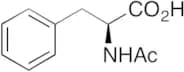
CAS:Controlled ProductApplications N-Acetyl-L-phenylalanine is an protected analogue of L-Phenylalanine (P319415), an essential amino acid produced for medical, feed, and nutritional applications such as in the preparation of Aspartame.
References Sriram, S., et al.: J. Med. Chem., 56, 2540 (2013); Parker, B.M., et al.: J. Biotech., 155, 396 (2011);Formula:C11H13NO3Color and Shape:NeatMolecular weight:207.23cis-4-Hydroxy-L-proline
CAS:Applications Hydroxyprolines are valuable chiral building blocks for organic synthesis of pharmaceuticals. Several microorganisms producing proline trans-4- and cis-3-hydroxylase were discovered and these enzymes were applied to the industrial production of trans-4- and cis-3-hydroxy-L-proline.
References Lawrence, C., et al.: Biochem. J., 313, 185 (1996), Mori, H., et al.: J. Bacteriol., 179, 5677 (1997), Clifton, I., et al.: Eur. J. Biochem., 268, 6625 (2001),Formula:C5H9NO3Color and Shape:Off White Crystalline PowderMolecular weight:131.13Fructose-leucine (mixture of diastereomers)
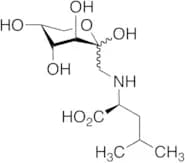
CAS:Controlled ProductFormula:C12H23NO7Color and Shape:White To BrownMolecular weight:293.31Isoleucine-d10 (mixture of diastereomers)
CAS:Controlled ProductApplications Isoleucine-d10 (mixture of diastereomers) (CAS# 29909-02-2) is a useful isotopically labeled research compound and can be used in gas liquid chromatography.
References VandenHeuvel, W., et.al., J. Chromatogr., 50, 405-412, (1970);Formula:C6D10H3NO2Color and Shape:NeatMolecular weight:141.2345Nalpha-Acetyl-L-ornithine
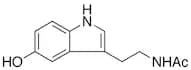
CAS:Controlled ProductFormula:C7H14N2O3Color and Shape:Off-WhiteMolecular weight:174.2N-Acetyl-5-hydroxytryptamine
CAS:Stability Hygroscopic
Applications A metabolite of Melatonin (M215000).
References Reiter, R.J., et al.: J. Biomed. Sci., 7, 444 (2000), Chen, Z., et al.: Am. J. Physiol, 284, 1618 (2003), Barrenetxe, J., et al.: J. Physiol. Biochem., 60, 61 (2004),Formula:C12H14N2O2Color and Shape:White To GreyMolecular weight:218.25185'-O-Methylthymidine
CAS:Controlled ProductApplications 5'-O-Methylthymidine (cas# 14504-60-0) is a useful research chemical.
Formula:C11H16N2O5Color and Shape:White To Off-WhiteMolecular weight:256.26L-Phenylalanine-d5 Methyl Ester Hydrochloride
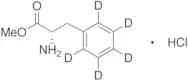
CAS:Controlled ProductApplications Protected (S) enantiomer of the amino acid Phenylalanine.
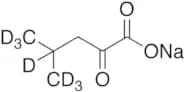
References Zhu, P., et al.: Bioorg. Med. Chem. Lett., 19, 6966 (2009), Cramer, B., et al.: Bioorg. Med. Chem., 18, 343 (2010),Formula:C10H9D5ClNO2Color and Shape:NeatMolecular weight:220.714-Methyl-2-oxovaleric Acid-d7 Sodium Salt
CAS:Controlled ProductApplications Labelled 4-Methyl-2-oxovaleric Acid, an α-ketomonocarboxylic acid that triggers insulin release by acting upon receptor sites which differ from those occupied by amino acids. 4-Methyl-2-oxovaleric Acid is an intermediate in the metabolism of Leucine.
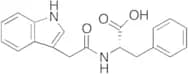
References Panten, U. et al.: Naun.-Schmied. Arch. Pharmacol., 291, 405 (1975); Vague, P. et al.: Diab. Metab., 1, 185 (1975); Francois, G. et al.: Lancet, 1, 858 (1984);Formula:C62H7H2O3·NaColor and Shape:NeatMolecular weight:159.17indole-3-acetyl-L-phenylalanine
CAS:Controlled ProductApplications Indole-3-acetyl-L-phenylalanine is an indole-3-acetyl-amino acid conjugate involved in regulatory mechanisms for the control of auxin activity during physiological and pathophysiological responses.
References Ostrowski, M., et al.: J Plant Physiol, 191, 63-72 (2016)Formula:C19H18N2O3Color and Shape:NeatMolecular weight:322.358D-Arginine
CAS:Controlled ProductApplications D-Arginine is an unnatural isomer of L-Arginine (A769505), and is used to inhibit glutamate-induced nitric oxide production in rats. Derivatives of D-Arginine are used for pharmaceutical purposes, one example is 1-Deamino-8-D-arginine vasopressin, which is used to treat various bleeding disorders.
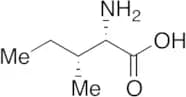
References Castellano, M., et al.: Neurosci. Lett., 314, 127 (2001); Kobrinsky, N., et al.: Lancet, 323, 1145 (1984); Weyrich, A., et al.: Circulation, 86, 279 (1992)Formula:C6H14N4O2Color and Shape:NeatMolecular weight:174.2L-Allo-isoleucine
CAS:Controlled ProductApplications L-alloisoleucine is a stereo-isomer of L-isoleucine (I820175) and is produced as a byproduct of isoleucine via transamination. L-allo-isoleucine has been suggested to induce epithelial β-defensin expression. In addition, L-allo-isoleucine is utilized in the biosynthesis pathway for coronamic acid.
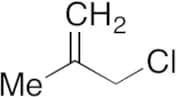
References Fehlbaum, P., et al.: Proc. Natl. Acad. Sci. USA 97, 12723 (2000); Parry, R. J., et al.: J. Am. Chem. Soc. 113, 1849 (1991)Formula:C6H13NO2Color and Shape:NeatMolecular weight:131.173-Chloro-2-methyl-1-propene
CAS:Applications 3-Chloro-2-methyl-1-propene has been used in the synthesis of 2-S-substituted pyrimidines as antimetabolites of nucleic acid precursors for cancer therapy.
Not a dangerous good if item is equal to or less than 1g/ml and there is less than 100g/ml in the package
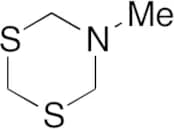
References Kaldrikyan, M.A., Melik-Ohanjanyan, R.G.: Hayastani Kimiakan Handes, 67, 321 (2014)Formula:C4H7ClColor and Shape:NeatMolecular weight:90.55Dihydro-5-methyl-4H-1,3,5-dithiazine
CAS:Controlled ProductApplications Dihydro-5-methyl-4H-1,3,5-dithiazine is used as a reagent in the synthesis of neovibsanin derivatives which have the ability to induce neuronal differentiation in PC12 cells.
References Annette, P.-J. C., et al.: Tetrahedron, 66, 6842 (2010)Formula:C4H9NS2Color and Shape:NeatMolecular weight:135.2513-Hydroxy-DL-kynurenine
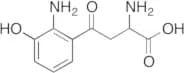
CAS:Stability Hygroscopic
Applications 3-Hydroxy-DL-kynurenine is a tryptophan metabolite. Could be associated with symptoms in Parkinson's disease.
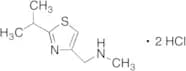
References Heilman, P. L., et al.: Movement Disorders, 35, 2028 (2020)Formula:C10H12N2O4Color and Shape:NeatMolecular weight:224.211-(2-Isopropylthiazol-4-yl)-N-methylmethanamine Dihydrochloride
CAS:Applications 1-(2-Isopropylthiazol-4-yl)-N-methylmethanamine dihydrochloride (cas# 1185167-55-8) is a useful research chemical.
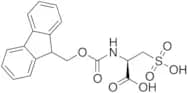
Formula:C8H14N2S·2ClHColor and Shape:NeatMolecular weight:243.2Fmoc-L-cysteic Acid
CAS:Controlled ProductApplications Fmoc-L-cysteic acid (cas# 751470-47-0) is a useful research chemical for organic synthesis and other chemical processes.
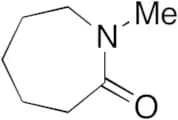
References Dialer, L. O., et al.: J. Med. Chem., 56, 7552 (2013); Revell, J. D., et al.: Tetrahedron, 63, 8420, (2007)Formula:C18H17NO7SColor and Shape:NeatMolecular weight:391.4N-Methylcaprolactam
CAS:Applications N-Methylcaprolactam is a reagent that is used in the synthesis of 3-Chloro-4-(dichloromethyl)-5-hydroxy-2(5H)-furanone-13C5, which is a chlorinated furanone that accounts for more of the mutagenic activity of drinking water than any other disinfection byproduct.
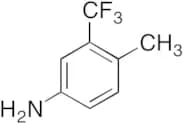
Formula:C7H13NOColor and Shape:NeatMolecular weight:127.185-Amino-2-methylbenzotrifluoride
CAS:Controlled ProductApplications 5-Amino-2-methylbenzotrifluoride is used to prepare azoles as inhibitors of VEGF receptors 1 and 2 with high intestinal permeability. It can also be used to prepare curcumin analogs conjugated with antiandrogens.
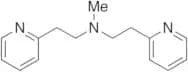
References Kiselyov, A., et al.: Bioorg. Med. Chem. Lett., 17, 1369 (2007); Shi, Q., et al.: Bioorg. Med. Chem., 20, 4020 (2012)Formula:C8H8F3NColor and Shape:NeatMolecular weight:175.15N-Methyl-N,N-bis(2-pyridylethyl)amine
CAS:Impurity Betahistine EP Impurity C (Free Base)
Applications N-Methyl-N,N-bis(2-pyridylethyl)amine is used as a reagent in the preparation of copper pyridylmethylethylenediamine dicyanamido polymeric complexes.
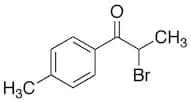
References Mautner, F.A. et al.: Inorg. Chim. Acta, 362, 4073 (2009);Formula:C15H19N3Color and Shape:NeatMolecular weight:241.332-Bromo-4'-methylpropiophenone
CAS:Applications 2-Bromo-4'-methylpropiophenone (cas# 1451-82-7) is a compound useful in organic synthesis.
Formula:C10H11BrOColor and Shape:NeatMolecular weight:227.1N-Methyl-1H-imidazole-1-carboxamide (~90%)
CAS:Controlled ProductStability Moisture Sensitive
Applications N-Methyl-1H-imidazole-1-carboxamide is a useful Methyl Isocyanate (MIC) substitute.Formula:C5H7N3OPurity:~90%Color and Shape:NeatMolecular weight:125.121-[1-(2-methoxyethyl)piperidin-3-yl]methanamine
CAS:Controlled ProductApplications 1-[1-(2-methoxyethyl)piperidin-3-yl]methanamine (cas# 936940-49-7) is a useful research chemical.
Formula:C9H20N2OColor and Shape:NeatMolecular weight:172.2682,2-Dimethoxy-N-methylethanamine
CAS:Applications 2,2-Dimethoxy-N-methylethanamine is an impurity formed in the synthetic process of Methimazole (M260300), a thiourea antithyroid agent that prevents iodine organification,
Not a dangerous good if item is equal to or less than 1g/ml and there is less than 100g/ml in the package
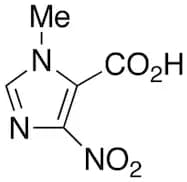
References Sitar, D.S., et al.: J. Pharmacol. Exp. Ther., 184, 432 (1973), Aboul-Enein, H.Y., et al.: Anal. Profiles Drug Subs., 8, 351 (1979), Cooper, D.S., et al.: N. Engl. J. Med., 311, 1353 (1984), Atterwill, C.K., et al.: Food Chem. Toxicol., 29, 355 (1991),Formula:C5H13NO2Color and Shape:NeatMolecular weight:119.161-Methyl-4-nitro-1H-imidazole-5-carboxylic Acid
CAS:Controlled ProductApplications A derivative of imidazole used in the synthesis of heteroxanthine.
References Sarasin, J., et al.: Helv. Chim. Acta, 7, 713 (1924),Formula:C5H5N3O4Color and Shape:NeatMolecular weight:171.114-Hydroxy-4-methyl-2-pentanone-d12
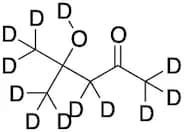
CAS:Controlled ProductApplications 4-Hydroxy-4-methyl-2-pentanone-d12 (CAS# 114253-85-9) is a useful isotopically labeled research compound.
Formula:C6D12O2Color and Shape:NeatMolecular weight:128.236-Amino-9-methylpurine(9-Methyl Adenine)
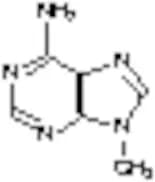
CAS:Controlled ProductApplications A receptor adenine derivative binding membrane brain animal cell line.
References Camaioni, E., et al.: Bioorg. Med. Chem., 6, 523 (1998), Kelly, M., et al.: Br. J. Pharmacol., 125, 979 (1998), Redzic, Z., et al.: Brain Res., 888, 66 (2001), Levy, D., et al.: J. Med. Chem., 46, 2177 (2003),Formula:C6H7N5Color and Shape:NeatMolecular weight:149.151-Methylpiperazine
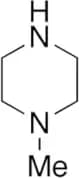
CAS:Controlled ProductImpurity Imatinib EP Impurity G
Applications 1-Methylpiperazine (Imatinib EP Impurity G) is used in the preparation of 2-(4-Methyl-1-piperazinylmethyl)acrylophenone(MPMAP), an antimicrotubular drug. It is a COVID19-related research product.
References Mallevais, M.L. et al.: Biochimie, 66, 477 (1984);Formula:C5H12N2Color and Shape:Colourless To Light YellowMolecular weight:100.163-Methyloxindole
CAS:Controlled ProductApplications 3-Methylindole metabolite.
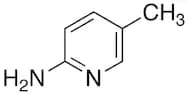
References Skordos, K., et al.: Chem. Res. Toxicol., 11, 741 (1998), Lanza, D., et al.: Drug Metab. Disposition, 29, 950 (2001), Hoenicke, K., et al.: J. Agric. Food Chem., 50, 4303 (2002),Formula:C9H9NOColor and Shape:BeigeMolecular weight:147.172-Amino-5-methylpyridine
CAS:Controlled ProductApplications 2-Amino-5-methylpyridine (cas# 1603-41-4) is a compound useful in organic synthesis.
Not a dangerous good if item is equal to or less than 1g/ml and there is less than 100g/ml in the package
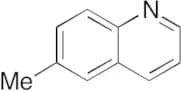
References Francotte, P., et al.: Bioorg. Med. Chem., 16, 9948 (2008), Sundaraganesan, N., et al.: J. Mol. Struc., 891, 284 (2008), Caleta, I., et al.: J. Med. Chem., 52, 1744 (2009),Formula:C6H8N2Color and Shape:NeatMolecular weight:108.146-Methylquinoline
CAS:Controlled ProductApplications 6-Methylquinoline, is a building block used for the synthesis of various pharmaceutical compounds, and biologically active compounds. It can be used for the preparation of pyranobenzopyrone compounds, having anti-norovirus activity.
References Pokhrel, L., et al.: bioorg. Med. Chem. Lett., 22, 3480 (2012);Formula:C10H9NColor and Shape:ColourlessMolecular weight:143.185Zinc Glycinate
CAS:Applications Zinc Glycinate is used in the preparation of hydroxy acid complexes used in skin antiaging, acne and skin whitening formulations.
Formula:C4H8N2O4ZnColor and Shape:NeatMolecular weight:213.5Vinyltris(2-methoxyethoxy)silane
CAS:Applications VINYLTRIS(2-METHOXYETHOXY)SILANE (cas# 1067-53-4) is a useful research chemical.
Formula:C11H24O6SiColor and Shape:ColourlessMolecular weight:280.393-Methyl-1H-Indole-d8
CAS:Controlled ProductApplications 3-(methyl-d3)-1H-Indole-2,4,5,6,7-d5 is the labeled analogue of 3-Methylindole (M313470), a naturally abundant pneumotoxin, found primarily in mammalian feces providing its strong fecal odor; however in lower concentrations the compound has a pleasent aroma, giving orange blossoms and jasmine their pleasing scent. It is often a component of commercial fragrances and perfumes.
Not a dangerous good if item is equal to or less than 1g/ml and there is less than 100g/ml in the package
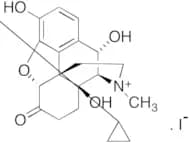
References Nakashima, T., et al.: Biol. Pharm. Bull., 32, 832 (2009), Xu, H., et al.: Chem. Pharm. Bull., 57, 321 (2009), Bodoor, K., et al.: J. Med. Chem., 52, 3753 (2009), Naskar, S., et al.: J. Chem. Res., 3, 174 (2009), Sollner, K., et al.: J. Agric. Food Chem., 57, 4319 (2009),Formula:C92H8HNColor and Shape:NeatMolecular weight:139.2210a-Hydroxy-methylnaltrexone Iodide
Controlled ProductStability Hygroscopic, Light Sensitive
Formula:C21H26NO5·IColor and Shape:Orange To RedMolecular weight:499.342-Methoxyethyl 3-Oxobutanoate
CAS:Controlled ProductApplications 2-Methoxyethyl 3-oxobutanoate (cas# 22502-03-0) is a useful research chemical.
Formula:C7H12O4Color and Shape:NeatMolecular weight:160.162-Methoxypropyl Acetate
CAS:Controlled ProductApplications 2-Methoxypropyl Acetate causes moderate irritation, significant reduction in body weight development and thymic atrophy in rats as well as pronounced prenatal toxicity in rats.
Not a dangerous good if item is equal to or less than 1g/ml and there is less than 100g/ml in the package
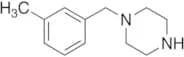
References Ma-Hock, L., et al.: Hum. Exp. Toxicol., 24, 95-99 (2005)Formula:C6H12O3Color and Shape:Colourless LiquidMolecular weight:132.161-(3-Methylbenzyl)piperazine
CAS:Controlled ProductFormula:C12H18N2Color and Shape:NeatMolecular weight:190.282-Bromo-4-methylphenol
CAS:Controlled ProductApplications 2-Bromo-4-methylphenol is a useful synthetic intermediate. It was used in the synthesis of furan-2-ylmethylene thiazolidinediones as potent, and selective inhibitors of phosphoinositide 3-kinase γ. It was also a reactant used to prepare phosphoramidate and phosphorothioamidate analogs of amiprophos Me as potential antimalarial agents.
References Pomel, V., et al.: J. Med. Chem., 49, 3857 (2006); Mara, C., et al.: Bioorg. Med. Chem. Lett., 21, 6180 (2011)Formula:C7H7BrOColor and Shape:NeatMolecular weight:187.03













![1-[1-(2-methoxyethyl)piperidin-3-yl]methanamine](/_next/image/?url=https%3A%2Fstatic.cymitquimica.com%2Fproducts%2FTR%2Fthumb-webp%2FM139405.webp&w=3840&q=75)