Amino Acids (AA)
Amino acids (AAs) are the fundamental building blocks of proteins, playing a crucial role in various biological processes. These organic compounds are essential for protein synthesis, metabolic pathways, and cell signaling. In this category, you will find a comprehensive range of amino acids, including essential, non-essential, and modified forms, which are vital for research in biochemistry, molecular biology, and nutritional sciences. At CymitQuimica, we provide high-quality amino acids to support your research and development needs, ensuring accuracy and reliability in your experimental outcomes.
Subcategories of "Amino Acids (AA)"
- Amino Acid Derivatives(3,957 products)
- Amino Acid and Amino Acid Related Compounds(3,472 products)
- Amino Acids with Oxygen or Sulphur(168 products)
- Boc- Amino Acids(351 products)
- Fmoc Amino Acids(1,710 products)
Found 38265 products of "Amino Acids (AA)"
Sort by
Purity (%)
0
100
|
0
|
50
|
90
|
95
|
100
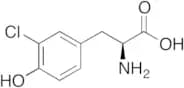
3-Chloro-L-tyrosine
CAS:Controlled Product<p>Stability Hygroscopic<br>Applications 3-Chloro-L-tyrosine was used in the enzymatic synthesis of halogen derivatives of aromatic amino acids labeled with hydrogen isotope. 3-Chloro-L-tyrosine exhibited stronger antioxidant properties in Hb-induced oxidative stress as was evident by higher efficiency of reduction of ferryl species.<br>References Winnicka, E., et al.: J. Chem. Eng., 8, 54 (2014); Lu, N., et al.: Toxicol. In Vitro, 28, 847 (2014);<br></p>Formula:C9H10NO3ClColor and Shape:NeatMolecular weight:215.632-(3-Fluorophenyl)-2-[4-(4-fluorophenyl)piperazin-1-yl]acetic acid
CAS:Molecular weight:332.35101318359375D-Arginine
CAS:Controlled Product<p>Applications D-Arginine is an unnatural isomer of L-Arginine (A769505), and is used to inhibit glutamate-induced nitric oxide production in rats. Derivatives of D-Arginine are used for pharmaceutical purposes, one example is 1-Deamino-8-D-arginine vasopressin, which is used to treat various bleeding disorders.<br>References Castellano, M., et al.: Neurosci. Lett., 314, 127 (2001); Kobrinsky, N., et al.: Lancet, 323, 1145 (1984); Weyrich, A., et al.: Circulation, 86, 279 (1992)<br></p>Formula:C6H14N4O2Color and Shape:NeatMolecular weight:174.202-[4-(4-Chlorophenyl)piperazin-1-yl]-2-(4-fluorophenyl)acetic acid
CAS:Molecular weight:348.799987792968753,5-Dichloro-4-methylaniline
CAS:Controlled Product<p>Applications 3,5-Dichloro-4-methylaniline<br></p>Formula:C7H7Cl2NColor and Shape:NeatMolecular weight:176.0436-Dodecanoate-1,4-anhydro-D-glucitol
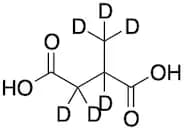
CAS:Controlled ProductFormula:C18H34O6Color and Shape:NeatMolecular weight:346.459(±)-2-Methyl-d3-succinic-2,3,3-d3 Acid
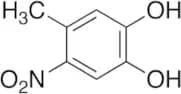
CAS:Controlled Product<p>Applications (±)-2-Methyl-d3-succinic-2,3,3-d3 Acid (CAS# 347840-08-8) is a useful isotopically labeled research compound.<br></p>Formula:C5D6H2O4Color and Shape:NeatMolecular weight:138.154-Methyl-5-nitrocatechol
CAS:Controlled Product<p>Applications MNC is on the metabolic pathway for 2,4-Dinitotoluene degradation.<br>References Spangoord, R.J., et al.: App. and Environ. Microbiology, 57, 11, 3200 (1991)<br></p>Formula:C7H7NO4Color and Shape:NeatMolecular weight:169.134-[2-(4-chlorophenyl)acetyl]-8-methyl-1-oxa-4,8-diazaspiro[4.5]decane-3-carboxylic acid
CAS:Purity:95.0%Molecular weight:352.820007324218754-benzoyl-8-ethyl-1-oxa-4,8-diazaspiro[4.5]decane-3-carboxylic acid
CAS:Purity:95.0%Molecular weight:318.37298583984375N-Acetyl-L-tyrosine
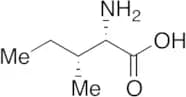
CAS:Controlled Product<p>Applications N-Acetyl-L-tyrosine is an analogue of L-tyrosine which stimulate the transport of L-Tyr, mainly by the ASC system.<br>References Jara, J. et al.: Melanoma Res., 1, 15 (1991),<br></p>Formula:C11H13NO4Color and Shape:Off-WhiteMolecular weight:223.23L-Allo-isoleucine
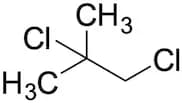
CAS:Controlled Product<p>Applications L-alloisoleucine is a stereo-isomer of L-isoleucine (I820175) and is produced as a byproduct of isoleucine via transamination. L-allo-isoleucine has been suggested to induce epithelial β-defensin expression. In addition, L-allo-isoleucine is utilized in the biosynthesis pathway for coronamic acid.<br>References Fehlbaum, P., et al.: Proc. Natl. Acad. Sci. USA 97, 12723 (2000); Parry, R. J., et al.: J. Am. Chem. Soc. 113, 1849 (1991)<br></p>Formula:C6H13NO2Color and Shape:NeatMolecular weight:131.171,2-Dichloro-2-methylpropane
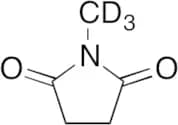
CAS:<p>Applications 1,2-Dichloro-2-methylpropane (cas# 594-37-6) is a useful research chemical.<br> Not a dangerous good if item is equal to or less than 1g/ml and there is less than 100g/ml in the package<br></p>Formula:C4H8Cl2Color and Shape:NeatMolecular weight:127.01N-Methylsuccinimide-d3
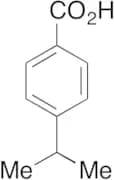
CAS:Controlled Product<p>Applications N-Methylsuccinimide-d3 is the isotope labelled analog of N-Methylsuccinimide (M329425); a model compound used to investigate the mechanism of enolization step by density-functional theory (DFT) calculations. N-Methylsuccinimide is a metabolite of N-methyl-2-pyrrolidone (NMP) and its presence in plasma and urine can be used as a biomarker of exposure to NMP<br>References Takahashi, O., et al.: Chem. Biodivers., 7, 1349 (2010)<br></p>Formula:C5D3H4NO2Color and Shape:NeatMolecular weight:116.1334-(1-Methylethyl)benzoic Acid
CAS:<p>Applications 4-(1-Methylethyl)benzoic Acid is used in the synthesis of quinuclidine benzamides as agonists for nicotinic acetylcholine receptors. Also used in the synthesis of nifuroxazide analogues showing antimicrobial activity against methicillin-resistant Staphylococcus.<br>References Bodnar, A. et al.: J. Med. Chem., 48, 905 (2005); Masunari, A. et al.: Bioorg. Med. Chem. Lett., 15, 4229 (2007);<br></p>Formula:C10H12O2Color and Shape:NeatMolecular weight:164.23-Methylbutyric-2,2-d2 Acid
CAS:Controlled Product<p>Applications 3-Methylbutyric-2,2-d2 Acid (CAS# 95927-02-9) is a useful isotopically labeled research compound.<br></p>Formula:C5H8D2O2Color and Shape:NeatMolecular weight:104.154-{[(Pyridin-3-ylmethyl)amino]methyl}benzoic acid
CAS:Formula:C14H14N2O2Purity:98%Color and Shape:SolidMolecular weight:242.2784-[(2,4-dioxo-3-phenyl-1,3-thiazolidin-5-yl)amino]benzoic acid
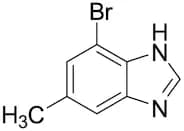
CAS:Purity:95.0%Molecular weight:328.33999633789064-Bromo-6-methyl-3H-1,3-benzodiazole
CAS:Controlled Product<p>Applications 4-Bromo-6-methyl-3H-1,3-benzodiazole<br></p>Formula:C8H7BrN2Color and Shape:NeatMolecular weight:211.0582-(4-Chlorophenyl)-2-[4-(2-methylphenyl)piperazin-1-yl]acetic acid
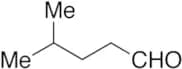
CAS:Molecular weight:344.83999633789064-Methylpentanal (up to 75% hydrated form)
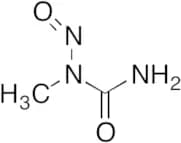
CAS:Controlled Product<p>Applications An intermediate used in the synthesis of Pregabalin (P704800) and related compounds.<br> Not a dangerous good if item is equal to or less than 1g/ml and there is less than 100g/ml in the package<br>References Posadas, I., et al.: Br. J. Pharmacol., 142, 331 (2004),<br></p>Formula:C6H12OColor and Shape:Colourless LiquidMolecular weight:100.16N-Methyl-N-nitroso Urea (Wetted with water >20%)
CAS:Controlled Product<p>Stability Temperature Sensitive<br>Applications Precursor of Diazomethane. It has a cytotoxicity effect.This product contains an undetermined amount of water.<br> Not a dangerous good if item is equal to or less than 1g/ml and there is less than 100g/ml in the package<br>References Huggins, C., et al.: J. Exp. Med., 131, 321 (1970), Gullino, P.M., et al.: J. Natl. Cancer Inst., 54, 401 (1975),<br></p>Formula:C2H5N3O2Color and Shape:Off-White To Light BeigeMolecular weight:103.084-{[1,1'-biphenyl]-4-carbonyl}-8-ethyl-1-oxa-4,8-diazaspiro[4.5]decane-3-carboxylic acid
CAS:Purity:95.0%Molecular weight:394.471008300781251-Methoxy-2-propanol
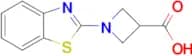
CAS:Controlled Product<p>Applications 1-Methoxy-2-propanol is used as a reagent in the synthesis of 2-amino-3-carboxy-4-phenylthiophenes as novel atypical protein kinase C inhibitors. Also used as a reagent in the synthesis of Metolachlor (M338700); a selective pre-emergence herbicide.<br> Not a dangerous good if item is equal to or less than 1g/ml and there is less than 100g/ml in the package<br>References Titchenell, P.M., et al.: Bioorg. Med. Chem. Lett., 23, 3034 (2013); Zhang, H.: Nongyao Kexue Yu Guanli, 32, 26 (2011)<br></p>Formula:C4H10O2Color and Shape:ColourlessMolecular weight:90.121-(1,3-benzothiazol-2-yl)azetidine-3-carboxylic acid
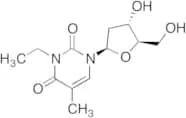
CAS:Purity:95.0%Molecular weight:234.27000427246094N3-Ethylthymidine
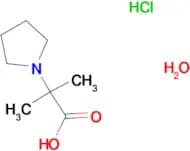
CAS:Controlled Product<p>Applications E677525<br>References Shimizu, T., et al.: Chem. Pharm. Bull., 53, 313 (2005)<br></p>Formula:C12H18N2O5Color and Shape:NeatMolecular weight:270.121572-methyl-2-(1-pyrrolidinyl)propanoic acid hydrochloride hydrate
CAS:Purity:95.0%Color and Shape:SolidMolecular weight:211.690002441406253-(4-Methylphenyl)-3-(trifluoromethyl)diaziridine
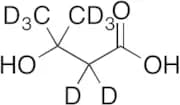
CAS:Controlled Product<p>Applications 3-(4-Methylphenyl)-3-(trifluoromethyl)diaziridine (cas# 87736-82-1) is a compound useful in organic synthesis.<br></p>Formula:C9H9F3N2Color and Shape:NeatMolecular weight:202.18β-Hydroxyisovaleric Acid-d8
CAS:Controlled ProductFormula:C5H2D8O3Color and Shape:Colourless To YellowMolecular weight:126.184-(4-chloro-2-fluorobenzoyl)-8-methyl-1-oxa-4,8-diazaspiro[4.5]decane-3-carboxylic acid
CAS:Purity:95.0%Molecular weight:356.77999877929692',3',5',6'-Tetrahydrospiro[indoline-3,4'-pyran]-5-carboxylic acid
CAS:Purity:95%Molecular weight:233.266998291015621'-(Tert-butoxycarbonyl)spiro[cyclohexane-1,3'-indoline]-4-carboxylic acid
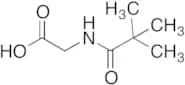
CAS:Purity:97%Molecular weight:331.4119873046875N-Pivaloylglycine
CAS:Controlled Product<p>Applications N-Pivaloylglycine is used in the biological study between dogs and rats. In a high dose toxicity study of pivalic acid (PA), PA caused skeletal muscle disorder in dog, and a significant increase of pivaloyl carnitine (PC) was observed in canine muscle, but not in rat muscle.<br>References Yamaguchi, T., et al.: Toxicol. Appl. Pharmacol., 214, 61-68 (2006)<br></p>Formula:C7H13NO3Color and Shape:NeatMolecular weight:159.184-Amino-3-Hydroxybutanoic Acid
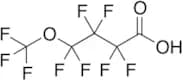
CAS:Controlled ProductFormula:C4H9NO3Color and Shape:NeatMolecular weight:119.12Perfluoro-4-methoxybutanoic Acid
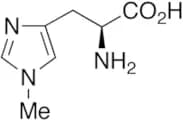
CAS:<p>Applications Perfluoro-4-Methoxybutanoic Acid (cas# 863090-89-5) is a useful research chemical.<br> Not a dangerous good if item is equal to or less than 1g/ml and there is less than 100g/ml in the package<br></p>Formula:C5HF9O3Color and Shape:NeatMolecular weight:280.051-Methyl-L-histidine
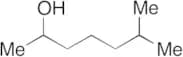
CAS:Controlled Product<p>Applications The urinary 1- and 3-methylhistidine (1- and 3-MH) metabolites as potential biomarkers of skeletal muscle toxicity. These metabolites were highly correlated to sex-, dose-, and time-dependent development of cerivastatin-induced myotoxicity. Natural but non-proteinogenic amino acid; employed as index of muscle protein breakdown.<br>References Berna, M., et al.: Anal. Chem., 79, 4199 (2007), Pritt, M., et al.: Toxicol. Sci., 103, 382 (2008), Tonomura, Y., et al.: Toxicology, 266, 48 (2009),<br></p>Formula:C7H11N3O2Color and Shape:NeatMolecular weight:169.186-Methyl-2-heptanol
CAS:Controlled Product<p>Applications 6-Methyl-2-heptanol is an intermediate used to prepare tri- and tetrasubstituted imidazoles as highly potent and specific ATP-mimetic inhibitors of p38 MAP kinase.<br>References Laufer, S., et al.: J. Med. Chem., 51, 4122 (2008)<br></p>Formula:C8H18OColor and Shape:NeatMolecular weight:130.232-methyl-1-[4-(trifluoromethyl)phenyl]propan-1-one
CAS:Controlled Product<p>Applications 2-methyl-1-[4-(trifluoromethyl)phenyl]propan-1-one (cas# 64436-58-4) is a useful research chemical.<br></p>Formula:C11H11OF3Color and Shape:NeatMolecular weight:216.194-Chloro-3-cyano-6-methoxy-7-[3-(4-methylpiperazin-1-yl)propoxy]quinoline
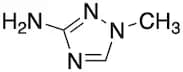
CAS:<p>Stability Hygroscopic<br>Applications 4-Chloro-3-cyano-6-methoxy-7-[3-(4-methylpiperazin-1-yl)propoxy]quinoline is a useful reagent to prepare benzofuranyl derivatives for treating solid tumours. It is also an impurity of Bosutinib.<br>References Hennequin, L. F. A. PCT Int. Appl. (2003), WO 2003047585 A1 20030612 (2003); Hennequin, L. F. A., Gibson, K. H., Foote, K. M. PCT Int. Appl. WO 2003047582 A1 20030612 (2003)<br></p>Formula:C19H23ClN4O2Color and Shape:Off White SolidMolecular weight:374.861-Methyl-1h-1,2,4-triazol-3-amine
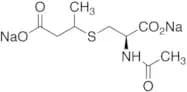
CAS:Controlled Product<p>Applications 1-Methyl-1h-1,2,4-triazol-3-amine (cas# 49607-51-4) is a useful research chemical.<br></p>Formula:C3H6N4Color and Shape:NeatMolecular weight:98.106N-Acetyl-S-(3-carboxy-2-propyl)-L-cysteine Disodium Salt (Mixture of Diastereomers)
CAS:Controlled Product<p>Applications A metabolite of Crotonaldehyde.<br>References Gray, J.M., et al.: Xenobiotica, 1, 55 (1971), Chung, F., et al.: Mutat. Res., 424, 71 (1999), Smith, C., et al.: Food Chem. Toxicol., 38, 637 (2000), Pan, J., et al.: Chem. Res. Toxicol., 15, 367 (2002),<br></p>Formula:C9H13NO5S·2NaColor and Shape:NeatMolecular weight:293.254-(2,5-dimethylphenyl)-3H,4H,5H,6H,7H-imidazo[4,5-c]pyridine-6-carboxylic acid
CAS:Purity:95.0%Molecular weight:271.320007324218752-Ethyl-4-methyl-1-pentanol
CAS:Controlled Product<p>Applications 2-Ethyl-4-methyl-1-pentanol is a volatile chemical that can be used to diagnose ratoon stunting disease in Sugar cane.<br>References Berna, A. Z., et al.: Pro. of the Conf. of the Austr. Soc. of Sugar Cane Tech., 37th, 150-157 (2015)<br></p>Formula:C8H18OColor and Shape:NeatMolecular weight:130.23Ethyl Lauroyl Arginate Hydrochloride
CAS:<p>Applications Ethyl Lauroyl Arginate Hydrochloride is used as a food antimicrobial in the sanitation of preserved foods. It is also used in cosmetics as a preservative.<br> Not a dangerous good if item is equal to or less than 1g/ml and there is less than 100g/ml in the package<br>References Brandt, A. et al.: . Food. Sci., 75, M557 (2010); Taormina, P. et al.: J. Food. Prot., 72, 1216 (2009); Chem. and Eng. News Page 14, Nov. 5 (2018)<br></p>Formula:C20H40N4O3·ClHColor and Shape:NeatMolecular weight:421.024-(4-chloro-2-fluorobenzoyl)-8-propyl-1-oxa-4,8-diazaspiro[4.5]decane-3-carboxylic acid
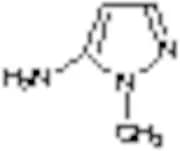
CAS:Purity:95.0%Molecular weight:384.82998657226565-Amino-1-methylpyrazole
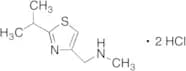
CAS:Controlled ProductFormula:C4H7N3Color and Shape:NeatMolecular weight:97.121-(2-Isopropylthiazol-4-yl)-N-methylmethanamine Dihydrochloride
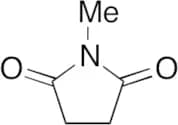
CAS:<p>Applications 1-(2-Isopropylthiazol-4-yl)-N-methylmethanamine dihydrochloride (cas# 1185167-55-8) is a useful research chemical.<br></p>Formula:C8H14N2S·2ClHColor and Shape:NeatMolecular weight:243.20N-Methylsuccinimide
CAS:<p>Applications N-Methylsuccinimide is used as a model compound to investigate the mechanism of enolization step by density-functional theory (DFT) calculations. N-Methylsuccinimide is a metabolite of N-methyl-2-pyrrolidone (NMP) and its presence in plasma and urine can be used as a biomarker of exposure to NMP<br>References Takahashi, O., et al.: Chem. Biodivers., 7, 1349 (2010)<br></p>Formula:C5H7NO2Color and Shape:Off-WhiteMolecular weight:113.11

![2-(3-Fluorophenyl)-2-[4-(4-fluorophenyl)piperazin-1-yl]acetic acid](/_next/image/?url=https%3A%2Fstatic.cymitquimica.com%2Fproducts%2F10%2Fthumb-webp%2FF300392.webp&w=3840&q=75)


![2-[4-(4-Chlorophenyl)piperazin-1-yl]-2-(4-fluorophenyl)acetic acid](/_next/image/?url=https%3A%2Fstatic.cymitquimica.com%2Fproducts%2F10%2Fthumb-webp%2FF300204.webp&w=3840&q=75)


![4-[2-(4-chlorophenyl)acetyl]-8-methyl-1-oxa-4,8-diazaspiro[4.5]decane-3-carboxylic acid](/_next/image/?url=https%3A%2Fstatic.cymitquimica.com%2Fproducts%2F10%2Fthumb-webp%2FF525660.webp&w=3840&q=75)
![4-benzoyl-8-ethyl-1-oxa-4,8-diazaspiro[4.5]decane-3-carboxylic acid](/_next/image/?url=https%3A%2Fstatic.cymitquimica.com%2Fproducts%2F10%2Fthumb-webp%2FF525665.webp&w=3840&q=75)


![4-{[(Pyridin-3-ylmethyl)amino]methyl}benzoic acid](/_next/image/?url=https%3A%2Fstatic.cymitquimica.com%2Fproducts%2F10%2Fthumb-webp%2FF015160.webp&w=3840&q=75)
![4-[(2,4-dioxo-3-phenyl-1,3-thiazolidin-5-yl)amino]benzoic acid](/_next/image/?url=https%3A%2Fstatic.cymitquimica.com%2Fproducts%2F10%2Fthumb-webp%2FF511756.webp&w=3840&q=75)
![2-(4-Chlorophenyl)-2-[4-(2-methylphenyl)piperazin-1-yl]acetic acid](/_next/image/?url=https%3A%2Fstatic.cymitquimica.com%2Fproducts%2F10%2Fthumb-webp%2FF300389.webp&w=3840&q=75)

![4-{[1,1'-biphenyl]-4-carbonyl}-8-ethyl-1-oxa-4,8-diazaspiro[4.5]decane-3-carboxylic acid](/_next/image/?url=https%3A%2Fstatic.cymitquimica.com%2Fproducts%2F10%2Fthumb-webp%2FF525684.webp&w=3840&q=75)


![4-(4-chloro-2-fluorobenzoyl)-8-methyl-1-oxa-4,8-diazaspiro[4.5]decane-3-carboxylic acid](/_next/image/?url=https%3A%2Fstatic.cymitquimica.com%2Fproducts%2F10%2Fthumb-webp%2FF525664.webp&w=3840&q=75)
![2',3',5',6'-Tetrahydrospiro[indoline-3,4'-pyran]-5-carboxylic acid](/_next/image/?url=https%3A%2Fstatic.cymitquimica.com%2Fproducts%2F10%2Fthumb-webp%2FF609567.webp&w=3840&q=75)
![1'-(Tert-butoxycarbonyl)spiro[cyclohexane-1,3'-indoline]-4-carboxylic acid](/_next/image/?url=https%3A%2Fstatic.cymitquimica.com%2Fproducts%2F10%2Fthumb-webp%2FF734299.webp&w=3840&q=75)

![2-methyl-1-[4-(trifluoromethyl)phenyl]propan-1-one](/_next/image/?url=https%3A%2Fstatic.cymitquimica.com%2Fproducts%2FTR%2Fthumb-webp%2FB489000.webp&w=3840&q=75)
![4-Chloro-3-cyano-6-methoxy-7-[3-(4-methylpiperazin-1-yl)propoxy]quinoline](/_next/image/?url=https%3A%2Fstatic.cymitquimica.com%2Fproducts%2FTR%2Fthumb-webp%2FC380750.webp&w=3840&q=75)
![4-(2,5-dimethylphenyl)-3H,4H,5H,6H,7H-imidazo[4,5-c]pyridine-6-carboxylic acid](/_next/image/?url=https%3A%2Fstatic.cymitquimica.com%2Fproducts%2F10%2Fthumb-webp%2FF522515.webp&w=3840&q=75)


![4-(4-chloro-2-fluorobenzoyl)-8-propyl-1-oxa-4,8-diazaspiro[4.5]decane-3-carboxylic acid](/_next/image/?url=https%3A%2Fstatic.cymitquimica.com%2Fproducts%2F10%2Fthumb-webp%2FF525750.webp&w=3840&q=75)