Amino Acids (AA)
Amino acids (AAs) are the fundamental building blocks of proteins, playing a crucial role in various biological processes. These organic compounds are essential for protein synthesis, metabolic pathways, and cell signaling. In this category, you will find a comprehensive range of amino acids, including essential, non-essential, and modified forms, which are vital for research in biochemistry, molecular biology, and nutritional sciences. At CymitQuimica, we provide high-quality amino acids to support your research and development needs, ensuring accuracy and reliability in your experimental outcomes.
Subcategories of "Amino Acids (AA)"
- Amino Acid Derivatives(3,957 products)
- Amino Acid and Amino Acid Related Compounds(3,472 products)
- Amino Acids with Oxygen or Sulphur(168 products)
- Boc- Amino Acids(351 products)
- Fmoc Amino Acids(1,710 products)
Found 38265 products of "Amino Acids (AA)"
Sort by
Purity (%)
0
100
|
0
|
50
|
90
|
95
|
100
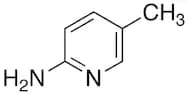
2-Amino-5-methylpyridine
CAS:Controlled Product<p>Applications 2-Amino-5-methylpyridine (cas# 1603-41-4) is a compound useful in organic synthesis.<br> Not a dangerous good if item is equal to or less than 1g/ml and there is less than 100g/ml in the package<br>References Francotte, P., et al.: Bioorg. Med. Chem., 16, 9948 (2008), Sundaraganesan, N., et al.: J. Mol. Struc., 891, 284 (2008), Caleta, I., et al.: J. Med. Chem., 52, 1744 (2009),<br></p>Formula:C6H8N2Color and Shape:NeatMolecular weight:108.146-Methylquinoline
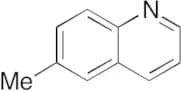
CAS:Controlled Product<p>Applications 6-Methylquinoline, is a building block used for the synthesis of various pharmaceutical compounds, and biologically active compounds. It can be used for the preparation of pyranobenzopyrone compounds, having anti-norovirus activity.<br>References Pokhrel, L., et al.: bioorg. Med. Chem. Lett., 22, 3480 (2012);<br></p>Formula:C10H9NColor and Shape:ColourlessMolecular weight:143.185Zinc Glycinate
CAS:<p>Applications Zinc Glycinate is used in the preparation of hydroxy acid complexes used in skin antiaging, acne and skin whitening formulations.<br></p>Formula:C4H8N2O4ZnColor and Shape:NeatMolecular weight:213.5Ethametsulfuron-methyl
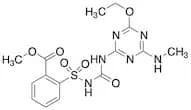
CAS:Controlled Product<p>Applications Ethametsulfuron-methyl is a regulator of the early steps of complement activation on mucosal surfaces. It can be used in combination treatment of ohmic heating with various essential oil components for inactivation of food-borne pathogens in buffered peptone water and salsa.<br>References Kim, S. S., et al.: Food Control, 80, 29 (2017); Reichhardt, M. P., et al.: Front Immunol, 7, 85 (2016)<br></p>Formula:C15H18N6O6SColor and Shape:NeatMolecular weight:410.404-Chloro-benzoic Acid 1-(4-Methoxyphenyl)hydrazide Hydrochloride
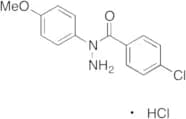
CAS:<p>Applications 4-Chloro-benzoic Acid 1-(4-Methoxyphenyl)hydrazide Hydrochloride is a derivative of (4-Methoxyphenyl)hydrazine Hydrochloride (M265880). It is a useful synthetic intermediate for the preparation of Indomethacin (I641000); a potent, time-dependent, nonselective inhibitor of the cyclooxygenase enzymes COX-1 and COX-2.<br>References Blobaum, Anna L., et al.: ACS Med. Chem. Lett., 4(5), 486-490 (2013); Prusakiewicz, Jeffery J., et al.: Biochemistry, 43(49), 15439-15445 (2004)<br></p>Formula:C14H13ClN2O2·HClColor and Shape:NeatMolecular weight:313.182-(6-Methoxynaphthalen-2-yl)propanenitrile
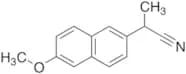
CAS:Controlled Product<p>Applications 2-(6-methoxynaphthalen-2-yl)propanenitrile (cas# 86603-94-3) is a useful research chemical.<br></p>Formula:C14H13NOColor and Shape:NeatMolecular weight:211.26(1-Chlorocyclohexyl)cyclohexyl-methanone
CAS:Controlled Product<p>Applications (1-Chlorocyclohexyl)cyclohexyl-methanone is a synthetic intermediate and a potential reagent for the synthesis of Dicyclomine Impurity A (B382435) and Dihexyverine Hydrochloride (D448200).<br>References Cramer, R., et al.: J. Med. Chem., 47, 6777 (2004); Vilar, S., et al.: J. Med. Chem., 49, 1118 (2006); Kopp, M., et al.: B. Soc. Chim. Fr., no vol., 84 (1952); Levy, J., et al.: CR. Soc. Biol., 144, 339 (1950)<br></p>Formula:C13H21ClOColor and Shape:NeatMolecular weight:228.76Vinyltris(2-methoxyethoxy)silane
CAS:<p>Applications VINYLTRIS(2-METHOXYETHOXY)SILANE (cas# 1067-53-4) is a useful research chemical.<br></p>Formula:C11H24O6SiColor and Shape:ColourlessMolecular weight:280.39Tiopronin-d3
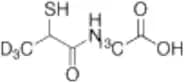
CAS:Controlled Product<p>Applications Labelled Tiopronin. It is used as antidote against heavy metal poisoning; hepatoprotectant; mucolytic.<br>References Capasso, F., et al.: Agents Actions, 11, 741 (1981), Amor, B., et al.: Arthritis Rheum., 25, 698 (1982), Ichida, F., et al.: J. Int. Med. Res., 10, 325 (1982),<br></p>Formula:C5H6D3NO3SColor and Shape:NeatMolecular weight:166.213-Hydroxy-4-methoxycinnamic Acid
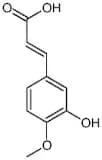
CAS:Controlled Product<p>Applications 3-Hydroxy-4-methoxycinnamic acid, trans-Isoferulic acid<br></p>Formula:C10H10O4Color and Shape:NeatMolecular weight:194.183-Methyl-5-(3-nitrophenyl)cyclohex-2-enone
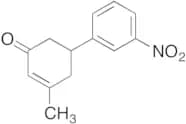
CAS:Controlled Product<p>Applications 3-Methyl-5-(3-nitrophenyl)cyclohex-2-enone is derived from Acetone (A163800), which is a common organic building block in organic chemistry.<br>References Neubert, L., et al.: J. Am. Chem. Soc., 134, 12239 (2012); Zhai, J.J., et al.: J. Am. Soc. Mass. Spec., 20, 1366 (2009);<br></p>Formula:C13H13NO3Color and Shape:NeatMolecular weight:231.25D-Tyrosine-d2
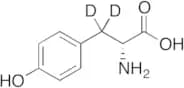
CAS:Controlled Product<p>Applications D-Tyrosine-d2 is deuterium labelled D-Tyrosine (T899970). D-Tyrosine, the stereoisomer to L-Tyrosine (T899975), is an amino acid used in various organic syntheses for antibiotics. It is used in the synthesis of (-)-anisomycin, as well as BATSI (boronic acid transition state inhibitors) which act on β-lactamases. It has also been studied as an inhibitor of microbial growth on surfaces, reducing microbial attachment to hydrophillic glass and hydrophobic polypropylene surfaces.<br>References Li, Ji. et al.: Chin. Chem. Lett., 23, 647 (2012); Xu, H. et al.: Water Res., 45, 5796 (2011); Ke, W. et al.: Antimicrob. Agents Chemother., 55, 174 (2011)<br></p>Formula:C9D2H9NO3Color and Shape:NeatMolecular weight:183.2Methyl 4-Methoxysalicylate
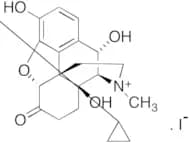
CAS:Controlled Product<p>Applications Methyl 4-Methoxysalicylate, is an organic building block, used for the synthesis of (+)-coriandrone A and B, two bioactive natural products. It can also be used for the preparation of Dimethoxybenzofuran derivatives as potent and selective inhibitors of CYP2A6.<br>References Wang, W., et al.: Org. Biomol. Chem., 11, 6686 (2013); Yamaguchi, Y., et al.: Heterocycles, 87, 1727 (2013);<br></p>Formula:C9H10O4Color and Shape:NeatMolecular weight:182.1710a-Hydroxy-methylnaltrexone Iodide
Controlled Product<p>Stability Hygroscopic, Light Sensitive<br></p>Formula:C21H26NO5·IColor and Shape:Orange To RedMolecular weight:499.342-Methoxyethyl 3-Oxobutanoate
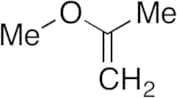
CAS:Controlled Product<p>Applications 2-Methoxyethyl 3-oxobutanoate (cas# 22502-03-0) is a useful research chemical.<br></p>Formula:C7H12O4Color and Shape:NeatMolecular weight:160.162-Methoxypropene
CAS:Controlled Product<p>Applications 2-Methoxypropene is used in the synthesis of Macrolactin A, a 24-member macrolide typically employed as an antibiotic. Also used in the synthesis of phenylalanine derivatives used as α4β1 and α4β7 receptor antagonists in the treatment of allergic asthma.<br>References Marino, K. et al.: J. Am. Chem. Soc., 12, 1664, (2002); Tilley, J. et al.: Bioorg. Med. Chem. Lett., 23, 1036 (2013);<br></p>Formula:C4H8OColor and Shape:NeatMolecular weight:72.112-Methoxypropyl Acetate
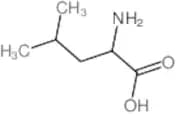
CAS:Controlled Product<p>Applications 2-Methoxypropyl Acetate causes moderate irritation, significant reduction in body weight development and thymic atrophy in rats as well as pronounced prenatal toxicity in rats.<br> Not a dangerous good if item is equal to or less than 1g/ml and there is less than 100g/ml in the package<br>References Ma-Hock, L., et al.: Hum. Exp. Toxicol., 24, 95-99 (2005)<br></p>Formula:C6H12O3Color and Shape:Colourless LiquidMolecular weight:132.16DL-leucine
CAS:<p>Applications Dl-leucine<br></p>Formula:C6H13NO2Color and Shape:WhiteMolecular weight:131.17Ammonium Perfluoro(2-methyl-3-oxahexanoate)
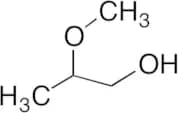
CAS:Controlled Product<p>Applications AMMONIUM PERFLUORO(2-METHYL-3-OXAHEXANOATE) (cas# 62037-80-3) is a useful research chemical.<br></p>Formula:C6F11O3·H4NColor and Shape:White To Off-WhiteMolecular weight:347.082-Methoxypropanol
CAS:Controlled Product<p>Applications 2-Methoxypropanol is a susbtance used in the relative parameter sensitivity in prenatal toxicity studies with substances classified as developmental toxicants. Also applied in the studies for the analysis of volatile organic compounds in cigarette packaging materials by SPME-GC/MS.<br> Not a dangerous good if item is equal to or less than 1g/ml and there is less than 100g/ml in the package<br>References Rorije, E., et al.: Reprod. Toxicol., 34, 284 (2012); Hong, W, et al.: Fujian Fenxi Ceshi, 19, 24 (2010)<br></p>Formula:C4H10O2Color and Shape:ColourlessMolecular weight:90.122-Methoxyethanol
CAS:Controlled Product<p>Applications 2-Methoxyethanol is used in the synthesis of 2-aminothiazoles in the treatment of prion disease (1). 2-Methoxyethanol is also used in the preparation of Rho-associated kinase inhibitors or (ROCK) inhibitors, for treatment of cardiovascular disease (2). Drinking water contaminant candidate list 3 (CCL 3) compound as per United States Environmental Protection Agency (EPA), environmental, and food contaminants.<br> Not a dangerous good if item is equal to or less than 1g/ml and there is less than 100g/ml in the package<br>References 1. Li, Z. et al.: ChemMedChem. 2013 May;8(5):847-57.2. Boland, S. et al.: Bioorg. Med. Chem. Lett. 2013 Dec 1;23(23):6442-6.<br></p>Formula:C3H8O2Color and Shape:NeatMolecular weight:76.092-Methylnaphth[1,2-d]oxazole
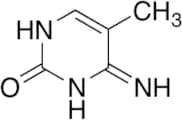
CAS:Controlled Product<p>Applications 2-Methylnaphth[1,2-d]oxazole (cas# 85-15-4) is a useful research chemical.<br></p>Formula:C12H9NOColor and Shape:YellowMolecular weight:183.2065-Methylcytosine (~90%)
CAS:Controlled Product<p>Applications 5-Methylcytosine (cas# 554-01-8) is a useful research chemical.<br></p>Formula:C5H7N3OPurity:~90%Color and Shape:NeatMolecular weight:125.132-Azido-2-deoxy-D-glucose
CAS:<p>Applications 2-Azido-2-deoxy-D-glucose is a glucose derivative that have been used to study the substrate specificity of galactokinase.<br>References Zou, W., et al.: Bioorg. Med. Chem. Lett., 22, 3540 (2012);<br></p>Formula:C6H11N3O5Color and Shape:White PowderMolecular weight:205.172-Bromo-4-methylphenol
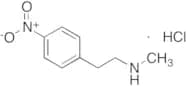
CAS:Controlled Product<p>Applications 2-Bromo-4-methylphenol is a useful synthetic intermediate. It was used in the synthesis of furan-2-ylmethylene thiazolidinediones as potent, and selective inhibitors of phosphoinositide 3-kinase γ. It was also a reactant used to prepare phosphoramidate and phosphorothioamidate analogs of amiprophos Me as potential antimalarial agents.<br>References Pomel, V., et al.: J. Med. Chem., 49, 3857 (2006); Mara, C., et al.: Bioorg. Med. Chem. Lett., 21, 6180 (2011)<br></p>Formula:C7H7BrOColor and Shape:NeatMolecular weight:187.03N-Methyl-2-(4-nitrophenyl)ethanamine Hydrochloride
CAS:Controlled Product<p>Applications N-Methyl-2-(4-nitrophenyl)ethanamine Hydrochloride is used as a reactant in the preparation of small molecule CDC25 phosphatases inhibitors.<br>References Contour-Galcera, Marie-Odile, et al.: Bioorg. & Med. Chem. Let., 14(23), 5809-5812 (2004)<br></p>Formula:C9H12N2O2·HClColor and Shape:NeatMolecular weight:216.66L-Citrulline
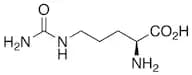
CAS:Controlled Product<p>Applications An amino acid, first isolated from the juice of watermelon, Citrullus vulgaris Schrad., Cucurbitaceae. Used in the treatment of asthenia.<br>References Kurtz, et al.: J. Biol. Chem., 122, 477 (1938), Rajantie, J., et al.: J. Pediatr., 97, 927 (1980), Carpenter, T.O., et al.: N. Engl. J. Med., 312, 290 (1985),<br></p>Formula:C6H13N3O3Color and Shape:NeatMolecular weight:175.195-Amino-4-oxopentanoic acid hydrochloride
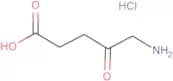
CAS:<p>066621 - 5-Amino-4-oxopentanoic acid hydrochloride</p>Formula:C5H10ClNO3Purity:97.0%Color and Shape:Solid, Powder or Crystalline Powder or SolidMolecular weight:167.592-(3-Methoxyphenoxy)propanoic acid
CAS:Controlled Product<p>Applications 2-(3-Methoxyphenoxy)propanoic acid<br></p>Formula:C10H12O4Color and Shape:NeatMolecular weight:196.2Methylpropylnitrosamine
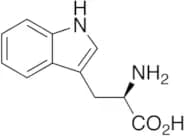
CAS:Controlled Product<p>Applications Methylpropylnitrosamine is used in biological studies as human liver microsomal cytochrome P-450 enzymes which are involved in the bioactivation of procarcinogens detected by umu gene response in Salmonella typhimurium TA 1535/pSK1002.<br>References Shimada, T., et al.: Cancer Res., 48, 3218 (1989);<br></p>Formula:C4H10N2OColor and Shape:NeatMolecular weight:102.14D-Tryptophan
CAS:Controlled Product<p>Applications An essential amino acid found in naturally produced peptides. Unlike its stereoisomer, L-tryptophan, it is not used in structural or enzyme proteins.<br>References Karunakaran, S.et al.: Bochem. J., 414, 343 (2008); Pallaghy, P.K. et al.: Biochem., 38, 11553 (1999);<br></p>Formula:C11H12N2O2Color and Shape:NeatMolecular weight:204.23N-Methylnitroacetamide
CAS:Controlled Product<p>Impurity Ranitidine EP Impurity H<br>Applications N-Methylnitroacetamide (Ranitidine EP Impurity H) is a degradation product of Ranitidine (R120000).<br>References Sharma, N. et al.: Sci. Pharmac., 79, 309 (2011); Haywood, P.A. et al.: J. Chem. Soc., 5, 951 (1987);<br></p>Formula:C3H6N2O3Color and Shape:NeatMolecular weight:118.09N,N-Diethyl-N’-1-naphthylethylenediamine Oxalate
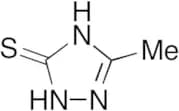
CAS:Controlled Product<p>Applications Used in the methods of detecting nitrotyrosine and aminotyrosine residues of peptides and proteins. Also used in the studies on the separation and photometric determination of antiepileptics.<br>References Quednow, B., et al.: Pharmazie, 34, 724 (1979),<br></p>Formula:C18H24N2O4Color and Shape:NeatMolecular weight:332.393-Methyl-1H(4H)-1,2,4-triazole-5-thione
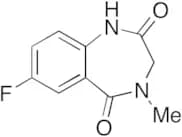
CAS:Formula:C3H5N3SColor and Shape:NeatMolecular weight:115.1577-Fluoro-3,4-dihydro-4-methyl-1H-1,4-benzodiazepine-2,5-dione
CAS:Controlled ProductFormula:C10H9FN2O2Color and Shape:NeatMolecular weight:208.191,6-Anhydro-β-D-glucopyranose-13C6
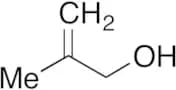
CAS:<p>Stability Hygroscopic<br>Applications Isotope labelled 1,6-Anhydro-β-D-glucopyranose (A648100), an compound that have been proven to be a valuable synthon for the preparation of various biologically important and structurally diverse products (e.g. rifamycin S, indanomycin, thromboxane B2, (+)-biotin, tetrodotoxin, quinone, and macrolide antibiotics) as well as for modified sugars.<br>References Fraser-Reid, B., et al. J. Am. Chem. Soc. 106, 731 (1984); Edwards, M.P., et al. J. Org. Chem. 49, 3503 (1984); Kelly, A.G., and Roberts, J.S. J. Chem. Soc., Chem. Commun. 228, (1980); Ogawa, T., et al. Carbohydr. Res. 57, C31 (1977); Isobe, M., et al. Tetrahedron Lett. 28, 6485 (1987);<br></p>Formula:C6H10O5Color and Shape:NeatMolecular weight:168.102-Methyl-2-propen-1-ol
CAS:Controlled Product<p>Stability Light Sensitive<br>Applications 2-Methyl-2-propen-1-ol has been used in the synthesis of C2-methyl-1,2-di-O-hexadecylglycerophosphocholine.<br> Not a dangerous good if item is equal to or less than 1g/ml and there is less than 100g/ml in the package<br>References Bittman, R., Witzke N.M.: Chem. Physics Lipid, 50, 99 (1989)<br></p>Formula:C4H8OColor and Shape:NeatMolecular weight:72.115-Amino-2-methyl-benzenesulfonamide
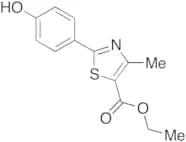
CAS:Controlled Product<p>Applications 5-amino-2-methyl-benzenesulfonamide (cas# 6973-09-7) is a useful research chemical.<br></p>Formula:C7H10N2O2SColor and Shape:NeatMolecular weight:186.23Ethyl 2-(4-Hydroxyphenyl)-4-methylthiazole-5-carboxylate
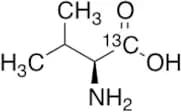
CAS:<p>Applications Ethyl 2-(4-Hydroxyphenyl)-4-methylthiazole-5-carboxylate is used in the synthesis of the major metabolites of Febuxostat (F229000), a xanthine oxidase/xanthine dehydrogenase inhibitor. Used for treatment of hyperuricemia and chronic gout. 40-120 mg/day febuxostat was proven effective in lowering serum urate levels when administered to manage hyperuricemia in patients with gout.<br>References Li, X., et. al.: Lett. Org. Chem., 12, 217 (2015); Vallu, V., et. al.: Anal. Chem. Indian J., 14, 339 (2014); Osada, Y., et al.: Eur. J. Pharmacol., 241, 183 (1993); Okamoto, K., et al.: J. Biol. Chem., 278, 1848 (2003); Mayer, M.D., et al.: Am. J. Therap., 12, 22 (2005); Tomlinson, B., et al.: Curr. Opin. Invest. Drugs, 6, 1168 (2005)<br></p>Formula:C13H13NO3SColor and Shape:NeatMolecular weight:263.31L-Valine-13C
CAS:<p>Applications L-Valine (1-13c, 99%) (cas# 81201-85-6) is a useful research chemical.<br></p>Formula:C413CH11NO2Color and Shape:NeatMolecular weight:118.14N-(4-Bromo-2-methylphenyl)-2-chloroacetamide
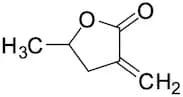
CAS:Controlled Product<p>Applications N-(4-Bromo-2-methylphenyl)-2-chloroacetamide (cas# 96686-51-0) is a useful research chemical.<br></p>Formula:C9H9NOClBrColor and Shape:NeatMolecular weight:262.53α-Methylene-γ-valerolactone
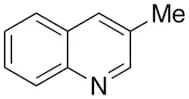
CAS:Controlled Product<p>Applications alpha-Methylene-gamma-valerolactone (cas# 62873-16-9) is a useful research chemical.<br></p>Formula:C6H8O2Color and Shape:NeatMolecular weight:112.1263-Methylquinoline
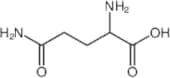
CAS:Controlled Product<p>Applications It can be degraded efficiently by the QL-degrading bacteria.<br>References Shukla, O., et al.: Microbios., 59, 47 (1989), Oh, Y; Biotechnol Bioeng 1994, 44, 533,,,<br></p>Formula:C10H9NColor and Shape:NeatMolecular weight:143.19DL-glutamine
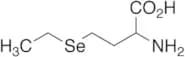
CAS:Controlled Product<p>Applications DL-glutamine<br></p>Formula:C5H10N2O3Color and Shape:NeatMolecular weight:146.14Seleno-D,L-ethionine
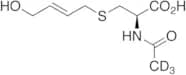
CAS:Controlled Product<p>Stability Hygroscopic<br>Applications Used as a substrate for methionine adenosyltransferase from rat liver.<br> Not a dangerous good if item is equal to or less than 1g/ml and there is less than 100g/ml in the package<br>References Lombardini, J.B., et al.: Biochem. Pharmacol., 32(3), 489 (1983), Kajander, E., et al.: Cancer Res., 46 (6), 2866 (1986), Kajander, E., et al.: Biochem. J., 267 (3), 767 (1990)<br></p>Formula:C6H13NO2SeColor and Shape:Off-White To Light BeigeMolecular weight:210.13N-Acetyl-S-(4-hydroxy-2-buten-1-yl)-L-cysteine-d3
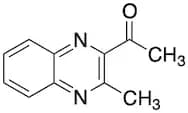
CAS:Controlled Product<p>Stability Hygroscopic<br>Applications A novel labelled metabolite of Butadiene monoepoxide (BMO), a mutagen and carcinogen compound.<br>References Cheng, X., et al.: Drug Metab. Dispos., 21, 121 (1993), Nieusma, J., et al.: Chem. Res. Toxicol., 10, 450 (1997),<br></p>Formula:C9D3H12NO4SColor and Shape:NeatMolecular weight:236.30323-Acetyl-2-methylquinoxaline
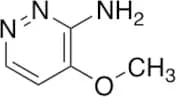
CAS:<p>Applications 3-Acetyl-2-methylquinoxaline is an intermediate in the synthesis of Desoxyquinocetone which is a metabolite of the veterinay drug Quinocetone.<br>References Li, Y. et al.: J. AOAC Int., 91, 1494 (2008); Liu, Z.-Y. et al.: Anal. Bioanal. Chem., 396, 1259 (1271);<br></p>Formula:C11H10N2OColor and Shape:NeatMolecular weight:186.214-Methoxypyridazin-3-amine
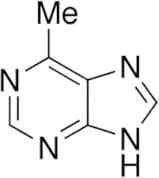
CAS:Controlled ProductFormula:C5H7N3OColor and Shape:NeatMolecular weight:125.1286-Methylpurine
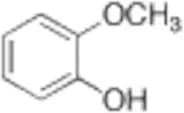
CAS:Controlled Product<p>Applications 6-Methylpurine (cas# 2004-03-7) is a compound useful in organic synthesis.<br> Not a dangerous good if item is equal to or less than 1g/ml and there is less than 100g/ml in the package<br></p>Formula:C6H6N4Color and Shape:NeatMolecular weight:134.142-Methoxyphenol
CAS:Controlled Product<p>Stability Light Sensitive<br>Applications 2-Methoxyphenol (CAS# 90-05-1) is useful for testing ruthenium- and palladium-containing catalysts activity via guaiacol hydrogenation.<br>References Shakirov, I. I., et al.: Pet. Chem., 60, 1136 (2020)<br></p>Formula:C7H8O2Color and Shape:NeatMolecular weight:124.14









![2-Methylnaphth[1,2-d]oxazole](/_next/image/?url=https%3A%2Fstatic.cymitquimica.com%2Fproducts%2FTR%2Fthumb-webp%2FM332348.webp&w=3840&q=75)