


Amino Acids (AA)
Amino acids (AAs) are the fundamental building blocks of proteins, playing a crucial role in various biological processes. These organic compounds are essential for protein synthesis, metabolic pathways, and cell signaling. In this category, you will find a comprehensive range of amino acids, including essential, non-essential, and modified forms, which are vital for research in biochemistry, molecular biology, and nutritional sciences. At CymitQuimica, we provide high-quality amino acids to support your research and development needs, ensuring accuracy and reliability in your experimental outcomes.
Subcategories of "Amino Acids (AA)"
- Amino Acid Derivatives(3,970 products)
- Amino Acid and Amino Acid Related Compounds(3,476 products)
- Amino Acids with Oxygen or Sulphur(168 products)
- Boc- Amino Acids(351 products)
- Fmoc Amino Acids(1,710 products)
Found 38286 products of "Amino Acids (AA)"
Sort by
Purity (%)
0
100
|
0
|
50
|
90
|
95
|
100
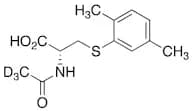
N-Acetyl-S-(2,5-dimethylbenzene)-L-cysteine-d3
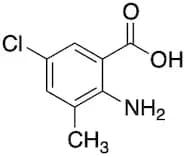
CAS:Controlled Product<p>Applications N-Acetyl-S-(2,5-dimethylbenzene)-L-cysteine-d3 (cas# 1331909-07-9) is a compound useful in organic synthesis.<br>References Gonzalez-Reche, L., et al.: Arch. Toxicol., 77, 80 (2003),<br></p>Formula:C13H14D3NO3SColor and Shape:NeatMolecular weight:270.362-Amino-5-chloro-3-methylbenzoic Acid
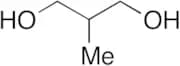
CAS:Controlled Product<p>Applications 2-Amino-5-chloro-3-methylbenzoic Acid is a useful research chemical for the preparation of benzoyl urea containing anthranillic acid groups with insecticidal activity.<br>References Peng, Y., et al.: Nongyao, 48, 326 (2009);<br></p>Formula:C8H8NO2ClColor and Shape:NeatMolecular weight:185.62-Methyl-1,3-propandiol (b-Hydroxyisobutanol)
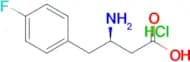
CAS:Controlled Product<p>Applications β-Hydroxyisobutanol is used as a reagent in the synthesis of pyrazolo[1,5-a]pyridinecarbonyl-substituted spirocyclic piperidine ketals as inhibitors of HCV protein NS4B and of hepatitis C viral replication and their lack of cytotoxicity in human cells.<br>References Tai, V.W.-F., et al.: Bioorg. Med. Chem. Lett., 24, 2288 (2014);<br></p>Formula:C4H10O2Color and Shape:ColourlessMolecular weight:90.121(R)-3-Amino-4-(4-fluorophenyl)butanoic acid hydrochloride
CAS:Purity:95.0%Color and Shape:Solid, White powderMolecular weight:233.66999816894532-[1-(Aminomethyl)cyclohexyl]acetic acid
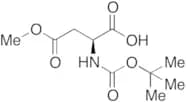
CAS:Purity:97.0%Color and Shape:Solid, Off-white crystalline powderMolecular weight:171.24000549316406Boc-L-aspartic Acid β-Methyl Ester
CAS:Controlled Product<p>Applications Boc-L-aspartic Acid β-Methyl Ester is used to prepare isoxazoline glycoprotein IIb/IIIa antagonists. It is also used to synthesize glutamic acid analogs as potent inhibitors of leukotriene A4 hydrolase.<br>References Xue, C., et al.: J. Med. Chem., 40, 2064 (1997); Kirkland, T., et al.: Bioorg. Med. Chem., 16, 4963 (2008)<br></p>Formula:C10H17NO6Color and Shape:NeatMolecular weight:247.245N-[(Benzyloxy)carbonyl]glycylglycine
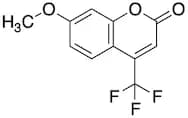
CAS:<p>Applications N-[(Benzyloxy)carbonyl]glycylglycine is a reagent in the synthesis of Glycylglycyl-L-tyrosine (G718500), which is a fungal tyrosinases and their capability to oxidize peptide-bound tyrosine residues is important in a view of applicability of tyrosinases.<br>References Bowness, J., et al.: Biochem. J., 53, 620 (1953), Cuff, M., et al.: J. Mol. Biol., 278, 855 (1998), Kubo, I., et al.: Bioorg. Med. Chem., 12, 5349 (2004),<br></p>Formula:C12H14N2O5Color and Shape:NeatMolecular weight:266.257-Methoxy-4-(trifluoromethyl)coumarin
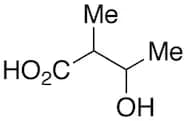
CAS:Controlled Product<p>Applications 7-Methoxy-4-(trifluoromethyl)coumarin is a biochemical for proteomics research.<br></p>Formula:C8H8BrN3Color and Shape:White To Off-WhiteMolecular weight:226.0733-Hydroxy-2-methylbutanoic Acid
CAS:Controlled Product<p>Applications 3-Hydroxy-2-methylbutanoic Acid (cas# 473-86-9) is a compound useful in organic synthesis.<br></p>Formula:C5H10O3Color and Shape:Colourless To YellowMolecular weight:118.137-Amino-3-methyl-8-oxo-5-thia-1-azabicyclo[4.2.0]oct-2-ene-2-carboxylic acid
CAS:Purity:95.0%Molecular weight:214.24000549316406D,L-o-Tyrosine
CAS:Controlled Product<p>Applications D,L-o-Tyrosine is a metabolite of Phenylalanine (P319415). A precursor in the formation of catecholamines. Used as biomarkers of protein oxidative damage in β-thalassemia.<br>References Tsugita, A., et al.: Eur. J. Biochem., 124, 585 (1982), Nielsen, F., et al.: Clin. Chem., 43, 1209 (1997), Mates, J., et al.: Clin. Biochem., 32, 595 (1999),<br></p>Formula:C9H11NO3Color and Shape:WhiteMolecular weight:181.198-benzyl-4-(2-ethylbutanoyl)-1-oxa-4,8-diazaspiro[4.5]decane-3-carboxylic acid
CAS:Purity:95.0%Molecular weight:374.48098754882813-Ethyl-6,7,8,9-tetrahydro-9-hydroxy-2-methyl-4H-pyrido[1,2-a]pyrimidin-4-one
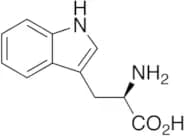
CAS:Controlled Product<p>Impurity Paliperidone USP Related Compound A<br>Applications 3-Ethyl-6,7,8,9-tetrahydro-9-hydroxy-2-methyl-4H-pyrido[1,2-a]pyrimidin-4-one (Paliperidone USP Related Compound A) is used in the synthesis of Paliperidone (P141000). Intermediate.<br>References Rein, A., et al.: Curr. Opin. Drug Discovery Dev., 3, 734 (2000),<br></p>Formula:C11H16N2O2Color and Shape:NeatMolecular weight:208.26D-Tryptophan
CAS:Controlled Product<p>Applications An essential amino acid found in naturally produced peptides. Unlike its stereoisomer, L-tryptophan, it is not used in structural or enzyme proteins.<br>References Karunakaran, S.et al.: Bochem. J., 414, 343 (2008); Pallaghy, P.K. et al.: Biochem., 38, 11553 (1999);<br></p>Formula:C11H12N2O2Color and Shape:NeatMolecular weight:204.235-((tert-Butoxycarbonyl)amino)pyrimidine-2-carboxylic acid
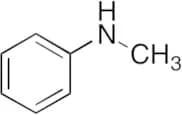
CAS:Purity:95%Molecular weight:239.2310028076172N-Methylaniline
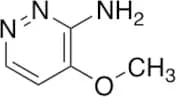
CAS:Controlled Product<p>Applications N-Methylaniline is used as an additive in gasoline because of its antiknock properties.<br> Not a dangerous good if item is equal to or less than 1g/ml and there is less than 100g/ml in the package<br>References Liu, Li-jun, et al.: Huaxue Shiji, 37(1), 53-55, 96 (2015); Qin, Li-xia, et al.: Guangzhou Huagong, 43(8), 138-139, 148 (2015);<br></p>Formula:C7H9NColor and Shape:NeatMolecular weight:107.154-Methoxypyridazin-3-amine
CAS:Controlled ProductFormula:C5H7N3OColor and Shape:NeatMolecular weight:125.128D-Arginine
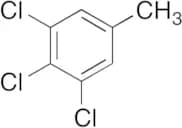
CAS:Controlled Product<p>Applications D-Arginine is an unnatural isomer of L-Arginine (A769505), and is used to inhibit glutamate-induced nitric oxide production in rats. Derivatives of D-Arginine are used for pharmaceutical purposes, one example is 1-Deamino-8-D-arginine vasopressin, which is used to treat various bleeding disorders.<br>References Castellano, M., et al.: Neurosci. Lett., 314, 127 (2001); Kobrinsky, N., et al.: Lancet, 323, 1145 (1984); Weyrich, A., et al.: Circulation, 86, 279 (1992)<br></p>Formula:C6H14N4O2Color and Shape:NeatMolecular weight:174.201,2,3-Trichloro-5-methylbenzene
CAS:<p>Applications 1,2,3-Trichloro-5-methylbenzene is useful in calculating 21 physical properties of organic compounds strictly from molecular structure.<br> Not a dangerous good if item is equal to or less than 1g/ml and there is less than 100g/ml in the package<br>References Jain, N., et al.: J. Pharm. Sci., 88, 852-860 (1999)<br></p>Formula:C7H5Cl3Color and Shape:White To Off-WhiteMolecular weight:195.4744-benzoyl-8-ethyl-1-oxa-4,8-diazaspiro[4.5]decane-3-carboxylic acid
CAS:Purity:95.0%Molecular weight:318.372985839843751,6-Anhydro-β-D-glucopyranose-13C6
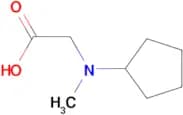
CAS:<p>Stability Hygroscopic<br>Applications Isotope labelled 1,6-Anhydro-β-D-glucopyranose (A648100), an compound that have been proven to be a valuable synthon for the preparation of various biologically important and structurally diverse products (e.g. rifamycin S, indanomycin, thromboxane B2, (+)-biotin, tetrodotoxin, quinone, and macrolide antibiotics) as well as for modified sugars.<br>References Fraser-Reid, B., et al. J. Am. Chem. Soc. 106, 731 (1984); Edwards, M.P., et al. J. Org. Chem. 49, 3503 (1984); Kelly, A.G., and Roberts, J.S. J. Chem. Soc., Chem. Commun. 228, (1980); Ogawa, T., et al. Carbohydr. Res. 57, C31 (1977); Isobe, M., et al. Tetrahedron Lett. 28, 6485 (1987);<br></p>Formula:C6H10O5Color and Shape:NeatMolecular weight:168.10(Cyclopentyl-methyl-amino)-acetic acid
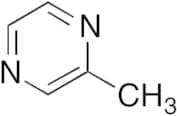
CAS:Purity:95.0%Color and Shape:SolidMolecular weight:157.212997436523442-Methylpyrazine
CAS:Controlled Product<p>Applications 2-Methyl-pyrazine is an intermediate used to synthesize 5-Methyl-2(1H)-pyrazinone (M324900) which is a derivative of 2-Hydroxypyrazine (H952710). 2-Hydroxypyrazine (H952710) is used in the synthesis of potential antioxidants.<br> Not a dangerous good if item is equal to or less than 1g/ml and there is less than 100g/ml in the package<br>References Shi, J. et al.: J. Phys. Org. Chem., 22, 1038 (2009); Bonde, C. et al.: Ind. J. Hetero. Chem., 10, 271 (2001);<br></p>Formula:C5H6N2Color and Shape:NeatMolecular weight:94.111-Methyl-2-pyrrolidinone
CAS:Controlled Product<p>Applications It is a versatile industrial solvent. NMP is currently approved for use only in veterinary pharmaceuticals. The determination of the disposition and metabolism of NMP in the rat will contribute toward understanding the toxicology of this exogenous chemical which man may likely be exposed to in increasing amounts.<br>References Southwell, D., et al.: J. Pharm. Pharmacol., 33, 3 (1981), Barry, W., et al.: J. Invest. Dermatol., 82, 49 (1984),<br></p>Formula:C5H9NOColor and Shape:ColourlessMolecular weight:99.132-Methylbutyrylglycine-d9
CAS:Controlled Product<p>Applications Labelled 2-Methylbutyrylglycine (M294340). 2-Methylbutyrylglycine is one of the acylglycines, an important class of metabolites that have been used in the diagnosis of several inborn errors of metabolism (IEM).<br>References Costa, C., et al.: J. Pharmaceut. Biomed. Anal., 21, 1215 (2000), Garcia-Villoria, J., et al.: Clin. Biochem., 42, 2 (2009), Scalbert, A., et al.: Metabolomics, 5, 435 (2009),<br></p>Formula:C72H9H4NO3Color and Shape:Off-WhiteMolecular weight:168.244-Chloro-3-cyano-6-methoxy-7-[3-(4-methylpiperazin-1-yl)propoxy]quinoline
CAS:<p>Stability Hygroscopic<br>Applications 4-Chloro-3-cyano-6-methoxy-7-[3-(4-methylpiperazin-1-yl)propoxy]quinoline is a useful reagent to prepare benzofuranyl derivatives for treating solid tumours. It is also an impurity of Bosutinib.<br>References Hennequin, L. F. A. PCT Int. Appl. (2003), WO 2003047585 A1 20030612 (2003); Hennequin, L. F. A., Gibson, K. H., Foote, K. M. PCT Int. Appl. WO 2003047582 A1 20030612 (2003)<br></p>Formula:C19H23ClN4O2Color and Shape:Off White SolidMolecular weight:374.864-(3-chlorobenzoyl)-8-propyl-1-oxa-4,8-diazaspiro[4.5]decane-3-carboxylic acid
CAS:Purity:95.0%Molecular weight:366.8399963378906Ferrous Bisglycinate
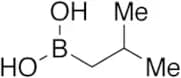
CAS:Controlled Product<p>Stability Hygroscopic<br>Applications Ferrous Bisglycinate is used in the fortification of infant formulations and foods.<br>References Fox, T. et al.: Am. J. Clin. Nutri., 67, 664 (1998); Heath, A. et al.: J. Am. Coll. Nutr., 20, 477 (2001);<br></p>Formula:C2H4NO2·FeColor and Shape:NeatMolecular weight:203.962-Methylpropylboronic Acid
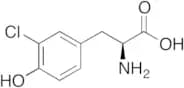
CAS:Controlled Product<p>Applications 2-Methylpropylboronic Acid is used in the preparation of isocoumarin analogs as inhibitors of γ-secretase cleavage. Also used in the preparation of peptide boronc acid.<br>References Peuchmaur, M. et al.: Bioorg. Med. Chem. Lett., 21, 1018 (2013); Roemmele, R. et al.: Org. Proc. Res. Devel., 17, 422 (2013);<br></p>Formula:C4H11BO2Color and Shape:NeatMolecular weight:101.943-Chloro-L-tyrosine
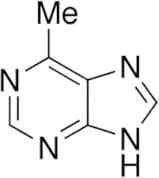
CAS:Controlled Product<p>Stability Hygroscopic<br>Applications 3-Chloro-L-tyrosine was used in the enzymatic synthesis of halogen derivatives of aromatic amino acids labeled with hydrogen isotope. 3-Chloro-L-tyrosine exhibited stronger antioxidant properties in Hb-induced oxidative stress as was evident by higher efficiency of reduction of ferryl species.<br>References Winnicka, E., et al.: J. Chem. Eng., 8, 54 (2014); Lu, N., et al.: Toxicol. In Vitro, 28, 847 (2014);<br></p>Formula:C9H10NO3ClColor and Shape:NeatMolecular weight:215.636-Methylpurine
CAS:Controlled Product<p>Applications 6-Methylpurine (cas# 2004-03-7) is a compound useful in organic synthesis.<br> Not a dangerous good if item is equal to or less than 1g/ml and there is less than 100g/ml in the package<br></p>Formula:C6H6N4Color and Shape:NeatMolecular weight:134.143-(4-tert-Butoxycarbonylaminophenoxy)propionic acid
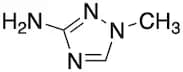
Formula:C14H19NO5Purity:85.0%Molecular weight:281.3081-Methyl-1h-1,2,4-triazol-3-amine
CAS:Controlled Product<p>Applications 1-Methyl-1h-1,2,4-triazol-3-amine (cas# 49607-51-4) is a useful research chemical.<br></p>Formula:C3H6N4Color and Shape:NeatMolecular weight:98.106N-[(9H-Fluoren-9-ylmethoxy)carbonyl]-N-methyl-L-alloisoleucine
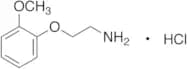
CAS:Controlled Product<p>Applications N-[(9H-Fluoren-9-ylmethoxy)carbonyl]-N-methyl-L-alloisoleucine, is a building block used in the synthesis of Ecumicin, which is a the potent anti-mycobacterial cyclic depsipeptide natural product.<br>References Hawkins, P. et al.: Organic Letters, Vol. 20, P: 1019-1022 (2018)<br></p>Formula:C22H25NO4Color and Shape:NeatMolecular weight:367.442-(2-Methoxyphenoxy)ethylamine Hydrochloride
CAS:<p>Impurity Carvedilol EP Impurity E; Carvedilol Impurity E; Carvedilol USP E<br>Applications 2-(2-Methoxyphenoxy)ethylamine Hydrochloride (Carvedilol EP Impurity E; Carvedilol Impurity E; Carvedilol USP E) is an impurity of Carvedilol synthesis.<br>References Smith, L., et al.: J. Med. Chem., 20, 1653 (1977),<br></p>Formula:C9H13NO2·ClHColor and Shape:NeatMolecular weight:203.674-(4-fluorobenzoyl)-8-propyl-1-oxa-4,8-diazaspiro[4.5]decane-3-carboxylic acid
CAS:Purity:95.0%Molecular weight:350.39001464843753-(Carboxymethyl-methyl-amino)-pyrrolidine-1-carboxylic acid tert-butyl ester
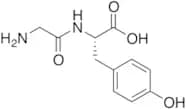
CAS:Purity:95.0%Molecular weight:258.3179931640625Glycyl-L-Tyrosine Dihydrate
CAS:Controlled Product<p>Applications Glycyl-L-Tyrosine Dihydrate is used in process for producing N-Glycyltyrosine. Glycyl-L-Tyrosine Dihydrate is the anhydrous form of Glycyl-L-tyrosine(G720108); which is used in preparation method of high quality Aspartame and Aspartame crystallization-inducing agent.<br>References Mimura, T., et al.: Eur. Pat. Appl., (1999); Gao, Z., et al.: Faming Zhuanli Shenqing, (2019);<br></p>Formula:C11H14N2O4·2H2OColor and Shape:NeatMolecular weight:274.276-methyl-8-nitro-3a,4,5,9b-tetrahydro-3H-cyclopenta[c]quinoline-4-carboxylic acid
CAS:Purity:95.0%Molecular weight:274.27600097656257-Chloro-L-Tryptophan
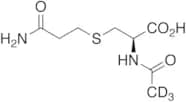
CAS:Controlled Product<p>Stability Hygroscopic<br>Applications 7-CHLORO-L-TRYPTOPHAN (cas# 73945-46-7) is a useful research chemical.<br></p>Formula:C11H11N2O2ClColor and Shape:NeatMolecular weight:238.67N-Acetyl-S-(carbamoylethyl)-L-cysteine-d3
CAS:Controlled Product<p>Stability Hygroscopic<br>Applications Labelled N-Acetyl-S-(carbamoylethyl)-L-cysteine (A171870). N-Acetyl-S-(carbamoylethyl)-L-cysteine is the urinary metabolite of Acrylamide (AA). Acrylamide is formed during the heating of food and is classified as a genotoxic carcinogen.<br>References Besaratinia, A., et al.: Mutat. Res., 80, 31 (2005), Bjellaas, T., et al.: Xenobiotica, 35, 1003 (2005), Bjellaas, T., et al.: Food Chem. Toxicol., 45, 1020 (2007), Bjellaas, T., et al.: Toxicol. Sci., 98, 110 (2007),<br></p>Formula:C8H11D3N2O4SColor and Shape:Off-WhiteMolecular weight:237.29N-Acetyl-S-(propyl-d7)-L-cysteine
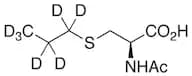
CAS:Controlled ProductFormula:C8D7H8NO3SColor and Shape:Off-WhiteMolecular weight:212.322-Amino-3-methylbutanamide Hydrochloride
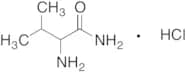
CAS:<p>Applications 2-amino-3-methylbutanamide Hydrochloride is a useful research chemical for the degradation studies of antibiotic MDL 62,879 (GE2270A), and a reagent for peptide synthesis.<br>References Tavecchia, P., et al.: Tetrahedron, 51, 4867 (1995); Gazis, E., et al.: Peptides, Proc. Eur. Symp., 6th, Athens, 1963, 107 (1966)<br></p>Formula:C5H12N2O·HClColor and Shape:NeatMolecular weight:152.6225-Methoxyresorcinol
CAS:<p>Applications 5-Methoxyresorcinol (cas# 2174-64-3) is a useful research chemical.<br></p>Formula:C7H8O3Color and Shape:NeatMolecular weight:140.1374-(3-phenoxyphenyl)-3H,4H,5H,6H,7H-imidazo[4,5-c]pyridine-6-carboxylic acid
CAS:Purity:95.0%Molecular weight:335.36300659179693-(1,2,4-Triazol-1-yl)-L-alanine
CAS:Controlled Product<p>Applications A metabolite common to all triazole fungicides: free triazole, 1,2,4-triazole (T), and its 2 conjugates: triazolylalanine (TA) and triazolylacetic acid (TAA).<br>References Hrudey, S., et al.: Water Sci. Technol., 20, 55 (1988), Froese, K., et al.: Water Res., 33, 1355 (1999), Hengel, M., et al.: J. Agric. Food Chem., 50, 3412 (2002),<br></p>Formula:C5H8N4O2Color and Shape:NeatMolecular weight:156.14


![2-[1-(Aminomethyl)cyclohexyl]acetic acid](/_next/image/?url=https%3A%2Fstatic.cymitquimica.com%2Fproducts%2F10%2Fthumb-webp%2FF040287.webp&w=3840&q=75)
![N-[(Benzyloxy)carbonyl]glycylglycine](/_next/image/?url=https%3A%2Fstatic.cymitquimica.com%2Fproducts%2FTR%2Fthumb-webp%2FB287100.webp&w=3840&q=75)
![7-Amino-3-methyl-8-oxo-5-thia-1-azabicyclo[4.2.0]oct-2-ene-2-carboxylic acid](/_next/image/?url=https%3A%2Fstatic.cymitquimica.com%2Fproducts%2F10%2Fthumb-webp%2FF319040.webp&w=3840&q=75)

![8-benzyl-4-(2-ethylbutanoyl)-1-oxa-4,8-diazaspiro[4.5]decane-3-carboxylic acid](/_next/image/?url=https%3A%2Fstatic.cymitquimica.com%2Fproducts%2F10%2Fthumb-webp%2FF525814.webp&w=3840&q=75)
![3-Ethyl-6,7,8,9-tetrahydro-9-hydroxy-2-methyl-4H-pyrido[1,2-a]pyrimidin-4-one](/_next/image/?url=https%3A%2Fstatic.cymitquimica.com%2Fproducts%2FTR%2Fthumb-webp%2FE926295.webp&w=3840&q=75)


![4-benzoyl-8-ethyl-1-oxa-4,8-diazaspiro[4.5]decane-3-carboxylic acid](/_next/image/?url=https%3A%2Fstatic.cymitquimica.com%2Fproducts%2F10%2Fthumb-webp%2FF525665.webp&w=3840&q=75)



![4-Chloro-3-cyano-6-methoxy-7-[3-(4-methylpiperazin-1-yl)propoxy]quinoline](/_next/image/?url=https%3A%2Fstatic.cymitquimica.com%2Fproducts%2FTR%2Fthumb-webp%2FC380750.webp&w=3840&q=75)
![4-(3-chlorobenzoyl)-8-propyl-1-oxa-4,8-diazaspiro[4.5]decane-3-carboxylic acid](/_next/image/?url=https%3A%2Fstatic.cymitquimica.com%2Fproducts%2F10%2Fthumb-webp%2FF525738.webp&w=3840&q=75)


![N-[(9H-Fluoren-9-ylmethoxy)carbonyl]-N-methyl-L-alloisoleucine](/_next/image/?url=https%3A%2Fstatic.cymitquimica.com%2Fproducts%2FTR%2Fthumb-webp%2FF588715.webp&w=3840&q=75)
![4-(4-fluorobenzoyl)-8-propyl-1-oxa-4,8-diazaspiro[4.5]decane-3-carboxylic acid](/_next/image/?url=https%3A%2Fstatic.cymitquimica.com%2Fproducts%2F10%2Fthumb-webp%2FF525715.webp&w=3840&q=75)

![6-methyl-8-nitro-3a,4,5,9b-tetrahydro-3H-cyclopenta[c]quinoline-4-carboxylic acid](/_next/image/?url=https%3A%2Fstatic.cymitquimica.com%2Fproducts%2F10%2Fthumb-webp%2FF314554.webp&w=3840&q=75)


![4-(3-phenoxyphenyl)-3H,4H,5H,6H,7H-imidazo[4,5-c]pyridine-6-carboxylic acid](/_next/image/?url=https%3A%2Fstatic.cymitquimica.com%2Fproducts%2F10%2Fthumb-webp%2FF522499.webp&w=3840&q=75)
