


Amino Acids (AA)
Amino acids (AAs) are the fundamental building blocks of proteins, playing a crucial role in various biological processes. These organic compounds are essential for protein synthesis, metabolic pathways, and cell signaling. In this category, you will find a comprehensive range of amino acids, including essential, non-essential, and modified forms, which are vital for research in biochemistry, molecular biology, and nutritional sciences. At CymitQuimica, we provide high-quality amino acids to support your research and development needs, ensuring accuracy and reliability in your experimental outcomes.
Subcategories of "Amino Acids (AA)"
- Amino Acid Derivatives(3,955 products)
- Amino Acid and Amino Acid Related Compounds(3,465 products)
- Amino Acids with Oxygen or Sulphur(168 products)
- Boc- Amino Acids(351 products)
- Fmoc Amino Acids(1,710 products)
Found 38248 products of "Amino Acids (AA)"
Sort by
Purity (%)
0
100
|
0
|
50
|
90
|
95
|
100
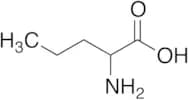
DL-norvaline
CAS:<p>Applications Norvaline, a hydrogen analogs of an amino acid, was found to be racemates from the Murchison meteorite show. Norvaline was used in chiral separation by electrokinetic chromatography.<br>References Cronin, J., et al.: Science, 275, 951 (1997); Pizzarello, S., et al.: Geochim. Cosmochim. Acta., 64, 329 (2000); Gerabe, S., et al.: J. Chromatogr., 480, 403 (1989);<br></p>Formula:C5H11NO2Color and Shape:NeatMolecular weight:117.15N-Cinnamylglycine
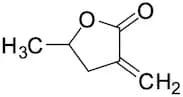
CAS:<p>Applications N-Cinnamylglycine is a derivative of ferulic acid (F308900), a widely distributed compound in plants that is used as an antioxidant and food preservative.<br>References Jellum,E., et al.: J. Pharma. Biomed. Anal., 9, 663 (1991); Kayahara, H., et al.: Anticancer. Res., 19, 3763 (1999); Bollina, V., et al.: Plant. Molec. Biol., 77, 355 (2011);<br></p>Formula:C11H11NO3Color and Shape:NeatMolecular weight:205.21α-Methylene-γ-valerolactone
CAS:Controlled Product<p>Applications alpha-Methylene-gamma-valerolactone (cas# 62873-16-9) is a useful research chemical.<br></p>Formula:C6H8O2Color and Shape:NeatMolecular weight:112.1264,4'-Methylenebis[2-chlorophenol]
CAS:Controlled Product<p>Applications 4,4'-Methylenebis[2-chlorophenol] is used in the manufacture of fire-resistant polyester material and is used in the synthesis of photo-sensitive print plates.<br> Not a dangerous good if item is equal to or less than 1g/ml and there is less than 100g/ml in the package<br>References Yu, S. et al.: Faming Zhuanli Shenqing (2009), CN 101597219 A 20091209.<br></p>Formula:C13H10Cl2O2Color and Shape:NeatMolecular weight:269.12(3aS,4S,6R,6aR)-6-(6-Amino-2-chloro-9H-purin-9-yl)-2,2-dimethyltetrahydrofuro[3,4-d][1,3]dioxole-4-carboxylic acid
CAS:Purity:97.0%Molecular weight:355.7399902343752-methyl-1-[4-(trifluoromethyl)phenyl]propan-1-one
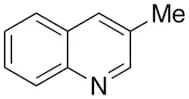
CAS:Controlled Product<p>Applications 2-methyl-1-[4-(trifluoromethyl)phenyl]propan-1-one (cas# 64436-58-4) is a useful research chemical.<br></p>Formula:C11H11OF3Color and Shape:NeatMolecular weight:216.193-Methylquinoline
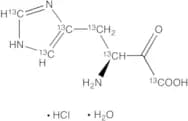
CAS:Controlled Product<p>Applications It can be degraded efficiently by the QL-degrading bacteria.<br>References Shukla, O., et al.: Microbios., 59, 47 (1989), Oh, Y; Biotechnol Bioeng 1994, 44, 533,,,<br></p>Formula:C10H9NColor and Shape:NeatMolecular weight:143.19L-Histidine Hydrochloride Hydrate (<5% D) (13C6, 97-99%)
CAS:Controlled ProductFormula:C6H9N3O2•(HCl)•(H2O)Purity:97-99%Color and Shape:NeatMolecular weight:161.1136461802S-Ethylglutathione
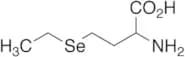
CAS:Controlled Product<p>Applications An inhibitor of the enzyme Glyoxalase 1.<br>References Vince, R. and Wadd, W.B.: Biochemical and Biophysical Res. Commun., 35, 5 (1969), Vegvari, A., et al.: ChemBioChem, 3(11), 1117 (2002)<br></p>Formula:C12H21N3O6SColor and Shape:NeatMolecular weight:335.38Seleno-D,L-ethionine
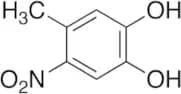
CAS:Controlled Product<p>Stability Hygroscopic<br>Applications Used as a substrate for methionine adenosyltransferase from rat liver.<br> Not a dangerous good if item is equal to or less than 1g/ml and there is less than 100g/ml in the package<br>References Lombardini, J.B., et al.: Biochem. Pharmacol., 32(3), 489 (1983), Kajander, E., et al.: Cancer Res., 46 (6), 2866 (1986), Kajander, E., et al.: Biochem. J., 267 (3), 767 (1990)<br></p>Formula:C6H13NO2SeColor and Shape:Off-White To Light BeigeMolecular weight:210.134-Methyl-5-nitrocatechol
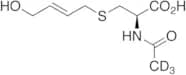
CAS:Controlled Product<p>Applications MNC is on the metabolic pathway for 2,4-Dinitotoluene degradation.<br>References Spangoord, R.J., et al.: App. and Environ. Microbiology, 57, 11, 3200 (1991)<br></p>Formula:C7H7NO4Color and Shape:NeatMolecular weight:169.13N-Acetyl-S-(4-hydroxy-2-buten-1-yl)-L-cysteine-d3
CAS:Controlled Product<p>Stability Hygroscopic<br>Applications A novel labelled metabolite of Butadiene monoepoxide (BMO), a mutagen and carcinogen compound.<br>References Cheng, X., et al.: Drug Metab. Dispos., 21, 121 (1993), Nieusma, J., et al.: Chem. Res. Toxicol., 10, 450 (1997),<br></p>Formula:C9D3H12NO4SColor and Shape:NeatMolecular weight:236.30323-(1,2,4-Triazol-1-yl)-L-alanine
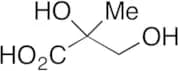
CAS:Controlled Product<p>Applications A metabolite common to all triazole fungicides: free triazole, 1,2,4-triazole (T), and its 2 conjugates: triazolylalanine (TA) and triazolylacetic acid (TAA).<br>References Hrudey, S., et al.: Water Sci. Technol., 20, 55 (1988), Froese, K., et al.: Water Res., 33, 1355 (1999), Hengel, M., et al.: J. Agric. Food Chem., 50, 3412 (2002),<br></p>Formula:C5H8N4O2Color and Shape:NeatMolecular weight:156.14α-Methylglyceric Acid
CAS:Controlled Product<p>Applications α-Methylglyceric Acid is a biogenic secondary organic aerosol used in air quality diagnosis.<br>References Ru, P., et. al.: Environ. Sci. Technol., 48, 8491 (2014); Napelenok, S.L., et. al.: Environ. Sci. Technol., 48, 464 (2014); Stone, E.A., et. al.: Environ. Chem., 9, 263 (2012)<br></p>Formula:C4H8O4Color and Shape:NeatMolecular weight:120.15-Benzyloxy-6-methoxyindole
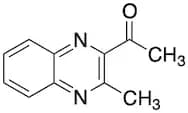
CAS:Controlled Product<p>Applications 5-Benzyloxy-6-methoxyindole (cas# 4790-04-9) is a compound useful in organic synthesis.<br>References McBride, C., et al.: Bioorg. Med. Chem. Lett., 16, 3789 (2006), Frost, J., et al.: J. Med. Chem., 51, 1904 (2008),<br></p>Formula:C16H15NO2Color and Shape:NeatMolecular weight:253.303-Acetyl-2-methylquinoxaline
CAS:<p>Applications 3-Acetyl-2-methylquinoxaline is an intermediate in the synthesis of Desoxyquinocetone which is a metabolite of the veterinay drug Quinocetone.<br>References Li, Y. et al.: J. AOAC Int., 91, 1494 (2008); Liu, Z.-Y. et al.: Anal. Bioanal. Chem., 396, 1259 (1271);<br></p>Formula:C11H10N2OColor and Shape:NeatMolecular weight:186.218-methyl-4-(2,4,6-trimethylbenzoyl)-1-oxa-4,8-diazaspiro[4.5]decane-3-carboxylic acid
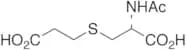
CAS:Purity:95.0%Molecular weight:346.427001953125N-Acetyl-S-(2-carboxyethyl)-L-cysteine Bis(dicyclohexylamine) Salt
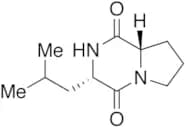
CAS:<p>Applications A metabolite of S-propylcysteine.<br>References Jones, A.R., et al.: Xenobiotica, 10, 827 (1980), 25) Ramu, K., et al.: Chem. Res. Toxicol., 8, 515 (1995), Krause, R., et al.: Drug Metab. Dispos., 25, 1013 (1997), Powley, M., et al.: Chem. Res. Toxicol., 16, 1448 (2003),<br></p>Formula:C12H23N·C8H13NO5SColor and Shape:NeatMolecular weight:597.89Cyclo(L-prolyl-L-leucyl)
CAS:Controlled Product<p>Applications Sorbicillin analog. A bioactive secondary metabolites from terrestrial Streptomyces species TN262.<br>References Ma, L. et al. : J. Anitibiot. 64, 645 (2011); Elleuch, L. et al.: Appl. Biochem. Biotech. 162, 579 (2010)<br></p>Formula:C11H18N2O2Color and Shape:NeatMolecular weight:210.272'-Amino-5'-(4-carboxyphenyl)-[1,1':3',1''-terphenyl]-4,4''-dicarboxylic acid
CAS:Purity:97%Molecular weight:453.45001220703125(5,6-Diphenyl-furo[2,3-d]pyrimidin-4-ylamino)-acetic acid
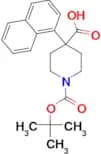
CAS:Purity:93.0%Molecular weight:345.3580017089844Boc-4-(naphthalen-1-yl)-piperidine-4-carboxylic acid
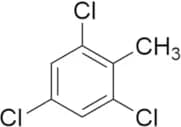
CAS:Purity:99.0%Molecular weight:355.43399047851561,3,5-Trichloro-2-methylbenzene
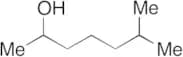
CAS:<p>Applications 1,3,5-Trichloro-2-methylbenzene can be used as reactant/reagent in hydrodechlorination process and catalysts for the production of 2,6-dichlorotoluene from polychlorotoluene-containing mixtures. Also, it is derived from 2,4,6-Trichlorobenzoic Acid (T774715), which is a possible degradation intermediate of Polychlorinated Biphenyls (PCBs) in contaminated soil, suggesting the occurrence of microbial transformation processes over time.<br> Not a dangerous good if item is equal to or less than 1g/ml and there is less than 100g/ml in the package<br>References Eichinger, W., et al.: PCT Int. Appl., WO 2001017932 A1 20010315 (2001); Stella, T., et al.: Sci Total Environ, 533, 177-186 (2015)<br></p>Formula:C7H5Cl3Color and Shape:White To Off-WhiteMolecular weight:195.476-Methyl-2-heptanol
CAS:Controlled Product<p>Applications 6-Methyl-2-heptanol is an intermediate used to prepare tri- and tetrasubstituted imidazoles as highly potent and specific ATP-mimetic inhibitors of p38 MAP kinase.<br>References Laufer, S., et al.: J. Med. Chem., 51, 4122 (2008)<br></p>Formula:C8H18OColor and Shape:NeatMolecular weight:130.23Thiodiglycolic Acid-d4
CAS:Controlled Product<p>Applications Thiodiglycolic Acid-d4 acts as a reagent for the synthesis of metabolites of S-carboxymethyl-L-cysteine and S-methyl-L-Cysteine and of some isotoically labelled (2H, 13C) analogs.<br>References Meese, C. O., et al.: Archiv der Pharmazie, 323, 957 (1990)<br></p>Formula:C4D4H2O4SColor and Shape:NeatMolecular weight:154.174-Methylhexanoic Acid
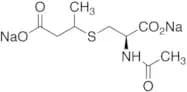
CAS:Controlled Product<p>Applications 4-Methylhexanoic Acid<br></p>Formula:C7H14O2Color and Shape:Colourless To Light YellowMolecular weight:130.18N-Acetyl-S-(3-carboxy-2-propyl)-L-cysteine Disodium Salt (Mixture of Diastereomers)
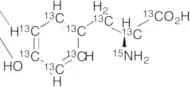
CAS:Controlled Product<p>Applications A metabolite of Crotonaldehyde.<br>References Gray, J.M., et al.: Xenobiotica, 1, 55 (1971), Chung, F., et al.: Mutat. Res., 424, 71 (1999), Smith, C., et al.: Food Chem. Toxicol., 38, 637 (2000), Pan, J., et al.: Chem. Res. Toxicol., 15, 367 (2002),<br></p>Formula:C9H13NO5S·2NaColor and Shape:NeatMolecular weight:293.25L-Tyrosine-13C9,15N
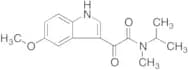
CAS:<p>Applications L-Tyrosine-13C9 ,15N is labelled analogue of L-Tyrosine (T899975), one of the 22 proteinogenic amino acids that are used by cells to synthesize proteins. L-Tyrosine is biologically converted from L-phenylalanine and is in turn is converted to L-DOPA and further converted into the neurotransmitters: dopamine, norepinephrine, and epinephrine.<br>References Rasmussen D.D. et al.: J. Clin. Endocrinol. Metab., 57, 760 (1983); Bagchi, S.P. et al.: Biochem. Pharmacol., 26, 900 (1977)<br></p>Formula:C9H1115NO3Color and Shape:White To Off-WhiteMolecular weight:191.11585-Methoxy-N-methyl-N-(1-methylethyl)-α-oxo-1H-indole-3-acetamide
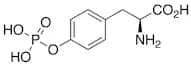
CAS:Controlled Product<p>Applications 5-Methoxy-N-methyl-N-(1-methylethyl)-α-oxo-1H-indole-3-acetamide is an intermediate used in the synthesis of 5-Methoxy-N-methyl-N-isopropyl Tryptamine (M271680), which is a psychedelic tryptamine related to N-methyl-N-isopropyltryptamine. 5-Methoxy MiPT potently inhibits the re-uptake of the monoamines serotonin and norepinephrine but does not affect dopamine re-uptake. 5-Methoxy MiPT has no effect on the release of monoamines from rat brain synaptosomes. This product is intended for forensic and research applications.<br>References Katagi, M., et al.: Jpn. J. Forensic Toxicol., 20, 303 (2002), Meatherall, R., et al.: J. Anal. Toxicol., 27, 313 (2003), Wilson, J., et al.: Forensic Sci. Int., 148, 31 (2005), Kamata, T., et al.: Drug Metab. Dispos., 34, 281 (2006),<br></p>Formula:C15H18N2O3Color and Shape:Beige To Light BrownMolecular weight:274.32O-Phospho-L-tyrosine
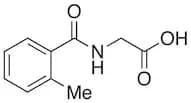
CAS:<p>Applications Useful in the study of tyrosine-phosphorylation, which has been linked with the malignant transformation of cells by some RNA tumour viruses.<br>References Sefton, B.M., et al.: Cell, 20, 807 (1980), Erikson, R., et al.: Perspect. Virol., 11, 93 (1981), Lee, E-S, et al.: J. Org. Chem., 59, 2086 (1994)<br></p>Formula:C9H12NO6PColor and Shape:NeatMolecular weight:261.172-Methyl Hippuric Acid
CAS:Controlled Product<p>Applications The main metabolite of o-xylene.<br>References Gregus, Z., et al.: Drug Metab. Dispos., 26, 1082 (1998), Gregus, Z., et al.: Xenobiotica, 29, 547 (1999), Gonzalez-Reche, L., et al.: Arch. Toxicol., 77, 80 (2003),<br></p>Formula:C10H11NO3Color and Shape:White To Off-WhiteMolecular weight:193.20(±)-Aspartic Acid
CAS:<p>Applications (±)-Aspartic Acid, is a non-essential amino acid found in food sources. Its conjugate base D-aspartate has potential use as a a therapeutic agent in the treatment of schizophrenia-related symptoms.<br>References Errico, F. et al.: J. Neurosci., 28, 10404 (2008); Denu, J.M. et al.: Biochem., 34, 3396 (1995); Chen, P.E. et al.: Mol. Pharmacol., 67, 1470 (2005);<br></p>Formula:C4H7NO4Color and Shape:NeatMolecular weight:133.108-benzyl-4-(3-fluorobenzoyl)-1-oxa-4,8-diazaspiro[4.5]decane-3-carboxylic acid
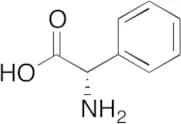
CAS:Purity:95.0%Molecular weight:398.4339904785156L-(+)-2-Phenylglycine
CAS:<p>Applications L-(+)-2-Phenylglycine is a derivative of Glycine (G615990), the smallest of all the amino acids, and is also used to treat schizophrenia, stroke, and benign prostatic hyperplasia. L-(+)-2-Phenylglycine is also used as an N-linked side chain of an SMTP (Stachybotrys microspora tripenyl phenols) congener, which was potent in enhancing plasminogen activation in S. microspora.<br>References Gusev, E., et al.: Cerebrovasc. Dis., 10, 49 (2000); Koide, H., et al.: J. Antibiot., 65, 91 (2012); Rosse, R., et al.: Clin. Neuropharmacol., 12, 416 (1989); Tuszynski, G., et al.: Lab. Invest., 70, 228 (1994)<br></p>Formula:C8H9NO2Color and Shape:Off White Crystalline PowderMolecular weight:151.1626trans-Glutaconic Acid
CAS:Controlled Product<p>Applications trans-Glutaconic Acid is used in the synthesis of iso and azokainoids which act as agonists for glutamate receptors. E-isomer of Glutaconic Acid (G596945).<br>References Felluga, F. et al.: Chirality, 24, 112 (2012); Wang, W. et al.: Bioorg. Med. Chem. Lett., 23, 1949 (2013);<br></p>Formula:C5H6O4Color and Shape:White To Light BrownMolecular weight:130.13,5-Dichloro-4-methylaniline
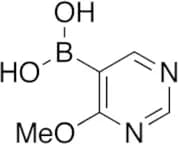
CAS:Controlled Product<p>Applications 3,5-Dichloro-4-methylaniline<br></p>Formula:C7H7Cl2NColor and Shape:NeatMolecular weight:176.043(4-Methoxypyrimidin-5-yl)boronic Acid
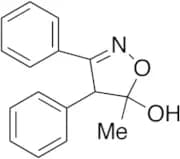
CAS:Controlled ProductFormula:C5H7BN2O3Color and Shape:NeatMolecular weight:153.9324,5-Dihydro-5-methyl-3,4-diphenyl-5-isoxazolol
CAS:Controlled Product<p>Applications 4,5-Dihydro-5-methyl-3,4-diphenyl-5-isoxazolol is an intermediate for the preparation of Valdecoxib.<br></p>Formula:C16H15NO2Color and Shape:NeatMolecular weight:253.30(S)-2-Amino-4-methylpentanol
CAS:Controlled Product<p>Applications (S)-2-Amino-4-methylpentanol is a starting material for the synthesis of aminopeptidase N and phospholipase A2 inhibitors.<br>References Fournié-Zaluski, M., et al.: J. Med. Chem., 35, 1259 (1992); Bennion, C., et al.: J. Med. Chem., 35, 2939 (1992)<br></p>Formula:C6H15NOColor and Shape:NeatMolecular weight:117.1893-Methyl-2,5-dihydrothiophene-1,1-dioxide
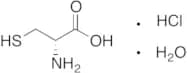
CAS:Controlled Product<p>Applications: 3-Methyl-2,5-dihydrothiophene-1,1-dioxide is a reagent used in Diels-Alder reactions of butadienylpyridinium bromides.<br>References Lee, S., et al.: J. Org. Chem., 62, 7812 (1997);<br></p>Formula:C5H8O2SColor and Shape:Off WhiteMolecular weight:132.181D-Cysteine Hydrochloride Monohydrate
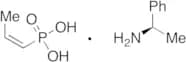
CAS:Controlled Product<p>Applications D-Cysteine Hydrochloride Monohydrate is used as a reactant in the expedient synthesis of electronically modified luciferins for bioluminescence imaging.<br>References McCutcheon, D., et al.: J. Am. Chem. Soc., 134, 7604 (2012);<br></p>Formula:C3H7NO2S·HCl·H2OColor and Shape:NeatMolecular weight:121.16+(36.46)+(18.02)cis-Propenylphosphonic Acid (R)-(+)-α-Methylbenzylamine Salt
CAS:Controlled Product<p>Applications cis-Propenylphosphonic Acid (R)-(+)-α-Methylbenzylamine Salt is used as a reagent in the microbial production of Fosfomycin (F727505); a compound used as an antibiotic in the treatment of urinary tract infections.<br>References Watanabe, M., et al.: Appl. Environ. Microb., 65, 1036 (1999); Itoh, N., et al.: Appl. Microbiol. Biot., 43, 394 (1995); White, R.F., et al.: Appl. Microbiol., 22, 55 (1971); Keating, G. et al.: Drugs, 73, 1951 (2013); Demir, T. et al.: Int. J. Infect. Dis., 17, e966 (2013)<br></p>Formula:C3H7O3P(C8H11N)Color and Shape:NeatMolecular weight:243.10243L-Valine
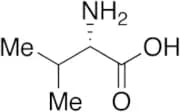
CAS:Controlled Product<p>Applications L-Valine is an essential amino acid and one of 20 proteinogenic amino acids. L-Valine cannot be manufactured by the body and must be acquired through diet or supplementation. L-valine is found in grains, dairy products, mushrooms, meats, peanuts and soy proteins. L-Valine has been used in studies to attenuate arrhythmias and induce hypotensive effects.<br>References Choi, C.W. et al.: Anim. Feed Sci. Technol., 102, 15 (2002); Kolarski, D. et al.: Krmiva, 30, 155 (1988); Oba, M. et al.: J. Dairy Sci., 93, 2044 (2010); Mitrega, K. et al.: Pharmacol. Res., 64, 218 (2011);<br></p>Formula:C5H11NO2Color and Shape:NeatMolecular weight:117.15Linoleoyl Carnitine
CAS:Controlled Product<p>Stability Hygroscopic, Temperature Sensitive<br>Applications A carnitine ester of unsaturated fatty acid. Used in the studies of fibroblasts in long-chain 3-hydroxyacyl-CoA dehydrogenase deficiency and fatty acid oxidation disorders.<br>References Gross R.W., et al.: J. Biol. Chem., 258, 5221 (1983),<br></p>Formula:C25H45NO4Color and Shape:NeatMolecular weight:423.634-(2-fluorobenzoyl)-8-propyl-1-oxa-4,8-diazaspiro[4.5]decane-3-carboxylic acid
CAS:Purity:95.0%Molecular weight:350.39001464843752-sec-Butyl-3-methoxypyrazine
CAS:Controlled Product<p>Applications A compound contents in musts and wines from Vitis vinifera variety Cabernet Sauvignon.<br>References Murray, K., et al.: J. Sci. Food Agric., 26, 973 (1975), Maga, J., et al.: Food Rev. Int., 8, 479 (1992), Allen, M., et al.: J. Agric. Food Chem., 43, 769 (1995),<br></p>Formula:C9H14N2OColor and Shape:NeatMolecular weight:166.228-benzyl-4-(2,2-dimethylpropanoyl)-1-oxa-4,8-diazaspiro[4.5]decane-3-carboxylic acid
CAS:Purity:95.0%Molecular weight:360.4540100097656


![4,4'-Methylenebis[2-chlorophenol]](/_next/image/?url=https%3A%2Fstatic.cymitquimica.com%2Fproducts%2FTR%2Fthumb-webp%2FM625390.webp&w=3840&q=75)
![(3aS,4S,6R,6aR)-6-(6-Amino-2-chloro-9H-purin-9-yl)-2,2-dimethyltetrahydrofuro[3,4-d][1,3]dioxole-4…](/_next/image/?url=https%3A%2Fstatic.cymitquimica.com%2Fproducts%2F10%2Fthumb-webp%2FF053671.webp&w=3840&q=75)

![2-methyl-1-[4-(trifluoromethyl)phenyl]propan-1-one](/_next/image/?url=https%3A%2Fstatic.cymitquimica.com%2Fproducts%2FTR%2Fthumb-webp%2FB489000.webp&w=3840&q=75)



![8-methyl-4-(2,4,6-trimethylbenzoyl)-1-oxa-4,8-diazaspiro[4.5]decane-3-carboxylic acid](/_next/image/?url=https%3A%2Fstatic.cymitquimica.com%2Fproducts%2F10%2Fthumb-webp%2FF525662.webp&w=3840&q=75)

![2'-Amino-5'-(4-carboxyphenyl)-[1,1':3',1''-terphenyl]-4,4''-dicarboxylic acid](/_next/image/?url=https%3A%2Fstatic.cymitquimica.com%2Fproducts%2F10%2Fthumb-webp%2FF621990.webp&w=3840&q=75)
![(5,6-Diphenyl-furo[2,3-d]pyrimidin-4-ylamino)-acetic acid](/_next/image/?url=https%3A%2Fstatic.cymitquimica.com%2Fproducts%2F10%2Fthumb-webp%2FF511717.webp&w=3840&q=75)





![8-benzyl-4-(3-fluorobenzoyl)-1-oxa-4,8-diazaspiro[4.5]decane-3-carboxylic acid](/_next/image/?url=https%3A%2Fstatic.cymitquimica.com%2Fproducts%2F10%2Fthumb-webp%2FF525805.webp&w=3840&q=75)





![4-(2-fluorobenzoyl)-8-propyl-1-oxa-4,8-diazaspiro[4.5]decane-3-carboxylic acid](/_next/image/?url=https%3A%2Fstatic.cymitquimica.com%2Fproducts%2F10%2Fthumb-webp%2FF525729.webp&w=3840&q=75)

![8-benzyl-4-(2,2-dimethylpropanoyl)-1-oxa-4,8-diazaspiro[4.5]decane-3-carboxylic acid](/_next/image/?url=https%3A%2Fstatic.cymitquimica.com%2Fproducts%2F10%2Fthumb-webp%2FF525790.webp&w=3840&q=75)