Amino Acids (AA)
Amino acids (AAs) are the fundamental building blocks of proteins, playing a crucial role in various biological processes. These organic compounds are essential for protein synthesis, metabolic pathways, and cell signaling. In this category, you will find a comprehensive range of amino acids, including essential, non-essential, and modified forms, which are vital for research in biochemistry, molecular biology, and nutritional sciences. At CymitQuimica, we provide high-quality amino acids to support your research and development needs, ensuring accuracy and reliability in your experimental outcomes.
Subcategories of "Amino Acids (AA)"
- Amino Acid Derivatives(3,955 products)
- Amino Acid and Amino Acid Related Compounds(3,465 products)
- Amino Acids with Oxygen or Sulphur(168 products)
- Boc- Amino Acids(351 products)
- Fmoc Amino Acids(1,710 products)
Found 38248 products of "Amino Acids (AA)"
Sort by
Purity (%)
0
100
|
0
|
50
|
90
|
95
|
100
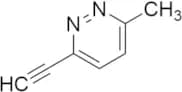
3-Ethynyl-6-methylpyridazine
CAS:Controlled ProductFormula:C7H6N2Color and Shape:NeatMolecular weight:118.1362-Ethyl-4-methylpentyl Acrylate
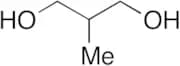
Controlled Product<p>Stability Temperature Sensitive, Light Sensitive<br>Applications 2-Ethyl-4-methylpentyl Acrylate<br></p>Formula:C11H20O2Color and Shape:NeatMolecular weight:184.282-Methyl-1,3-propandiol (b-Hydroxyisobutanol)
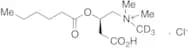
CAS:Controlled Product<p>Applications β-Hydroxyisobutanol is used as a reagent in the synthesis of pyrazolo[1,5-a]pyridinecarbonyl-substituted spirocyclic piperidine ketals as inhibitors of HCV protein NS4B and of hepatitis C viral replication and their lack of cytotoxicity in human cells.<br>References Tai, V.W.-F., et al.: Bioorg. Med. Chem. Lett., 24, 2288 (2014);<br></p>Formula:C4H10O2Color and Shape:ColourlessMolecular weight:90.121Hexanoyl-L-carnitine-(N-methyl-d3) Chloride
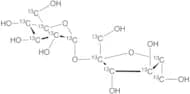
Controlled Product<p>Stability Hygroscopic<br>Applications Hexanoyl-L-carnitine-(N-methyl-d3) Chloride, is the labeled analogue of Hexanoyl-L-carnitine Hydrochloride (H294440), which is used as reactant in the synthesis of carnitine benzyl esters as prodrugs.<br>References Gong, X., et. al.: J. Chem. Res., 6, 327 (2008)<br></p>Formula:C13H23D3ClNO4Color and Shape:NeatMolecular weight:298.82Sucrose-13C6-glu-13C6-fru
CAS:Controlled Product<p>Applications Labeled Sucrose (S697000). Yuanzhen sugar is a polysaccharide polymer, containing a certain amount of fructooligosaccharides.<br>References Watanabe, T., et al.: Biosci. Biotech. Biochem., 72, 3167 (2008), You, Y., et al.: J. Agric. Food Chem., 57, 709 (2009),<br></p>Formula:C12H22O11Color and Shape:NeatMolecular weight:354.21,2-Cyclohexanedicarboxylic Acid Mono 4-Methyl-7-carboxy-heptyl Ester
CAS:<p>Stability Hygroscopic<br>Applications 1,2-Cyclohexanedicarboxylic Acid Mono 4-Methyl-7-carboxy-heptyl Ester is a possible metabolite of the di(isononyl)cyclohexane-1,2-dicarboxylate (DINCH) monoester (MINCH).<br>References Koch, H., et al.: Arch. Toxicol., 87, 799 (2013)<br></p>Formula:C17H28O6Color and Shape:Colourless To Light YellowMolecular weight:328.4Perfluoro(4-methyl-3,6-dioxaoct-7-ene)sulfonyl Fluoride
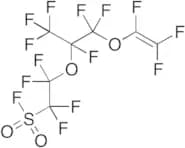
CAS:Controlled Product<p>Applications Perfluoro(4-methyl-3,6-dioxaoct-7-ene)sulfonyl Fluoride is used as a reagent in the synthesis of novel perfluorinated vinyl ether containing sulfonimide functionality which can be copolymered with tetrafluoroethylene to yield a novel perfluorinated copolymer.<br>References Zhu, S., et al.: Chinese J. Chem., 21, 921 (2003);<br></p>Formula:C7F14O4SColor and Shape:NeatMolecular weight:446.123'-Methylacetophenone
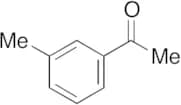
CAS:Controlled Product<p>Applications 3'-Methylacetophenone is a reagent that is used in the preparation of 3-aryl-6-phenylimidazo[2,1-b]thiazoles which has anticancer properties.<br>References Koppireddi, S., et al.: Bioorg. Med. Chem. Lett., 24, 5428 (2014);<br></p>Formula:C9H10OColor and Shape:NeatMolecular weight:134.18α-(2,3-Dimethylphenyl)-α-methyl-1H-imidazole-5-methanol
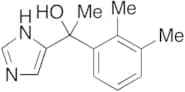
CAS:Controlled Product<p>Applications α-(2,3-Dimethylphenyl)-α-methyl-1H-imidazole-5-methanol is used as a reagent in the synthesis of Medetomidine (M203250); an α2-adrenergic agonist. Also a sedative and analgesic.<br>References Scheinin, M., et al.: Br. J. Clin. Pharmacol., 24, 443 (1987); Stenberg, D., et al.: J. Vet. Pharmacol. Ther., 10, 319 (1987); Virtanen, R., et al.: Eur. J. Pharmacol., 150, 9 (1988); Cullen, L.K., et al.: Br. Vet. J., 152, 519 (1996); Chen, W., et al.: Faming Zhuanli Shenqing. CN 101921234 A 20101222. Dec 22, 2010<br></p>Formula:C13H16N2OColor and Shape:Light Yellow To BeigeMolecular weight:216.284-Chloro-2-methylaniline
CAS:Controlled Product<p>Stability Air Sensitive<br>Applications 4-Chloro-2-methylaniline<br> Not a dangerous good if item is equal to or less than 1g/ml and there is less than 100g/ml in the package<br></p>Formula:C7H8ClNColor and Shape:Light BrownMolecular weight:141.60(4S)-4-Hydroxy-L-isoleucine
CAS:Controlled Product<p>Applications (4S)-4-Hydroxy-L-isoleucine is 4S isomer of 4-Hydroxyisoleucine, which is used as a treatment for type II diabetes.<br>References Martinez-Force, E., et al.: Biotechnol. Tech., 5, 209 (1991); Sauvaire, Y., et al.: Diabetes, 47, 206 (1998), Narender, T., et al.: Bioorg. Med. Chem. Lett., 2006, 16, 293 (2006);<br></p>Formula:C6H13NO3Color and Shape:NeatMolecular weight:147.17L-Valine-13C5,15N
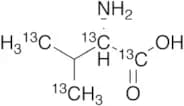
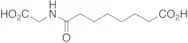
CAS:Controlled Product<p>Applications Labelled analogue of L-Vailne. L-Valine is an essential amino acid and one of 20 proteinogenic amino acids. L-Valine cannot be manufactured by the body and must be acquired through diet or supplementation. L-valine is found in grains, dairy products, mushrooms, meats, peanuts and soy proteins. L-Valine has been used in studies to attenuate arrhythmias and induce hypotensive effects.<br>References Choi, C.W. et al.: Anim. Feed Sci. Technol., 102, 15 (2002); Kolarski, D. et al.: Krmiva, 30, 155 (1988); Oba, M. et al.: J. Dairy Sci., 93, 2044 (2010); Mitrega, K. et al.: Pharmacol. Res., 64, 218 (2011);<br></p>Formula:C5H1115NO2Color and Shape:NeatMolecular weight:123.1Suberyl Glycine
CAS:Controlled Product<p>Applications Suberylglycine is one of the acylglycines, an important class of metabolites that have been used in the diagnosis of several inborn errors of metabolism (IEM).<br>References Costa, C., et al.: J. Pharmaceut. Biomed. Anal., 21, 1215 (2000), Garcia-Villoria, J., et al.: Clin. Biochem., 42, 2 (2009), Scalbert, A., et al.: Metabolomics, 5, 435 (2009),<br></p>Formula:C10H17NO5Color and Shape:Light Yellow To BrownMolecular weight:231.25L-Phenylalanine-13C6
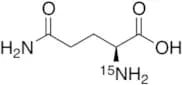
CAS:Controlled Product<p>Applications Labelled analogue of L-Phenylalanine, an essential amino acid. L-Phenylalanine is biologically converted into L-tyrosine, another one of the DNA-encoded amino acids, which in turn is converted to L-DOPA and further converted into dopamine, norepinephrine, and epinephrine. L-Phenylalanine is produced for medical, feed, and nutritional applications such as in the preparation of Aspartame.<br>References Hollunger, G. et al.: Acta Pharmacol. Toxicol., 34, 391 (1974); Bagchi, S.P. et al.: Biochem. Pharmacol., 26, 900 (1977);<br></p>Formula:C313C6H11NO2Color and Shape:White To Off-WhiteMolecular weight:171.15L-Glutamine-15N
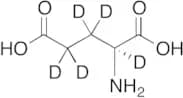
CAS:<p>Applications L-Glutamine (Alpha-15n, 98%) (cas# 80143-57-3) is a useful research chemical.<br></p>Formula:C5H1015NNO3Color and Shape:NeatMolecular weight:147.138L-Glutamic Acid-d5
CAS:Controlled Product<p>Applications L-Glutamic Acid-d5 is an non-essential amino acid. Its salt form (glutamate) is an important neurotransmitter that plays a key role in long-term potentiation and is important for learning and memory. It is also a key molecule in cellular metabolism.<br>References McEntee, W., et al.: Psychopharmacology, 111, 391 (1993), Manev, H., et al.: Mol. Pharmacol., 36, 106 (1989)<br></p>Formula:C52H5H4NO4Color and Shape:NeatMolecular weight:152.16Reboxetine-d5 Mesylate
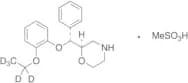
CAS:Controlled ProductFormula:C20H22D5NO6SColor and Shape:Off White SolidMolecular weight:414.53N-des(4-Chlorobenzoyl) Rebamipide
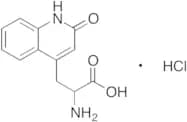
CAS:Formula:C12H13ClN2O3Color and Shape:White To Off-WhiteMolecular weight:268.7N-Acetyl-S-(2-carboxyethyl)-L-cysteine Bis(dicyclohexylamine) Salt
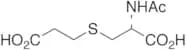
CAS:<p>Applications A metabolite of S-propylcysteine.<br>References Jones, A.R., et al.: Xenobiotica, 10, 827 (1980), 25) Ramu, K., et al.: Chem. Res. Toxicol., 8, 515 (1995), Krause, R., et al.: Drug Metab. Dispos., 25, 1013 (1997), Powley, M., et al.: Chem. Res. Toxicol., 16, 1448 (2003),<br></p>Formula:C12H23N·C8H13NO5SColor and Shape:NeatMolecular weight:597.89Thiodiglycolic Acid-d4
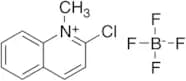
CAS:Controlled Product<p>Applications Thiodiglycolic Acid-d4 acts as a reagent for the synthesis of metabolites of S-carboxymethyl-L-cysteine and S-methyl-L-Cysteine and of some isotoically labelled (2H, 13C) analogs.<br>References Meese, C. O., et al.: Archiv der Pharmazie, 323, 957 (1990)<br></p>Formula:C4D4H2O4SColor and Shape:NeatMolecular weight:154.172-Chloro-1-methylquinolinium Tetrafluoroborate
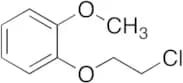
CAS:Controlled Product<p>Applications 2-Chloro-1-methylquinolinium tetrafluoroborate (cas# 16843-24-6) is a useful research chemical.<br></p>Formula:C10H9ClN·BF4Color and Shape:NeatMolecular weight:265.441-(2-Chloroethoxy)-2-methoxybenzene
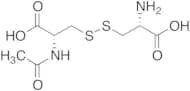
CAS:Controlled Product<p>Applications 1-(2-Chloroethoxy)-2-methoxy benzene, is an impurity of Carvedilol (C184625), a nonselective β-adrenergic blocker with α1-blocking activity. Carvedilol is an antihypertensive used in the treatment of congestive heart failure.<br>References Hirohashi, M., et al.: Arzneim.-Forsch., 40, 735 (1990); Packer, M., et al.: N. Engl. J. Med., 334, 1349 (1996);<br></p>Formula:C9H11ClO2Color and Shape:NeatMolecular weight:186.64N-Acetyl-L-cystine
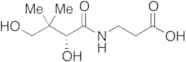
CAS:Controlled Product<p>Applications N-Acetyl-L-cystine is an antioxidant, used in the treatment of influenza A virus pandemic (1). N-Acetyl-L-cystine promotes fertilization by reducing disulfide bonds in zona pellucida of mouse (2).Releases N-Acetyl-L-cysteine, which is an antidote for paracetamol poisoning.<br>References (1) Zhang, R., et al.: (2014) Int. Immunopharmacol. 22: 1-8 (2) Takeo, T., et al.: Biol Reprod. (2015) 92: 1-7<br></p>Formula:C8H14N2O5S2Color and Shape:NeatMolecular weight:282.34Pantothenic Acid (Technical Grade, Contains Lactone)
CAS:Controlled Product<p>Stability Hygroscopic<br>Applications Pantothenic Acid is a member of the B complex vitamins; essential vitamin for the biosynthesis of coenzyme A in mammalian cells. Occurs ubiquitously in all animal and plant tissue. The richest common source is liver, but jelly of the queen bee contains 6 times as much as liver. Rice bran and molasses are other good sources.<br>References Gardner, P., et al.: Food Chem., 68, 471 (2000); Ou, B., et al.: J. Agric. Food Chem., 50, 2772 (2002); Bahorun, T., et al.: J. Sci. Food Agric., 84, 1553 (2004)<br></p>Formula:C9H17NO5Color and Shape:NeatMolecular weight:219.24L-Phenylalanine-d7
CAS:Controlled Product<p>Applications Labelled analogue of L-Phenylalanine, an essential amino acid.<br>References Hollunger, G. et al.: Acta Pharmacol. Toxicol., 34, 391 (1974); Bagchi, S.P. et al.: Biochem. Pharmacol., 26, 900 (1977);<br></p>Formula:C9H4D7NO2Color and Shape:NeatMolecular weight:172.23(3R)-Tetrahydrofuran-3-yl 4-Methylbenzenesulfonate
CAS:Controlled Product<p>Applications (3R)-Tetrahydrofuran-3-yl 4-Methylbenzenesulfonate is derived from (R)-(-)-3-Hydroxytetrahydrofuran (H957760), which is a versatile chemical reactant used in the synthesis of pharmaceutical agents.<br>References Hrapchak, M., et al.: J. Labelled. Comp. Radiopharm., 57, 687 (2014);<br></p>Formula:C11H14O4SColor and Shape:White To Off-WhiteMolecular weight:242.29Butyrylglycine
CAS:<p>Applications Butyrylglycine is one of the acylglycines, an important class of metabolites that have been used in the diagnosis of several inborn errors of metabolism (IEM).<br>References Costa, C., et al.: J. Pharmaceut. Biomed. Anal., 21, 1215 (2000), Garcia-Villoria, J., et al.: Clin. Biochem., 42, 2 (2009), Scalbert, A., et al.: Metabolomics, 5, 435 (2009),<br></p>Formula:C6H11NO3Color and Shape:NeatMolecular weight:145.16D-Aspartic Acid
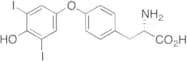
CAS:<p>Applications A non-essential amino acid found in food sources and dietary supplements. Its conjugate base D-aspartate has potential use as a a therapeutic agent in the treatment of schizophrenia-related symptoms.<br>References Errico, F. et al.: J. Neurosci., 28, 10404 (2008); Denu, J.M. et al.: Biochem., 34, 3396 (1995); Chen, P.E. et al.: Mol. Pharmacol., 67, 1470 (2005);<br></p>Formula:C4H7NO4Color and Shape:NeatMolecular weight:133.103’,5’-Diiodo-L-thyronine
CAS:Controlled Product<p>Applications 3’,5’-Diiodo-L-thyronine is a thyroid hormone that has been shown to increase malic enzyme activity, and the activity of glucose-6-phosphate dehydrogenase in teleost Anabas testudineus. Thus, showing short term effect on lipid metabolism.<br>References Davey, K.G.: Insect Biochem. Mol. Bio., 30, 877 (2000); Shameena, B., et. al.: Endocr. Res., 26, 431 (2000)<br></p>Formula:C15H13I2NO4Color and Shape:NeatMolecular weight:525.081-Chloro-2-methylpropene
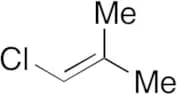
CAS:Controlled Product<p>Stability Volatile<br>Applications 1-Chloro-2-methylpropene is a reagent in the synthesis of pyrrolyl and indolyl diketo acids and esters as nucleotide-competitive non-nucleoside inhibitors of terminal deoxynucleotidyl transferase.<br> Not a dangerous good if item is equal to or less than 1g/ml and there is less than 100g/ml in the package<br>References Costi, R., et al.: J. Med. Chem., 56, 7431 (2013);<br></p>Formula:C4H7ClColor and Shape:NeatMolecular weight:90.55Caerulein (>85%)
CAS:Controlled Product<p>Applications Caerulein is a ten amino acid oligopeptide that stimulates smooth muscle and increases digestive secretions. It is similar in action and composition to cholecystokinin. It stimulates gastric, biliary, and pancreatic secretion; and certain smooth muscle. It is used in paralytic ileus and as diagnostic aid in pancreatic malfunction. It is used to induce pancreatitis in experimental animal models.<br>References Anastasi,E., et al.: Ep., 23, 699 (1997); De Caro, G., et al.: Br. J. Pharmac Chemother., 33, 48 (1968)<br></p>Formula:C58H73N13O21S2Purity:~90%Color and Shape:Off-WhiteMolecular weight:1352.40Fmoc-n-me-lys(boc)-oh
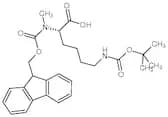
CAS:Controlled Product<p>Applications Fmoc-n-me-lys(boc)-oh<br></p>Formula:C27H34N2O6Color and Shape:NeatMolecular weight:482.569(2R)-3-Amino-2-fluoropropanoic Acid-13C3
CAS:Controlled ProductFormula:C3H6FNO2Color and Shape:NeatMolecular weight:110.06D,L-Cystathionine-d4
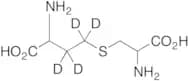
CAS:Controlled Product<p>Applications Isotope labelled Intermediate for transsulfuration whereby a mammal transfers the sulfur of methionine via homocysteine to cysteine.<br>References Thompson, J.W., et al.: J. Biol. Chem., 266, 17011 (1991), Yoshida, Y., et al.: Microbiol., 148, 3961 (2002), Jiracek, J., et al.: J. Med. Chem., 49, 3982 (2006),<br></p>Formula:C72H4H10N2O4SColor and Shape:White To Light BrownMolecular weight:226.29(R)-3-Carboxy-2-hydroxy-N,N,N-trimethylpropan-1-aminium Chloride
CAS:Controlled Product<p>Stability Hygroscopic<br>Applications (R)-3-Carboxy-2-hydroxy-N,N,N-trimethylpropan-1-aminium chloride is an important co-factor of mammalian mitochondrial energy metabolism. It is also a good active ingredient for dry-skin.<br>References Geier, David A., et al.: Neurochem. Res., 38(11), 2336-2341 (2013);Tanno, Osamu, et al.: Fragrance J., 33(8), 82-85 (2005);<br></p>Formula:C7H16NO3·ClColor and Shape:White To Off-WhiteMolecular weight:197.660L-3-Benzothienylalanine
CAS:Controlled Product<p>Applications L-3-Benzothienylalanine<br></p>Formula:C11H11NO2SColor and Shape:NeatMolecular weight:221.28Ethyl 3-(dimethylamino)-2-(2,4,5-trifluoro-3-methoxybenzoyl)acrylate
CAS:Formula:C15H16F3NO4Color and Shape:NeatMolecular weight:331.287L-Aspartic Acid
CAS:<p>Applications L-Aspartic Acid is a non-essential amino acid found in food sources. L-Aspartic Acid is one of the 20 proteinogenic amino acids; the building blocks of proteins. Its conjugate base L-aspartate is an excitatory neurotransmitter in the central nervous system.<br>References Ager, D.J. et al.: J. Mol. Catal. Enzym., 11, 199 (2001); Velisek, J. et al.: Cze. J. Food. Sci., 24, 1 (2006); Nagahama, M. et al.: Cell Tiss. Res., 318, 483 (2004);<br></p>Formula:C4H7NO4Color and Shape:WhiteMolecular weight:133.10N-Boc-propargylamine
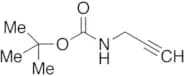
CAS:Controlled Product<p>Applications N-Boc-propargylamine is used in the preparation of triazolobenzylidene-thiazolopyrimidines which act as CDC25 phosphatase inhibitors. Also used in the synthesis of β-glucan polysaccharide analogs.<br>References Duval, R. et al.: J. Comb. Chem., 11, 947 (2009); Tanaka, H. et al.: Tetrahedron Lett., 53, 4104 (2012);<br></p>Formula:C8H13NO2Color and Shape:NeatMolecular weight:155.2L-Leucic Acid
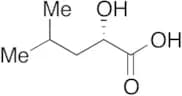
CAS:Controlled Product<p>Applications L-Leucic Acid is a reagent in the synthesis of cryptophycins based macrocyclic depsipeptides which are used as tubulin inhibitors.<br>References Kumar, A., et al.: Eur. J. Med. Chem., 93, 55 (2015)<br></p>Formula:C6H12O3Color and Shape:NeatMolecular weight:132.16S-Phenylmercapturic Acid-d5
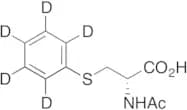
CAS:Controlled Product<p>Applications S-Phenylmercapturic Acid-d5 is the labelled analogue of S-Phenylmercapturic Acid (P335600), an important metabolite of Benzene.<br>References Qu, Q., et al.: Am. J. Ind. Med., 37, 522 (2000); Ghittori, S., et al.: Int. Arch. Occup. Environ. Health, 67, 195 (1995);<br></p>Formula:C11H8D5NO3SColor and Shape:NeatMolecular weight:244.322,6-Diaminopimelic Acid
CAS:Controlled Product<p>Applications 2,6-Diaminopimelic Acid is useful in biological studies involving amino acids and amino sugars as molecular indicators of the origins of organic matter in buried tephra soils.<br>References Hobara, S., et al.: Geoderma, 373, 114449 (2020)<br></p>Formula:C7H14N2O4Color and Shape:NeatMolecular weight:190.20Biocytin
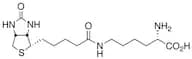
CAS:<p>Applications Useful for the synthesis of Biocytin containing peptides to study the mechanism of reactions catalyzed by biotin - containing enzymes.<br>References Bodanszky, M., and Fagan, D.T.: J. Am. Chem. Soc., 99, 235 (1977)<br></p>Formula:C16H28N4O4SColor and Shape:White To Off-WhiteMolecular weight:372.48L-Lysine-2,6,6-d3 HCl
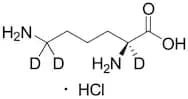
CAS:Controlled Product<p>Applications L-Lysine-2,6,6-d3 HCl is a useful isotopically labeled compound of L-Lysine HydrochlorideDISCONTINUED PLEASE SEE L486915 (L468923)<br></p>Formula:C6D3H11N2O2·HClColor and Shape:NeatMolecular weight:185.667N-Methyl-N-trimethylsilylacetamide
CAS:Controlled Product<p>Applications N-Methyl-N-trimethylsilylacetamide, is a powerful silylating agent for polar compounds.<br> Not a dangerous good if item is equal to or less than 1g/ml and there is less than 100g/ml in the package<br>References Melanie MacGregor-Ramiasa et. al; Acta biomaterialia, 56, undefined (2017-2-25)<br></p>Formula:C6H15NOSiPurity:>85%Color and Shape:NeatMolecular weight:145.276-Hydroxy-L-DOPA
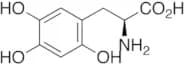
CAS:Controlled Product<p>Impurity Levodopa EP Impurity A; Levodopa USP Related Compound A<br>Stability Hygroscopic<br>Applications 6-Hydroxy-L-DOPA (Levodopa EP Impurity A; Levodopa USP Related Compound A) is the 6-hydroxy derivative of the amino acid L-DOPA (D533751) with neurotoxic properties. Studies show that exogenously administered 6-Hydroxy-L-DOPA is biotransformed by amino acid decarboxylase to the highly potent and catecholamine-selective neurotoxin, 6-Hydroxydopamine. The treatment of 6-Hydroxy-L-DOPA in rats resulted in the stimulation of acetylcholinesterase.<br>References Jaim-Etcheverry, G. et al.: Brain Res., 100, 699 (1975); Kostrzewa, R.M. et al.: Amino Acids, 14, 175 (1998); Berthet, A. et al.: J. Neurosci., 29, 4829 (2009);<br></p>Formula:C9H11NO5Color and Shape:Brown To BlackMolecular weight:213.19L-Tryptophan-d3
CAS:Controlled Product<p>Applications L-Tryptophan-d3 is a deuterium labelled amino acid, which is a protein building block. The unlabelled L-Tryptophan (T947210) is also available.<br>References Goze, C., et al.: Eur. J. Pharmacol., 643, 153 (2010), Bhandare, P., et al.: J. Chem. Pharm. Res., 2, 372 (2010),<br></p>Formula:C11D3H9N2O2Color and Shape:NeatMolecular weight:207.24N-Methyl-1-propanamine
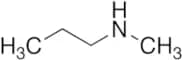
CAS:<p>Applications A naturally occurring nitrostable secondary amine found in tabacco smoke condensate.<br>References Singer, G.M. et al.: J. Agric. Food Chem. 24, 553(1976); Bush, L. P. et al.: Can. J. Plant Sci. 50, 289(1970).<br></p>Formula:C4H11NColor and Shape:ColourlessMolecular weight:73.145'-O-Methylthymidine
CAS:Controlled Product<p>Applications 5'-O-Methylthymidine (cas# 14504-60-0) is a useful research chemical.<br></p>Formula:C11H16N2O5Color and Shape:White To Off-WhiteMolecular weight:256.26