Amino Acids (AA)
Amino acids (AAs) are the fundamental building blocks of proteins, playing a crucial role in various biological processes. These organic compounds are essential for protein synthesis, metabolic pathways, and cell signaling. In this category, you will find a comprehensive range of amino acids, including essential, non-essential, and modified forms, which are vital for research in biochemistry, molecular biology, and nutritional sciences. At CymitQuimica, we provide high-quality amino acids to support your research and development needs, ensuring accuracy and reliability in your experimental outcomes.
Subcategories of "Amino Acids (AA)"
- Amino Acid Derivatives(3,955 products)
- Amino Acid and Amino Acid Related Compounds(3,465 products)
- Amino Acids with Oxygen or Sulphur(168 products)
- Boc- Amino Acids(351 products)
- Fmoc Amino Acids(1,710 products)
Found 38248 products of "Amino Acids (AA)"
Sort by
Purity (%)
0
100
|
0
|
50
|
90
|
95
|
100
1-BENZYL-4-(BENZYLOXY)PYRROLIDINE-2-CARBOXYLIC ACID HCL
CAS:Purity:95.0%Color and Shape:SolidMolecular weight:347.83999633789062-(2,2-Dimethyl-3-oxo-piperazin-1-yl)-propionic acid
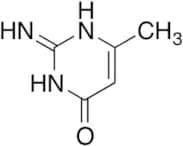
CAS:Formula:C9H16N2O3Purity:98%Color and Shape:SolidMolecular weight:200.2382-Amino-6-methylpyrimidin-4(3H)-one
CAS:Controlled Product<p>Applications 2-Amino-6-methylpyrimidin-4(3H)-one (cas# 3977-29-5) is a useful research chemical.<br></p>Formula:C5H7N3OColor and Shape:NeatMolecular weight:125.13Bis(4-methylpentyl) Phthalate
CAS:Controlled Product<p>Applications Bis(4-methylpentyl) Phthalate, is a phthalic acid ester (PAEs), widely used in many consumable products with potential carcinogenic properties. It is also the product of the fermentation of Streptomyces regnesis 099.<br></p>Formula:C20H30O4Color and Shape:ColourlessMolecular weight:334.45Oleoyl-L-carnitine
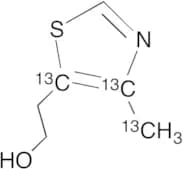
CAS:Controlled Product<p>Stability Hygroscopic<br>Applications Oleoyl-L-carnitine is a long-chain fatty ester of carnitine which is accumulated and released into the circulation, in fatty-acid oxidation defects. Pattern of Oleoyl-L-carnitine can be diagnostic for a number of ß-oxidation defects.<br>References Adams, S., et al.: J. Nutrition, 139, 1073 (2009); Ventura, F., et al.: Clinica Chimica Acta, 281, 1 (1999); Pourfarzam, M., et al.: Clinical Chem,, 40, 2267 (1994); Schaefer, J., et al.: Pediatric Res., 37, 354 (1995)<br></p>Formula:C25H47NO4Color and Shape:NeatMolecular weight:425.644-Methyl-5-thiazoleethanol-13C3 (~90%)
CAS:Controlled Product<p>Applications 4-Methyl-5-thiazoleethanol-13C3 is used in the synthesis of novel HldE kinase inhibitors used against gram negative bacteria. Also used in the synthesis of potential antimalarial agents from bis-thiazolium analogues. Refer to M330235.<br> Not a dangerous good if item is equal to or less than 1g/ml and there is less than 100g/ml in the package<br>References Desroy, N. et al.: J. Med. CHem., 56, 1418 (2013); Caldarelli, S. et al.: J. Med. CHem., 496, (2013);<br></p>Formula:C3C3H9NOSPurity:~90%Color and Shape:NeatMolecular weight:146.185N-Methyl-N-trimethylsilylacetamide
CAS:Controlled Product<p>Applications N-Methyl-N-trimethylsilylacetamide, is a powerful silylating agent for polar compounds.<br> Not a dangerous good if item is equal to or less than 1g/ml and there is less than 100g/ml in the package<br>References Melanie MacGregor-Ramiasa et. al; Acta biomaterialia, 56, undefined (2017-2-25)<br></p>Formula:C6H15NOSiPurity:>85%Color and Shape:NeatMolecular weight:145.272-Methyl Hippuric Acid
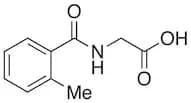
CAS:Controlled Product<p>Applications The main metabolite of o-xylene.<br>References Gregus, Z., et al.: Drug Metab. Dispos., 26, 1082 (1998), Gregus, Z., et al.: Xenobiotica, 29, 547 (1999), Gonzalez-Reche, L., et al.: Arch. Toxicol., 77, 80 (2003),<br></p>Formula:C10H11NO3Color and Shape:White To Off-WhiteMolecular weight:193.208-benzyl-4-(2-methylbutanoyl)-1-oxa-4,8-diazaspiro[4.5]decane-3-carboxylic acid
CAS:Purity:95.0%Molecular weight:360.45401000976564-Methyl-d3-catechol
CAS:Controlled Product<p>Applications 4-Methyl-d3-catechol (CAS# 83719-41-9) is a useful isotopically labeled research compound.<br></p>Formula:C72H3H5O2Color and Shape:NeatMolecular weight:127.166-(tert-Butoxycarbonyl)-2-(1H-pyrrol-1-yl)-4,5,6,7-tetrahydrothieno[2,3-c]pyridine-3-carboxylic acid
CAS:Purity:97.0%Molecular weight:348.42001342773447-(Cyclopropylamino)thieno[3,2-b]pyridine-3,6-dicarboxylic acid hydrochloride
CAS:Purity:98%Molecular weight:314.7399902343754-bromo-2-(3-hydroxyazetidin-1-yl)benzo[d]thiazole-6-carboxylic acid
CAS:Purity:95.0%Molecular weight:329.1700134277344(2R)-2-Hydroxyglutaric Acid Disodium Salt
CAS:<p>Stability Hygroscopic<br>Applications A potential inhibitor of glutamate carboxypeptidase.<br>References Wolcott, T.G., et al.: Biochem. Biophys. Res. Commun., 57, 709 (1974), Knowles, P.F., et al.: Eur. J. Biochem., 114, 139 (1981),<br></p>Formula:C5H6O5·2NaColor and Shape:NeatMolecular weight:192.082-Methylpropylboronic Acid
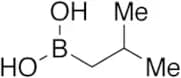
CAS:Controlled Product<p>Applications 2-Methylpropylboronic Acid is used in the preparation of isocoumarin analogs as inhibitors of γ-secretase cleavage. Also used in the preparation of peptide boronc acid.<br>References Peuchmaur, M. et al.: Bioorg. Med. Chem. Lett., 21, 1018 (2013); Roemmele, R. et al.: Org. Proc. Res. Devel., 17, 422 (2013);<br></p>Formula:C4H11BO2Color and Shape:NeatMolecular weight:101.943-(4-Methylphenyl)-3-(trifluoromethyl)diaziridine
CAS:Controlled Product<p>Applications 3-(4-Methylphenyl)-3-(trifluoromethyl)diaziridine (cas# 87736-82-1) is a compound useful in organic synthesis.<br></p>Formula:C9H9F3N2Color and Shape:NeatMolecular weight:202.18Ac-Glu-OMe
CAS:Controlled Product<p>Applications Ac-Glu-OMe (cas# 17015-15-5) is a useful research chemical.<br></p>Formula:C8H13NO5Color and Shape:NeatMolecular weight:203.19L-Tyrosine-13C9,15N
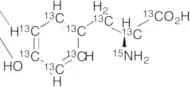
CAS:<p>Applications L-Tyrosine-13C9 ,15N is labelled analogue of L-Tyrosine (T899975), one of the 22 proteinogenic amino acids that are used by cells to synthesize proteins. L-Tyrosine is biologically converted from L-phenylalanine and is in turn is converted to L-DOPA and further converted into the neurotransmitters: dopamine, norepinephrine, and epinephrine.<br>References Rasmussen D.D. et al.: J. Clin. Endocrinol. Metab., 57, 760 (1983); Bagchi, S.P. et al.: Biochem. Pharmacol., 26, 900 (1977)<br></p>Formula:C9H1115NO3Color and Shape:White To Off-WhiteMolecular weight:191.11584-{[(Pyridin-3-ylmethyl)amino]methyl}benzoic acid
CAS:Formula:C14H14N2O2Purity:98%Color and Shape:SolidMolecular weight:242.2783-[(4,6-Dimethylpyrimidin-2-yl)amino]benzoic acid
CAS:Formula:C13H13N3O2Purity:95.0%Color and Shape:SolidMolecular weight:243.2664-(2-phenylbutanoyl)-8-propyl-1-oxa-4,8-diazaspiro[4.5]decane-3-carboxylic acid
CAS:Purity:95.0%Molecular weight:374.48098754882815-Methyl-2-furanmethanol
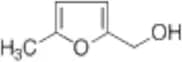
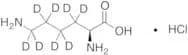
CAS:Controlled Product<p>Stability Hygroscopic<br>Applications 5-Methyl-2-furanmethanol (cas# 3857-25-8) is a compound useful in organic synthesis.<br></p>Formula:C6H8O2Color and Shape:NeatMolecular weight:112.13L-Lysine-3,3,4,4,5,5,6,6-d8 Hydrochloride
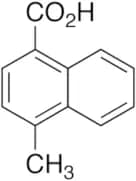
CAS:Controlled Product<p>Applications L-Lysine-3,3,4,4,5,5,6,6-d8 Dihydrochloride, is the labelled L-Lysine, a naturally occurring amino acid which is used in the labelling of human bone marrow mesenchymal stem cells for analysis.<br>References Rocha, B. et al.: J. Prot. Res., 11, 5350 (2012); Kumar, D. et al.: Polym. J., 45, 160 (2013);<br></p>Formula:C6D8H6N2O2·ClHColor and Shape:NeatMolecular weight:154.2436464-Methyl-1-naphthoic Acid
CAS:<p>Applications Naphthalenecarboxylic acid derivatives known for their antidote activity against urea and other herbicides.<br></p>Formula:C12H10O2Color and Shape:NeatMolecular weight:186.215-Hydroxy-N-methylprotriptyline
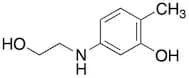
CAS:Controlled Product<p>Impurity Cyclobenzaprine USP Related Compound A<br>Applications 5-Hydroxy-N-methylprotriptyline acts as a reducing agent in chemical reactions. Cyclobenzaprine USP Related Compound A.<br>References Gribble, G. et al.: Synthesis., 3, 172 (1977);<br></p>Formula:C20H23NOColor and Shape:NeatMolecular weight:293.405-((2-Hydroxyethyl)amino)-2-methylphenol
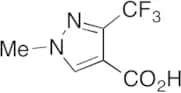
CAS:Controlled Product<p>Applications 5-((2-Hydroxyethyl)amino)-2-methylphenol (cas# 55302-96-0) is a useful research chemical.<br></p>Formula:C9H13NO2Color and Shape:NeatMolecular weight:167.23-(Trifluoromethyl)-1-methyl-1H-pyrazole-4-carboxylic Acid
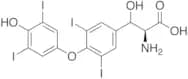
CAS:Controlled Product<p>Applications 3-(Trifluoromethyl)-1-methyl-1H-pyrazole-4-carboxylic Acid is used in the synthesis of diaryl ether inhibitors of Toxoplasma gondii enoyl reductase. Also used in the synthesis of 4-carboxamide derivatives acting as antifungal agents.<br>References Cheng, G. et al.: Bioorg. Med. Chem. Lett., 23, 2035 (2013); Wu, Z. et al.: Molecules, 17, 14205 (2012);<br></p>Formula:C6H5F3N2O2Color and Shape:NeatMolecular weight:194.11β-Hydroxy Thyroxine (>90%)
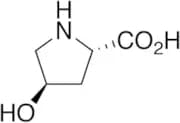
CAS:Controlled Product<p>Impurity Levothyroxine beta-Hydroxy Impurity / Levothyroxine beta-Hydroxy T4 Impurity<br>Applications It has been prepared for testing as possible antithyroid. It showed some thyromimetic activity.<br>References Wawzone, S., et al.: J. Med. Chem., 6, 442 (1963),<br></p>Formula:C15H11I4NO5Purity:>90%Color and Shape:NeatMolecular weight:792.87trans-4-Hydroxy-L-proline
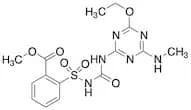
CAS:Controlled Product<p>Applications A natural constituent of animal structural proteins such as collagen and elastin. Several microorganisms producing proline trans-4- and cis-3-hydroxylase were discovered and these enzymes were applied to the industrial production of trans-4- and cis-3-hydroxy-L-proline.<br>References Langmaier, F. et al.: Int. J. Cosm. Sci., 24, 273 (2002); Lawrence, C., et al.: Biochem. J., 313, 185 (1996); Mori, H., et al.: J. Bacteriol.; 179, 5677 (1997); Clifton, I., et al.: Eur. J. Biochem., 268, 6625 (2001);<br></p>Formula:C5H9NO3Color and Shape:NeatMolecular weight:131.13Ethametsulfuron-methyl
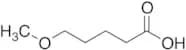
CAS:Controlled Product<p>Applications Ethametsulfuron-methyl is a regulator of the early steps of complement activation on mucosal surfaces. It can be used in combination treatment of ohmic heating with various essential oil components for inactivation of food-borne pathogens in buffered peptone water and salsa.<br>References Kim, S. S., et al.: Food Control, 80, 29 (2017); Reichhardt, M. P., et al.: Front Immunol, 7, 85 (2016)<br></p>Formula:C15H18N6O6SColor and Shape:NeatMolecular weight:410.405-methoxypentanoic acid
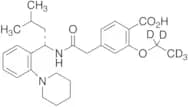
CAS:Controlled Product<p>Applications 5-methoxypentanoic acid (cas# 70160-05-3) is a useful research chemical.<br></p>Formula:C6H12O3Color and Shape:ColourlessMolecular weight:132.15Repaglinide-ethyl-d5
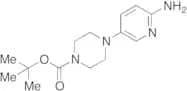
CAS:Controlled Product<p>Applications Deuterated Repaglinide, a non-sulfonylurea oral hypoglycemic agent which is used as an antidiabetic.<br>References Wolffenbuttel, B.H.R., et al.: Eur. J. Clin. Pharmacol., 45, 113 (1993), Ampudia-Blasco, F.J., et al.: Diabetologia, 37, 703 (1994),<br></p>Formula:C272H5H31N2O4Color and Shape:White SolidMolecular weight:457.621-Boc-4-(6-aminopyridin-3-yl)piperazine
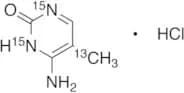
CAS:Controlled Product<p>Applications 1-Boc-4-(6-aminopyridin-3-yl)piperazine is used to prepare pyrido[2,3-d]pyrimidin-7-ones as selective inhibitors of cyclin-dependent kinases 4 and 6.<br>References Toogood, P., et al.: J. Med. Chem., 48, 2388 (2005); Cho, Y., et al.: J. Med. Chem., 53, 7938 (2010)<br></p>Formula:C14H22N4O2Color and Shape:NeatMolecular weight:278.355-Methyl Cytosine-13C,15N2 Hydrochloride
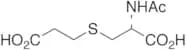
CAS:<p>Applications A labelled derivative of Dibarbituric acid.<br>References Hitchings, G.H., et al.: J. Biol. Chem., 177, 357 (1949),<br></p>Formula:CC4H715N2NO·ClHColor and Shape:NeatMolecular weight:164.57N-Acetyl-S-(2-carboxyethyl)-L-cysteine Bis(dicyclohexylamine) Salt
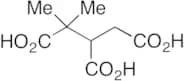
CAS:<p>Applications A metabolite of S-propylcysteine.<br>References Jones, A.R., et al.: Xenobiotica, 10, 827 (1980), 25) Ramu, K., et al.: Chem. Res. Toxicol., 8, 515 (1995), Krause, R., et al.: Drug Metab. Dispos., 25, 1013 (1997), Powley, M., et al.: Chem. Res. Toxicol., 16, 1448 (2003),<br></p>Formula:C12H23N·C8H13NO5SColor and Shape:NeatMolecular weight:597.893-Methylbutane-1,2,3-tricarboxylic Acid
CAS:Controlled Product<p>Applications 3-Methylbutane-1,2,3-tricarboxylic Acid is an atmospheric oxidation product of α-pinene that is a tracer compound for atmospheric terpene secondary organic aerosol (SOA) particles.<br> Not a dangerous good if item is equal to or less than 1g/ml and there is less than 100g/ml in the package<br>References Dette, H.P., et. al.: J. Phys. Chem. A., 118, 7024 (2014)<br></p>Formula:C8H12O6Color and Shape:NeatMolecular weight:204.188-methyl-4-(2-phenylbutanoyl)-1-oxa-4,8-diazaspiro[4.5]decane-3-carboxylic acid
CAS:Purity:95.0%Molecular weight:346.427001953125Acetic acid, 2-[2-[4-[(R)-(4-chlorophenyl)phenylmethyl]-1-piperazinyl]ethoxy]-, hydrochloride (1:2)
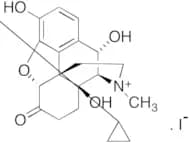
CAS:Purity:98%Molecular weight:461.8099975585937510a-Hydroxy-methylnaltrexone Iodide
Controlled Product<p>Stability Hygroscopic, Light Sensitive<br></p>Formula:C21H26NO5·IColor and Shape:Orange To RedMolecular weight:499.34(±)-3-Amino-iso-butyric-2,3,3-d3 Acid
CAS:Controlled Product<p>Applications (±)-3-Amino-iso-butyric-2,3,3-d3 Acid is the labeled version of DL-3-Aminoisobutyric Acid (A603043(P)), which is a useful compound for suppressing atherosclerosis in apolipoprotein E-knockout mouse.<br>References Shimba, Y., et al.: Bio. Pharma. Bull., 43, 1016 (2020)<br></p>Formula:C4D3H6NO2Color and Shape:White To Off-WhiteMolecular weight:106.14Fmoc N-Hydroxysuccinimide Ester
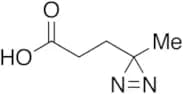
CAS:<p>Stability Moisture Sensitive<br>Applications Used in conjunction with Isothiocyanate to conduct partial Edman Degradation on biologically active peptides.<br> Not a dangerous good if item is equal to or less than 1g/ml and there is less than 100g/ml in the package<br>References Heidenreich, O., et al.: J. Biol. Chem., 269, 2131 (1994), Kothe, U., et al.: Anal. Biochem., 356, 148 (2006), Thakkar, A., et al.: Anal. Chem., 78, 5935 (2006),<br></p>Formula:C19H15NO5Color and Shape:NeatMolecular weight:337.333-Methyl-diazirine-3-propanoic Acid
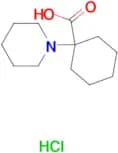
CAS:Controlled Product<p>Stability Light Sensitive<br>Applications 3-Methyl-diazirine-3-propanoic Acid is a reagent used in crosslinking sugars and photoactivatable crosslinking.<br>References Tanaka, Y. et al.: J. Am. Chem. Soc., 130, 3278 (2008);<br></p>Formula:C5H8N2O2Color and Shape:NeatMolecular weight:128.131-(1-piperidinyl)cyclohexanecarboxylic acid hydrochloride
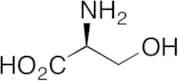
CAS:Purity:95.0%Molecular weight:247.75999450683594L-Serine
CAS:<p>Applications L-Serine is used in the synthesis of purines and pyrimidines as antibacterial/antifungal agents, as well as acting as a proteinogenic compound.<br>References Olivella, M. et al.: Bioorg. Med. Chem., 20, 6109 (2012);<br></p>Formula:C3H7NO3Color and Shape:White Crystalline PowderMolecular weight:105.092-[4-(3-Chlorophenyl)piperazin-1-yl]-2-(3-methylphenyl)acetic acid
CAS:Molecular weight:344.83999633789063-(2,3-Dihydro-1H-indol-1-yl)propanoic acid
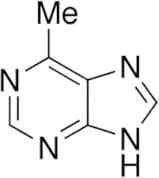
CAS:Formula:C11H13NO2Purity:95.0%Color and Shape:SolidMolecular weight:191.236-Methylpurine
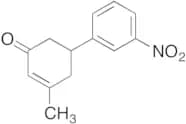
CAS:Controlled Product<p>Applications 6-Methylpurine (cas# 2004-03-7) is a compound useful in organic synthesis.<br> Not a dangerous good if item is equal to or less than 1g/ml and there is less than 100g/ml in the package<br></p>Formula:C6H6N4Color and Shape:NeatMolecular weight:134.143-Methyl-5-(3-nitrophenyl)cyclohex-2-enone
CAS:Controlled Product<p>Applications 3-Methyl-5-(3-nitrophenyl)cyclohex-2-enone is derived from Acetone (A163800), which is a common organic building block in organic chemistry.<br>References Neubert, L., et al.: J. Am. Chem. Soc., 134, 12239 (2012); Zhai, J.J., et al.: J. Am. Soc. Mass. Spec., 20, 1366 (2009);<br></p>Formula:C13H13NO3Color and Shape:NeatMolecular weight:231.25





![8-benzyl-4-(2-methylbutanoyl)-1-oxa-4,8-diazaspiro[4.5]decane-3-carboxylic acid](/_next/image/?url=https%3A%2Fstatic.cymitquimica.com%2Fproducts%2F10%2Fthumb-webp%2FF525812.webp&w=3840&q=75)

![6-(tert-Butoxycarbonyl)-2-(1H-pyrrol-1-yl)-4,5,6,7-tetrahydrothieno[2,3-c]pyridine-3-carboxylic ac…](/_next/image/?url=https%3A%2Fstatic.cymitquimica.com%2Fproducts%2F10%2Fthumb-webp%2FF066597.webp&w=3840&q=75)
![7-(Cyclopropylamino)thieno[3,2-b]pyridine-3,6-dicarboxylic acid hydrochloride](/_next/image/?url=https%3A%2Fstatic.cymitquimica.com%2Fproducts%2F10%2Fthumb-webp%2FF613766.webp&w=3840&q=75)
![4-bromo-2-(3-hydroxyazetidin-1-yl)benzo[d]thiazole-6-carboxylic acid](/_next/image/?url=https%3A%2Fstatic.cymitquimica.com%2Fproducts%2F10%2Fthumb-webp%2FF496137.webp&w=3840&q=75)



![4-{[(Pyridin-3-ylmethyl)amino]methyl}benzoic acid](/_next/image/?url=https%3A%2Fstatic.cymitquimica.com%2Fproducts%2F10%2Fthumb-webp%2FF015160.webp&w=3840&q=75)
![3-[(4,6-Dimethylpyrimidin-2-yl)amino]benzoic acid](/_next/image/?url=https%3A%2Fstatic.cymitquimica.com%2Fproducts%2F10%2Fthumb-webp%2FF023725.webp&w=3840&q=75)
![4-(2-phenylbutanoyl)-8-propyl-1-oxa-4,8-diazaspiro[4.5]decane-3-carboxylic acid](/_next/image/?url=https%3A%2Fstatic.cymitquimica.com%2Fproducts%2F10%2Fthumb-webp%2FF525728.webp&w=3840&q=75)

![8-methyl-4-(2-phenylbutanoyl)-1-oxa-4,8-diazaspiro[4.5]decane-3-carboxylic acid](/_next/image/?url=https%3A%2Fstatic.cymitquimica.com%2Fproducts%2F10%2Fthumb-webp%2FF525631.webp&w=3840&q=75)
![Acetic acid, 2-[2-[4-[(R)-(4-chlorophenyl)phenylmethyl]-1-piperazinyl]ethoxy]-, hydrochloride (1:2)](/_next/image/?url=https%3A%2Fstatic.cymitquimica.com%2Fproducts%2F10%2Fthumb-webp%2FF861700.webp&w=3840&q=75)

![2-[4-(3-Chlorophenyl)piperazin-1-yl]-2-(3-methylphenyl)acetic acid](/_next/image/?url=https%3A%2Fstatic.cymitquimica.com%2Fproducts%2F10%2Fthumb-webp%2FF300388.webp&w=3840&q=75)