Amino Acids (AA)
Amino acids (AAs) are the fundamental building blocks of proteins, playing a crucial role in various biological processes. These organic compounds are essential for protein synthesis, metabolic pathways, and cell signaling. In this category, you will find a comprehensive range of amino acids, including essential, non-essential, and modified forms, which are vital for research in biochemistry, molecular biology, and nutritional sciences. At CymitQuimica, we provide high-quality amino acids to support your research and development needs, ensuring accuracy and reliability in your experimental outcomes.
Subcategories of "Amino Acids (AA)"
- Amino Acid Derivatives(3,955 products)
- Amino Acid and Amino Acid Related Compounds(3,471 products)
- Amino Acids with Oxygen or Sulphur(168 products)
- Boc- Amino Acids(351 products)
- Fmoc Amino Acids(1,710 products)
Found 38262 products of "Amino Acids (AA)"
Sort by
Purity (%)
0
100
|
0
|
50
|
90
|
95
|
100
2-Ethyl-4-methylpentyl Acrylate
Controlled Product<p>Stability Temperature Sensitive, Light Sensitive<br>Applications 2-Ethyl-4-methylpentyl Acrylate<br></p>Formula:C11H20O2Color and Shape:NeatMolecular weight:184.282-((3-Oxocyclohex-1-enyl)amino)benzoic acid
CAS:Formula:C13H13NO3Purity:98.0%Color and Shape:SolidMolecular weight:231.2514-Chloro-3-methylaniline
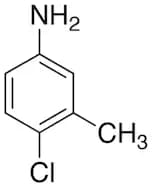
CAS:Controlled Product<p>Applications 4-Chloro-3-methylaniline (cas# 7149-75-9) is a compound useful in organic synthesis.<br></p>Formula:C7H8ClNColor and Shape:NeatMolecular weight:141.60β-Methylamino-L-alanine Hydrochloride
CAS:Controlled Product<p>Stability Hygroscopic<br>Applications β-Methylamino-L-alanine Hydrochloride is a useful intermediate in the synthesis of β-N-methylamino-L-alanine and other amino acid derivatives.<br>References Arevalo-Garcia, E. B., et al.: Tetrahedron Lett., 55, 2335 (2014); Sagiyan, A. S., et al.: Hayastani Kimiakan Handes, 61, 424 (2008); Sagiyan, A. S., et al.: Russ. Chem. Bull., 46, 483 (1997)<br></p>Formula:C4H10N2O2•(HCl)Color and Shape:NeatMolecular weight:118.1336462-(4-Fluorophenyl)-2-[4-(2-methylphenyl)piperazin-1-yl]acetic acid
CAS:Molecular weight:328.38699340820312,6-Di-tert-butyl-4-methyl-d3-phenol
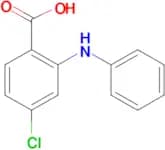
CAS:Controlled Product<p>Applications 2,6-Di-tert-butyl-4-methyl-d3-phenol (CAS# 86819-59-2) is a useful isotopically labeled research compound. This compound has been shown to significantly have lower toxic potency in mice compared to butylated hydroxytolune (BHT).<br>References Mizutani, T., et.al., Toxicol. Appl. Pharmacol. 69,283-290,(1983);<br></p>Formula:C15D3H21OColor and Shape:NeatMolecular weight:223.374-Chloro-2-phenylamino-benzoic acid
CAS:Formula:C13H10ClNO2Purity:95.0%Color and Shape:SolidMolecular weight:247.687-(Cyclopropylamino)thieno[3,2-b]pyridine-3,6-dicarboxylic acid hydrochloride
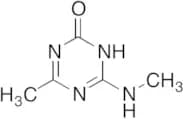
CAS:Purity:98%Molecular weight:314.7399902343754-Methyl-6-(methylamino)-1,3,5-triazin-2(1H)-one
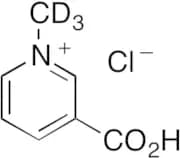
CAS:<p>Applications 4-Methyl-6-(methylamino)-1,3,5-triazin-2(1H)-one is a heterocyclic Triazine based building block useful in organic synthesis. It is related to 2-Amino-4-methoxy-6-methyl-1,3,5-triazine (A616880), which is used to synthesize pesticides.<br>References Klein, J., et al.: J. AOAC Intrnational, 86, 1015 (2003); Pang, G., et al.: J. Chromat. A, 1125, 1 (2006);<br></p>Formula:C5H8N4OColor and Shape:White To Off-WhiteMolecular weight:140.14Trigonelline-d3 Hydrochloric Acid Salt (N-methyl-d3)
CAS:Controlled Product<p>Stability Hygroscopic<br>Applications Trigonelline-d3 HCl is deuterium labelled Trigonelline HCl. Trigonelline HCl has utility in developing site-specific system that delivers drugs to the brain. It has also been suggested as a potential anti-Alzheimer disease agent.<br>References Bodor, N., et al.: J. Med. Chem 26, 313 (1983); Makowska, J., et al.: J. Chromatogr. B 968, 101 (2014)<br></p>Formula:C7D3H5NO2·ClColor and Shape:NeatMolecular weight:176.624-(3,4-dichlorophenyl)-3H,4H,5H,6H,7H-imidazo[4,5-c]pyridine-6-carboxylic acid
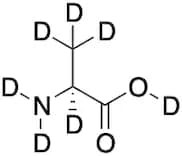
CAS:Purity:95.0%Molecular weight:312.1499938964844L-Alanine-d7
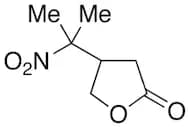
CAS:Controlled Product<p>Applications L-Alanine-d7 (CAS# 74280-71-0) is a useful isotopically labeled research compound.<br></p>Formula:C3D7NO2Color and Shape:Off-WhiteMolecular weight:96.144-(1-Methyl-1-nitroethyl)tetrahydrofuran-2-one
CAS:Controlled Product<p>Applications Used in the synthesis of DMPO-type spin traps.<br>References Konaka, R., et al.: Free Radical Res., 23, 15 (1995),<br></p>Formula:C7H11NO4Color and Shape:NeatMolecular weight:173.171-[2-Nitro-4-(trifluoromethyl)phenyl]piperidine-4-carboxylic acid
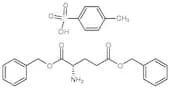
CAS:Molecular weight:318.25201416015625L-Glutamic acid dibenzyl ester 4-toluenesulfonate
CAS:Controlled Product<p>Applications L-Glutamic acid dibenzyl ester 4-toluenesulfonate<br></p>Formula:C26H29NO7SColor and Shape:NeatMolecular weight:499.582-sec-Butyl-3-methoxypyrazine
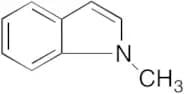
CAS:Controlled Product<p>Applications A compound contents in musts and wines from Vitis vinifera variety Cabernet Sauvignon.<br>References Murray, K., et al.: J. Sci. Food Agric., 26, 973 (1975), Maga, J., et al.: Food Rev. Int., 8, 479 (1992), Allen, M., et al.: J. Agric. Food Chem., 43, 769 (1995),<br></p>Formula:C9H14N2OColor and Shape:NeatMolecular weight:166.221-Methylindole
CAS:Controlled Product<p>Applications The selenocyanation and thiocyanation of electron rich arene, 1-Methylindole, achieved using N-iodosuccinimide (NIS) as a catalyst and aqueous tert-Bu hydroperoxide (TBHP) as an oxidant at room temperature.<br>References Muniraj, N., et al.: ChemistrySelect, 1, 1033-1038 (2016)<br></p>Formula:C9H9NColor and Shape:NeatMolecular weight:131.188-ethyl-4-(2-phenylbutanoyl)-1-oxa-4,8-diazaspiro[4.5]decane-3-carboxylic acid
CAS:Purity:95.0%Molecular weight:360.4540100097656(4S)-4-METHYL-L-PROLINE HCL
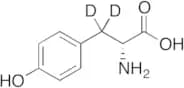
CAS:Formula:C6H12ClNO2Purity:97.0%Color and Shape:SolidMolecular weight:165.62D-Tyrosine-d2
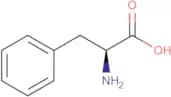
CAS:Controlled Product<p>Applications D-Tyrosine-d2 is deuterium labelled D-Tyrosine (T899970). D-Tyrosine, the stereoisomer to L-Tyrosine (T899975), is an amino acid used in various organic syntheses for antibiotics. It is used in the synthesis of (-)-anisomycin, as well as BATSI (boronic acid transition state inhibitors) which act on β-lactamases. It has also been studied as an inhibitor of microbial growth on surfaces, reducing microbial attachment to hydrophillic glass and hydrophobic polypropylene surfaces.<br>References Li, Ji. et al.: Chin. Chem. Lett., 23, 647 (2012); Xu, H. et al.: Water Res., 45, 5796 (2011); Ke, W. et al.: Antimicrob. Agents Chemother., 55, 174 (2011)<br></p>Formula:C9D2H9NO3Color and Shape:NeatMolecular weight:183.2H-Phe-OH
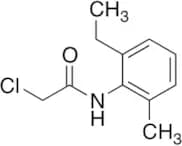
CAS:<p>M02961 - H-Phe-OH</p>Formula:C9H11NO2Purity:98%Color and Shape:SolidMolecular weight:165.1922-chloro-N-(2-ethyl-6-methylphenyl)acetamide
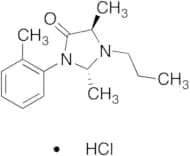
CAS:Controlled Product<p>Applications 2-chloro-N-(2-ethyl-6-methylphenyl)acetamide (cas# 32428-71-0) is a useful research chemical.<br></p>Formula:C11H14ClNOColor and Shape:NeatMolecular weight:211.692,5-Dimethyl-3-(2-methylphenyl)-1-propylimidazolini-4-one Hydrochloride
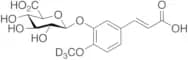
CAS:Controlled Product<p>Applications rac-trans-2,5-Dimethyl-3-(2-methylphenyl)-1-propylimidazolini-4-one Hydrochloride is the salt analogue of 2,5-Dimethyl-3-(2-methylphenyl)-1-propylimidazolini-4-one (D477055), an impurity of Prilocaine (Prilocaine Hydrochloride P725000). Prilocaine is a local anesthetic of the amino amide type and is often used in dentistry. Prilocaine is also often combined with lidocaine as a preparation for dermal anesthesia (lidocaine/prilocaine or EMLA) towards the treatment of conditions like paresthesia.<br>References Caliaro, G., et al.: J. Pharm. Biomed. Anal., 26, 427 (2001), Ulmeanu, S., et al.: Pharm. Res., 20, 1317 (2003)<br></p>Formula:C15H22N2O·HClColor and Shape:NeatMolecular weight:282.8089Isoferulic Acid-d3 3-O-β-D-Glucuronide
CAS:Controlled Product<p>Applications Labelled Isoferulic Acid 3-O-β-D-Glucuronide, the glucuronide conjugate of Isoferulic Acid (H946180). Isoferulic Acid 3-O-β-D-Glucuronide is one of the circulating metabolites in human plasma after coffee consumption.<br>References Fumeaux, R. et al.: Org. Biomol. Chem., 8, 5199 (2010); Redeuil, K. et al.: J. Chrom. A, 1218, 4678 (2011);<br></p>Formula:C16H15D3O10Color and Shape:NeatMolecular weight:373.334-Chloro-4-methyl-1-pentene
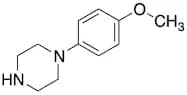
CAS:Controlled Product<p>Applications 4-Chloro-4-methyl-1-pentene affects the surface modification of Kevlar stitch threads on mechanical interfacial properties of carbon fiber and bismaleimide stitched composites.<br> Not a dangerous good if item is equal to or less than 1g/ml and there is less than 100g/ml in the package<br>References Ai, T., et al.: Fuhe Cailiao Xuebao, 24, 34-39 (2007)<br></p>Formula:C6H11ClColor and Shape:NeatMolecular weight:118.61-(4-Methoxyphenyl)piperazine
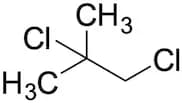
CAS:Controlled Product<p>Applications 1-(4-Methoxyphenyl)piperazine (cas# 38212-30-5) is a useful research chemical.<br></p>Formula:C11H16N2OColor and Shape:NeatMolecular weight:192.261,2-Dichloro-2-methylpropane
CAS:<p>Applications 1,2-Dichloro-2-methylpropane (cas# 594-37-6) is a useful research chemical.<br> Not a dangerous good if item is equal to or less than 1g/ml and there is less than 100g/ml in the package<br></p>Formula:C4H8Cl2Color and Shape:NeatMolecular weight:127.012-Methyl-N-[3-(trifluoromethyl)phenyl]propanamide
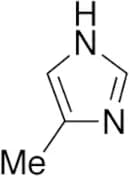
CAS:Controlled ProductFormula:C11H12F3NOColor and Shape:NeatMolecular weight:231.214-Methylimidazole
CAS:<p>Applications 4-Methylimidazole is a monomethylated imidazole that can be used as a building block in the preparation of a wide range of biologically active compounds. 4-Methylimidazole is a product which results from the interaction of reducing sugars with ammonia. 4-Methylimidazole showed convulsant activity in animals and is listed as a possible carcinogen.<br> Not a dangerous good if item is equal to or less than 1g/ml and there is less than 100g/ml in the package<br>References Nishie, K. et al.: Toxicol. Appl. Pharmacol., 14, 301 (1969): Cunha, S.C. et al.: J. Food Comp. Anal., 24, 609 (2011); Chan, P.C. et al.: Arch. Toxicol., 82, 55 (2008);<br></p>Formula:C4H6N2Color and Shape:Light YellowMolecular weight:82.105-Hydroxy-2-methyl-1H-imidazole-1-ethanol
CAS:Controlled Product<p>Applications 5-Hydroxy-2-methyl-1H-imidazole-1-ethanol is a degradation product of Metronidazole (M338880), an antibiotic.<br>References Perez, Tzayam, et al.: Electrochimica Acta, 165, 173-181 (2015)<br></p>Formula:C6H10N2O2Color and Shape:NeatMolecular weight:142.16D-Lysine hydrochloride
CAS:Controlled Product<p>Applications D-Lysine, HCl<br></p>Formula:C6H14N2O2·ClHColor and Shape:NeatMolecular weight:182.649Bis(4-methylpentyl) Phthalate
CAS:Controlled Product<p>Applications Bis(4-methylpentyl) Phthalate, is a phthalic acid ester (PAEs), widely used in many consumable products with potential carcinogenic properties. It is also the product of the fermentation of Streptomyces regnesis 099.<br></p>Formula:C20H30O4Color and Shape:ColourlessMolecular weight:334.451-(2-Methoxyphenethyl)piperazine
CAS:Controlled Product<p>Applications 1-(2-METHOXYPHENETHYL)PIPERAZINE (cas# 6722-54-9) is a useful research chemical.<br></p>Formula:C13H20N2OColor and Shape:NeatMolecular weight:220.322-(4-Chloro-phenylamino)-thiazole-4-carboxylic acid
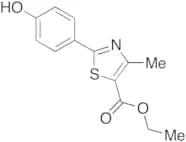
CAS:Formula:C10H7ClN2O2SPurity:95.0%Color and Shape:SolidMolecular weight:254.69Ethyl 2-(4-Hydroxyphenyl)-4-methylthiazole-5-carboxylate
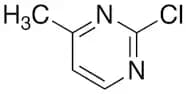
CAS:<p>Applications Ethyl 2-(4-Hydroxyphenyl)-4-methylthiazole-5-carboxylate is used in the synthesis of the major metabolites of Febuxostat (F229000), a xanthine oxidase/xanthine dehydrogenase inhibitor. Used for treatment of hyperuricemia and chronic gout. 40-120 mg/day febuxostat was proven effective in lowering serum urate levels when administered to manage hyperuricemia in patients with gout.<br>References Li, X., et. al.: Lett. Org. Chem., 12, 217 (2015); Vallu, V., et. al.: Anal. Chem. Indian J., 14, 339 (2014); Osada, Y., et al.: Eur. J. Pharmacol., 241, 183 (1993); Okamoto, K., et al.: J. Biol. Chem., 278, 1848 (2003); Mayer, M.D., et al.: Am. J. Therap., 12, 22 (2005); Tomlinson, B., et al.: Curr. Opin. Invest. Drugs, 6, 1168 (2005)<br></p>Formula:C13H13NO3SColor and Shape:NeatMolecular weight:263.312-Chloro-4-methylpyrimidine
CAS:Controlled Product<p>Stability Toxic<br>Applications 2-Chloro-4-methylpyrimidine (cas# 13036-57-2) is a compound useful in organic synthesis.<br></p>Formula:C5H5ClN2Color and Shape:BeigeMolecular weight:128.564-Methoxy-d3-benzoic Acid
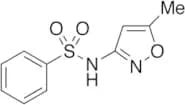
CAS:Controlled Product<p>Applications 4-Methoxy-d3-benzoic Acid (CAS# 27914-54-1) is a useful isotopically labeled research compound.<br></p>Formula:C8H5D3O3Color and Shape:WhiteMolecular weight:155.17N-(5-Methyl-3-isoxazolyl)benzenesulfonamide
CAS:<p>Applications N-(5-Methyl-3-isoxazolyl)benzenesulfonamide is used in the preparation of isoxazolecarboxylic acid derivatives as agricultural fungicides.<br>References Gomes, J.R.B., et al.: Tetrahedron, 61, 2705 (2005),<br></p>Formula:C10H10N2O3SColor and Shape:Light Yellow SolidMolecular weight:238.26D,L-o-Tyrosine
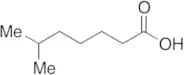
CAS:Controlled Product<p>Applications D,L-o-Tyrosine is a metabolite of Phenylalanine (P319415). A precursor in the formation of catecholamines. Used as biomarkers of protein oxidative damage in β-thalassemia.<br>References Tsugita, A., et al.: Eur. J. Biochem., 124, 585 (1982), Nielsen, F., et al.: Clin. Chem., 43, 1209 (1997), Mates, J., et al.: Clin. Biochem., 32, 595 (1999),<br></p>Formula:C9H11NO3Color and Shape:WhiteMolecular weight:181.196-Methylheptanoic Acid (>90%)
CAS:Controlled Product<p>Applications 6-Methylheptanoic acid is used as a reagent to synthesize analogues of Eponemycin, an antibiotic that also exhibits anti-angiogenic activity by inhibiting proteasome function. 6-Methylheptanoic acid naturally occurs as a component of the scent chemical of the brushtail possum.<br> Not a dangerous good if item is equal to or less than 1g/ml and there is less than 100g/ml in the package<br>References McLean, S., et al.: J. Chem. Ecol., 38, 1318 (2012); Oikawa, T., et al.: Biochem. Biophys. Res. Comm., 181, 1070 (1991); Sin, N., et al.: Bioorg. Med. Chem., 6, 1209 (1998)<br></p>Formula:C8H16O2Purity:>90%Color and Shape:NeatMolecular weight:144.214-Chloro-2-methylaniline
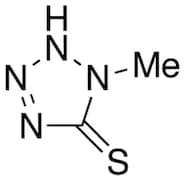
CAS:Controlled Product<p>Stability Air Sensitive<br>Applications 4-Chloro-2-methylaniline<br> Not a dangerous good if item is equal to or less than 1g/ml and there is less than 100g/ml in the package<br></p>Formula:C7H8ClNColor and Shape:Light BrownMolecular weight:141.60N-Methyl-5-tetrazolethiol
CAS:Controlled Product<p>Impurity Cefoperazone EP Impurity C<br>Applications N-Methyl-5-tetrazolethiol (Cefoperazone EP Impurity C) is an impurity of Cefoperazone.<br>References Kitson, T., et al.: Biochem. J., 175, 83 (1978), Elenbaas, R., et al.: Clin. Pharmacol. Ther., 32, 347(1982),<br></p>Formula:C2H4N4SColor and Shape:NeatMolecular weight:116.142-Methyl-5-nitrobenzenesulfonamide
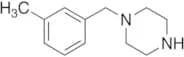
CAS:Controlled Product<p>Applications 2-Methyl-5-nitrobenzenesulfonamide is a chemical reagent in the synthesis of good inhibitors of cancer-related carbonic anhydrase. Also used in the synthesis of novel deacetylase inhibitors used in anti-tumor therapy.<br>References Moeker, J. et al.: J. Med. Chem., 57, 3522 (2014); Han, L. et al.: Bioorg. Med. Chem., 22, 1529 (2014);<br></p>Formula:C7H8N2O4SColor and Shape:Yellowish SolidMolecular weight:216.211-(3-Methylbenzyl)piperazine
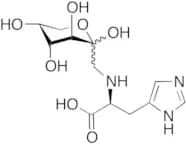
CAS:Controlled ProductFormula:C12H18N2Color and Shape:NeatMolecular weight:190.28Fructose-histidine
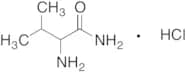
CAS:Controlled Product<p>Applications Fructose-histidine is an amadori compound formed in food.<br>References Wang, J., et al.: J. Mass Spec., 43, 262 (2008); Hashiba, H.: J. Agri. Food Chem., 24, 70 (1976)<br></p>Formula:C12H19N3O7Color and Shape:NeatMolecular weight:317.32-Amino-3-methylbutanamide Hydrochloride
CAS:<p>Applications 2-amino-3-methylbutanamide Hydrochloride is a useful research chemical for the degradation studies of antibiotic MDL 62,879 (GE2270A), and a reagent for peptide synthesis.<br>References Tavecchia, P., et al.: Tetrahedron, 51, 4867 (1995); Gazis, E., et al.: Peptides, Proc. Eur. Symp., 6th, Athens, 1963, 107 (1966)<br></p>Formula:C5H12N2O·HClColor and Shape:NeatMolecular weight:152.622



![2-(4-Fluorophenyl)-2-[4-(2-methylphenyl)piperazin-1-yl]acetic acid](/_next/image/?url=https%3A%2Fstatic.cymitquimica.com%2Fproducts%2F10%2Fthumb-webp%2FF300208.webp&w=3840&q=75)

![7-(Cyclopropylamino)thieno[3,2-b]pyridine-3,6-dicarboxylic acid hydrochloride](/_next/image/?url=https%3A%2Fstatic.cymitquimica.com%2Fproducts%2F10%2Fthumb-webp%2FF613766.webp&w=3840&q=75)
![4-(3,4-dichlorophenyl)-3H,4H,5H,6H,7H-imidazo[4,5-c]pyridine-6-carboxylic acid](/_next/image/?url=https%3A%2Fstatic.cymitquimica.com%2Fproducts%2F10%2Fthumb-webp%2FF522492.webp&w=3840&q=75)

![1-[2-Nitro-4-(trifluoromethyl)phenyl]piperidine-4-carboxylic acid](/_next/image/?url=https%3A%2Fstatic.cymitquimica.com%2Fproducts%2F10%2Fthumb-webp%2FF034079.webp&w=3840&q=75)

![8-ethyl-4-(2-phenylbutanoyl)-1-oxa-4,8-diazaspiro[4.5]decane-3-carboxylic acid](/_next/image/?url=https%3A%2Fstatic.cymitquimica.com%2Fproducts%2F10%2Fthumb-webp%2FF525680.webp&w=3840&q=75)

![(4-bromophenyl)(1,4-dioxa-8-azaspiro[4.5]dec-8-yl)acetic acid](/_next/image/?url=https%3A%2Fstatic.cymitquimica.com%2Fproducts%2F10%2Fthumb-webp%2FF340545.webp&w=3840&q=75)

![2-Methyl-N-[3-(trifluoromethyl)phenyl]propanamide](/_next/image/?url=https%3A%2Fstatic.cymitquimica.com%2Fproducts%2FTR%2Fthumb-webp%2FM331270.webp&w=3840&q=75)





![(3-methylphenyl)[4-(2-methylphenyl)piperazin-1-yl]acetic acid](/_next/image/?url=https%3A%2Fstatic.cymitquimica.com%2Fproducts%2F10%2Fthumb-webp%2FF300212.webp&w=3840&q=75)
![2-[4-(3-Chlorophenyl)piperazin-1-yl]-2-phenylacetic acid](/_next/image/?url=https%3A%2Fstatic.cymitquimica.com%2Fproducts%2F10%2Fthumb-webp%2FF300393.webp&w=3840&q=75)