


Amino Acids (AA)
Amino acids (AAs) are the fundamental building blocks of proteins, playing a crucial role in various biological processes. These organic compounds are essential for protein synthesis, metabolic pathways, and cell signaling. In this category, you will find a comprehensive range of amino acids, including essential, non-essential, and modified forms, which are vital for research in biochemistry, molecular biology, and nutritional sciences. At CymitQuimica, we provide high-quality amino acids to support your research and development needs, ensuring accuracy and reliability in your experimental outcomes.
Subcategories of "Amino Acids (AA)"
- Amino Acid Derivatives(3,955 products)
- Amino Acid and Amino Acid Related Compounds(3,471 products)
- Amino Acids with Oxygen or Sulphur(168 products)
- Boc- Amino Acids(351 products)
- Fmoc Amino Acids(1,710 products)
Found 38262 products of "Amino Acids (AA)"
Sort by
Purity (%)
0
100
|
0
|
50
|
90
|
95
|
100
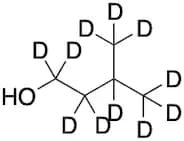
3-Methyl-1-butyl-d11 Alcohol
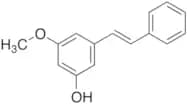
CAS:Controlled Product<p>Applications 3-Methyl-1-butyl-d11 Alcohol (CAS# 170678-50-9) is a useful isotopically labeled research compound.<br></p>Formula:C5D11HOColor and Shape:NeatMolecular weight:99.22(E)-3-Methoxy-5-styrylphenol
CAS:Controlled Product<p>Applications (E)-3-Methoxy-5-styrylphenol (cas# 35302-70-6) is a useful research chemical.<br></p>Formula:C15H14O2Color and Shape:NeatMolecular weight:226.275-((tert-Butoxycarbonyl)amino)pyrimidine-2-carboxylic acid
CAS:Purity:95%Molecular weight:239.2310028076172cis-4-Hydroxy-L-proline
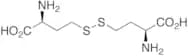
CAS:<p>Applications Hydroxyprolines are valuable chiral building blocks for organic synthesis of pharmaceuticals. Several microorganisms producing proline trans-4- and cis-3-hydroxylase were discovered and these enzymes were applied to the industrial production of trans-4- and cis-3-hydroxy-L-proline.<br>References Lawrence, C., et al.: Biochem. J., 313, 185 (1996), Mori, H., et al.: J. Bacteriol., 179, 5677 (1997), Clifton, I., et al.: Eur. J. Biochem., 268, 6625 (2001),<br></p>Formula:C5H9NO3Color and Shape:Off White Crystalline PowderMolecular weight:131.13L-Homocystine
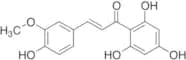
CAS:Controlled Product<p>Applications Increased levels lead to hyperhomocysteinemia; a cardiovascular risk factor in prediction of coronary heart disease as well as being associated with congenital birth defects, pregnancy complications and cancer.<br>References Geisel, J. et al.: Clin. Chem. Lab. Med., 41, 1513 (2003); Geisel, J. et al.: Clin. Chem. Lab. Med., 41, 1513 (2003);<br></p>Formula:C8H16N2O4S2Color and Shape:NeatMolecular weight:268.353-Methoxy-2',4',6',4-tetrahydroxychalcone (>80%)
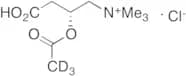
CAS:Controlled Product<p>Applications 3-Methoxy-2',4',6',4-tetrahydroxychalcone piperidine complex (cas# 52218-19-6) is a useful research chemical.<br></p>Formula:C16H14O6Purity:>80%Color and Shape:NeatMolecular weight:302.28Acetyl-d3 L-Carnitine Hydrochloride
CAS:Controlled Product<p>Applications Acetyl-d3 L-Carnitine Hydrochloride is labelled Acetyl L-Carnitine Hydrochloride (A171990) which is used for transmembrane action potential studies. Acetylcarnitine has antinociceptive activity that may be mediated by enhanced activity of muscarinic cholinergic receptors or mGlu2 glutamate receptors.<br>References Matsui, K., et al.: Japanese J. Pharmcol., 39, 263 (1985); Chlechio, S., et al.: J. Endocrinol. Invest., 27, 171 (2004): Walker, R., et al.: Comparative General Pharmacol., 4, 65 (1973)<br></p>Formula:C92H3H15NO4·ClColor and Shape:NeatMolecular weight:242.72Myristoyl-L-carnitine Hydrochloride
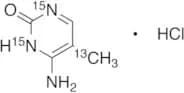
CAS:Controlled Product<p>Applications Myristoyl-L-carnitine Hydrochloride is a long-chain fatty ester of carnitine which is accumulated and released into the circulation, in fatty-acid oxidation defects. Pattern of Lauroyl-L-carnitine can be diagnostic for a number of ß-oxidation defects.<br>References Ventura, F., et al.: Clinica Chimica Acta, 281, 1 (1999); Pourfarzam, M., et al.: Clinical Chem,, 40, 2267 (1994); Schaefer, J., et al.: Pediatric Res., 37, 354 (1995)<br></p>Formula:C21H42ClNO4Color and Shape:NeatMolecular weight:408.025-Methyl Cytosine-13C,15N2 Hydrochloride
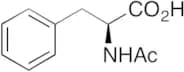
CAS:<p>Applications A labelled derivative of Dibarbituric acid.<br>References Hitchings, G.H., et al.: J. Biol. Chem., 177, 357 (1949),<br></p>Formula:CC4H715N2NO·ClHColor and Shape:NeatMolecular weight:164.57N-Acetyl-L-phenylalanine
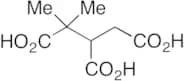
CAS:Controlled Product<p>Applications N-Acetyl-L-phenylalanine is an protected analogue of L-Phenylalanine (P319415), an essential amino acid produced for medical, feed, and nutritional applications such as in the preparation of Aspartame.<br>References Sriram, S., et al.: J. Med. Chem., 56, 2540 (2013); Parker, B.M., et al.: J. Biotech., 155, 396 (2011);<br></p>Formula:C11H13NO3Color and Shape:NeatMolecular weight:207.233-Methylbutane-1,2,3-tricarboxylic Acid
CAS:Controlled Product<p>Applications 3-Methylbutane-1,2,3-tricarboxylic Acid is an atmospheric oxidation product of α-pinene that is a tracer compound for atmospheric terpene secondary organic aerosol (SOA) particles.<br> Not a dangerous good if item is equal to or less than 1g/ml and there is less than 100g/ml in the package<br>References Dette, H.P., et. al.: J. Phys. Chem. A., 118, 7024 (2014)<br></p>Formula:C8H12O6Color and Shape:NeatMolecular weight:204.183-Ethyl-5-(2-hydroxyethyl)-4-methylthiazolium Bromide
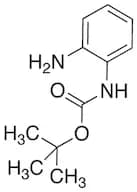
CAS:Controlled Product<p>Applications 3-Ethyl-5-(2-hydroxyethyl)-4-methylthiazolium bromide is used in the novel synthesis of benzoin catalyzed by thiazolium salts.<br></p>Formula:C8H14BrNOSColor and Shape:BeigeMolecular weight:252.17N-Boc-1,2-phenyldiamine
CAS:Controlled Product<p>Applications Protected 1,2-Phenyldiamine, an intermediate in the synthesis of histone deacetylase agents and antitumor agents.<br>References Andrews, D., et al.: Bioorg. Med. Chem. Lett., 18, 2580 (2008), Mahboobi, S., et al.: J. Med. Chem., 52, 2265 (2009),<br></p>Formula:C11H16N2O2Color and Shape:NeatMolecular weight:208.26Fmoc N-Hydroxysuccinimide Ester
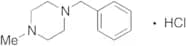
CAS:<p>Stability Moisture Sensitive<br>Applications Used in conjunction with Isothiocyanate to conduct partial Edman Degradation on biologically active peptides.<br> Not a dangerous good if item is equal to or less than 1g/ml and there is less than 100g/ml in the package<br>References Heidenreich, O., et al.: J. Biol. Chem., 269, 2131 (1994), Kothe, U., et al.: Anal. Biochem., 356, 148 (2006), Thakkar, A., et al.: Anal. Chem., 78, 5935 (2006),<br></p>Formula:C19H15NO5Color and Shape:NeatMolecular weight:337.331-Methyl-4-(phenylmethyl)piperazine Hydrochloride
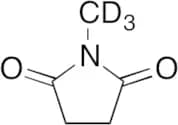
CAS:Controlled Product<p>Applications 1-Methyl-4-(phenylmethyl)piperazine hydrochloride is a useful synthetic intermediate.<br></p>Formula:C12H18N2·ClHColor and Shape:NeatMolecular weight:226.75N-Methylsuccinimide-d3
CAS:Controlled Product<p>Applications N-Methylsuccinimide-d3 is the isotope labelled analog of N-Methylsuccinimide (M329425); a model compound used to investigate the mechanism of enolization step by density-functional theory (DFT) calculations. N-Methylsuccinimide is a metabolite of N-methyl-2-pyrrolidone (NMP) and its presence in plasma and urine can be used as a biomarker of exposure to NMP<br>References Takahashi, O., et al.: Chem. Biodivers., 7, 1349 (2010)<br></p>Formula:C5D3H4NO2Color and Shape:NeatMolecular weight:116.1332,4,8,10-Tetraoxaspiro[5.5]undecane-3,9-diylbis(2-methylpropane-2,1-diyl) bis(3-(3-(tert-butyl)-4-hydroxy-5-methylphenyl)propanoate)
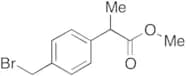
CAS:Controlled Product<p>Applications 2,4,8,10-Tetraoxaspiro[5.5]undecane-3,9-diylbis(2-methylpropane-2,1-diyl) bis(3-(3-(tert-butyl)-4-hydroxy-5-methylphenyl)propanoate) (cas# 90498-90-1) is a useful compound used as a modifier for the thermo-oxidative stabilization of synthesized meterials such as polypropylene-based materials, and spider silk.<br>References Matta, A.; et al.: Polym. Degrad. Stab., 142, 50 (2017); Dao, A. T.; et al.: Polym. Degrad. Stab., 153, 37 (2018).<br></p>Formula:C43H64O10Color and Shape:NeatMolecular weight:740.964-(Bromomethyl)-α-methyl-benzeneacetic Acid Methyl Ester
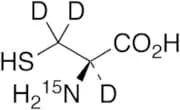
CAS:Controlled ProductFormula:C11H13BrO2Color and Shape:NeatMolecular weight:257.124L-Cysteine-15N,d3
CAS:Controlled ProductFormula:C3D3H415NO2SColor and Shape:NeatMolecular weight:125.174-[2-(4-chlorophenyl)acetyl]-8-methyl-1-oxa-4,8-diazaspiro[4.5]decane-3-carboxylic acid
CAS:Purity:95.0%Molecular weight:352.820007324218752-Methylpentane
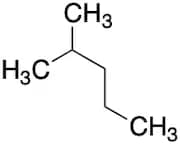
CAS:<p>Applications 2-Methylpentane is used as a raw material/intermediate in organic synthesis, rubber solvent, and vegetable oil extraction solvent.<br>References Choi, D., et al.: Adv. Funct. Mater. 25, 920 (2015)<br></p>Formula:C6H14Color and Shape:ColourlessMolecular weight:86.18Ademethionine-d3 1,4-Butanedisulfonate (>85%)
CAS:Controlled Product<p>Applications Ademethionine-d3 1,4-Butanedisulfonate, is a labeled analogue of Ademethionine 1,4-Butanedisulfonate (A280355), used in the synthesis of sulfonio-adenosyl-L-methionine (SAMe) salts.<br></p>Formula:C15H20D3N6O5S(C4H8O6S2)·(C4H10O6S2)Purity:>85%Color and Shape:NeatMolecular weight:402.46 (Free Base)4-Methyl-valerophenone
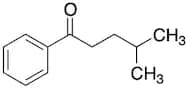
CAS:Controlled Product<p>Applications 4-Methyl-valerophenone is an intermediate used in the synthesis of a-Pyrrolidinoisohexanophenone (Hydrochloride) (P841230), which is a phenone derivative used for research purposes.<br>References Guo, Z.K., et al.: Marine Drugs, 16, 45/1 (2018)<br></p>Formula:C12H16OColor and Shape:NeatMolecular weight:176.253-Methyl Salicylic Acid
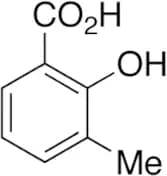
CAS:Controlled Product<p>Applications 3-Methyl Salicylic Acid is a toxic compound, it’s toxicity is similar to salicylic acid. Reagent used in manufacturing and preparation of dyes.<br>References Egorova, T. V., et al.: Tekstil'naya Promyshlennost , 3, 48 (1987); Keshavarz, M. H., et al.: J. Hazard. Mater., 237, 79 (2012)<br></p>Formula:C8H8O3Color and Shape:NeatMolecular weight:152.151'-(Tert-butoxycarbonyl)spiro[cyclohexane-1,3'-indoline]-4-carboxylic acid
CAS:Purity:97%Molecular weight:331.41198730468751-{[(2-METHYL-2-PROPANYL)OXY]CARBONYL-6-PHENYL-3-PIPERIDINECARBOXYLIC ACID
CAS:Purity:95.0%Molecular weight:305.37399291992194-Chloro-2-methylaniline
CAS:Controlled Product<p>Stability Air Sensitive<br>Applications 4-Chloro-2-methylaniline<br> Not a dangerous good if item is equal to or less than 1g/ml and there is less than 100g/ml in the package<br></p>Formula:C7H8ClNColor and Shape:Light BrownMolecular weight:141.601-BOC-2,3-Dihydropyrrole-4-boronic acid, pinacol ester
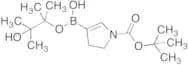
CAS:Controlled Product<p>Applications 1-BOC-2,3-Dihydropyrrole-4-boronic acid, pinacol ester is a useful research chemical for organic synthesis and other chemical processes.<br>References Lewis, R. T., et al.: From PCT Int. Appl. (2017), WO 2017004359 A1 20170105<br></p>Formula:C15H26BNO4Color and Shape:White To Off-WhiteMolecular weight:295.1828-propyl-4-(pyridine-3-carbonyl)-1-oxa-4,8-diazaspiro[4.5]decane-3-carboxylic acid
CAS:Purity:95.0%Molecular weight:333.38800048828125L-Arginine-13C,d4 Dihydrochloride
CAS:Controlled Product<p>Stability Extremely Hygroscopic<br>Applications Labelled L-Arginine (A769500). An essential amino acid for human development. Precursor for nitric oxide. Ammonia detoxicant (hepatic failure); diagnostic aid (pituitary function).<br>References Miura, T., et al.: Anal. Biochem., 139, 432 (1984), Jones, et al.: Adv. Enzyme Regul., 9, 19 (1970), Borders, C.L., et al.: Protein. Sci., 3, 541 (1994),<br></p>Formula:C5CH10D4N4O2·2HClColor and Shape:NeatMolecular weight:252.14(R)-D-Methioninol
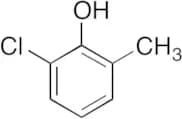
CAS:Controlled Product<p>Applications (R)-D-Methioninol<br></p>Formula:C5H13NOSColor and Shape:NeatMolecular weight:135.232-Chloro-6-methylphenol
CAS:Controlled ProductFormula:C7H7ClOColor and Shape:NeatMolecular weight:142.58N-Boc-L-cis-4,5-Methanoprolineamide
CAS:Controlled Product<p>Applications N-Boc-L-cis-4,5-Methanoprolineamide is an intermediate used to prepare methanoprolinenitrile-contg. dipeptide mimetics as DPP-IV inhibitors and as antidiabetic agents.<br>References Magnin, D., et al.: J. Med. Chem., 47, 2587 (2004)<br></p>Formula:C11H18N2O3Color and Shape:NeatMolecular weight:226.272L-Aspartic Acid
CAS:<p>Applications L-Aspartic Acid is a non-essential amino acid found in food sources. L-Aspartic Acid is one of the 20 proteinogenic amino acids; the building blocks of proteins. Its conjugate base L-aspartate is an excitatory neurotransmitter in the central nervous system.<br>References Ager, D.J. et al.: J. Mol. Catal. Enzym., 11, 199 (2001); Velisek, J. et al.: Cze. J. Food. Sci., 24, 1 (2006); Nagahama, M. et al.: Cell Tiss. Res., 318, 483 (2004);<br></p>Formula:C4H7NO4Color and Shape:WhiteMolecular weight:133.104-(furan-2-carbonyl)-8-methyl-1-oxa-4,8-diazaspiro[4.5]decane-3-carboxylic acid
CAS:Purity:95.0%Molecular weight:294.30700683593754-(2-ethoxyphenyl)-3H,4H,5H,6H,7H-imidazo[4,5-c]pyridine-6-carboxylic acid
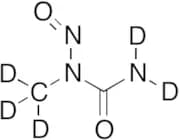
CAS:Purity:95.0%Molecular weight:287.3190002441406N-Methyl-N-nitroso Urea-d5 (Wetted with water >20%)
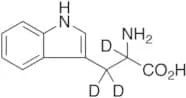
CAS:Controlled Product<p>Applications N-Methyl-N-nitroso Urea-d6 is the labelled form of N-Methyl-N-nitroso Urea (M325815), which is a precursor of Diazomethane. It has a cytotoxicity effect.<br>References Huggins, C., et al.: J. Exp. Med., 131, 321 (1970); Gullino, P.M., et al.: J. Natl. Cancer Inst., 54, 401 (1975)<br></p>Formula:C2D5N3O2Color and Shape:NeatMolecular weight:108.11D,L-Tryptophan-d3
CAS:Controlled Product<p>Applications A labelled, essential amino acid.<br>References Liu, F., et al.: Bioorg. Med. Chem., 18, 4167 (2010), Kumar, R., et al.: Eur. J. Med. Chem., 45, 2265 (2010), Cai, W., et al.: Bioorg. Med. Chem., 18, 1899 (2010),<br></p>Formula:C112H3H9N2O2Color and Shape:NeatMolecular weight:207.242-Methoxypropene
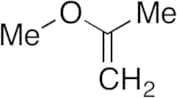
CAS:Controlled Product<p>Applications 2-Methoxypropene is used in the synthesis of Macrolactin A, a 24-member macrolide typically employed as an antibiotic. Also used in the synthesis of phenylalanine derivatives used as α4β1 and α4β7 receptor antagonists in the treatment of allergic asthma.<br>References Marino, K. et al.: J. Am. Chem. Soc., 12, 1664, (2002); Tilley, J. et al.: Bioorg. Med. Chem. Lett., 23, 1036 (2013);<br></p>Formula:C4H8OColor and Shape:NeatMolecular weight:72.112-Methyl-2-(nitroamino)-1-propanol
CAS:Controlled Product<p>Applications A nitroamino subsituted primary alcohol.<br></p>Formula:C4H10N2O3Color and Shape:NeatMolecular weight:134.13L-Lysine L-Malate
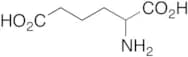
CAS:Controlled Product<p>Applications L-Lysine L-Malate is used in the preparation of amino acid ionic liquids for use in food and medical field.<br></p>Formula:C6H14N2O2·C4H6O5Color and Shape:NeatMolecular weight:280.27rac α-Aminoadipic Acid
CAS:<p>Applications An amino acid isolated from Cholera vibrio.<br>References Windsor, et al.: J. Biol. Chem., 192, 595 (1951), Scott, A.I., et al.: Synth. Commun., 10, 127 (1980),<br></p>Formula:C6H11NO4Color and Shape:Off White PowderMolecular weight:161.16Boc-4-azido-L-phenylalanine
CAS:Controlled Product<p>Applications Boc-4-azido-L-phenylalanine is used in the development of visible fluorogenic dyes for cellular imaging.<br>References Qi, Jianjun., et al.; Bioconjugate Chem., 22, 1758 (2011);<br></p>Formula:C14H18N4O4Color and Shape:NeatMolecular weight:306.324-(4-methylphenyl)-3H,4H,5H,6H,7H-imidazo[4,5-c]pyridine-6-carboxylic acid
CAS:Purity:95.0%Molecular weight:257.2929992675781Fmoc-Ser(TBDMS)-OH
CAS:Controlled Product<p>Applications Fmoc-Ser(TBDMS)-OH (cas# 146346-81-8) is a useful research chemical.<br></p>Formula:C24H31NO5SiColor and Shape:NeatMolecular weight:441.592H-Val-Gly-OH
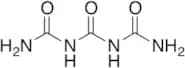
CAS:Controlled Product<p>Applications H-Val-Gly-OH (cas# 686-43-1) is a useful research chemical.<br></p>Formula:C7H14N2O3Color and Shape:NeatMolecular weight:174.2Triuret
CAS:<p>Applications Triuret is a byproduct of purine degradation in living organisms. It is a product from the pyrolsis of urea.<br>References Sergiu P. P., et al:. HHS Public Access, (2010);<br></p>Formula:C3H6N4O3Color and Shape:NeatMolecular weight:146.10N-Methyltaurine Sodium Salt (>50% in Water)
CAS:Controlled Product<p>Applications N-Methyltaurine Sodium Salt is used in the analysis of the changing properties of anionic surfactants and the development of new skin cleansers or soaps. It is the salt of N-Methyltaurine, a compound used in sperm cryopreservation studies. N-Methyltaurine is also used in the studies relating to effects on oxidative damage to erythrocytes via phenylhydrazine.<br> Not a dangerous good if item is equal to or less than 1g/ml and there is less than 100g/ml in the package<br>References Pokhrel, P.K. et al.: Adv. Exp. Med. Biol., 483, 503 (2000); Miyahara, R. et al.: Fragr. J., 28, 11 (2000); Garde, J.J. et al.: Bio. Repro., 69, 602 (2003);<br></p>Formula:C3H8NO3S·NaColor and Shape:ColourlessMolecular weight:161.164-{[(1-methyl-1H-benzimidazol-2-yl)methyl]amino}benzoic acid
CAS:Purity:95.0%Molecular weight:281.31500244140625






![2,4,8,10-Tetraoxaspiro[5.5]undecane-3,9-diylbis(2-methylpropane-2,1-diyl) bis(3-(3-(tert-butyl)-4-…](/_next/image/?url=https%3A%2Fstatic.cymitquimica.com%2Fproducts%2FTR%2Fthumb-webp%2FT306005.webp&w=3840&q=75)
![4-[2-(4-chlorophenyl)acetyl]-8-methyl-1-oxa-4,8-diazaspiro[4.5]decane-3-carboxylic acid](/_next/image/?url=https%3A%2Fstatic.cymitquimica.com%2Fproducts%2F10%2Fthumb-webp%2FF525660.webp&w=3840&q=75)

![1'-(Tert-butoxycarbonyl)spiro[cyclohexane-1,3'-indoline]-4-carboxylic acid](/_next/image/?url=https%3A%2Fstatic.cymitquimica.com%2Fproducts%2F10%2Fthumb-webp%2FF734299.webp&w=3840&q=75)
![1-{[(2-METHYL-2-PROPANYL)OXY]CARBONYL-6-PHENYL-3-PIPERIDINECARBOXYLIC ACID](/_next/image/?url=https%3A%2Fstatic.cymitquimica.com%2Fproducts%2F10%2Fthumb-webp%2FF513063.webp&w=3840&q=75)

![8-propyl-4-(pyridine-3-carbonyl)-1-oxa-4,8-diazaspiro[4.5]decane-3-carboxylic acid](/_next/image/?url=https%3A%2Fstatic.cymitquimica.com%2Fproducts%2F10%2Fthumb-webp%2FF525740.webp&w=3840&q=75)




![4-(furan-2-carbonyl)-8-methyl-1-oxa-4,8-diazaspiro[4.5]decane-3-carboxylic acid](/_next/image/?url=https%3A%2Fstatic.cymitquimica.com%2Fproducts%2F10%2Fthumb-webp%2FF525626.webp&w=3840&q=75)
![4-(2-ethoxyphenyl)-3H,4H,5H,6H,7H-imidazo[4,5-c]pyridine-6-carboxylic acid](/_next/image/?url=https%3A%2Fstatic.cymitquimica.com%2Fproducts%2F10%2Fthumb-webp%2FF522522.webp&w=3840&q=75)



![4-(4-methylphenyl)-3H,4H,5H,6H,7H-imidazo[4,5-c]pyridine-6-carboxylic acid](/_next/image/?url=https%3A%2Fstatic.cymitquimica.com%2Fproducts%2F10%2Fthumb-webp%2FF522491.webp&w=3840&q=75)



![4-{[(1-methyl-1H-benzimidazol-2-yl)methyl]amino}benzoic acid](/_next/image/?url=https%3A%2Fstatic.cymitquimica.com%2Fproducts%2F10%2Fthumb-webp%2FF314477.webp&w=3840&q=75)