Amino Acids (AA)
Amino acids (AAs) are the fundamental building blocks of proteins, playing a crucial role in various biological processes. These organic compounds are essential for protein synthesis, metabolic pathways, and cell signaling. In this category, you will find a comprehensive range of amino acids, including essential, non-essential, and modified forms, which are vital for research in biochemistry, molecular biology, and nutritional sciences. At CymitQuimica, we provide high-quality amino acids to support your research and development needs, ensuring accuracy and reliability in your experimental outcomes.
Subcategories of "Amino Acids (AA)"
- Amino Acid Derivatives(3,955 products)
- Amino Acid and Amino Acid Related Compounds(3,465 products)
- Amino Acids with Oxygen or Sulphur(168 products)
- Boc- Amino Acids(351 products)
- Fmoc Amino Acids(1,710 products)
Found 38248 products of "Amino Acids (AA)"
Sort by
Purity (%)
0
100
|
0
|
50
|
90
|
95
|
100
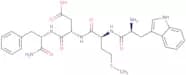
Gastrin Tetrapeptide
CAS:<p>Gastrin tetrapeptide is a pharmacological treatment for clinical relevance. It has been shown to be an irreversible inhibitor of the histamine H2-receptor. Activated gastrin tetrapeptide has been shown to inhibit the activity of 5-hydroxytryptamine (5-HT) receptors and κ-opioid receptors in vitro, and studies have shown that it decreases glutamate release from nerve cells, which may contribute to its antiemetic properties. Gastrin tetrapeptide has also been shown to have a physiological effect on humans, with decreased 5-HT concentrations and increased gastric pH levels being observed. This peptide is used in the treatment of infectious diseases such as malaria, which causes vomiting and diarrhea.</p>Formula:C29H36N6O6SPurity:Min. 95%Molecular weight:596.7 g/molAc-D-Lys-OH
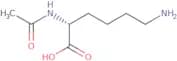
CAS:<p>Nicotinamide is a form of vitamin B3 that has been shown to inhibit the growth of Giardia lamblia trophozoites. Nicotinamide also inhibits the sirtuins and has been shown to inhibit cell cycle control in microorganisms. It inhibits transcriptional activity by competing with nicotinamide adenine dinucleotide for binding sites on DNA and prevents the formation of nicotinamide-adenine dinucleotide complexes, which are needed for DNA synthesis. Nicotinamide also binds to metronidazole, causing it to be inactive as an antimicrobial agent. The mechanism of action of nicotinamide may be due to its ability to bind and inactivate metronidazole, thereby preventing it from functioning as an anti-microbial agent.</p>Formula:C8H16N2O3Purity:Min. 95%Molecular weight:188.22 g/mol1-{[5-(Cyclopropylcarbonyl)-1-methyl-4,5,6,7-tetrahydro-1H-pyrazolo[4,3-c]pyridin-3-yl]carbonyl}piperidine-4-carboxylic acid
CAS:<p>Please enquire for more information about 1-{[5-(Cyclopropylcarbonyl)-1-methyl-4,5,6,7-tetrahydro-1H-pyrazolo[4,3-c]pyridin-3-yl]carbonyl}piperidine-4-carboxylic acid including the price, delivery time and more detailed product information at the technical inquiry form on this page</p>Formula:C18H24N4O4Purity:Min. 95%Molecular weight:360.41 g/molH-Pro-Asn-OH
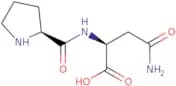
CAS:<p>H-Pro-Asn-OH is a reactive functional group that is activated by the presence of acidic conditions. It can react with epoxides to form cyclic ethers. H-Pro-Asn-OH can be used in vitro studies to assess the activation of caspases, which are proteolytic enzymes that play a role in cell apoptosis. It has also been used for molecular imaging and as an antigen for immunotherapy in cancer treatment. This molecule has a reactive functional group on its side chain and reacts with epoxides to form cyclic ethers.</p>Formula:C9H15N3O4Purity:Min. 95%Molecular weight:229.23 g/molBoc-trans-4-aminocyclohexane acetic acid
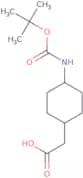
CAS:<p>Please enquire for more information about Boc-trans-4-aminocyclohexane acetic acid including the price, delivery time and more detailed product information at the technical inquiry form on this page</p>Formula:C13H23NO4Molecular weight:257.33 g/molDynorphin B (1-9)
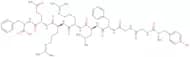
CAS:<p>Please enquire for more information about Dynorphin B (1-9) including the price, delivery time and more detailed product information at the technical inquiry form on this page</p>Formula:C54H78N16O12Purity:Min. 95%Molecular weight:1,143.3 g/molFmoc-Lys(Nde)-OH
CAS:<p>Please enquire for more information about Fmoc-Lys(Nde)-OH including the price, delivery time and more detailed product information at the technical inquiry form on this page</p>Formula:C32H29N3O8Purity:Min. 95%Molecular weight:583.59 g/molFMoc-L-4-BroMophenylalanine
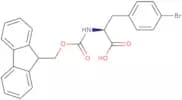
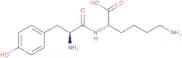
CAS:<p>FMoc-L-4-BroMophenylalanine is a cell culture substrate that is used to study the interaction between peptides and hydrogels. It can be used as a fluorescent probe in peptide binding assays as well as for studies of protein folding. This product has been shown to be efficient at inducing gelation with other amino acids, such as aspartic acid, glycine, and arginine. FMoc-L-4-BroMophenylalanine also has potential applications for use in classifying peptides based on their charge and size.</p>Formula:C24H20BrNO4Purity:Min. 95%Molecular weight:466.32 g/molH-Tyr-Lys-OH
CAS:<p>H-Tyr-Lys-OH is a small drug molecule that has been shown to inhibit protein synthesis. It binds to the active site of the transcription-polymerase chain and competitively inhibits the binding of RNA polymerase. H-Tyr-Lys-OH has also been shown to have anti-inflammatory properties, which may be due to its ability to inhibit prostaglandin synthesis. H-Tyr-Lys-OH's conformational properties are similar to those found in proteins such as glutamic acid and lysine.</p>Formula:C15H23N3O4Purity:Min. 95%Molecular weight:309.36 g/molH-D-Ala-D-Ala-D-Ala-D-Ala-D-Ala-D-Ala-OH
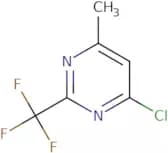
CAS:<p>Please enquire for more information about H-D-Ala-D-Ala-D-Ala-D-Ala-D-Ala-D-Ala-OH including the price, delivery time and more detailed product information at the technical inquiry form on this page</p>Formula:C18H32N6O7Purity:Min. 95%Molecular weight:444.48 g/mol4-Chloro-6-methyl-2-trifluoromethylpyrimidine
CAS:<p>Please enquire for more information about 4-Chloro-6-methyl-2-trifluoromethylpyrimidine including the price, delivery time and more detailed product information at the technical inquiry form on this page</p>Formula:C6H4ClF3N2Purity:Min. 95%Molecular weight:196.56 g/mol(Nle 8·18,Tyr34)-pTH (1-34) (human)
CAS:<p>Please enquire for more information about (Nle 8·18,Tyr34)-pTH (1-34) (human) including the price, delivery time and more detailed product information at the technical inquiry form on this page</p>Formula:C183H295N55O52Purity:Min. 95%Molecular weight:4,097.64 g/molPAR-1 (1-6) (mouse, rat) trifluoroacetate salt
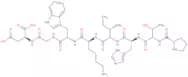
CAS:<p>Please enquire for more information about PAR-1 (1-6) (mouse, rat) trifluoroacetate salt including the price, delivery time and more detailed product information at the technical inquiry form on this page</p>Formula:C37H54N10O9Purity:Min. 95%Molecular weight:782.89 g/molH-Pro-Thr-His-Ile-Lys-Trp-Gly-Asp-OH
CAS:<p>H-Pro-Thr-His-Ile-Lys-Trp-Gly-Asp-OH is a potent inhibitor of platelet activation, which is induced by nitroprusside. In vitro studies have shown that this peptide inhibits the expression of growth factors, such as platelet derived growth factor (PDGF), and inhibits PDGF activity. This peptide also has an inhibitory effect on nitroprusside, which may be due to its ability to inhibit PDGF expression. The inhibition of PDGF by this peptide may result in the potentiation of the effects of nitroprusside on blood pressure.</p>Formula:C44H64N12O12Purity:Min. 95%Molecular weight:953.05 g/molZ-Pro-Leu-Gly-OH
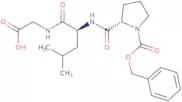
CAS:<p>Z-Pro-Leu-Gly-OH is a peptide that belongs to the class of amides, oxalate salts, and grignard reagents. It can be synthesized from the reaction between an oxalate salt and a grignard reagent. The synthesis of Z-Pro-Leu-Gly-OH is usually done by reacting an oxalate salt with a grignard reagent in presence of a ketone or ketomethylene.</p>Formula:C21H29N3O6Purity:Min. 95%Molecular weight:419.47 g/molBiotinyl-(Leu8,D-Trp22,Tyr25)-Somatostatin-28 trifluoroacetate salt
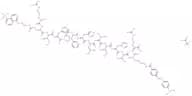
CAS:<p>Please enquire for more information about Biotinyl-(Leu8,D-Trp22,Tyr25)-Somatostatin-28 trifluoroacetate salt including the price, delivery time and more detailed product information at the technical inquiry form on this page</p>Formula:C148H223N43O42S3Purity:Min. 95%Molecular weight:3,372.82 g/molOsteostatin (1-5) amide (human, bovine, dog, horse, mouse, rabbit, rat) trifluoroacetate salt
CAS:<p>Please enquire for more information about Osteostatin (1-5) amide (human, bovine, dog, horse, mouse, rabbit, rat) trifluoroacetate salt including the price, delivery time and more detailed product information at the technical inquiry form on this page</p>Formula:C27H42N10O7Purity:Min. 95%Molecular weight:618.69 g/molAc-His-His-Gly-His-OH
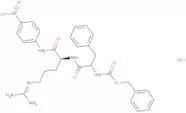
CAS:<p>Ac-His-His-Gly-His-OH is a lysine ligand with an acetyl group and two histidine residues. Acetylation of the hydroxyl group on the lysine residue is necessary for binding to metal ions, such as protonation. This molecule has been shown to have five different protonation states at neutral pH. The protonated form has been found to be more soluble in water than the deprotonated form. Acetylation of both lysines in the molecule leads to hydrolytic cleavage of the amide bond, which causes it to become insoluble in water. Acetylation also alters chemical properties, such as changes in color; for example, this molecule exhibits dichroism when viewed under polarized light.</p>Formula:C22H28N10O6Purity:Min. 95%Molecular weight:528.52 g/molZ-Phe-Arg-pNA·HCl
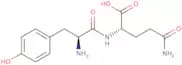
CAS:<p>Please enquire for more information about Z-Phe-Arg-pNA·HCl including the price, delivery time and more detailed product information at the technical inquiry form on this page</p>Formula:C29H33N7O6·HClPurity:Min. 95%Molecular weight:612.08 g/molH-Tyr-Gln-OH
CAS:<p>H-Tyr-Gln-OH is a model system for the study of polymerase chain reactions. It is a basic protein that has been shown to have antimicrobial peptide activity, and it can be used as a light signal in colony-stimulating factor experiments. H-Tyr-Gln-OH also has been shown to affect fertility in mice and to alter the frequency shift of light. The plant physiology studies on H-Tyr-Gln-OH have revealed that this molecule can stimulate epidermal growth factor production in plants, which may be due to its ability to bind lipid kinases. H-Tyr-Gln-OH can also be used as an antigen for antibody production or as a hybridization probe for DNA detection.</p>Formula:C14H19N3O5Purity:Min. 95%Molecular weight:309.32 g/mol(Met5,Pro6,D-Phe7,D-Trp9,Phe10)-α-MSH (5-13)
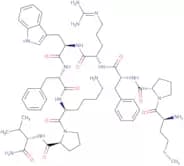
CAS:<p>(Met5,Pro6,D-Phe7,D-Trp9,Phe10)-a-MSH (5-13) is a fragment of alpha-MSH. It is produced by the coupling of 5 amino acids with a fatty acid at the C-terminus. This peptide has been found to have an anti aging effect on the skin due to its ability to stimulate the production of collagen and glycerin. It also has an active oxygen species that can activate tyrosinase and therefore increase melanin production. The enzyme tyrosinase is responsible for catalyzing the last step in the synthesis of melanin from dopaquinone. This compound may be used cosmetically or as a growth regulator in skincare products.</p>Formula:C61H87N15O9SPurity:Min. 95%Molecular weight:1,206.51 g/mol(Arg8)-Vasopressin (free acid) trifluoroacetate salt
CAS:<p>Please enquire for more information about (Arg8)-Vasopressin (free acid) trifluoroacetate salt including the price, delivery time and more detailed product information at the technical inquiry form on this page</p>Formula:C46H64N14O13S2Purity:Min. 95%Molecular weight:1,085.22 g/mol(D-Phe2·6,Pro3)-LHRH trifluoroacetate salt
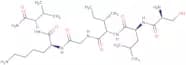
CAS:<p>Please enquire for more information about (D-Phe2·6,Pro3)-LHRH trifluoroacetate salt including the price, delivery time and more detailed product information at the technical inquiry form on this page</p>Formula:C59H80N14O13Purity:Min. 95%Molecular weight:1,193.35 g/molPAR-2 (1-6) amide (human) trifluoroacetate salt
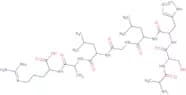
CAS:<p>PAR-2 (1-6) amide (human) trifluoroacetate salt H-Ser-Leu-Ile-Gly-Lys-Val-NH2 trifluoroacetate salt is a protease inhibitor that inhibits the activity of PAR2, a protein receptor. PAR2 is implicated in cancer and inflammation. It has been shown to inhibit growth factor signaling, as well as activate toll-like receptor 4 and other inflammatory pathways. PAR2 inhibition has also been studied in vivo and found to be effective in treating wild type mice with melanoma cells. In vitro studies have shown that PAR2 inhibition by PAR 2 (1-6) amide (human) trifluoroacetate salt H-Ser-Leu-Ile-Gly-Lys-Val NH2 trifluoroacetate salt blocks the production of tumour necrosis factor alpha and interleukin 6.</p>Formula:C28H54N8O7Purity:Min. 95%Molecular weight:614.78 g/molC3a (70-77)
CAS:<p>C3a is a molecule that is part of the complement system. It was first discovered in leukocytes and has since been detected in other populations. C3a is a chemotactic factor for neutrophils and eosinophils, which are types of white blood cells. C3a binds to the surface of cells by means of protein-antibody interactions, and it can also act as an anaphylatoxin by binding to mast cell receptors.</p>Formula:C35H61N13O10Purity:Min. 95%Molecular weight:823.94 g/molZ-Leu-Met-OH
CAS:<p>Please enquire for more information about Z-Leu-Met-OH including the price, delivery time and more detailed product information at the technical inquiry form on this page</p>Formula:C19H28N2O5SPurity:Min. 95%Molecular weight:396.5 g/molRenin Substrate 1 trifluoroacetate salt
CAS:<p>Please enquire for more information about Renin Substrate 1 trifluoroacetate salt including the price, delivery time and more detailed product information at the technical inquiry form on this page</p>Formula:C109H157N31O22S2Purity:Min. 95%Molecular weight:2,317.74 g/molFibrinopeptide A (human) trifluoroacetate salt
CAS:<p>Fibrinopeptide A is a peptide that is released from the fibrinolysis of fibrinogen. It can be used as a blood marker for the diagnosis of bowel disease and primary pulmonary hypertension, but not for other diseases such as infectious diseases. Fibrinopeptide A has been shown to be an effective model system for studying thrombin-mediated fibrin polymerization in vitro. This drug also can be used as a tool for investigating the disulfide bond in fibrinogen.</p>Formula:C63H97N19O26Purity:Min. 95%Molecular weight:1,536.56 g/molGastric Inhibitory Polypeptide (6-30) amide (human) trifluoroacetate salt
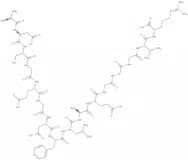
CAS:<p>Please enquire for more information about Gastric Inhibitory Polypeptide (6-30) amide (human) trifluoroacetate salt including the price, delivery time and more detailed product information at the technical inquiry form on this page</p>Formula:C139H209N35O38SPurity:Min. 95%Molecular weight:3,010.43 g/molFA-Gly-Leu-NH2
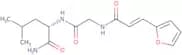
CAS:<p>FA-Gly-Leu-NH2 is an amide that inhibits the activity of metalloproteases by binding to the zinc ion in the active site. It was shown to inhibit protease activity and protein synthesis in armillaria. This compound also showed irreversible inhibition of thermolysin, a serine protease, and protein synthesis in yeast. The biological properties of FA-Gly-Leu-NH2 were studied using a synthetic substrate for thermolysin, which led to the conclusion that this inhibitor has potential as a therapeutic agent for inflammatory diseases.</p>Formula:C15H21N3O4Purity:Min. 95%Molecular weight:307.35 g/molH-Ala-Gly-Ala-OH
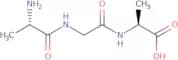
CAS:<p>H-Ala-Gly-Ala-OH is a small molecule that regulates the replication of viruses. It was discovered by x-ray crystallography and has been shown to inhibit the replication of viruses in cell culture. H-Ala-Gly-Ala-OH effectively inhibits viral replication by binding to the protein that is required for viral RNA synthesis. This molecule also affects other cellular processes, such as regulating gene expression and DNA repair. The molecular orbital energies have been calculated using density functional theory and analysed using diffraction data from X-ray crystallography. H-Ala-Gly-Ala-OH binds to the virus's surface by electrostatic interactions with the phosphate backbone of the nucleic acid, preventing it from infecting cells. At low temperatures, HAAGAO can inhibit both DNA and RNA synthesis in vitro, but at higher temperatures it only inhibits RNA synthesis.</p>Formula:C8H15N3O4Purity:Min. 95%Molecular weight:217.22 g/molAngiotensin I-Converting Enzyme (ACE) Inactivator Cyanoac-Phe-Phe-OH
CAS:<p>Cyanoac-Phe-Phe-OH is a hydrolytic enzyme that irreversibly inactivates the ACE enzyme. It acts as an inhibitor of angiotensin-converting enzyme and inhibits the conversion of angiotensin I to angiotensin II, which is involved in blood pressure regulation. Cyanoac-Phe-Phe-OH has been shown to be more potent than captopril, another ACE inhibitor. It also has a longer half life and greater selectivity for ACE over other serine proteases.</p>Formula:C21H21N3O4Purity:Min. 95%Molecular weight:379.41 g/molH-Gly-Gly-Pro-OH
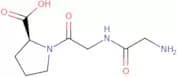
CAS:<p>H-Gly-Gly-Pro-OH is a recombinant polypeptide with affinity for amino acids. It is a positionally defined sequence of amino acids that has been shown to bind to Alzheimer's disease (AD) amyloid peptides and inhibit the formation of beta amyloid fibrils. The N-terminal sequence of this polypeptide is immunogenic, which may be useful for generating antibodies against AD.</p>Formula:C9H15N3O4Purity:Min. 95%Molecular weight:229.23 g/molBoc-Pro-Pro-Pro-Pro-OH
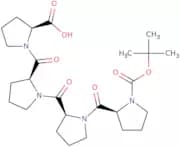
CAS:<p>Boc-Pro-Pro-Pro-Pro-OH is a synthetic peptide. It has been shown to have high specificity and is useful in the diagnosis of diseases that are caused by abnormal extracellular glutamic acid, hydroxyproline, or ion-exchange. Boc-Pro-Pro-Pro-Pro-OH has been used as a model for other peptides and has been shown to have acidic properties. The structure is dodecyl peptidic with a residue of -N(CH2)3-.</p>Formula:C25H38N4O7Purity:Min. 95%Molecular weight:506.59 g/molNeurotensin (9-13)
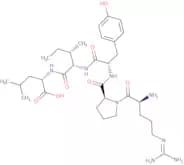
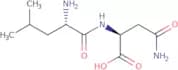
CAS:<p>Neurotensin (NT) is a peptide hormone that belongs to the family of amides and is found in the stomach, small intestine, and central nervous system. NT is an agonist of the neurotensin receptor and binds to allosteric binding sites on the receptor. Neurotensin (NT) is modified by proteolysis, which may be due to its acidic residue at position 9. This modification leads to increased affinity for the neurotensin receptor binding site. The pharmacokinetic properties of NT are not well-understood as it has been shown to have both high lipophilicity and low plasma protein binding rates. Neurotensin (NT) receptors have been shown to be G protein coupled receptors with different subtypes, such as NT1, NT2A, NT2B, and NT3.</p>Formula:C32H52N8O7Purity:Min. 95%Molecular weight:660.81 g/molH-Leu-Asn-OH
CAS:<p>H-Leu-Asn-OH is a water-soluble drug that belongs to the group of serotonin reuptake inhibitors. It is a radical prostatectomy drug that has been shown to have disease-modifying effects in patients with benign prostatic hyperplasia. H-Leu-Asn-OH has also been shown to be effective in treating HIV infection and cancer, as well as inhibiting the growth of cancer cells in cell culture. This compound is chemically stable and can be transported across the blood brain barrier. Clinical studies on H-Leu-Asn-OH have found it to be safe for use in humans.</p>Formula:C10H19N3O4Purity:Min. 95%Molecular weight:245.28 g/molN-Heptyl-Hyp-OH
CAS:<p>The synthesis of N-heptyl-hyp-OH is a chiral resolution process for the preparation of the enantiomers of heptanol. The enantioselective synthesis of this compound is achieved by converting the racemic mixture to an optically active form by means of a chiral auxiliary, followed by protection and hydrolysis. This method produces an optically pure product in high yield.</p>Formula:C12H23NO3Purity:Min. 95%Molecular weight:229.32 g/molZ-Gly-Phe-Ala-OH
CAS:<p>Please enquire for more information about Z-Gly-Phe-Ala-OH including the price, delivery time and more detailed product information at the technical inquiry form on this page</p>Formula:C22H25N3O6Purity:Min. 95%Molecular weight:427.45 g/molH-Cys-Ser-Arg-Ala-Arg-Lys-Gln-Ala-Ala-Ser-Ile-Lys-Val-Ala-Val-Ser-Ala-Asp-Arg-OH trifluoroacetate salt
CAS:<p>Please enquire for more information about H-Cys-Ser-Arg-Ala-Arg-Lys-Gln-Ala-Ala-Ser-Ile-Lys-Val-Ala-Val-Ser-Ala-Asp-Arg-OH trifluoroacetate salt including the price, delivery time and more detailed product information at the technical inquiry form on this page</p>Formula:C82H149N31O26SPurity:Min. 95%Molecular weight:2,017.32 g/molNeuronostatin-13 (mouse, rat) trifluoroacetate salt
<p>Please enquire for more information about Neuronostatin-13 (mouse, rat) trifluoroacetate salt including the price, delivery time and more detailed product information at the technical inquiry form on this page</p>Formula:C65H112N20O17Purity:Min. 95%Molecular weight:1,445.71 g/molBoc-Lys(2-chloro-Z)-PAM resin (200-400 mesh)
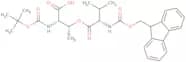
<p>Please enquire for more information about Boc-Lys(2-chloro-Z)-PAM resin (200-400 mesh) including the price, delivery time and more detailed product information at the technical inquiry form on this page</p>Purity:Min. 95%Boc-Thr(Val-Fmoc)-OH
CAS:<p>Please enquire for more information about Boc-Thr(Val-Fmoc)-OH including the price, delivery time and more detailed product information at the technical inquiry form on this page</p>Formula:C29H36N2O8Purity:Min. 95%Molecular weight:540.6 g/mol3-Cyano-2-methylphenylboronic acid
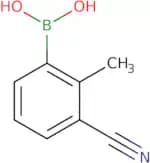
CAS:<p>3-Cyano-2-methylphenylboronic acid is a high quality compound that can be used as a reagent, intermediate, or building block in the synthesis of complex compounds. This chemical is also useful as a speciality chemical and research chemical. 3-Cyano-2-methylphenylboronic acid has versatile uses in organic synthesis due to its versatility in reactions and building blocks.</p>Formula:C8H8BNO2Purity:Min. 95%Color and Shape:PowderMolecular weight:160.97 g/molpTH (1-31) (human)
CAS:<p>Please enquire for more information about pTH (1-31) (human) including the price, delivery time and more detailed product information at the technical inquiry form on this page</p>Formula:C162H269N49O47S2Purity:Min. 95%Molecular weight:3,719.3 g/molFITC-β-Ala-Amyloid β-Protein (1-40)
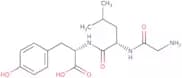
CAS:<p>Please enquire for more information about FITC-beta-Ala-Amyloid beta-Protein (1-40) including the price, delivery time and more detailed product information at the technical inquiry form on this page</p>Formula:C218H311N55O64S2Purity:Min. 95%Molecular weight:4,790.27 g/molH-Gly-Leu-Tyr-OH
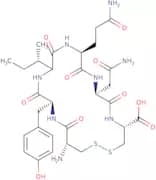
CAS:<p>H-Gly-Leu-Tyr-OH is a tripeptide that is found in some human and animal proteins. The peptide contains glycine, leucine, tyrosine, and hydroxyproline. It binds to copper ions with an inhibition constant of 1.5 x 10^5 M and has a pH optimum of 7.0. In the active form, it inhibits α subunit of bacterial aminopeptidase which is required for protein synthesis in bacteria. The peptide also has been shown to be a model system for the study of enzyme mechanisms and as a chromatographic method for analyzing proteins in food chemistry.</p>Formula:C17H25N3O5Purity:Min. 95%Molecular weight:351.4 g/mol(Ile3)-Pressinoic acid
CAS:<p>Ile3-pressinoic acid is an amide that is structurally similar to gamma-aminobutyric acid. It has dose-dependent effects on fatty acid synthesis and redox potential. Ile3-pressinoic acid is a leishmania molecule that can be used as a diagnostic agent for the disease, as well as a potential treatment in cell culture and animal models. It also has been shown to have receptor activity on peptide hormones, including oxytocin receptors.</p>Formula:C30H44N8O10S2Purity:Min. 95%Molecular weight:740.85 g/molBoc-Arg(Tos)-Merrifield resin (200-400 mesh)
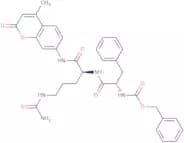
<p>Please enquire for more information about Boc-Arg(Tos)-Merrifield resin (200-400 mesh) including the price, delivery time and more detailed product information at the technical inquiry form on this page</p>Purity:Min. 95%Z-Phe-Cit-AMC
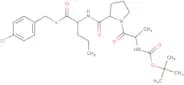
CAS:<p>Z-Phe-Cit-AMC is a fluorescent substrate for the enzymes cysteine and peptide aminopeptidases. It has been synthesized by conjugating 7-amino-4-methylcoumarin with L-phenylalanine. The product is useful in assays to measure the activity of these enzymes, which are involved in protein digestion and wound healing. Z-Phe-Cit-AMC can be hydrolyzed by bromelain, ficin, or papain and it can be used as a substrate for enzyme reactions.</p>Formula:C33H35N5O7Purity:Min. 95%Molecular weight:613.66 g/molBoc-Ala-Pro-Nva-4-chloro-SBzl
CAS:<p>Please enquire for more information about Boc-Ala-Pro-Nva-4-chloro-SBzl including the price, delivery time and more detailed product information at the technical inquiry form on this page</p>Formula:C25H36ClN3O5SPurity:Min. 95%Molecular weight:526.09 g/mol

![1-{[5-(Cyclopropylcarbonyl)-1-methyl-4,5,6,7-tetrahydro-1H-pyrazolo[4,3-c]pyridin-3-yl]carbonyl}pi…](/_next/image/?url=https%3A%2Fstatic.cymitquimica.com%2Fproducts%2F3D%2Fthumb-webp%2FFC119596.webp&w=3840&q=75)