Amino Acids (AA)
Amino acids (AAs) are the fundamental building blocks of proteins, playing a crucial role in various biological processes. These organic compounds are essential for protein synthesis, metabolic pathways, and cell signaling. In this category, you will find a comprehensive range of amino acids, including essential, non-essential, and modified forms, which are vital for research in biochemistry, molecular biology, and nutritional sciences. At CymitQuimica, we provide high-quality amino acids to support your research and development needs, ensuring accuracy and reliability in your experimental outcomes.
Subcategories of "Amino Acids (AA)"
- Amino Acid Derivatives(3,955 products)
- Amino Acid and Amino Acid Related Compounds(3,464 products)
- Amino Acids with Oxygen or Sulphur(168 products)
- Boc- Amino Acids(351 products)
- Fmoc Amino Acids(1,710 products)
Found 38247 products of "Amino Acids (AA)"
Sort by
Purity (%)
0
100
|
0
|
50
|
90
|
95
|
100
(Trp63,Trp64)-C3a (63-77)
CAS:<p>Please enquire for more information about (Trp63,Trp64)-C3a (63-77) including the price, delivery time and more detailed product information at the technical inquiry form on this page</p>Formula:C86H134N26O18Purity:Min. 95%Molecular weight:1,820.15 g/molAc-Val-Glu-Ile-Asp-aldehyde (pseudo acid)
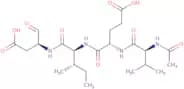
CAS:<p>Ac-Val-Glu-Ile-Asp-aldehyde is a pseudo acid that has been shown to induce apoptotic cell death in cultured cells. It is localized in the cerebellar granule and mitochondria of HL-60 cells and HK-2 cells. Ac-Val-Glu-Ile-Asp-aldehyde induces necrotic cell death when it binds to the serine protease zymogen, which is localized in the mitochondrial membrane. It also induces apoptosis by disrupting the mitochondrial membrane potential, leading to a release of cytochrome c into the cytosol. Ac-Val-Glu-Ile-Asp-aldehyde can bind to annexin and tubule cells, which are important for β cell function.</p>Formula:C22H36N4O9Purity:Min. 95%Molecular weight:500.54 g/molFmoc-Nle-Nle-OH
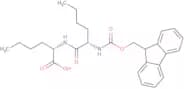
CAS:<p>Please enquire for more information about Fmoc-Nle-Nle-OH including the price, delivery time and more detailed product information at the technical inquiry form on this page</p>Formula:C27H34N2O5Purity:Min. 95%Molecular weight:466.57 g/molAllatotropin
CAS:<p>Allatotropin is a diagnostic agent that belongs to the class of antimicrobial peptides. It has been shown to have strong activity against Gram-positive and Gram-negative bacteria. Allatotropin inhibits the growth of bacteria by binding to the external membrane, disrupting its integrity. Allatotropin also has been shown to increase gamma-aminobutyric acid levels in brain tissue and galleria mellonella larvae when injected subcutaneously. This may be due to its ability to activate GABA receptors. Allatotropin can be synthesized in vitro by combining β-amino acids with fatty acids and terminal residues, such as lysine, arginine, and glutamine, under conditions that mimic those found in living cells. This synthetic process yields a mixture of allatotropins with varying chain lengths and amino acid sequences.</p>Formula:C65H103N19O17S2Purity:Min. 95%Molecular weight:1,486.76 g/mol(H-Cys-pNA)2 (Disulfide bond)
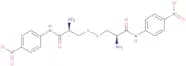
CAS:<p>H-Cys-pNA is a labile molecule that has been used as a substrate for aminopeptidase activity. It is a competitive inhibitor of aminopeptidase and binds to the active site of the enzyme, preventing it from cleaving peptides from their amino acids. H-Cys-pNA has been shown to inhibit oxytocin release by binding to the oxytocin receptor in rat brain tissue. This molecule also inhibits the growth of dysgerminoma cells in vitro and blocks cell division. H-Cys-pNA is susceptible to proteolytic degradation and may be degraded by polyacrylamide gel electrophoresis, which can be used for its analysis on polyacrylamide gels.</p>Formula:C18H20N6O6S2Purity:Min. 95%Molecular weight:480.52 g/molFmoc-Ala-Cys(Psi(Me ,Me)pro)-OH
<p>Please enquire for more information about Fmoc-Ala-Cys(Psi(Me ,Me)pro)-OH including the price, delivery time and more detailed product information at the technical inquiry form on this page</p>Formula:C24H26N2O5SPurity:Min. 95%Molecular weight:454.54 g/molFmoc-D-Val-Wang resin (200-400 mesh)
<p>Please enquire for more information about Fmoc-D-Val-Wang resin (200-400 mesh) including the price, delivery time and more detailed product information at the technical inquiry form on this page</p>Purity:Min. 95%1-Methyl-4-(4,4,5,5-tetramethyl-[1,3,2]dioxaborolan-2-yl)-1h-imidazole
CAS:<p>Please enquire for more information about 1-Methyl-4-(4,4,5,5-tetramethyl-[1,3,2]dioxaborolan-2-yl)-1h-imidazole including the price, delivery time and more detailed product information at the technical inquiry form on this page</p>Formula:C10H17BN2O2Purity:Min. 95%Color and Shape:PowderMolecular weight:208.07 g/molN-Me-Thr(Bzl)-OH·HCl
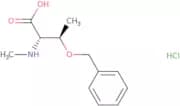
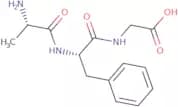
CAS:<p>N-Me-Thr(Bzl)-OH·HCl is a soluble, hydroformylation catalyst with alkenyl and sulfonated substituents. It is used as a hydrogenation catalyst in the industrial production of polymers, detergents, and other organic chemicals. It can also be used to catalyze the reduction of carbonyl groups to alcohols in organic synthesis.<br>N-Me-Thr(Bzl)-OH·HCl is insoluble in water and can be converted into an insoluble form by reacting with HCl or NaOH. This product has been shown to have radical properties that allow it to catalyze the hydrogenation of alkenes and alkynes.</p>Formula:C12H17NO3·HClPurity:Min. 95%Molecular weight:259.73 g/molH-Ala-Phe-Gly-OH
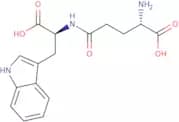
CAS:<p>Please enquire for more information about H-Ala-Phe-Gly-OH including the price, delivery time and more detailed product information at the technical inquiry form on this page</p>Formula:C14H19N3O4Purity:Min. 95%Molecular weight:293.32 g/molH-Glu(Trp-OH)-OH
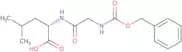
CAS:<p>H-Glu(Trp-OH)-OH is a synthetic immunomodulator that is used in vitro to study the immune system. H-Glu(Trp-OH)-OH has been shown to stimulate the production of antibodies by polyclonal antibodies, which inhibits the growth of bacteria. H-Glu(Trp-OH)-OH has also been shown to have anti-inflammatory properties and can inhibit lung damage caused by radiation. H-Glu(Trp-OH)-OH is not active against tuberculosis or other infectious diseases in animals because it does not cause an increase in phagocytic cells or leukocytes.</p>Formula:C16H19N3O5Purity:Min. 95%Molecular weight:333.34 g/molZ-Gly-Leu-OH
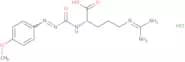
CAS:<p>Z-Gly-Leu-OH is a synthetic peptide that is used as a substrate for proteases. It contains the amino acid sequence Gly-Leu-OH and has been shown to inhibit serine proteases with irreversible inhibition. Z-Gly-Leu-OH inhibits protease activity by binding to the enzyme's active site, which prevents it from catalyzing reactions and stabilizing the product of the reaction. The substrate can be cleaved by a protease in two ways: (1) hydrolysis of the amide bond between Gly and Leu or (2) protonation of the amide bond between Gly and Leu followed by elimination of water. These reactions are reversible because they are dependent on pH. In order to measure enzyme activity using this substrate, it must be conjugated with a fluorescent dye so that fluorescence can be detected following cleavage.</p>Formula:C16H22N2O5Purity:Min. 95%Molecular weight:322.36 g/molN-(4-Methoxyphenylazoformyl)-Arg-OH·HCl
CAS:<p>Please enquire for more information about N-(4-Methoxyphenylazoformyl)-Arg-OH·HCl including the price, delivery time and more detailed product information at the technical inquiry form on this page</p>Formula:C14H20N6O4·HClPurity:Min. 95%Color and Shape:Orange Red SolidMolecular weight:372.81 g/mol[2,6-Dimethyl-4-(3-[2-(Z-amino)-ethylcarbamoyl]-propoxy)-benzenesulfonyl]-Dap (Boc)-OMe
CAS:<p>Please enquire for more information about [2,6-Dimethyl-4-(3-[2-(Z-amino)-ethylcarbamoyl]-propoxy)-benzenesulfonyl]-Dap (Boc)-OMe including the price, delivery time and more detailed product information at the technical inquiry form on this page</p>Formula:C31H44N4O10SPurity:Min. 95%Molecular weight:664.77 g/molH-Leu-Gly-Gly-OH
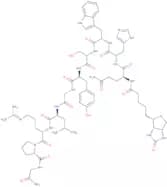
CAS:<p>H-Leu-Gly-Gly-OH is a protease enzyme that belongs to the family of hydrolases. It has been shown to have proteolytic activity with casein and protein synthesis with pancreatic enzymes. The kinetic data for this enzyme were determined by measuring the rate of hydrolysis at different pH levels. The optimum pH for this enzyme is 6.0, with a maximum activity at pH 7.5 and an inhibition at pH 4.0. This enzyme can be found in either the free form or as an integral membrane protein in lysosomes, where it exhibits high affinity for hydrogen bonds and low affinity for ionic bonds. H-Leu-Gly-Gly-OH is used in analytical methods such as chromatography and spectrophotometry to identify proteins in biological samples.END></p>Formula:C10H19N3O4Purity:Min. 95%Molecular weight:245.28 g/molBiotinyl-(Gln1)-LHRH trifluoroacetate salt Biotinyl-Gln-His-Trp-Ser-Tyr-Gly-Leu-Arg-Pro-Gly-NH2 trifluoroacetate salt
CAS:<p>Please enquire for more information about Biotinyl-(Gln1)-LHRH trifluoroacetate salt Biotinyl-Gln-His-Trp-Ser-Tyr-Gly-Leu-Arg-Pro-Gly-NH2 trifluoroacetate salt including the price, delivery time and more detailed product information at the technical inquiry form on this page</p>Formula:C65H92N20O15SPurity:Min. 95%Molecular weight:1,425.62 g/molFmoc-Pro-DHPP resin (200-400 mesh)
<p>Please enquire for more information about Fmoc-Pro-DHPP resin (200-400 mesh) including the price, delivery time and more detailed product information at the technical inquiry form on this page</p>Purity:Min. 95%SV40 Nuclear Transport Signal Peptide Analog
CAS:<p>Please enquire for more information about SV40 Nuclear Transport Signal Peptide Analog including the price, delivery time and more detailed product information at the technical inquiry form on this page</p>Formula:C60H104N20O15SPurity:Min. 95%Molecular weight:1,377.66 g/molLeptin (93-105) (human)
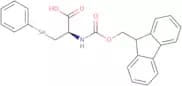
CAS:<p>Please enquire for more information about Leptin (93-105) (human) including the price, delivery time and more detailed product information at the technical inquiry form on this page</p>Formula:C64H110N20O23Purity:Min. 95%Molecular weight:1,527.68 g/molFmoc-L-Sec(phenyl)-OH
CAS:<p>Please enquire for more information about Fmoc-L-Sec(phenyl)-OH including the price, delivery time and more detailed product information at the technical inquiry form on this page</p>Formula:C24H21NO4SePurity:Min. 95%Molecular weight:466.39 g/molZ-Ala-Glu-OH
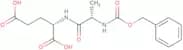
CAS:<p>Z-Ala-Glu-OH is an amino acid with a glutamate residue. It is a synthetic amino acid that has been shown to have excitotoxic effects in the brain. The mechanism of action is thought to involve the activation of ionotropic glutamate receptors and the inhibition of voltage-gated potassium channels, leading to neuronal cell death. This compound has been found to be a sweetener in biochemical reactions. Z-Ala-Glu-OH was shown to undergo proteolytic degradation, which may be due to aminopeptidases present in the gut or enzyme preparations used during digestion. This amino acid was also shown to have neurodegenerative properties when given orally to mealworms, as well as profiles that are similar to those found in humans with neurodegenerative diseases such as Alzheimer's disease and amyotrophic lateral sclerosis.</p>Formula:C16H20N2O7Purity:Min. 95%Color and Shape:PowderMolecular weight:352.34 g/molpTH (73-84) (human)
CAS:<p>Please enquire for more information about pTH (73-84) (human) including the price, delivery time and more detailed product information at the technical inquiry form on this page</p>Formula:C54H96N16O19Purity:Min. 95%Molecular weight:1,273.44 g/molSuc-Ala-Ala-Phe-pNA
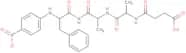
CAS:<p>Suc-Ala-Ala-Phe-pNA is a peptide that is being studied for its potential to act as an anticancer agent. It inhibits the growth of tumor cells by binding to the neurokinin receptor and thereby blocking the production of substances such as epidermal growth factor, which promote tumor growth. Suc-Ala-Ala-Phe-pNA also has been shown to inhibit the activity of enzymes involved in glucocorticoid receptors, which are proteins that play a key role in regulating the immune response. This peptide also has been shown to be active against mouse skin cells and human prostate cancer cells. In addition, it is believed that this peptide may be useful in gene therapy because it can induce apoptosis in tumor cells without affecting normal tissue.</p>Formula:C25H29N5O8Purity:Min. 95%Molecular weight:527.53 g/molBis(4-methylphenyl) sulfone
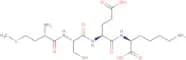
CAS:<p>Bis(4-methylphenyl) sulfone is an industrial chemical used in the manufacture of other chemicals. It is a sulfone that contains a hydroxyl group and a methylating agent. The reaction solution must be anhydrous and contain sodium carbonate, chloride, and methylating agent. The product can be synthesized by the Suzuki coupling reaction between an alkyl halide and an aryl boronic acid. This process requires activation energies of about 40-45 kcal/mol to drive the reaction forward. The hydrochloric acid reacts with the hydroxyl group on the sulfone to form a chlorosulfonic acid intermediate, which reacts with methylene chloride to produce bis(4-methylphenyl) sulfone. The carbonyl group on this intermediate is activated by adding methoxy groups, which are then replaced by chlorine atoms in order to form bis(4-chlorophenyl) sulfone.</p>Formula:C14H14O2SPurity:Min. 95%Molecular weight:246.33 g/molH-Met-Cys-Glu-Lys-OH trifluoroacetate salt
CAS:<p>Please enquire for more information about H-Met-Cys-Glu-Lys-OH trifluoroacetate salt including the price, delivery time and more detailed product information at the technical inquiry form on this page</p>Formula:C19H35N5O7S2Purity:Min. 95%Molecular weight:509.64 g/mol((R)-4-Hydroxy-4-methyl-Orn (5-TAMRA)7)-Phalloidin
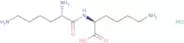
<p>Please enquire for more information about ((R)-4-Hydroxy-4-methyl-Orn (5-TAMRA)7)-Phalloidin including the price, delivery time and more detailed product information at the technical inquiry form on this page</p>Formula:C60H69N11O14SPurity:Min. 95%Molecular weight:1,200.32 g/molH-Lys-Lys-OH hydrochloride salt
CAS:<p>Please enquire for more information about H-Lys-Lys-OH hydrochloride salt including the price, delivery time and more detailed product information at the technical inquiry form on this page</p>Formula:C12H26N4O3·xHClPurity:Min. 95%Molecular weight:274.36 g/molH-Leu-Leu-Val-Tyr-OH
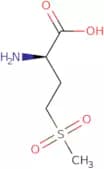
CAS:<p>Please enquire for more information about H-Leu-Leu-Val-Tyr-OH including the price, delivery time and more detailed product information at the technical inquiry form on this page</p>Formula:C26H42N4O6Purity:Min. 95%Molecular weight:506.64 g/molH-D-Met(O2)-OH
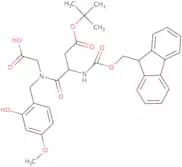
CAS:<p>H-D-Met(O2)-OH is an amino acid that is naturally occurring in the human body. It can be found in dietary sources such as milk, eggs, and meat. This amino acid is a building block for proteins and also has a number of metabolic pathways. H-D-Met(O2)-OH isomerizes to form D-Met(O2)-OH and L-Met(O2)-OH through enzymatic reactions. These isomers have different biological effects, with L-Met(O2)-OH being more potent than D-Met(O2)-OH. The enzyme that catalyzes this reaction is called synthetase. H-D-Met(O2)-OH can be used as a supplement to increase muscle mass or as a treatment for gluconeogenesis disorders such as diabetes mellitus type 2.</p>Formula:C5H11NO4SPurity:Min. 95%Molecular weight:181.21 g/molFmoc-D-Asp(OtBu)-(Hmb)Gly-OH
CAS:<p>Please enquire for more information about Fmoc-D-Asp(OtBu)-(Hmb)Gly-OH including the price, delivery time and more detailed product information at the technical inquiry form on this page</p>Formula:C33H36N2O9Purity:Min. 95%Molecular weight:604.65 g/mol(H-Cys-betaNA)2·2 HCl (Disulfide bond)
CAS:<p>Please enquire for more information about (H-Cys-betaNA)2·2 HCl (Disulfide bond) including the price, delivery time and more detailed product information at the technical inquiry form on this page</p>Formula:C26H26N4O2S2·2HClPurity:Min. 95%Molecular weight:563.56 g/molH-Tyr-Ile-Gly-Ser-Arg-OH trifluoroacetate salt
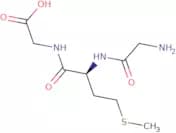
CAS:<p>The H-Tyr-Ile-Gly-Ser-Arg-OH trifluoroacetate salt is a synthetic peptide that has been shown to promote neuronal growth and axonal regeneration. This compound has been synthesized using a biocompatible polymer, collagen gel, and neurotrophic factors. The peptide is also able to stimulate the synthesis of collagen in mesenchymal cells cultured in tissue culture. The peptide can be used for treatment of subcutaneous tumors and neural injury.</p>Formula:C26H42N8O8Purity:Min. 95%Molecular weight:594.66 g/molH-Gly-Met-Gly-OH
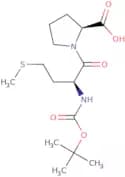
CAS:<p>H-Gly-Met-Gly-OH is an amide containing a sulfoxide group. It is synthesized from the amino acid glycine and the tripeptide Met-Gly-Gly. The synthesis of HMG was first reported by Sato in 1907, although it was not used as a drug until 1983. This drug has potential antitumor activity and inhibits the growth of certain tumor cells. HMG is metabolized by peptidases, which hydrolyze the peptide bond between glycine and Met-Gly-Gly. Hydrolysis of HMG yields glyoxylic acid (H2O2) and the amino acids glycine and methanol. HMG also inhibits the uptake of glucose into cells, which may be related to its antitumor effect. X-ray diffraction studies have shown that HMG has a carboxylate group at C6 that binds to three oxygen atoms, which are present in two</p>Formula:C9H17N3O4SPurity:Min. 95%Molecular weight:263.32 g/molBoc-Met-Pro-OH
CAS:<p>Boc-Met-Pro-OH is a peptide that can be synthesized by condensation of the amino acid methanol with the carboxylic acid proline. This reaction yields Boc-Met-Pro-OH, which can be monitored via thin layer chromatography. The side chain on Boc-Met-Pro-OH is analogous to that of cholecystokinin and this class of peptides are derived from the amide bond. Condensation reactions catalyzed by papain or methyl esters result in the formation of an amide bond between two amino acids. These reactions also produce Boc-Met-Pro-OH because it has an amide bond.</p>Formula:C15H26N2O5SPurity:Min. 95%Molecular weight:346.44 g/molProadrenomedullin (1-20) (human)
CAS:<p>Proadrenomedullin (1-20) is a polypeptide that is found in human plasma. It is a member of the vasoactive intestinal peptide family and has been shown to be involved in the regulation of vascular tone, blood pressure, and blood vessel permeability. Proadrenomedullin (1-20) also inhibits the production of proinflammatory cytokines such as tumor necrosis factor-alpha, interleukin-6, and interleukin-8. This compound has been shown to have antiviral activity against HIV and herpes simplex virus type 1. Proadrenomedullin (1-20) also functions as a growth factor for tumor cells.</p>Formula:C112H178N36O27Purity:Min. 95%Molecular weight:2,460.84 g/mol(Lys3)-Bombesin
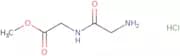
CAS:<p>Lys3-Bombesin is a bifunctional peptide that binds to the bombesin receptor and is used in cancer therapy. It is a radiotracer, which can be used for diagnostic imaging and diagnosis of tumors. Lys3-Bombesin has a high affinity for the bombesin receptor subtype B, which is expressed by prostate cancer cells. The peptide can be conjugated to a small molecule, such as a radioactive isotope, and used to deliver it specifically to the tumor site. This compound has been shown to inhibit the growth of human prostate cancer cells in vitro.</p>Formula:C71H110N22O18SPurity:Min. 95%Molecular weight:1,591.84 g/molGly-Gly-OMe·HCl
CAS:<p>Gly-Gly-OMe·HCl is a diagnostic agent that can be used to diagnose atherosclerotic lesions. It is conjugated to an organic molecule and then radiolabeled. The conjugate can be detected by cyclopentadienyl, which emits gamma rays when it decays. This conjugate has been shown to selectively accumulate in atherosclerotic lesions of the coronary arteries, where it accumulates with a higher concentration than in the surrounding tissue. This product also has gastroprotective effects on the stomach and liver and can reduce lipid levels in hyperlipidaemic patients.</p>Formula:C5H10N2O3•HClPurity:Min. 95 Area-%Color and Shape:Slightly Rose PowderMolecular weight:182.61 g/molFmoc-D-Tyr(tBu)-Wang resin (200-400 mesh)
<p>Please enquire for more information about Fmoc-D-Tyr(tBu)-Wang resin (200-400 mesh) including the price, delivery time and more detailed product information at the technical inquiry form on this page</p>Purity:Min. 95%Epinecidin-1 trifluoroacetate salt
CAS:<p>Please enquire for more information about Epinecidin-1 trifluoroacetate salt including the price, delivery time and more detailed product information at the technical inquiry form on this page</p>Formula:C114H176N30O21SPurity:Min. 95%Molecular weight:2,334.87 g/molAQEE-30 (mouse, rat) trifluoroacetate salt
CAS:<p>Please enquire for more information about AQEE-30 (mouse, rat) trifluoroacetate salt including the price, delivery time and more detailed product information at the technical inquiry form on this page</p>Formula:C156H245N47O56Purity:Min. 95%Molecular weight:3,674.9 g/molPreptin (rat) trifluoroacetate salt
CAS:<p>Please enquire for more information about Preptin (rat) trifluoroacetate salt including the price, delivery time and more detailed product information at the technical inquiry form on this page</p>Formula:C181H268N48O51Purity:Min. 95%Molecular weight:3,932.36 g/molUroguanylin Topoisomer A (human) trifluoroacetate salt
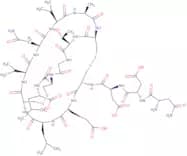
CAS:<p>Trifluoroacetate salt</p>Formula:C64H102N18O26S4Purity:Min. 95%Molecular weight:1,667.86 g/molN-((RS)-2-Hydroxy-propyl)-Val-Leu-anilide
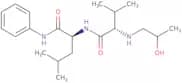
CAS:<p>Please enquire for more information about N-((RS)-2-Hydroxy-propyl)-Val-Leu-anilide including the price, delivery time and more detailed product information at the technical inquiry form on this page</p>Formula:C20H33N3O3Purity:Min. 95%Molecular weight:363.49 g/molH-trans-4,5-Dehydro-DL-Lys-OH·2 HCl
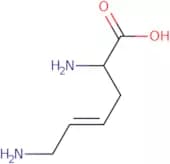
CAS:<p>Please enquire for more information about H-trans-4,5-Dehydro-DL-Lys-OH·2 HCl including the price, delivery time and more detailed product information at the technical inquiry form on this page</p>Formula:C6H12N2O2·2HClPurity:Min. 95%Molecular weight:217.09 g/molBpoc-Gly-OH·DCHA
CAS:Controlled Product<p>Please enquire for more information about Bpoc-Gly-OH·DCHA including the price, delivery time and more detailed product information at the technical inquiry form on this page</p>Formula:C18H19NO4·C12H23NPurity:Min. 95%Molecular weight:494.67 g/molD-Threoninol
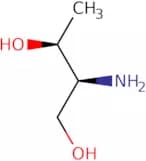
CAS:<p>Please enquire for more information about D-Threoninol including the price, delivery time and more detailed product information at the technical inquiry form on this page</p>Formula:C4H11NO2Purity:Min. 95%Molecular weight:105.14 g/molL-Lysine diisocyanate
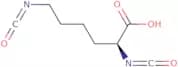
CAS:<p>L-Lysine diisocyanate is an organic compound that is a reactive site for the production of calcium stearate and ethylene diamine. It has been shown to be a reactive site in vitro, but not in vivo. L-Lysine diisocyanate reacts with water vapor to produce hydrogen cyanide, which is toxic to cells. The presence of l-lysine can inhibit the formation of hydrogen cyanide, but it also inhibits uptake into cells and tissue cultures.</p>Formula:C8H10N2O4Purity:Min. 95 Area-%Molecular weight:198.18 g/molIL-8 Inhibitor
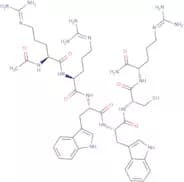
CAS:<p>IL-8 Inhibitor Ac-Arg-Arg-Trp-Trp-Cys-Arg-NH2 is a molecule that blocks the receptor for IL-8, a c-c chemokine. This leads to reduced inflammation and decreased activation of cells in the inflammatory process. IL-8 Inhibitor Ac-Arg-Arg-Trp-Trp-Cys--Arg--NH2 has been shown to be effective in reducing chronic bronchitis and pancreatitis in animal models. The effective dose for IL 8 inhibitor is not yet known.</p>Formula:C45H66N18O7SPurity:Min. 95%Molecular weight:1,003.19 g/mol2-Chloro-3-methoxybenzaldehyde
CAS:<p>Please enquire for more information about 2-Chloro-3-methoxybenzaldehyde including the price, delivery time and more detailed product information at the technical inquiry form on this page</p>Formula:C8H7ClO2Purity:Min. 95%Molecular weight:170.59 g/molZ-Asp-Gln-Met-Asp-AFC
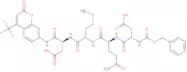
CAS:<p>Please enquire for more information about Z-Asp-Gln-Met-Asp-AFC including the price, delivery time and more detailed product information at the technical inquiry form on this page</p>Formula:C36H39F3N6O13SPurity:Min. 95%Molecular weight:852.79 g/mol




![1-Methyl-4-(4,4,5,5-tetramethyl-[1,3,2]dioxaborolan-2-yl)-1h-imidazole](/_next/image/?url=https%3A%2Fstatic.cymitquimica.com%2Fproducts%2F3D%2Fthumb-webp%2FFM166321.webp&w=3840&q=75)
![[2,6-Dimethyl-4-(3-[2-(Z-amino)-ethylcarbamoyl]-propoxy)-benzenesulfonyl]-Dap (Boc)-OMe](/_next/image/?url=https%3A%2Fstatic.cymitquimica.com%2Fproducts%2F3D%2Fthumb-webp%2FFD111582.webp&w=3840&q=75)