Amino Acids (AA)
Amino acids (AAs) are the fundamental building blocks of proteins, playing a crucial role in various biological processes. These organic compounds are essential for protein synthesis, metabolic pathways, and cell signaling. In this category, you will find a comprehensive range of amino acids, including essential, non-essential, and modified forms, which are vital for research in biochemistry, molecular biology, and nutritional sciences. At CymitQuimica, we provide high-quality amino acids to support your research and development needs, ensuring accuracy and reliability in your experimental outcomes.
Subcategories of "Amino Acids (AA)"
- Amino Acid Derivatives(3,955 products)
- Amino Acid and Amino Acid Related Compounds(3,464 products)
- Amino Acids with Oxygen or Sulphur(168 products)
- Boc- Amino Acids(351 products)
- Fmoc Amino Acids(1,710 products)
Found 38247 products of "Amino Acids (AA)"
Sort by
Purity (%)
0
100
|
0
|
50
|
90
|
95
|
100
mPEG9-OH
CAS:<p>mPEG9-OH is a PEG polymer categorised as monofunctional (OH-PEG-X). Used as a linker, mPEG9-OH is used to attached PEG to proteins, peptides, oligonucleotides, nanoparticles and small molecules via pegylation, a bioconjugation technique.</p>Formula:C19H40O10Purity:Min. 95%Molecular weight:428.51 g/mol((R)-4-Hydroxy-4-methyl-Orn7)-phalloidin
CAS:<p>Please enquire for more information about ((R)-4-Hydroxy-4-methyl-Orn7)-phalloidin including the price, delivery time and more detailed product information at the technical inquiry form on this page</p>Formula:C35H49N9O10SPurity:Min. 95%Color and Shape:PowderMolecular weight:787.88 g/molZ-Leu-Ser-OMe
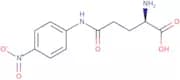
CAS:<p>Please enquire for more information about Z-Leu-Ser-OMe including the price, delivery time and more detailed product information at the technical inquiry form on this page</p>Formula:C18H26N2O6Purity:Min. 95%Molecular weight:366.41 g/molH-D-Glu(pNA)-OH
CAS:<p>Please enquire for more information about H-D-Glu(pNA)-OH including the price, delivery time and more detailed product information at the technical inquiry form on this page</p>Formula:C11H13N3O5Purity:Min. 95%Molecular weight:267.24 g/molH-Lys-Pro-OH hydrochloride salt
CAS:<p>H-Lys-Pro-OH hydrochloride salt is a monoclonal antibody that is used to treat psychotic disorders. It blocks the binding of gamma-aminobutyric acid (GABA) to its receptor, which reduces neuronal activity and has a calming effect on the central nervous system. H-Lys-Pro-OH hydrochloride salt also inhibits the phosphatase enzyme and prevents it from breaking down phosphotungstic acid, which is used in this process. The antibody also binds to the analog of gamma aminobutyric acid, preventing it from binding with its receptor. H-Lys-Pro-OH hydrochloride salt may be advantageous in treating kidney fibrosis because it prevents cell proliferation and growth in tissue cultures by inhibiting enzymes involved in collagen synthesis. H-Lys-Pro-OH hydrochloride salt may also be useful as an antitumor agent because it inhibits tumor growth by blocking uptake and replication of DNA.</p>Formula:C11H21N3O3Purity:Min. 95%Molecular weight:243.3 g/molEndomorphin-2 trifluoroacetate salt
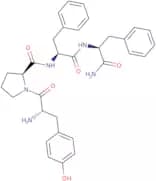
CAS:<p>Endomorphin-2 is a cyclic peptide that is the endogenous ligand for the neurokinin-1 receptor and kappa-opioid receptors. It has been shown to have analgesic, anti-inflammatory, and antidiarrheal properties. Endomorphin-2 also has been shown to inhibit platelet aggregation and vasoconstriction in vivo. The biological activities of endomorphin-2 are similar to those of endomorphin-1, but it differs structurally in that it contains a single intramolecular hydrogen bond between the amide nitrogen of Tyr and Pro. This intramolecular hydrogen bond may be responsible for the high potency of endomorphin-2, as well as its conformational stability.</p>Formula:C32H37N5O5Purity:Min. 95%Molecular weight:571.67 g/molBicine
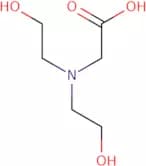
CAS:<p>Bicine, also known as N,N-Bis(2-hydroxyethyl)glycine, is a Bis(2-hydroxyethyl) amine buffer with an optimal pH range of 7.6-9.0 and a pKa of 8.26. This buffering agent forms metal complexes and is used in crystallization and enzymatic studies.</p>Formula:C6H13NO4Purity:Min. 95%Color and Shape:White SolidMolecular weight:163.17 g/molH-Tyr-Tyr-Tyr-Tyr-Tyr-Tyr-OH trifluoroacetate salt
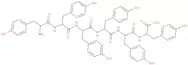
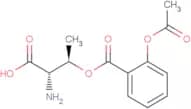
CAS:<p>The compound H-Tyr-Tyr-Tyr-Tyr-Tyr-Tyr-OH trifluoroacetate salt is a synthetic antigen for use in the production of immunoadsorbent conjugates. It is a postulated fluorescence molecule that interacts with specific antibodies to form an antigen. This antigen can be used as a probe for detecting antibodies in biological fluids and tissues by fluorescence microscopy and has been shown to have no antigenicity in skin reactions.</p>Formula:C54H56N6O13Purity:Min. 95%Molecular weight:997.06 g/molL-Threonine derivative-1
CAS:<p>L-Threonine derivative-1 is acetylsalicylic acid-L-threonine ester with potential analgesic activity.</p>Formula:C13H15NO6Purity:97.03% - 98.91%Color and Shape:SolidMolecular weight:281.26(Gly22)-Amyloid b-Protein (1-40) trifluoroacetate salt
CAS:<p>Please enquire for more information about (Gly22)-Amyloid b-Protein (1-40) trifluoroacetate salt including the price, delivery time and more detailed product information at the technical inquiry form on this page</p>Formula:C191H291N53O56SPurity:Min. 95%Molecular weight:4,257.74 g/molH-Arg-Asn-Ile-Ala-Glu-Ile-Ile-Lys-Asp-Ile-OH
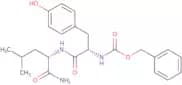
CAS:<p>Arg-Asn-Ile-Ala-Glu-Ile-Ile-Lys-Asp is a synthetic peptide that was designed to be unidirectional in its metabolic activity. This peptide has been shown to stimulate nerve growth and promote axonal outgrowth. It can also be used to treat neuropathic pain and other conditions related to the nervous system. The Arg-Asn-Ile-Ala-Glu sequence has been shown to increase nerve growth factor synthesis, which promotes axonal outgrowth. This sequence may also have potential as an antiadhesive or antiinflammatory agent since it may inhibit the interactions of inflammatory cells with the endothelium.</p>Formula:C52H93N15O16Purity:Min. 95%Molecular weight:1,184.39 g/molZ-Tyr-Leu-NH2
CAS:<p>The compound Z-Tyr-Leu-NH2 is a synthetic molecule that inhibits the activity of metalloproteases. It binds to the active site of these enzymes, preventing them from cleaving their substrates. The enzyme's activity is inhibited by binding to uncharged amino acid residues in the active site, which prevents attack by the metal ion and therefore prevents cleavage of substrate proteins. Z-Tyr-Leu-NH2 has been shown to be effective against proteases that are involved in Alzheimer's disease and other neurodegenerative diseases. The optimal pH for this compound is 7.5, with a reaction time of 1 hour at 37 degrees Celsius. The transition temperature for this compound is -10 degrees Celsius, with a phase transition at -4 degrees Celsius.</p>Formula:C23H29N3O5Purity:Min. 95%Molecular weight:427.49 g/molAcetyl-Hirudin (53-65) (sulfated) Ac-Asp-Gly-Asp-Phe-Glu-Glu-Ile-Pro-Glu-Glu-Tyr(SO3H)-Leu-Gln-OH
CAS:<p>Acetyl-Hirudin 53-65 (sulfated) Ac-Asp-Gly-Asp-Phe-Glu-Glu-Ile-Pro-Glu-Glu-Tyr(SO3H)-Leu-Gln-OH is an anticoagulant drug that is used to prevent blood clots. It has been shown to inhibit thrombin and dextran sulfate, a substance that can cause blood clots. Acetyl Hirudin 53–65 (sulfated) Ac Asp Gly Asp Phe Glu Glu Ile Pro Glu Glu Tyr (SO3H) Leu Gln OH also prevents the formation of new blood clots by inhibiting the expression of certain proteins such as epidermal growth factor, monoclonal antibody, and fibrinogen. The molecular weight of this compound is about 8,000 Daltons.</p>Formula:C72H100N14O32SPurity:Min. 95%Molecular weight:1,705.71 g/molH-Leu-Leu-Val-Tyr-OH
CAS:<p>Please enquire for more information about H-Leu-Leu-Val-Tyr-OH including the price, delivery time and more detailed product information at the technical inquiry form on this page</p>Formula:C26H42N4O6Purity:Min. 95%Molecular weight:506.64 g/molH-Tyr-Ile-Gly-Ser-Arg-OH trifluoroacetate salt
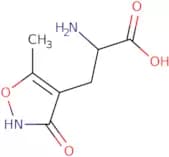
CAS:<p>The H-Tyr-Ile-Gly-Ser-Arg-OH trifluoroacetate salt is a synthetic peptide that has been shown to promote neuronal growth and axonal regeneration. This compound has been synthesized using a biocompatible polymer, collagen gel, and neurotrophic factors. The peptide is also able to stimulate the synthesis of collagen in mesenchymal cells cultured in tissue culture. The peptide can be used for treatment of subcutaneous tumors and neural injury.</p>Formula:C26H42N8O8Purity:Min. 95%Molecular weight:594.66 g/mol(R,S)-α-Amino-3-hydroxy-5-methyl-4-isoxazolepropionic acid hydrobromide
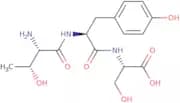
CAS:<p>(R,S)-AMPA is a synthetic analog of the excitatory neurotransmitter glutamate, specifically designed to activate AMPA receptors, a subtype of ionotropic glutamate receptors. These receptors are pivotal in mediating fast synaptic transmission in the central nervous system. (R,S)-AMPA serves as a prototypical agonist for AMPA receptors, facilitating the study of receptor function and synaptic plasticity.</p>Formula:C7H10N2O4•HBrPurity:Min. 95%Molecular weight:267.08 g/molH-Thr-Tyr-Ser-OH
CAS:<p>H-Thr-Tyr-Ser-OH is a fluorescent peptide with conjugates that has been shown to be sequestered in atherosclerotic lesions. The fluorescence of this peptide is increased when bound to lipofuscin, which accumulates in atherosclerotic lesions. Immunohistochemical staining has revealed that H-Thr-Tyr-Ser-OH is a marker for the identification of atheromas and can be used to identify areas of lipid accumulation. H-Thr-Tyr-Ser-OH binds to peroxidases and enzyme linked immunosorbent assay (ELISA) antibodies, making it useful as an indicator for the presence of these enzymes. This peptide also stains positively for markers such as CD11b, CD68, and lysozyme.</p>Formula:C16H23N3O7Purity:Min. 95%Molecular weight:369.37 g/molFmoc-Ser(tBu)-Thr(Psi(Me ,Me)pro)-OH
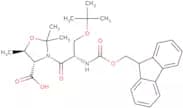
CAS:<p>Please enquire for more information about Fmoc-Ser(tBu)-Thr(Psi(Me ,Me)pro)-OH including the price, delivery time and more detailed product information at the technical inquiry form on this page</p>Formula:C29H36N2O7Purity:Min. 95%Color and Shape:PowderMolecular weight:524.61 g/molGRF (human) acetate salt
CAS:<p>Growth hormone-releasing factor (GRF) or GHRH (growth hormone-releasing hormone).Binds to the growth hormone-releasing hormone receptor (GHRH-R), causing growth hormone secretion.porcine: H-YADAIFTNSYRKVLGQLSARKLLQDIMSRQQGERNQEQGARVRL-NH2bovine: H-YADAIFTNSYRKVLGQLSARKLLQDIMNRQQGERNQEQGAKVRL-NH2ovine: H-YADAIFTNSYRKILGQLSARKLLQDIMNRQQGERNQEQGAKVRL-NH2human: H-YADAIFTNSYRKVLGQLSARKLLQDIMSRQQGESNQERGARARL-NH2</p>Formula:C215H358N72O66SPurity:Min. 98 Area-%Color and Shape:PowderMolecular weight:5,039.65 g/molBradykinin-Like Neuropeptide (Aplysia californica) trifluoroacetate salt
CAS:<p>Please enquire for more information about Bradykinin-Like Neuropeptide (Aplysia californica) trifluoroacetate salt including the price, delivery time and more detailed product information at the technical inquiry form on this page</p>Formula:C53H98N24O14SPurity:Min. 95%Molecular weight:1,327.56 g/molUroguanylin Topoisomer A (human) trifluoroacetate salt
CAS:<p>Trifluoroacetate salt</p>Formula:C64H102N18O26S4Purity:Min. 95%Molecular weight:1,667.86 g/molH-trans-4,5-Dehydro-DL-Lys-OH·2 HCl
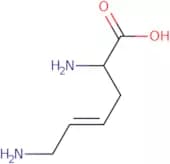
CAS:<p>Please enquire for more information about H-trans-4,5-Dehydro-DL-Lys-OH·2 HCl including the price, delivery time and more detailed product information at the technical inquiry form on this page</p>Formula:C6H12N2O2·2HClPurity:Min. 95%Molecular weight:217.09 g/molD-Threoninol
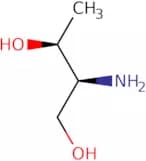
CAS:<p>Please enquire for more information about D-Threoninol including the price, delivery time and more detailed product information at the technical inquiry form on this page</p>Formula:C4H11NO2Purity:Min. 95%Molecular weight:105.14 g/molH-Lys-Lys-Lys-Lys-OH acetate salt
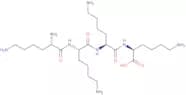
CAS:<p>H-Lys-Lys-Lys-Lys-OH acetate salt is a fatty acid that has been shown to form stable complexes with DNA and act as an intercalator. It also provides a repair mechanism for DNA, which may be due to its ability to bind to stem cell factor (SCF) and increase the proliferation of stem cells. H-Lys-Lys-Lys-Lys-OH acetate salt has significant cytotoxicity against viruses, such as human immunodeficiency virus type 1 (HIV1) and human papilloma virus type 16. This drug can also be used as an adjuvant in monoclonal antibody production by stimulating the production of antibodies from mouse spleen cells. H-Lys-Lys-Lys-Lys-OH acetate salt has been shown to inhibit the growth of E. coli K12 and Bacteria Corynebacterium diphtheriae, both of</p>Formula:C24H50N8O5Purity:Min. 95%Molecular weight:530.7 g/molH-Lys-Lys-Glu-Asp-Val-Val-Abu-Cys-Ser-Abu-Ser-Tyr-Lys-Lys-NH2
CAS:<p>Please enquire for more information about H-Lys-Lys-Glu-Asp-Val-Val-Abu-Cys-Ser-Abu-Ser-Tyr-Lys-Lys-NH2 including the price, delivery time and more detailed product information at the technical inquiry form on this page</p>Formula:C69H119N19O21SPurity:Min. 95%Molecular weight:1,582.86 g/mol((R)-4-Hydroxy-4-methyl-Orn (TRITC)7)-Phalloidin
<p>Please enquire for more information about ((R)-4-Hydroxy-4-methyl-Orn (TRITC)7)-Phalloidin including the price, delivery time and more detailed product information at the technical inquiry form on this page</p>Formula:C60H70N12O13S2Purity:Min. 95%Molecular weight:1,231.4 g/molH-Pro-His-Leu-OH
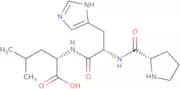
CAS:<p>H-Pro-His-Leu-OH is a tripeptide with a sequence of L-proline, H-histidine, and D-leucine. It is an experimental substrate for peptide transporters and has been shown to be taken up by E. coli. This peptide is specific for Borrelia burgdorferi, the organism that causes Lyme disease.</p>Formula:C17H27N5O4Purity:Min. 95%Molecular weight:365.43 g/molN-α-Fmoc-N-δ-Boc-D-ornithine
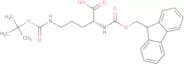
CAS:<p>N-alpha-Fmoc-N-delta-Boc-D-ornithine (NFDO) is an antibiotic that belongs to the group of macrocyclic, cyclic antibiotics. This drug has antibacterial activity against gram-negative pathogens and is most effective against E. coli. NFDO is synthesized by a solid phase synthesis that occurs in two stages: first, FMOC protected amino acids are coupled to the resin and then deprotection is carried out with piperidine in DMF at room temperature. The final product is obtained by cleavage of the peptide from the resin with trifluoroacetic acid and purification by HPLC.</p>Formula:C25H30N2O6Purity:Min. 95%Color and Shape:White PowderMolecular weight:454.52 g/molH-Gly-Arg-Ala-Asp-Ser-Pro-Lys-OH acetate salt
CAS:<p>Glycine-arginine-aspartate (GAA) is a mimic of the endothelium-derived vasoactive peptide, nitric oxide (NO). It has been shown to attenuate the inflammatory response by decreasing leukocyte adhesion and migration. GAA is also a potent inhibitor of vascular permeability and can attenuate edema in animal models. Studies have shown that GAA prevents microvascular damage following brain infarction. The mechanism of action for GAA is not fully understood, but it may be due to its ability to inhibit fibronectin breakdown, which leads to cerebral edema. GAA's activity on the endothelium may be due to its ability to mimic NO or inhibit sulfate synthesis.</p>Formula:C29H51N11O11Purity:Min. 95%Molecular weight:729.78 g/molBoc-Gly-Gly-Gly-Lys-OH
CAS:<p>Please enquire for more information about Boc-Gly-Gly-Gly-Lys-OH including the price, delivery time and more detailed product information at the technical inquiry form on this page</p>Formula:C17H31N5O7Purity:Min. 95%Molecular weight:417.46 g/molC5a Anaphylatoxin (37-53) (human) trifluoroacetate salt
CAS:<p>Please enquire for more information about C5a Anaphylatoxin (37-53) (human) trifluoroacetate salt including the price, delivery time and more detailed product information at the technical inquiry form on this page</p>Formula:C82H141N27O22SPurity:Min. 95%Molecular weight:1,889.23 g/molAc-Tyr-Val-Ala-Asp-aldehyde (pseudo acid)
CAS:<p>Ac-Tyr-Val-Ala-Asp-aldehyde is a sesquiterpene lactone that has been shown to have anti-inflammatory properties. It inhibits the inflammatory response by inhibiting the production of pro-inflammatory cytokines and chemokines, such as IL1β, IL6, and TNFα. Ac-Tyr-Val-Ala-Asp-aldehyde also inhibits the activity of cyclooxygenase 2 (COX2) and lipoxygenase (LOX), which are enzymes that produce prostaglandins from arachidonic acid. Acetylsalicylic acid is an example of a drug with similar properties. Acetylsalicylic acid has been shown to inhibit the growth of cancer cells in tissue culture studies and in animal models. This compound may also be used to treat bowel disease, congestive heart failure, or other diseases that are characterized by increased apoptosis.</p>Formula:C23H32N4O8Purity:Min. 95%Molecular weight:492.52 g/mol(H-Asp-Glu-Val-Asp)2-Rhodamine 110 trifluoroacetate salt
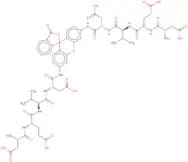
CAS:<p>Please enquire for more information about (H-Asp-Glu-Val-Asp)2-Rhodamine 110 trifluoroacetate salt including the price, delivery time and more detailed product information at the technical inquiry form on this page</p>Formula:C56H66N10O23Purity:Min. 95%Molecular weight:1,247.18 g/molMca-Lys-Pro-Leu-Gly-Leu-Dap (Dnp)-Ala-Arg-NH2 trifluoroacetate salt
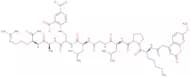
CAS:<p>Please enquire for more information about Mca-Lys-Pro-Leu-Gly-Leu-Dap (Dnp)-Ala-Arg-NH2 trifluoroacetate salt including the price, delivery time and more detailed product information at the technical inquiry form on this page</p>Formula:C55H80N16O16Purity:Min. 95%Molecular weight:1,221.32 g/mol4-Methoxyphenyl boronic acid
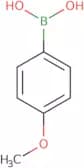
CAS:<p>4-Methoxyphenyl boronic acid is a molecule with a hydroxyl group and a boronic acid. It is synthesized by reacting biphenyl with trifluoroacetic acid in the presence of sodium carbonate and palladium-catalyzed coupling. 4-Methoxyphenyl boronic acid has shown to bind to the receptor for fatty acids, which may be due to its structural similarity to p-hydroxybenzoic acid. The protonated form of this molecule has been shown to react with an electrophilic carbon atom and an electron-deficient alkyl or vinyl halide, resulting in ring formation. This reaction is known as the Suzuki coupling reaction.</p>Formula:C7H9BO3Purity:Min. 95%Color and Shape:PowderMolecular weight:151.96 g/molL-Lysine methyl ester 2HCl
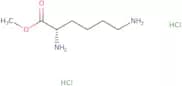
CAS:<p>L-Lysine methyl ester 2HCl is a lysine derivative that has been synthesized by reacting L-lysine with methanol and hydrochloric acid. This compound's cytotoxicity has been demonstrated in an inhibition study using calf thymus dna. L-Lysine methyl ester 2HCl contains amide, acid, and ester linkages, as well as hydrogen bonds that are typical of natural compounds. It is also biologically active and has a molecular weight of 246.3 g/mol. The chemical structure of this compound consists of a central l-lysine molecule with two methyl groups on the nitrogen atom. The compound also contains a carboxyl group on the end of the chain and an ester group on the second carbon atom from the end of the chain. L-Lysine methyl ester 2HCl can be found in soybeans and bovine fetal tissue. It exhibits morphological properties similar to other</p>Formula:C7H16N2O2·2HClPurity:Min. 95%Color and Shape:PowderMolecular weight:233.14 g/molZ-Ala-Ala-Lys-4MbetaNA formiate salt
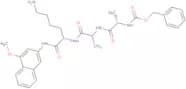
CAS:<p>Please enquire for more information about Z-Ala-Ala-Lys-4MbetaNA formiate salt including the price, delivery time and more detailed product information at the technical inquiry form on this page</p>Formula:C31H39N5O6·CH2O2Purity:Min. 95%Molecular weight:623.7 g/molH-Ala-Pro-Phe-OH
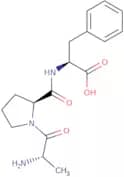
CAS:<p>Please enquire for more information about H-Ala-Pro-Phe-OH including the price, delivery time and more detailed product information at the technical inquiry form on this page</p>Formula:C17H23N3O4Purity:Min. 95%Molecular weight:333.38 g/molBAM-22P (8-22) trifluoroacetate salt
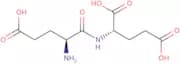
CAS:<p>BAM-22P (8-22) trifluoroacetate salt is a compound that has been shown to be an effective drug for the treatment of pain. It has been shown to have an effect on bone cancer, which can be activated by serotonin. This compound may be beneficial in treating nerve injury and fibrosarcoma cells. BAM-22P (8-22) trifluoroacetate salt is an allosteric modulator of the serotonin receptor and may be used as a treatment for pain in wild-type mice. The molecule is also a serotonin reuptake inhibitor, which prevents the reuptake of serotonin into the presynaptic neuron. This leads to increased levels of serotonin in the synapse and increased pain relief.</p>Formula:C91H127N25O23SPurity:Min. 95%Molecular weight:1,971.2 g/molH-Glu-Glu-OH
CAS:<p>H-Glu-Glu-OH is an organic acid that has proteolytic and gene product properties. It is a hyperactive compound that can be used as a sample preparation reagent for the detection of glutamic acid in proteins. H-Glu-Glu-OH inhibits protein synthesis by binding to ribosomes, which are responsible for the production of proteins in the cell, and prevents their function. Magnetic resonance spectroscopy has been used to investigate the uptake of H-Glu-Glu-OH into mammalian cells and ovarian follicles.</p>Formula:C10H16N2O7Purity:Min. 95 Area-%Color and Shape:White PowderMolecular weight:276.24 g/mol(D-Trp8)-Somatostatin-14 trifluoroacetate salt
CAS:<p>Please enquire for more information about (D-Trp8)-Somatostatin-14 trifluoroacetate salt including the price, delivery time and more detailed product information at the technical inquiry form on this page</p>Formula:C76H104N18O19S2Purity:Min. 95%Molecular weight:1,637.88 g/molFmoc-Lys(N3)-OH
CAS:<p>Fmoc-Lys(N3)-OH is a glutamic acid molecule with a specific lysine and histidine residue. It has been shown to be cytotoxic in vitro, specifically targeting cancer cells. Fmoc-Lys(N3)-OH can be conjugated to vancomycin or other molecules that are not normally cell permeable for the treatment of neurodegenerative diseases. The divalent nature of this molecule allows it to cross the blood-brain barrier. Solid phase synthesis is used to produce this compound, which is then purified by chromatography and characterized by mass spectrometry.</p>Formula:C21H22N4O4Purity:Min. 95%Molecular weight:394.42 g/molMet-Enkephalin-Arg acetate salt
CAS:<p>Please enquire for more information about Met-Enkephalin-Arg acetate salt including the price, delivery time and more detailed product information at the technical inquiry form on this page</p>Formula:C33H47N9O8SPurity:Min. 95%Molecular weight:729.85 g/molH-Gly-Gly-NH2·HCl
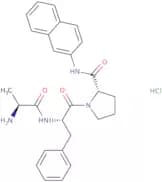
CAS:<p>Gly-Gly-NH2·HCl is a nanosized antibiotic that has been shown to have antibacterial properties. It is activated by long-chain inorganic acids, such as hydrochloric acid, and organic solvents, such as acetone. This compound has an amide group that makes it acidic. The hydrocarbon chain of this molecule may be either short or long.</p>Formula:C4H9N3O2·HClPurity:Min. 95%Molecular weight:167.59 g/molH-Ala-Phe-Pro-bNA·HCl
CAS:<p>Please enquire for more information about H-Ala-Phe-Pro-bNA·HCl including the price, delivery time and more detailed product information at the technical inquiry form on this page</p>Formula:C27H30N4O3·HClPurity:Min. 95%Molecular weight:495.01 g/molJKC-301 Cyclo(-D-Asp-Pro-D-Ile-Leu-D-Trp)
CAS:<p>Please enquire for more information about JKC-301 Cyclo(-D-Asp-Pro-D-Ile-Leu-D-Trp) including the price, delivery time and more detailed product information at the technical inquiry form on this page</p>Formula:C32H44N6O7Purity:Min. 95%Molecular weight:624.73 g/molZ-Glu-Tyr-OH
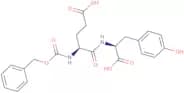
CAS:<p>Z-Glu-Tyr-OH is a disulfide bond with a cavity. It is soluble in acidic solutions and has a cationic surface. Z-Glu-Tyr-OH is an enzyme inhibitor that blocks the activity of α subunit of protein kinase C, which is involved in intracellular signal transduction pathways. The inhibition of this enzyme may lead to apoptosis, or programmed cell death. Z-Glu-Tyr-OH also inhibits fatty acid synthesis by blocking the activity of hydroxylase enzymes, such as 3β-hydroxysteroid dehydrogenase and 17α-hydroxylase. This compound has been shown to inhibit indole-3-propionic acid production by inhibiting the kinetic and sephadex g-100 activities of the enzyme indoleamine 2,3 dioxygenase.</p>Formula:C22H24N2O8Purity:Min. 95%Molecular weight:444.43 g/moluPAR (84-95) (human) trifluoroacetate salt
CAS:<p>Please enquire for more information about uPAR (84-95) (human) trifluoroacetate salt including the price, delivery time and more detailed product information at the technical inquiry form on this page</p>Formula:C62H98N18O20SPurity:Min. 95%Molecular weight:1,447.62 g/molH-Ala-Ala-Pro-Ala-OH
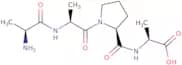
CAS:<p>H-Ala-Ala-Pro-Ala-OH is a tetrapeptide that inhibits elastase, an enzyme that breaks down elastin. This compound has been shown to have anti-elastolytic activity in vitro and in vivo. H-Ala-Ala-Pro-Ala-OH was administered intraperitoneally to hamsters with induced emphysema, resulting in a decrease of elastin abnormalities and improvement of the ultrastructure of the lungs. It also improves pancreatic morphology and function in porcine pancreatitis models.</p>Formula:C14H24N4O5Purity:Min. 95%Molecular weight:328.36 g/molHIV-1 rev Protein (34-50)
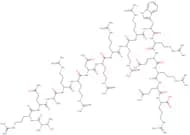
CAS:<p>Please enquire for more information about HIV-1 rev Protein (34-50) including the price, delivery time and more detailed product information at the technical inquiry form on this page</p>Formula:C97H173N51O24Purity:Min. 95%Molecular weight:2,437.74 g/mol