Amino Acids (AA)
Amino acids (AAs) are the fundamental building blocks of proteins, playing a crucial role in various biological processes. These organic compounds are essential for protein synthesis, metabolic pathways, and cell signaling. In this category, you will find a comprehensive range of amino acids, including essential, non-essential, and modified forms, which are vital for research in biochemistry, molecular biology, and nutritional sciences. At CymitQuimica, we provide high-quality amino acids to support your research and development needs, ensuring accuracy and reliability in your experimental outcomes.
Subcategories of "Amino Acids (AA)"
- Amino Acid Derivatives(3,969 products)
- Amino Acid and Amino Acid Related Compounds(3,474 products)
- Amino Acids with Oxygen or Sulphur(168 products)
- Boc- Amino Acids(351 products)
- Fmoc Amino Acids(1,710 products)
Found 38282 products of "Amino Acids (AA)"
Sort by
Purity (%)
0
100
|
0
|
50
|
90
|
95
|
100
2-Hydroxy-4-methyl-benzonitrile
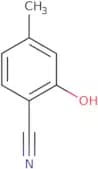
CAS:<p>2-Hydroxy-4-methylbenzonitrile is a high quality chemical, which can be used as a reagent, intermediate or building block in the synthesis of other compounds. It is a versatile building block and can be used to make compounds with various functional groups. 2-Hydroxy-4-methylbenzonitrile is also a useful scaffold for new drug discovery and has been shown to react with many different types of functional groups. This compound has been found to have antibacterial properties, making it useful for research into new antibiotics.</p>Formula:C8H7NOPurity:Min. 95%Molecular weight:133.15 g/molH-Gly-Gly-His-Gly-OH
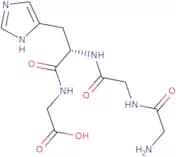
CAS:<p>H-Gly-Gly-His-Gly-OH is a tripeptide with a molecular weight of 778.09 g/mol. It is crosslinked to the side chain of lysine residues and can be used for the crosslinking of protein fibers, such as wool or silk, to form hydrophobic materials that are both resistant to shrinkage and have good thermal stability. The crosslinking reaction can be achieved by either the hypobromous acid oxidation or by inorganic oxidants such as hydrogen peroxide. H-Gly-Gly-His-Gly-OH has axial reactive radicals at its center which facilitates the formation of covalent links with other molecules.br><br>br><br>The yield depends on the type of reactant used and ranges from 47% (hydrogen peroxide) to 60% (hypobromous acid). The residue obtained after hydrolysis is an alpha amino acid consisting of</p>Formula:C12H18N6O5Purity:Min. 95%Color and Shape:PowderMolecular weight:326.31 g/molH-Gly-Pro-pNA•hydrochloride
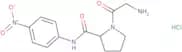
CAS:<p>H-Gly-Pro-pNA is an antidiabetic drug that inhibits the activity of dipeptidyl peptidase IV (DPP IV), a family of enzymes that catalyses the cleavage of the amino acid sequence of proline and arginine. The inhibitory effect on DPP IV by H-Gly-Pro-pNA was demonstrated using magnetic resonance spectroscopy, chromatographic assays, and electrospray ionization mass spectrometry. H-Gly-Pro-pNA also has hydrophobic properties and can interact with other drugs that are lipophilic. In vitro assays have been used to determine the inhibition activity of H-Gly-Pro-pNA against various proteins involved in diabetes mellitus, including aminopeptidases, carboxypeptidases and endopeptidases.</p>Formula:C13H16N4O4•HClPurity:Min. 95%Color and Shape:White PowderMolecular weight:328.75 g/mol3-Benzyloxy-4-methoxybenzoic acid
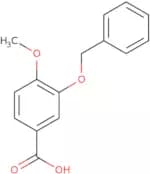
CAS:3-Benzyloxy-4-methoxybenzoic acid is a natural product that was isolated as a yellow crystalline powder from the needles of the tree Kirkia. It can be used as a radical and has been shown to have frameworks with galanthamine. 3-Benzyloxy-4-methoxybenzoic acid has been shown to be an inhibitor of protein synthesis in cells, which may be due to its ability to inhibit the activity of ribosomes and protein synthesis.Formula:C15H14O4Purity:Min. 95%Molecular weight:258.27 g/mol2-Fluoro-5-methylbenzonitrile
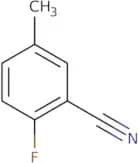
CAS:<p>2-Fluoro-5-methylbenzonitrile (2FMBC) is a molecule that has a molecular weight of 153.22 g/mol and a melting point of -30°C. It also has a boiling point of 190°C at 14 mmHg, and it is soluble in ethanol, ether, acetone, benzene, chloroform, carbon disulfide, and nitrobenzene. 2FMBC can be found in the vibrational spectrum from 400 to 700 nm with a maximum absorption frequency of 724 nm. The infrared spectrum for 2FMBC ranges from 700 cm-1 to 3200 cm-1. The molecular orbital theory predicts that the energy levels for this molecule are symmetrical and unsymmetrical. It has been shown by x-ray data that 2FMBC's dipole moment is 0 D.</p>Formula:C8H6FNPurity:Min. 95%Color and Shape:PowderMolecular weight:135.14 g/molApelin-17 trifluoroacetate
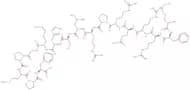
CAS:<p>Apelin-17 trifluoroacetate is a reaction component, reagent and useful scaffold for the synthesis of complex compounds. It is a high quality, research chemical that is used in the synthesis of fine chemicals. Apelin-17 trifluoroacetate has versatile building block and can be used as a useful intermediate or as a speciality chemical. It also has high reactivity and is soluble in organic solvents.</p>Formula:C96H156N34O20S•C2HF3O2Purity:Min. 95%Color and Shape:PowderMolecular weight:2,252.57 g/molTos-Gly-Pro-Lys-pNA acetate
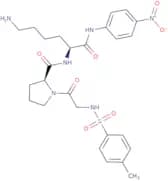
CAS:<p>Tos-Gly-Pro-Lys-pNA acetate is a peptide that has been shown to have inhibitory effects on serine proteases, such as fibrinogen. Tos-Gly-Pro-Lys-pNA acetate binds to the active site of serine proteases, which inhibits their activity and prevents them from cleaving fibrinogen. The rate of reaction is dependent on the concentration of enzyme inhibitors. For example, at low concentrations, the enzyme inhibitor will bind to only one or two sites on the serine protease, while at high concentrations it may bind to many sites. This molecule has been shown to be a potent inhibitor of human immunodeficiency virus (HIV) protease and is currently being studied for its use as a potential antiviral agent.</p>Formula:C26H34N6O7SPurity:Min. 95%Color and Shape:PowderMolecular weight:574.65 g/molL-Ornithine hydrochloride
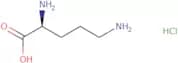
CAS:<p>Ornithine is an amino acid that is a precursor for the synthesis of arginine, creatine, and polyamines. It can be found in a variety of protein-rich foods or can be synthesized from glutamate by the enzyme ornithine transcarbamylase. Ornithine HCl is used as an additive to animal feed to promote growth and improve feed conversion rates. This compound has been shown to increase nitrogen retention and utilization in cattle, which may be due to its ability to inhibit GABA degradation or its ability to stimulate endogenous arginine production. Ornithine HCl also enhances the activity of dietary fatty acids, which may be due to its ability to increase intracellular levels of citric acid cycle intermediates such as succinic acid.</p>Formula:C5H12N2O2•HClPurity:Min. 95%Color and Shape:PowderMolecular weight:168.62 g/mol2-Methoxy benzyl chloride
CAS:<p>2-Methoxy benzyl chloride is an organometallic compound that has potent antagonist activity against a wide variety of organometallic and non-organometallic compounds. It is used in the treatment of inflammatory diseases, such as myocardial infarct, and also displays antimicrobial properties. 2-Methoxy benzyl chloride is a potent competitive inhibitor of many enzymes, including xanthine oxidase, hydroxylase, and tyrosinase. This molecule also has the ability to bind to cationic polymers and inhibit polymerization reactions by interfering with the formation of hydrogen bonds between monomers. The chlorine atom in this molecule can be replaced by a hydrogen atom for use as an antimicrobial agent. 2-Methoxy benzyl chloride binds to nitrogen atoms on amides and other nitrogen containing compounds, which may account for its antiinflammatory effects.</p>Formula:C8H9ClOPurity:Min. 95%Color and Shape:PowderMolecular weight:156.61 g/molFmoc-Lys(Boc)-OH
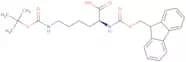
CAS:<p>Fmoc-Lys(Boc)-OH is a synthetic amino acid that has been used to synthesize polypeptides. It is prepared by the reaction of naphthalene, trifluoroacetic acid and copper (II) acetate in an acidic environment. The synthesis of Fmoc-Lys(Boc)-OH involves the use of a high salt and coordination geometry for the copper complex. This amino acid can be used as a cancer drug, because it inhibits NS3 protease, which is an enzyme that promotes tumor growth. Fmoc-Lys(Boc)-OH also binds to carbohydrate receptors on cancer cells and inhibits uptake of these cells by macrophages.</p>Formula:C26H32N2O6Purity:Min. 98 Area-%Color and Shape:White PowderMolecular weight:468.54 g/molN-Methyl-4-pyridone-3-carboxamide
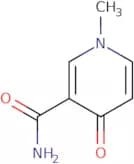
CAS:<p>N-Methyl-4-pyridone-3-carboxamide is a nonnutritive sweetener that has been shown to have no effect on peroxisome proliferation. It also had no effect on the levels of fatty acids in rat cardiomyocytes and did not affect uv absorption. N-Methyl-4-pyridone-3-carboxamide binds to the receptor α subunit of the taste receptor and inhibits adenosine uptake, which may be responsible for its effects on depression. This compound also alters energy metabolism by inhibiting mitochondrial ATP production and glycolysis.</p>Formula:C7H8N2O2Purity:(%) Min. 95%Color and Shape:PowderMolecular weight:152.15 g/mol2-Boc-6-Chloro-3,4-dihydro-1H-isoquinoline-1-carboxylic acid
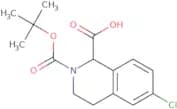
CAS:<p>2-Boc-6-Chloro-3,4-dihydro-1H-isoquinoline-1-carboxylic acid is a useful scaffold for the production of various chemical compounds. It is a versatile building block that can be used as an intermediate in various chemical reactions or as a speciality chemical. 2-Boc-6-Chloro-3,4-dihydro-1H-isoquinoline-1 carboxylic acid has been shown to be a high quality and reliable reagent for use in research and development.</p>Formula:C15H18ClNO4Purity:Min. 95%Color and Shape:White PowderMolecular weight:311.76 g/mol5-Nitro-m-phenylenediamine
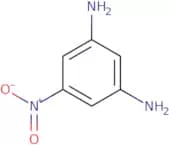
CAS:<p>5-Nitro-m-phenylenediamine is an organic compound that has the chemical formula CHNO. It is a white crystalline solid with a melting point of 158 °C. The compound is soluble in water and other polar solvents but insoluble in nonpolar solvents such as hexane. 5-Nitro-m-phenylenediamine can be prepared by nitration of m-phenylenediamine, which produces the desired product in about 30% yield and with impurities that must be removed by fractional crystallization. The compound is used as an intermediate for making dyes and pharmaceuticals.</p>Formula:C6H7N3O2Purity:Min. 95%Color and Shape:PowderMolecular weight:153.14 g/molFmoc-D-allo-Thr(tBu)-L-Ser(Psi(Me,Me)pro)-OH
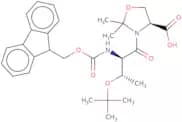
<p>Fmoc-D-allo-Thr(tBu)-L-Ser(Psi(Me,Me)pro)-OH is a reagent that is used as an intermediate in the synthesis of complex compounds. It is also a fine chemical that can be used to prepare speciality chemicals. Fmoc-D-allo-Thr(tBu)-L-Ser(Psi(Me,Me)pro)-OH has CAS No. and can be used as a reaction component in various reactions. This compound is versatile and can be used as a building block for other compounds.</p>Formula:C29H36N2O7Purity:Min. 95%Color and Shape:PowderMolecular weight:524.61 g/molH-Val-Trp-OH
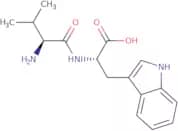
CAS:<p>H-Val-Trp-OH is a noncompetitive inhibitor of the enzyme tyrosinase, which plays a role in melanin production. It also has radical scavenging activities and can inhibit the activity of other enzymes such as glucose 6-phosphate dehydrogenase and acetylcholinesterase. The compound is stable in aqueous solution and can be used to study the effects of H-Val-Trp-OH on wheat germ cells. It is composed of an amino acid sequence that resembles tyrosine, with a carboxylate group attached to the hydroxyl group at position 3. H-Val-Trp-OH is most active against tyrosinase when it is in its activated form, but it can also act as an inhibitor when it is not activated. The compound inhibits the activity of tyrosinase by binding to its active site and blocking the binding or catalysis of substrate molecules. This inhibition occurs through competitive interactions with</p>Formula:C16H21N3O3Purity:Min. 95%Color and Shape:PowderMolecular weight:303.36 g/molD-Phenylalanyl-prolyl-arginyl chloromethyl ketone
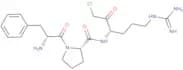
CAS:<p>D-Phenylalanyl-prolyl-arginyl chloromethyl ketone is a chemical compound that inhibits the proteolytic activity of serine proteases. It binds to the thrombin receptor on the surface of cells and prevents activation of fibrinogen by thrombin, which is an enzyme that promotes clotting. D-Phenylalanyl-prolyl-arginyl chloromethyl ketone also blocks platelet aggregation and has shown an ability to induce muscle cell proliferation. This drug has been used in pharmacological experiments as an inhibitor binding agent.</p>Formula:C21H31ClN6O3Purity:Min. 90 Area-%Color and Shape:PowderMolecular weight:450.96 g/mol4-Fluoro-3-methoxybenzoic acid
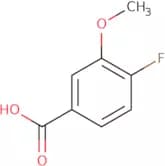
CAS:<p>4-Fluoro-3-methoxybenzoic acid is a chiral, organic compound. It is an estrogen antagonist that binds to the estrogen receptor. 4-Fluoro-3-methoxybenzoic acid has been shown to inhibit tumor growth by blocking the interaction of estradiol with its receptor in the cancer cell line MCF-7. The metabolically active form of this compound is 4′-hydroxymethyl 4′,4″-difluorobenzoate and it can be converted into other metabolites such as 3′,4′,5′,6′-tetrahydroxybenzoic acid. This conversion may be mediated by cytochrome P450 enzymes or through hydrolysis by esterases or glucuronidases. The stereoisomers of 4-fluoro-3 methoxybenzoic acid are erythro and threo forms which have different affinities for</p>Formula:C8H7FO3Purity:Min. 95%Color and Shape:PowderMolecular weight:170.14 g/molL-Histidine β-naphthylamide
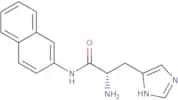
CAS:<p>L-Histidine beta-naphthylamide is an allosteric activator of the imidazole group of histidine. It has been shown to regulate sequences and functional groups in subtilisin. L-Histidine beta-naphthylamide binds to the benzyl ester and regulatory allosteric site on the enzyme, which is located between the active site and the substrate binding site. The binding of this molecule stabilizes a transition state intermediate that would otherwise be too reactive to form products.</p>Formula:C16H16N4OPurity:Min. 95%Color and Shape:PowderMolecular weight:280.32 g/molN,N'-Diacetyl-L-cystine
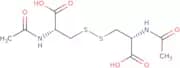
CAS:<p>N,N'-Diacetyl-L-cystine (NAC) is a cysteine derivative that is used in the preparation of samples for analysis by liquid chromatography. It has been shown to have an antiatherogenic effect in chronic bronchitis patients and has been found to be a growth factor, inhibiting apoptosis and stimulating cell proliferation. NAC also increases the activity of aminotransferases in serum samples, which can be used as an indicator of liver health. Its chemical stability and low toxicity make it an ideal candidate for use as a pharmaceutical preparation at doses below those required for its enzyme-stimulating effects.</p>Formula:C10H16N2O6S2Purity:Min. 95%Color and Shape:PowderMolecular weight:324.38 g/mol4-(4-Chlorophenyl)-2-(3-methyl-5-oxo-1-phenyl(2-pyrazolin-4-yl))-4-oxobutanoic acid
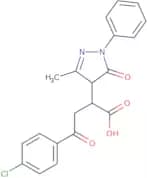
CAS:<p>Please enquire for more information about 4-(4-Chlorophenyl)-2-(3-methyl-5-oxo-1-phenyl(2-pyrazolin-4-yl))-4-oxobutanoic acid including the price, delivery time and more detailed product information at the technical inquiry form on this page</p>Purity:Min. 95%