Amino Acids (AA)
Amino acids (AAs) are the fundamental building blocks of proteins, playing a crucial role in various biological processes. These organic compounds are essential for protein synthesis, metabolic pathways, and cell signaling. In this category, you will find a comprehensive range of amino acids, including essential, non-essential, and modified forms, which are vital for research in biochemistry, molecular biology, and nutritional sciences. At CymitQuimica, we provide high-quality amino acids to support your research and development needs, ensuring accuracy and reliability in your experimental outcomes.
Subcategories of "Amino Acids (AA)"
- Amino Acid Derivatives(3,957 products)
- Amino Acid and Amino Acid Related Compounds(3,472 products)
- Amino Acids with Oxygen or Sulphur(168 products)
- Boc- Amino Acids(351 products)
- Fmoc Amino Acids(1,710 products)
Found 38265 products of "Amino Acids (AA)"
Sort by
Purity (%)
0
100
|
0
|
50
|
90
|
95
|
100
2-Amino-1-(1-aza-2-(4-methylthiophenyl)vinyl)ethene-1,2-dicarbonitrile
CAS:<p>Please enquire for more information about 2-Amino-1-(1-aza-2-(4-methylthiophenyl)vinyl)ethene-1,2-dicarbonitrile including the price, delivery time and more detailed product information at the technical inquiry form on this page</p>Formula:C12H10N4SPurity:Min. 95%Color and Shape:PowderMolecular weight:242.3 g/mol2-Methoxyphenylacetonitrile
CAS:<p>2-Methoxyphenylacetonitrile is a chemical that is used in the manufacture of pharmaceuticals. It has antibacterial activity and can be used to treat typhoid fever, staphylococcal infections, and mental disorders such as schizophrenia. 2-Methoxyphenylacetonitrile is an alkylating agent that reacts with nucleophiles in proteins, DNA, and RNA. These reactions lead to the destruction of the bacterial cell wall and inhibition of protein synthesis. The mechanism by which 2-methoxyphenylacetonitrile exerts its antibacterial effect may involve formation of a reactive intermediate that inhibits bacterial ribonucleotide reductase. The addition of an electron to this intermediate leads to the formation of a covalent bond with one or more amino acids in the protein acceptor, thereby preventing further growth and division of bacteria.</p>Formula:C9H9NOPurity:Min. 90%Color and Shape:White PowderMolecular weight:147.17 g/molBoc-1-amino-4,7,10-trioxa-13-tridecanamine
CAS:<p>Boc-1-amino-4,7,10-trioxa-13-tridecanamine (BocAT) is a triazine compound that has been used to synthesize azides as well as to inhibit the growth of cancer cells. The inhibition of tumor cells is achieved through the covalent attachment of BocAT to lysine residues on the cell surface. This process leads to cell death by preventing the synthesis of proteins necessary for cell division and metabolism. BocAT has also been shown to bind gadolinium and other metal ions with high specificity. It can be used in vivo for tumor tissue localization and imaging with magnetic resonance imaging (MRI).</p>Formula:C15H32N2O5Purity:Min. 95%Color and Shape:Yellow LiquidMolecular weight:320.43 g/mol4-Amino-1-Boc-piperidine
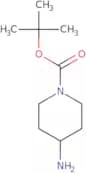
CAS:<p>4-Amino-1-Boc-piperidine is a potent inhibitor of the CCR5 receptor. It is an x-ray crystal structure with a hydroxide solution that inhibits the growth of cancer cells. The inhibitor binding site for 4-Amino-1-Boc-piperidine was determined to be the CCR5 receptor, which is located on the surface of hematopoietic cells. The compound has been shown to inhibit human T lymphocyte proliferation in vitro and inhibit HIV replication in infected patients. 4-Amino-1-Boc-piperidine is able to inhibit the growth of cancer cells by blocking the production of cytokines, such as interleukin 2, that are needed for cell division and growth.</p>Formula:C10H20N2O2Purity:Min. 95%Color and Shape:PowderMolecular weight:200.28 g/molFmoc-Val-Gly-OH
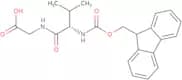
CAS:<p>Fmoc-Val-Gly-OH is a Research Chemical that is commonly used in the field of efficient synthesis. It is an amino acyl compound that can be utilized for the synthesis of various molecules. Fmoc-Val-Gly-OH is known for its high efficiency and reliability in producing desired results. It can be easily analyzed using spectrometry techniques, allowing researchers to accurately determine its composition and purity. This versatile compound can react with azides, alcohols, and other compounds to create new chemical entities. With its efficient properties, Fmoc-Val-Gly-OH is an essential tool for scientists and researchers in their quest for innovative discoveries.</p>Formula:C22H24N2O5Purity:Min. 95%Molecular weight:396.44 g/molFmoc-O-benzylphospho-L-serine
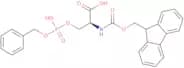
CAS:<p>Fmoc-O-benzylphospho-L-serine is a fmoc-protected phosphoserine derivative for efficient synthesis of phosphoserine-containing peptides via standard fmoc SPPS. Compatible with common activators such as PyBOP or TBTU, it remains stable during piperidine deprotection and enables incorporation of multiple phosphoserine residues, for example successful syntheses of phospholamban and human salivary statherin. In certain cases, β-piperidinylalanine formation may occur during N-terminal Ser(PO(OBzl)OH) Fmoc deprotection, especially under microwave conditions.</p>Formula:C25H24NO8PPurity:Min. 97 Area-%Color and Shape:White Off-White PowderMolecular weight:497.43 g/molCyclo(L-Pro-L-Tyr)
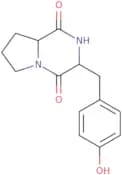
CAS:<p>Cyclo(-Pro-Tyr) is a natural product that belongs to the class of antimicrobial agents. It has been shown to inhibit the growth of colorectal adenocarcinoma cells by reducing mitochondrial membrane potential and inhibiting protein synthesis. Cyclo(-Pro-Tyr) also has antimicrobial properties against bacteria, including Enterococcus faecalis and Escherichia coli. The biological properties of Cyclo(-Pro-Tyr) have been investigated in vitro with tissue culture and acetate extracts, demonstrating its ability to inhibit the production of fatty acids, as well as its wound healing abilities. Cyclo(-Pro-Tyr) is a synthetase that uses methyl myristate as a substrate and etoac extract as an electron donor. The enzyme converts methyl myristate into cyclopropane fatty acid ester, which can be used for the synthesis of polymers such as polypropylene and polyethylene terephthalate.</p>Formula:C14H16N2O3Purity:Min. 95%Color and Shape:PowderMolecular weight:260.29 g/molL-Threonine
CAS:<p>L-Threonine is an amino acid that is classified as a non-essential amino acid. It is a precursor for the synthesis of proteins and other important compounds in the body, such as neurotransmitters. L-Threonine has been shown to be necessary for the function of enzymes that catalyze reactions in cells. This amino acid also plays a role in protein synthesis and can help regulate transcriptional regulation of genes. L-Threonine has been shown to have antioxidant properties, which may be due to its ability to scavenge anion radicals and inhibit lipid peroxidation.</p>Formula:C4H9NO3Purity:(Titration)Color and Shape:White PowderMolecular weight:119.12 g/mol6a-Methyl hydrocortisone 21-acetate
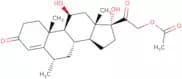
CAS:Controlled Product<p>Hydrocortisone is a corticosteroid that is used to suppress the immune system and reduce inflammation. It has anti-inflammatory, antipyretic, and vasoconstrictive properties. Hydrocortisone is a synthetic form of cortisol, which is produced naturally by the adrenal gland. Hydrocortisone acetate is an ester of hydrocortisone with acetic acid. This drug can be administered orally or topically, depending on the condition being treated. The methyl group in this compound makes it less reactive than natural hydrocortisone.</p>Formula:C24H34O6Purity:Min. 95%Color and Shape:PowderMolecular weight:418.52 g/mol6-Boc-hydrazinonicotinicacid
CAS:<p>6-Boc-hydrazinonicotinicacid is a cytotoxic compound that binds to hydroxyapatite and induces necrosis in cancer cells. This compound also has antimicrobial properties. 6-Boc-hydrazinonicotinic acid is conjugated with peptides for use as an immunoconjugate for the targeted delivery of drugs to cancer cells. It can be used to diagnose cancer by its uptake in human serum and inflammatory cells, as well as to identify cancerous tissues through its binding to hydroxyapatite. The biological studies have shown that 6-Boc-hydrazinonicotinic acid inhibits the growth of various types of tumour cells, including breast, prostate, colon, and lung cancers.</p>Formula:C11H15N3O4Purity:Min. 95%Color and Shape:PowderMolecular weight:253.25 g/molN-Fmoc-S-2-amino-heptanoic acid
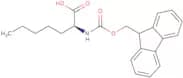
CAS:<p>N-Fmoc-S-2-amino-heptanoic acid is a metabolite of the pentose phosphate pathway that is also found in the glycolytic pathway. It is a cell activator and, as such, can be used to stimulate the production of insulin, dopamine, and other metabolic products. N-Fmoc-S-2-amino-heptanoic acid has been shown to reduce levels of glucose in rat brains with administration through the injection route. This compound has also been shown to inhibit glycolytic enzymes and increase cell toxicity.</p>Formula:C22H25NO4Purity:Min. 95%Color and Shape:White Off-White PowderMolecular weight:367.44 g/mol3-Bromo-2-methoxybenzyl alcohol
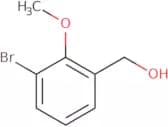
CAS:<p>3-Bromo-2-methoxybenzyl alcohol is a reaction component that is used in the synthesis of a number of chemical compounds. It has been shown to be a useful scaffold, with versatile building blocks and intermediates. 3-Bromo-2-methoxybenzyl alcohol is an intermediate for the synthesis of complex compounds such as antihypertensive drugs, anti-inflammatory agents, and immunosuppressant drugs. This compound also has a variety of uses in research including as a reagent for the determination of enzyme activity and as an analytical reference standard.</p>Formula:C8H9BrO2Purity:Min. 95%Color and Shape:PowderMolecular weight:217.06 g/mol(9-Phenanthryl)methyl methacrylate
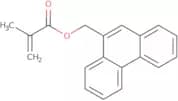
CAS:<p>9-Phenanthryl)methyl methacrylate is a fluorescent pigment that is used as a nanomaterial. It is an acidic material and can be used in coatings to improve the properties of materials. 9-Phenanthryl)methyl methacrylate has been shown to have fluorescence resonance energy transfer (FRET) properties, which may be due to its monolayer structure and chromophore. The diameter of this particle ranges from 10-20 nm, with a water permeability of 20% at pH 7.0 and 0.1% at pH 2.0. This pigment has a high degree of surface roughness, which is due to its morphology and the microenvironment in which it exists.</p>Formula:C19H16O2Purity:Min. 95 Area-%Color and Shape:PowderMolecular weight:276.33 g/mol3-Fluoro-5-methoxybenzylamine hydrochloride
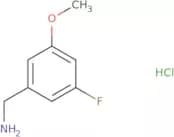
CAS:<p>3-Fluoro-5-methoxybenzylamine hydrochloride is a chemical building block that can be used in organic synthesis. It is a versatile building block and can be used to synthesize complex compounds. 3-Fluoro-5-methoxybenzylamine hydrochloride is used as a reaction component and reagent for the production of pharmaceuticals, agricultural chemicals, and other organic compounds. It has CAS number 1158269-22-7 and can be found in the Chemical Abstract Services database.</p>Formula:C8H10FNO•HClPurity:Min. 95%Color and Shape:Clear LiquidMolecular weight:191.63 g/molα-Methylbenzyl alcohol
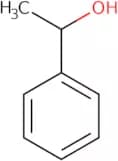
CAS:<p>Alpha-methylbenzyl alcohol is a fatty acid that is used as a chemical intermediate in the synthesis of pharmaceutical agents. It has been shown to inhibit phosphotungstic acid (PTA) hydrolysis and surface methodology, as well as to have carcinogenic potential. Alpha-methylbenzyl alcohol has also been found to be an inhibitor of phospholipase A2, which catalyzes the hydrolysis of glycerophospholipids into free fatty acids and lysophospholipids. Alpha-methylbenzyl alcohol inhibits the reaction by binding reversibly with the hydroxyl group on enzyme active site. The kinetic mechanism studies of alpha-methylbenzyl alcohol have revealed that it is a competitive inhibitor for enzymes such as protein kinase C and leucine aminopeptidase.</p>Formula:C8H10OPurity:Min. 95%Color and Shape:Clear LiquidMolecular weight:122.16 g/molFmoc-L-propargylglycine
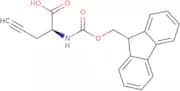
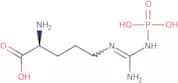
CAS:<p>Fmoc-L-propargylglycine is a cyclic peptide that is synthesized by chemical ligation. It has antiviral, anti-tumor, and anti-inflammatory activities. Fmoc-L-propargylglycine inhibits the growth of cancer cells in vitro. The mechanism of action is not fully understood, but it may involve the inhibition of cellular proliferation and the induction of apoptosis. This compound also inhibits epidermal growth factor (EGF) induced cell proliferation in caco-2 cells.</p>Formula:C20H17NO4Purity:Min. 98 Area-%Color and Shape:White PowderMolecular weight:335.35 g/molN-Phospho-L-arginine lithium salt hydrate
CAS:<p>N-Phospho-L-arginine lithium salt hydrate is an arginine derivative that has a complex life cycle. It is used as a substrate for ATP synthesis, and also participates in the formation of disulfide bonds during protein folding. N-Phospho-L-arginine lithium salt hydrate is an important component of many enzymes, which are vital to the body's metabolic processes. This compound can be used to study biochemical properties of enzymes in biological samples and infectious diseases, which could lead to new treatments for these diseases.</p>Formula:C6H15N4O5P·xLi·yH2OPurity:Min. 95%Color and Shape:PowderMolecular weight:254.18 g/molL-a-Glycerophosphorylcholine
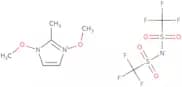
CAS:<p>Precursor of neurotransmitter acetylcholine</p>Formula:C8H20NO6PPurity:(%) Min. 95%Color and Shape:White PowderMolecular weight:257.22 g/mol1,3-Dimethoxy-2-methylimidazoliumbis(trifluoromethylsulfonyl)imide
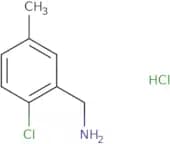
CAS:<p>Please enquire for more information about 1,3-Dimethoxy-2-methylimidazoliumbis(trifluoromethylsulfonyl)imide including the price, delivery time and more detailed product information at the technical inquiry form on this page</p>Formula:C8H11F6N3O6S2Purity:Min. 95%Color and Shape:PowderMolecular weight:423.31 g/mol2-Chloro-5-methylbenzylamine hydrochloride
CAS:<p>2-Chloro-5-methylbenzylamine hydrochloride is a chemical that is used as a versatile building block in the synthesis of complex compounds. It has a wide range of uses, including as a research chemical, reagent, and speciality chemical. 2-Chloro-5-methylbenzylamine hydrochloride is also used as an intermediate in the synthesis of other chemicals and can be used as an organic building block, reaction component, and scaffold. This product can be used to produce high-quality products, such as pharmaceuticals and agrochemicals.</p>Formula:C8H10ClN•HClPurity:Min. 95%Molecular weight:192.09 g/mol