Amino Acids (AA)
Amino acids (AAs) are the fundamental building blocks of proteins, playing a crucial role in various biological processes. These organic compounds are essential for protein synthesis, metabolic pathways, and cell signaling. In this category, you will find a comprehensive range of amino acids, including essential, non-essential, and modified forms, which are vital for research in biochemistry, molecular biology, and nutritional sciences. At CymitQuimica, we provide high-quality amino acids to support your research and development needs, ensuring accuracy and reliability in your experimental outcomes.
Subcategories of "Amino Acids (AA)"
- Amino Acid Derivatives(3,957 products)
- Amino Acid and Amino Acid Related Compounds(3,472 products)
- Amino Acids with Oxygen or Sulphur(168 products)
- Boc- Amino Acids(351 products)
- Fmoc Amino Acids(1,710 products)
Found 38265 products of "Amino Acids (AA)"
Sort by
Purity (%)
0
100
|
0
|
50
|
90
|
95
|
100
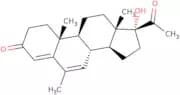
17-Hydroxy-6-methylpregna-4,6-diene-3,20-dione
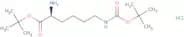
CAS:Controlled Product<p>17-Hydroxy-6-methylpregna-4,6-diene-3,20-dione is a progestin that is used as an antiretroviral agent in the treatment of HIV. It has been shown to be effective for chronic cough and cancer. 17-Hydroxy-6-methylpregna-4,6-diene-3,20-dione can be used for the treatment of infectious diseases such as HIV by inhibiting viral replication and reducing the amount of virus in the blood. This drug can also be used to treat some cancers and solid tumours. It has been shown to have long term efficacy in these conditions due to its ability to block cell division. 17 hydroxy pregnane 4,6 diene 3,20 dione is also used in the treatment of geriatric patients with chronic illnesses or who are immunocompromised due to its ability to stimulate appetite.</p>Formula:C22H30O3Purity:Min. 98 Area-%Color and Shape:White Off-White PowderMolecular weight:342.47 g/molLys(Boc)-OtBu,HCl
CAS:<p>Lys(Boc)-OtBu,HCl is a versatile building block and research chemical that can be used for the synthesis of complex compounds. This compound is a useful intermediate and reaction component in organic chemistry. It is also a reagent that can be used to synthesize high-quality chemical products.</p>Formula:C15H30N2O4·HClPurity:Min. 95%Color and Shape:White PowderMolecular weight:338.87 g/mol1,4-Phenylenediacrylic acid diethyl ester
CAS:<p>1,4-Phenylenediacrylic acid diethyl ester (PDAD) is an organic molecule that is used as a template molecule in polymerizations. It can be used to coat surfaces with polymers, which makes them more resistant to corrosion and wear. PDAD interacts with an electron beam in the presence of oxygen, generating excimers and supercritical CO2. These interactions are responsible for the red shift that occurs when PDAD interacts with the electron beam. The absorption spectrum of PDAD has been shown to change depending on its morphology: alpha-type PDAD absorbs at lower wavelengths than beta-type PDAD.</p>Formula:C16H18O4Purity:Min. 95%Color and Shape:PowderMolecular weight:274.31 g/mol6a-Methyl hydrocortisone 21-acetate
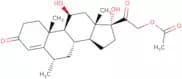
CAS:Controlled Product<p>Hydrocortisone is a corticosteroid that is used to suppress the immune system and reduce inflammation. It has anti-inflammatory, antipyretic, and vasoconstrictive properties. Hydrocortisone is a synthetic form of cortisol, which is produced naturally by the adrenal gland. Hydrocortisone acetate is an ester of hydrocortisone with acetic acid. This drug can be administered orally or topically, depending on the condition being treated. The methyl group in this compound makes it less reactive than natural hydrocortisone.</p>Formula:C24H34O6Purity:Min. 95%Color and Shape:PowderMolecular weight:418.52 g/molCyclo(-L-Leu-L-Phe)
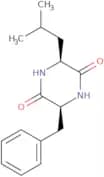
CAS:<p>Cyclo(-L-Leu-L-Phe) is a nonribosomal peptide that inhibits bacterial growth. It is synthesized from the amino acids L-leucine, L-phenylalanine, and L-tyrosine. The antibacterial activity of this compound was tested in fibroblast cells and human lung tissue. Cyclo(-L-Leu-L-Phe) showed no cytotoxicity in these cell lines at concentrations up to 10 µg/mL. Cyclo(-L-Leu-L-Phe) also has antimicrobial activity against Streptomyces lividans and other bacteria. Cyclo(-L-Leu-L-Phe) can be detected by high performance liquid chromatography (HPLC).</p>Formula:C15H20N2O2Purity:Min. 95%Color and Shape:White PowderMolecular weight:260.33 g/mol4,6-Dimethyl-N-phenylpyrimidin-2-amine
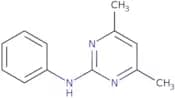
CAS:<p>4,6-Dimethyl-N-phenylpyrimidin-2-amine is a fungicide that is effective against the production of nitrite ion in the liver. It has been shown to be a potent inhibitor of hepatic steatosis. 4,6-Dimethyl-N-phenylpyrimidin-2-amine was also shown to have an inhibitory effect on the growth of fungal strains in vitro. This compound has been demonstrated to be active against a number of plant pathogens and may be useful in postharvest applications. 4,6-Dimethyl-N-phenylpyrimidin-2-amine interacts with the hippocampus formation and may play a role in preventing neurodegenerative diseases such as Alzheimer's disease or Parkinson's disease.</p>Formula:C12H13N3Purity:Min. 95%Color and Shape:PowderMolecular weight:199.25 g/mol5-Methyl-2-nitrobenzamide
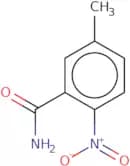
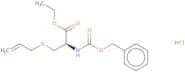
CAS:<p>5-Methyl-2-nitrobenzamide is a compound that has antiproliferative activity and is used as an anticancer drug. This drug inhibits the polymerization of the protein tubulin in cancer cells, thereby inhibiting cell division. It also inhibits the growth of certain tumor cell lines in vitro. 5-Methyl-2-nitrobenzamide was found to inhibit the proliferation of human ovarian carcinoma cells by binding to DNA, preventing transcription and replication of genetic information. In addition, this agent binds to tubulin and prevents its polymerization, leading to inhibition of cell division.</p>Formula:C8H8N2O3Purity:Min. 95%Color and Shape:PowderMolecular weight:180.16 g/molS-2-Propen-1-yl-L-cysteine ethyl ester hydrochloride
CAS:<p>Please enquire for more information about S-2-Propen-1-yl-L-cysteine ethyl ester hydrochloride including the price, delivery time and more detailed product information at the technical inquiry form on this page</p>Formula:C8H15NO2S•HClPurity:Min. 95%Molecular weight:225.74 g/molBoc-1-amino-4,7,10-trioxa-13-tridecanamine
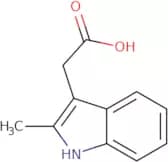
CAS:<p>Boc-1-amino-4,7,10-trioxa-13-tridecanamine (BocAT) is a triazine compound that has been used to synthesize azides as well as to inhibit the growth of cancer cells. The inhibition of tumor cells is achieved through the covalent attachment of BocAT to lysine residues on the cell surface. This process leads to cell death by preventing the synthesis of proteins necessary for cell division and metabolism. BocAT has also been shown to bind gadolinium and other metal ions with high specificity. It can be used in vivo for tumor tissue localization and imaging with magnetic resonance imaging (MRI).</p>Formula:C15H32N2O5Purity:Min. 95%Color and Shape:Yellow LiquidMolecular weight:320.43 g/mol2-Methylindole-3-acetic acid
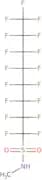
CAS:<p>2-Methylindole-3-acetic acid is a molecule that has been shown to interact with membrane lipids and induce lipid peroxidation. It also interacts with the molecule creatinine, which is excreted in urine, and has been shown to increase urinary levels of creatinine. 2-Methylindole-3-acetic acid has been shown to have antioxidant activity by scavenging radicals and inhibiting lipid peroxidation. The mechanism for this activity is due to its ability to form hydrogen bonds with radicals and react with them, thereby removing them from the cell membrane. 2-Methylindole-3-acetic acid also interacts with receptor protein within the cell, targeting intracellular targets such as DNA and RNA molecules. This compound is an endogenous hormone that may reduce cholesterol levels in cells.<br>2-Methylindole-3-acetic acid was first isolated from the bark of "Indocalamus latifolius" (</p>Formula:C11H11NO2Purity:Min. 95%Molecular weight:189.21 g/mol1,1,2,2,3,3,4,4,5,5,6,6,7,7,8,8,8-Heptadecafluoro-N-methyloctane-1-sulfonamide
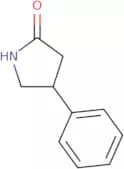
CAS:Controlled Product<p>1,1,2,2,3,3,4,4,5,5,6,6,7,7,8,8-heptadecafluoro-N-methyloctane-1-sulfonamide is a perfluorinated sulfonate that is used as a surfactant in wastewater treatment and to package food. This compound is not water soluble and requires an organic solvent to dissolve it. It has been shown that the use of 1HFAFMS can reduce the amount of phosphates in packaging materials by up to 50%. 1HFAFMS also has been found to be safe for humans and does not accumulate in the environment. It does not bioaccumulate and is rapidly excreted through urine.</p>Formula:C9H4F17NO2SPurity:Min. 95%Color and Shape:PowderMolecular weight:513.17 g/mol4-Phenyl-2-pyrrolidone
CAS:<p>4-Phenyl-2-pyrrolidone (4PP) is a chemical that inhibits bacterial growth by binding to the fatty acids required for cellular membrane synthesis. 4PP has been shown to inhibit the production of gamma-aminobutyric acid (GABA), an inhibitory neurotransmitter, and also has an aromatic hydrocarbon structure, which may be important for its antibacterial activity. The effective dose of 4PP is 10 µg/mL and it can be used in aerobic environments. This chemical also has a kinetic effect on the production of RNA sequences, which could play a role in its ability to inhibit bacterial growth.</p>Formula:C10H11NOPurity:Min. 95%Color and Shape:PowderMolecular weight:161.2 g/mol5-Hydroxy-1-methyl-1H-pyrazole
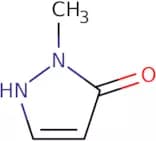
CAS:<p>5-Hydroxy-1-methyl-1H-pyrazole is a chemical compound that is used as a reagent, useful intermediate, and fine chemical. It is a versatile building block and can be used in the synthesis of pharmaceuticals, agrochemicals, dyes, and other chemicals. CAS No. 33641-15-5</p>Formula:C4H6N2OPurity:Min. 95%Color and Shape:Off-White PowderMolecular weight:98.1 g/molCyclo(L-prolyl-L-leucyl)
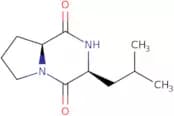
CAS:<p>Cyclo(L-prolyl-L-leucyl) is a cyclic lipopeptide that inhibits the transcription of DNA. It binds to the polymerase chain and blocks the transcription process, which prevents the production of RNA. Cyclo(L-prolyl-L-leucyl) has been shown to have an inhibitory effect on human pathogens such as fungi, protozoa, or bacteria. Cyclo(L-prolyl-L-leucyl) also has anti-cancer properties and is used for cancer treatment. Cyclo(L-prolyl-L-leucyl) is extracted from an acetate extract and purified by chromatography. The purified product is then tested in vitro using assays including magnetic resonance spectroscopy.</p>Formula:C11H18N2O2Purity:Min. 95%Color and Shape:PowderMolecular weight:210.27 g/molH-His-Asp-OH
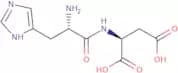
CAS:<p>H-His-Asp-OH is a histidine derivative that has been shown to have antimicrobial activity. It binds to DNA and inhibits the polymerase chain reaction. The drug also has structural similarities with phosphatases, which may be due to its ability to bind to DNA in an activated form. H-His-Asp-OH is a potent inhibitor of bacterial growth and has been shown to inhibit the growth of Eukaryotes.</p>Formula:C10H14N4O5Purity:Min. 95%Color and Shape:White PowderMolecular weight:270.24 g/molL-Threonine benzyl ester hydrochloride
CAS:<p>L-Threonine benzyl ester hydrochloride is a glycopeptide that is used as a precursor to L-threonine. It is synthesized from cycloserine, which contains a phenyl group, and D-serine, which contains an amino acid with two threonine molecules. The synthesis starts with the activation of the benzyl ester by treatment with hydrazoic acid. This activated compound reacts with D-serine in the presence of an organic base to form the benzyl ester of D-serine. The reaction can be carried out in one pot without isolation steps. The final step is an oxidative cleavage of the benzyl group by irradiation with ultraviolet light or exposure to hydrogen peroxide, yielding L-threonine benzyl ester hydrochloride as a white solid.</p>Formula:C11H15NO3•HClPurity:Min. 95%Color and Shape:White To Off-White SolidMolecular weight:245.7 g/molD-Phenylglycine tert-butyl ester hydrochloride
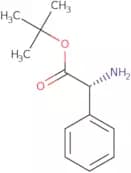
CAS:<p>D-Phenylglycine tert-butyl ester hydrochloride is a fine chemical that has versatile uses in research as a building block, intermediate, or reagent. It can be used to make complex compounds and useful scaffolds for organic chemistry. D-Phenylglycine tert-butyl ester hydrochloride is also a useful reaction component and can be used to make high-quality products.</p>Formula:C12H17NO2·HClPurity:Min. 95%Color and Shape:PowderMolecular weight:243.73 g/mol6-amino-4-(2-methoxyphenyl)-3-methyl-4H-pyrano[3,2-d]pyrazole-5-carbonitrile
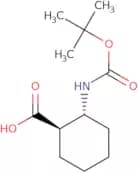
CAS:<p>Please enquire for more information about 6-amino-4-(2-methoxyphenyl)-3-methyl-4H-pyrano[3,2-d]pyrazole-5-carbonitrile including the price, delivery time and more detailed product information at the technical inquiry form on this page</p>Formula:C15H14N4O2Purity:Min. 95%Color and Shape:PowderMolecular weight:282.30 g/mol(1R,2R)-Boc-aminocyclohexane carboxylic acid
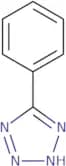
CAS:<p>Please enquire for more information about (1R,2R)-Boc-aminocyclohexane carboxylic acid including the price, delivery time and more detailed product information at the technical inquiry form on this page</p>Formula:C12H21NO4Purity:Min. 95%Color and Shape:PowderMolecular weight:243.3 g/mol5-Phenyl-1H-tetrazole
CAS:<p>5-Phenyl-1H-tetrazole is a heterocyclic compound that has been shown to have hydrogen bonding interactions with biological molecules. 5-Phenyl-1H-tetrazole is also able to react with glycol ethers to form a glycol ether derivative, which has the ability to inhibit the activity of choroidal neovascularization. 5-Phenyl-1H-tetrazole is used in electrochemical impedance spectroscopy (EIS) as a tracer molecule, and in structural analysis of solid materials such as polymers and metals. It has been shown that 5-phenyl tetrazole can bind to receptors on cell membranes and can be used as a ligand in coordination geometry.</p>Formula:C7H6N4Purity:Min. 95%Color and Shape:PowderMolecular weight:146.15 g/mol




![6-amino-4-(2-methoxyphenyl)-3-methyl-4H-pyrano[3,2-d]pyrazole-5-carbonitrile](/_next/image/?url=https%3A%2Fstatic.cymitquimica.com%2Fproducts%2F3D%2Fthumb-webp%2FFA169804.webp&w=3840&q=75)