Amino Acids (AA)
Amino acids (AAs) are the fundamental building blocks of proteins, playing a crucial role in various biological processes. These organic compounds are essential for protein synthesis, metabolic pathways, and cell signaling. In this category, you will find a comprehensive range of amino acids, including essential, non-essential, and modified forms, which are vital for research in biochemistry, molecular biology, and nutritional sciences. At CymitQuimica, we provide high-quality amino acids to support your research and development needs, ensuring accuracy and reliability in your experimental outcomes.
Subcategories of "Amino Acids (AA)"
- Amino Acid Derivatives(3,971 products)
- Amino Acid and Amino Acid Related Compounds(3,477 products)
- Amino Acids with Oxygen or Sulphur(168 products)
- Boc- Amino Acids(351 products)
- Fmoc Amino Acids(1,710 products)
Found 38321 products of "Amino Acids (AA)"
Sort by
Purity (%)
0
100
|
0
|
50
|
90
|
95
|
100
2-Phenyladamantane
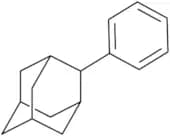
CAS:<p>2-Phenyladamantane is an organic chemical compound. It is a colorless liquid with a sweet aromatic odor. 2-Phenyladamantane has two isomers, one axial and the other equatorial. The axial isomer is more stable than the equatorial isomer because of steric hindrance in the equatorial position. The resonance structures for the axial configuration are shown on the left and those for the equatorial configuration are shown on the right.</p>Formula:C16H20Purity:Min. 98 Area-%Color and Shape:PowderMolecular weight:212.33 g/molEthyl 3-((4-bromo-2-methyl-5-oxo-1-phenyl-3-pyrazolin-3-yl)methoxy)benzoate
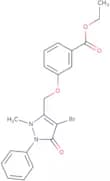
CAS:<p>Please enquire for more information about Ethyl 3-((4-bromo-2-methyl-5-oxo-1-phenyl-3-pyrazolin-3-yl)methoxy)benzoate including the price, delivery time and more detailed product information at the technical inquiry form on this page</p>Purity:Min. 95%Fmoc-N-Me-Asp(OtBu)-OH
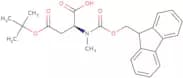
CAS:<p>Fmoc-N-Me-Asp(OtBu)-OH is a synthetic peptide with potential immunosuppressive properties. It has been shown to inhibit the proliferation of human lymphocytes in response to lipopolysaccharides (LPS) and also to suppress the release of cytokines such as IL-1β, IL-6, and TNFα. The effects were dose dependent and could be reversed by the addition of a neutralizing antibody. This peptide can be used as an immunosuppressant in clinical trials that are investigating treatments for myasthenia gravis. Fmoc-N-Me-Asp(OtBu)-OH has been synthesised using chemical synthesis methods from commercially available reagents.</p>Formula:C24H27NO6Purity:Min. 98 Area-%Color and Shape:PowderMolecular weight:425.47 g/molH-Cys-Gly-OH
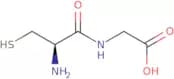
CAS:<p>H-Cys-Gly-OH is a cyclic peptide that has potent antitumor activity. It was synthesized from glutathione and cysteine, which are naturally occurring amino acids in the human body. The mechanism of action of H-Cys-Gly-OH is not well understood, but it may be due to its ability to bind to α1-acid glycoprotein and other proteins in the blood. The compound also has a redox potential, fluorescence spectra, and structural analysis that can be used for identification purposes. This molecule is stable at acid pH and is easily soluble in water or organic solvents. H-Cys-Gly-OH can be analyzed by titration calorimetry or cyclic voltammetry methods.</p>Formula:C5H10N2O3SPurity:Min. 95%Molecular weight:178.21 g/molDL-Arginine hydrochloride
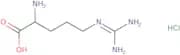
CAS:<p>L-Arginine is a conditionally essential amino acid that is used in the biosynthesis of proteins. It has been shown to inhibit the activity of specific enzymes, such as casein kinase II and phospholipase A2, which are involved in cellular processes. L-Arginine has been found to be beneficial for patients with type 2 diabetes mellitus who have poor glucose homeostasis and renal dysfunction. L-Arginine also enhances uptake of cationic surfactants by cells. L-Arginine HCl is an inorganic acid that may be used for pharmacokinetic studies in humans or animals.</p>Formula:C6H14N4O2•(HCl)xPurity:Min. 95%Color and Shape:PowderMolecular weight:174.2 g/molN-[(1-Methyl-1H-indol-3-yl)methyl]cyclohexanamine
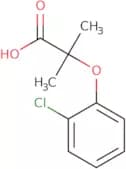
CAS:Controlled ProductPlease enquire for more information about N-[(1-Methyl-1H-indol-3-yl)methyl]cyclohexanamine including the price, delivery time and more detailed product information at the technical inquiry form on this pageFormula:C16H22N2Purity:Min. 95%Molecular weight:242.36 g/mol2-(2-Chlorophenoxy)-2-methylpropanoic acid
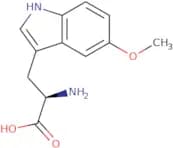
CAS:2-(2-Chlorophenoxy)-2-methylpropanoic acid is a plant hormone that is involved in the mediation of plant responses to various biotic and abiotic stressors. It is synthesized from salicylic acid by the enzyme phenylalanine ammonia-lyase and its structure resembles that of hydrogen peroxide. Its linear growth-promoting activity is mediated by the formation of 2,4-dichlorophenoxyacetic acid, which activates the production of hydrogen peroxide and induces cell expansion. The biosynthesis of this compound has been shown in plants through studies on excised tissues.Formula:C10H11ClO3Purity:Min. 95%Color and Shape:PowderMolecular weight:214.65 g/mol5-Methoxy-D-tryptophan
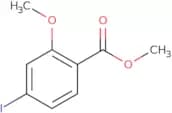
CAS:<p>5-Methoxy-D-tryptophan is a biaryl amino acid derivative that belongs to the class of alkaloids. It is a chiral monomeric building block derived from D-tryptophan. 5-Methoxy-D-tryptophan is commonly used in research chemicals and has been found in natural products such as lochnerine and indole. This compound exhibits unique properties and can be utilized for various applications in the field of chemistry and biochemistry. Its versatility makes it an essential component for researchers and scientists looking to explore new avenues in their studies.</p>Formula:C12H14N2O3Purity:Min. 95%Color and Shape:PowderMolecular weight:234.25 g/mol4-Iodo-2-methoxybenzoic acid methyl ester
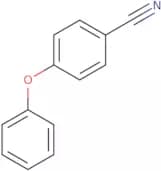
CAS:<p>4-Iodo-2-methoxybenzoic acid methyl ester is a high quality chemical that can be used as a versatile building block in chemical synthesis. It is a complex compound that has been shown to be an effective reagent for research, which can be used in the synthesis of new complex compounds. 4-Iodo-2-methoxybenzoic acid methyl ester is also useful as an intermediate or reaction component in organic syntheses. This chemical is available for purchase at a CAS number of 148490-97-5.</p>Formula:C9H9IO3Purity:Min. 95%Color and Shape:PowderMolecular weight:292.07 g/mol4-Phenoxybenzonitrile
CAS:<p>4-Phenoxybenzonitrile is a synthetic, electron deficient amide that has been shown to react with various halides in vitro. 4-Phenoxybenzonitrile is stable in the presence of copper oxide and can be recycled. It also reacts with fatty acid and monoacylglycerol, which are drug targets for the prevention of hyperlipidemia. In vitro studies have shown that 4-phenoxybenzonitrile potently inhibits potassium phosphate uptake by cells. The reaction mechanism for this inhibition is not known, but it may involve a palladium-catalyzed coupling.</p>Formula:C13H9NOPurity:Min. 95%Color and Shape:PowderMolecular weight:195.22 g/molAc-Asp-Glu-Val-Asp-pNA
CAS:Ac-Asp-Glu-Val-Asp-pNA is a peptide that is derived from the human tumor necrosis factor (TNF) precursor protein. It has been shown to inhibit the growth of tumor cells in vitro by inducing apoptosis. Ac-Asp-Glu-Val-Asp-pNA binds to and activates caspase 3, which leads to cleavage of the proapoptotic protein Bid into Bax and Bak, leading to mitochondrial membrane potential collapse and cell death. The peptide also inhibits DNA synthesis in HL60 cells and hemocytes. Ac-Asp-Glu-Val-Asp-pNA also inhibits proliferation of K562 cells through proteolytic degradation of the antiapoptotic protein Bcl2L11.Formula:C26H34N6O13Purity:Min. 95%Color and Shape:PowderMolecular weight:638.58 g/mol4-Methoxystyrene
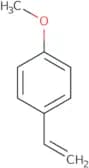
CAS:<p>4-Methoxystyrene is a monomer that can be polymerized to form poly(4-methoxystyrene). It is an ionic monomer that has been used in cationic polymerization reactions. 4-Methoxystyrene can also be used as a fluorescence detector and as a base for the synthesis of polymers with desired properties. The kinetic, radical, and cationic polymerization reactions are all possible with 4-methoxystyrene. This compound has been shown to have intermolecular hydrogen bonding and oxygen nucleophiles, which are both required for the reaction mechanism of this compound. X-ray crystal structures have revealed the structure of this compound.</p>Formula:C9H10OPurity:Min. 95%Color and Shape:Colorless Clear LiquidMolecular weight:134.18 g/molEthyl N-ethyl-N-[(heptadecafluorooctyl)sulphonyl]glycinate
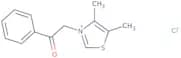
CAS:Controlled Product<p>Ethyl N-Ethyl-N-[(Heptadecafluorooctyl)Sulphonyl]Glycinate is a sulfonate that is used as a surfactant. It is a clear, colorless liquid with a slight odor that is soluble in water and can be used as a chemical intermediate. Ethyl N-Ethyl-N-[(Heptadecafluorooctyl)Sulphonyl]Glycinate is also known as an additive to substances, such as alcohols and other chemicals, or mixtures of substances.</p>Formula:C14H12F17NO4SPurity:Min. 95%Color and Shape:PowderMolecular weight:613.29 g/mol4,5-Dimethyl-3-(2-oxo-2-phenylethyl)thiazol-3-ium chloride
CAS:<p>4,5-Dimethyl-3-(2-oxo-2-phenylethyl)thiazol-3-ium chloride (CGP42112A) is a cytosolic calcium antagonist and a biocompatible polymer that has been shown to be effective in the treatment of diabetes. The drug binds to the endothelin A receptor, which causes the release of intracellular calcium ions from the endoplasmic reticulum. CGP42112A has been shown to demonstrate side effects profiles that are similar to those seen with other pharmacological agents, such as mitochondrial functions and glycation. It also inhibits growth factor β1, which is involved in cell proliferation and differentiation. CGP42112A has been shown to be effective in combination therapy for patients with diabetic nephropathy, tubulointerstitial injury, and neuronal death.</p>Formula:C13H14ClNOSPurity:Min. 95%Color and Shape:SolidMolecular weight:267.78 g/mol4-Bromo-3-methylpyrazole
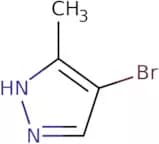
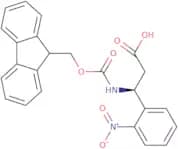
CAS:<p>4-Bromo-3-methylpyrazole is a 3-methylpyrazole that has been shown to have an inhibitory effect on the growth of plants. It is used as a predictive model for pyrazole compounds and has been shown to be an additive in crop plants. 4-Bromo-3-methylpyrazole can be activated by diazo compounds, such as nitrosamines, leading to a variety of chemical reactions. The descriptor for this compound is C6H4BrN2.</p>Formula:C4H5BrN2Color and Shape:PowderMolecular weight:161 g/molFmoc-(S)-3-amino-3-(2-nitrophenyl)propionic acid
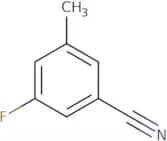
CAS:<p>Please enquire for more information about Fmoc-(S)-3-amino-3-(2-nitrophenyl)propionic acid including the price, delivery time and more detailed product information at the technical inquiry form on this page</p>Formula:C24H20N2O6Purity:Min. 95%Color and Shape:White PowderMolecular weight:432.43 g/mol3-Fluoro-5-methylbenzonitrile
CAS:<p>3-Fluoro-5-methylbenzonitrile is a reactive halogen molecule that can be used in model compounds, such as 3-fluoro-5-methylbenzoic acid. It has been shown to react with nucleophiles in the presence of microwaves, yielding high yields. The compound can be labeled with a variety of labels, including fluorine isotopes, which can be useful for tracking the compound's metabolism.</p>Formula:C8H6FNPurity:Min. 95%Color and Shape:PowderMolecular weight:135.14 g/molCbz-L-glutamine
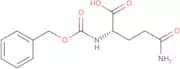
CAS:<p>Cbz-L-glutamine is a water soluble compound that is used in the synthesis of pomalidomide. It is synthesized through a stepwise amide formation from methylamine and ethylene diamine. Cbz-L-glutamine has been shown to have an inhibitory effect on cancer cells, which may be due to its ability to break down hydroxamic acids. This chemical reaction causes the release of hydrogen ions, which leads to the disruption of various cellular processes, such as DNA replication and protein synthesis. The uptake of Cbz-L-glutamine by cancer cells has been shown in tissue culture experiments.</p>Formula:C13H16N2O5Purity:Min. 95%Color and Shape:PowderMolecular weight:280.28 g/mol3-Hydroxy-4-methoxyphenethylamine HCl
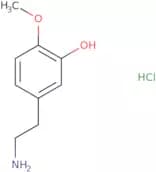
CAS:Controlled Product<p>3-Hydroxy-4-methoxyphenethylamine HCl is an amine that is found in plants. It has been shown to be a reactive compound with a carbonyl group and an amine group. 3-Hydroxy-4-methoxyphenethylamine HCl can act as a dopamine receptor agonist, causing the release of serotonin from neurons. This chemical also has anti-inflammatory properties and may be used to treat inflammatory diseases such as asthma. 3-Hydroxy-4-methoxyphenethylamine HCl may also have blood pressure lowering effects.</p>Formula:C9H14ClNO2Purity:Min. 95%Color and Shape:White to off-white solid.Molecular weight:203.67 g/molN-Lauroyl-L-glutamic acid
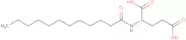
CAS:<p>Lauroyl-L-glutamic acid is a cationic surfactant with a hydroxy group. It is used as an emulsifier, dispersant, and wetting agent in oil solutions. This product also has the ability to chelate metal ions, such as calcium carbonate and iron. The product is primarily used in the manufacture of paints, plastics, coatings and adhesives. Lauroyl-L-glutamic acid has been shown to have a primary amino group that can react with another molecule containing a carboxylic acid group. This reaction produces hydrogen bonds that form gels or solids in water.</p>Formula:C17H31NO5Purity:Min. 95%Color and Shape:White to pale yellow solid.Molecular weight:329.43 g/mol

![N-[(1-Methyl-1H-indol-3-yl)methyl]cyclohexanamine](/_next/image/?url=https%3A%2Fstatic.cymitquimica.com%2Fproducts%2F3D%2Fthumb-webp%2FFM128410.webp&w=3840&q=75)
![Ethyl N-ethyl-N-[(heptadecafluorooctyl)sulphonyl]glycinate](/_next/image/?url=https%3A%2Fstatic.cymitquimica.com%2Fproducts%2F3D%2Fthumb-webp%2FFE95451.webp&w=3840&q=75)