Amino Acids (AA)
Amino acids (AAs) are the fundamental building blocks of proteins, playing a crucial role in various biological processes. These organic compounds are essential for protein synthesis, metabolic pathways, and cell signaling. In this category, you will find a comprehensive range of amino acids, including essential, non-essential, and modified forms, which are vital for research in biochemistry, molecular biology, and nutritional sciences. At CymitQuimica, we provide high-quality amino acids to support your research and development needs, ensuring accuracy and reliability in your experimental outcomes.
Subcategories of "Amino Acids (AA)"
- Amino Acid Derivatives(3,971 products)
- Amino Acid and Amino Acid Related Compounds(3,477 products)
- Amino Acids with Oxygen or Sulphur(168 products)
- Boc- Amino Acids(351 products)
- Fmoc Amino Acids(1,710 products)
Found 38321 products of "Amino Acids (AA)"
Sort by
Purity (%)
0
100
|
0
|
50
|
90
|
95
|
100
Fmoc-a-Me-D-Trp(Boc)-OH
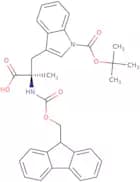
CAS:<p>Fmoc-a-Me-D-Trp(Boc)-OH is a building block that is used in the synthesis of peptides and proteins. It is an intermediate for the production of pharmaceuticals, which can be used as a reagent or speciality chemical. Fmoc-a-Me-D-Trp(Boc)-OH has been reported to be useful as a reactant in organic synthesis reactions such as condensation reactions, reductive aminations and peptide coupling reactions. This compound is also a versatile scaffold for the preparation of complex compounds with high purity and quality.</p>Formula:C32H32N2O6Purity:Min. 95%Color and Shape:White PowderMolecular weight:540.61 g/mol2-Methoxybenzonitrile
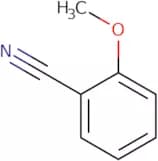
CAS:<p>2-Methoxybenzonitrile is a reactive molecule that can undergo a variety of reactions. In simulations, 2-methoxybenzonitrile reacts with carbon tetrachloride to form chlorobenzene and hydrochloric acid. The reaction mechanism involves the metal surface, which is believed to act as a catalyst and transfer the molecule to the receptor binding site on the substrate molecule. 2-Methoxybenzonitrile has been shown to react with various functional groups on a substrate molecule, including ester, amide, nitrile, sulfide, sulfone, and phosphate groups. This reaction system also produces different reaction products depending on the type of functional group.</p>Formula:C8H7NOPurity:Min. 95%Color and Shape:Clear LiquidMolecular weight:133.15 g/mol5-Methylthiophene-3-carbohydrazide
CAS:<p>5-Methylthiophene-3-carbohydrazide is a white powder that is soluble in water and ethanol. It is used as a reagent for organic synthesis, especially for the production of heterocycles. The chemical name for 5-methylthiophene-3-carbohydrazide is methyl 3-(aminocarbonyl)-5-methylthiophenecarboxylate. It has a molecular weight of 160.06 grams per mole and a melting point of 35°C. It reacts with acid to form an N-methylthiophthalimide, which can then be reacted with various amines to produce diverse products. This compound is also used as a building block in the synthesis of complex molecules such as pharmaceuticals, agrochemicals, or fragrances.</p>Formula:C6H8N2OSPurity:Min. 95 Area-%Color and Shape:PowderMolecular weight:156.21 g/mol8-Methoxy-2-methyl-2,3,4,5-tetrahydro-1H-pyrido[4,3-b]indole
CAS:<p>8-Methoxy-2-methyl-2,3,4,5-tetrahydro-1H-pyrido[4,3-b]indole is a versatile building block that can be used as a reagent or speciality chemical. It has been used in research and development of pharmaceuticals and as a useful intermediate for the synthesis of other compounds. 8-Methoxy-2-methyl-2,3,4,5-tetrahydro-1H-pyrido[4,3-b]indole is an important reaction component for the synthesis of many types of compounds such as indoles, coumarins, and quinazolinones.</p>Formula:C13H16N2OPurity:Min. 95%Color and Shape:PowderMolecular weight:216.28 g/molCalcitonin (8-32) (salmon I) trifluoroacetate salt
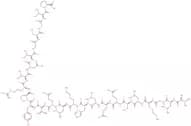
CAS:<p>Please enquire for more information about Calcitonin (8-32) (salmon I) trifluoroacetate salt including the price, delivery time and more detailed product information at the technical inquiry form on this page</p>Formula:C119H198N36O37·C2HF3O2Purity:Min. 98 Area-%Color and Shape:PowderMolecular weight:2,725.07 g/molD-Alanine isopropyl ester HCl
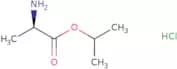
CAS:<p>D-Alanine isopropyl ester HCl is a synthetic compound that has been used as a diagnostic tool for detecting the presence of molybdenum in urine. It has been shown to have a high affinity for the receptor, and acts as an agonist. D-Alanine isopropyl ester HCl has also been shown to induce malignant growth in fibroblast cells.</p>Formula:C6H13NO2·ClHPurity:Min. 95%Color and Shape:White PowderMolecular weight:167.63 g/mol4-Methyl-2(5H)-furanone
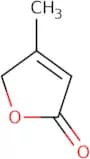
CAS:<p>4-Methyl-2(5H)-furanone is an isomeric compound that can be isolated from various plant sources including isoprene, chalcones, and other plant extracts. It has been shown to inhibit the formation of dental plaque and the growth of oral bacteria in a functional group study. 4-Methyl-2(5H)-furanone is also known as a chalcone and has been shown to have antibacterial properties. This chemical reaction can be used as an alternative to chlorhexidine for the treatment of dental plaque.</p>Formula:C5H6O2Purity:Min. 95%Color and Shape:Clear LiquidMolecular weight:98.1 g/molL-Seleno-L-methionine
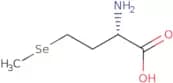
CAS:<p>L-Seleno-L-methionine is a selenium-containing amino acid that is found in the proteins of some plants and animals. It functions as an enzyme cofactor and aids in energy metabolism, protein synthesis, and other biochemical processes. Seleno-L-methionine has been shown to have a protective effect against oxidative damage by scavenging free radicals. It also increases mitochondrial membrane potential and prevents the release of proapoptotic factors from mitochondria into the cytosol. Seleno-L-methionine has been used for analytical purposes as well as to evaluate changes in cell signaling pathways due to chemiluminescence methods or chemical inhibitors. Seleno-L-methionine also has an antioxidant activity that reduces the production of reactive oxygen species (ROS) by reacting with hydroxyl radicals, hydrogen peroxide, nitric oxide, singlet oxygen, and peroxynitrite. Seleno-L-m</p>Formula:C5H11NO2SePurity:(Hplc) Min. 98%Color and Shape:White PowderMolecular weight:196.11 g/mol5-Hydroxy-L-tryptophan
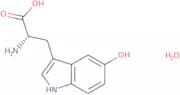
CAS:<p>5-hydroxy-L-tryptophan (5HTP) is a naturally occurring amino acid that is an intermediate in the synthesis of the neurotransmitter serotonin. 5HTP appears to be able to increase levels of serotonin in the brain and may be used to treat mood disorders, including depression and anxiety. In clinical trials, 5HTP was found to be as effective as some antidepressant drugs for treating depression. Studies have shown that 5HTP increases locomotor activity and dopamine concentrations. It also increases physiological functions such as temperature regulation, heart rate, blood pressure, and respiration rate. The mechanism by which 5HTP achieves these effects is not yet fully understood but may involve its ability to bind to specific receptors on cells in different regions of the brain.<br>5HTP has been shown to inhibit polymerase chain reactions (PCR) in vitro by binding to DNA gyrase and topoisomerase IV enzyme activities. It also inhibits fatty acid oxidation in vitro by binding</p>Formula:C11H12N2O3Purity:Min. 95%Color and Shape:PowderMolecular weight:220.22 g/mol3-Methylcrotonyl glycine
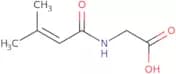
CAS:<p>3-Methylcrotonyl glycine is a metabolite of carnitine that has been shown to be an effective marker for detection of creatine kinase (CK) deficiency in patients with infantile mitochondrial encephalomyopathy. 3-Methylcrotonyl glycine is used for the diagnosis of metabolic disorders such as fatty acid oxidation defects, enzyme deficiencies, and inherited metabolic disorders. 3-Methylcrotonyl glycine can be used for the diagnosis of various symptoms including muscle weakness, fatigue, developmental delay, and seizures in children. The sensitivity of 3-methylcrotonyl glycine as a biomarker can be increased by using gas chromatography coupled with mass spectrometry.</p>Formula:C7H11NO3Purity:Min. 95%Color and Shape:PowderMolecular weight:157.17 g/mol5-Methyl-2-nitrobenzamide
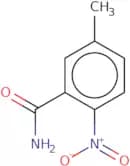
CAS:<p>5-Methyl-2-nitrobenzamide is a compound that has antiproliferative activity and is used as an anticancer drug. This drug inhibits the polymerization of the protein tubulin in cancer cells, thereby inhibiting cell division. It also inhibits the growth of certain tumor cell lines in vitro. 5-Methyl-2-nitrobenzamide was found to inhibit the proliferation of human ovarian carcinoma cells by binding to DNA, preventing transcription and replication of genetic information. In addition, this agent binds to tubulin and prevents its polymerization, leading to inhibition of cell division.</p>Formula:C8H8N2O3Purity:Min. 95%Color and Shape:PowderMolecular weight:180.16 g/molN-[(1-Methyl-1H-indol-3-yl)methyl]cyclohexanamine
CAS:Controlled ProductPlease enquire for more information about N-[(1-Methyl-1H-indol-3-yl)methyl]cyclohexanamine including the price, delivery time and more detailed product information at the technical inquiry form on this pageFormula:C16H22N2Purity:Min. 95%Molecular weight:242.36 g/molPoly-L-lysine hydrobromide - M.W:1000-5000
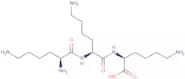
CAS:<p>Poly-L-lysine hydrobromide is a polymer that consists of repeating lysine monomers. It has a molecular weight range of 1000 to 5000 Daltons. Poly-L-lysine hydrobromide is used for intramolecular hydrogen bonding, which increases its resistance to thermal and kinetic energy. Poly-L-lysine hydrobromide is also used in the structural analysis of proteins, because it can be easily purified from human serum by dialysis. This polymer has been shown to be effective against carcinoma cell lines, amide bonds, terminal residues, and ester linkages. There is also evidence that poly-L-lysine hydrobromide may have anticancer properties in vitro and in vivo.<br>Poly-L-lysine hydrobromide has been shown to have antiangiogenic properties due to its ability to block the interaction between tumor cells and endothelial cells. This can lead to tumor regression and decreased metastasis</p>Formula:(C6H12N2O2)n•(HBr)xPurity:Min. 95%Color and Shape:White PowderD-Leucine benzyl ester 4-toluenesulfonate salt
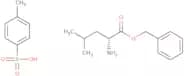
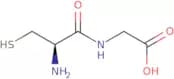
CAS:<p>D-Leucine benzyl ester 4-toluenesulfonate salt is a versatile building block for the synthesis of complex compounds. It can be used as a reagent or a speciality chemical in research, and has been shown to be useful as a reaction component. D-Leucine benzyl ester 4-toluenesulfonate salt is also a useful scaffold for the synthesis of higher quality products. The CAS number for this product is 17664-93-6.</p>Formula:C13H19NO2·C7H8O3SPurity:Min. 95%Color and Shape:PowderMolecular weight:393.5 g/molH-Cys-Gly-OH
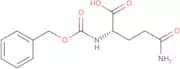
CAS:<p>H-Cys-Gly-OH is a cyclic peptide that has potent antitumor activity. It was synthesized from glutathione and cysteine, which are naturally occurring amino acids in the human body. The mechanism of action of H-Cys-Gly-OH is not well understood, but it may be due to its ability to bind to α1-acid glycoprotein and other proteins in the blood. The compound also has a redox potential, fluorescence spectra, and structural analysis that can be used for identification purposes. This molecule is stable at acid pH and is easily soluble in water or organic solvents. H-Cys-Gly-OH can be analyzed by titration calorimetry or cyclic voltammetry methods.</p>Formula:C5H10N2O3SPurity:Min. 95%Molecular weight:178.21 g/molCbz-L-glutamine
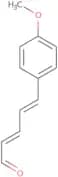
CAS:<p>Cbz-L-glutamine is a water soluble compound that is used in the synthesis of pomalidomide. It is synthesized through a stepwise amide formation from methylamine and ethylene diamine. Cbz-L-glutamine has been shown to have an inhibitory effect on cancer cells, which may be due to its ability to break down hydroxamic acids. This chemical reaction causes the release of hydrogen ions, which leads to the disruption of various cellular processes, such as DNA replication and protein synthesis. The uptake of Cbz-L-glutamine by cancer cells has been shown in tissue culture experiments.</p>Formula:C13H16N2O5Purity:Min. 95%Color and Shape:PowderMolecular weight:280.28 g/mol4-Methoxycinnamylidene acetaldehyde
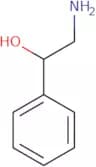
CAS:<p>4-Methoxycinnamylidene acetaldehyde is a versatile building block with a CAS number of 27394-81-6. It is used in the research and production of fine chemicals, pharmaceuticals, and high quality reagents. 4-Methoxycinnamylidene acetaldehyde can be used as a useful scaffold for the synthesis of complex compounds. This building block is also a useful intermediate in organic chemistry reactions.</p>Formula:C12H12O2Purity:Min. 95%Color and Shape:PowderMolecular weight:188.22 g/molDL-Phenylethanolamine
CAS:<p>DL-Phenylethanolamine is a hydroxy amine that is used in the synthesis of other chemicals. It is obtained by reacting phenylacetic acid with hydroxylamine. DL-Phenylethanolamine is an intermediate in the synthesis of the anti-inflammatory drug Indomethacin. This molecule contains a asymmetric carbon atom, which can be distinguished using infrared spectroscopy. The uptake of DL-phenylethanolamine into cells can be measured by detecting the release of amines from lysosomes and mitochondria. In addition, this molecule has conformational properties that can be detected by NMR spectroscopy, making it useful for detection sensitivity and identification purposes.</p>Formula:C8H11NOPurity:(%) Min. 90%Color and Shape:PowderMolecular weight:137.18 g/mol2-Methoxy-1-[(4-methylphenyl)sulphinyl]benzene
CAS:<p>2-Methoxy-1-[(4-methylphenyl)sulphinyl]benzene is a reagent and useful intermediate that is used in the synthesis of complex compounds. This chemical has been shown to be a useful scaffold for the synthesis of natural products. It can also be used as a building block in the synthesis of speciality chemicals and research chemicals, as well as versatile building blocks in reactions.</p>Formula:C14H14O2SPurity:Min. 95%Molecular weight:246.33 g/mol6-Methoxycoumarin
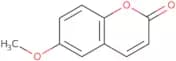
CAS:<p>6-Methoxycoumarin is a potent inhibitor drug that inhibits the activity of monoamine oxidase (MAO). It has been shown to have anti-feedant properties in laboratory experiments and is used as an antifeedant. 6-Methoxycoumarin also fluoresces under ultraviolet light, which can be used to identify its presence in a solution. 6-Methoxycoumarin is a derivative of coumarin and has the same skeleton with two methoxy groups attached. The compound can be identified by its chemical structure and predictable fluorescence properties. 6-Methoxycoumarin has been shown to bind to amines, which are organic compounds containing nitrogen, on the chromatographic column, allowing for easy detection.</p>Formula:C10H8O3Purity:Min. 95%Color and Shape:PowderMolecular weight:176.17 g/mol


![8-Methoxy-2-methyl-2,3,4,5-tetrahydro-1H-pyrido[4,3-b]indole](/_next/image/?url=https%3A%2Fstatic.cymitquimica.com%2Fproducts%2F3D%2Fthumb-webp%2FFM117858.webp&w=3840&q=75)
![N-[(1-Methyl-1H-indol-3-yl)methyl]cyclohexanamine](/_next/image/?url=https%3A%2Fstatic.cymitquimica.com%2Fproducts%2F3D%2Fthumb-webp%2FFM128410.webp&w=3840&q=75)
![2-Methoxy-1-[(4-methylphenyl)sulphinyl]benzene](/_next/image/?url=https%3A%2Fstatic.cymitquimica.com%2Fproducts%2F3D%2Fthumb-webp%2FFM66194.webp&w=3840&q=75)