Amino Acids (AA)
Amino acids (AAs) are the fundamental building blocks of proteins, playing a crucial role in various biological processes. These organic compounds are essential for protein synthesis, metabolic pathways, and cell signaling. In this category, you will find a comprehensive range of amino acids, including essential, non-essential, and modified forms, which are vital for research in biochemistry, molecular biology, and nutritional sciences. At CymitQuimica, we provide high-quality amino acids to support your research and development needs, ensuring accuracy and reliability in your experimental outcomes.
Subcategories of "Amino Acids (AA)"
- Amino Acid Derivatives(3,971 products)
- Amino Acid and Amino Acid Related Compounds(3,477 products)
- Amino Acids with Oxygen or Sulphur(168 products)
- Boc- Amino Acids(351 products)
- Fmoc Amino Acids(1,710 products)
Found 38321 products of "Amino Acids (AA)"
Sort by
Purity (%)
0
100
|
0
|
50
|
90
|
95
|
100
Human growth hormone (1-43)
CAS:<p>Human growth hormone is a polypeptide hormone that stimulates the growth of tissues and organs. It also plays a role in the regulation of the metabolism of carbohydrates, fats, and proteins. It is produced by cells in the anterior pituitary gland and acts on cells in many different parts of the body to regulate cell function. Growth hormone is used as a research tool in endocrinology and cell biology. It can be used to study how hormones affect cells both in vitro and in vivo.<br>A recombinant form of human growth hormone (r-hGH) has been approved for treatment of children with deficient or insufficient growth due to idiopathic short stature, chronic renal insufficiency, Turner syndrome, Prader-Willi syndrome, or familial short stature.<br>HGH may also be used to treat adults who are experiencing age-related muscle loss or wasting associated with HIV/AIDS or cancer cachexia.</p>Formula:C240H358N62O67SPurity:Min. 95%Molecular weight:5,215.85 g/molGly-Asp-OH
CAS:<p>Gly-Asp-OH is a medicine that has proliferative activity. It is also an immunoregulatory and biologically active substance, which suppresses the production of cytokines IL-10 in mononuclear cells. Gly-Asp-OH is a synthetic compound with medicinal properties. The structure of this compound was elucidated by chemical analysis and spectroscopic methods. It can be used as an anti-inflammatory agent or to prevent cell death induced by necrosis or apoptosis.</p>Formula:C6H10N2O5Purity:Min. 95 Area-%Color and Shape:PowderMolecular weight:190.15 g/mol(Des-Gly10,D-Trp6,D-Leu7,Pro-NHEt 9)-LHRH trifluoroacetate salt
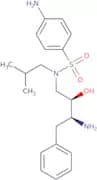
<p>Please enquire for more information about (Des-Gly10,D-Trp6,D-Leu7,Pro-NHEt 9)-LHRH trifluoroacetate salt including the price, delivery time and more detailed product information at the technical inquiry form on this page</p>Formula:C64H83N17O12Purity:Min. 95%Color and Shape:PowderMolecular weight:1,282.45 g/mol4-Amino-N-((2R,3S)-3-amino-2-hydroxy-4-phenylbutyl)-N-ispobutylbenzenesulfonamide
CAS:<p>4-Amino-N-((2R,3S)-3-amino-2-hydroxy-4-phenylbutyl)-N-isobutylbenzenesulfonamide is an amide that is used to treat HIV infections. It has been shown to have potent anti-viral activity against HIV infected cells in the laboratory and can inhibit the replication of HIV by interfering with the virus's ability to use the reverse transcriptase enzyme. 4ABAB has been shown to bind to the enzyme ribonuclease H (crth2), which is responsible for breaking down viral RNA. This binding prevents crth2 from cleaving viral RNA, thus inhibiting DNA synthesis and preventing cell death. 4ABAB also interferes with a hydrogen bond between ethyl group and the hydroxyl group on crth2, leading to a decrease in activity.</p>Formula:C20H29N3O3SPurity:Min. 95%Color and Shape:White PowderMolecular weight:391.53 g/molFmoc-21-amino-4,7,10,13,16,19-hexaoxaheneicosanoic acid
CAS:Fmoc-21-amino-4,7,10,13,16,19-hexaoxaheneicosanoic acid is a PEG compound with two different functional groups (also known as heterobifunctional). Unlike homobifunctional PEG compounds (same functional group on both ends), this type of compounds are more versatile as have two different anchor points. Fmoc-21-amino-4,7,10,13,16,19-hexaoxaheneicosanoic acid is used as a linker and spacer to add a PEG moiety, via pegylation (a bioconjugation technique) to proteins, peptides, oligonucleotides, small molecules and nanoparticles.Formula:C30H41NO10Purity:Min. 95%Color and Shape:PowderMolecular weight:575.65 g/molN-Methyldioctylamine
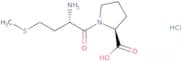
CAS:<p>N-Methyldioctylamine is a biodegradable, water soluble, and non-toxic chemical that can be used as an alternative to caustic soda for wastewater treatment. It removes organic matter from industrial effluents by breaking down long chain hydrocarbons into smaller fragments and reacts with the hydroxyl group of proteins to form hydroxylamines. N-Methyldioctylamine has been shown to inhibit protease activity in wild-type strains of bacteria, such as Escherichia coli and Pseudomonas aeruginosa. It also inhibits hematopoietic cells from developing into mature cells by disrupting the biochemical composition of their membranes. N-Methyldioctylamine is reactive with fatty acids and amines found in mammalian tissue samples. This compound can be used as a sample preparation agent or analytical reagent for caproic acid, which is used in process optimization applications.</p>Formula:C17H37NPurity:Min. 95%Color and Shape:Clear LiquidMolecular weight:255.48 g/molH-Met-Pro-OH·HCl
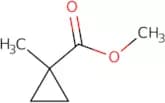
CAS:<p>Please enquire for more information about H-Met-Pro-OH·HCl including the price, delivery time and more detailed product information at the technical inquiry form on this page</p>Formula:C10H18N2O3S•HClPurity:Min. 95%Color and Shape:PowderMolecular weight:282.79 g/molMethyl 1-methylcyclopropane-1-carboxylate
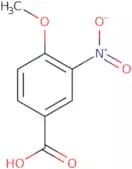
CAS:<p>Please enquire for more information about Methyl 1-methylcyclopropane-1-carboxylate including the price, delivery time and more detailed product information at the technical inquiry form on this page</p>Formula:C6H10O2Purity:Min. 95%Molecular weight:114.14 g/mol4-Methoxy-3-nitrobenzoic acid
CAS:<p>4-Methoxy-3-nitrobenzoic acid is a hydroxybenzoic acid, and belongs to the group of heterocyclic compounds. It is a preactivated hydroxybenzoate that can be used in the synthesis of griseoluteic acid with chloride as an electron donor. Griseoluteic acid has inhibitory activities on isolated yield. This compound also has potent antitumor activity, which may be due to its ability to inhibit DNA synthesis and protein synthesis by binding to DNA polymerase and ribosomes respectively. Preparative high performance liquid chromatography (HPLC) using this compound is possible with marine microorganisms as the stationary phase. The x-ray absorption spectrum shows that 4-methoxy-3-nitrobenzoic acid has potential for use as a contrast agent for x-rays in imaging tissues.</p>Formula:C8H7NO5Purity:Min. 98 Area-%Color and Shape:PowderMolecular weight:197.14 g/molO-Benzyl-L-threonine
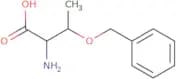
CAS:<p>O-Benzyl-L-threonine is a polymer that can be used to treat inflammatory diseases. It is an ionic polymer that reacts with calcium carbonate and forms nanosized architectures. O-Benzyl-L-threonine has been shown to cause the disassembly of inflammatory cells and induce cell death through necrosis factor. This polymer has been shown to have an optimal reaction when combined with a target cell in the presence of calcium carbonate. The phenolic group on the threonine molecule is responsible for this reaction's success.</p>Formula:C11H15NO3Purity:Min. 95%Color and Shape:White To Off-White SolidMolecular weight:209.24 g/mol5-Bromo-2-methylbenzonitrile
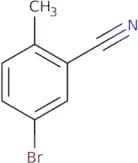
CAS:<p>5-Bromo-2-methylbenzonitrile is a substrate for the enzyme benzoate kinase and is used as an intermediate in the synthesis of cyclen. It can be activated by addition of acid, which leads to a rapid increase in the rate of reaction. The kinetic data for this reaction have been analyzed and show that it obeys first order kinetics with respect to both 5-bromo-2-methylbenzonitrile and benzoic acid. This reaction is also catalyzed by an analog of cyclen, which binds to the enzyme more tightly than 5-bromo-2-methylbenzonitrile, resulting in a higher activation energy. It is possible to analyze the kinetics of this reaction using agarose gel electrophoresis or supercoiled DNA analysis.</p>Formula:C8H6BrNPurity:Min. 95%Color and Shape:PowderMolecular weight:196.04 g/molH-Lys-Asp-OH
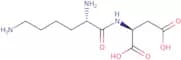
CAS:<p>H-Lys-Asp-OH is a molecule that binds to the receptor binding molecule for the colony stimulating factor. It has been shown to be effective in protecting against experimental models of hepatic steatosis and monoclonal antibody induced liver injury. The therapeutic potential of H-Lys-Asp-OH is being investigated as a treatment for human hepatic steatosis, which is a condition characterized by high levels of fat in the liver. This drug also has pharmacokinetic properties that are important in its use as an experimental model for studying the effects of antibiotics on bacterial DNA synthesis, and as a diagnostic tool for detecting antibiotic resistant bacteria.</p>Formula:C10H19N3O5Purity:Min. 95%Color and Shape:White PowderMolecular weight:261.28 g/molN-Acetyl-S-benzyl-L-cysteine
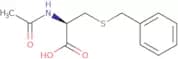
CAS:<p>N-Acetyl-S-benzyl-L-cysteine is a fluorescence detector that is often used in toxicological studies. It is commonly used to measure the formation of urinary acid after the ingestion of drugs or toxins, as well as the oxidative DNA damage. N-Acetyl-S-benzyl-L-cysteine can be found in urine samples and maternal blood. This compound is prepared by mixing an aqueous solution with a solvent, such as toluene or methyl ethyl ketone, yielding an oily precipitate. The resulting precipitate is then dissolved in water and filtered with a syringe filter for use in fluorescence detection.</p>Formula:C12H15NO3SPurity:Min. 95%Color and Shape:PowderMolecular weight:253.32 g/molN-{[(4-Methyl-2-oxo-2H-chromen-7-yl)oxy]acetyl}glycine
CAS:N-{[(4-Methyl-2-oxo-2H-chromen-7-yl)oxy]acetyl}glycine is a versatile building block that can be used as a research chemical or reagent. This compound is a useful scaffold for complex compounds and can be used in the synthesis of other compounds. N-[(4-methyl-2,7-dioxo)-2H chromen-7-yl] acetyl glycine has been shown to be an effective intermediate in organic synthesis, due to its reactivity and high quality. This molecule is a fine chemical that can be used as a building block for speciality chemicals such as pharmaceuticals, agrochemicals, dyes, and plastics. It has also been shown to have antiinflammatory activities.Formula:C14H13NO6Purity:Min. 95%Color and Shape:PowderMolecular weight:291.26 g/molb-Chloro-L-alanine hydrochloride
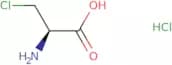
CAS:<p>b-Chloro-L-alanine hydrochloride (BCA) is a synthetic compound that has been shown to have anticarcinogenic and antioxidant effects. It can be produced by the hydrogen peroxide-dependent oxidation of b-chloroalanine. BCA's effect on cancer cells is attributed to its ability to inhibit the synthesis of sulfoxides, which are needed for the biosynthesis of pyrimidine nucleotides. BCA also inhibits oxidative stress by scavenging free radicals and reactive oxygen species. This product has been shown to be effective in treating Aeropyrum pernix infections, which are caused by a type of anaerobic bacteria with a metabolic pathway that includes sulfide oxidation.</p>Formula:C3H6NO2Cl·HClPurity:Min. 95%Color and Shape:White PowderMolecular weight:160 g/molPoly-L-lysine hydrochloride, MW 10000 - 30000
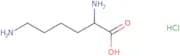
CAS:<p>Poly-L-lysine hydrochloride, MW20000 is a water soluble polymer with an average molecular weight of 20000 Da. It is used in the synthesis of peptides and proteins due to its high purity, high quality, and low cost. Poly-L-lysine hydrochloride, MW20000 has been shown to bind to a wide range of surfaces such as glass, plastic, silicon dioxide, and stainless steel. This makes it useful for surface modification. Poly-L-lysine hydrochloride can be used as a scaffold for chemical reactions or as an intermediate in the synthesis of complex compounds.</p>Color and Shape:Powder3-(tert-butyl)-1-phenyl-4-(2-thienylmethylene)-2-pyrazolin-5-one
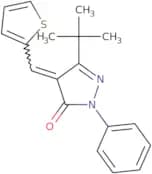
CAS:<p>Please enquire for more information about 3-(tert-butyl)-1-phenyl-4-(2-thienylmethylene)-2-pyrazolin-5-one including the price, delivery time and more detailed product information at the technical inquiry form on this page</p>Purity:Min. 95%Cyclo(-Gly-L-Glu)
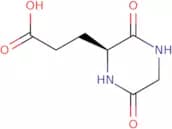
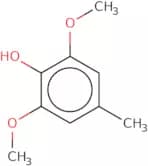
CAS:<p>Cyclo(-Gly-L-Glu) is a cyclic dipeptide that has been analyzed using LC-MS/MS. It is a bioactive compound that can be found in the bioscience and biochemistry fields. Cyclo(-Gly-L-Glu) is used as an analytical method for determining the presence of dipeptides, which are small molecules composed of two amino acids linked together by a peptide bond. The cyclic form of the molecule allows it to bind to proteins and other molecules in order to stabilize them. Cyclo(-Gly-L-Glu) has also been shown to have potential as a therapeutic agent for cancer treatments, based on its ability to inhibit the activity of protein kinases involved in cell proliferation and apoptosis.</p>Formula:C7H10N2O4Purity:Min. 98 Area-%Color and Shape:PowderMolecular weight:186.17 g/mol2,6-Dimethoxy-4-methylphenol
CAS:<p>2,6-dimethoxy-4-methylphenol is a synthetic chemical with potential use as an insecticide. It is a cholinesterase inhibitor that inhibits the action of acetylcholinesterase, an enzyme that breaks down acetylcholine, which is a neurotransmitter important for cognitive function and muscle control. 2,6-dimethoxy-4-methylphenol has been shown to be toxic to insects in a sensitivity test and has also shown some toxicity to rats when administered orally at high doses. This chemical has been shown to inhibit the production of fatty acids in plants and can be used as a potential insecticide for human food crops.</p>Formula:C9H12O3Purity:Min. 97.0%Color and Shape:White Yellow PowderMolecular weight:168.19 g/molFmoc-Cit-OH
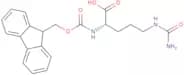
CAS:<p>Fmoc-Cit-OH, or N-Fmoc-L-citrulline, is a protected amino acid derivative commonly used in peptide synthesis. The "Fmoc" portion refers to the fluorenylmethyloxycarbonyl group, a protecting group that shields the amino group of citrulline, preventing unwanted side reactions during peptide chain elongation. Citrulline, the core amino acid in Fmoc-Cit-OH, is a non-proteinogenic amino acid, which is not directly incorporated into proteins during translation. In peptide synthesis, Fmoc-Cit-OH is incorporated into peptide chains using solid-phase peptide synthesis (SPPS). This technique allows for the stepwise assembly of peptides on a solid support, with Fmoc-protected amino acids added sequentially. The Fmoc group is then removed using a mild base, exposing the free amino group for the addition of the next amino acid. Fmoc-Cit-OH is particularly valuable in the synthesis of peptides containing citrulline residues, which are often found in biologically active peptides and proteins. These peptides may have therapeutic potential in various fields, including drug discovery and prodrug synthesis.</p>Formula:C21H23N3O5Purity:Min. 98 Area-%Color and Shape:White Off-White PowderMolecular weight:397.42 g/mol




![N-{[(4-Methyl-2-oxo-2H-chromen-7-yl)oxy]acetyl}glycine](/_next/image/?url=https%3A%2Fstatic.cymitquimica.com%2Fproducts%2F3D%2Fthumb-webp%2FFM124445.webp&w=3840&q=75)