Amino Acids (AA)
Amino acids (AAs) are the fundamental building blocks of proteins, playing a crucial role in various biological processes. These organic compounds are essential for protein synthesis, metabolic pathways, and cell signaling. In this category, you will find a comprehensive range of amino acids, including essential, non-essential, and modified forms, which are vital for research in biochemistry, molecular biology, and nutritional sciences. At CymitQuimica, we provide high-quality amino acids to support your research and development needs, ensuring accuracy and reliability in your experimental outcomes.
Subcategories of "Amino Acids (AA)"
- Amino Acid Derivatives(3,957 products)
- Amino Acid and Amino Acid Related Compounds(3,472 products)
- Amino Acids with Oxygen or Sulphur(168 products)
- Boc- Amino Acids(351 products)
- Fmoc Amino Acids(1,710 products)
Found 38265 products of "Amino Acids (AA)"
Sort by
Purity (%)
0
100
|
0
|
50
|
90
|
95
|
100
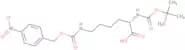
N-α-Boc-Nε-4-nitro-Z-L-lysine
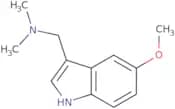
CAS:<p>Nepsilon-4-nitro-Z-L-lysine is a plant nutrient that can be used in agricultural and horticultural applications. It is a particle that can be added to the soil to improve fertility and stimulate plant growth. Nepsilon-4-nitro-Z-L-lysine has been shown to have a protective effect on plants against insect pests and fungal infections, as well as inhibiting the formation of toxic compounds during fermentation. This product also provides an alternative to chemical treatment and can be used for environmental monitoring or mesoscale studies. Nepsilon-4-nitro-Z-L-lysine has been shown to improve horse fertility and reduce the number of treatments required for resistant bacterial infections.</p>Formula:C19H27N3O8Purity:Min. 95%Color and Shape:SolidMolecular weight:425.43 g/mol5-Methoxygramine
CAS:Controlled Product<p>5-Methoxygramine is a metabolic intermediate which is an analog of 5-hydroxytryptamine (5-HT). It has been shown to increase blood pressure and reduce the activity of the 5-HT2C receptor. This drug also has been found to inhibit the growth of some cancer cells in vitro, but it does not affect normal cells. It can be used as a tool for identifying compounds that may have similar effects. The binding affinity of 5-methoxygramine for the 5-HT2C receptor was measured by displacement experiments with 3H-spiperone. The effect of this compound on dopamine release from rat striatal slices was studied by measuring electrical activity in isolated heart preparations. The effect of this compound on leishmania infection was studied using infected mice and isolated heart preparations.</p>Formula:C12H16N2OPurity:Min. 95%Color and Shape:PowderMolecular weight:204.27 g/mol(S)-2-Amino-3,3,3-trifluoropropanoic acid hydrochloride
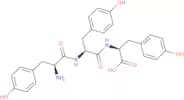
CAS:<p>Please enquire for more information about (S)-2-Amino-3,3,3-trifluoropropanoic acid hydrochloride including the price, delivery time and more detailed product information at the technical inquiry form on this page</p>Formula:C3H4F3NO2•HCLPurity:Min. 95%Color and Shape:PowderMolecular weight:179.52 g/molH-Tyr-Tyr-Tyr-OH
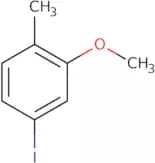
CAS:<p>H-Tyr-Tyr-Tyr-OH is a synthetic compound that has been used to study the mechanism of lactoperoxidase. Lactoperoxidase is an enzyme that catalyzes the oxidation of thiocyanate to form hypothiocyanite, hydrogen peroxide, and a hydroxy group. The hydroxy group is formed by the reaction of two molecules of hydrogen peroxide with a molecule of thiocyanate. This reaction produces an oxygen atom, which then reacts with water to produce an acid. H-Tyr-Tyr-Tyr-OH has been shown to be a substrate for lactoperoxidase in horse serum and bovine serum. It has also been found to react with oxygen at neutral pH levels, forming a product that absorbs ultraviolet light at 280 nm.</p>Formula:C27H29N3O7Purity:Min. 95%Color and Shape:PowderMolecular weight:507.54 g/mol5-Iodo-2-methylanisole
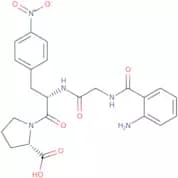
CAS:<p>5-Iodo-2-methylanisole is a versatile building block that can be used in the preparation of complex compounds. It is an intermediate in the synthesis of many biologically active compounds, such as pharmaceuticals, pesticides, and herbicides. This compound is also a reagent for organic synthesis and other research purposes. 5-Iodo-2-methylanisole has been shown to have high purity and quality with a melting point of 176°C.</p>Formula:C8H9IOColor and Shape:Clear LiquidMolecular weight:248.06 g/molo-Aminobenzoylglycyl-p-nitro-L-phenylalanyl-L-proline TFA salt
CAS:<p>O-Aminobenzoylglycyl-p-nitro-L-phenylalanyl-L-proline TFA salt is a synthetic, hydrophilic interaction chromatography (HIC) substrate. It has inhibitory properties and is used in biological assays to measure the activities of enzymes that catalyze the hydrolysis of the substrate. O-Aminobenzoylglycyl-p-nitro-L-phenylalanyl-L-proline TFA salt also has been shown to have bioactivities on blood pressure and cell monolayers.</p>Formula:C23H25N5O7•C2HF3O2Purity:Min. 95 Area-%Color and Shape:PowderMolecular weight:597.49 g/molAlanine anhydride
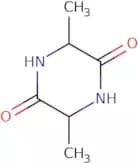
CAS:<p>Alanine anhydride is a purine derivative that can be used as a diagnostic agent. It contains a carbonyl group and a chloride, which are both low energy groups. Alanine anhydride is also a hydrogen bond acceptor, which allows it to bind to the amide backbone of proteins. The nitrogen atoms in this compound are diagnostic agents that can be used to identify the presence of cancer cells in urine samples. This chemical has been shown to have potential microbial infection-fighting effects.</p>Formula:C6H10N2O2Purity:Min. 98 Area-%Color and Shape:PowderMolecular weight:142.16 g/molL-Serine ethyl ester hydrochloride
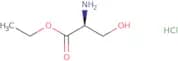
CAS:<p>L-Serine ethyl ester hydrochloride is a metabolite of L-serine that has been found to inhibit the growth of cancer cells. It has been shown to inhibit the proliferation of muscle cells and reduce the size of pancreatitis. L-Serine ethyl ester hydrochloride has also been shown to have an inhibitory effect on stenosis in animal models. This drug inhibits microbial growth by inhibiting protein synthesis in bacteria, which may be due to its hydroxyl group. L-Serine ethyl ester hydrochloride also enhances endothelial cell growth and prevents autoimmune diseases in mice.</p>Formula:C5H11O3N•HClPurity:Min. 95%Molecular weight:169.61 g/mol3-Bromo-4-methoxybenzoic acid methyl ester
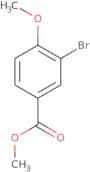
CAS:<p>3-Bromo-4-methoxybenzoic acid methyl ester is an isomer of 4-methoxybenzoic acid. It is a natural product that can be found in dihydroisoquinoline and in the ethyl formate oxidation products. There are two ways to synthesize this compound: by oxidation of diphenyl ethers or by hydrolysis of chloride acetaldehyde. 3-Bromo-4-methoxybenzoic acid methyl ester has been shown to have cellular toxicity against human cells and biphenyl.</p>Formula:C9H9BrO3Purity:Min. 95%Color and Shape:PowderMolecular weight:245.07 g/mol2-Methylresorcinol, technical
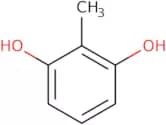
CAS:<p>2-Methylresorcinol, technical is the sodium salt of 2-methylresorcinol. It has been shown to be chemically stable at high temperatures and can be used in magnetic resonance spectroscopy. The nmr spectra of 2-methylresorcinol are different from those of other compounds. It is a molecule with a carbonyl group and one methyl group that reacts with hydrochloric acid to produce a reaction product with a chlorine atom, which reacts with trifluoroacetic acid or trifluoromethanesulfonic acid to produce an activated intermediate that can react with a second molecule to form another reaction product. This mechanism may be useful in the synthesis of anti-tuberculosis drugs.</p>Formula:C7H8O2Purity:Min. 95%Color and Shape:PowderMolecular weight:124.14 g/mol2,2'-Dihydroxy-4-methoxybenzophenone
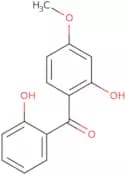
CAS:<p>2,2'-Dihydroxy-4-methoxybenzophenone (DHMB) is a chemical compound used in the manufacturing of sunscreens. It is also used as an antioxidant and antiinflammatory agent in topical preparations. The genotoxic effects of DHMB are well documented, but it is unclear whether these effects are due to UV radiation or other mechanisms. DHMB has been shown to be toxic to cells in vivo and in vitro. There have been reports of skin cancer developing on the ears of rats following chronic exposure to this chemical. DHMB binds to the estrogen receptor, which may be responsible for its genotoxic activity. This chemical has also been shown to inhibit the growth of bacteria such as Pseudomonas aeruginosa and Escherichia coli by binding with fatty acids on the cell membrane surface. DHMB is used for wastewater treatment because it can bind with heavy metals and remove them from water sources.</p>Formula:C14H12O4Purity:Min. 95%Color and Shape:Yellow To Dark Yellow SolidMolecular weight:244.24 g/mol4-Amino-3-methylbenzonitrile
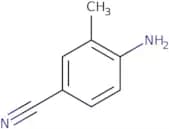
CAS:<p>4-Amino-3-methylbenzonitrile is a proton ionophore that can be used to prevent viral replication. It is a synthetic, aminobenzonitrile derivative that binds to the viral RNA polymerase and prevents the synthesis of new virus particles. 4-Amino-3-methylbenzonitrile has been shown to inhibit the growth of some strains of coxsackievirus, although it is less effective against other strains and viruses. 4-Amino-3-methylbenzonitrile inhibits the synthesis of viral proteins by binding to the viral RNA polymerase. This prevents viral transcription and replication, which leads to cell death.</p>Formula:C8H8N2Color and Shape:PowderMolecular weight:132.16 g/mol(2R)-4-Methyl-2-[2-oxo-2-[(phenylmethoxy)amino]ethyl]pentanoic acid
CAS:<p>Please enquire for more information about (2R)-4-Methyl-2-[2-oxo-2-[(phenylmethoxy)amino]ethyl]pentanoic acid including the price, delivery time and more detailed product information at the technical inquiry form on this page</p>Formula:C15H21NO4Molecular weight:279.33 g/mol1-Docosahexaenoyl-sn-glycero-3-phosphocholine
CAS:<p>1-Docosahexaenoyl-sn-glycero-3-phosphocholine (1DHCPC) is a metabolite of lysophosphatidylcholine. 1DHCPC has been found in mouse and human tissues, which indicates that it is a mouse metabolite. This compound is an acyl group attached to the glycerol backbone of phospholipids. The acyl group consists of either an unsaturated fatty acid or a saturated fatty acid with one double bond in the molecule. 1DHCPC is formed by the addition of a docosahexaenoic acid (DHA) to sn-glycero-3-phosphocholine by phospholipase A2.</p>Formula:C30H50NO7PPurity:90%MinColor and Shape:PowderMolecular weight:567.70 g/molN-Methyl-β-alaninenitrile
CAS:<p>N-Methyl-beta-alaninenitrile is a fine chemical that is used as a versatile building block in the synthesis of complex compounds. It can be used as a reagent to synthesize other chemicals, or as an intermediate in the production of pharmaceuticals. N-Methyl-beta-alaninenitrile is also useful in the synthesis of high quality and useful scaffolds.</p>Formula:C4H8N2Purity:Min. 98.0 Area-%Molecular weight:84.12 g/molN-[(S)-(2,3,4,5,6-Pentafluorophenoxy)phenoxyphosphinyl]-L-alanine 1-methylethyl ester
CAS:<p>Intermediate in the synthesis of sofosbubir</p>Formula:C18H17F5NO5PPurity:Min. 97 Area-%Color and Shape:White PowderMolecular weight:453.3 g/mol4-Chloro-3-methoxybenzoic acid
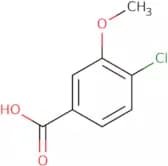
CAS:<p>4-Chloro-3-methoxybenzoic acid (4CMB) is a putative cancer drug that belongs to the group of imidazole derivatives. 4CMB has been shown to inhibit the growth of human breast and colon cancer cells in culture by altering the metabolism of 3-hydroxyanthranilic acid, which is an acceptor for aromatic amino acid hydroxylase. The effect of 4CMB on this enzyme leads to a decrease in the production of kynurenine, which is a molecule involved in the production of melanin. This reduced amount of kynurenine results in a loss of pigment and decreases the ability of melanocytes to produce pigments such as melanin. This may help explain how 4CMB works against malignant cells and cancer.</p>Formula:C8H7ClO3Purity:Min. 95%Color and Shape:PowderMolecular weight:186.59 g/mol2-Fluoro-4-methoxyphenylacetone
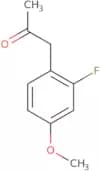
CAS:<p>2-Fluoro-4-methoxyphenylacetone is a high quality chemical that can be used as a reagent, complex compound, and useful intermediate. It is also a fine chemical and speciality chemical with CAS No. 16817-46-2. This product can be used as a reaction component for diverse synthetic reactions in research and development of various types of pharmaceuticals and fine chemicals. It is also versatile building block for the synthesis of valuable products.</p>Formula:C10H11FO2Purity:Min. 95%Molecular weight:182.19 g/molCyclo(-Arg-Gly-Asp-D-Tyr-Lys) trifluoroacetate salt
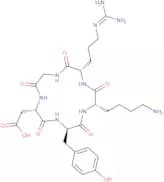
CAS:<p>Cyclo(-Arg-Gly-Asp-D-Tyr-Lys) trifluoroacetate salt is a reagent that is used in organic synthesis as a building block to create complex compounds. It is also useful for research purposes, as it can be used to produce high quality products. Cyclo(-Arg-Gly-Asp-D-Tyr-Lys) trifluoroacetate salt is a chemical with CAS No. 217099-14-4 and has the chemical formula C17H21N3O2F3.</p>Formula:C27H41N9O8Purity:Min. 95%Color and Shape:White SolidMolecular weight:619.67 g/mol3-Methoxy-4-methylbenzaldehyde
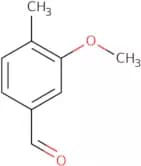
CAS:<p>3-Methoxy-4-methylbenzaldehyde is a chemical compound that belongs to the class of phenylpropanoids. It has been shown to have a variety of uses, including as a drug substance and in natural products. 3-Methoxy-4-methylbenzaldehyde can be used for labeling, mass spectrometric detection, physicochemical techniques, and chromatographic science. The compound can be detected using electron ionization, mass spectrometric detection, or chromatographic science. Isomers of this compound are often difficult to identify due to the presence of other similar compounds.</p>Formula:C9H10O2Purity:Min. 95%Color and Shape:PowderMolecular weight:150.17 g/mol


![(2R)-4-Methyl-2-[2-oxo-2-[(phenylmethoxy)amino]ethyl]pentanoic acid](/_next/image/?url=https%3A%2Fstatic.cymitquimica.com%2Fproducts%2F3D%2Fthumb-webp%2FB-9970.webp&w=3840&q=75)


![N-[(S)-(2,3,4,5,6-Pentafluorophenoxy)phenoxyphosphinyl]-L-alanine 1-methylethyl ester](/_next/image/?url=https%3A%2Fstatic.cymitquimica.com%2Fproducts%2F3D%2Fthumb-webp%2FFP59695.webp&w=3840&q=75)