Amino Acids (AA)
Amino acids (AAs) are the fundamental building blocks of proteins, playing a crucial role in various biological processes. These organic compounds are essential for protein synthesis, metabolic pathways, and cell signaling. In this category, you will find a comprehensive range of amino acids, including essential, non-essential, and modified forms, which are vital for research in biochemistry, molecular biology, and nutritional sciences. At CymitQuimica, we provide high-quality amino acids to support your research and development needs, ensuring accuracy and reliability in your experimental outcomes.
Subcategories of "Amino Acids (AA)"
- Amino Acid Derivatives(3,955 products)
- Amino Acid and Amino Acid Related Compounds(3,436 products)
- Amino Acids with Oxygen or Sulphur(168 products)
- Boc- Amino Acids(351 products)
- Fmoc Amino Acids(1,710 products)
Found 38216 products of "Amino Acids (AA)"
Sort by
Purity (%)
0
100
|
0
|
50
|
90
|
95
|
100
Methyl 4-methyl-3-[(N-propylalanyl)amino]thiophene-2-carboxylate HCl
CAS:<p>Methyl 4-methyl-3-[(N-propylalanyl)amino]thiophene-2-carboxylate HCl is a local anesthetic. It has been shown to be effective in the treatment of dental pain. Methyl 4-methyl-3-[(N-propylalanyl)amino]thiophene-2-carboxylate HCl acts by inhibiting the sodium channels in nerve cells, thereby blocking the transmission of pain signals and causing muscle relaxation. This drug also provides relief from anxiety, tension, and fear. Methyl 4-methyl-3-[(N-propylalanyl)amino]thiophene-2-carboxylate HCl has a rapid onset of action, with effects lasting up to 45 minutes. The drug is metabolized by hydrolysis to methyl 3-(aminocarbonyl)thiophene carboxylate and excreted in urine as metabolites.</p>Formula:C13H20N2O3S·HClPurity:Min. 95%Color and Shape:PowderMolecular weight:320.84 g/molN-Methyloctylamine
CAS:<p>N-Methyloctylamine is a low energy, organic extractant that is soluble in water and ethanol. It has been shown to be an effective agent for the extraction of adenine nucleotides from acidic aqueous solutions. The hydroxyl group on the molecule enables oxidation reactions with molecules containing aldehyde groups, such as diphenyl ethers and amines. N-Methyloctylamine has also been shown to be an effective catalyst for transfer reactions between particles, such as nanoparticles.</p>Formula:C9H21NPurity:Min. 95%Color and Shape:Clear LiquidMolecular weight:143.27 g/mol6-Methoxy-1H-indol-5-ol
CAS:<p>6-Methoxy-1H-indol-5-ol, also known as 5-hydroxytryptophan (5HTP) is a natural amino acid that is found in the human body. It is converted into serotonin by the enzyme tryptophan hydroxylase and becomes an intermediate in the metabolic pathway of serotonin (5HT). Serotonin affects mood and behavior and is used to treat depression. 6-Methoxy-1H-indol-5-ol has been shown to be effective in treating depression and obesity. This drug has a number of side effects, including nausea, vomiting, diarrhea, dizziness, anxiety, agitation, headache, insomnia, tachycardia (fast heartbeat), high blood pressure, mania or psychosis.</p>Formula:C9H9NO2Purity:Min. 95%Molecular weight:163.17 g/molFmoc-Asp(OtBu)-D-Ser(Psi(Me,Me)pro)-OH
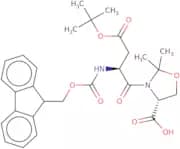
<p>Fmoc-Asp(OtBu)-D-Ser(Psi(Me,,Me)pro)-OH is a high quality, reagent, complex compound, useful intermediate, fine chemical, useful scaffold, and speciality chemical that is used in the synthesis of peptides and other organic compounds. It can be used as a reaction component for the synthesis of peptides and other organic compounds. This building block is versatile with many different functional groups and can be used in a wide variety of reactions. Fmoc-Asp(OtBu)-D-Ser(Psi(Me,,Me)pro)-OH is also a reaction component that can be used to make various drugs or pharmaceuticals.</p>Formula:C29H34N2O8Purity:Min. 95%Color and Shape:White PowderMolecular weight:538.59 g/molEthyl (2R,4R)-4-methylpipecolate
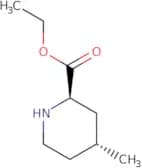
CAS:<p>Ethyl (2R,4R)-4-methylpipecolate is an organic compound that can be synthesized from the reaction of ethyl 2-bromoacetate and 4-methylphenol. It has been used as a precursor to medicines and intermediates. The reaction can be carried out in an alkaline environment at high temperature with a transfer catalyst, such as palladium on charcoal. The reaction time is dependent on the efficiency of the transfer and microreactor. Ethyl (2R,4R)-4-methylpipecolate is hydrolyzed to give 2-(ethoxycarbonyl)propionic acid by hydrolysis with water or base.</p>Formula:C9H17NO2Purity:Min. 95%Color and Shape:Colourless to light yellow liquid.Molecular weight:171.24 g/mol6-Methoxy-1-methyl-1H-indole-3-carbaldehyde
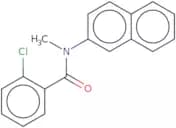
CAS:<p>6-Methoxy-1-methyl-1H-indole-3-carbaldehyde is a high quality chemical that is used as a reagent, complex compound, useful intermediate, and speciality chemical. It is a fine chemical that has been shown to be useful as a building block in the synthesis of many other compounds. 6-Methoxy-1-methyl-1H-indole-3-carbaldehyde is also versatile and can be used in reactions involving nucleophilic substitution, reductive amination, and oxidative coupling.</p>Formula:C11H11NO2Purity:Min. 95%Color and Shape:White PowderMolecular weight:189.21 g/molN-Methyl-N-(1-naphthyl)-1-chlorobenzamide
CAS:<p>N-Methyl-N-(1-naphthyl)-1-chlorobenzamide is a versatile and useful chemical that can be used in the preparation of many different compounds. It is a reaction component and reagent, as well as a useful scaffold for the synthesis of many different compounds. It has high quality and is used in research chemicals. N-Methyl-N-(1-naphthyl)-1-chlorobenzamide has CAS No. 74881-60-0 and is a speciality chemical. It can also be used as a versatile building block or intermediates for the synthesis of more complex compounds.</p>Formula:C18H14ClNOPurity:Min. 95%Molecular weight:295.76 g/mol3-Methyl-2-hydroxy-3H-imidazo[4,5-f]quinoline
CAS:<p>3-Methyl-2-hydroxy-3H-imidazo[4,5-f]quinoline is a high quality reagent that can be used as an intermediate or building block in the synthesis of other compounds. It is a fine chemical with CAS No. 144486-08-8 and can be used as a speciality chemical in research. This compound has versatile building blocks that are useful in reactions and have been shown to be a reaction component in the synthesis of various compounds.</p>Formula:C11H9N3OPurity:Min. 95%Color and Shape:Yellow PowderMolecular weight:199.21 g/molBoc-2-chloro-L-phenylalanine
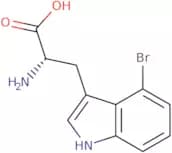
CAS:<p>Boc-2-chloro-L-phenylalanine is a versatile building block that can be used as an intermediate or a reaction component. It has the following properties: CAS No. 114873-02-8, fine chemical, useful scaffold, versatile building block, useful intermediate, research chemicals, reaction component, speciality chemical, complex compound, useful building block. Boc-2-chloro-L-phenylalanine is a high quality reagent that can be used for research purposes.</p>Formula:C14H18ClNO4Purity:Min. 98 Area-%Color and Shape:PowderMolecular weight:299.75 g/mol4-Bromo-L-tryptophan
CAS:<p>4-Bromo-L-tryptophan is an amino acid that is used in the synthesis of biomimetic molecules. It is synthesized by allylation with bromine and then chromatographically purified. 4-Bromo-L-tryptophan can also be used to study the biosynthesis of tryptophan. 4-Bromo-L-tryptophan has a molecular weight of 204.2 daltons and a pKa of 5.72, which makes it acidic at physiological pH values. The compound spontaneously forms anhydride with hydroxytryptophan, which stabilizes it and prevents hydrolysis reactions. The optimum temperature for enzymatic activity is 160 degrees Celsius, and kinetic constants have been determined at this temperature as well as at 100 degrees Celsius. Catalytic asymmetric synthesis has also been accomplished using 4-bromo L tryptophan as a substrate.</p>Formula:C11H11BrN2O2Purity:Min. 95%Color and Shape:Slightly Yellow PowderMolecular weight:283.12 g/molFmoc-(1R,2R)-2-aminocyclohexane carboxylic acid
CAS:<p>Fmoc-(1R,2R)-2-aminocyclohexane carboxylic acid is a versatile building block used as a reaction component in the synthesis of chemical compounds. It is classified as a speciality chemical and has been shown to be useful in the synthesis of complex compounds. The CAS number for this compound is 389057-34-5.</p>Formula:C22H23NO4Purity:Min. 99 Area-%Color and Shape:PowderMolecular weight:365.42 g/molD-tert-Leucine
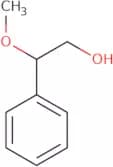
CAS:<p>D-tert-Leucine is an amino acid that is a substrate for enzyme catalysis, including the trifluoroacetic acid-catalyzed reaction. It has been used as a chiral building block for the synthesis of enantiopure amides and peptides. D-tert-Leucine also inhibits metalloproteases and can be used to inhibit receptor binding by altering the structure of ligands.</p>Formula:C6H13NO2Purity:Min. 97.0%Color and Shape:White PowderMolecular weight:131.17 g/mol2-Methoxy-2-phenylethanol
CAS:<p>2-Methoxy-2-phenylethanol is a molecule that has been found to be a good catalyst for the ring-opening of epoxides. It is also used as a solid catalyst in kinetic studies and as an additive in organic syntheses. 2-Methoxy-2-phenylethanol is soluble in water and reacts with fatty acids to form acetylated products. This molecule has been shown to have an inhibitory effect on human liver alcohol dehydrogenase, which may be due to it's ability to bind to the enzyme's active site.</p>Formula:C9H12O2Purity:Min. 95%Color and Shape:Colorless Clear LiquidMolecular weight:152.19 g/mol2-Amino-6-methoxybenzoic acid
CAS:<p>2-Amino-6-methoxybenzoic acid is a monosubstituted amide, which is synthesized by the hydrolysis of 2-amino-5-methylbenzoic acid with hydrochloric acid in the presence of diacetate. This compound is formed as part of the biosynthesis of aminophenols and heterocycles. It can be used to adsorb metal ions and organic compounds, such as chloride and butyllithium. 2-Amino-6-methoxybenzoic acid is also found in aeruginosa infections due to its ability to inhibit bacterial growth by inhibiting protein synthesis. The synthesis of this compound requires shikimate pathway enzymes.</p>Formula:C8H9NO3Purity:Min. 95%Color and Shape:PowderMolecular weight:167.16 g/molN-Methyl-N-(1-naphthyl)-2-iodobenzamide
CAS:<p>N-Methyl-N-(1-naphthyl)-2-iodobenzamide is a chemical building block that is used in the synthesis of new compounds. It reacts with other chemicals to form new compounds, and can be used as a reaction component or reagent. N-Methyl-N-(1-naphthyl)-2-iodobenzamide has been shown to have high quality and is useful as a research chemical. This compound can be used as a versatile building block in the synthesis of complex compounds and fine chemicals.</p>Formula:C18H14INOPurity:Min. 95%Molecular weight:387.21 g/mol4-Methoxy-2-methylphenylacetone
CAS:<p>4-Methoxy-2-methylphenylacetone (4MMPA) is a reagent that is used as an intermediate for the synthesis of high quality fine chemicals. It is also a useful scaffold and building block in organic synthesis. 4MMPA is a versatile building block, which can be used in the synthesis of speciality chemicals, research chemicals, and reaction components. 4MMPA has CAS number 16882-24-9.</p>Formula:C11H14O2Purity:Min. 95%Molecular weight:178.23 g/molN-[4-(Acetylamino)phenyl]glycine
CAS:<p>N-[4-(Acetylamino)phenyl]glycine is a fine chemical that can be used as a building block in the synthesis of pharmaceuticals, agricultural chemicals, and other speciality chemicals. It is an intermediate in the synthesis of heterocyclic compounds and has been shown to be useful for the preparation of complex compounds. N-[4-(Acetylamino)phenyl]glycine also serves as a reaction component in many organic reactions and has been used as a research chemical. This compound has high purity and can be obtained at competitive prices.</p>Formula:C10H12N2O3Purity:Min. 95%Color and Shape:PowderMolecular weight:208.21 g/mol1-(2-Methylphenyl)-2-nitropropene
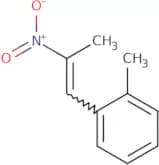
CAS:<p>1-(2-Methylphenyl)-2-nitropropene is a high quality reagent that is used as a complex compound, useful intermediate, and fine chemical. It has been shown to be a versatile building block for the synthesis of various organic compounds. 1-(2-Methylphenyl)-2-nitropropene is a speciality chemical with CAS No. 103205-27-2. This compound can be used in research chemicals or as a reaction component for the synthesis of other substances.</p>Formula:C10H11NO2Purity:Min. 95%Molecular weight:177.2 g/mol4-Methyl-5,7-dimethoxycoumarin
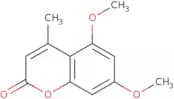
CAS:<p>4-Methyl-5,7-dimethoxycoumarin is a coumarin derivative that has been synthesized from acetonitrile and aluminium. It is used as an antiplatelet drug in the treatment of cardiovascular diseases such as unstable angina, myocardial infarction, and transient ischemic attack. 4-Methyl-5,7-dimethoxycoumarin reversibly inhibits platelet aggregation by blocking the platelet receptor P2Y12 on the surface of platelets. This drug also has antioxidant effects and can be used to identify markers associated with cardiovascular disease.</p>Formula:C12H12O4Purity:Min. 95%Molecular weight:220.22 g/mol3-Phenoxytoluene
CAS:<p>3-Phenoxytoluene is a colorless, viscous liquid that is soluble in nonpolar solvents. It is used as a raw material for the production of phenoxyethanol and other compounds. 3-Phenoxytoluene can be synthesized by reacting an alcohol with a chloroformate in the presence of copper chloride. This reaction proceeds through the following steps:</p>Formula:C13H12OPurity:Min. 95%Color and Shape:Clear LiquidMolecular weight:184.23 g/mol
![Methyl 4-methyl-3-[(N-propylalanyl)amino]thiophene-2-carboxylate HCl](/_next/image/?url=https%3A%2Fstatic.cymitquimica.com%2Fproducts%2F3D%2Fthumb-webp%2FFM130460.webp&w=3840&q=75)




![3-Methyl-2-hydroxy-3H-imidazo[4,5-f]quinoline](/_next/image/?url=https%3A%2Fstatic.cymitquimica.com%2Fproducts%2F3D%2Fthumb-webp%2FFM25639.webp&w=3840&q=75)





![N-[4-(Acetylamino)phenyl]glycine](/_next/image/?url=https%3A%2Fstatic.cymitquimica.com%2Fproducts%2F3D%2Fthumb-webp%2FFA123743.webp&w=3840&q=75)