Amino Acids (AA)
Amino acids (AAs) are the fundamental building blocks of proteins, playing a crucial role in various biological processes. These organic compounds are essential for protein synthesis, metabolic pathways, and cell signaling. In this category, you will find a comprehensive range of amino acids, including essential, non-essential, and modified forms, which are vital for research in biochemistry, molecular biology, and nutritional sciences. At CymitQuimica, we provide high-quality amino acids to support your research and development needs, ensuring accuracy and reliability in your experimental outcomes.
Subcategories of "Amino Acids (AA)"
- Amino Acid Derivatives(3,978 products)
- Amino Acid and Amino Acid Related Compounds(3,477 products)
- Amino Acids with Oxygen or Sulphur(168 products)
- Boc- Amino Acids(351 products)
- Fmoc Amino Acids(1,710 products)
Found 38329 products of "Amino Acids (AA)"
Sort by
Purity (%)
0
100
|
0
|
50
|
90
|
95
|
100
DL-Leucine
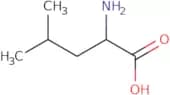
CAS:<p>DL-Leucine is an amino acid that is needed for the formation of proteins. It is also able to inhibit the activity of enzymes by hydrolyzing them. DL-Leucine has been shown to be a potent inhibitor of lysine hydrolases and can be used as an additive in the manufacture of animal feed. DL-Leucine has been shown to be stable in many environments, including those containing chlorine, hydrochloric acid, n-dimethyl formamide, and x-ray crystallography. The enantiomers of DL-leucine have different chemical stability; one form is more stable than the other in acidic environments.</p>Formula:C6H13NO2Purity:Min. 95%Color and Shape:PowderMolecular weight:131.17 g/molL-Alaninol
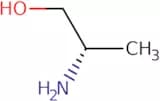
CAS:<p>L-Alaninol is a natural amino acid that can be synthesized in an asymmetric way. It has been used as a palladium complex catalyst to produce the inorganic acid, l-alaninol. L-Alaninol is biologically active and has shown antiviral and antimicrobial activities against mycobacterium avium and human lymphocytes. It also has been shown to have anticancer properties in animal models. In addition, it has been used as a model system for the study of organic chemistry reactions. L-Alaninol has also been shown to exhibit magnetic resonance spectroscopy properties that are similar to those of l-phenylalaninol.</p>Formula:C3H9NOColor and Shape:Colorless Slightly Yellow Clear LiquidMolecular weight:75.11 g/mol2-(2-Methoxyphenyl)-4,5-diphenylimidazole
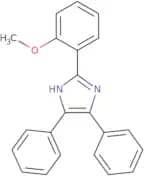
CAS:2-(2-Methoxyphenyl)-4,5-diphenylimidazole is a molecule with a dihedral angle of -115.1° and an asymmetric synthesis. It has antimicrobial activity against Escherichia coli, Staphylococcus aureus, and Bacillus subtilis. This compound also inhibits the synthesis of thromboxane A2 by blocking the 5-azaindole binding site on platelets and prolongs bleeding time in rats. 2-(2-Methoxyphenyl)-4,5-diphenylimidazole has been shown to be an antiplatelet drug that blocks the binding site of rilmenidine and imidazoline on platelets and reduces platelet aggregation. It also binds to the pyrazole ring of tautomers as well as hydrogen bonds to carbonyl groups on phenyl groups.Formula:C22H18N2OPurity:Min. 95%Color and Shape:PowderMolecular weight:326.39 g/mol2-Chloro-7-methoxyquinazoline
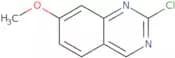
CAS:2-Chloro-7-methoxyquinazoline is a useful chemical that is used in the production of other compounds. It can be used as a building block for the synthesis of various organic compounds, such as pharmaceuticals and pesticides. This compound has been shown to have useful properties, such as high purity and low cost.Formula:C9H7ClN2OPurity:Min. 95%Color and Shape:Yellow PowderMolecular weight:194.62 g/molN-Methyl-DL-aspartic acid
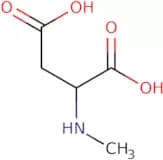
CAS:<p>N-Methyl-DL-aspartic acid (NMDA) is a pharmacological agent that binds to the glutamate receptor and increases the intracellular calcium concentration in cells. NMDA has been shown to cause neuronal death in mouse hippocampal cells, as well as rat striatal cells. It can also act as a messenger molecule and enhance growth factor production. NMDA binds to the N-methyl-D-aspartate receptor, which is located on the surface of neurons in the brain. This binding causes an influx of sodium ions into the cell, resulting in an increase in the intracellular calcium concentration. This increase leads to changes in cellular function, including increased growth factor production and neuronal death.</p>Formula:C5H9NO4Purity:Min. 95%Color and Shape:PowderMolecular weight:147.13 g/molEthyl 2-phenylbutyrate
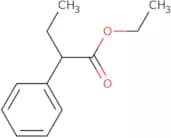
CAS:<p>Ethyl 2-phenylbutyrate is a synthetic, non-steroidal compound that has been shown to inhibit the activity of cyclooxygenase enzymes. It is used as an intermediate in organic synthesis and as a reagent in the cross-coupling reaction between arenes and magnesium. The compound is synthesized by reacting cyclopentyl bromide with an alkyl halide, followed by treatment with an alkanoic acid. The enantiomers of ethyl 2-phenylbutyrate can be separated by chromatography or by crystallization. This chemical is soluble in benzene and ether, but not in water.</p>Formula:C12H16O2Purity:Min. 95%Color and Shape:PowderMolecular weight:192.25 g/mol2-Ethoxy-4-methoxycinnamic acid
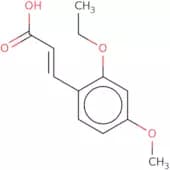
CAS:<p>2-Ethoxy-4-methoxycinnamic acid is a synthetic chemical with the CAS number 1372859-34-1. It is a versatile building block that can be used for the synthesis of many complex compounds. 2-Ethoxy-4-methoxycinnamic acid is one of a number of scaffolds that are useful for creating fine chemicals and research chemicals. This compound is also an intermediate in many reactions and can be used as a reagent to produce other substances.</p>Formula:C12H14O4Purity:Min. 95%Molecular weight:222.24 g/mol3-Bromo-2-methylpyridine
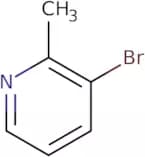
CAS:<p>3-Bromo-2-methylpyridine is a synthetic compound that has been shown to be an effective inhibitor of the cannabinoid receptor. It is used as a postprocessing agent in hydrogenation reduction reactions and can be used for the synthesis of pharmaceuticals. 3-Bromo-2-methylpyridine has been shown to bind to the cannabinoid type 1 receptor with high affinity, but it has not been determined whether this binding leads to inhibition. The chemical structure of 3-bromo-2-methylpyridine is similar to that of other cannabinoid type 1 receptor antagonists, such as SR141716A and AM251.</p>Formula:C6H6BrNPurity:Min. 96 Area-%Color and Shape:PowderMolecular weight:172.02 g/molN-alpha-Boc-D-tryptophan
CAS:<p>N-alpha-Boc-D-tryptophan is a synthetic molecule that is used in the synthesis of cyclic peptides. It is a nonpeptide amide and has been shown to have potent antitumor activity. N-alpha-Boc-D-tryptophan has been studied as a potential cancer therapeutic agent, with high cytotoxicity and molecular modeling studies indicating that it may be an effective drug for the treatment of cancer. The compound binds to the receptor and blocks the binding site, preventing activation of the receptor by its natural ligand. This synthetic process can be used as a template molecule for other compounds that bind to this receptor.</p>Formula:C16H20N2O4Purity:Min. 95 Area-%Color and Shape:PowderMolecular weight:304.34 g/mol(R)-(-)-Glycidyl butyrate
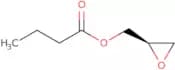
CAS:<p>(R)-(-)-Glycidyl butyrate is a chiral molecule with a single enantiomer. It is an inhibitor of bacterial growth, and has been shown to be selective for Gram-positive bacteria such as staphylococci and subtilis, while being less active against Gram-negative bacteria such as E. coli. The kinetic constants of the enzyme that catalyzes the hydrolysis of (R)-(-)-glycidyl butyrate have been determined by immobilization on ion exchange resins. The stereoselectivity of this reaction was also found to be in favor of (R)-(-)-glycidyl butyrate. This compound also has potent inhibitory activity against iodination reaction catalyzed by Escherichia coli D-amino acid oxidase, which is used in the diagnosis of phenylketonuria. Finally, (R)-(-)-glycidyl butyrate has been shown to inhibit de</p>Formula:C7H12O3Purity:Min. 95%Color and Shape:Clear, colourless to pale yellow liquid.Molecular weight:144.17 g/molD-Glutamic acid di-tert-butyl ester hydrochloride
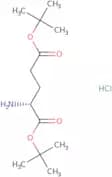
CAS:<p>D-Glutamic acid di-tert-butyl ester hydrochloride is an organic acid that is used as a medicine. It is a covalently conjugated psychotropic drug, which means it contains two molecules of the same type. D-Glutamic acid di-tert-butyl ester hydrochloride has been shown to be effective in the treatment of depression and other mood disorders. This drug has also been shown to inhibit the reuptake of neurotransmitters such as serotonin and norepinephrine, which may account for its efficacy in treating depression. The drug was also found to be effective in the treatment of obsessive compulsive disorder (OCD) by inhibiting serotonin reuptake.</p>Formula:C13H25NO4·HClPurity:Min. 95%Color and Shape:White PowderMolecular weight:295.8 g/molN-Methyl-3,4-methylenedioxyphenylpropane hydrochloride
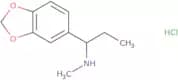
CAS:Controlled Product<p>N-Methyl-3,4-methylenedioxyphenylpropane hydrochloride is a high quality reagent that is a useful intermediate in the synthesis of complex compounds. It is used as a fine chemical and research chemicals in the manufacture of speciality chemicals. N-Methyl-3,4-methylenedioxyphenylpropane hydrochloride has been shown to be an excellent scaffold for the synthesis of many different compounds with high versatility. It can also be used as a building block or reaction component.</p>Formula:C11H15NO2·HClColor and Shape:PowderMolecular weight:229.7 g/mol6-Methoxy-1,2,3,4-tetrahydronaphthalene-2-carboxylic acid
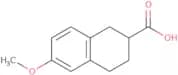
CAS:6-Methoxy-1,2,3,4-tetrahydronaphthalene-2-carboxylic acid (MTN) is a polyphenol that has been shown to be effective against Alzheimer's disease in vitro and in vivo. MTN is able to bind to the polymerase chain reaction (PCR) product of APP and inhibit it from binding to heme oxygenase. MTN also prevents the accumulation of amyloid plaques by inhibiting the formation of beta-amyloid protein. MTN binds to thioflavin T and can be used as a fluorescent probe for immunofluorescence staining. MTN also inhibits the expression levels of APP and PS1 proteins in APP/PS1 transgenic mice by modulating the activity of transcriptional factors such as CREB.Formula:C12H14O3Purity:Min. 95%Color and Shape:PowderMolecular weight:206.24 g/mol1-(tert-Butoxy)-2-methylpropane
CAS:<p>1-(tert-Butoxy)-2-methylpropane is a reactive, thermodynamic, and chemical substance. It has the chemical formula CH 3 (CH 2 ) 3 CO-O-C(CH 3 ) 3 . It is a colorless liquid with a boiling point of -25 degrees Celsius. 1-(tert-Butoxy)-2-methylpropane reacts with peroxides to form tert-butyl hydroperoxide. This compound has been observed in reactions involving the formation of ion exchange resins. 1-(tert-Butoxy)-2-methylpropane can be protonated to form tertiary butyl cation and tertiary butyl anion. The reactivity of this substance is optimal at 25 degrees Celsius and its chemical structures are composed of formyl group and ion exchange groups.</p>Formula:C8H18OPurity:Min. 95%Color and Shape:PowderMolecular weight:130.23 g/molEthyl (2R,4R)-4-methylpipecolate
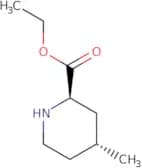
CAS:<p>Ethyl (2R,4R)-4-methylpipecolate is an organic compound that can be synthesized from the reaction of ethyl 2-bromoacetate and 4-methylphenol. It has been used as a precursor to medicines and intermediates. The reaction can be carried out in an alkaline environment at high temperature with a transfer catalyst, such as palladium on charcoal. The reaction time is dependent on the efficiency of the transfer and microreactor. Ethyl (2R,4R)-4-methylpipecolate is hydrolyzed to give 2-(ethoxycarbonyl)propionic acid by hydrolysis with water or base.</p>Formula:C9H17NO2Purity:Min. 95%Color and Shape:Colourless to light yellow liquid.Molecular weight:171.24 g/mol5-Methyl 4-fluoroglutamate
CAS:<p>5-Methyl 4-fluoroglutamate is a reaction component that is used as a reagent in organic synthesis. It is a high quality and versatile building block for the production of fine chemicals. 5-Methyl 4-fluoroglutamate is also used as an intermediate to synthesize complex compounds, such as pharmaceuticals, agrochemicals, dyes, and other useful substances.</p>Formula:C6H10FNO4Purity:Min. 95%Molecular weight:179.15 g/molMethyl (2R,3S)-N-boc-3-phenylisoserine
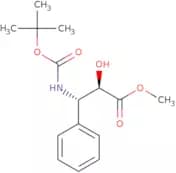
CAS:<p>Methyl (2R,3S)-N-boc-3-phenylisoserine is a fine chemical that has been used as a building block for the synthesis of complex compounds with high quality. It reacts with other molecules to form various useful compounds and has been used in research chemicals and as a reaction component. Methyl (2R,3S)-N-boc-3-phenylisoserine is also used as a reagent and is an important intermediate for the production of many speciality chemicals.</p>Formula:C15H21NO5Purity:Min. 95%Color and Shape:PowderMolecular weight:295.33 g/molFmoc-Pro-Pro-Gly-OH
<p>Fmoc-Pro-Pro-Gly-OH is an activating reagent that has been used in the synthesis of peptides with a C-terminal carboxyl group. It is typically used as a chloroformate ester and reacts with amino groups to form amide bonds. The activation of this reagent can be performed either by reaction with isobutyl or by reaction with piperidine. This product may also be used for the synthesis of tripeptides, pentafluorophenyl esters, and mimetic peptides. Fmoc-Pro-Pro-Gly-OH is typically purified by trituration, followed by evaporation in vacuum and then recrystallization from methanol or ethanol.</p>Formula:C27H29N3O6Purity:Min. 95%Color and Shape:PowderMolecular weight:491.54 g/mol4,5-Dimethyl-1,2-phenylenediamine
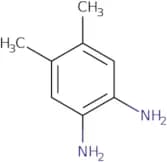
CAS:<p>4,5-Dimethyl-1,2-phenylenediamine is a fluorescent derivative of an unlabeled amine that is used in analytical chemistry. It has been shown to react with hydrogen bond donors and acceptors in aqueous solution to produce a new compound with a different fluorescence spectrum. This reaction mechanism can be used for sample preparation prior to analysis by various analytical methods. The coordination geometry of 4,5-dimethyl-1,2-phenylenediamine has been determined using x-ray crystal structures obtained from the compound in fetal bovine serum. A model system that mimics the disease activity of diabetic patients has been constructed using this compound as the analyte.</p>Formula:C8H12N2Purity:Min. 95%Color and Shape:PowderMolecular weight:136.19 g/molZ-Phe-Phe-OH
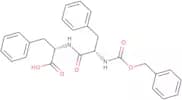
CAS:<p>Z-Phe-Phe-OH is a specific primer that is used in molecular biology to amplify a region of DNA. It is an organic solvent with a low boiling point, making it ideal for use in the PCR process. Z-Phe-Phe-OH has been shown to be effective against many strains of Helminth, including Ascaris lumbricoides and Trichuris trichiura. The product synthesis of this substance can be enhanced by the addition of primers such as those derived from pastoris, vulgare l., or P. pastoris.</p>Formula:C26H26N2O5Purity:Min. 95%Color and Shape:White PowderMolecular weight:446.5 g/mol