Amino Acids (AA)
Amino acids (AAs) are the fundamental building blocks of proteins, playing a crucial role in various biological processes. These organic compounds are essential for protein synthesis, metabolic pathways, and cell signaling. In this category, you will find a comprehensive range of amino acids, including essential, non-essential, and modified forms, which are vital for research in biochemistry, molecular biology, and nutritional sciences. At CymitQuimica, we provide high-quality amino acids to support your research and development needs, ensuring accuracy and reliability in your experimental outcomes.
Subcategories of "Amino Acids (AA)"
- Amino Acid Derivatives(3,978 products)
- Amino Acid and Amino Acid Related Compounds(3,477 products)
- Amino Acids with Oxygen or Sulphur(168 products)
- Boc- Amino Acids(351 products)
- Fmoc Amino Acids(1,710 products)
Found 38329 products of "Amino Acids (AA)"
Sort by
Purity (%)
0
100
|
0
|
50
|
90
|
95
|
100
2-Methylnicotinic acid
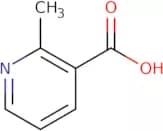
CAS:<p>2-Methylnicotinic acid is a compound that belongs to the amide group. It is an aromatic hydrocarbon that has been shown to be active in animals. 2-Methylnicotinic acid has been shown to have anti-inflammatory properties, which may be due to its ability to inhibit prostaglandin synthesis. This compound also prevents the development of autoimmune diseases by blocking the receptor activity of T cells and preventing the production of inflammatory cytokines.</p>Formula:C7H7NO2Purity:Min. 95%Color and Shape:White PowderMolecular weight:137.14 g/molN-α-Fmoc-N-ω-(4-toluenesulfonyl)-D-arginine
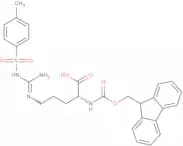
CAS:<p>N-alpha-Fmoc-N-omega-(4-toluenesulfonyl)-D-arginine is a serine protease inhibitor. It binds to the active site of kallikrein, an enzyme that cleaves peptides from the carboxyl terminus of proteins. This prevents the breakdown of these proteins and has been shown to have analgesic effects in animal models. N-alpha-Fmoc-N-omega-(4-toluenesulfonyl)-D-arginine can also be used as a lead compound for the design of other inhibitors with improved pharmacological properties. The derivates of this compound may be synthesized by various strategies, including asymmetric synthesis and phenothiazine chemistry.</p>Formula:C28H30N4O6SPurity:Min. 95%Color and Shape:White/Off-White SolidMolecular weight:550.63 g/mol4',2-Dihydroxy-3-methoxychalcone
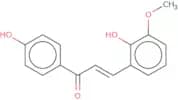
CAS:<p>4,2-Dihydroxy-3-methoxychalcone is a fine chemical that is useful in the synthesis of various pharmaceuticals and other chemicals. It is a versatile building block that can be used as a reaction component or intermediate in the synthesis of complex compounds. 4,2-Dihydroxy-3-methoxychalcone has been shown to be a high quality reagent for use in the synthesis of speciality chemicals and research chemicals. This compound is also useful as a scaffold for the development of new drugs.</p>Formula:C16H14O4Purity:Min. 95%Molecular weight:270.28 g/molS-Benzyl-L-cysteine methyl ester hydrochloride
CAS:<p>S-Benzyl-L-cysteine methyl ester hydrochloride is a thioether that can be synthesized from benzyl mercaptan and cysteine. It is used as an optical reagent in the determination of amines. This chemical has a helical conformation and it has been shown to have a transition at 280 nm. S-Benzyl-L-cysteine methyl ester hydrochloride is also a monomer in porphyrins, which are important for the production of heme and chlorophyll. This chemical is also catalytic, and its conformation changes when it reacts with amines.</p>Formula:C11H15NO2S·HClPurity:Min. 95%Color and Shape:PowderMolecular weight:261.77 g/molIndole-3-acetyl-L-alanine acid methyl ester
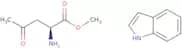
CAS:<p>Please enquire for more information about Indole-3-acetyl-L-alanine acid methyl ester including the price, delivery time and more detailed product information at the technical inquiry form on this page</p>Formula:C14H16N2O3Purity:Min. 95%Molecular weight:260.29 g/mol2,3-Diethyl-5-methylpyrazine
CAS:<p>2,3-Diethyl-5-methylpyrazine is a methyl ketone that is used as a model for fatty acids. It has been shown to be an important precursor for the synthesis of unsaturated ketones. 2,3-Diethyl-5-methylpyrazine can be produced by the reaction of acetone with ethylene and then subjected to acid catalyzed cyclization. This compound also has a characteristic odor that has been described as "fruity" or "spicy." It is used in the production of butyric acid, which is an important industrial chemical.</p>Formula:C9H14N2Purity:Min. 95%Color and Shape:Colorless PowderMolecular weight:150.22 g/mol3-Fluoro-2-methylphenylacetone
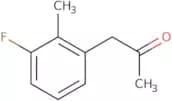
CAS:<p>3-Fluoro-2-methylphenylacetone is a reaction component and reagent that is useful in the synthesis of complex compounds. 3-Fluoro-2-methylphenylacetone, also known as 2-fluoromethylbenzaldehyde, is a versatile building block that can be used to synthesize a wide variety of chemical compounds. It has been shown to be an excellent intermediate and building block for the synthesis of pharmaceuticals, pesticides, agrochemicals, specialty chemicals, and other organic compounds. 3-Fluoro-2-methylphenylacetone is a fine chemical that has CAS No. 1017060-34-2.</p>Formula:C10H11FOPurity:Min. 95%Molecular weight:166.19 g/molEthyl 2-phenylbutyrate
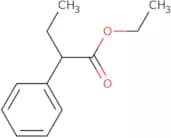
CAS:<p>Ethyl 2-phenylbutyrate is a synthetic, non-steroidal compound that has been shown to inhibit the activity of cyclooxygenase enzymes. It is used as an intermediate in organic synthesis and as a reagent in the cross-coupling reaction between arenes and magnesium. The compound is synthesized by reacting cyclopentyl bromide with an alkyl halide, followed by treatment with an alkanoic acid. The enantiomers of ethyl 2-phenylbutyrate can be separated by chromatography or by crystallization. This chemical is soluble in benzene and ether, but not in water.</p>Formula:C12H16O2Purity:Min. 95%Color and Shape:PowderMolecular weight:192.25 g/molDL-Leucine
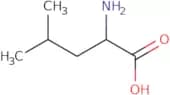
CAS:<p>DL-Leucine is an amino acid that is needed for the formation of proteins. It is also able to inhibit the activity of enzymes by hydrolyzing them. DL-Leucine has been shown to be a potent inhibitor of lysine hydrolases and can be used as an additive in the manufacture of animal feed. DL-Leucine has been shown to be stable in many environments, including those containing chlorine, hydrochloric acid, n-dimethyl formamide, and x-ray crystallography. The enantiomers of DL-leucine have different chemical stability; one form is more stable than the other in acidic environments.</p>Formula:C6H13NO2Purity:Min. 95%Color and Shape:PowderMolecular weight:131.17 g/molN-Phenyl-2,4,6-triphenyl pyridinium tetrafluoroborate
CAS:<p>N-Phenyl-2,4,6-triphenyl pyridinium tetrafluoroborate is a crystalline material that is insoluble in water and organic solvents. It can be used as a monomer in the synthesis of polymers and for immobilization of enzymes. N-Phenyl-2,4,6-triphenyl pyridinium tetrafluoroborate can be used to reprocess technetium and has been shown to diffract x-rays with high resolution. This compound is also fluorescent with a long wavelength (620 nm) and can be used as a radioactive tracer.</p>Formula:C29H22N·BF4Purity:Min. 95%Molecular weight:471.3 g/mol2-Methyl-2-phenoxypropanoyl chloride
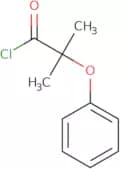
CAS:<p>2-Methyl-2-phenoxypropanoyl chloride is a fine chemical that is a versatile building block used in the synthesis of research chemicals and speciality chemicals. This compound reacts with nucleophiles to form esters, amides, and nitriles, which are useful in organic syntheses. 2-Methyl-2-phenoxypropanoyl chloride is also used as an intermediate for the synthesis of other compounds, including pharmaceuticals and pesticides. The high quality of this compound makes it a desirable reagent for use in research.</p>Formula:C10H11ClO2Purity:Min. 95%Color and Shape:PowderMolecular weight:198.65 g/molN-α-Boc-L-2,3-diaminopropionic acid
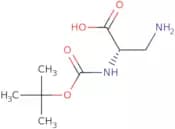
CAS:N-alpha-Boc-L-2,3-diaminopropionic acid is a synthetic amino acid that has been shown to have anticancer properties. The amino acid contains a functional group with two carboxylates and a disulfide bond. It has also been shown to inhibit the nuclear factor kappa B ligand (NFκB) and hepg2 cells, leading to cell death. This agent is a glycopeptide conjugate that inhibits the growth of mammalian cells by preventing protein synthesis. N-alpha-Boc-L-2,3-diaminopropionic acid has been shown to be cytotoxic in vitro against human leukemia HL60 cells.Formula:C8H16N2O4Purity:Min. 95%Color and Shape:White PowderMolecular weight:204.22 g/molN-a-t-Boc-N-g-trityl-L-asparagine
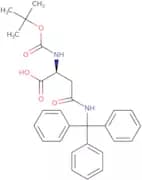
CAS:<p>N-a-t-Boc-N-g-trityl-L-asparagine is a recombinant human protein that has been synthesized in E. coli. It is a peptide with 17β-estradiol at its C terminus, and it binds to the oestrogen receptor α (ERα) via hydrogen bonding interactions. The linker between the asparagine and estradiol is a Boc group that can be removed by protease activity, revealing the active form of 17β-estradiol. ERα ligates to N-a-t-Boc-N-g-trityl L asparagine with high affinity, and this interaction is reversible. The linker also contains a functional group for surface attachment, which may be used to attach this peptide to a solid support or tissue culture substrate for use in cell cultures.<br>br></p>Formula:C28H30N2O5Purity:Min. 95%Color and Shape:White PowderMolecular weight:474.55 g/mol3-(2-Hydroxy-5-methylphenyl)pyrazole
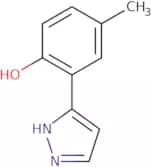
CAS:<p>3-(2-Hydroxy-5-methylphenyl)pyrazole is an organic compound with a pyrazole ring. It is a ligand that can be used to study the interactions between metals, such as copper and iron ions, and transition metal complexes. This compound has been shown to have antiferromagnetic coupling with chloride salts, and it interacts with chloride in the presence of iron ions. 3-(2-Hydroxy-5-methylphenyl)pyrazole is soluble in acetate salt solution and reacts with copper.</p>Formula:C10H10N2OPurity:Min. 95%Color and Shape:PowderMolecular weight:174.2 g/mol1-(3-Hydroxy-4-methoxyphenyl)-2-nitroethane
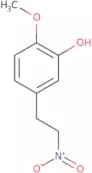
CAS:<p>1-(3-Hydroxy-4-methoxyphenyl)-2-nitroethane is a chemical intermediate that can be used in the synthesis of other compounds. It is a fine chemical with many potential uses, as well as being a versatile building block for organic synthesis. As an example, 1-(3-Hydroxy-4-methoxyphenyl)-2-nitroethane can be used to synthesize the drug erythromycin. This chemical has been shown to have antihistamine and antiinflammatory properties.</p>Formula:C9H11NO4Purity:Min. 95%Molecular weight:197.19 g/molFmoc-Arg(Me)2-OH, asymmetrical
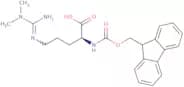
CAS:<p>Fmoc-Arg(Me)2-OH is a high quality, versatile building block that can be used in the synthesis of complex compounds and fine chemicals. It is an intermediate that is useful as a reagent in organic chemistry and as a speciality chemical. Fmoc-Arg(Me)2-OH has been shown to react with other amino acids to form peptides and proteins, or it may be used as a building block for the synthesis of polymers. The compound has been shown to have many uses, including being a reaction component for the synthesis of pharmaceuticals and bioactive molecules.</p>Formula:C23H28N4O4Purity:Min. 95%Color and Shape:PowderMolecular weight:424.49 g/molBoc-2-chloro-L-phenylalanine
CAS:<p>Boc-2-chloro-L-phenylalanine is a versatile building block that can be used as an intermediate or a reaction component. It has the following properties: CAS No. 114873-02-8, fine chemical, useful scaffold, versatile building block, useful intermediate, research chemicals, reaction component, speciality chemical, complex compound, useful building block. Boc-2-chloro-L-phenylalanine is a high quality reagent that can be used for research purposes.</p>Formula:C14H18ClNO4Purity:Min. 98 Area-%Color and Shape:PowderMolecular weight:299.75 g/molFmoc-Cys(Trt)-Opfp
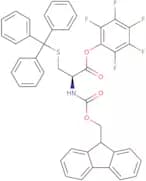
CAS:<p>Fmoc-Cys(Trt)-Opfp is a synthetic peptide that is used in the study of receptor selectivity. This compound has been shown to bind to melanocortin receptors, and it is also an effective ligand for these receptors. Fmoc-Cys(Trt)-Opfp has been shown to be expressed in the brain and to have a transfer effect on other neurons. The structure function relationship of this compound has been studied by analyzing high concentrations of it in aquaculture systems. The sequences of this compound have been determined by structural studies on acid sequences.</p>Formula:C43H30F5NO4SPurity:Min. 95%Color and Shape:White PowderMolecular weight:751.76 g/molH-Val-Tyr-OH
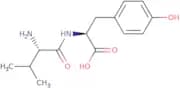
CAS:<p>H-Val-Tyr-OH is an organic compound that is used as a research tool. It has been shown to inhibit angiotensin system and tubule cells in vitro. H-Val-Tyr-OH has also been shown to be active against Proteus aeruginosa, which is responsible for virulent sepsis in humans. The mechanism of action for H-Val-Tyr-OH is not known, but it may involve the hydroxyl group or the proximal tubules. H-Val-Tyr-OH can be synthesized from a variety of chemical reagents, including trifluoroacetic acid and hydrochloric acid. In addition, H-Val Tyr OH can be produced by using biological samples such as wheat germ and human test samples.</p>Formula:C14H20N2O4Purity:Min. 95%Color and Shape:PowderMolecular weight:280.32 g/mol1-Hexyl-3-methylimidazolium hexafluorophosphate
CAS:<p>1-Hexyl-3-methylimidazolium hexafluorophosphate is a cationic surfactant that is soluble in water. It has been shown to be effective for the removal of heavy metals, organic pollutants, and radioactive substances from wastewater by anion exchange resin. This compound also interacts with potassium hexafluorophosphate (KFP) to form a highly efficient ion pair. The transport properties of 1-hexyl-3-methylimidazolium hexafluorophosphate are due to its concentration dependent interactions with water molecules, which are affected by the temperature and pressure. The Langmuir adsorption isotherm has been used to describe the equilibrium between 1-hexyl-3-methylimidazolium hexafluorophosphate and KFP.</p>Formula:C10H19F6N2PPurity:Min. 95%Color and Shape:Colourless To Yellow LiquidMolecular weight:312.24 g/mol