Amino Acids (AA)
Amino acids (AAs) are the fundamental building blocks of proteins, playing a crucial role in various biological processes. These organic compounds are essential for protein synthesis, metabolic pathways, and cell signaling. In this category, you will find a comprehensive range of amino acids, including essential, non-essential, and modified forms, which are vital for research in biochemistry, molecular biology, and nutritional sciences. At CymitQuimica, we provide high-quality amino acids to support your research and development needs, ensuring accuracy and reliability in your experimental outcomes.
Subcategories of "Amino Acids (AA)"
- Amino Acid Derivatives(3,969 products)
- Amino Acid and Amino Acid Related Compounds(3,474 products)
- Amino Acids with Oxygen or Sulphur(168 products)
- Boc- Amino Acids(351 products)
- Fmoc Amino Acids(1,710 products)
Found 38282 products of "Amino Acids (AA)"
Sort by
Purity (%)
0
100
|
0
|
50
|
90
|
95
|
100
L-Alaninol
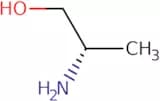
CAS:<p>L-Alaninol is a natural amino acid that can be synthesized in an asymmetric way. It has been used as a palladium complex catalyst to produce the inorganic acid, l-alaninol. L-Alaninol is biologically active and has shown antiviral and antimicrobial activities against mycobacterium avium and human lymphocytes. It also has been shown to have anticancer properties in animal models. In addition, it has been used as a model system for the study of organic chemistry reactions. L-Alaninol has also been shown to exhibit magnetic resonance spectroscopy properties that are similar to those of l-phenylalaninol.</p>Formula:C3H9NOColor and Shape:Colorless Slightly Yellow Clear LiquidMolecular weight:75.11 g/molDL-Leucine
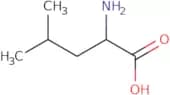
CAS:<p>DL-Leucine is an amino acid that is needed for the formation of proteins. It is also able to inhibit the activity of enzymes by hydrolyzing them. DL-Leucine has been shown to be a potent inhibitor of lysine hydrolases and can be used as an additive in the manufacture of animal feed. DL-Leucine has been shown to be stable in many environments, including those containing chlorine, hydrochloric acid, n-dimethyl formamide, and x-ray crystallography. The enantiomers of DL-leucine have different chemical stability; one form is more stable than the other in acidic environments.</p>Formula:C6H13NO2Purity:Min. 95%Color and Shape:PowderMolecular weight:131.17 g/mol3-Styryl-L-alanine
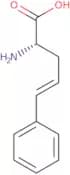
CAS:<p>3-Styryl-L-alanine is a synthetic petroselinic acid. It has been shown to be an inhibitor of phenylalanine ammonia-lyase, and the active site of this enzyme has been modeled by molecular modeling. Kinetic studies have shown that 3-styryl-L-alanine deaminates to form an acylated product with a higher affinity for the active site than the substrate. The ligand is rationalized by focusing on its constant, which is given by (k/K)^2 = 1/(1+constant).</p>Formula:C11H13NO2Purity:Min. 95%Color and Shape:White Off-White PowderMolecular weight:191.23 g/mol1-Phenyl-1H-5-(2'-hydroxy-5'-methylphenyl)pyrazole
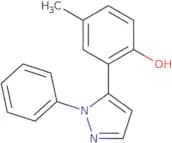
CAS:<p>1-Phenyl-1H-5-(2'-hydroxy-5'-methylphenyl)pyrazole is a chemical compound with the molecular formula C14H10N2O. It is a white crystalline solid that can be used as a building block, intermediate, or reagent in organic synthesis. It is soluble in most solvents, but insoluble in water. 1-Phenyl-1H-5-(2'-hydroxy-5'-methylphenyl)pyrazole has been used as a useful scaffold for high quality compounds and research chemicals. The CAS number for this chemical compound is 90617-39-3.</p>Formula:C16H14N2OPurity:Min. 95%Molecular weight:250.3 g/mol9-Mesityl-10-methylacridinium perchlorate
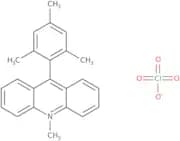
CAS:<p>9-Mesityl-10-methylacridinium perchlorate is a cross-coupling reagent that can be used to form amines from alkenes via bond cleavage. The mechanism of this reaction involves irradiation, which generates radical species, and the use of molecular probes to rationalize the rate of the reaction. 9-Mesityl-10-methylacridinium perchlorate is a highly reactive compound with a short half life, which makes it an ideal candidate for generating radicals in order to study mechanistic studies on acridinium.</p>Formula:C23H22ClNO4Purity:Min. 95%Color and Shape:PowderMolecular weight:411.88 g/molCyclobis(paraquat-1,4-phenylene) tetrakis(hexafluorophosphate)
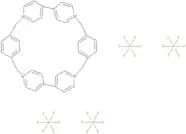
CAS:<p>Cyclobis(paraquat-1,4-phenylene) tetrakis(hexafluorophosphate) (CPQTF) is a polyether that has been shown to have antiviral and anti-inflammatory properties. CPQTF is a chiral molecule which has the ability to form filaments at high temperatures. The temperature at which this polymer changes from a liquid to a filament is dependent on the concentration of polymer in solution. CPQTF has also been shown to have coagulation properties and can be used in cosmetics.</p>Formula:C36H32F24N4P4Purity:Min. 95%Color and Shape:White PowderMolecular weight:1,100.52 g/mol2-Chloropropionylglycine
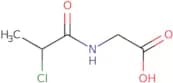
CAS:<p>2-Chloropropionylglycine is an organic chemical compound that is used as a raw material for the production of other chemicals. It is a colorless, odorless solid with a melting point of 131°C. 2-Chloropropionylglycine has high chemical stability and can be used in industrial processes to produce ethyl acetate, sodium carbonate, and carbonates. 2-Chloropropionylglycine can also be used as a precursor for other chemicals such as chlorinated acetic acid and glyoxylic acid.</p>Formula:C5H8ClNO3Purity:Min. 95%Color and Shape:PowderMolecular weight:165.57 g/mol(2S,4R)-Boc-4-hydroxypiperidine-2-carboxylic acid
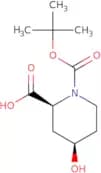
CAS:<p>(2S,4R)-Boc-4-hydroxypiperidine-2-carboxylic acid is a fine chemical that is used as an intermediate in organic synthesis. It has been shown to be a versatile building block for the construction of complex compounds. (2S,4R)-Boc-4-hydroxypiperidine-2-carboxylic acid is also a speciality chemical with many applications in the research field.</p>Formula:C11H19NO5Purity:Min. 95%Color and Shape:PowderMolecular weight:245.27 g/mol2-Bromo-2-phenylacetophenone
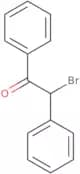
CAS:<p>2-Bromo-2-phenylacetophenone is a drug that has been used in the treatment of brain disorders. It is also an antioxidant that prevents radiation damage to the brain by absorbing radiation energy and dissipating it as heat. 2-Bromo-2-phenylacetophenone has shown neuroprotective effects in animals by inhibiting the activity of cyclooxygenase (COX)-2, which is related to cancer and inflammation. This substance can be synthesized by reacting sodium carbonate or hydroxide with an alkanoic acid in the presence of trifluoroacetic acid. The reaction products are separated from unreacted reactants and other impurities by solid phase synthesis, purified, and characterized using nuclear magnetic resonance spectra.</p>Formula:C14H11BrOPurity:Min. 95%Color and Shape:Off-White To Light Brown SolidMolecular weight:275.14 g/mol5-Methoxy-3(2-aminopropyl)indole hydrochloride
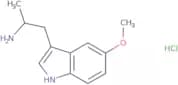
CAS:Controlled Product<p>5-Methoxy-3(2-aminopropyl)indole hydrochloride is a useful reagent for the synthesis of complex compounds and a versatile building block for the preparation of speciality chemicals. It is used in the production of fine chemicals, such as reagents and intermediates. This compound also has potential use as a research chemical or as a reaction component in organic syntheses.</p>Formula:C12H16N2O·HClPurity:Min. 95%Molecular weight:240.73 g/molBoc-L-alanine benzylester
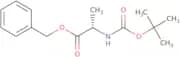
CAS:<p>Boc-L-alanine benzylester is a novel fluorescent crosslinker that can be used to synthesize fluorescent polymers. It is composed of an acid moiety and benzothiadiazole moieties, which are catalytic. The synthesis of Boc-L-alanine benzylester involves the reaction of lysine or tyrosine with an acid chloride to form an amide bond, followed by a ring opening reaction with the corresponding benzothiadiazole. The fluorescein group is then added as a substituent at the N-terminus. This new crosslinker has been shown to have high reactivity in cycloadditions and crosslinking reactions with anthracene, cyclopentadiene, and cyclohexadiene. Boc-L-alanine benzylester has also been shown to be effective in ascorbate oxidation.</p>Formula:C15H21NO4Purity:Min. 95%Color and Shape:PowderMolecular weight:279.33 g/mol2-Methyl-1-hexene
CAS:<p>2-Methyl-1-hexene is a reaction product of ethylene and phosphite. It is used in the manufacture of butyl acrylate and methyl methacrylate. 2-Methyl-1-hexene reacts with oxygen to form a peroxide intermediate, which then reacts with aldehyde groups to form products that are characterized by their mass spectra. The rate of this reaction is dependent on the concentrations of both reactants, as well as on the temperature and acidity of the reaction environment. This process can be carried out in either liquid or gas phase at various temperatures.</p>Formula:C7H14Purity:Min. 95%Color and Shape:Colorless Clear LiquidMolecular weight:98.19 g/molCyclo(L-Ala-L-Gly)
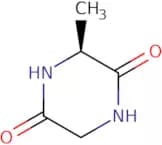
CAS:<p>Cyclo(L-Ala-L-Gly) is a synthetic peptide that has been shown to stabilize biomolecules. It was found to be a competitive inhibitor of the enzyme phospholipase A2 and has been used in protein engineering. Cyclo(L-Ala-L-Gly) has also been shown to inhibit the formation of n-oxides from H2O2 by binding with it.</p>Formula:C5H8N2O2Purity:Min. 95%Color and Shape:White PowderMolecular weight:128.13 g/mol3-(4-Methylbenzylidene)camphor
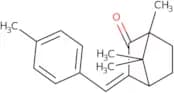
CAS:<p>3-(4-Methylbenzylidene)camphor is a chemical compound that has two isomers, alpha and beta. It can be found in biological samples, such as human urine or wastewater, and can be used for the treatment of skin cancer. 3-(4-Methylbenzylidene)camphor is prepared by extraction from a dry sample with an organic solvent. The extraction process requires a hydroxyl group to react with the dry sample and create a liquid. The resulting liquid is then evaporated to leave behind the extract. The kinetic data of 3-(4-Methylbenzylidene)camphor was determined by measuring its rate of reaction with an analytical method. The rate of reaction increased as the concentration increased to a constant value at high concentrations, which suggests that it may have some occlusive properties in humans due to its tendency to bind to plasma proteins.</p>Formula:C18H22OPurity:Min. 95%Color and Shape:White PowderMolecular weight:254.37 g/molBoc-4-(4-chlorophenyl)-piperidine-4-carboxylic acid
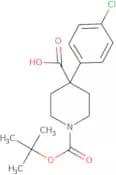
CAS:<p>Boc-4-(4-chlorophenyl)-piperidine-4-carboxylic acid is a versatile building block that can be used to synthesize complex compounds. It is a high quality, research chemical that can be used as a reagent or speciality chemical. Boc-4-(4-chlorophenyl)-piperidine-4-carboxylic acid is an intermediate for the synthesis of pharmacologically active compounds and has been used as a reaction component in the synthesis of other useful scaffolds. CAS No. 644981-94-2</p>Formula:C17H22ClNO4Purity:Min. 95%Color and Shape:White PowderMolecular weight:339.81 g/molBoc-S-trityl-L-homocysteine
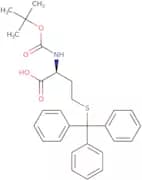
CAS:<p>Boc-S-trityl-L-homocysteine is a synthetic molecule that is used as a prodrug to introduce the amino acid homocysteine into cells. It has been shown to have anti-cancer and estrogen receptor modulating properties. Boc-S-trityl-L-homocysteine is synthesized by reacting L-homocysteine with diisopropylamino chlorides in the presence of sodium hydroxide, followed by ligation with dicyclohexylcarbodiimide. The compound adopts a centrosymmetric conformation due to the presence of two chiral centers at C3 and C4 positions on the pyridyl ring. The active site consists of an aromatic ring with three substituents, one of which is an amide group. This chemical transformation occurs through a nucleophilic attack by the amide group on an electrophilic carbonyl carbon atom.</p>Formula:C28H31NO4SPurity:Min. 95%Color and Shape:PowderMolecular weight:477.62 g/mol(4-Hydroxy-3-methylphenyl)acetone
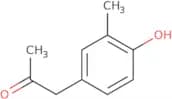
CAS:<p>(4-Hydroxy-3-methylphenyl)acetone is a high quality, reagent that has been used in the synthesis of complex compounds. It is also a useful intermediate for the production of fine chemicals, useful scaffolds, and useful building blocks. The compound can be used as a speciality chemical in research and is versatile as a building block for reactions. (4-Hydroxy-3-methylphenyl)acetone has been shown to react with various organic compounds, such as alcohols, amines, and carboxylic acids.</p>Formula:C10H12O2Purity:Min. 98 Area-%Color and Shape:PowderMolecular weight:164.2 g/mol4-Bromo-L-tryptophan
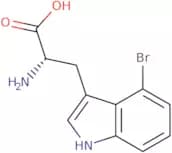
CAS:<p>4-Bromo-L-tryptophan is an amino acid that is used in the synthesis of biomimetic molecules. It is synthesized by allylation with bromine and then chromatographically purified. 4-Bromo-L-tryptophan can also be used to study the biosynthesis of tryptophan. 4-Bromo-L-tryptophan has a molecular weight of 204.2 daltons and a pKa of 5.72, which makes it acidic at physiological pH values. The compound spontaneously forms anhydride with hydroxytryptophan, which stabilizes it and prevents hydrolysis reactions. The optimum temperature for enzymatic activity is 160 degrees Celsius, and kinetic constants have been determined at this temperature as well as at 100 degrees Celsius. Catalytic asymmetric synthesis has also been accomplished using 4-bromo L tryptophan as a substrate.</p>Formula:C11H11BrN2O2Purity:Min. 95%Color and Shape:Slightly Yellow PowderMolecular weight:283.12 g/mol1-Boc-azetidine-3-yl-methanol
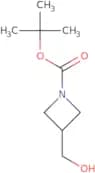
CAS:<p>Stable under physiological and chemical conditions, 1-Boc-azetidine-3-yl-methanol is a linker that forms permanent bonds in conjugates, particularly in antibody-drug conjugates (ADCs) and as a linker in PROTAC (PROteolysis TArgeting Chimera) molecules for targeted protein degradation. It is also a versatile chemical intermediate used to synthesize complex organic molecules, particularly in pharmaceuticals, agrochemicals, and research chemicals.</p>Formula:C9H17NO3Purity:Min. 95%Color and Shape:White PowderMolecular weight:187.24 g/molRengasin-4'-O-glucoside
<p>Rengasin-4'-O-glucoside (RG4G) is a natural glycoside that belongs to the category of sugar derivatives. It has versatile uses and can be used as a building block for complex compounds, as well as in research chemicals, pharmaceuticals, and cosmetics. RG4G also has many applications in chemistry, including being used as a reagent or speciality chemical. RG4G is also an important intermediate in organic synthesis, which can be used to synthesize many useful compounds. The compound is often used as a scaffold for larger molecules.</p>Purity:Min. 95%