Amino Acids (AA)
Amino acids (AAs) are the fundamental building blocks of proteins, playing a crucial role in various biological processes. These organic compounds are essential for protein synthesis, metabolic pathways, and cell signaling. In this category, you will find a comprehensive range of amino acids, including essential, non-essential, and modified forms, which are vital for research in biochemistry, molecular biology, and nutritional sciences. At CymitQuimica, we provide high-quality amino acids to support your research and development needs, ensuring accuracy and reliability in your experimental outcomes.
Subcategories of "Amino Acids (AA)"
- Amino Acid Derivatives(3,970 products)
- Amino Acid and Amino Acid Related Compounds(3,476 products)
- Amino Acids with Oxygen or Sulphur(168 products)
- Boc- Amino Acids(351 products)
- Fmoc Amino Acids(1,710 products)
Found 38286 products of "Amino Acids (AA)"
Sort by
Purity (%)
0
100
|
0
|
50
|
90
|
95
|
100
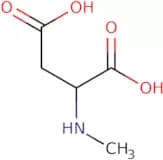
N-Methyl-DL-aspartic acid
CAS:<p>N-Methyl-DL-aspartic acid (NMDA) is a pharmacological agent that binds to the glutamate receptor and increases the intracellular calcium concentration in cells. NMDA has been shown to cause neuronal death in mouse hippocampal cells, as well as rat striatal cells. It can also act as a messenger molecule and enhance growth factor production. NMDA binds to the N-methyl-D-aspartate receptor, which is located on the surface of neurons in the brain. This binding causes an influx of sodium ions into the cell, resulting in an increase in the intracellular calcium concentration. This increase leads to changes in cellular function, including increased growth factor production and neuronal death.</p>Formula:C5H9NO4Purity:Min. 95%Color and Shape:PowderMolecular weight:147.13 g/mol4,6-Dimethyl-5-nitro-m-phenylenediamine
CAS:<p>4,6-Dimethyl-5-nitro-m-phenylenediamine is a versatile building block that can be used as a reagent or a speciality chemical. It is used in research to test the susceptibility of bacteria to antibiotics and other toxic substances. 4,6-Dimethyl-5-nitro-m-phenylenediamine has been shown to inhibit the growth of Mycobacterium tuberculosis, Mycobacterium avium complex, and some strains of Staphylococcus aureus. This product is also useful for making high quality compounds that are useful scaffolds for drug development.br><br>4,6-Dimethyl-5-nitro-m-phenylenediamine is an organic compound with the chemical formula C9H8N2O3. It has two asymmetric carbon atoms and exists as two enantiomers, one of which is more reactive than the other. The (S)-en</p>Formula:C8H11N3O2Purity:Min. 95%Molecular weight:181.19 g/molH-Gly-Pro-OH
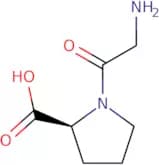
CAS:<p>Glycine is a non-essential amino acid that is used in the biosynthesis of proteins. It is also a precursor to porphyrins, which are important cofactors in many enzymes. Glycine can be converted to glyoxylate and subsequently to oxalate. Glycine plays an important role in the diagnosis of cancer tissue because it has been shown to have high levels of enzyme activities that are indicative for cancer cells. Glycine also has biological properties that make it suitable for use as an experimental model for metabolic disorders, such as energy metabolism, proton production and human serum.</p>Formula:C7H12N2O3Purity:Min. 95%Color and Shape:PowderMolecular weight:172.18 g/molFmoc-glycine N-hydroxysuccinimide ester
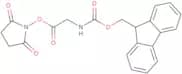
CAS:<p>Fmoc-glycine N-hydroxysuccinimide ester is a reagent and building block that is used in the synthesis of peptides and other organic compounds. It has many uses, including as a reaction component, a speciality chemical, and a versatile building block. Fmoc-glycine N-hydroxysuccinimide ester is also a useful intermediate for complex compounds or fine chemicals. This product is available to purchase at wholesale pricing in quantities ranging from 1 gram to 5 kilograms.</p>Formula:C21H18N2O6Purity:Min. 95 Area-%Color and Shape:White Off-White PowderMolecular weight:394.38 g/molN-Acetyl-D-tryptophan
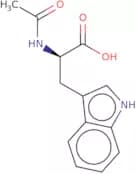
CAS:<p>N-Acetyl-D-tryptophan is a form of tryptophan that has been shown to have neuroprotective effects. It binds to the neurokinin 1 receptor, inhibiting the release of neurotoxic substances and preventing neuronal cell death. N-Acetyl-D-tryptophan is also able to inhibit the formation of reactive oxygen species, which are responsible for cellular damage. N-Acetyl-D-tryptophan has been shown to have neuroprotective effects in bacterial strain, gamma-aminobutyric acid (GABA) binding constants, reaction solution, inhibitor binding, mitochondrial cytochrome c amide and atherosclerotic cardiovascular disease urine samples.</p>Formula:C13H14N2O3Purity:Min. 95%Color and Shape:White PowderMolecular weight:246.26 g/mol3-Bromo-5-methyl-1H-1,2,4-triazole
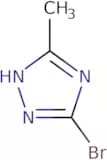
CAS:3-Bromo-5-methyl-1H-1,2,4-triazole is a bifunctional building block that can be used in organic synthesis as a versatile building block. It is also an important intermediate for the preparation of various types of chemical compounds and can be used as a research chemical or speciality chemical. This compound has been shown to have high purity and quality. 3-Bromo-5-methyl-1H-1,2,4-triazole is a complex compound that has been used in the synthesis of pharmaceuticals and agrochemicals.Formula:C3H4BrN3Purity:Min. 95%Color and Shape:PowderMolecular weight:161.99 g/molN-Boc-glycine N-carboxyanhydride
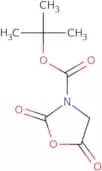
CAS:N-Boc-glycine N-carboxyanhydride is a reagent that is used to prepare the activated ester of pyridine with an alkyl ester. It is soluble in a variety of solvents and has a high reactivity. This product can be used in peptide synthesis, especially for the protection of alpha amino groups during coupling reactions. It has been shown to have good fluorine atom properties, as well as an electronegativity that is higher than that of chlorine or bromine.Formula:C8H11NO5Purity:Min. 98 Area-%Color and Shape:PowderMolecular weight:201.18 g/molEthyl1-boc-4-allyl-4-piperidinecarboxylate
CAS:<p>Ethyl1-boc-4-allyl-4-piperidinecarboxylate is a reagent, high quality, complex compound, useful intermediate, fine chemical, useful scaffold, useful building block, speciality chemical and research chemicals. It is used as a versatile building block for synthesis of drugs. Ethyl1-boc-4-allyl-4-piperidinecarboxylate is also used in reactions to synthesize new compounds with varied structures and properties. This product can be used in the production of various types of pharmaceuticals and other chemical products.</p>Formula:C16H27NO4Purity:Min. 95%Molecular weight:297.39 g/mol5-Methoxy-1-methyl-1H-indole-3-carbaldehyde
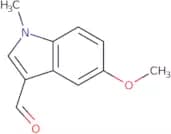
CAS:<p>5-Methoxy-1-methyl-1H-indole-3-carbaldehyde is a synthetic compound that has been shown to inhibit the growth of human tumour cells in vitro. This compound is a regioisomeric mixture of two enantiomers, with the (S) isomer being the more potent inhibitor. The (R) isomer was found to be less active against human tumour cells and may have an antimicrobial activity. 5-Methoxy-1-methyl-1H-indole-3-carbaldehyde has been shown to be bioreductive towards electron donors such as NADPH and glutathione. It also inhibits dt diaphorase and aerobic metabolism in human tumour cells.</p>Formula:C11H11NO2Purity:Min. 95%Color and Shape:Off-White PowderMolecular weight:189.21 g/mol4-Amino-2-methylphenol
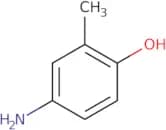
CAS:<p>4-Amino-2-methylphenol is a chemical substance that is used in the production of dyes, cationic surfactants, and basic dyes. It can be produced through oxidation of phenol or by dehydration of aniline. 4-Amino-2-methylphenol has been shown to have potential use as a surface enhancer for Raman spectroscopy. This compound has also been used to extract amines and ethers from organic solvents.</p>Formula:C7H9NOPurity:Min. 95%Color and Shape:SolidMolecular weight:123.15 g/molN,N-Diethyl-5-methyl-[1,2,4]triazolo[5,1-b]pyrimidin-7-amine
CAS:<p>N,N-Diethyl-5-methyl-[1,2,4]triazolo[5,1-b]pyrimidin-7-amine (MTX) is a drug that is used in the treatment of disease activity. It has been shown to have an effect on the production of redox potentials and energy metabolism. MTX also has an effect on cardiac muscle by inhibiting the enzyme activities associated with cardiac muscle contraction and relaxation. This drug has been shown to be effective in the treatment of bowel disease, injury, and basic protein as well as caproic acid production.</p>Formula:C10H15N5Purity:Min. 95%Color and Shape:PowderMolecular weight:205.26 g/mol4-Phenylbenzaldehyde oxime
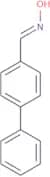
CAS:4-Phenylbenzaldehyde oxime is a high quality reagent that is used as a building block in the synthesis of complex compounds. It is an aromatic compound with a chemical formula of C8H7O2N. This product can be used to make a variety of useful intermediates, fine chemicals, and speciality chemicals. 4-Phenylbenzaldehyde oxime has been identified as a potentially useful scaffold for synthetic organic chemistry and research into new drugs. It is also used as an intermediate in the production of other organic compounds. This product has been shown to be versatile and can be used to synthesize many different types of reactions.Formula:C13H11NOPurity:Min. 95%Color and Shape:PowderMolecular weight:197.23 g/molTuftsin acetate salt
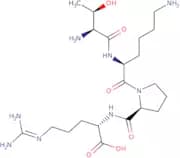
CAS:<p>Please enquire for more information about Tuftsin acetate salt including the price, delivery time and more detailed product information at the technical inquiry form on this page</p>Formula:C21H40N8O6•C2H4O2Purity:Min. 95%Color and Shape:PowderMolecular weight:560.64 g/mol6-Methoxybenzothiazole-2-carboxylic acid
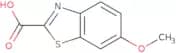
CAS:<p>6-Methoxybenzothiazole-2-carboxylic acid is a synthetic sulfur compound that is used in the synthesis of benzothiazines. It is also an intermediate in the biosynthesis of thiocyanate, a natural product that has been shown to have anti-inflammatory properties. 6-Methoxybenzothiazole-2-carboxylic acid has been shown to be highly efficient as a luciferin, and can be used in the production of bioluminescence. 6-Methoxybenzothiazole-2-carboxylic acid belongs to the family of benzothiazines, which are benzoquinones with two fused rings. Benzothiazines are found in marine natural products such as luciferins and some other nature products.</p>Formula:C9H7NO3SPurity:Min. 95%Color and Shape:PowderMolecular weight:209.22 g/molImidazo[1,2-a]pyridin-2-yl-methylamine dihydrochloride
CAS:<p>Imidazo[1,2-a]pyridin-2-yl-methylamine dihydrochloride is a fine chemical that is used as an intermediate in the synthesis of various compounds. It has been found to be an excellent building block for complex compounds and useful scaffold for a variety of research chemicals. Imidazo[1,2-a]pyridin-2-yl-methylamine dihydrochloride is also a reaction component that can be used in the synthesis of speciality chemicals and pharmaceuticals. Imidazo[1,2-a]pyridin-2-yl-methylamine dihydrochloride is soluble in water and methanol and can be stored at room temperature. This product has a CAS number of 452967-56-5.</p>Formula:C8H9N3·2HClPurity:Min. 95%Color and Shape:PowderMolecular weight:220.1 g/molN-[4-(Acetylamino)phenyl]glycine
CAS:<p>N-[4-(Acetylamino)phenyl]glycine is a fine chemical that can be used as a building block in the synthesis of pharmaceuticals, agricultural chemicals, and other speciality chemicals. It is an intermediate in the synthesis of heterocyclic compounds and has been shown to be useful for the preparation of complex compounds. N-[4-(Acetylamino)phenyl]glycine also serves as a reaction component in many organic reactions and has been used as a research chemical. This compound has high purity and can be obtained at competitive prices.</p>Formula:C10H12N2O3Purity:Min. 95%Color and Shape:PowderMolecular weight:208.21 g/molN-[(9H-Fluoren-9-ylmethoxy)carbonyl]-L-homoarginine
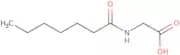
CAS:Formula:C22H26N4O4Purity:>97.0%(T)(HPLC)Color and Shape:White to Almost white powder to crystalMolecular weight:410.47N-Heptanoylglycine
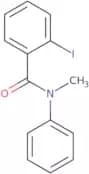
CAS:<p>N-Heptanoylglycine is an organic molecule that belongs to the family of fatty acids. It is a natural product, which can be found in various human tissues and body fluids. N-heptanoylglycine has been detected in the blood and urine of patients with metabolic disorders, such as fatty acid oxidation disorder (FAOD) and mitochondrial dysfunction. It has also been identified as a potential biomarker for infectious diseases, such as tuberculosis (TB). The detection sensitivity of N-heptanoylglycine has been shown to be higher than that of other biomarkers currently used in diagnostic tests for TB.</p>Formula:C9H17NO3Purity:Min. 95%Color and Shape:White PowderMolecular weight:187.24 g/mol2-Iodo-N-methyl-N-phenylbenzamide
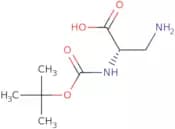
CAS:<p>2-Iodo-N-methyl-N-phenylbenzamide is a cyclised molecule that has been synthesized by intramolecular arylation and reductive cyclisation. 2-Iodo-N-methyl-N-phenylbenzamide can be used as an industrial catalyst for the production of phenols, benzaldehydes, and indoles. The catalytic activity of 2-Iodo-N-methyl-N-phenylbenzamide is high, with yields of up to 99%. This molecule is recyclable because it can be easily regenerated from the crude product. It also has high catalytic activity due to its cyclic structure.</p>Formula:C14H12INOPurity:Min. 95%Molecular weight:337.16 g/molN-alpha-Boc-L-2,3-diaminopropionic acid
CAS:<p>N-alpha-Boc-L-2,3-diaminopropionic acid is a synthetic amino acid that has been shown to have anticancer properties. The amino acid contains a functional group with two carboxylates and a disulfide bond. It has also been shown to inhibit the nuclear factor kappa B ligand (NFκB) and hepg2 cells, leading to cell death. This agent is a glycopeptide conjugate that inhibits the growth of mammalian cells by preventing protein synthesis. N-alpha-Boc-L-2,3-diaminopropionic acid has been shown to be cytotoxic in vitro against human leukemia HL60 cells.</p>Formula:C8H16N2O4Purity:Min. 95%Color and Shape:White PowderMolecular weight:204.22 g/mol



![N,N-Diethyl-5-methyl-[1,2,4]triazolo[5,1-b]pyrimidin-7-amine](/_next/image/?url=https%3A%2Fstatic.cymitquimica.com%2Fproducts%2F3D%2Fthumb-webp%2FFD153326.webp&w=3840&q=75)
![Imidazo[1,2-a]pyridin-2-yl-methylamine dihydrochloride](/_next/image/?url=https%3A%2Fstatic.cymitquimica.com%2Fproducts%2F3D%2Fthumb-webp%2FFI51742.webp&w=3840&q=75)
![N-[4-(Acetylamino)phenyl]glycine](/_next/image/?url=https%3A%2Fstatic.cymitquimica.com%2Fproducts%2F3D%2Fthumb-webp%2FFA123743.webp&w=3840&q=75)
![N-[(9H-Fluoren-9-ylmethoxy)carbonyl]-L-homoarginine](/_next/image/?url=https%3A%2Fstatic.cymitquimica.com%2Fproducts%2F3B%2Fthumb-webp%2FF1014.webp&w=3840&q=75)