Amino Acids (AA)
Subcategories of "Amino Acids (AA)"
- Amino Acid Derivatives(4,017 products)
- Amino Acid and Amino Acid Related Compounds(3,492 products)
- Amino Acids with Oxygen or Sulphur(168 products)
- Boc- Amino Acids(351 products)
- Fmoc Amino Acids(1,710 products)
Found 38390 products of "Amino Acids (AA)"
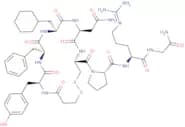
(Deamino-Cys1,b-cyclohexyl-Ala4,Arg8)-Vasopressin trifluoroacetate salt
CAS:Desmopressin is a synthetic analogue of vasopressin, which is used to treat disorders associated with insufficient secretion of vasopressin. It has been shown that desmopressin binds to the vasopressin V2 receptor subtype and stimulates the release of arginine-vasopressin in corticotropin-releasing hormone (CRH)-treated rat pituitary cells. This stimulation was mediated by a residue on the Cys1,b-cyclohexyl residue. The binding of desmopressin to this site was demonstrated in vitro using binding experiments on rat brain synaptosomes. Desmopressin has also been shown to stimulate ovulation in rats and humans, and it has been shown to be effective for treating nocturnal enuresis in children.Formula:C50H71N13O11S2Purity:Min. 95%Molecular weight:1,094.31 g/mol2-Bromo-6-methylpyridin-3-ol
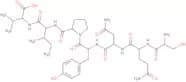
CAS:2-Bromo-6-methylpyridin-3-ol is a heterocyclic organic compound. It is a pyridine ring with two methyl groups attached to the ring at positions 2 and 6. The bromine atom is at position 3. This is an important intermediate in the Suzuki coupling reaction, which uses it as a starting material for the synthesis of many other compounds. The dieckmann condensation reaction produces this compound from 2,6-dichloropyridine and other reagents. Fluorescent when exposed to UV light, this compound has been used as a probe for chloride ions in solution using mass spectroscopy. This substance also yields dieckmann condensation products with alkynes and chlorine or bromine. 2-Bromo-6-methylpyridin-3-ol can be produced by treating pyridine with methylacrylate in the presence of catalysts such as copper(II)Formula:C6H6BrNOPurity:Min. 95%Molecular weight:188.02 g/molH-Ser-Gln-Asn-Tyr-Pro-Ile-Val-OH
CAS:Please enquire for more information about H-Ser-Gln-Asn-Tyr-Pro-Ile-Val-OH including the price, delivery time and more detailed product information at the technical inquiry form on this pageFormula:C37H57N9O12Purity:Min. 95%Molecular weight:819.9 g/mol(D-Trp32)-Neuropeptide Y (human, rat) trifluoroacetate salt
CAS:Please enquire for more information about (D-Trp32)-Neuropeptide Y (human, rat) trifluoroacetate salt including the price, delivery time and more detailed product information at the technical inquiry form on this pageFormula:C196H288N56O56SPurity:Min. 95%Molecular weight:4,356.79 g/molZ-Tyr-Lys-Arg-pNA·2 TFA
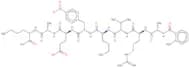
CAS:Z-Tyr-Lys-Arg-pNA·2 TFA is a potent inhibitor of proteases. It has been shown to be an efficient inhibitor of the major yeast protease, proteinase A, and other enzymes that are used for the industrial production of peptides. Z-Tyr-Lys-Arg-pNA·2 TFA is a synthetic peptide with a molecular mass of 5,836 Da and an optimum pH of 7.5. This peptide is synthesized by the chemical reaction between butoxycarbonyl (Boc) Lys(Z)-Tyr(N)-Arg(R)-pNA and 2 equivalents of trifluoroacetic acid (TFA). The synthesis takes place in a homogenous solution in dichloromethane at room temperature in the presence of triethylamine as base. Filtration through a 0.22 μm filter removes any insoluble impurities from the solution.Formula:C35H45N9O8·2C2HF3O2Purity:Min. 95%Molecular weight:947.83 g/molAnthranilyl-HIV Protease Substrate V trifluoroacetate salt
CAS:Please enquire for more information about Anthranilyl-HIV Protease Substrate V trifluoroacetate salt including the price, delivery time and more detailed product information at the technical inquiry form on this pageFormula:C50H76N14O13Purity:Min. 95%Molecular weight:1,081.23 g/molFluorescein-6-carbonyl-Tyr-Val-Ala-DL-Asp(OMe)-fluoromethylketone
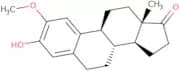
CAS:Please enquire for more information about Fluorescein-6-carbonyl-Tyr-Val-Ala-DL-Asp(OMe)-fluoromethylketone including the price, delivery time and more detailed product information at the technical inquiry form on this pageFormula:C45H50FN5O15Purity:Min. 95%Molecular weight:919.9 g/mol2-Methoxy estrone
CAS:Controlled Product2-Methoxy estrone is a metabolite of estrone and is produced by the enzyme 2-hydroxylase. This compound has minimal toxicity and can be used as a marker for biological processes, such as cellular transformation. 2-Methoxy estrone has been shown to inhibit the activity of acetylcholinesterase, an enzyme that breaks down acetylcholine, which is essential for neurotransmission. It has also been implicated in the regulation of angiogenic processes in vitro and in vivo. The role of 2-methoxy estrone in cancer cells is not fully understood but it may have potential as a biomarker for prostate cancer and breast cancer.Formula:C19H24O3Purity:(%) Min. 95%Color and Shape:PowderMolecular weight:300.39 g/mol(Arg13)-Amyloid b-Protein (1-40) trifluoroacetate salt
CAS:Please enquire for more information about (Arg13)-Amyloid b-Protein (1-40) trifluoroacetate salt including the price, delivery time and more detailed product information at the technical inquiry form on this pageFormula:C194H300N54O58SPurity:Min. 95%Molecular weight:4,348.85 g/molFmoc-Nle-Wang resin (200-400 mesh)
Please enquire for more information about Fmoc-Nle-Wang resin (200-400 mesh) including the price, delivery time and more detailed product information at the technical inquiry form on this page
Purity:Min. 95%Fmoc-Pro-Wang resin (200-400 mesh)
Please enquire for more information about Fmoc-Pro-Wang resin (200-400 mesh) including the price, delivery time and more detailed product information at the technical inquiry form on this pagePurity:Min. 95%4-[(4-Methylpiperazin-1-yl)methyl]benzoic acid
CAS:4-[(4-Methylpiperazin-1-yl)methyl]benzoic acid is an organic compound. It is a white solid that is insoluble in water but soluble in organic solvents. The molecule has a molecular weight of 224.8 g/mol and contains a carbonyl group and amine functional groups. 4-[(4-Methylpiperazin-1-yl)methyl]benzoic acid can be prepared by the acylation of 4-(aminomethyl)-benzoic acid with imidazole hydrochloride in the presence of sodium carbonate as a base.Formula:C13H18N2O2Purity:Min. 95%Molecular weight:234.29 g/molH-Lys(Mtt)-2-chlorotrityl resin (200-400 mesh)
Please enquire for more information about H-Lys(Mtt)-2-chlorotrityl resin (200-400 mesh) including the price, delivery time and more detailed product information at the technical inquiry form on this pagePurity:Min. 95%Neuromedin U-23 (rat) trifluoroacetate salt
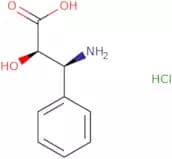
CAS:Neuromedin U-23 (rat) is a peptide that belongs to the family of tachykinins, which are small neuropeptides that act as neurotransmitters in the central nervous system. It is a potent stimulator of intestinal motility and has been shown to have protective effects against oxidative stress in cells. Neuromedin U-23 (rat) shares sequence similarity with human neuromedin N-19 and binds to the same receptors in the brain, suggesting it may have similar physiological effects. This peptide has been shown to inhibit tumor cell growth by inducing apoptosis, but it does not appear to have any effect on healthy cells.Formula:C124H180N34O31Purity:Min. 95%Molecular weight:2,642.97 g/mol(2R,3S)-3-Amino-2-hydroxy-3-phenylpropanoic acid hydrochloride
CAS:(2R,3S)-3-Amino-2-hydroxy-3-phenylpropanoic acid hydrochloride is an organic compound that is used in the manufacture of taxol, an anticancer drug. It is synthesized by reacting chloroacetic acid with a metal hydroxide, such as sodium hydroxide or potassium hydroxide. The reaction proceeds spontaneously to form the enantiomerically pure (2R,3S) form and unreacted (2S,3R) form. The (2R,3S) enantiomer has been found to be more reactive than the (2S,3R) form. Quaternary ammonium salts are formed when the (2R,3S) enantiomer reacts with quaternary ammonium compounds such as benzyltrimethylammonium chloride. This compound can also be used in catalytic reactions to produce drugs such as carbapenems and pen
Formula:C9H12ClNO3Purity:Min. 95%Molecular weight:217.65 g/mol(Lys3)-Bombesin
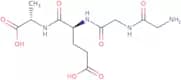
CAS:Lys3-Bombesin is a bifunctional peptide that binds to the bombesin receptor and is used in cancer therapy. It is a radiotracer, which can be used for diagnostic imaging and diagnosis of tumors. Lys3-Bombesin has a high affinity for the bombesin receptor subtype B, which is expressed by prostate cancer cells. The peptide can be conjugated to a small molecule, such as a radioactive isotope, and used to deliver it specifically to the tumor site. This compound has been shown to inhibit the growth of human prostate cancer cells in vitro.Formula:C71H110N22O18SPurity:Min. 95%Molecular weight:1,591.84 g/molH-Gly-Gly-Glu-Ala-OH
CAS:H-Gly-Gly-Glu-Ala-OH is a carboxylate. It has been shown to be an ionizable molecule with a proton that can exist in either the hydrated or dehydrated form. The proton of the carboxylate group can move between the two forms and the ionization state depends on pH and temperature. H-Gly-Gly-Glu-Ala-OH is a linear peptide, which means it has an amide group and a residue at each end of the chain. Each of these residues has specific conformations, which are impacted by intramolecular hydrogen bonds. These conformations play a role in determining its pharmacological properties, as well as its function in structural biology and magnetic resonance techniques. H-Gly-Gly-Glu-Ala-OH also has population distribution studies that have been used for diffraction analyses, as well as for titration experiments.
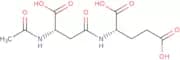
Formula:C12H20N4O7Purity:Min. 95%Molecular weight:332.31 g/molAc-Asp(Glu-OH)-OH
CAS:Ac-Asp(Glu-OH)-OH is a low potency, but potentiating compound that binds to the cell cytoplasm. It inhibits the uptake of glutamate into the synaptic cleft by binding to acidic granules. This compound may be neuroprotective and inhibit prostate carcinoma growth. Ac-Asp(Glu-OH)-OH has also been shown to inhibit postsynaptic potentials and decrease glutamate release in cerebellar granule cells.
Formula:C11H16N2O8Purity:Min. 95%Molecular weight:304.25 g/molH-Phe-beta-Ala-OH
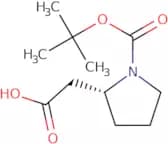
CAS:H-Phe-beta-Ala-OH is a dipeptide analog of dermorphin. It has been shown to be an antinociceptive agent in the tail-flick test, and also inhibits the effects of naloxone, an opioid antagonist. H-Phe-beta-Ala-OH may be an effective analgesic that could be used as a substitute for morphine.Formula:C12H16N2O3Purity:Min. 95%Molecular weight:236.27 g/molN-Boc-D-b-homoproline
CAS:Please enquire for more information about N-Boc-D-b-homoproline including the price, delivery time and more detailed product information at the technical inquiry form on this pageFormula:C11H19NO4Purity:Min. 95%Molecular weight:229.27 g/mol






![4-[(4-Methylpiperazin-1-yl)methyl]benzoic acid](/_next/image/?url=https%3A%2Fstatic.cymitquimica.com%2Fproducts%2F3D%2Fthumb-webp%2FFM136767.webp&w=3840&q=75)