Amino Acids (AA)
Amino acids (AAs) are the fundamental building blocks of proteins, playing a crucial role in various biological processes. These organic compounds are essential for protein synthesis, metabolic pathways, and cell signaling. In this category, you will find a comprehensive range of amino acids, including essential, non-essential, and modified forms, which are vital for research in biochemistry, molecular biology, and nutritional sciences. At CymitQuimica, we provide high-quality amino acids to support your research and development needs, ensuring accuracy and reliability in your experimental outcomes.
Subcategories of "Amino Acids (AA)"
- Amino Acid Derivatives(4,012 products)
- Amino Acid and Amino Acid Related Compounds(3,490 products)
- Amino Acids with Oxygen or Sulphur(168 products)
- Boc- Amino Acids(351 products)
- Fmoc Amino Acids(1,710 products)
Found 38362 products of "Amino Acids (AA)"
Sort by
Purity (%)
0
100
|
0
|
50
|
90
|
95
|
100
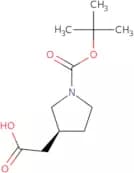
(S)-(1-boc-pyrrolidin-3-yl)-acetic acid
CAS:Please enquire for more information about (S)-(1-boc-pyrrolidin-3-yl)-acetic acid including the price, delivery time and more detailed product information at the technical inquiry form on this page
Formula:C11H19NO4Purity:Min. 95%Molecular weight:229.27 g/molFmoc-α-methyl-L-phenylalanine
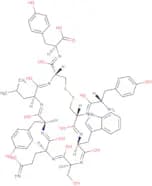
CAS:Please enquire for more information about Fmoc-α-methyl-L-phenylalanine including the price, delivery time and more detailed product information at the technical inquiry form on this pageFormula:C25H23NO4Purity:Min. 95%Color and Shape:PowderMolecular weight:401.45 g/molH-Tyr-Cys-Trp-Ser-Gln-Tyr-Leu-Cys-Tyr-OH trifluoroacetate salt (Disulfide bond)
CAS:Please enquire for more information about H-Tyr-Cys-Trp-Ser-Gln-Tyr-Leu-Cys-Tyr-OH trifluoroacetate salt (Disulfide bond) including the price, delivery time and more detailed product information at the technical inquiry form on this page
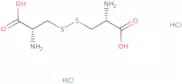
Formula:C58H71N11O15S2Purity:Min. 95%Molecular weight:1,226.38 g/molL-Cystine dihydrochloride
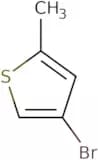
CAS:L-Cystine dihydrochloride is a chemical compound that is used as an amino acid. It has biological properties that are due to its ability to inhibit pancreatic lipase and l-threonine. L-Cystine dihydrochloride has been shown to have anti-infectious effects against a number of bacterial and viral diseases, including HIV, herpes simplex virus, and influenza. L-Cystine dihydrochloride is also used in cell culture experiments because it can be used to break disulfide bonds in proteins.Formula:C6H14Cl2N2O4S2Purity:Min. 95%Color and Shape:White PowderMolecular weight:313.22 g/mol4-Bromo-2-methylthiophene
CAS:4-Bromo-2-methylthiophene is a linker that is used in the synthesis of metal carbonyls. It has been shown to be an efficient cross-linking agent for the preparation of polymers. 4-Bromo-2-methylthiophene can be isomerized to 2,5-dimethylthiophene by heating it with hydroxylamine. 4-Bromo-2-methylthiophene can also catalyze the alkylation of nucleophiles such as ammonia and dimethyl sulfate, as well as nucleophilic attack on carboxylic acid derivatives. This compound is acidic, due to its chloride substituent, which can react with basic groups such as hydroxyl groups or amines.Formula:C5H5BrSPurity:Min. 95%Color and Shape:Clear LiquidMolecular weight:177.06 g/molDynorphin A (porcine 1-13) - acetate salt
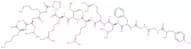
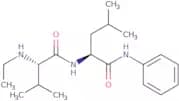
CAS:Dynorphin A (1-13) H-Tyr-Gly-Gly-Phe-Leu-Arg-Arg-Ile-Arg-Pro-Lys-Leu-Lys is a peptide that is found in the brain and spinal cord. It is an agonist of opioid receptors, which are involved in pain relief, as well as motor control. Dynorphin A (1-13) H has been shown to inhibit acetylcholine release, which may be due to its ability to bind to kappa opioid receptors. Dynorphin A (1-13) H is also known to bind to κ opioid receptors, where it inhibits locomotor activity and induces analgesia.Formula:C75H126N24O15Purity:Min. 95%Color and Shape:PowderMolecular weight:1,603.96 g/molN-Et-Val-Leu-anilide
CAS:Please enquire for more information about N-Et-Val-Leu-anilide including the price, delivery time and more detailed product information at the technical inquiry form on this page
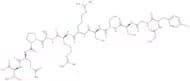
Formula:C19H31N3O2Purity:Min. 95%Molecular weight:333.47 g/molIGF-I (30-41)
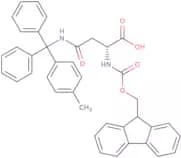
CAS:Please enquire for more information about IGF-I (30-41) including the price, delivery time and more detailed product information at the technical inquiry form on this pageFormula:C51H83N19O19Purity:Min. 95%Molecular weight:1,266.32 g/molFmoc-D-Asn(Mtt)-OH
CAS:Please enquire for more information about Fmoc-D-Asn(Mtt)-OH including the price, delivery time and more detailed product information at the technical inquiry form on this pageFormula:C39H34N2O5Purity:Min. 95%Molecular weight:610.7 g/mol(D-Arg1,D-Trp7·9,Leu11)-Substance P
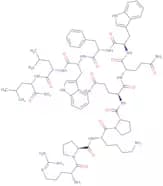
CAS:Substance P is a neuropeptide that is involved in the transmission of pain signals from the nerves to the brain. It also has been implicated in inflammatory and autoimmune diseases. Substance P is a potent agonist of the neurokinin-1 receptor, which causes an increase in intracellular calcium ion levels, leading to neuronal excitation. The release of substance P from nerve fibers can be blocked by administration of an analog (e.g., N-acetyl-D-Arg1,D-Trp7·9,Leu11)-substance P H-D-Arg-Pro-Lys-Pro-Gln-Gln-D-Trp-Phe-D-Trp-Leu -Leu -NH2). This compound blocks the activation of substance P receptors with high affinity and specificity.Formula:C75H108N20O13Purity:Min. 95%Molecular weight:1,497.79 g/molPhenserine
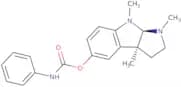
CAS:Phenserine is a natural drug that is an ester hydrochloride. It has been shown to be effective in the treatment of Alzheimer's disease in clinical trials. Phenserine has also been found to inhibit acetylcholinesterase, an enzyme that breaks down the neurotransmitter acetylcholine. This inhibition leads to increased levels of acetylcholine, which can improve cognitive function and reduce neuronal death. The mechanism of action for phenserine is unknown, but it may involve a change in iron homeostasis or other biochemical reactions. Phenserine has not been tested on humans; however, it has shown promising results in animal studies.Formula:C20H23N3O2Purity:Min. 95%Molecular weight:337.42 g/molH-Lys(Boc)-OH
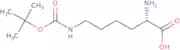
CAS:H-Lys(Boc)-OH is an ε-amino-protected lysine that plays a pivotal role in solution phase peptide synthesis. Strategically protected at the ε-amino group, it allows controlled peptide assembly, and it serves as intermediate for synthesizing β-peptides. The bulky Boc (tert-butyloxycarbonyl) group shields its epsilon amine (NH2) group, acting as a protective measure to prevent unwanted side reactions.Formula:C11H22N2O4Color and Shape:White PowderMolecular weight:246.3 g/molH-Ile-2-chlorotrityl resin (200-400 mesh)
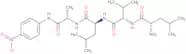
Please enquire for more information about H-Ile-2-chlorotrityl resin (200-400 mesh) including the price, delivery time and more detailed product information at the technical inquiry form on this pagePurity:Min. 95%H-Leu-Val-Leu-Ala-pNA
CAS:Please enquire for more information about H-Leu-Val-Leu-Ala-pNA including the price, delivery time and more detailed product information at the technical inquiry form on this pageFormula:C26H42N6O6Purity:Min. 95%Molecular weight:534.65 g/molAdipokinetic Hormone (Apis mellifera ligustica) TFA salt
CAS:Adipokinetic hormone is a peptide hormone that has been shown to stimulate the metabolism of fat cells in laboratory animals. This peptide is produced by the gland cells of honeybees and is used to regulate the energy metabolism of honeybees and other insects. Adipokinetic hormone has been shown to increase locomotor activity, inhibit the growth of human pathogens, activate transfer reactions, and inhibit receptor activity. The biological properties of this hormone have not yet been fully elucidated.Formula:C47H65N11O14•C2HF3O2Purity:Min. 95 Area-%Color and Shape:PowderMolecular weight:1,122.10 g/molAF-2
CAS:AF-2 is a potent, selective and competitive antagonist at the nicotinic acetylcholine receptor (nAChR). AF-2 binds to the extracellular domains of the nAChR and prevents agonists from binding. It has been shown to inhibit acetylcholine release in isolated heart preparations with high affinity and selectivity. The drug has been tested as an anthelmintic against Caenorhabditis elegans and found to be effective. AF-2 is a cholinergic compound that binds to ganglia, leading to a biphasic response. It also has significant effects on the central nervous system, inhibiting both nicotinic and muscarinic acetylcholine receptors. AF-2 is sequenced according to the following formula: H-Lys-His-Glu-Tyr-Leu-Arg-Phe NH2Formula:C47H70N14O10Purity:Min. 95%Molecular weight:991.15 g/mol4-Fluoro-2-methoxyphenol
CAS:4-Fluoro-2-methoxyphenol is a fluorinating agent that is used in the manufacture of pharmaceuticals, plastics and pesticides. It has been shown to induce apoptosis in cultured cells by upregulating reactive oxygen species (ROS) and increasing mitochondrial membrane permeability, as well as inhibiting cellular physiology. 4-Fluoro-2-methoxyphenol also inhibits the production of ATP and may be toxic to cells by interfering with dinucleotide phosphate.Formula:C7H7FO2Purity:Min. 95%Color and Shape:Clear LiquidMolecular weight:142.13 g/molBradykinin (2-7) acetate salt
CAS:Please enquire for more information about Bradykinin (2-7) acetate salt including the price, delivery time and more detailed product information at the technical inquiry form on this pageFormula:C29H40N6O8Purity:Min. 95%Molecular weight:600.66 g/mol(D-Cys(tBu)2,Thr(tBu)6)-Leu-Enkephalin-Thr
CAS:Leu-Enkephalin is a synthetic opioid peptide that exhibits potent analgesic effects and is used in the treatment of a variety of pain syndromes. Leu-Enkephalin has been shown to have an inhibitory effect on δ-opioid receptors, which are involved in the transmission of pain signals. Leu-Enkephalin has also been shown to have an inhibitory effect on other enzymes such as aminopeptidases, proteases, and kinases. This drug has been used in the treatment of autoimmune diseases, cancer, and inflammatory diseases. Leu-Enkephalin is also known to increase locomotor activity and reduce sensitivity to pain.Formula:C41H62N6O9SPurity:Min. 95%Molecular weight:815.03 g/molSomatostatin-14 (3-14) trifluoroacetate salt
CAS:Please enquire for more information about Somatostatin-14 (3-14) trifluoroacetate salt including the price, delivery time and more detailed product information at the technical inquiry form on this pageFormula:C71H96N16O17S2Purity:Min. 95%Molecular weight:1,509.75 g/mol