Amino Acids (AA)
Subcategories of "Amino Acids (AA)"
- Amino Acid Derivatives(4,015 products)
- Amino Acid and Amino Acid Related Compounds(3,490 products)
- Amino Acids with Oxygen or Sulphur(168 products)
- Boc- Amino Acids(351 products)
- Fmoc Amino Acids(1,710 products)
Found 38368 products of "Amino Acids (AA)"
L-Lysyl-L-lysyl-L-lysyl-L-lysyl-L-lysine
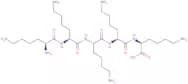
CAS:L-Lysyl-L-lysyl-L-lysyl-L-lysyl-L-lysine (LLLLLL) is an antibacterial agent that belongs to the class of pharmacological agents. LLLLLL has been shown to have antibacterial efficacy against oral pathogens, such as Streptococcus mutans and Porphyromonas gingivalis. LLLLLL binds to the bacterial cell wall by forming a covalent disulfide bond with cysteine residues on the peptidoglycan layer. This prevents cell wall synthesis, leading to cell death by inhibiting protein synthesis. LLLLLL has also been shown to have low toxicity in animal models for long periods of time, with high values in human serum.Formula:C30H62N10O6Purity:Min. 95%Molecular weight:658.88 g/mol(N-Me-Phe7)-Neurokinin B trifluoroacetate salt
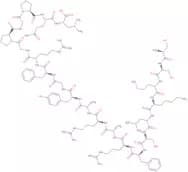
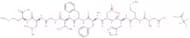
CAS:Please enquire for more information about (N-Me-Phe7)-Neurokinin B trifluoroacetate salt including the price, delivery time and more detailed product information at the technical inquiry form on this page
Formula:C60H81N13O14S2Purity:Min. 95%Molecular weight:1,272.5 g/mol1,2-Dipalmitoyl-sn-glycero-3-phosphocholine
CAS:1,2-Dipalmitoyl-sn-glycero-3-phosphocholine (DPPC) is a sodium salt that has the ability to form surfactant bilayers. DPPC is a model system for studying biochemical reactions and the phase transition of lipid bilayers. This compound has been used to study the effects of various drugs on cell membranes in biochemical research. In addition, DPPC has been shown to have hypoglycemic effects in animal models as well as having an anti-inflammatory effect.Formula:C40H80NO8PPurity:Min. 95 Area-%Color and Shape:PowderMolecular weight:734.04 g/molN-(Fmoc-5-amino-3-oxa-pentyl)succinamic acid
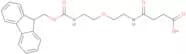
CAS:N-(Fmoc-5-amino-3-oxa-pentyl)succinamic acid is a high quality chemical that is used as an intermediate in the production of pharmaceuticals and other fine chemicals. It is also a reagent for use in peptide synthesis. N-(Fmoc-5-amino-3-oxa-pentyl)succinamic acid has a CAS No. 669073-62-5 and can be used as a useful scaffold for the production of complex compounds. This compound is also useful for research purposes, due to its versatility as a building block with speciality chemical applications.
Formula:C23H26N2O6Purity:Min. 95%Molecular weight:426.46 g/molpTH (1-34) amide (human) trifluoroacetate salt
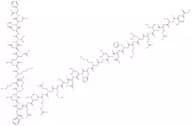
CAS:Parathyroid hormone (PTH) is a peptide hormone that regulates calcium and phosphate balance in the body. PTH is secreted by the parathyroid glands, located near the thyroid gland in the neck. It is also known as parathormone or parathyrin. The active form of PTH, called pTH (1-34) amide, has been shown to stimulate bone resorption and to inhibit bone formation. The amino acid sequence of this hormone starts with arginine and ends with phenylalanine. The N-terminal amino acid residue is an aspartic acid or asparagine and histidine is the only basic residue in this molecule. This molecule has two acidic residues, glutamic acid and aspartic acid, which are found on the side chains of two amino acids: aspartic acid and glutamic acid. Valine is found at position 3 and phenylalanine at position 34.
Formula:C181H292N56O50S2Purity:Min. 95%Molecular weight:4,116.73 g/mol1,2-Dilauroyl-sn-glycero-3-phosphoethanolamine
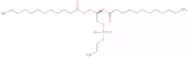
CAS:1,2-Dilauroyl-sn-glycero-3-phosphoethanolamine (DLPE) is a lipid molecule that can induce phase transition in aqueous solutions. DLPE is an active ingredient in nonsteroidal anti-inflammatory drugs and has been shown to inhibit the activity of enzymes such as cyclooxygenase and lipoxygenase. DLPE also inhibits the growth of infectious organisms such as Escherichia coli and HIV by inhibiting receptor activity. DLPE binds to receptors on the surface of cells, which prevents these cells from releasing inflammatory cytokines.Formula:C29H58NO8PPurity:Min. 95%Color and Shape:PowderMolecular weight:579.75 g/molH-Trp-Val-OH
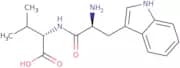
CAS:H-Trp-Val-OH is a human protein that has been shown to be involved in the uptake of glucose into cells. H-Trp-Val-OH is also known as colony stimulating factor 1, which stimulates the growth and differentiation of hematopoietic cells. It has been shown to play a role in weight gain, insulin resistance, and type 2 diabetes. This monoclonal antibody has not been found to have any long term toxicity or genotoxicity in animal studies.Formula:C16H21N3O3Purity:Min. 95%Molecular weight:303.36 g/mol([15N]Gly)-Glutathione (reduced)
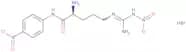
CAS:Please enquire for more information about ([15N]Gly)-Glutathione (reduced) including the price, delivery time and more detailed product information at the technical inquiry form on this pagePurity:Min. 95%H-Arg(NO2)-pNA·HBr
CAS:Please enquire for more information about H-Arg(NO2)-pNA·HBr including the price, delivery time and more detailed product information at the technical inquiry form on this page
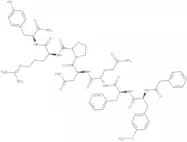
Formula:C12H17N7O5·HBrPurity:Min. 95%Molecular weight:420.22 g/mol(Phenylac 1,D-Tyr(Me)2,Arg6·8,Tyr-NH29)-Vasopressin trifluoroacetate salt Phenylac-D-Tyr(Me)-Phe-Gln-Asn-Arg-Pro-Arg-Tyr-NH2 tri
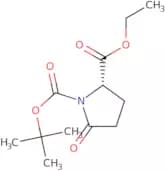
CAS:Please enquire for more information about (Phenylac 1,D-Tyr(Me)2,Arg6·8,Tyr-NH29)-Vasopressin trifluoroacetate salt Phenylac-D-Tyr(Me)-Phe-Gln-Asn-Arg-Pro-Arg-Tyr-NH2 tri including the price, delivery time and more detailed product information at the technical inquiry form on this pageFormula:C62H83N17O13Purity:Min. 95%Color and Shape:PowderMolecular weight:1,274.43 g/molN-Boc-L-pyroglutamic acid ethyl ester
CAS:N-Boc-L-pyroglutamic acid ethyl ester is a chiral building block that can be used for the preparation of amides. It is a good activating agent and is used to synthesize amide bonds from carboxylic acids. N-Boc-L-pyroglutamic acid ethyl ester can be used to synthesize sulfoxides and piperidines, which are ligands. It is also an amido, stereoselective and DPP-4 inhibitor. This chemical simplifies catalysis reactions by replacing the use of toxic solvents.
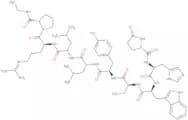
Formula:C12H19NO5Purity:Min. 95%Molecular weight:257.28 g/mol(Des-Gly10,D-Tyr5,D-Leu6,Pro-NHEt 9)-LHRH
CAS:Please enquire for more information about (Des-Gly10,D-Tyr5,D-Leu6,Pro-NHEt 9)-LHRH including the price, delivery time and more detailed product information at the technical inquiry form on this pageFormula:C59H84N16O12Purity:Min. 95%Molecular weight:1,209.4 g/molFibronectin Fragment (196-203)
CAS:Fibronectin fragment (196-203) H-Ser-Arg-Asn-Arg-Cys-Asn-Asp-Gln, is a synthetic peptide that has been shown to have antiinflammatory properties. It can inhibit the inflammatory response by inhibiting the production of cytokines and chemokines. Fibronectin fragment (196-203) H-Ser-Arg-Asn-Arg-Cys-Asn, has also been shown to inhibit angiogenesis and tumor growth in vitro, as well as stabilize blood vessels and reduce the incidence of lymphatic vessel leakage. This peptide may be used in cancer therapy and for other diseases such as Kaposi's sarcoma, rheumatoid arthritis, autoimmune diseases, or infectious diseases.Formula:C35H62N18O14SPurity:Min. 95%Molecular weight:991.05 g/molBradykinin (1-5) trifluoroacetate salt
CAS:Bradykinin (1-5) trifluoroacetate salt H-Arg-Pro-Pro-Gly-Phe-OH is a peptide that has been shown to have anti-cancer properties. The effect of Bradykinin (1-5) trifluoroacetate salt H-Arg-Pro-Pro-Gly-Phe-OH on prostate cancer cells was studied in vitro by measuring the extent of cell growth. The results showed a dose dependent decrease in tumor growth rate, suggesting that this peptide may be useful as an adjuvant therapy for prostate cancer. Bradykinin (1-5) trifluoroacetate salt H-Arg-Pro-Pro-Gly-Phe has also been shown to inhibit diabetic nephropathy and reduce proteinuria in diabetic patients. This peptide may also be used to diagnose prostate cancer because it binds to the thrombin receptor, which is present on cancer cells but notFormula:C27H40N8O6Purity:Min. 95%Molecular weight:572.66 g/molH-beta-Ala-Trp-OH
CAS:Please enquire for more information about H-beta-Ala-Trp-OH including the price, delivery time and more detailed product information at the technical inquiry form on this page
Formula:C14H17N3O3Purity:Min. 95%Molecular weight:275.3 g/molGlutaryl-Ala-Ala-Phe-4MbNA
CAS:Please enquire for more information about Glutaryl-Ala-Ala-Phe-4MbNA including the price, delivery time and more detailed product information at the technical inquiry form on this pageFormula:C31H36N4O7Purity:Min. 95%Molecular weight:576.64 g/molKininogen-Based Thrombin Inhibitor
CAS:Please enquire for more information about Kininogen-Based Thrombin Inhibitor including the price, delivery time and more detailed product information at the technical inquiry form on this pageFormula:C29H46N8O7SPurity:Min. 95%Molecular weight:650.79 g/molCatestatin (human) trifluoroacetate
CAS:Please enquire for more information about Catestatin (human) trifluoroacetate including the price, delivery time and more detailed product information at the technical inquiry form on this pageFormula:C104H164N32O27SPurity:Min. 95%Molecular weight:2,326.68 g/molH-Thr-Val-OH
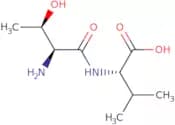
CAS:The peptidomimetic H-Thr-Val-OH is a synthetic molecule that is hydrophobic. It has been shown to activate epidermal growth factor (EGF) through the transduction of a signal from outside the cell to inside the cell. This activation of EGF leads to increased levels of other molecules, such as cytosolic amide and hydrogen bond, which are important for cell growth. The amino acid sequence of H-Thr-Val-OH resembles that of EGF, allowing it to bind to the same receptor site on cells. This binding activates signalling pathways that lead to increased levels of proteins involved in cell proliferation, migration, and differentiation.Formula:C9H18N2O4Purity:Min. 95%Molecular weight:218.25 g/mol(Tyr0)-Neurokinin A
CAS:Please enquire for more information about (Tyr0)-Neurokinin A including the price, delivery time and more detailed product information at the technical inquiry form on this pageFormula:C59H89N15O16SPurity:Min. 95%Molecular weight:1,296.5 g/mol


![([15N]Gly)-Glutathione (reduced)](/_next/image/?url=https%3A%2Fstatic.cymitquimica.com%2Fproducts%2F3D%2Fthumb-webp%2FFG109306.webp&w=3840&q=75)