Amino Acids (AA)
Amino acids (AAs) are the fundamental building blocks of proteins, playing a crucial role in various biological processes. These organic compounds are essential for protein synthesis, metabolic pathways, and cell signaling. In this category, you will find a comprehensive range of amino acids, including essential, non-essential, and modified forms, which are vital for research in biochemistry, molecular biology, and nutritional sciences. At CymitQuimica, we provide high-quality amino acids to support your research and development needs, ensuring accuracy and reliability in your experimental outcomes.
Subcategories of "Amino Acids (AA)"
- Amino Acid Derivatives(3,971 products)
- Amino Acid and Amino Acid Related Compounds(3,477 products)
- Amino Acids with Oxygen or Sulphur(168 products)
- Boc- Amino Acids(351 products)
- Fmoc Amino Acids(1,710 products)
Found 38321 products of "Amino Acids (AA)"
Sort by
Purity (%)
0
100
|
0
|
50
|
90
|
95
|
100
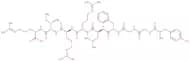
Dynorphin A (1-9)
CAS:<p>Dynorphin A (1-9) H-Tyr-Gly-Gly-Phe-Leu-Arg-Arg-Ile-Arg-OH is a substrate binding inhibitor that blocks potassium channels. Dynorphin A (1-9) H-Tyr-Gly-Gly-Phe-Leu Arg Arg Ile Arg OH binds to the d -alanine site of the potassium channel and inhibits glutamate release from presynaptic terminals. Dynorphin A (1 9) H Tyr Gly Gly Phe Leu Arg Arg Ile Arg OH has been shown to be a potent inhibitor of aminopeptidase activity in vitro, which may be due to its affinity for the substrate binding site on the enzyme. Its inhibition of aminopeptidase activity may lead to an increase in opioid peptides such as dynorphins and enkephalins. Dynorphin A (1 9) H Tyr Gly Gly Phe</p>Formula:C52H84N18O11Purity:Min. 95%Molecular weight:1,137.34 g/molThr-Ala-Pro-Arg-Atrial Natriuretic Factor (1-28) (human, bovine, porcine) trifluoroacetate salt
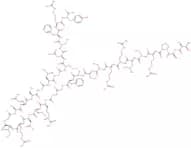
CAS:<p>Thr-Ala-Pro-Arg-Atrial Natriuretic Factor (1-28) (human, bovine, porcine) trifluoroacetate salt is a peptide hormone that regulates blood pressure by causing the kidneys to excrete sodium and water. It is used as a model system for studying the physiological effects of urodilatin and has been shown to inhibit the cyclase enzyme. Thr-Ala-Pro-Arg-Atrial Natriuretic Factor (1-28) (human, bovine, porcine) trifluoroacetate salt may also have an antihypertensive effect through its ability to reduce levels of natriuretic peptides in plasma. This drug is also being investigated as a possible treatment for congestive heart failure. The small molecular weight makes it suitable for use as a natriuretic or antihypertensive drug with minimal side effects.</p>Formula:C145H234N52O44S3Purity:Min. 95%Molecular weight:3,505.93 g/molH-D-Leu-D-Leu-OH
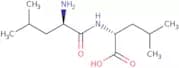
CAS:<p>H-D-Leu-D-Leu-OH is a type of molecule that can be found in the human body. It is an amino acid with specificities and transport mechanisms that are not yet well understood. This compound is resistant to aminopeptidase activity and has been shown to have a ph optimum in the intestinal tract. Acetylation of this molecule may also have an effect on its transport rate, as it has been shown to affect the transport rate of D-tryptophan and D-alanine. H-D-Leu-D-Leu-OH is a type of molecule that can be found in the human body. It is an amino acid with specificities and transport mechanisms that are not yet well understood. This compound is resistant to aminopeptidase activity and has been shown to have a ph optimum in the intestinal tract. Acetylation of this molecule may also have an effect on its transport rate, as</p>Formula:C12H24N2O3Purity:Min. 95%Molecular weight:244.33 g/molSuc-Ala-Lys-Pro-Phe-pNA
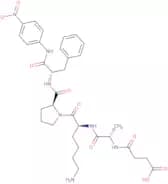
CAS:<p>Suc-Ala-Lys-Pro-Phe-pNA is a casein that has been modified to contain additional lysine residues. This modification increases the protein’s stability, making it more resistant to hydrolysis by phosphatases. Suc-Ala-Lys-Pro-Phe-pNA also contains a peptide sequence that is homologous to a part of the endoplasmic reticulum chaperone FK506 binding protein (FKBP). The peptide sequence in this casein acts as an artificial chaperone and can be used in cell culture experiments to stabilize newly synthesized proteins.</p>Formula:C33H43N7O9Purity:Min. 95%Molecular weight:681.74 g/molGLP-1 (7-37) (human, bovine, guinea pig, mouse, rat) acetate salt
CAS:<p>Please enquire for more information about GLP-1 (7-37) (human, bovine, guinea pig, mouse, rat) acetate salt including the price, delivery time and more detailed product information at the technical inquiry form on this page</p>Formula:C151H228N40O47·xC2H4O2Purity:Min. 95%Molecular weight:3,355.67 g/molH-Trp-Glu-OH
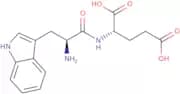
CAS:<p>H-Trp-Glu-OH is a fatty acid that is involved in the synthesis of proteins. It is involved in the transcription-polymerase chain reaction, which is a technique used to amplify DNA sequences. H-Trp-Glu-OH is also used in sample preparation and in the treatment of neurological disorders and diabetes. H-Trp-Glu-OH has been shown to inhibit neuronal death by inhibiting uptake and cell proliferation through hydrogen bonds with human serum and peroxisome proliferation. This compound has also been shown to have diagnostic properties for diabetes, as it can be detected in human serum after an insulin stimulus.</p>Formula:C16H19N3O5Purity:Min. 95%Molecular weight:333.34 g/molH-2,6-Difluoro-Phe-OH·HCl
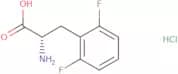
CAS:<p>Please enquire for more information about H-2,6-Difluoro-Phe-OH·HCl including the price, delivery time and more detailed product information at the technical inquiry form on this page</p>Formula:C9H9F2NO2·HClPurity:Min. 95%Molecular weight:237.63 g/molN-alpha-Fmoc-Nbeta-allyloxycarbonyl-L-2,3-diaminopropionic acid
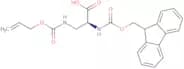
CAS:<p>Please enquire for more information about N-alpha-Fmoc-Nbeta-allyloxycarbonyl-L-2,3-diaminopropionic acid including the price, delivery time and more detailed product information at the technical inquiry form on this page</p>Formula:C22H22N2O6Purity:Min. 95%Molecular weight:410.53 g/molH-Pro-Leu-Gly-NHOH·HCl
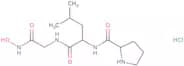
CAS:<p>Please enquire for more information about H-Pro-Leu-Gly-NHOH·HCl including the price, delivery time and more detailed product information at the technical inquiry form on this page</p>Formula:C13H24N4O4·HClPurity:Min. 95%Molecular weight:336.81 g/molAc-Asp-Met-Gln-Asp-AMC
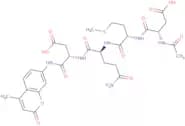
CAS:Please enquire for more information about Ac-Asp-Met-Gln-Asp-AMC including the price, delivery time and more detailed product information at the technical inquiry form on this pageFormula:C30H38N6O12SPurity:Min. 95%Molecular weight:706.72 g/mol(Lys1015·1024)-Thrombospondin-1 (1015-1024) (human, bovine, mouse) trifluoroacetate salt
CAS:<p>Please enquire for more information about (Lys1015·1024)-Thrombospondin-1 (1015-1024) (human, bovine, mouse) trifluoroacetate salt including the price, delivery time and more detailed product information at the technical inquiry form on this page</p>Formula:C68H105N17O12SPurity:Min. 95%Molecular weight:1,384.73 g/mol(Des-Gly10,His(Bzl)6,Pro-NHEt 9)-LHRH
CAS:<p>Please enquire for more information about (Des-Gly10,His(Bzl)6,Pro-NHEt 9)-LHRH including the price, delivery time and more detailed product information at the technical inquiry form on this page</p>Formula:C66H86N18O12Purity:Min. 95%Molecular weight:1,323.5 g/molSuc-Leu-Tyr-AMC
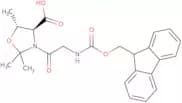
CAS:<p>AMC conjugated molecule targeting chymotrypsin-like peptidase, calpain I and II and papain, and Ti protease from E. coli</p>Formula:C29H33N3O8Purity:Min. 95%Molecular weight:551.59 g/molFmoc-Gly-Thr(Psi(Me ,Me)pro)-OH
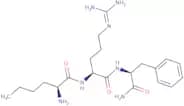
CAS:<p>Fmoc-Gly-Thr(Psi(Me,Me)pro)-OH is a high-performance liquid chromatography (HPLC) phase. It is used for the separation of peptides and amino acids. Fmoc-Gly-Thr(Psi(Me,Me)pro)-OH is used in industrial applications to reduce pressure, as well as in the production of large quantities of liquid chromatography.</p>Formula:C24H26N2O6Purity:Min. 95%Molecular weight:438.47 g/molH-Nle-Arg-Phe-NH2 acetate salt
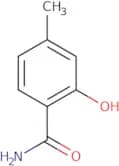
CAS:<p>Please enquire for more information about H-Nle-Arg-Phe-NH2 acetate salt including the price, delivery time and more detailed product information at the technical inquiry form on this page</p>Formula:C21H35N7O3Purity:Min. 95%Molecular weight:433.55 g/mol4-Methylsalicylamide
CAS:<p>4-Methylsalicylamide is a chemical compound that belongs to the class of isonicotinic amides. It is a potent anti-inflammatory agent with minimal inhibitory concentration (MIC) values of 4 µg/mL for gram-positive bacteria and 8 µg/mL for gram-negative bacteria. This compound has been shown to be effective against methicillin-resistant Staphylococcus aureus (MRSA) and Clostridium perfringens, although is not active against acid-fast bacteria such as Mycobacterium tuberculosis or Mycobacterium avium complex. 4-Methylsalicylamide has been shown to have an inhibitory effect on ring-opening, which may be due to its ability to acetylate mitochondrial membranes, altering the membrane potential. The molecular modeling studies also showed that 4MSAM binds at the same site as antibiotics such as penicillin and erythromycin in bacterial ribos</p>Formula:C8H9NO2Purity:Min. 95%Color and Shape:PowderMolecular weight:151.16 g/molN-alpha-Z-L-lysine methyl ester hydrochloride
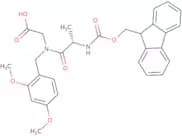
CAS:<p>N-alpha-Z-L-lysine methyl ester hydrochloride is a preparation that is used as a methyl ester. It is an ester of lysine and methyl chloride. This product has a molecular weight of 170.16 g/mol and the chemical formula CH3CONHCH2CH(NH)CO2CH3. The structural data has not been confirmed by X-ray crystallography, but it can be assumed to be in the form of a zwitterion. N-alpha-Z-L-lysine methyl ester hydrochloride can be used for the synthesis of peptides, which are building blocks for proteins and enzymes. N-alpha-Z-L-lysine methyl ester hydrochloride is also used in the production of certain kinds of drugs and organic acids such as acetylsalicylic acid (aspirin).</p>Formula:C15H22N2O4·HClPurity:Min. 95%Molecular weight:330.81 g/molFmoc-Ala-(Dmb)Gly-OH
CAS:<p>Please enquire for more information about Fmoc-Ala-(Dmb)Gly-OH including the price, delivery time and more detailed product information at the technical inquiry form on this page</p>Formula:C29H30N2O7Purity:Min. 95%Molecular weight:518.56 g/molCRF (6-33) (human, rat)
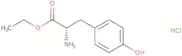
CAS:<p>CRF (6-33) is a neuropeptide that is found in the human cerebral cortex and rat liver. It has been shown to inhibit protein synthesis and sequenced by Edmond H. Fischer, who also discovered corticotropin-releasing factor (CRF). CRF (6-33) binds to its receptor CRFR1, which activates phospholipase C and generates inositol 1,4,5-triphosphate. This leads to the release of calcium from intracellular stores and the activation of protein kinase C. The release of calcium ions into the cytosol causes an increase in intracellular levels of cAMP, which activates a series of reactions responsible for the cellular effects of CRF. CRF (6-33) has been shown to be involved in depression by controlling neurotransmitter levels.br></p>Formula:C141H231N41O43SPurity:Min. 95%Molecular weight:3,220.66 g/molL-Tyrosine ethyl ester hydrochloride
CAS:<p>L-Tyrosine ethyl ester hydrochloride is a non-protein amino acid that inhibits the activity of metalloproteases, which are enzymes that break down proteins. It has been shown to be effective against bowel disease and cancer by inhibiting the release of inflammatory cytokines. L-Tyrosine ethyl ester hydrochloride also has anti-inflammatory properties and can be used in the treatment of depression and liver cirrhosis. This drug is an inhibitor of hydroxylase, which is an enzyme involved in the synthesis of melanin. It is a structural analogue to L-DOPA, which is used for Parkinson's disease. L-Tyrosine ethyl ester hydrochloride has been shown to have antihypertensive effects and can be used as a diuretic agent.</p>Formula:C11H15NO3·HClPurity:Min. 95%Color and Shape:PowderMolecular weight:245.7 g/mol