Amino Acids (AA)
Amino acids (AAs) are the fundamental building blocks of proteins, playing a crucial role in various biological processes. These organic compounds are essential for protein synthesis, metabolic pathways, and cell signaling. In this category, you will find a comprehensive range of amino acids, including essential, non-essential, and modified forms, which are vital for research in biochemistry, molecular biology, and nutritional sciences. At CymitQuimica, we provide high-quality amino acids to support your research and development needs, ensuring accuracy and reliability in your experimental outcomes.
Subcategories of "Amino Acids (AA)"
- Amino Acid Derivatives(3,969 products)
- Amino Acid and Amino Acid Related Compounds(3,474 products)
- Amino Acids with Oxygen or Sulphur(168 products)
- Boc- Amino Acids(351 products)
- Fmoc Amino Acids(1,710 products)
Found 38282 products of "Amino Acids (AA)"
Sort by
Purity (%)
0
100
|
0
|
50
|
90
|
95
|
100
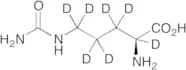
L-Citrulline-d7
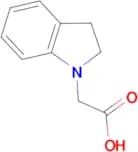
CAS:Controlled Product<p>Applications L-Citrulline-d7, is the labeled analogue of L-Citrulline (C535700), which is an amino acid, first isolated from the juice of watermelon, Citrullus vulgaris Schrad., Cucurbitaceae. It is also used in the treatment of asthenia.<br>References Kurtz, et al.: J. Biol. Chem., 122, 477 (1938), Rajantie, J., et al.: J. Pediatr., 97, 927 (1980), Carpenter, T.O., et al.: N. Engl. J. Med., 312, 290 (1985),<br></p>Formula:C6D7H6N3O3Color and Shape:NeatMolecular weight:182.23(2,3-Dihydro-1H-indol-1-yl)acetic acid
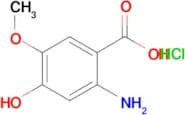
CAS:Purity:95.0%Color and Shape:SolidMolecular weight:177.20300292968752-amino-4-hydroxy-5-methoxybenzoic acid hydrochloride
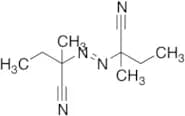
CAS:Purity:95.0%Molecular weight:219.61999511718752,2'-Azobis-(2-methylbutyronitrile)
CAS:<p>Applications 2,2'-AZOBIS-(2-METHYLBUTYRONITRILE) (cas# 13472-08-7) is a useful research chemical.<br>Dangerous Goods Info This compound is forbidden to ship by air under IATA regulations.<br></p>Formula:C10H16N4Color and Shape:White to Off-White SolidMolecular weight:192.27(Fluoro-Methylphosphoryl)Oxycyclohexane
CAS:Controlled Product<p>(Fluoro-Methylphosphoryl)Oxycyclohexane is an organophosphorus compound that acts as a nerve agent. It inhibits the enzyme acetylcholinesterase, which is responsible for breaking down acetylcholine, leading to excess cholinergic stimulation. This can cause excessive contraction of muscles or even death. The exposure to (Fluoro-Methylphosphoryl)Oxycyclohexane can be detected by analytical methods such as gas chromatography/mass spectrometry. Oximes are used in the reactivation of acetylcholinesterase and are effective in preventing neuronal death. They bind to the phosphonyl group in (Fluoro-Methylphosphoryl)Oxycyclohexane and prevent it from inhibiting the enzyme acetylcholinesterase.</p>Formula:C7H14FO2PPurity:Min. 95%Molecular weight:180.16 g/mol3,4-Methylenedioxy propiophenone
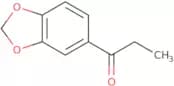
CAS:Controlled Product<p>3,4-Methylenedioxy propiophenone is a synthetic compound with a fatty acid chain. It has been shown to have potent activity against leishmania and has been used as an intermediate in the synthesis of other drugs. 3,4-Methylenedioxy propiophenone can be synthesized by acylation reactions with chloride and acetylcholinesterase inhibition. This product also has molecular docking properties, which have been analyzed using computational methods, such as profiling and profile analysis.</p>Formula:C10H10O3Purity:Min. 98 Area-%Color and Shape:Slightly Brown PowderMolecular weight:178.18 g/molDopaquinone
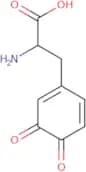
CAS:<p>Please enquire for more information about Dopaquinone including the price, delivery time and more detailed product information at the technical inquiry form on this page</p>Formula:C9H9NO4Purity:Min. 95%Molecular weight:195.17 g/molBoc-Thionoala-1-(6-nitro)benzotriazolide
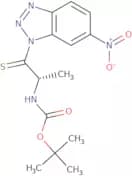
CAS:<p>Please enquire for more information about Boc-Thionoala-1-(6-nitro)benzotriazolide including the price, delivery time and more detailed product information at the technical inquiry form on this page</p>Formula:C14H17N5O4SPurity:Min. 95%Molecular weight:351.38 g/mol2-Phenyl-2-(2-piperidyl)acetamide
CAS:<p>2-Phenyl-2-(2-piperidyl)acetamide is an enantiomeric amide that can be used as a chiral building block for the synthesis of other organic compounds. It is synthesized by reacting phenylacetic acid with piperidine. 2-Phenyl-2-(2-piperidyl)acetamide is a primary amide and has been shown to have analgesic properties.</p>Formula:C13H18N2OPurity:Min. 97 Area-%Color and Shape:PowderMolecular weight:218.29 g/mol7-[5-(Fluoro-methyl-phosphoryl)oxypentyl]-4-nitro-2,1,3-benzoxadiazole
CAS:Controlled Product<p>7-[5-(Fluoro-methyl-phosphoryl)oxypentyl]-4-nitro-2,1,3-benzoxadiazole is a reactivator of the central nervous system. It is a noncompetitive antagonist at muscarinic receptors and blocks postsynaptic acetylcholine release from cholinergic neurons. It has been shown to have no effect on blood pressure but does cause an increase in locomotor activity in animals. This drug binds to the hippocampal formation and the ventral hippocampus, which are areas of the brain that are involved in memory and spatial navigation. The distribution of this drug postulated to be due to its ability to penetrate micron sized openings in cell membranes.</p>Formula:C12H15FN3O5PPurity:Min. 95%Molecular weight:331.24 g/mol2-Phenoxyphenylacetonitrile
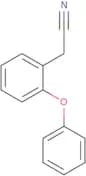
CAS:<p>2-Phenoxyphenylacetonitrile is a pyrethroid n-oxide that is chemically related to other insecticides that are used in agriculture and against insects such as mosquitoes. 2-Phenoxyphenylacetonitrile is a synthetic compound that has been shown to have an optimum pH of 5.5, which makes it difficult to dissolve in water. The compound's high stability at low pH levels means that it can be used in acidic environments. It also has been shown to have strong activity against human serum and food composition, with no detectable activity against bacteria or fungi.</p>Formula:C14H11NOPurity:Min. 95%Color and Shape:Clear LiquidMolecular weight:209.24 g/mol1-[3-(Fluoro-Methylphosphoryl)Oxypropyl]Pyrene
CAS:Controlled Product<p>1-[3-(Fluoro-Methylphosphoryl)Oxypropyl]Pyrene is a fluorescent derivative of pyrene. It has been used to label DNA and proteins for experiments involving fluorescence. The fluorophores in 1-[3-(Fluoro-Methylphosphoryl)Oxypropyl]Pyrene are activated by laser light, which causes emission of light at a wavelength of 590 nm. The emission spectrum of 1-[3-(Fluoro-Methylphosphoryl)Oxypropyl]Pyrene is sensitive to the environment and changes with chemical modification.</p>Formula:C20H18FO2PPurity:Min. 95%Molecular weight:340.33 g/molL-Cysteine - non-animal origin
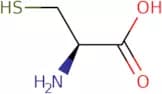
CAS:<p>L-Cysteine is a non-animal derived amino acid that has been shown to help maintain normal iron levels in the body. It also helps reduce oxidative injury and inflammation. L-Cysteine is made naturally by the human body, but can be found in some foods as well. L-Cysteine has been shown to help regulate protein oxidation and injury responses in humans. L-Cysteine plays a role in the immune system by binding to Toll-like receptors, which are proteins on cells that are involved with inflammation and immunity. L-Cysteine also plays a role in the immune system by stimulating antibody production, which is important for fighting infection. Cysteine is an amino acid involved with many biochemical reactions, including synthesis of proteins and DNA molecules. Cysteine also regulates gene expression through response elements that are found in the promoter regions of genes. The rate constant for cysteine is 0.00001s^(-1).</p>Formula:C3H7NO2SColor and Shape:White PowderMolecular weight:121.16 g/molRef: 3D-FC76819
Discontinued productDL-Proline
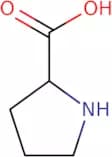
CAS:<p>DL-Proline is a biological molecule that has been shown to bind to the DNA binding domains of proteins. This binding can be seen with the crystal structures of DL-proline and protein. The reaction mechanism for DL-proline is as follows:<br><br>DL-Proline + Protein → Proline + Protein<br><br>The equilibrium constant for this reaction is 1.0 at 298 K. The pKa value for the amide group in DL-proline is 4.8, which means that it will react with water and form an amine group at physiological pH levels. DL-Proline has been shown to have metabolic disorders.</p>Formula:C5H9NO2Purity:Min. 95%Color and Shape:PowderMolecular weight:115.13 g/molRef: 3D-FP15447
Discontinued productPoly ε L-lysine HCl - Average MW 2000~4700Da
CAS:<p>Antimicrobial cationic peptide; used for microscopy glass slides coating</p>Formula:(C6H12N2O•HCl)nPurity:Min. 95 Area-%Color and Shape:White Yellow PowderRef: 3D-FP159079
Discontinued product2-Hydroxy-6-methylbenzoic acid methyl ester
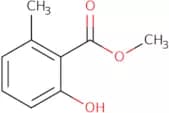
CAS:<p>Methyl anthranilate is a bioactive molecule that belongs to the group of methyl 2-hydroxybenzoates. It has been shown to be effective against formicidae and other insects in bioassays. The chemical composition of methyl anthranilate includes a hydroxyl group and an aromatic ring, which may allow for a diverse range of chemical structures. Methyl anthranilate is synthesized by the non-enzymatic condensation of formaldehyde with 2-hydroxybenzoic acid. This molecule has been used as an insecticide in model organisms such as Drosophila melanogaster and Caenorhabditis elegans.</p>Formula:C9H10O3Purity:Min. 95%Color and Shape:PowderMolecular weight:166.17 g/molRef: 3D-FH67529
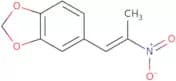
Discontinued product1-(3,4-Methylenedioxyphenyl) 2-nitropropene
CAS:<p>1-(3,4-Methylenedioxyphenyl) 2-nitropropene (1-MPNP) is a phosphatase inhibitor that is active against gram-negative bacteria by inhibiting enterotoxins and chlamydia. 1-MPNP inhibits the activity of tyrosine phosphatases, which are enzymes that play a major role in bacterial virulence. 1-MPNP competitively inhibits the activity of tyrosine phosphatases and prevents them from catalyzing the hydrolysis of polyphosphate substrates. This inhibition leads to an accumulation of polyphosphates in the bacterial cell membrane, which disrupts its permeability and leads to cell death.</p>Formula:C10H9NO4Purity:Min. 97.5 Area-%Color and Shape:Yellow PowderMolecular weight:207.18 g/molRef: 3D-FM67977
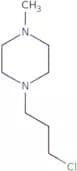
Discontinued product1-(3-Chloropropyl)-4-methylpiperazine
CAS:<p>1-(3-Chloropropyl)-4-methylpiperazine is an analog of chlorpromazine. It has been shown to be a transactivator, which causes the activation of genes in response to a variety of stimuli and plays a role in the pathogenesis of infections. 1-(3-Chloropropyl)-4-methylpiperazine also interacts with chloride ions, causing an increase in intracellular chloride concentrations. This increased concentration leads to an increase in transcription and replication rates. The structures of viral RNA were determined using 1-(3-chloropropyl)-4-methylpiperazine as a fluorescent probe.</p>Formula:C8H17ClN2Purity:Min. 95%Color and Shape:Clear LiquidMolecular weight:176.69 g/mol





![7-[5-(Fluoro-methyl-phosphoryl)oxypentyl]-4-nitro-2,1,3-benzoxadiazole](/_next/image/?url=https%3A%2Fstatic.cymitquimica.com%2Fproducts%2F3D%2Fthumb-webp%2FFF98971.webp&w=3840&q=75)
![1-[3-(Fluoro-Methylphosphoryl)Oxypropyl]Pyrene](/_next/image/?url=https%3A%2Fstatic.cymitquimica.com%2Fproducts%2F3D%2Fthumb-webp%2FFF89825.webp&w=3840&q=75)