Amino Acids (AA)
Amino acids (AAs) are the fundamental building blocks of proteins, playing a crucial role in various biological processes. These organic compounds are essential for protein synthesis, metabolic pathways, and cell signaling. In this category, you will find a comprehensive range of amino acids, including essential, non-essential, and modified forms, which are vital for research in biochemistry, molecular biology, and nutritional sciences. At CymitQuimica, we provide high-quality amino acids to support your research and development needs, ensuring accuracy and reliability in your experimental outcomes.
Subcategories of "Amino Acids (AA)"
- Amino Acid Derivatives(3,978 products)
- Amino Acid and Amino Acid Related Compounds(3,477 products)
- Amino Acids with Oxygen or Sulphur(168 products)
- Boc- Amino Acids(351 products)
- Fmoc Amino Acids(1,710 products)
Found 38329 products of "Amino Acids (AA)"
Sort by
Purity (%)
0
100
|
0
|
50
|
90
|
95
|
100
Ref: 4Z-P-147057
Discontinued productRef: 4Z-P-5452
Discontinued productRef: 4Z-I-091003
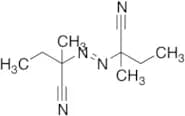
Discontinued product2,2'-Azobis-(2-methylbutyronitrile)
CAS:<p>Applications 2,2'-AZOBIS-(2-METHYLBUTYRONITRILE) (cas# 13472-08-7) is a useful research chemical.<br>Dangerous Goods Info This compound is forbidden to ship by air under IATA regulations.<br></p>Formula:C10H16N4Color and Shape:White to Off-White SolidMolecular weight:192.27(1R,4R)-rel-2-Benzyl-5-(tert-butoxycarbonyl)-2,5-diazabicyclo[2.2.1]heptane-3-carboxylic acid
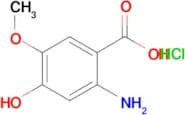
CAS:Molecular weight:332.42-amino-4-hydroxy-5-methoxybenzoic acid hydrochloride
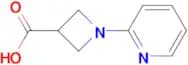
CAS:Purity:95.0%Molecular weight:219.61999511718751-(Pyridin-2-yl)azetidine-3-carboxylic acid
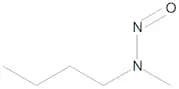
CAS:Color and Shape:SolidMolecular weight:178.1909942626953N-Butyl-N-methylnitrosamine
CAS:<p>Applications N-Butyl-N-methylnitrosamine, is an nitroso impurity found in “Sartans” , a class of drugs that block the action of angiotensin.<br> Not a dangerous good if item is equal to or less than 1g/ml and there is less than 100g/ml in the package<br></p>Formula:C5H12N2OColor and Shape:Light YellowMolecular weight:116.16(S)-2-(4-(2-(2-Amino-4-oxo-4,7-dihydro-1H-pyrrolo[2,3-d]pyrimidin-5-yl)ethyl)benzamido)pentanedioic acid
CAS:Purity:95.0%Color and Shape:Solid, Blue powderMolecular weight:427.4169921875DL-Methionine Methylsulfonium Chloride
CAS:Controlled Product<p>Applications DL-Methionine methylsulfonium chloride (cas# 3493-12-07) is a useful research chemical.<br></p>Formula:C6H14ClNO2SColor and Shape:NeatMolecular weight:199.7Ref: 10-F693590
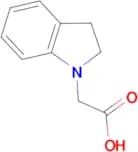
Discontinued product(2,3-Dihydro-1H-indol-1-yl)acetic acid
CAS:Purity:95.0%Color and Shape:SolidMolecular weight:177.2030029296875L-Citrulline-d7
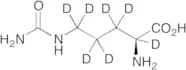
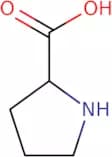
CAS:Controlled Product<p>Applications L-Citrulline-d7, is the labeled analogue of L-Citrulline (C535700), which is an amino acid, first isolated from the juice of watermelon, Citrullus vulgaris Schrad., Cucurbitaceae. It is also used in the treatment of asthenia.<br>References Kurtz, et al.: J. Biol. Chem., 122, 477 (1938), Rajantie, J., et al.: J. Pediatr., 97, 927 (1980), Carpenter, T.O., et al.: N. Engl. J. Med., 312, 290 (1985),<br></p>Formula:C6D7H6N3O3Color and Shape:NeatMolecular weight:182.23DL-Proline
CAS:<p>DL-Proline is a biological molecule that has been shown to bind to the DNA binding domains of proteins. This binding can be seen with the crystal structures of DL-proline and protein. The reaction mechanism for DL-proline is as follows:<br><br>DL-Proline + Protein → Proline + Protein<br><br>The equilibrium constant for this reaction is 1.0 at 298 K. The pKa value for the amide group in DL-proline is 4.8, which means that it will react with water and form an amine group at physiological pH levels. DL-Proline has been shown to have metabolic disorders.</p>Formula:C5H9NO2Purity:Min. 95%Color and Shape:PowderMolecular weight:115.13 g/molRef: 3D-FP15447
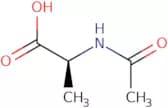
Discontinued productN-Acetyl-L-alanine
CAS:<p>N-Acetyl-L-alanine is the N-acetylated form of L-alanine and is a nonessential amino acid. It is an amide containing one nitrogen atom and two carbonyl groups. The nitrogen can be found in either the alpha or beta position on the amide. The biological properties of N-acetyl-L-alanine are similar to those of L-alanine, as it is used as a substrate for protein synthesis and has been shown to inhibit p21 and epidermal growth factor. The conformational properties of N-acetyl-L-alanine are different from that of L-alanine due to its changed shape, which may affect its biological activity.</p>Formula:C5H9NO3Purity:Min. 95%Color and Shape:White PowderMolecular weight:131.13 g/mol




![2-[4-(methylamino)-3-nitrobenzoyl]benzoic acid](/_next/image/?url=https%3A%2Fstatic.cymitquimica.com%2Fproducts%2F10%2Fthumb-webp%2FF518183.webp&w=3840&q=75)
![(1R,4R)-rel-2-Benzyl-5-(tert-butoxycarbonyl)-2,5-diazabicyclo[2.2.1]heptane-3-carboxylic acid](/_next/image/?url=https%3A%2Fstatic.cymitquimica.com%2Fproducts%2F10%2Fthumb-webp%2FF986861.webp&w=3840&q=75)
![(S)-2-(4-(2-(2-Amino-4-oxo-4,7-dihydro-1H-pyrrolo[2,3-d]pyrimidin-5-yl)ethyl)benzamido)pentanedioi…](/_next/image/?url=https%3A%2Fstatic.cymitquimica.com%2Fproducts%2F10%2Fthumb-webp%2FF079404.webp&w=3840&q=75)