Amino Acids (AA)
Amino acids (AAs) are the fundamental building blocks of proteins, playing a crucial role in various biological processes. These organic compounds are essential for protein synthesis, metabolic pathways, and cell signaling. In this category, you will find a comprehensive range of amino acids, including essential, non-essential, and modified forms, which are vital for research in biochemistry, molecular biology, and nutritional sciences. At CymitQuimica, we provide high-quality amino acids to support your research and development needs, ensuring accuracy and reliability in your experimental outcomes.
Subcategories of "Amino Acids (AA)"
- Amino Acid Derivatives(3,971 products)
- Amino Acid and Amino Acid Related Compounds(3,477 products)
- Amino Acids with Oxygen or Sulphur(168 products)
- Boc- Amino Acids(351 products)
- Fmoc Amino Acids(1,710 products)
Found 38321 products of "Amino Acids (AA)"
Sort by
Purity (%)
0
100
|
0
|
50
|
90
|
95
|
100
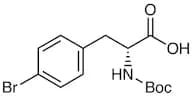
N-(tert-Butoxycarbonyl)-4-bromo-D-phenylalanine
CAS:Formula:C14H18BrNO4Purity:>98.0%(HPLC)Color and Shape:White to Almost white powder to crystalMolecular weight:344.211-Benzyl-5-oxopyrrolidine-3-carboxylic Acid
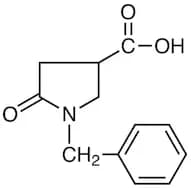
CAS:Formula:C12H13NO3Purity:>98.0%(GC)(T)Color and Shape:White to Almost white powder to crystalMolecular weight:219.244'-Amino-N-methylacetanilide
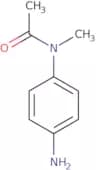
CAS:<p>4'-Amino-N-methylacetanilide is a chemical reagent that can be used as a building block for the synthesis of other chemicals. It has been shown to have a high quality and is useful in the research field. It has been used as an intermediate in the production of pharmaceuticals and pesticides, such as acetaminophen, chloramphenicol, and nitrofurantoin. 4'-Amino-N-methylacetanilide has also been used as a versatile building block for the synthesis of various complex compounds, including dyes and polymers.</p>Formula:C9H12N2OPurity:Min. 95 Area-%Color and Shape:PowderMolecular weight:164.2 g/molRef: 3D-FA34065
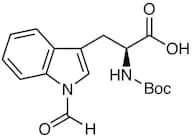
Discontinued productNα-(tert-Butoxycarbonyl)-N1-formyl-L-tryptophan
CAS:Formula:C17H20N2O5Purity:>98.0%(T)Color and Shape:White to Light gray to Light yellow powder to crystalMolecular weight:332.361-Butyl-1-methylpyrrolidinium bromide
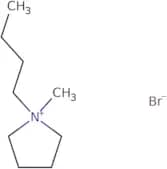
CAS:<p>1-Butyl-1-methylpyrrolidinium bromide is a pyridinium salt with a pyrrolidinium moiety. It forms by the reaction of 1-butylpiperidine and 2 equivalents of Br2 in dichloromethane at -20 degrees Celsius. The formation rate can be determined by measuring the absorbance of the product at 227 nm. 1-Butyl-1-methylpyrrolidinium bromide is an analytical reagent that has been used to determine the viscosity and pH of organic solutions, as well as enzyme activities and kinetic parameters. It has also been used for chemical structures and chromatographic science studies, such as electrochemical impedance spectroscopy.</p>Formula:C9H20BrNPurity:Min. 95%Color and Shape:White PowderMolecular weight:222.17 g/molRef: 3D-FB60715
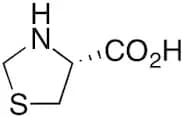
Discontinued productL-Thioproline extrapure, 98%
CAS:Formula:C4H7NO2SPurity:min. 98%Color and Shape:White to off - white, Crystalline powderMolecular weight:133.175-Hydroxy-L-Tryptophan extrapure, 98%
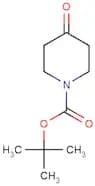
CAS:Formula:C11H12N2O3Purity:min. 99%Color and Shape:White to off - white to pale brown, PowderMolecular weight:220.231-BOC-4-Piperidone extrapure, 99%
CAS:Formula:C10H17NO3Purity:min. 99%Color and Shape:White to pale yellow to brown, Crystalline powderMolecular weight:199.25FMOC-N-Trityl-L-Asparagine (FMOC-Asn(Trt)-OH) extrapure, 99%
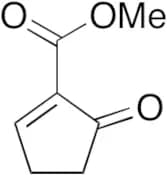
CAS:Formula:C38H32N2O5Purity:min. 99%Color and Shape:White to off-white, Crystalline powderMolecular weight:596.672-Methoxycarbonylcyclopent-2-enone
CAS:Controlled ProductFormula:C7H8O3Color and Shape:NeatMolecular weight:140.1373-((2-Chlorothiazol-5-yl)methyl)-5-methyl-1,3,5-oxadiazinan-4-imine Hydrochloride
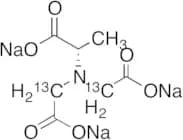
CAS:Controlled Product<p>Applications 3-((2-Chlorothiazol-5-yl)methyl)-5-methyl-1,3,5-oxadiazinan-4-imine Hydrochloride is an intermediate for the synthesis of N-(3-((2-Chlorothiazol-5-yl)methyl)-5-methyl-1,3,5-oxadiazinan-4-ylidene)benzenesulfonamide (C385860), which is an impurity of Thiamethoxam (T344180), a neonicotinoid insecticide.<br>References Oliver, J., et al.: J. Environ. Horticult., 28, 135 (2010), Ghosh, A., et al.: J. Entomol. Res., 34, 35 (2010), Chem. and Eng. News 90: 10 (2012)<br></p>Formula:C8H11ClN4OS·ClHColor and Shape:NeatMolecular weight:283.178N,N-Bis(carboxymethyl-13C)-L-alanine
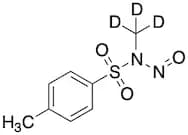
CAS:Controlled ProductFormula:C513C2H11NO6Color and Shape:Off White SolidMolecular weight:273.10Diazald-d3
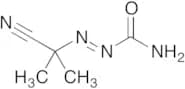
CAS:<p>Applications N-Methyl-d3-N-nitroso-p-toluenesulfonamide is the labeled version of Diazald; Diazomethane precursor.<br>References Takizawa, et al.: J. Pharm. Soc. Jpn., 70, 490 (1950)<br></p>Formula:C8D3H7N2O3SColor and Shape:Pale Yellow to Light Yellow SolidMolecular weight:217.060042-(1-Cyano-1-methylethyl)azocarboxamide
CAS:<p>Applications 2-(1-Cyano-1-methylethyl)azocarboxamide, cna be used in the synthesis of azobenzene side chain polymers derived from the bifunctional fumaric acid and itaconic acid.<br>References Kim, s. et al.: Polymer, Vol 55. P: 871-877 (2014);<br></p>Formula:C5H8N4OColor and Shape:Light Yellow SolidMolecular weight:140.14N,N-[Iminobis(trimethylene)]bis-D-gluconamide
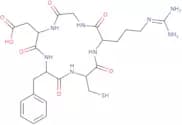
CAS:Controlled Product<p>Applications N,N-[Iminobis(trimethylene)]bis-D-gluconamide (cas# 86303-20-0) is a compound useful in organic synthesis.<br></p>Formula:C18H37N3O12Color and Shape:NeatMolecular weight:487.50Cyclo(-Arg-Gly-Asp-D-Phe-Cys) acetate salt
CAS:<p>Cyclo(-Arg-Gly-Asp-D-Phe-Cys) acetate salt is a peptide that has been modified to be an active targeting agent. It is an amphipathic molecule that can be used to deliver therapeutic agents specifically to cancer cells. Cyclo(-Arg-Gly-Asp-D-Phe-Cys) acetate salt is conjugated to a drug and is taken up by cells through the process of endocytosis. Once inside the cell, the drug is released and binds with the cell membrane, which leads to cell death. The uptake of this peptide has been shown to be pH dependent; it is taken up more readily in acidic environments than in neutral or alkaline environments. This peptide has also been shown to have cytotoxic effects on both MFC7 cells and rat liver cells.</p>Formula:C24H34N8O7SPurity:Min. 95%Molecular weight:578.64 g/molRef: 3D-FC110008
Discontinued product4-Chloro-2-(methyl-phenyl-sulfamoyl)-benzoic acid methylester
CAS:<p>4-Chloro-2-(methyl-phenyl-sulfamoyl)-benzoic acid methylester is an industrial chemical that is used in the production of other chemicals. It can be produced by the esterification of 4-chlorophenylacetic acid with methyl phenyl sulfonyl chloride, followed by diazotization and chlorination. This chemical also has the ability to form a condensation product with hydrazine.</p>Formula:C15H14ClNO4SPurity:Min. 95%Molecular weight:339.79 g/molRef: 3D-FC150757
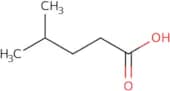
Discontinued product4-Methylpentanoic acid
CAS:<p>4-Methylpentanoic acid is a fatty acid that is the product of anaerobic fermentation in the colon and can be found as an end product in the body. It can be used as a substrate in film tests for detecting bacteria, such as Escherichia coli, which are associated with bowel diseases. 4-Methylpentanoic acid has been shown to have inhibitory effects against nuclear dna replication, mitochondrial membrane potential, and energy metabolism. 4-Methylpentanoic acid also has antiinflammatory properties and has been shown to decrease body mass index. The 6-Fluoro-3-indoxyl-beta-D-galactopyranoside is an antituberculosis drug that belongs to the class of rifamycins. It is the most active of the rifamycins for the treatment of tuberculosis. Rifapentine inhibits bacterial growth by binding to DNA-dependent RNA polymerase, thereby preventing transcription</p>Formula:C6H12O2Purity:Min. 95%Molecular weight:116.16 g/molRef: 3D-FM35595
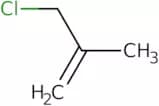
Discontinued product3-Chloro-2-methyl-1-propene
CAS:<p>3-Chloro-2-methyl-1-propene is a reactive chemical that belongs to the class of organic compounds. It is a chlorocarbon with a hydroxyl group and an alkyl group. 3-Chloro-2-methyl-1-propene can react with other chemicals in solution, which may be due to steric interactions or cationic polymerization. This reaction is catalyzed by a solid catalyst, such as dimethyl fumarate or chloride. The addition of hydrogen fluoride or trifluoroacetic acid will increase the rate of this reaction.</p>Formula:C4H7ClPurity:Min. 95%Color and Shape:PowderMolecular weight:90.55 g/molRef: 3D-FC34789
Discontinued product






![N,N-[Iminobis(trimethylene)]bis-D-gluconamide](/_next/image/?url=https%3A%2Fstatic.cymitquimica.com%2Fproducts%2FTR%2Fthumb-webp%2FI400500.webp&w=3840&q=75)