Peptides
Subcategories of "Peptides"
Found 29788 products of "Peptides"
CCT7 Blocking Peptide
A synthetic peptide for use as a blocking control in assays to test for specificity of CCT7 antibody, catalog no. 70R-5634
Purity:Min. 95%SYNCRIP Blocking Peptide
A synthetic peptide for use as a blocking control in assays to test for specificity of SYNCRIP antibody, catalog no. 70R-1309
Purity:Min. 95%FCRLA Blocking Peptide
A synthetic peptide for use as a blocking control in assays to test for specificity of FCRLA antibody, catalog no. 70R-7201
Purity:Min. 95%WDFY3 Blocking Peptide
A synthetic peptide for use as a blocking control in assays to test for specificity of WDFY3 antibody, catalog no. 70R-9011
Purity:Min. 95%Bombesin
CAS:Controlled ProductBombesin is a small peptide that was first isolated from the skin of a frog, Bombina bombina, with homologs later found to be present in mammalian tissues, including the brain and gastrointestinal tract. It is a member of the bombesin-like peptide family, which includes several related peptides such as gastrin-releasing peptide (GRP) and neuromedin B.
Bombesin acts as a neuromodulator and regulates various physiological functions, including gastrointestinal motility and stimulation of gastrin release from G cells. It also plays a role in the regulation of cardiovascular function and neurotransmitter release. In addition, bombesin has been shown to stimulate the growth and proliferation of certain types of cancer cells, including prostate and lung cancer cells, through its interaction with bombesin receptors. It may therefore be used as a potential biomarker for certain cancers.
This product is available as a 0.5mg vial.Formula:C71H110N24O18SPurity:Min. 95%Molecular weight:1,619.8 g/molKLHDC8B Blocking Peptide
A synthetic peptide for use as a blocking control in assays to test for specificity of KLHDC8B antibody, catalog no. 70R-3775
Purity:Min. 95%DDX42 Blocking Peptide
A synthetic peptide for use as a blocking control in assays to test for specificity of DDX42 antibody, catalog no. 70R-4789
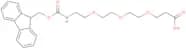
Purity:Min. 95%Fmoc-N-Amido-dPEG®3-Acid
CAS:Fmoc-N-Amido-dPEG®3-Acid is a PEG compound with two different functional groups (also known as heterobifunctional). Unlike homobifunctional PEG compounds (same functional group on both ends), this type of compounds are more versatile as have two different anchor points. Fmoc-N-Amido-dPEG®3-Acid is used as a linker and spacer to add a PEG moiety, via pegylation (a bioconjugation technique) to proteins, peptides, oligonucleotides, small molecules and nanoparticles.
Formula:C24H29NO7Purity:Min. 95%Molecular weight:443.49 g/molICMT Blocking Peptide
A synthetic peptide for use as a blocking control in assays to test for specificity of ICMT antibody, catalog no. 70R-7402
Purity:Min. 95%Big Endothelin-1 (Porcine, 1-39)
CAS:This product has disulfide Bonds between Cys1-Cys15 and Cys3-Cys11, is sourced from: Porcine, 1-39 and is available as a 0.5mg vial. Big Endothelin-1 (Porcine, 1-39) is a precursor peptide of the vasoconstrictor Endothelin-1 (ET-1). ET-1 exhibits vasoconstrictive properties and is an activator of endothelin G-protein coupled receptors. Furthermore ET-1 is produced when inflammation, vascular stress or hypoxia occurs. In vivo Big Endothelin-1 has a greater half life compared to ET-1 and therefore makes it useful to study secretory activity in the endothelial system.
Overall Big Endothelin-1 (Porcine, 1-39) can be used as a research tool for studying protein interactions, receptor activation and function, and ligand binding. This peptide is also used in pharmacology to study the effects of therapeutic agents on receptor activity and expression.Formula:C193H289N49O58S5Purity:Min. 95%Molecular weight:4,384 g/molDes-Arg9-[Leu8]-Bradykinin
CAS:Des-Arg9-[Leu8]-bradykinin is a bradykinin receptor activator. This peptide can be used as a research tool to study the relationship between peptides and ion channels in cell biology, and to assess the effects of inhibitors on protein interactions. Des-Arg9-[Leu8]-bradykinin has shown inhibitory activity against a number of ligand binding receptors, including the beta-adrenergic receptor, angiotensin II receptor, and acetylcholine muscarinic receptor. The affinity of this peptide for different receptors is dependent on its position within the molecule.
Formula:C41H63N11O10Purity:Min. 95%Molecular weight:870.01 g/molGly-Phe-NH2• AcOH
CAS:Controlled ProductGly-Phe-NH2 is an amino acid that can be used as a research tool in the study of protein interactions, receptor activation, and ion channels. It has been shown to activate ligands such as peptides and antibodies. This compound also inhibits ligands in the cell biology field. Gly-Phe-NH2• AcOH is a white powder with a purity of 99%.
Formula:C11H15N3O2•CH3COOHPurity:Min. 95%Molecular weight:281.31 g/molAc-Asp-Glu-Val-Asp-AMC
CAS:Ac-Asp-Glu-Val-Asp-AMC is an ion channel activator. It binds to the receptor site of the ligand, which causes a conformational change in the protein that leads to the opening of the ion channel. Ac-Asp-Glu-Val-Asp-AMC is a peptide with a molecular weight of 927.6 and is soluble in water. This product has been shown to be stable under various conditions and can be used as research tool or pharmacological agent. Ac-Asp-Glu-Val-Asp-AMC is also an antibody that binds to an epitope on human CD8 protein and can be used for cell biology studies, such as activation and inhibition of these proteins.Formula:C30H37N5O13Purity:Min. 95%Molecular weight:675.64 g/molm-dPEG®12-MAL
CAS:m-dPEG®12-MAL is a PEG compound with two different functional groups (also known as heterobifunctional). Unlike homobifunctional PEG compounds (same functional group on both ends), this type of compounds are more versatile as have two different anchor points. m-dPEG®12-MAL is used as a linker and spacer to add a PEG moiety, via pegylation (a bioconjugation technique) to proteins, peptides, oligonucleotides, small molecules and nanoparticles.
Formula:C58H108N2O29Purity:Min. 95%Molecular weight:1,297.47 g/molFBXO10 Blocking Peptide
A synthetic peptide for use as a blocking control in assays to test for specificity of FBXO10 antibody, catalog no. 70R-3607
Purity:Min. 95%NPY (Porcine, 13-36)
CAS:NPY is a peptide that belongs to the family of neuropeptides. It is an activator of G-protein coupled receptors, which are proteins found on the surface of cells. NPY binds to these receptors and triggers a signal transduction cascade that leads to increased activity in ion channels. This results in an increase in the permeability of the membrane and the influx of calcium ions into cells, which can cause cell death or inhibition of cell growth. NPY has been shown to be involved in many physiological processes, including regulation of food intake, body weight, water balance, reproduction, and immune function. NPY has also been shown to inhibit receptor binding by antibodies.
Formula:C135H209N41O36Purity:Min. 95%Molecular weight:2,982.4 g/molNPY (Human, Rat)
CAS:NPY (Human, Rat) is a peptide that belongs to the family of neuropeptides. It is a central neurotransmitter and neuromodulator in the brain and has an important role in the regulation of many physiological processes, including feeding behavior, body weight, blood pressure, stress responses and reproduction. NPY (Human, Rat) is used as a research tool for studying ion channels and receptor interactions. This product is also used to develop antibodies that can be used as a research tool or diagnostic reagent. NPY (Human, Rat) is not active when taken orally; it must be injected into the body.
Formula:C189H285N55O57SPurity:Min. 95%Molecular weight:4,271.7 g/molHOXA5 Blocking Peptide
A synthetic peptide for use as a blocking control in assays to test for specificity of HOXA5 antibody, catalog no. 70R-8341
Purity:Min. 95%DCP2 Blocking Peptide
A synthetic peptide for use as a blocking control in assays to test for specificity of DCP2 antibody, catalog no. 70R-4869
Purity:Min. 95%CTCFL Blocking Peptide
A synthetic peptide for use as a blocking control in assays to test for specificity of CTCFL antibody, catalog no. 70R-8110
Purity:Min. 95%




![Des-Arg9-[Leu8]-Bradykinin](/_next/image/?url=https%3A%2Fstatic.cymitquimica.com%2Fproducts%2F3D%2Fthumb-webp%2FPBK-4065-V.webp&w=3840&q=75)