Peptides
Subcategories of "Peptides"
Found 29603 products of "Peptides"
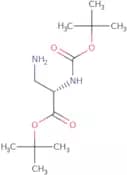
Boc-Dap-OtBu hydrochloride salt
CAS:Boc-Dap-OtBu hydrochloride salt is a chemical that is synthesized by anhydride and trifluoroacetic acid. It can be used in the laboratory for protein visualization, as well as to detect proteins using LC-MS. The presence of trifluoroacetic acid makes the Boc-Dap-OtBu hydrochloride salt fluorescent, which makes it possible to visualize the reaction products under UV light. This chemical is often used in fluorescence spectrometry to identify amino acids and other compounds.Formula:C12H24N2O4Purity:Min. 95%Color and Shape:PowderMolecular weight:260.33 g/molEB1
Custom research peptide; min purity 95%. For different specs please use the Peptide Quote Tool
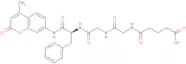
Formula:C150H236N46O26Molecular weight:3,099.77 g/molGlutaryl-Gly-Gly-Phe-AMC
CAS:Glutaryl-Gly-Gly-Phe-AMC is a proteolytic peptide which is used in the study of the proteasome. It has been shown to have affinity for the proteasome, and can be used as a monoclonal antibody for both immunohistochemical analysis and two-dimensional electrophoresis. The peptide was sequenced and found to have no homology to any known protein or peptide. Glutaryl-Gly-Gly-Phe-AMC has been shown to bind specifically to β amyloid (Aβ) subunits in cell homogenates and cytosol, as well as nuclei in tissue sections from AD brain. In addition, it has been shown that this peptide can be fluorescently labeled with Alexa Fluor 488 or 594 dye for use in microscopy studies.Formula:C28H30N4O8Purity:Min. 98 Area-%Color and Shape:PowderMolecular weight:550.56 g/molSetmelanotide
Pro-opiomelanocortin (POMC)-derived peptides act on neurons expressing the Melanocortin 4 receptor (MC4R) to reduce body weight. Setmelanotide is a highly potent MC4R agonist that leads to weight loss in diet-induced obese animals and obese individuals with complete POMC deficiency.The endogenous ligand alpha-melanocyte-stimulating hormone (alpha-MSH) for MC4R has been shown to have a much lower affinity than Setmelanotide, explaining some of the drug's potency. Administration of Setmelanotide to wildtype mice resulted in significant weight loss while MC4R knockout mice fail to respond. Setmelanotide is in numerous clinical trials and shows promising results. Patients with POMC defects upstream of MC4R show more significant responses to treatment than those with MC4R deficiency or obese controls.Molecular weight:1,117.34 g/molExendin 3 (9-39) amide
Originally identified in Heloderma horridum horridum (Mexican beaded lizard), exendin-3 shares homology with vasoactive intestinal peptide (VIP), secretin, helospectin I and II and helodermin. Exendin-3 increases cellular cAMP levels and amylase release from pig pancreatic cells.Truncated exendin-3 is a potent and selective GLP-1 receptor antagonist. It inhibits cAMP production and insulin release induced by GLP-1, exendin-3, and exendin-4. It also blocks the inhibitory effect of GLP-1 on food intake in rats. Exendin 3 (9-39) amide is being considered for clinical use in obese patients. This is based on the extensive and consistent data demonstrating its effectiveness as a tool to improve fasting and postprandial levels of glucose and glucagon.
Color and Shape:PowderMolecular weight:3,367.7 g/molIRBP (1-20)
IRBP (1-20) is derived from the interphotoreceptor retinoid-binding protein (IRBP), present in the interphotoreceptor matrix and is expressed by cone and rod photoreceptors in the eye. IRBP is involved in retinoid delivery and protects retinal cells from oxidative stress.In retinitis pigmentosa patients, IRBP can be subjected to mutations resulting in a non-secreted form of IRBP to be produced. Furthermore IRBP gene mutations have been associated with high myopia and retinal dystrophy.The expression of IRBP is reduced in diabetes patients which may lead to visual cycle misfunction and the photoreceptors can be vulnerable to damage.
Molecular weight:2,193.2 g/molAc-CESLEQEAAN-OH
Peptide Ac-CESLEQEAAN-OH is a Research Peptide with significant interest within the field academic and medical research. This peptide is available for purchase at Cymit Quimica in multiple sizes and with a specification of your choice.
PTH (13-34) Human
PTH 13-34 is a biologically active fragment of parathyroid hormone (PTH) with hypertensive activities. PTH 13-34 is being trialled as a possible treatment for osteoporosis (to replace the existing recombinant human PTH 1-34 treatment peptide).PTH is an 84-amino-acid polypeptide hormone (PTH 1-84) which is secreted by the parathyroid glands along with its fragments (such as PTH 1-34 and PTH 7-84). PTH increases calcium and decrease phosphate levels in the blood and the abundance of PTH-derived peptides is regulated by blood calcium levels. PTH inhibits the bone growth-promoting activity of osteoblasts and induces osteoclasts to resorb bone and release calcium and phosphate ions into the blood. PTH binds to and activates the receptor parathyroid hormone receptor 1 (PTHR1). PTHR1 is a G-protein-coupled receptor (GPCR) which regulates mineral ion homeostasis, bone turnover and skeletal development.Molecular weight:2,806.5 g/molH-YLGEEYVK^^-OH
Peptide H-YLGEEYVK^^-OH is a Research Peptide with significant interest within the field academic and medical research. This peptide is available for purchase at Cymit Quimica in multiple sizes and with a specification of your choice.H-GLTLHLK^-OH
Peptide H-GLTLHLK^-OH is a Research Peptide with significant interest within the field academic and medical research. This peptide is available for purchase at Cymit Quimica in multiple sizes and with a specification of your choice.Click TP10
TP10 is an amphipathic cell-penetrating peptide (CPP) also known as transportan 10. Its formation involves the use of a lysine residue to form a chimeric linkage between a mastoparan 21-residue peptide, a wasp venon 14-residue peptide and 6-residues derived from the neuropeptide galanin. Structurally TP10 contains only positively charged amino acids along with 4 lysines and an N-terminus. Therefore, it will produce a +5 charge under conditions of a neutral pH. It has been found that TP10 may aid molecules in penetrating through the cell membrane barrier through directly interacting with the lipid bilayer. During these interactions with the membrane TP10 will form an amphipathic α-helix. TP10 can be used in transduction methods.TP10 is provided here with a N-terminal alkyne attachment. Two of the most regularly encountered functional groups for click chemistry are azides and alkynes, and the azide-alkyne cycloaddition has become the most popular click reaction. The use of click chemistry with alkyne-TP10 allows a wide variety of applications particularly for conjugation, modification, and peptide design. Fluorescent labelling of TP10 for drug delivery has been used in vivo.
Color and Shape:PowderMolecular weight:2,260.4 g/molH-ILMQYIKANSKFIGIPMGLPQSIALSSLMVAQ-OH
Peptide H-ILMQYIKANSKFIGIPMGLPQSIALSSLMVAQ-OH is a Research Peptide with significant interest within the field academic and medical research. This peptide is available for purchase at Cymit Quimica in multiple sizes and with a specification of your choice.
LCBiot-PKYVKQNTLKLAT-OH
Peptide LCBiot-PKYVKQNTLKLAT-OH is a Research Peptide with significant interest within the field academic and medical research. This peptide is available for purchase at Cymit Quimica in multiple sizes and with a specification of your choice.
H-GAHWQFNAL^-OH
Peptide H-GAHWQFNAL^-OH is a Research Peptide with significant interest within the field academic and medical research. This peptide is available for purchase at Cymit Quimica in multiple sizes and with a specification of your choice.HIV-gp120-Fragment (318-327)
CAS:Custom research peptide; min purity 95%. For different specs please use the Peptide Quote ToolFormula:C48H80N16O12Molecular weight:1,073.27 g/molAlyteserin-1c
Alyerserin-1c is a C-terminally α-amidated 23 residue Cationic antimicrobial peptide (AMP) with a net charge of +2. Anti-microbial peptides (AMPs) are produced by the innate immune system and are expressed when the host is challenged by a pathogen. The Alyerserin family of peptides was first identified in norepinephrine-stimulated skin secretions of the midwife toad-Alytes obstetricans-(Alytidae). Alyteserin-1 peptides have limited structural similarity to the ascaphins from the skins of frogs of the Leiopelmatidae family. Alyteserin-1 peptides are selective at inhibiting growth activity of Gram-negative bacteria-such as Escherichia coli and show weak haemolytic activity against human erythrocytes.Alyteserin contain at least 50% hydrophobic amino acids. Hydrophobic residues contribute to the insertion of the peptide into the hydrophobic membrane core which results in membrane disruption and death of the pathogen. Due to their mechanism of action it is less likely for resistance to develop towards such peptides compared to conventional antibiotics.Molecular weight:2,265.74 g/molMotilin (human, porcine)
CAS:Custom research peptide; min purity 95%. For different specs please use the Peptide Quote ToolFormula:C120H188N34O35SMolecular weight:2,699.1 g/mol5TAMRA-GQVGRQLAIIGDDINR-NH2
Peptide 5TAMRA-GQVGRQLAIIGDDINR-NH2 is a Research Peptide with significant interest within the field academic and medical research. This peptide is available for purchase at Cymit Quimica in multiple sizes and with a specification of your choice.
H-NNPFYFPSR^-OH
Peptide H-NNPFYFPSR^-OH is a Research Peptide with significant interest within the field academic and medical research. This peptide is available for purchase at Cymit Quimica in multiple sizes and with a specification of your choice.