


Peptides
Subcategories of "Peptides"
Found 29926 products of "Peptides"
DFFA Blocking Peptide
A synthetic peptide for use as a blocking control in assays to test for specificity of DFFA antibody, catalog no. 20R-1064
Purity:Min. 95%ADAMTS18 Blocking Peptide
A synthetic peptide for use as a blocking control in assays to test for specificity of ADAMTS18 antibody, catalog no. 70R-4602
Purity:Min. 95%Brain injury Derived Neurotrophic Peptide(3) BINP
Catalogue peptide; min. 95% purity
Formula:C62H101N17O19Molecular weight:1,388.58 g/molCrustacean Erythrophore Concentrating Hormone
Catalogue peptide; min. 95% purity
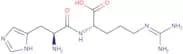
Formula:C45H59N11O11Molecular weight:930.04 g/molH-His-Arg-OH
CAS:H-His-Arg-OH is a synthetic peptide that has been shown to have cytotoxic effects on mammalian cells. The H-His-Arg-OH peptide can be used for the treatment of heart disease and autoimmune diseases, such as rheumatoid arthritis. This peptide has been found to be resistant to congestive heart failure, which is caused by a number of factors, including hypertension and valvular stenosis. It has also been shown to have an immunoglobulin G1 (IgG1) genotype.
Formula:C12H21N7O3Purity:Min. 95%Molecular weight:311.34 g/molRef: 3D-FH108062
Discontinued productCJC-1295
CAS:CJC-1295 is a synthetic peptide, which is an analogue of growth hormone-releasing hormone (GHRH). It is synthesized through recombinant DNA technology, which allows for precise control over its sequence and length. This particular peptide is designed to bind to GHRH receptors in the pituitary gland. By activating these receptors, CJC-1295 stimulates the release of growth hormone (GH) into the bloodstream.The primary function of CJC-1295 is to influence the endocrine system, particularly enhancing the release of endogenous growth hormone. It achieves this by increasing the amplitude and frequency of GH pulses without affecting the natural negative feedback mechanisms that regulate GH production. This mode of action distinguishes CJC-1295 from other growth hormone therapies, as it promotes a more physiological pattern of hormone secretion.CJC-1295 is used in various scientific contexts, primarily in research focusing on growth hormone deficiencies, muscle wasting conditions, and certain metabolic disorders. Its ability to increase GH release also makes it a subject of interest in studies related to aging, tissue repair, and regeneration. The longer half-life of CJC-1295 compared to natural GHRH peptides further enhances its applications in research, allowing for more sustained and controlled experimentation.
Purity:Min. 95%Ref: 3D-FC138107
Discontinued productSomatostatin-28 (1-14)
Catalogue peptide; min. 95% purity
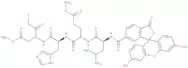
Formula:C61H105N23O21SMolecular weight:1,528.72 g/molFluorescein-6-carbonyl-Leu-Glu(OMe)-His-DL-Asp(OMe)-fluoromethylketone
CAS:Please enquire for more information about Fluorescein-6-carbonyl-Leu-Glu(OMe)-His-DL-Asp(OMe)-fluoromethylketone including the price, delivery time and more detailed product information at the technical inquiry form on this page
Formula:C45H47FN6O14Purity:Min. 95%Molecular weight:914.89 g/molbeta-Lipotropin (1-10), porcine
Catalogue peptide; min. 95% purity
Formula:C42H66N10O15Molecular weight:951.05 g/molDisulfide biotin azide
CAS:Extraordinary strength of the streptavidin-biotin interaction allows for efficient capturing of even highly dilute targets; however, it makes recovery of proteins from affinity resins challenging. Conventional methods to elute biotinylated proteins from immobilized avidin include the following: (i) denaturation of streptavidin by boiling the resin in a denaturing buffer that may include high concentrations of chaotropic salts, (ii) trypsin digestion of proteins while they are bound to the resin, or (iii) elution of proteins with excess free biotin. These protocols can co-elute contaminant proteins by releasing nonspecifically bound proteins and/or naturally biotinylated proteins concurrently with labeled proteins. In addition, some of these methods can cause elution of high levels of resin-based peptides along with the proteins of interest, resulting in further sample contamination.
Disulfide Biotin Azide probe eliminates a major limitation of the streptavidin-biotin affinity purification. This reagent contains a biotin moiety linked to an azide moiety through a spacer arm containing a cleavable disulfide linker. Captured biomolecules can be efficiently released under mild conditions (50 mM dithiothreitol, 10 mM 2-mercaptoethanol or 1% sodium borohydride) and the small molecular fragment (188.25 Da) left on the labeled protein following cleavage. These features make the cleavable probe especially attractive for use in biomolecular labeling and proteomic studies.Formula:C27H48N8O7S3Purity:Min 95%Molecular weight:692.92 g/molMyelin Oligodendrocyte Glycoprotein (35-55) (mouse, rat) trifluoroacetate
CAS:Myelin oligodendrocyte glycoprotein (MOG) is a myelin protein found in the central nervous system. MOG is a ligand for CD200, which is an inhibitory receptor expressed by astrocytes. It has been shown that MOG can induce the proliferation and differentiation of primary cultures of rat astrocytes in vitro. MOG induces the production of reactive oxygen species in mitochondria and increases the expression of acid-binding protein, which are both important factors in the demyelination process. MOG has also been implicated as a potential factor in the development of multiple sclerosis. Further research into this protein may lead to new treatments or cures for disorders such as encephalomyelitis, nervous system diseases, or even cancer.
Formula:C118H177N35O29S•C2HO2F3Purity:Min. 95%Color and Shape:PowderMolecular weight:2,695.98 g/molPrepro TRH (53-74)
Catalogue peptide; min. 95% purity
Formula:C118H182N32O32Molecular weight:2,560.96 g/mol[Trp11] Neurotensin (8-13)
Catalogue peptide; min. 95% purity
Formula:C40H65N13O7Molecular weight:840.05 g/molBiotin-[Tyr0]-Orexin B, mouse, rat
Catalogue peptide; min. 95% purity
Formula:C145H238N48O38S2Molecular weight:3,325.86 g/molP69 (522-534), M. leprae
Catalogue peptide; min. 95% purity
Formula:C52H84N14O21Molecular weight:1,241.33 g/mol[D-Tyr27,36, D-Thr32]-Neuropeptide Y, human
Catalogue peptide; min. 95% purity
Formula:C189H285N55O57SMolecular weight:4,271.67 g/molAc-a-CGRP (19-37) (human)
Catalogue peptide; min. 95% purity
Formula:C88H139N25O26Molecular weight:1,963.24 g/mol[Ala8]-Humanin, [Ala8]-HN, Shna
Catalogue peptide; min. 95% purity
Formula:C119H204N34O32SMolecular weight:2,655.23 g/molGrowth Hormone Releasing Factor, GRF (1-40), amide, human
Catalogue peptide; min. 95% purity
Formula:C194H318N62O62SMolecular weight:4,543.14 g/molADP-Ribosylation Factor 6, ARF6 (2-13)
Catalogue peptide; min. 95% purity
Formula:C60H102N16O17Molecular weight:1,319.58 g/molBig Gastrin-1, human
Catalogue peptide; min. 95% purity
Formula:C176H251N43O53SMolecular weight:3,849.30 g/molAngiotensin II type 1 receptor (181-187), AT1, ATE.
Catalogue peptide; min. 95% purity
Formula:C40H52N10O13Molecular weight:880.92 g/mol[Arg0] Met-Enkephalin
Catalogue peptide; min. 95% purity
Formula:C33H47N9O8SMolecular weight:729.86 g/mol








![[Trp11] Neurotensin (8-13)](/_next/image/?url=https%3A%2Fstatic.cymitquimica.com%2Fproducts%2F3D%2Fthumb-webp%2FVAC-00688.webp&w=3840&q=75)


![Biotin-[Tyr0]-Orexin B, mouse, rat](/_next/image/?url=https%3A%2Fstatic.cymitquimica.com%2Fproducts%2F3D%2Fthumb-webp%2FVAC-00130.webp&w=3840&q=75)

![[D-Tyr27,36, D-Thr32]-Neuropeptide Y, human](/_next/image/?url=https%3A%2Fstatic.cymitquimica.com%2Fproducts%2F3D%2Fthumb-webp%2FVAC-00911.webp&w=3840&q=75)

![[Ala8]-Humanin, [Ala8]-HN, Shna](/_next/image/?url=https%3A%2Fstatic.cymitquimica.com%2Fproducts%2F3D%2Fthumb-webp%2FVAC-00593.webp&w=3840&q=75)


![[Arg0] Met-Enkephalin](/_next/image/?url=https%3A%2Fstatic.cymitquimica.com%2Fproducts%2F3D%2Fthumb-webp%2FVAC-00699.webp&w=3840&q=75)