Peptides
Peptides are short chains of amino acids linked by peptide bonds, serving as important biological molecules that play key roles in cellular processes. They function as hormones, neurotransmitters, and signaling molecules, and are widely used in therapeutic and diagnostic applications. Peptides are also crucial in research for studying protein interactions, enzyme activities, and cell signaling pathways. At CymitQuimica, we provide a diverse selection of high-quality peptides to support your research and development needs in biotechnology and pharmaceuticals.
Subcategories of "Peptides"
Found 30311 products of "Peptides"
Sort by
Purity (%)
0
100
|
0
|
50
|
90
|
95
|
100
Human PD - L1 inhibitor V
<p>PD-1 inhibitors and PD-L1 inhibitors are a group of checkpoint inhibitors being developed for the treatment of cancer.PD-1 and its ligand PD-L1 are critical in regulating T cell activation, tolerance and immunopathology. PD-1 is an immune checkpoint and guards against autoimmunity through two mechanisms. First, it promotes apoptosis of antigen-specific T-cells in lymph nodes. Second, it reduces apoptosis in regulatory T cells. Several types of cancer cells overexpress PD-L1 in order to escape from the PD-1/PD-L1 immunosurveillance mechanism. In this way, Human PD - L1 inhibitor V could be used in the treatment of cancers that overexpress PD-L1.</p>Color and Shape:PowderMolecular weight:1,484.8 g/molCRAMP-18
<p>Cathelicidin-related anti-microbial peptide (CRAMP), is the mouse homologue of the human LL-37 antimicrobial peptide and shares 67% sequence identity with LL-37.CRAMP-18 is the anti-bacterial sequence derived from CRAMP, it possesses potent anti-bacterial activity against Gram-positive and Gram-negative bacterial strains with no haemolytic activity. As well as displaying direct anti-microbial activity, CRAMP-18 also binds to lipopolysaccharide (LPS) to neutralise LPS activity.CRAMP is a cationic peptide, encoded for by the Camp gene and is highly expressed in bone marrow. Its expression is up-regulated by infectious and inflammatory signals and it is secreted by cells such as neutrophils, epithelial cells, and macrophages.</p>Molecular weight:2,147.61 g/molCyclo[Arg-Gly-Asp-D-Phe-Lys(Azide)]
Cyclo[Arg-Gly-Asp-D-Phe-Lys(Azide)] is a peptide that contains the RGD sequence. It is a synthetic cyclic peptide that has been shown to bind to integrin receptors, which are cell surface receptors found in many cells. These integrins are involved in cellular adhesion and signaling. Cyclo[Arg-Gly-Asp-D-Phe-Lys(Azide)] can be used as a tool for click chemistry, as it can be modified with other molecules such as azides, which can then be used for click reactions with other molecules. This peptide has also been shown to have biological activity against cancer cells and inflammation.Formula:C27H39N12O7Purity:Min. 95%Molecular weight:629.68 g/molGpTX-1 Toxin
<p>GpTX-1 is a synthetic 34 amino acid peptide derived from tarantula spider venom. Due to its antagonist activitiy against voltage gated sodium channels such as Na v1.7, it can be used as a possible therapeutic in inflammatory, neuropathic, visceral and nociceptive pain treatment. DpTX-1 has also been found to block voltage-dependent calcium channels.<br>One-Letter Formula: H-DCLGFMRKCIPDNDKCCRPNLVCSRTHKWCKYVF-NH2</p>Formula:C176H271N53O45S7Purity:Min. 95%Molecular weight:4,073.9 g/mol[N-Me-Asp1]-Angiotensin II
<p>[N-Me-Asp1]-Angiotensin II is a peptide that belongs to the peptides and biochemicals group. It is an angiotensin II antagonist, which means that it blocks the action of Angiotensin II on its receptors. This peptide can be used as a vasoconstrictive agent in the treatment of hypertension.</p>Formula:C51H73N13O12Purity:Min. 95%Molecular weight:1,060.23 g/molMAGEA4 (230-239) Light
<p>Melanoma-associated antigen As (MAGEA) are a large family of tumour-associated antigens and a subclass of the larger family of cancer testis antigens (CTAs). These proteins are tumour antigens expressed in a variety of malignant tumours including: bladder- lung- skin and breast malignancies. In healthy tissue however their expression is restricted to germ cells of the testis, nervous system, foetal ovaries and placenta. In cancer cells, the MAGEA family proteins support growth, survival and metastasis, and contribute actively to malignancy. They are also involved in the regulation of the tumour suppressor protein p53 pathway and in regulating ubiquitin signalling in cancer cells. MAGEA expression is linked to poor prognosis in cancer patients. MAGEA subfamily proteins are recognized by cytotoxic T lymphocytes and evoke a strong T cell reactivity against autologous tumour cells in culture.</p>Formula:C48H73N15O17Color and Shape:PowderMolecular weight:1,131.5 g/molBoc-L-Glutamic Acid bis-Propargyl Amide
<p>Boc-L-Glutamic Acid bis-Propargyl Amide is a building block for Click Chemistry. It is a white solid that is soluble in DMF, DMSO and other organic solvents. This product can be used as a reagent for peptide synthesis and as an intermediate for the synthesis of amino acids. Boc-L-Glutamic Acid bis-Propargyl Amide reacts with dimethylaminoethanol to form the corresponding amide. It has been shown that this product can be used in click chemistry reactions to form amides and ureas.</p>Formula:C16H23N3O4Purity:Min. 95%Molecular weight:321.3 g/molC-terminal Sortagging-[Cys(Sulfocyanine7)]
<p>This C-terminal Sortagging peptide acts as a (oligo)glycine nucleophile in the final steps of a sortagging protein labelling reaction. This reaction results in the (Sulfocyanine7) fluorescent moiety being attached to the C-terminus of the target protein or peptide.A substrate peptide containing the LPXTG motif is recognised and cleaved by the enzyme Sortase A (SrtA) from Staphylococcus aureus. The catalytic cysteine residue in the active site of SrtA, serves as a nucleophile to cleave the peptide bond between threonine and glycine of the substrate peptide. Cleavage results in the formation of a thioacyl intermediate between the substrate peptide and SrtA. This intermediate is then resolved by the N-terminus of this (oligo)glycine nucleophile peptide, resulting in the creation of a new peptide bond that links the substrate peptide to this peptide and its fluorescent dye. This method of protein labelling is known as sortagging.This peptide contains Sulfocyanine7, which is a NIR (near infrared) emitting fluorescent dye.</p>Molecular weight:1,121.4 g/molFmoc-Pro-Wang Resin (100-200 mesh) 1% DVB
Fmoc-Pro-Wang Resin (100-200 mesh) is a resin that can be used for peptide synthesis. It is a building block for the synthesis of peptides, proteins and other organic compounds. Fmoc-Pro-Wang Resin (100-200 mesh) 1% DVB is an acid labile resin that is polymerized with N,N'-Dicyclohexylcarbodiimide and 4-(dimethylamino)pyridine to form a three dimensional crosslinked network. This resin has 100-200 mesh particle size and 1% DVB content.Purity:Min. 95%EGFR/kinKDR peptide substrate
<p>Substrate of the epidermal growth factor receptor (EGFR), a member of the receptor tyrosine kinase family known as ErbBs or HER receptors. These receptors are involved in the regulation of cell proliferation, survival, differentiation and migration. However their dysregulation can contribute towards many diseases such as cancer.Binding to the ligand binding domain of the EGFR causes receptor dimerization. This is sequentially followed by the tyrosine kinase domain being activated and the tyrosines on the C-terminal tail become phosphorylated, which in turn activates downstream signalling pathways.</p>Color and Shape:PowderMolecular weight:1,620.9 g/mol[5-FAM]-M918
<p>Novel cell-penetrating peptide (CPP). M918 was derived from the tumour suppressor protein p14ARF and can be utilized for both covalent and non-covalent delivery of macromolecules in animal and plant cells. CPPs are able to cross the cell membrane at low micromolar concentrations without causing significant membrane damage in vivo and in vitro.This cationic CPP Peptide is labelled with an N-terminal 5-carboxyfluorescein (5-FAM), a widely used green fluorescent tag.</p>Molecular weight:3,009.34 g/molHIV-1 Rev (34-50)
<p>The full Rev is vital in aiding transport of unspliced viral mRNA from the nucleus. Within Rev there are 3 main functional regions - the arginine rich motif (ARM), the oligomerization domain (OD), and nuclear export sequence (NES). The peptide sequence 34-50 aligns to the ARM motif which binds the Rev Response Element (RRE) in RNA to form a complex which ultimately leads to nuclear export. ARM is able to recognise a wide range of RNA sequence to and still bind to form a Rev dimer. The Rev ARM sequence has also been shown to work as a nuclear localisation sequence that can penetrate cells. In research, Rev ARM has been utilised as a cell penetrating peptide (CPP) for its ability to bind RNA due to the arginine residues presenting multiple sides for binding and thus deliver macromolecules into the cell.</p>Color and Shape:PowderMolecular weight:2,436.4 g/molTAT 2-4
<p>TAT 2-4 is derived from human immunodeficiency virus (HIV) transactivator of transcription (TAT) residues 47-58. TAT (47-58) is a cell penetrating cationic peptide derived from the N-terminus of the Tat protein, which is a trans-activator of the transcription protein present in the human immunodeficiency virus (HIV). As a cell penetrating peptide (CPP) TAT aids in the cellular uptake of molecules and hence serves a valuable purpose in transduction methods. TAT 2-4 are residues (47-58) of HIV TAT protein repeated back to back, this dimer of TAT sequences has been shown to be the most efficient oligomer for cell penetration. This TAT dimer has been used in previous studies to deliver a wide variety of cargoes including fluorophores, chelators and DNA to target cells.</p>Color and Shape:PowderMolecular weight:3,213.9 g/molDes-n-Octanoyl-[Ser3]-Ghrelin (Human, 1-18)
<p>Des-n-Octanoyl-[Ser3]-Ghrelin (Human, 1-18) is a non-acylated analog of Ghrelin (Human, 1-18), amino acids 1-18 of the peptide hormone Ghrelin. This peptide does not contain the unique N-octanoyl group which is linked to Ghrelin's third serine residue covalently and which allows Ghrelin to associate with the growth hormone secretagogue receptor (GHS-R). Through interaction with the GHS-R, Ghrelin can exert its various effects on the body such as stimulating appetite, nutrient sensing, meal initiation and the regulation of insulin resistance, diabetes and obesity. Its wider functions are also associated with glucose homeostasis, energy homeostasis, cardio-protective effects, bone metabolism and its potential to be a target for cancer means that it can be used to develop therapies for a whole spectrum of diseases. This molecule is used as a research tool for studying cell biology and pharmacology.</p>Formula:C88H143N31O29Purity:Min. 95%Molecular weight:2,099.31 g/molKRREILSRRPSYR-acid
<p>Protein kinases are important drug targets for numerous diseases to try and better evaluate the enzyme specificity, affinity, mode of action and identify possible inhibitors. In vitro assays and synthetic substrates provide valuable data about human kinase activity. CREBtide KRREILSRRPSYR is based on the phosphorylation sequence in d-CREB (cAMP response element binding protein) it is a substrate for protein kinase A (PKA)(Km = 3.9 mM). However, it has also been tested as a substrate for other protein kinases, including cAMP-dependent protein kinase (cAK) and protein kinase C (PKC). Immunoblots and autoradiography have been used for CREBtide KRREILSRRPSYR in vitro kinase analysis.</p>Color and Shape:PowderMolecular weight:1,716 g/molN-formylated PSMalpha3
<p>Pathogenic Staphylococcus aureus strains produce N-formylmethionyl containing peptides. Peptides starting with an N-formylated methionyl group constitute a unique hallmark of bacterial as well as mitochondrial metabolism, and professional phagocytes of our innate immune system recognise this microbial/mitochondrial pattern as a danger signal that guides innate immune cells.All PSMα peptides have the same basic functions and promote virulence through effects on discrete neutrophil functions (i.e. chemotaxis) and by being cytotoxic at higher concentrations. PSMα2 and PSMα3 can both bind to FPR2 and trigger superoxide release in neutrophils at low nanomolar concentrations. In addition, at high nanomolar concentrations they display cytotoxicity selectively on apoptotic neutrophil membranes and this occurs in an FPR2 independent manner.</p>Color and Shape:PowderMolecular weight:2,633.4 g/molDnp-Gly-Pro-Leu-Gly-Met-Arg-Gly-Leu-NH2
<p>This peptide is a collagenase, MMP-13 and stromelysin substrate. It can be used as a biochemical in enzyme assays to measure the activity of collagenases and MMPs.</p>Formula:C40H64N14O12SPurity:Min. 95%Molecular weight:965.11 g/molVisperas1pY
<p>An immuno-receptor tyrosine-based activation motif (ITAM) is a phosphorylation site consisting of a conserved sequence of four amino acids that is repeated twice in the cytoplasmic tails of cell-surface non-catalytic tyrosine-phosphorylated receptors. ITAMs are involved activation of immune cells. The motif has the following structure: YxxL/I. where xx are any two amino acids. Two of these motifs are typically separated by between 6 and 8 amino acids in the cytoplasmic tail of the molecule (YxxL/Ix(6-8)YxxL/I). ITAMs are found in the CD3 and θ¶-chains of the T cell receptor (TCR) complex. TCR is a multi-subunit receptor on the surface of T cells which contains two ligand binding chains containing 20 phosphorylation sites, distributed on 10 ITAMs. The TCR θ¶-chain is a homodimer subunit that contains six ITAMs (12 sites). These sites are phosphorylated by the membrane-anchored Src family tyrosine kinase Lck and Fyn and are dephosphorylated by the transmembrane phosphatases CD148 and CD45. When both tyrosines in an ITAM are phosphorylated they generate docking sites for the tandem SH2 domains of the cytosolic tyrosine kinase ZAP-70. Bound ZAP-70 can phosphorylate tyrosines on other substrates that initiate the signal transduction that leads to T cell activation. The multiple ITAMs on the TCR function mainly to amplify subsequent signalling.T cells rely on the TCR to recognize antigens, in the form of peptides bound to major histocompatibility complexes (MHC), on the surfaces of antigen-presenting cells. Binding of TCR to antigen-MCH complexes leads to proliferation, differentiation, and the secretion of effector cytokines, contributing to the elimination of infections.</p>Molecular weight:1,986.9 g/molLiver-Expressed Antimicrobial Peptide 2, human
<p>Liver-Expressed Antimicrobial Peptide 2 (LEAP2) is a peptide that belongs to the family of antimicrobial peptides. LEAP2 is a potent activator of ion channels, which are membrane proteins that regulate the passage of ions through the cell membrane. LEAP2 can also inhibit protein interactions by binding to receptors and ligands on the surface of cells. LEAP2 has been shown to be a receptor for Ligand-gated ion channels, which are involved in many cellular processes such as neurotransmitter release, muscle contraction, and hormone release.<br>LEAP2 can be used as an inhibitor of the hyperpolarization activated cyclic nucleotide-gated (HCN) channels in neurons. These channels are important for regulating neuronal excitability and inhibiting neuronal activity following action potentials.</p>Formula:C191H316N64O57S5Purity:Min. 95%Molecular weight:4,581.3 g/molSRC-1 (676-700)
<p>Steroid Receptor Coactivator - 1 (676-700).</p>Color and Shape:PowderMolecular weight:2,797.4 g/molH-Leu-2-ClTrt-Resin (100-200 mesh) 1% DVB
<p>H-Leu-2-ClTrt-Resin (100-200 mesh) 1% DVB is a resin that has been used to synthesize peptides. It can be used as a building block for many other chemical reactions, such as cross-linking and oxidation. This resin is typically used in the synthesis of peptides with an amino acid sequence of H-Leu-2-ClTrt and contains 1% DVB. The resin can be used for the synthesis of small organic molecules, such as antibiotics, with a molecular weight between 500 and 2000 Da.</p>Purity:Min. 95%SARS-CoV-2 Nucleoprotein 2 (326-340)
<p>The coronavirus (CoV) nucleoprotein is the major component of CoV structural proteins. Also known as the nucleocapsid protein, it is an abundant RNA-binding protein critical for viral genome packaging. These factors make nucleoprotein a good target for developing new antiviral drugs. In addition, the identification of epitopes within the nucleoprotein sequence can help design more effective SARS-CoV-2 vaccines.Models have predicted epitopes exhibiting antigenicity, stability and interactions with MHC class-I and class-II molecules. Nucleoprotein (261-275) is an epitope candidate with various HLA restrictions. This epitope can be used to better vaccine design for more durable CD4+ and CD8+ T cell responses for long-lasting immunity.</p>Molecular weight:1,621.8 g/molAngiotensin II (1-8)
<p>Angiotensin II (Ang-II) is a key signalling peptide of the renin angiotensin system (RAS) which is involved in regulating blood pressure, cardiovascular function and energy balance. RAS activity is elevated in obesity and is widely studied in relation to lifestyle-related diseases.Ang-II is produced from angiotensinogen (AGT) via the intermediate angiotensin I (Ang-I). AGT is cleaved by the aspartyl-protease, renin, to produce Ang-I, which is then cleaved by the dicarboxyl-peptidase angiotensin converting enzyme (ACE). ACE removes a histidine and a leucine from the C-terminus of Ang-I to form Ang-II.Ang-II exerts its affect by binding to the G-protein-coupled receptors- Ang II type 1 (AT1) and Ang II type 2 (AT2) receptors. Ang-II plays central roles in glucose metabolism and blood pressure. Increased levels of Ang-II have also been associated with Alzheimer's disease, and certain cancers including oesophageal squamous cell carcinoma (ESCC), brain cancers and breast cancers. The effects of Ang-II appear to be supressed by another branch of the RAS- the ACE2/Ang-(1-7)/Mas pathway.</p>Molecular weight:1,045.5 g/mol[Nle4, D-Phe7]-ß-MSH-Amide
Melanocyte Stimulating Hormone (MSH) and Related Peptides are a group of peptides that have a role in the regulation of skin pigmentation. One such peptide is Nle4, D-Phe7]-ß-MSH-amide, which is an agonist of melanocortin receptors. It has been shown to stimulate the proliferation and cause the differentiation of melanocytes in vitro, as well as to increase the number of melanocytes in vivo.Formula:C78H111N21O19Purity:Min. 95%Molecular weight:1,646.88 g/molUBA3 (59-72) peptide
<p>Peptide derived from the ubiquitin-activating enzyme 3 (UBA3), the catalytic subunit of the NEDD8-activating enzyme (NAE).</p>Color and Shape:PowderMolecular weight:1,495.8 g/molMet-Leu-pNA (Hydrochloride Form)
<p>Met-Leu-pNA (Hydrochloride Form) is a peptide that binds with high affinity to the N-methyl-D-aspartate receptor, an ion channel protein. It is used in research tools and as an inhibitor. The peptide has been shown to inhibit the activity of the receptor by competitive inhibition, preventing binding of glutamate, which normally activates the ion channel. This inhibition leads to a decrease in neuronal excitability and decreased production of proinflammatory cytokines.</p>Formula:C17H26N4O4S•HClPurity:Min. 95%Molecular weight:418.95 g/molYSA acid
<p>YSA binds to the extracellular domain of ephrin type-A receptor 2 (EphA2) with high affinity and selectivity. YSA binding activates EphA2 and its tumour suppressing downstream signalling pathways (including inhibition of the PI3K/Akt and ERK pathways), and promotes receptor internalisation.EphA2 is highly expressed in many types of solid tumour, and the level of EphA2 expression is positively correlated with malignancy and poor prognosis in some cancer types.YSA has been shown to be an effective targeting peptide of chemotherapeutic drugs to EphA2 expressing tumours. YSA-drug conjugates are able to selectively target EphA2 expressing tumours, both activating tumour supressing downstream signalling pathways, and becoming effectively internalised by cancer cells to further increase the potency of the chemotherapeutic drug. YSA-drug conjugates have been shown to be dramatically more effective at inhibiting tumour growth than chemotherapy alone. Selective tumour targeting with YSA could also reduce the systemic toxicity caused by nonselective and highly toxic chemotherapy agents, and thus reduce adverse side effects of chemotherapy.</p>Molecular weight:1,346.6 g/molMBP Ac1-9 (4Y)
<p>This peptide constitutes the acetylated N-terminal region of murine myelin basic protein (MBP) and displays high affinity for major histocompatibility complexes (MHC). This high MHC affinity is due to substitution of the native lysine at position 4 for a tyrosine. Substitution increases the MHC binding affinity of the peptide by around 1 million fold, therefore creating a superagonist ligand. MBP is an integral component of myelin found in the central nervous system (CNS) vital for the development and stability of the myelin sheath where it plays a role in membrane adhesion. MBP may be targeted by auto-antibodies in diseases such as multiple sclerosis. The low affinity of the native lysine containing MBP 1-9 peptide for MCH class II may result in MBP auto-reactive T cells escaping central-tolerance where self reactive T cells are usually eliminated. MBPs constitute an extraordinarily varied collection of splice isoforms which show a myriad of post-translational modifications.</p>Color and Shape:PowderMolecular weight:1,133.22 g/molα-Neo-Endorphin (Porcine)
CAS:Alpha-Neo-Endorphin is a peptide that belongs to the group of opioid peptides. It is a potent activator of opioid receptors and has been used as a research tool in cell biology to study the function of opioid receptors. Alpha-Neo-Endorphin activates these receptors by binding to them, and these opioid receptors are involved in the modulation of pain, epidermal nerve fiber regulation and skin homeostasis. It is further demonstrated the ability to in human keratinocytes, stimulate wound healing. alpha-neoendorphin is derived from prodynorphin when it is proteolytically cleaved. This product is available as a 0.5mg vial and is sourced from Porcine.Purity:Min. 95%Cyclorasin 12A
<p>Cyclorasin 12A is a research tool that can be used to activate or block ligands on their receptors. Cyclorasin 12A is a peptide fragment of cyclosporin A, which is an immunosuppressive agent. Cyclorasin 12A binds to the receptor, which activates the ion channels and inhibits the activity of protein kinases. Cyclorasin 12A has been shown to inhibit ion channels in cells and also has been found to reduce inflammation by inhibiting cytokine production.</p>Formula:C71H102N27O11FPurity:Min. 95%Molecular weight:1,528.78 g/molGanglioside GM1-binding peptides p3
<p>Ganglioside GM1-binding peptides p3.</p>Color and Shape:PowderMolecular weight:1,777.1 g/molLocustatachykinin I
<p>Locustatachykinin I(LTK1 or Lom-TK-I) is a potent, rapid and persistent secretion stimulator in locust Malphigian tubules which controls primary urine production, tubule writhing and local sphincter functions.- LTK1 shares sequence homology with mammalian tachykinins such as substance P.- Two putative tachykinin receptors, Drosophila tachykinin-receptor (DTKR) and neurokinin receptor from Drosophila (NK0) have been identified.</p>Molecular weight:937.5 g/molFGF 2 Mouse
FGF-2 is a protein that belongs to the FGF family. It is an activator of erythropoietin, which stimulates the production of red blood cells. FGF-2 also acts as a ligand for FGFR1 and FGFR2, which are receptors for FGF-2. The binding of FGF-2 to these receptors leads to a cascade of cellular responses by activating different types of ion channels and proteins involved in cell proliferation and differentiation. This protein is purified from mouse sources with high purity and no detectable endotoxin levels.Purity:Min. 95%H-Glu(OtBu)-2-ClTrt-Resin (100-200 mesh) 1% DVB
This resin is a building block for peptide synthesis that can be used as a solid support in solid phase peptide synthesis. It has been used in the synthesis of a number of biologically active molecules. The resin is prepared by coupling an amine and thiol in the presence of triethylamine and 1-hydroxybenzotriazole. The resin contains 1% DVB, which serves as the protecting agent for the amino acid side chain during coupling reactions.Purity:Min. 95%Insulin A Chain (A12-21)
<p>Type I diabetes is an autoimmune condition caused by the destruction of insulin-producing β cells. The initiation mechanism is unclear but involves activating autoreactive T cells against the β-cell-specific antigen, insulin.RIP-B7.1 mice express CD80 on pancreatic β cells and are a model for studying de novo induction of diabetogenic CD8 T cells. Immunization of RIP-B7.1 mice with preproinsulin (ppins)-encoding plasmid DNA induces experimental autoimmune diabetes (EAD). EAD is associated with significant induction of CD8 T cells specific for the (A12-21) restricted epitope leading to the destruction of β cells.The Insulin A Chain (A12-21) epitope is recognised by pancreas-infiltrating CD8 T cells isolated from immunized, diabetic RIP-B7.1 mice as shown by flow cytometry. The Insulin A Chain (A12-21) epitope can also be used to stimulate inducible IFN- expression of ppins-primed CD8 T cells ex vivo as determined by flow cytometry. GFP fusion has shown the expression of insulin A chain (A12-21) epitope in HeLa cells.</p>Molecular weight:1,246.3 g/molJzTx-V Peptide
A synthetic tarantula spider toxin sourced from the chinese earth tiger tarantula, Chilobrachys jingzhao. This product has the following disulfide bonds: Cys1-Cys4, Cys2-Cys5, Cys3-Cys6 and is available as a trifluoroacetate Salt.Formula:C157H243N47O38S7Purity:Min. 95%Molecular weight:3,621.43 g/mol[5-FAM]-TAT (47-57) amide
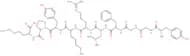
<p>[5-FAM]-TAT (47-57) is a cell penetrating cationic peptide derived from the N-terminus of the Tat protein, which is a trans-activator of the transcription protein present in the human immunodeficiency virus (HIV). Specifically TAT (47-57) is located within the arginine-rich basic domain 48-60 of the TAT peptide which as a whole has three domains which function to aid HIV through transactivation, DNA binding and nuclear transport. As a cell penetrating peptide (CPP) TAT aids in the cellular uptake of molecules and hence serves a valuable purpose in transduction methods. This property has been demonstrated through its ability of allowing toxins such as the neurotoxin Botulinum neurotoxin Type A, produced by the Clostridium botulinum type A bacteria to penetrate the skin barrier non-invasively. Additionally TAT (47-57) can be used to deliver proteins, fluorophores, chelators and DNA to target cells.It contains 5-carboxyfluorescein (5-FAM), a widely used green fluorescent tag.</p>Molecular weight:1,917.14 g/molTetanus Toxin P2 (830 - 844)
<p>Tetanus Toxin P2 (830 - 844) is a protein that is derived from the single-chain polypeptide neurotoxin produced by Clostridium tetani. The neurotoxins produced by Clostridium tetani are among the most potent molecules known to humankind. Once in the body, the toxin binds to the basal lamina at the neuromuscular junction. From here, the toxin is transported to inhibitory interneurons in the spinal cord, where it prevents the release of neurotransmitters, which causes spastic paralysis.The P2 protein has antigenic properties that are reflective of the neurotoxin released by Clostridium tetani. Therefore, P2 is a suitable epitopes for CD4+ T cells and can be used to stimulate the release of IFNg, which is a cytokine that promotes macrophage activity and coordinates lymphocyte endothelium interactions.</p>Color and Shape:PowderMolecular weight:1,724 g/molIFNB1 (118-132) Human
<p>Recombinant human interferon-β (IFNB) is a therapeutic for certain stages of multiple sclerosis (MS). However, a significant portion of patients develop neutralising antibodies within 2 years and prevent clinical efficacy of the treatment, this was correlated to a specific rise in IgG. Sequencing of IFNB1 revealed a CD4+ T cell epitope residues (118-132) that contains critical T cell activation residues. The identification of this sequences can now allow it to be manipulated to hopefully provide new interferon treatments that reduces the capacity for induction of neutralising antibodies in MS patients. The IFNB1 (118-132) epitope can be used for immunological investigations such as T cell activation, antibody recognition via immunoassays and immunohistochemistry. This may provide further insights into certain haplotypes correlating to IFNB responses in MS treatment.</p>Molecular weight:1,906.23 g/molAc-RLR-[AMC] Proteasome Substrate
<p>Fluorogenic substrate peptide to assay trypsin-like activity. In its intact state this peptide is non-fluorescent, however when aminomethylcoumarin (AMC) is released upon hydrolysation, fluorescence can be detected. This peptide is therefore a useful tool for analysing trypsin-like enzyme activity.AMC is a fluorescent dye with excitation maxima at around 360 nm and emission maxima at around 450 nm. AMC can be excited with a mercury lamp and observed using a UV filter set.</p>Molecular weight:642.4 g/molBiotin-PEG2-Claudin-9
<p>Biotin-PEG2-Claudin-9 is derived from the tight junction protein Claudin-9 which is encoded by the CLDN6 gene and can be found within epithelial cell to cell contacts. Structurally, the Claudin family, of which Claudin-9 is a member, are transmembrane proteins containing two extracellular loops and are involved in maintaining cell polarity and controlling paracellular ion flux.Reduction in the number of Claudins has been associated with tumour formation. This may be due to Claudin role in maintaining cell detachment and migration.Claudin-9 has been shown to be overexpressed in hepatocellular carcinoma (HCC) and has the ability to increase the metastasis of hepatocytes. It further influences the activation of the Stat3 signalling pathway through tyrosine kinase 2. Overall CLDN9 demonstrates itself to be a HCC proto-oncogene.This peptide has a covalently bonded N-terminal Biotin tag that can be used for detection and purification and contains a polyethylene glycol spacer (PEG2).</p>Color and Shape:PowderMolecular weight:2,881.5 g/molApelin-17 (human, bovine)
<p>Apelin-17 (human, bovine) is derived from the apelin peptide which acts as a ligand for the apelin receptor (APJ) G protein coupled receptor and is a substrate for angiotensin converting enzyme 2. Preprapelin, encoded for by APLN located on Xq25-26.1, is cleaved to form either apelin 36,or apelin 17, 12 and apelin 13. As a member of the adipokine hormone family, which are involved in processes such as vascular homeostasis and angiogenesis, apelin is secreted from adipose tissue.Apelin has been found to be expressed in the spinal cord and the human brain and when performing immunohistochemistry it was observed that apelin-17 is significantly expressed in the human heart, brain, lungs and endothelial cells.Both apelin and the apelin receptor are widely distributed around the body thus apelin has been found to be associated with cardiovascular diseases, obesity, diabetes and cancer. Studies exploring myocardial infarction showed there to be greater apelin mRNA expression during human heart failure compared to in healthy tissue. Apelin protects against heart failure due to, the pyroglutamyl form of apelin, playing a role in decreasing infarct size of myocardial infarctions. Furthermore in rats with hypertension, the expression of apelin and APJ was decreased.</p>Molecular weight:2,137.2 g/molTAT-AKAP79 (326-336) scrambled
<p>The activation of transient receptor potential cation channel subfamily V member 1 (TRPV1) is believed to play a role in hyperalgesia, asthma and hypertension. TRPV1 is important for neuronal pain detection as well as the detection of heat, capsaicin, protons and the neurotransmitter anandamide. -The scaffold protein AKAP79 targets kinases to phosphorylate TRPV1, however it has been shown that inflammatory intermediates prostaglandin-E2 or bradykinin can activate these kinases creating a route for inflammation to cause hyperalgesia.This product is composed of the TRPV1 interacting domain of AKAP79 reordered into a scrambled sequence and conjugated to the cell penetrating TAT domain. This product was shown in vivo to have no effect on TRPV1 algesia and thus is a vital control for research work. This product is a vital tool for research into suitable TRPV1 antagonists.</p>Molecular weight:2,878.6 g/molHCV NS3 protease FRET substrate
<p>HCV NS3 protease FRET substrate</p>Color and Shape:PowderMolecular weight:2,112.8 g/molCooP
<p>CooP peptide specifically homes to invasive tumours such as glioblastoma and their blood vessels. Mammary-derived growth inhibitor (MDGI), also known as the fatty-acid binding protein 3 (FABP3) or the heart fatty acid-binding protein (H-FABP) is the binding partner for the CooP peptide. Coop peptide homes to all tumours which express MDGI and their associated vasculature. MDGI is not however expressed in the normal human brain. Therefore the CooP peptide appears to have a highly selective specificity as a homing peptide and the potential to deliver targeted therapy to treat invasive brain tumours.CooP peptide has been successfully used for the targeted delivery of chemotherapy and different nanoparticles.</p>Molecular weight:845.4 g/molHIV-1 reverse transcriptase (A2-YI9)
<p>HIV-1 replication is rapid and error prone which is beneficial to the virus as it allows mutations to arise that aid evasion of the host immune system and resistance to drug treatment. RT is the key target for most anti-HIV drugs and therefore conserved sequences are useful to aid further research into new less toxic antiviral treatments. HIV-1 reverse transcriptase (RT) converts the RNA genome into DNA during retroviral replication. HIV-1 RT is a heterodimer composed of 2 subunits, p66 and p51. HIV-1 RT heterodimer has 2 enzymatic functions, DNA polymerase and Rnase H resulting in nucleic acid translation to a linear DNA duplex. Complete inhibition of viral replication is the only known method of preventing HIV-1 drug resistance and disease progression.HIV RT epitopes have become a useful research tool as an in vitro antigenic challenge to study cytotoxic T lymphocyte (CTL) responses to retroviruses. The HIV-1 RT A2-YI9 sequence has been shown to be an effective epitope for CTL recognition leading to lysis of HIV-infected T cells. The A2-YI9 is also considered a potential for vaccine development due to it being a well conserved sequence.</p>Molecular weight:1,012.17 g/molOxytocin (free acid)
<p>Neuropeptide and hormone involved in many processes, including- social bonding--sexual reproduction- childbirth and breastfeeding. Oxytocin is synthesised in the hypothalamus as a prepropeptide consisting of a signal peptide, the oxytocin peptide hormone, a processing signal and the carrier protein- neurophysin. The prohormone then undergoes endoproteolytic cleavage and amidation to form the final oxytocin peptide.Dysregulation of oxytocin has been implicated in the pathophysiology of neuropsychiatric disorders that impact social functioning, such as autism, schizophrenia, and depression as well as anorexia nervosa. Intranasal oxytocin administration may reduce amygdala activity and amygdala-midbrain connectivity in response to fearful situations- reduce cortisol release and anxiety in response to psychosocial stress- increase trust behaviour- increase the ability to interpret mental states, and increase the amount of time spent gazing at the eyes when viewing faces.</p>Molecular weight:1,007.4 g/mol




![Cyclo[Arg-Gly-Asp-D-Phe-Lys(Azide)]](/_next/image/?url=https%3A%2Fstatic.cymitquimica.com%2Fproducts%2F3D%2Fthumb-webp%2FRGD-3749-PI.webp&w=3840&q=75)

![[N-Me-Asp1]-Angiotensin II](/_next/image/?url=https%3A%2Fstatic.cymitquimica.com%2Fproducts%2F3D%2Fthumb-webp%2FPAN-3949-PI.webp&w=3840&q=75)


![C-terminal Sortagging-[Cys(Sulfocyanine7)]](/_next/image/?url=https%3A%2Fstatic.cymitquimica.com%2Fproducts%2F3D%2Fthumb-webp%2FCRB1101496.webp&w=3840&q=75)


![[5-FAM]-M918](/_next/image/?url=https%3A%2Fstatic.cymitquimica.com%2Fproducts%2F3D%2Fthumb-webp%2FCRB1100287.webp&w=3840&q=75)


![Des-n-Octanoyl-[Ser3]-Ghrelin (Human, 1-18)](/_next/image/?url=https%3A%2Fstatic.cymitquimica.com%2Fproducts%2F3D%2Fthumb-webp%2FPGH-3645-PI.webp&w=3840&q=75)









![[Nle4, D-Phe7]-ß-MSH-Amide](/_next/image/?url=https%3A%2Fstatic.cymitquimica.com%2Fproducts%2F3D%2Fthumb-webp%2FPMC-3669-PI.webp&w=3840&q=75)












![[5-FAM]-TAT (47-57) amide](/_next/image/?url=https%3A%2Fstatic.cymitquimica.com%2Fproducts%2F3D%2Fthumb-webp%2FCRB1100169.webp&w=3840&q=75)


![Ac-RLR-[AMC] Proteasome Substrate](/_next/image/?url=https%3A%2Fstatic.cymitquimica.com%2Fproducts%2F3D%2Fthumb-webp%2FCRB1100438.webp&w=3840&q=75)